TagAir Quality Monitors(111)
-
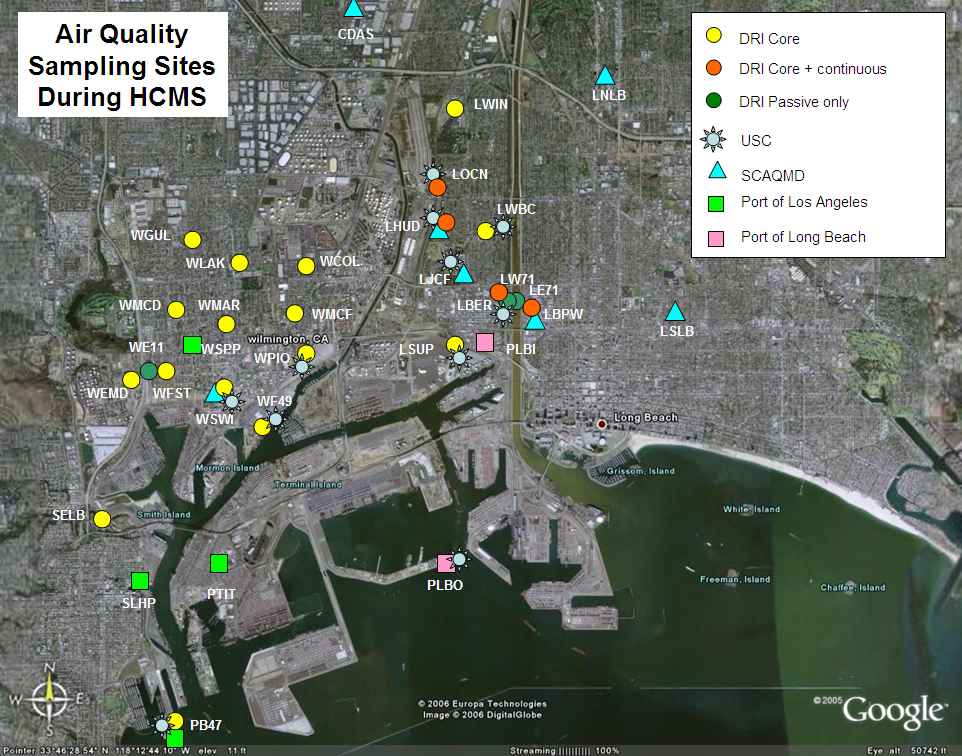
Harbor Communities Monitoring Study air quality monitor sampling sites map
A Google Earth satellite map (© 2006 Europa Technologies/DigitalGlobe) showing air quality monitoring station locations during the Harbor Communities Monitoring Study (HCMS) in the Wilmington, CA and Ports of Los Angeles and Long Beach area. Stations are categorized by operator: DRI Core, DRI Core + continuous, DRI Passive only, USC, SCAQMD, Port of Los Angeles, and Port of Long Beach. -
 2023-03-01
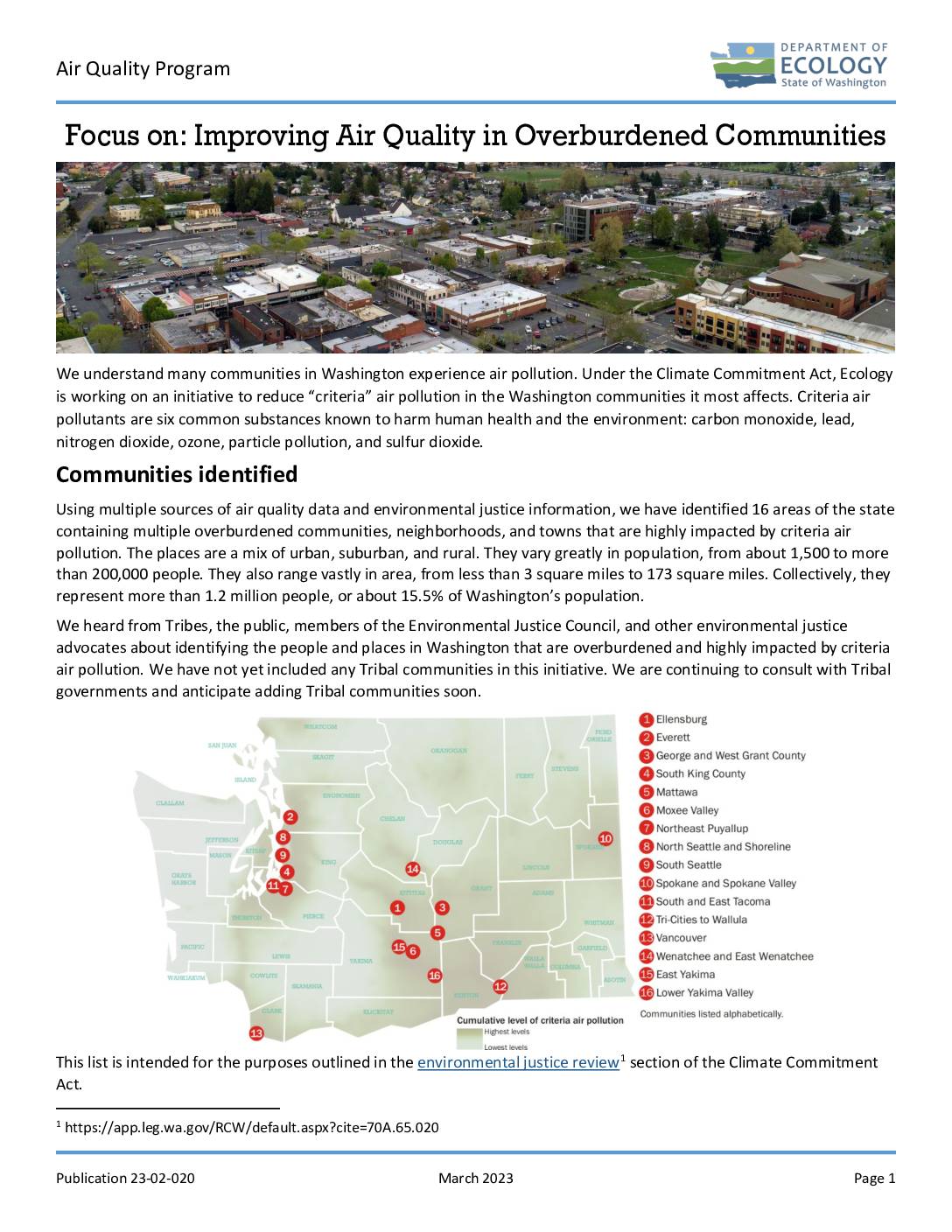
Focus on: Improving Air Quality in Overburdened Communities
Washington State's Department of Ecology has identified 16 overburdened communities across the state that are highly impacted by criteria air pollution, collectively representing over 1.2 million residents. Using air quality data and environmental justice tools, the agency is working under the Climate Commitment Act to reduce six key pollutants — including particle pollution, ozone, and nitrogen dioxide — in areas ranging from South Seattle and South King County to rural communities like Mattawa and the Lower Yakima Valley. Next steps include expanding air monitoring, engaging affected communities, and working with Tribal governments to address pollution impacts over multiple years. -
 2023-02-10
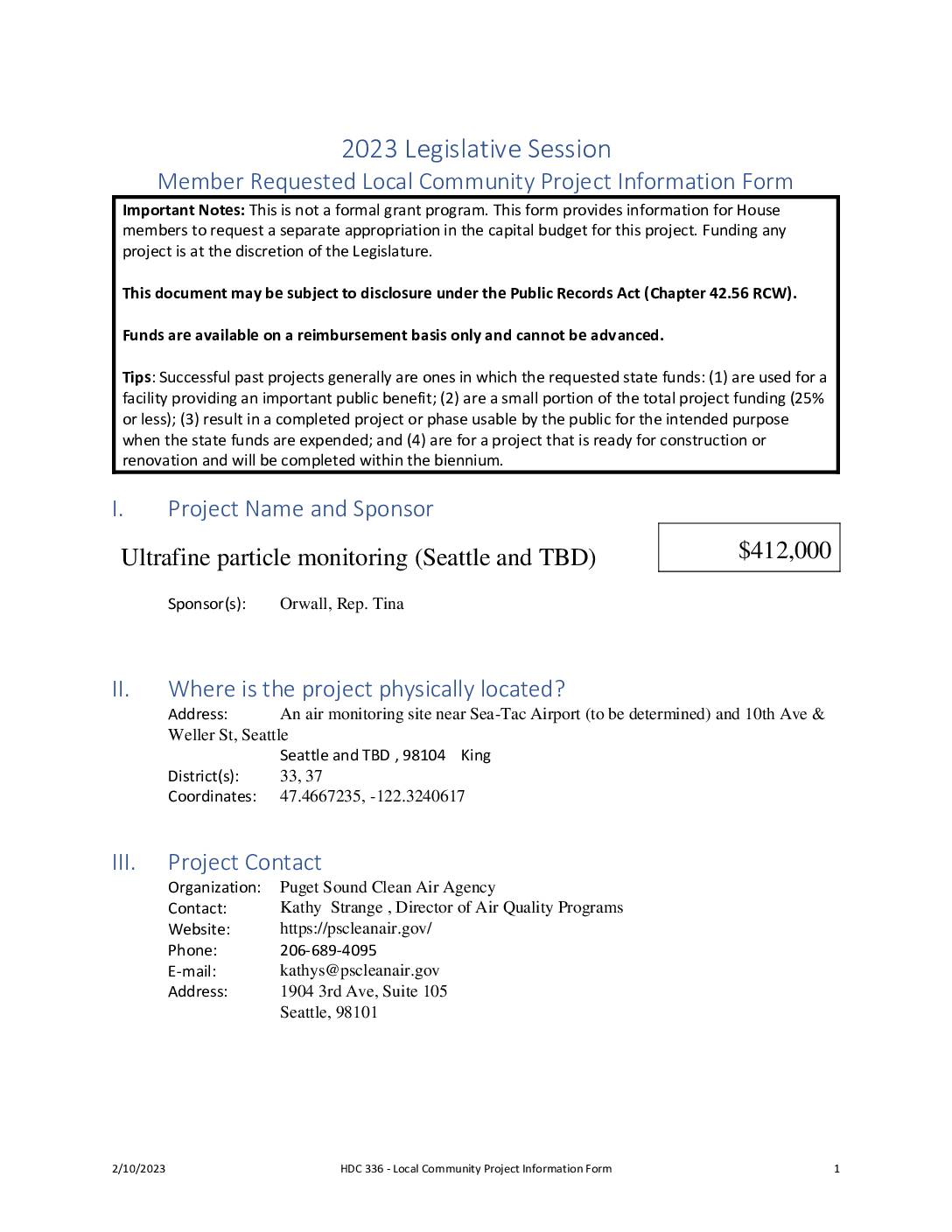
Ultrafine particle monitoring (Seattle and TBD) – Member Requested Local Community Project Information Form
A 2023 Washington State legislative funding request of $412,000 seeks to establish two ultrafine particle air quality monitors near Sea-Tac Airport and the I-5/I-90 interchange in Seattle, operated by the Puget Sound Clean Air Agency. The project aims to measure tiny airborne particles — particularly those produced by aircraft and vehicle traffic — that are not currently tracked routinely in Washington State. The University of Washington would analyze the collected data to identify pollution sources and establish health-impact baselines, with monitoring expected to begin in spring 2024. -
Washington Air Monitoring Network: Air Quality Program
Washington State Department of Ecology -
 2022-08-20
The Effect of Occupational Exposures to Aircraft Ultrafine Particles on Acute Cardiorespiratory Health, and Control Using Personal Protective Equipment
A University of Washington thesis by Mariah Dittmore investigates whether short-term exposure to ultrafine particles from aircraft engines causes measurable cardiorespiratory harm at concentrations found in surrounding communities, and whether personal protective equipment can reduce that harm. The research builds on a 2018 Los Angeles study that linked walking near aircraft pollution to elevated blood inflammation markers, while noting that roadway traffic posed its own distinct respiratory risks. The findings are relevant to policy discussions around Seattle-Tacoma International Airport and the health of workers and residents exposed to aircraft emissions. -
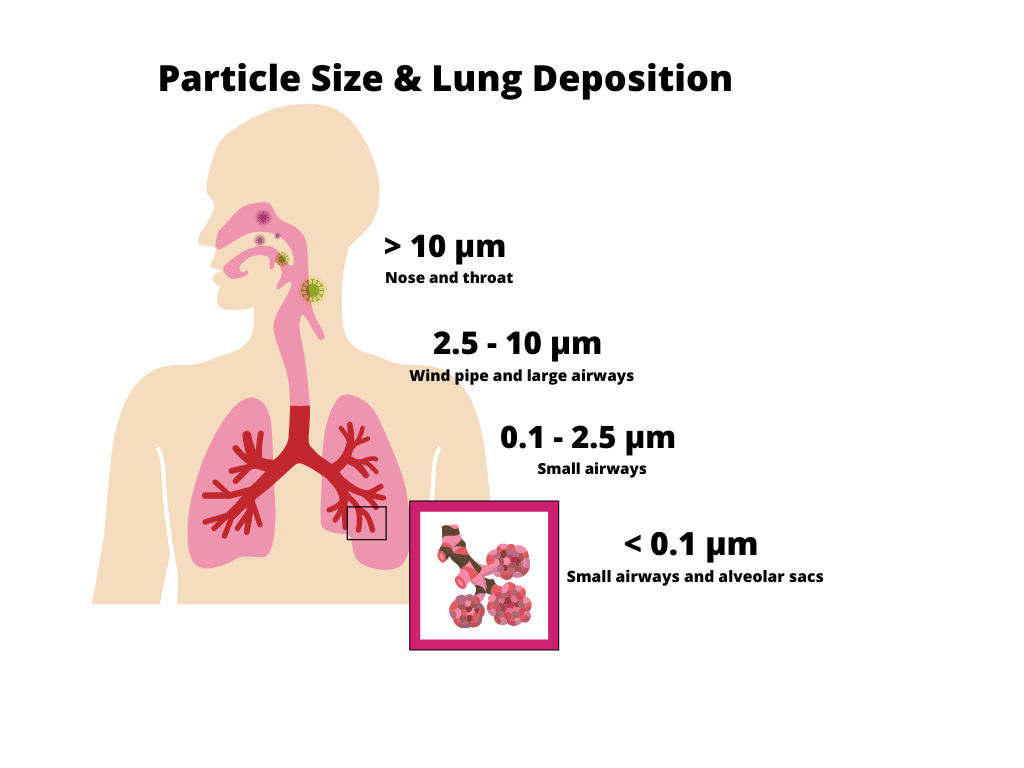
UWDEOHS-particle deposition
An educational infographic titled 'Particle Size & Lung Deposition' illustrating how airborne particles of different sizes deposit in various regions of the respiratory tract: particles >10 μm in the nose and throat, 2.5–10 μm in the windpipe and large airways, 0.1–2.5 μm in small airways, and <0.1 μm in small airways and alveolar sacs. The diagram includes an anatomical illustration of the human respiratory system with a magnified inset of alveolar sacs. -
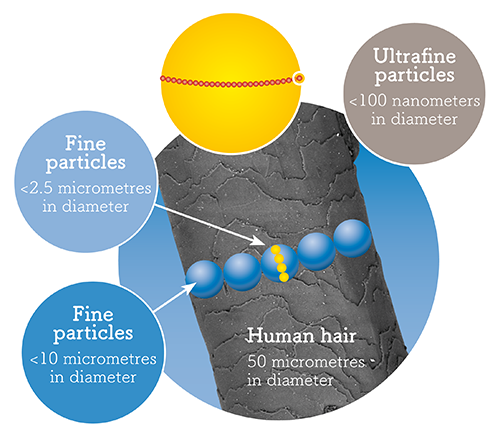
ultrafine particles
Infographic comparing sizes of airborne particulate matter relative to a human hair (50 micrometres in diameter): ultrafine particles (<100 nanometers), fine particles (<2.5 micrometres), and coarse fine particles (<10 micrometres). The diagram uses scaled spheres to visually illustrate how these pollution particles relate in size to a strand of human hair. -
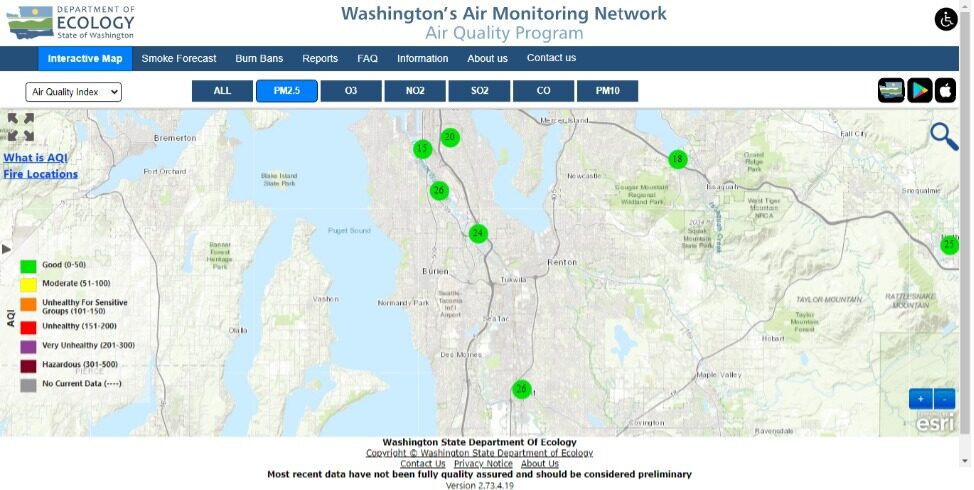
Washington State Department of Ecology – Air Quality Index Map, Seattle/Sea-Tac Region
Screenshot of Washington's Air Monitoring Network interactive map (Air Quality Program, WDOE, version 2.73.4.19) showing PM2.5 Air Quality Index readings across the greater Seattle–Sea-Tac–Puget Sound area. All visible monitoring stations display green indicators (Good, AQI 0–50). -
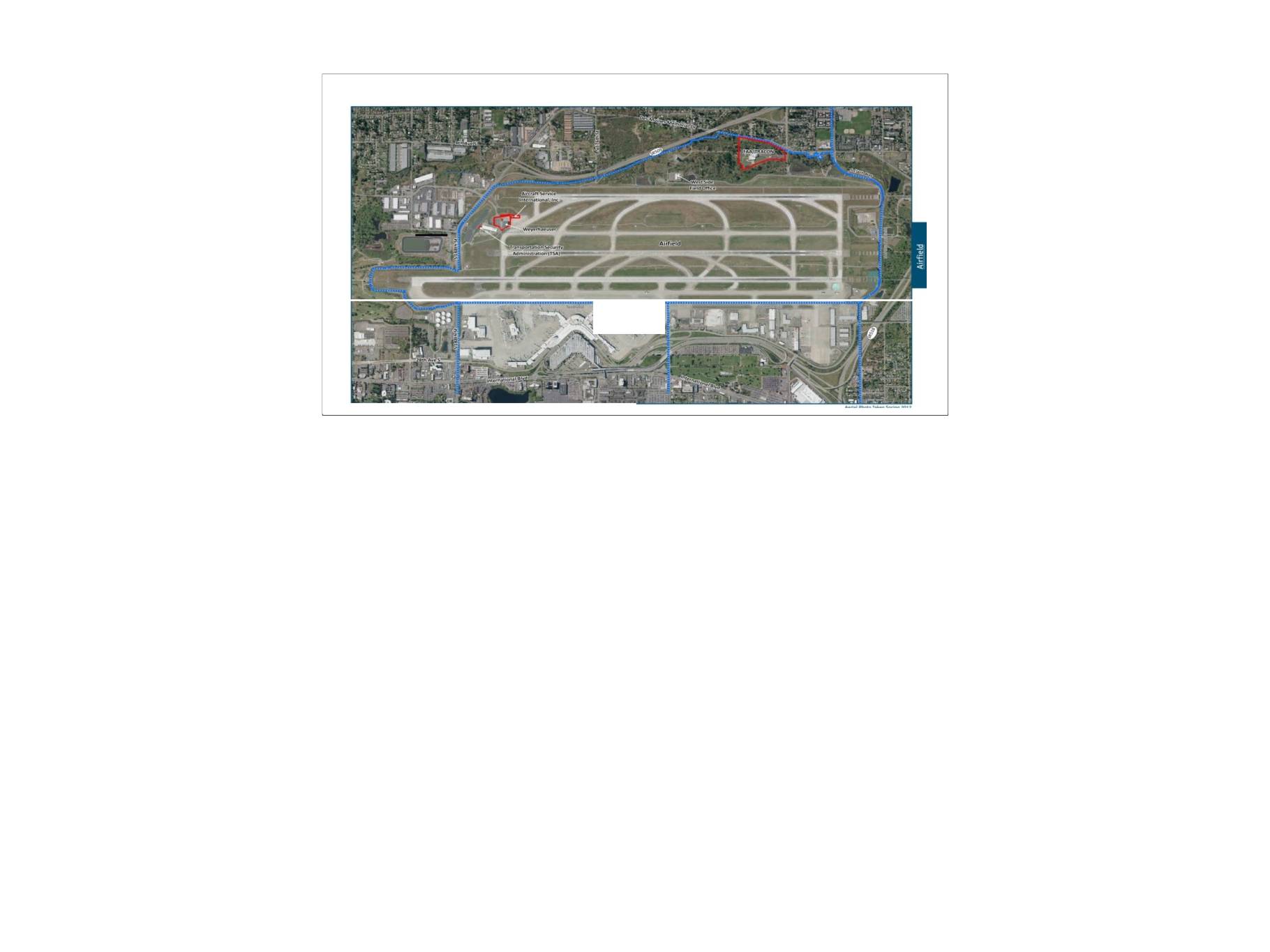 2022-05-26
Air Quality Monitoring (AQM) Presentation: Sea-Tac Airport Flight Tracks and Airfield Overview
This document contains airfield mapping and flight-track data related to Seattle-Tacoma International Airport (Sea-Tac), showing Port of Seattle lease boundaries, zone match lines, and recorded aircraft flight paths in the surrounding region. It includes a radar playback capture from August 14, 2019, depicting a FedEx 397 missed approach and an Alaska 807 departure with a non-standard turn at approximately 2,130 feet MSL. The materials appear to be part of an airport noise or operations review archive documenting aircraft movement patterns around Sea-Tac. -
 2022-02-14
Characterization of annual average traffic-related air pollution levels (particle number, black carbon, nitrogen dioxide, PM2.5, carbon dioxide) in the greater Seattle area from a year-long mobile monitoring campaign
Researchers conducted a year-long mobile air quality monitoring campaign across the greater Seattle area, measuring traffic-related pollutants including ultrafine particles, black carbon, nitrogen dioxide, fine particulate matter, and carbon dioxide at 309 locations. The study developed predictive models of annual average pollution levels to support health research on how traffic emissions affect Seattle residents, particularly the elderly. The findings showed strong spatial variation in pollution levels linked to traffic and land use patterns across the region.