TagWater Quality(475)
-
 2022-09-12
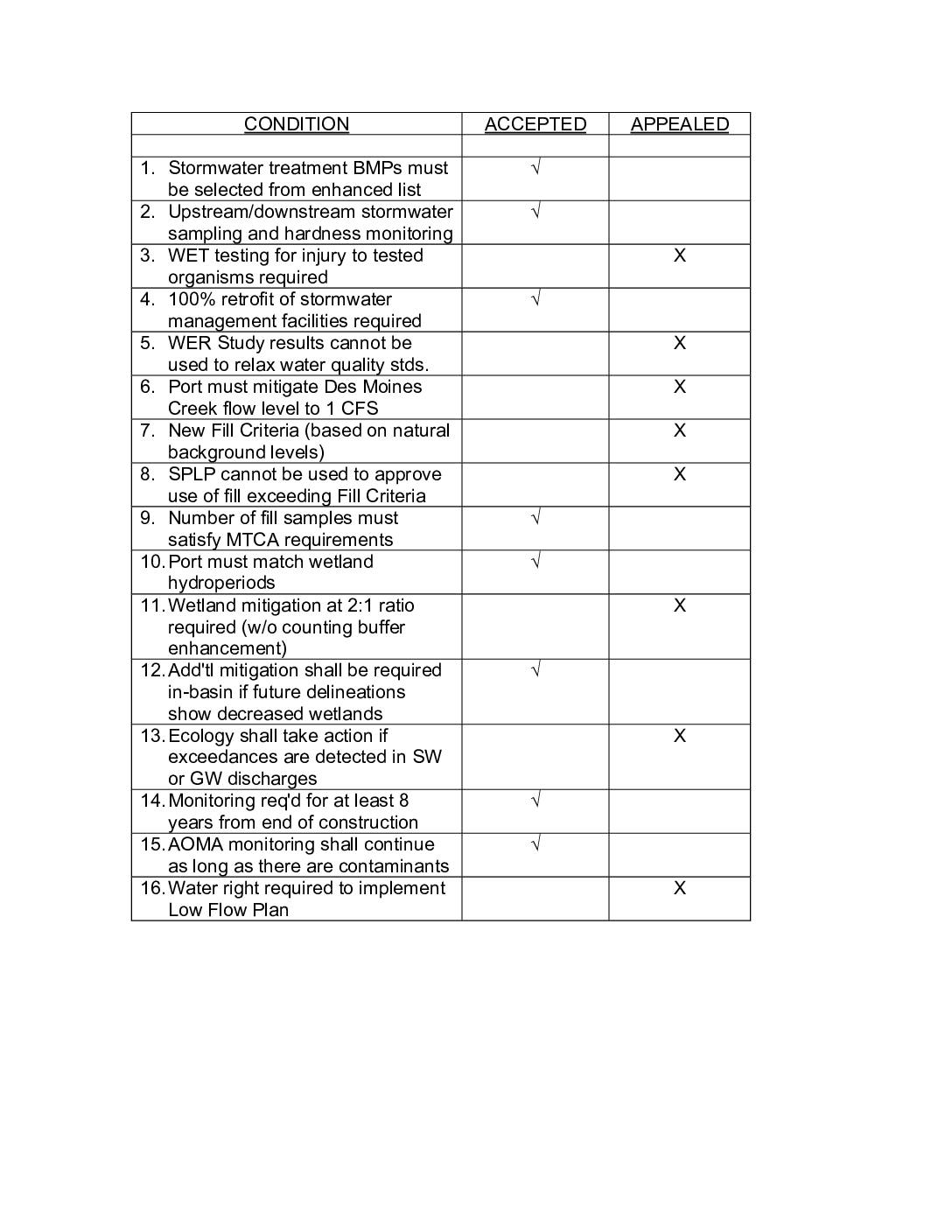
Conditions accepted and appealed summary table
This document lists 16 permit conditions related to environmental protections at what appears to be a Port development project, showing which conditions were accepted and which were appealed. Conditions covering stormwater management, wetland mitigation, fill criteria, and water quality monitoring were contested, with 8 of the 16 conditions formally appealed. Accepted conditions include stormwater sampling, wetland hydroperiod matching, and long-term contamination monitoring requirements. -
 2022-09-12
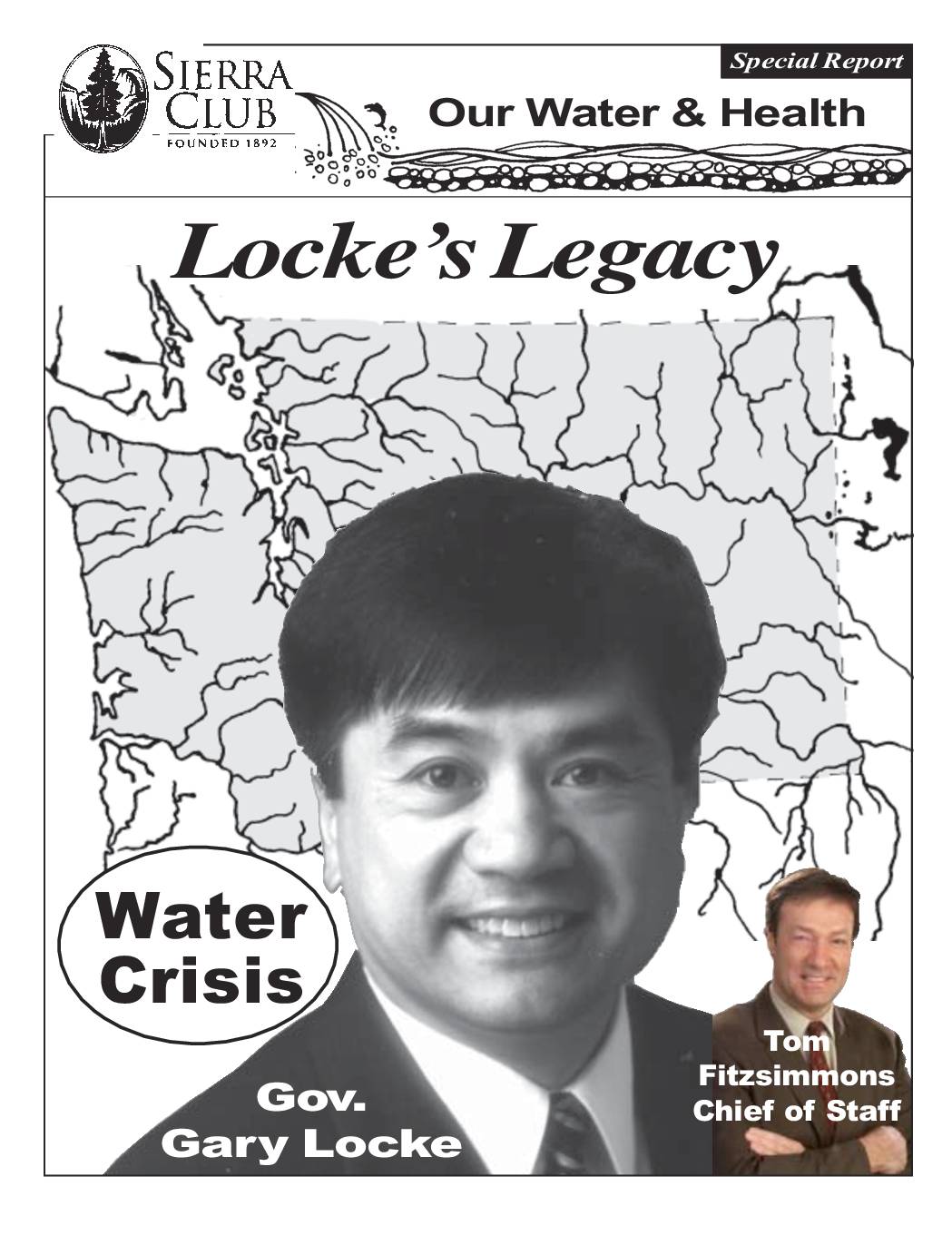
Locke’s legacy: Water crisis
A Sierra Club special report critiques Washington Governor Gary Locke's environmental record, with particular focus on the SeaTac Third Runway project, where Ecology Director Tom Fitzsimmons allegedly removed staff who sought to enforce environmental laws and signed the 'Toxic Fill Bill' allowing contaminated materials to be used in runway construction. The report details how the Port of Seattle's $1 billion-plus runway expansion required building one of the world's largest retaining walls over fish-bearing streams and wetlands in an earthquake-prone area. The Pollution Control Hearings Board ultimately found state permits insufficient and imposed 16 additional environmental conditions on the project. -
 2022-09-12
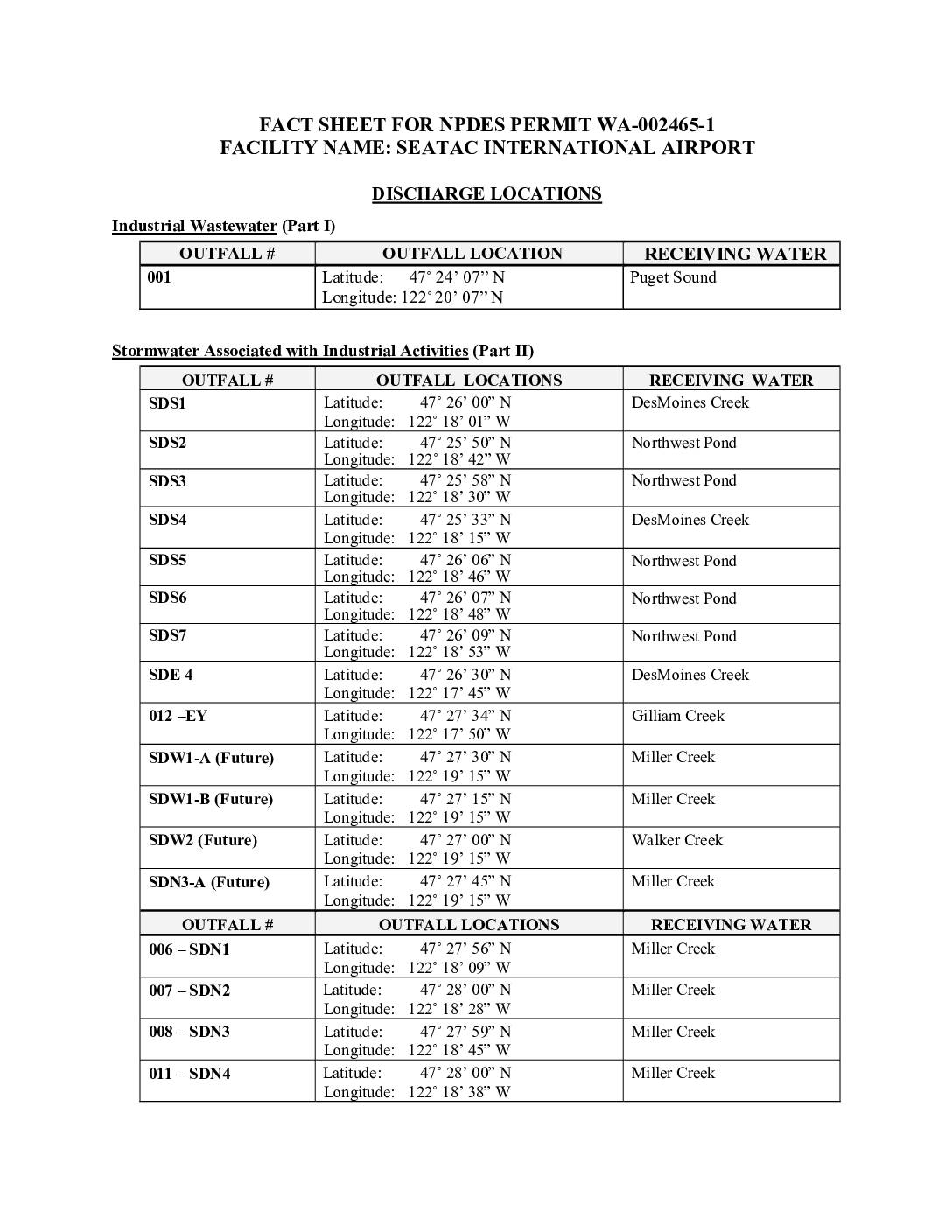
Fact sheet for NPDES permit WA-002465-1: SeaTac International Airport
This NPDES permit fact sheet for Seattle-Tacoma International Airport details the locations and receiving waterways for all stormwater and industrial wastewater discharge outfalls at the facility. It covers three categories of discharge: industrial wastewater flowing to Puget Sound, stormwater from industrial activities flowing to local waterways such as Des Moines Creek, Miller Creek, and Northwest Pond, and stormwater from construction activities discharged to Des Moines Creek, Miller Creek, Walker Creek, and Gilliam Creek. The document lists both existing and future planned outfall locations with precise latitude and longitude coordinates for each discharge point. -
Fecal bacteria pollution is a problem for Poverty Bay’s shellfish
A mix of dog droppings, septic leakage and other pollutants have become a nuisance for wildlife and geoduck harvesting at Poverty Bay over the last few years. By Alex Bruell • August 19, 2022 5:30 am Divers, walkers and other beachgoers enjoy Poverty Bay in Des Moines on a Saturday morning, Aug. 13. Photo by Alex Bruell/Sound -
 2022-01-01
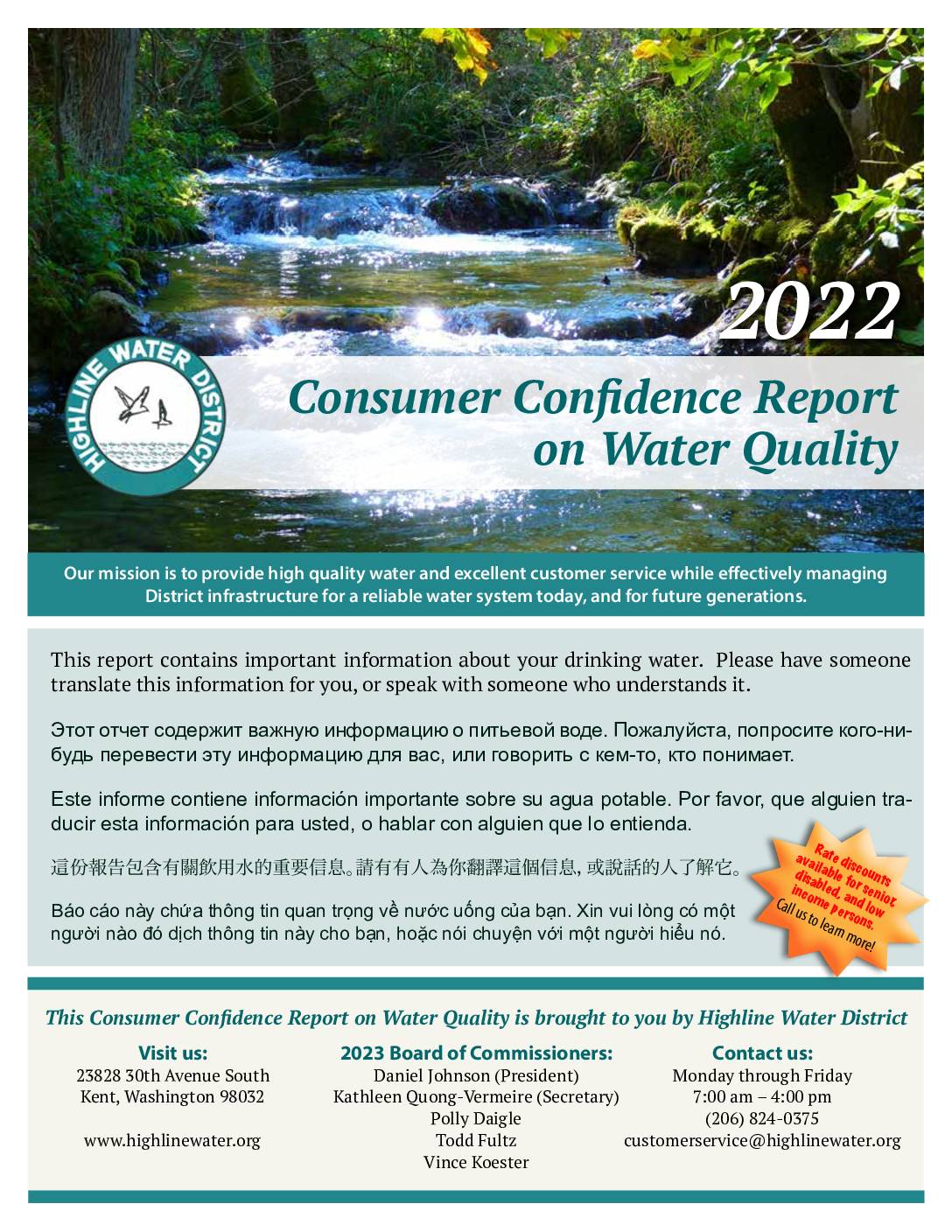
Consumer Confidence Report on Water Quality 2022
The Highline Water District's 2022 Consumer Confidence Report details the sources, treatment, and quality testing of drinking water served to customers in the Kent and SeaTac, Washington area. Approximately 75% of the district's water comes from Seattle Public Utilities' Cedar River Watershed, with the remaining 25% drawn from local groundwater wells, all of which are treated and tested for over 200 contaminants before reaching customers. The report confirms that Highline Water District's water meets all state and federal safety standards and is significantly below EPA maximum contaminant levels. -
 2021-12-31
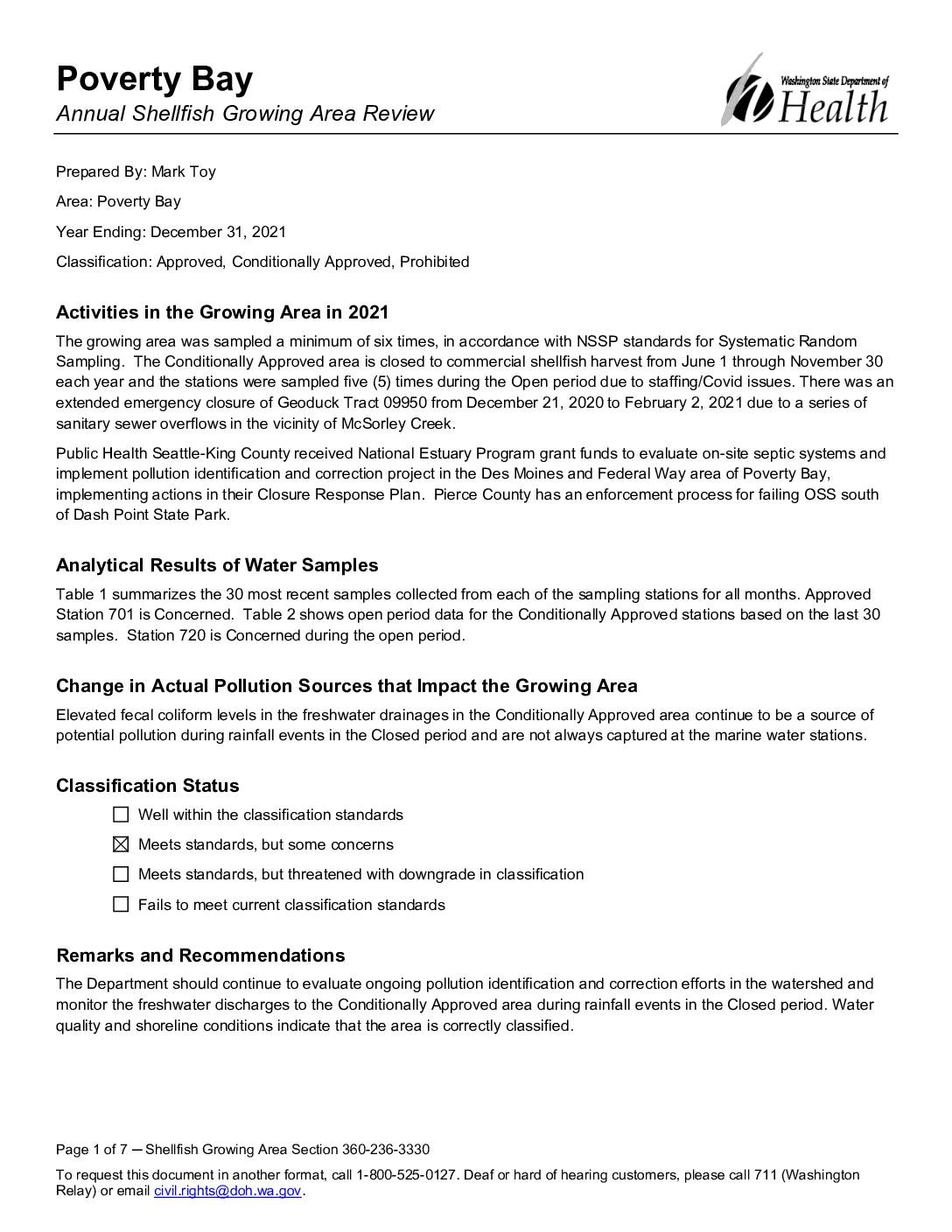
Poverty Bay annual shellfish growing area review
This 2021 annual review by the Washington State Department of Health assesses water quality and shellfish harvesting conditions in Poverty Bay, located near Des Moines and Federal Way. The area holds a mix of Approved, Conditionally Approved, and Prohibited classifications, with most stations meeting bacteriological standards, though Station 701 and Station 720 raised concerns due to elevated fecal coliform levels. Pollution sources such as stormwater runoff and past sanitary sewer overflows continue to be monitored, with ongoing correction efforts supported by Public Health Seattle-King County grant funding. -
 2020-05-29
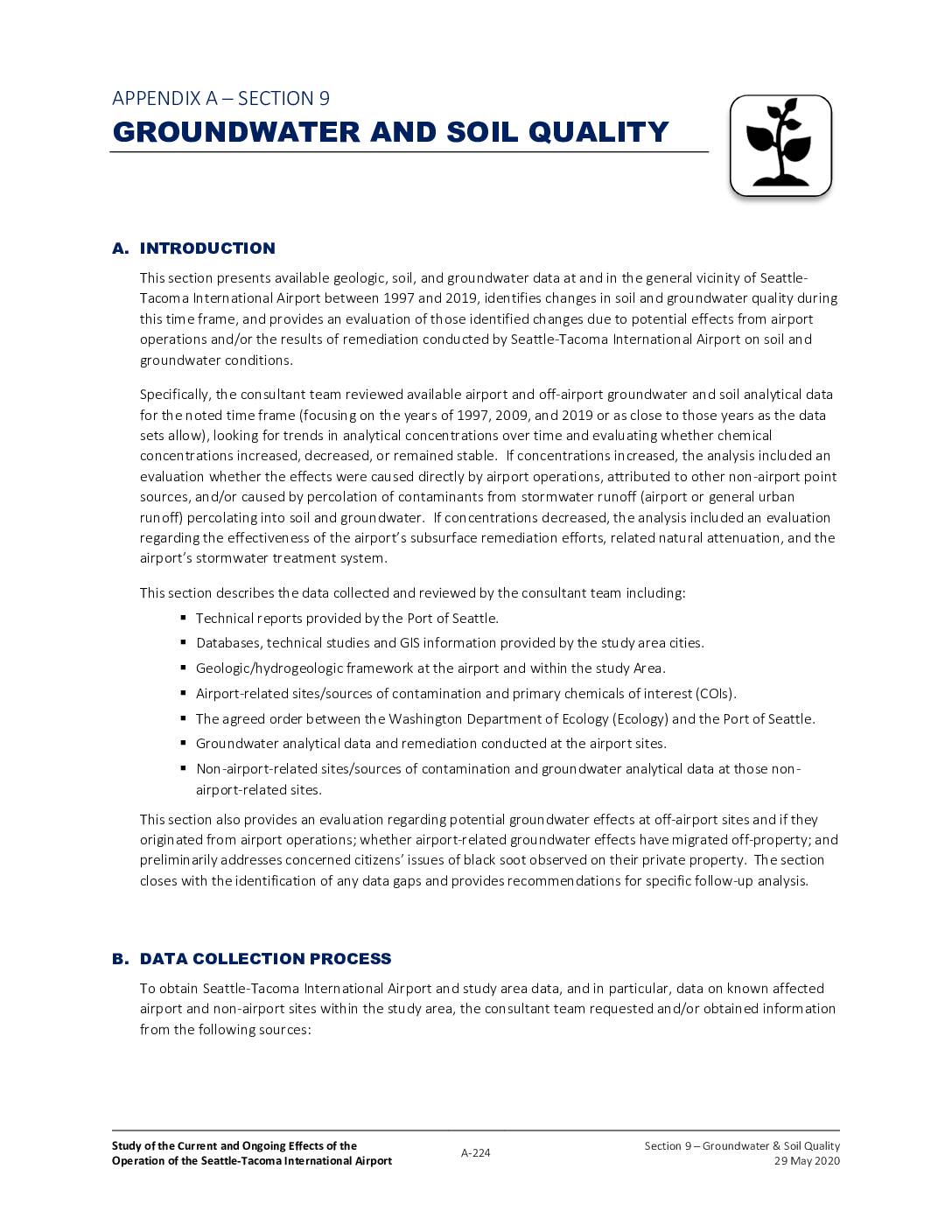
Appendix A, Section 9: Groundwater and Soil Quality — Study of the Current and Ongoing Effects of the Operation of the Seattle-Tacoma International Airport
This 2020 environmental study examines groundwater and soil quality at and around Seattle-Tacoma International Airport from 1997 to 2019, tracking changes in contamination levels and evaluating whether they stem from airport operations, other pollution sources, or stormwater runoff. The report draws on data from the Port of Seattle, surrounding cities, and state environmental agencies to assess the effectiveness of the airport's cleanup efforts and identify any contamination that may have spread beyond airport property. The underlying geology—dense glacial till soils—generally slows the movement of contaminants through the ground in the area. -
 2020-01-01
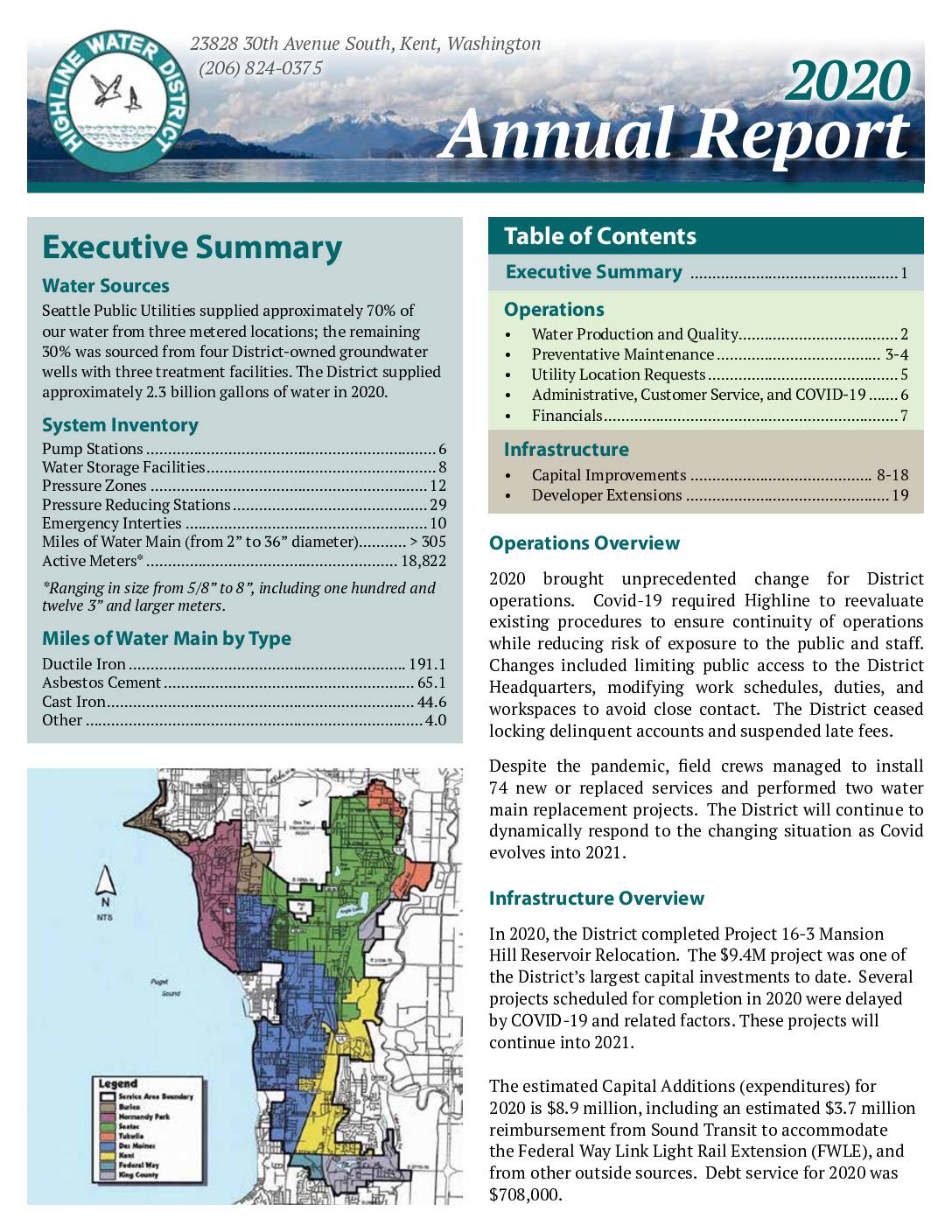
Highline Water District 2020 annual report
The Highline Water District 2020 Annual Report details the operations and infrastructure of a public water utility serving the Kent, Washington area, which supplied approximately 2.3 billion gallons of water to nearly 19,000 active meters that year. The report covers water production and quality, preventative maintenance, and capital improvement projects, including the $9.4 million Mansion Hill Reservoir Relocation. It also describes how COVID-19 impacted district operations, leading to modified work schedules, suspended late fees, and delays in several planned infrastructure projects. -
 2015-03-01
City of Des Moines 2015 Surface Water Comprehensive Plan
The City of Des Moines 2015 Surface Water Comprehensive Plan is a technical planning document prepared by Parametrix engineers in March 2015 for the City of Des Moines, Washington. It addresses the management and infrastructure of the city's surface water systems, covering stormwater and drainage planning for the community. The plan was certified by licensed professional engineers and serves as a long-term guide for surface water improvements in the Des Moines area. -
 2014-10-13
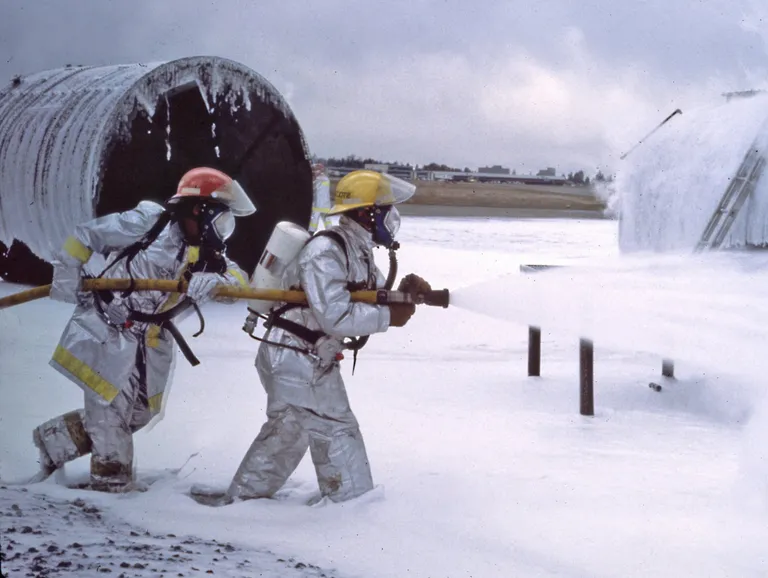
Firefighter PFAS training exercise October 13, 2014
Two firefighters in silver proximity suits and yellow helmets operate a hose line deploying fire-suppression foam across a tarmac area. A large cylindrical aircraft fuselage mockup is visible in the background, consistent with an Aircraft Rescue and Firefighting (ARFF) training exercise at an airport facility.