TagWashington State Legislature(119)
-
 2019-09-17
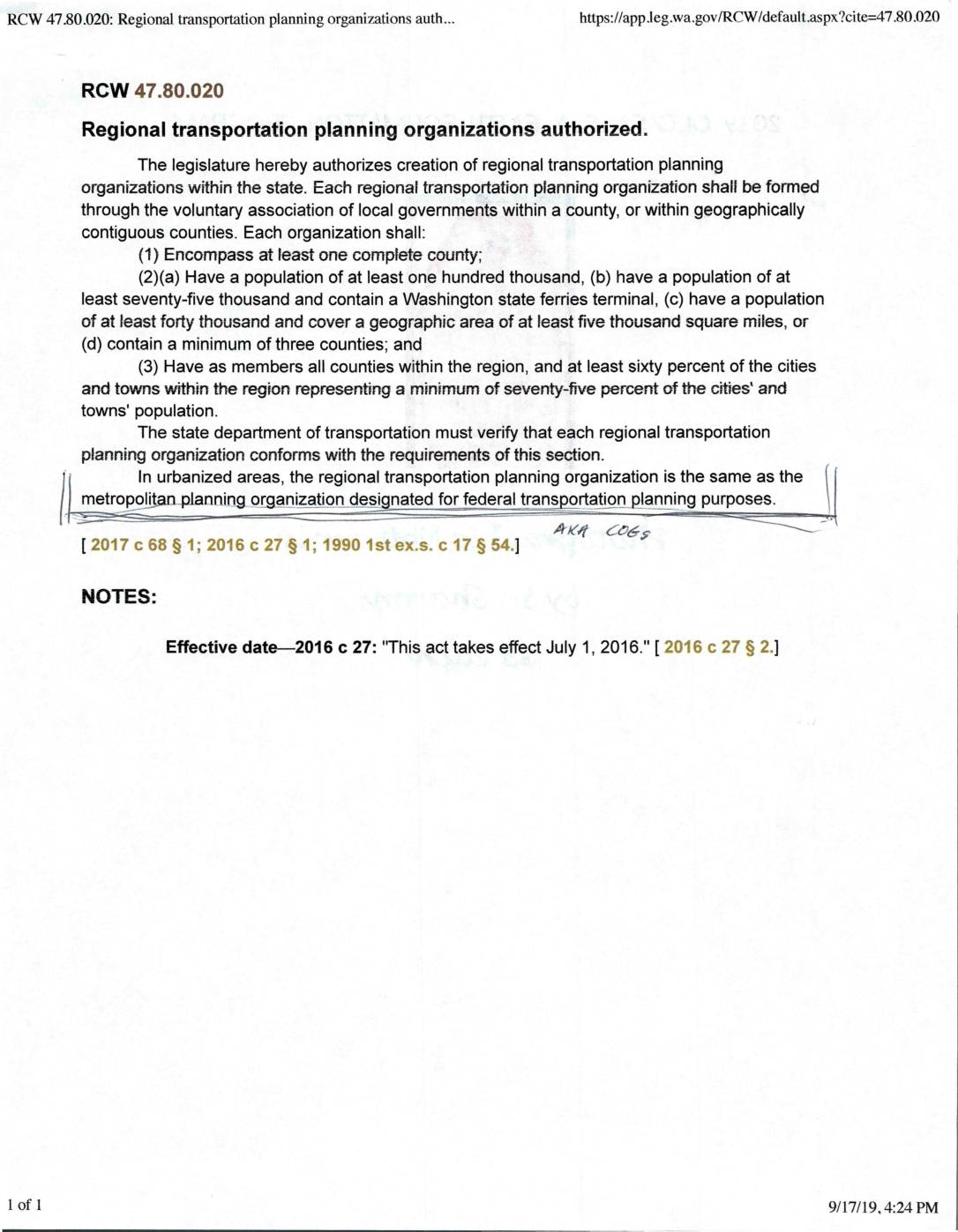
RCW 47.80.020: Regional transportation planning organizations authorized
Washington State law (RCW 47.80.020) authorizes the creation of Regional Transportation Planning Organizations (RTPOs), formed through voluntary associations of local governments within contiguous counties. Each RTPO must meet minimum population and geographic requirements, include all counties in the region, and have at least 60% of cities and towns representing 75% of the regional city/town population as members. In urbanized areas, the RTPO is the same body as the federally designated Metropolitan Planning Organization (MPO), also known as a COG. -
 2018-12-11
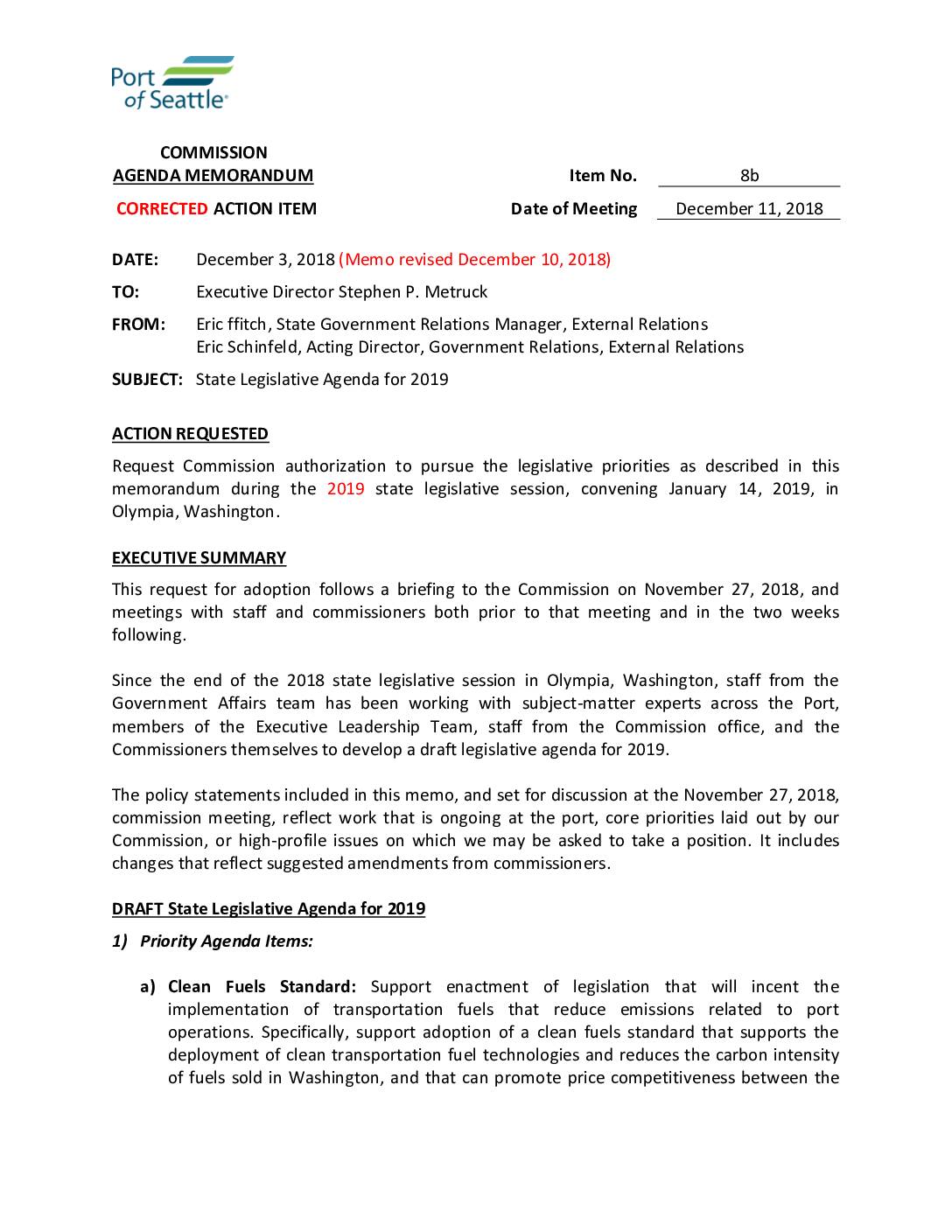
State legislative agenda for 2019
In December 2018, the Port of Seattle Commission reviewed its draft state legislative priorities for the 2019 session, covering topics such as clean fuels standards, workforce development, and transportation access to Sea-Tac Airport. The agenda sought state funding for transportation infrastructure improvements, including potential upgrades to State Route 518 and the Puget Sound Gateway Program, to address growing demand linked to airport expansion. Additional priorities included supporting small and minority-owned businesses, maritime innovation, and land use policies affecting port competitiveness. -
 2018-11-15
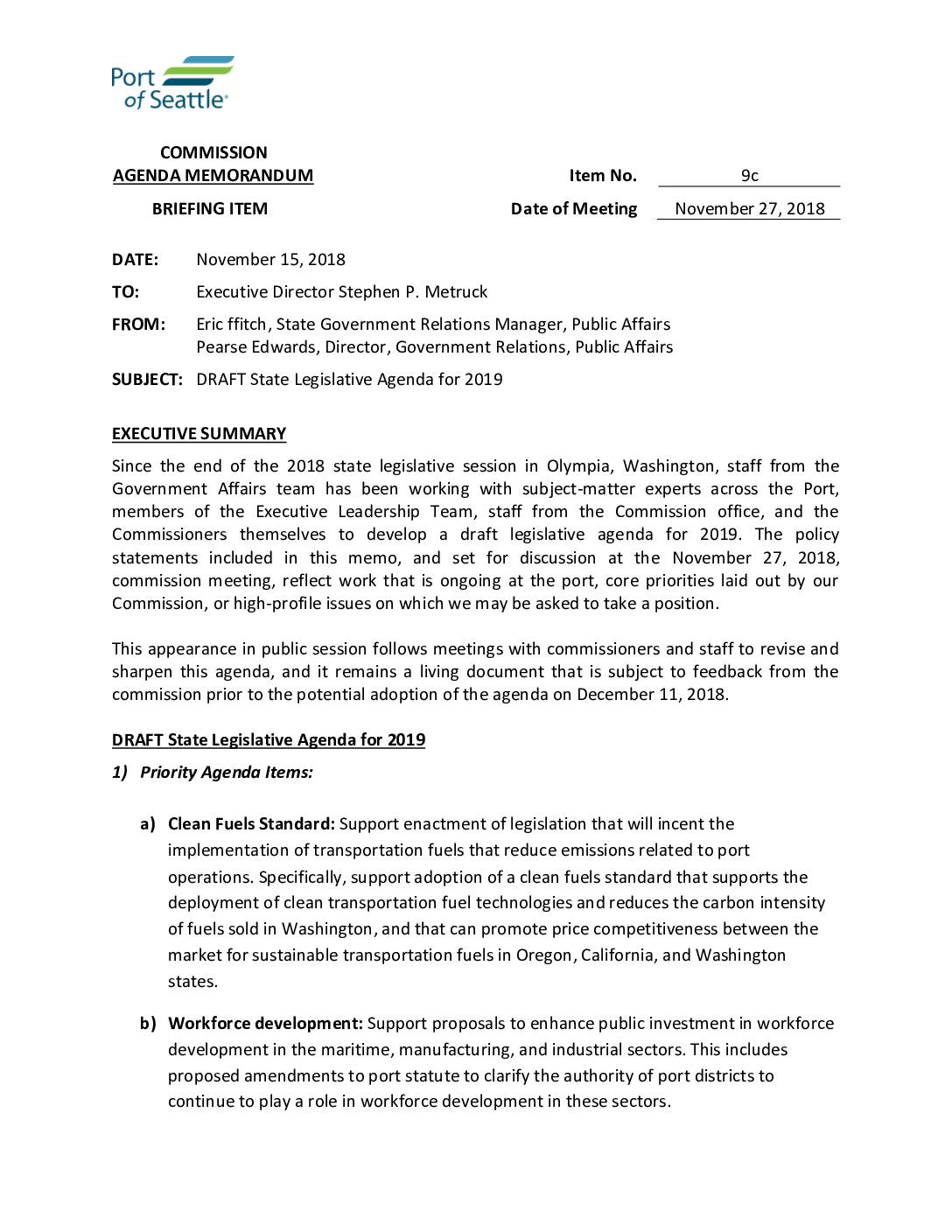
Draft state legislative agenda for 2019
This November 2018 Port of Seattle Commission memo outlines a draft state legislative agenda for 2019, covering priorities such as clean fuels standards, workforce development, and transportation access to Sea-Tac Airport. While not exclusively focused on airport noise policy, it addresses funding for transportation infrastructure upgrades around Sea-Tac, including State Route 518 improvements and the Puget Sound Gateway Program, aimed at managing growing traffic demands from airport expansion. The document also touches on land use, small business inclusion, and maritime innovation as broader port-related legislative goals. -
 2018-11-06
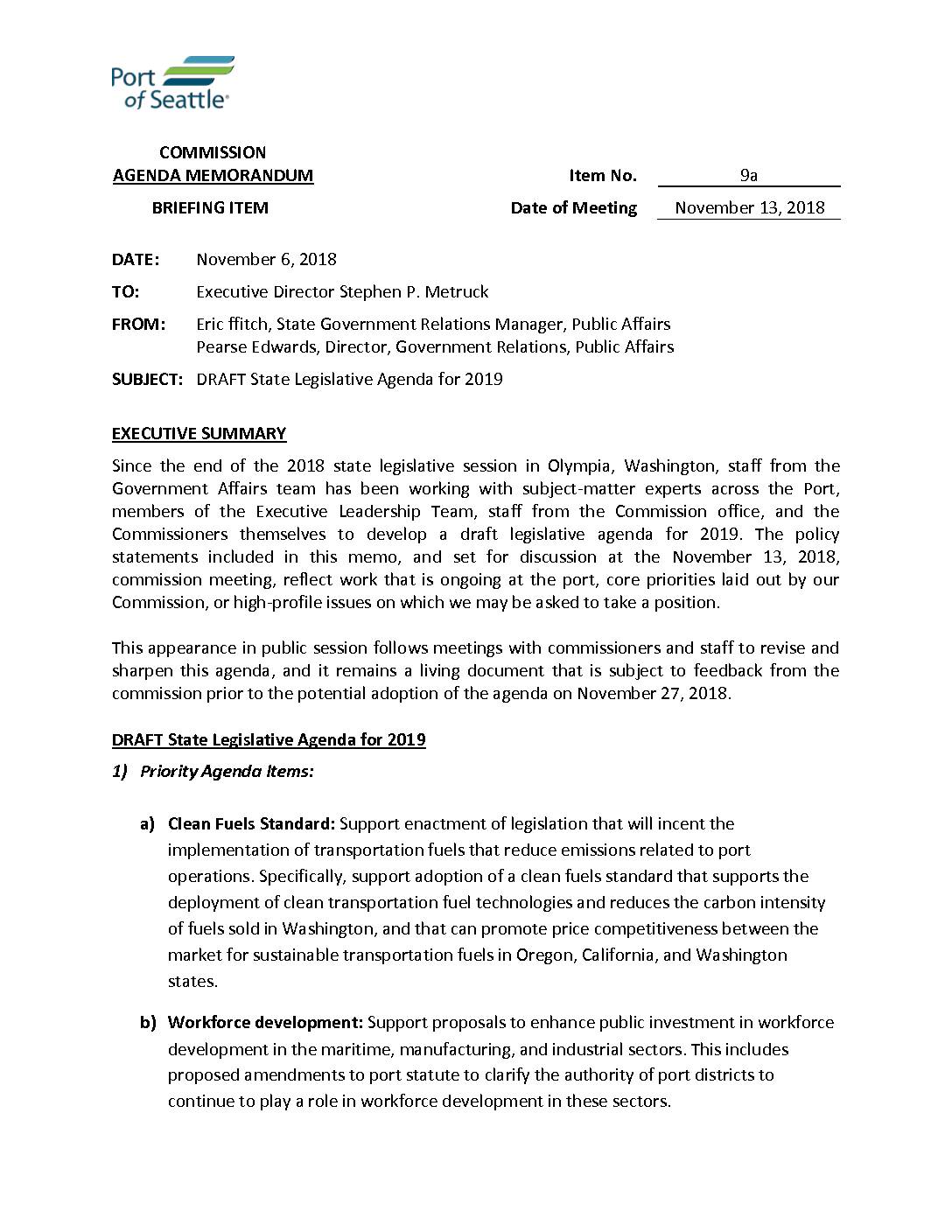
Draft state legislative agenda for 2019
The Port of Seattle's draft 2019 state legislative agenda outlines priority policy areas including support for a clean fuels standard to reduce emissions from port operations, workforce development in maritime and industrial sectors, and improved transportation access to Sea-Tac Airport via State Route 518 and the Puget Sound Gateway program. The agenda also covers land use protections for port-related zones, small business inclusion, and funding for a Maritime Innovation Center. While the document addresses transportation infrastructure near Sea-Tac, it does not specifically focus on airport noise policy. -
 2018-11-05
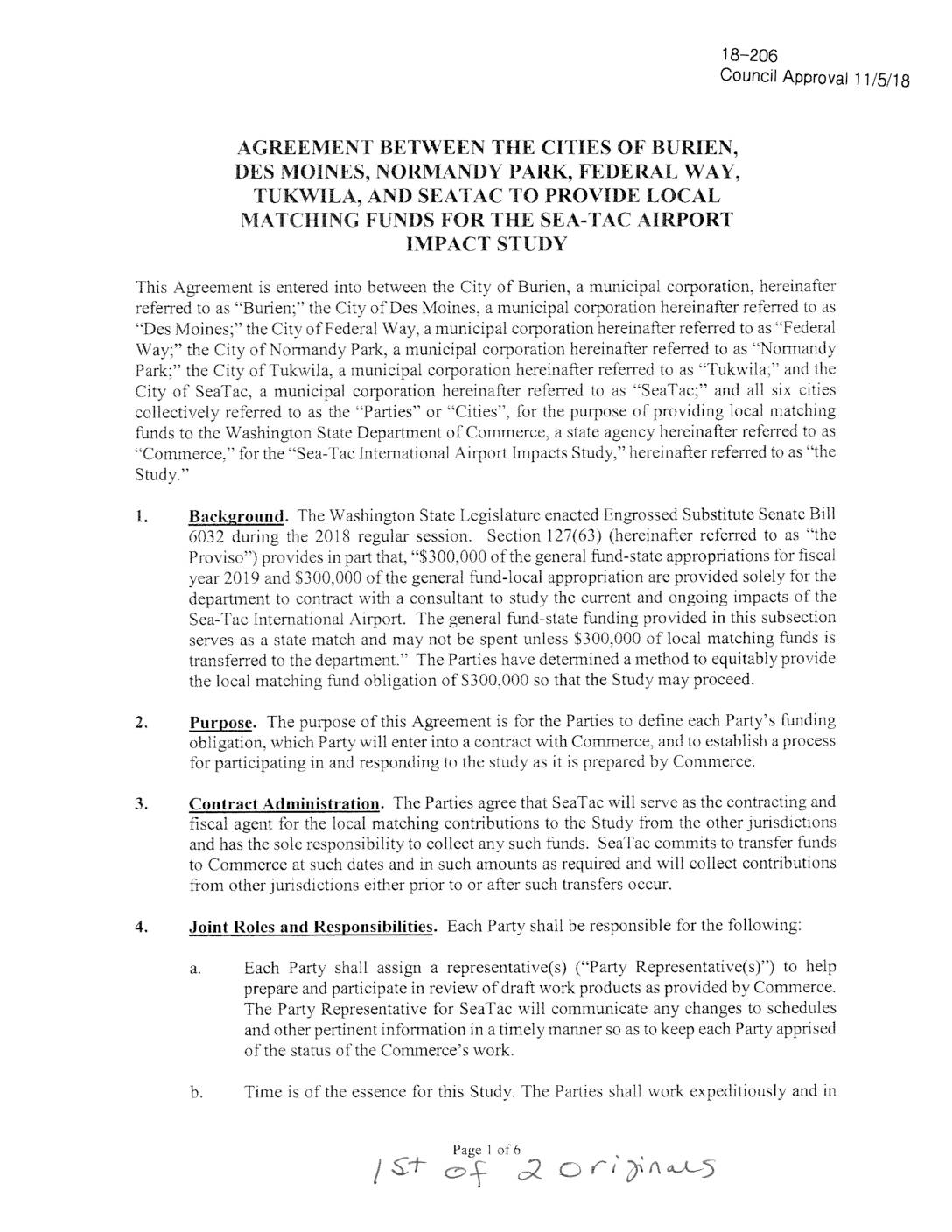
Agreement Between the Cities of Burien, Des Moines, Normandy Park, Federal Way, Tukwila, and Sea-Tac to Provide Local Matching Funds for the Sea-Tac Airport Impact Study
Six cities near Seattle-Tacoma International Airport — Burien, Des Moines, Federal Way, Normandy Park, Tukwila, and SeaTac — agreed to jointly contribute $300,000 in local matching funds to unlock an equal amount of state funding for a study of the airport's current and ongoing impacts on surrounding communities. Under the agreement, the City of SeaTac serves as the fiscal and contracting agent, collecting contributions from the other cities and transferring the combined funds to the Washington State Department of Commerce, which will hire a consultant to conduct the study. The agreement outlines each city's financial obligations, dispute resolution procedures, and the process for participating in and reviewing the study's draft findings. -
 2018-03-27
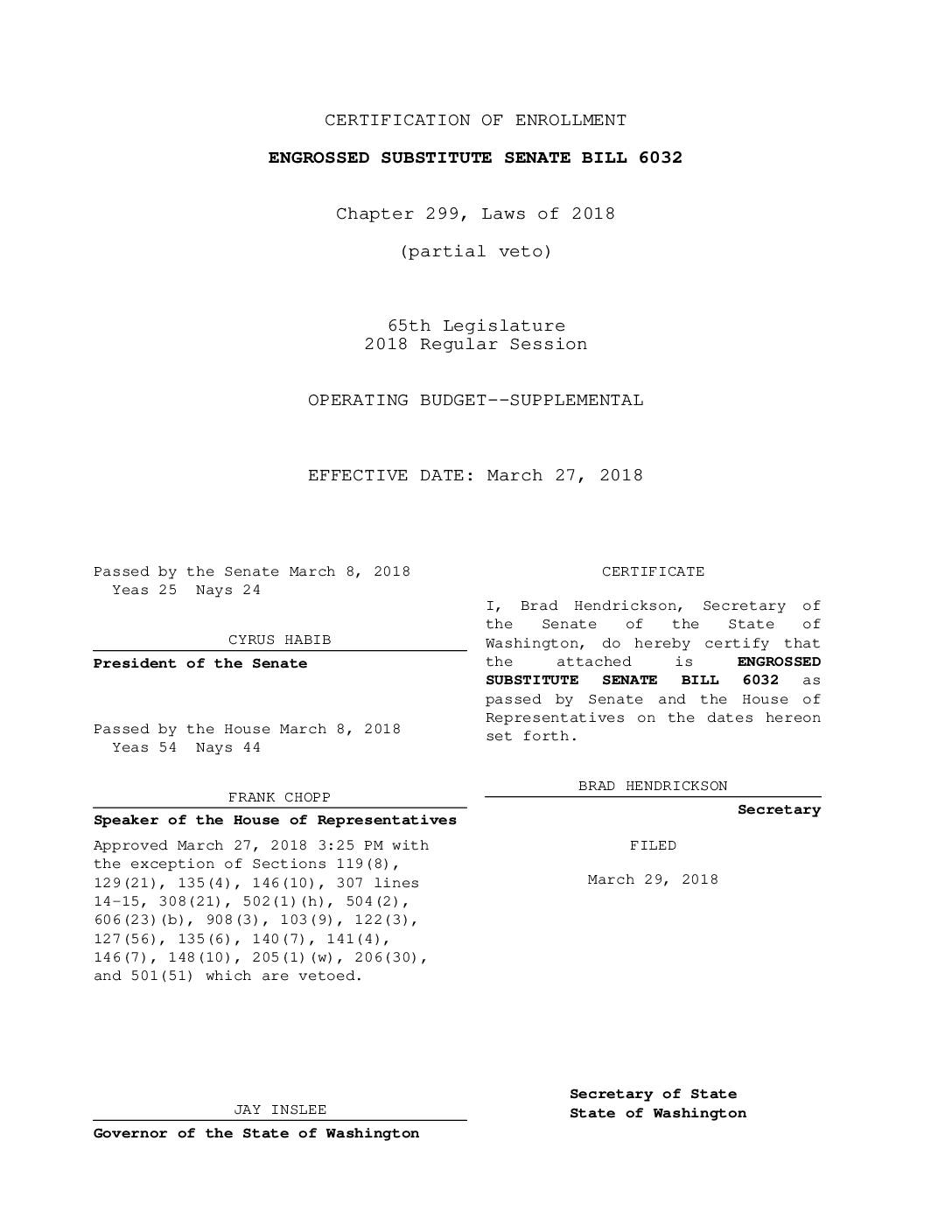
Engrossed Substitute Senate Bill 6032: Washington State 2018 Supplemental Operating Budget (Chapter 299, Laws of 2018)
Engrossed Substitute Senate Bill 6032, passed by the Washington State Legislature on March 8, 2018, and signed by Governor Jay Inslee on March 27, 2018, is a supplemental operating budget bill making appropriations and amendments to various state funds for the 2017-2019 fiscal biennium. The bill covers a wide range of general government expenditures, including funding for the House of Representatives, tax structure reform discussions, and rural health care planning. Governor Inslee approved the bill with a partial veto, striking down more than 20 specific sections. -
 2018-02-13
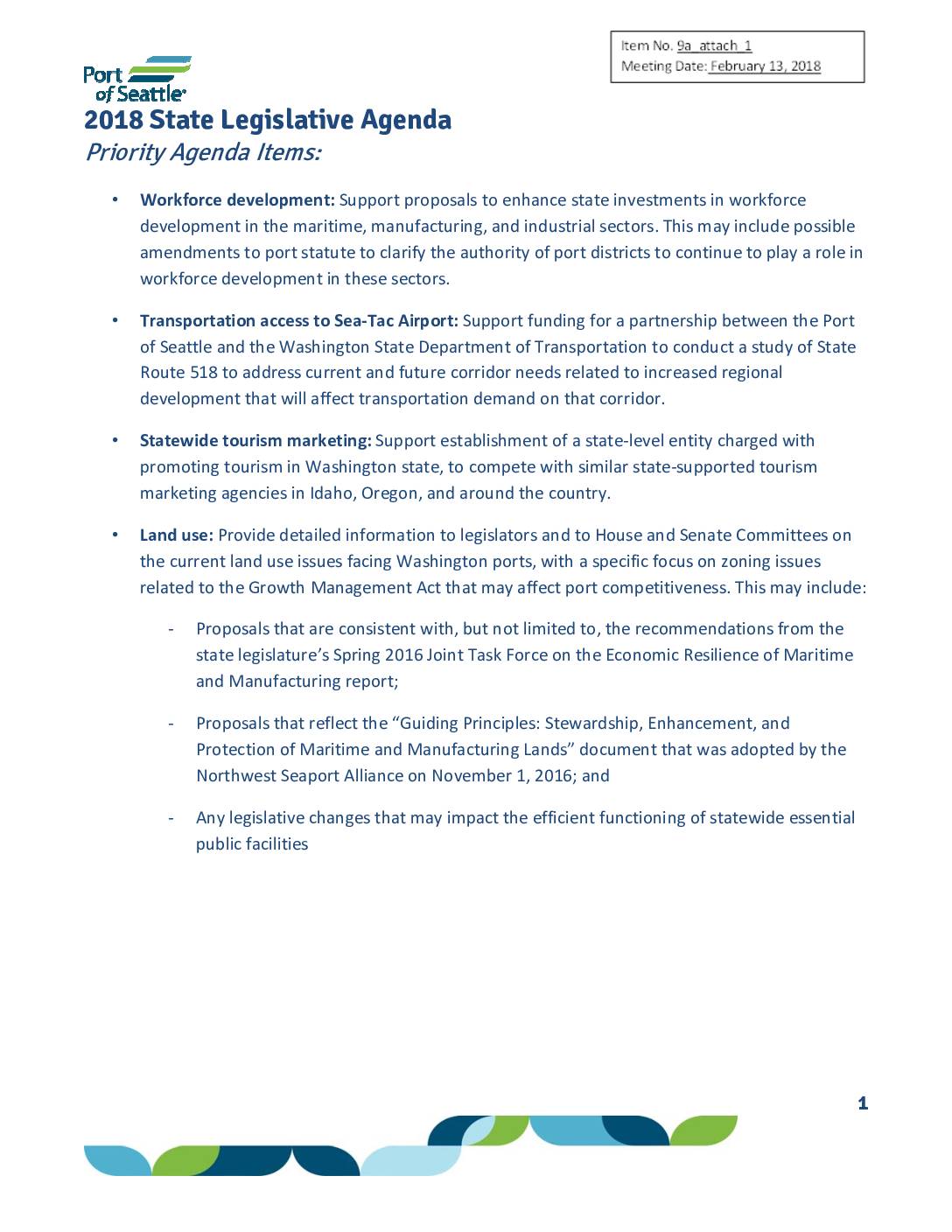
2018 state legislative agenda
The Port of Seattle's 2018 State Legislative Agenda outlines the organization's key policy priorities for the year, including workforce development in maritime and manufacturing industries, transportation improvements around Sea-Tac Airport, statewide tourism promotion, and land use issues affecting port competitiveness. The agenda also addresses quality job creation, support for small and minority-owned businesses, and transportation infrastructure funding for critical regional projects like the Puget Sound Gateway Program and State Route 518. While focused broadly on port operations and economic development, the document touches on airport-related transportation access and aviation safety regulations relevant to Sea-Tac Airport stakeholders. -
-
 2017-10-18
Final adoption of state legislative agenda for 2018
In October 2017, the Port of Seattle Commission considered its 2018 state legislative priorities, which included workforce development in maritime and industrial sectors, transportation improvements around Sea-Tac Airport, and land use issues affecting port competitiveness. The agenda also addressed support for small and minority-owned businesses, rural economic development, and statewide tourism marketing. While the document covers broad port policy goals, it does not contain specific noise policy provisions related to Sea-Tac Airport operations. -
King Lysen: A reformer in the Legislature who took on the old boys
By Joel Connelly, SEATTLEPI.COM Mar 20, 2017|Updated Mar 21, 2017 4:21 p.m. An abandoned 496-foot-tall cooling power of Washington Public Power Supply System (WPPSS) nuclear plant at Satsop. State Sen. King Lysen, early critic of the WPPSS nuclear program, died last week. WPPSS had to abandon four of its five reactors, at various stages of construction. Lysen