TagThird Runway(1084)
-
 2001-06-12
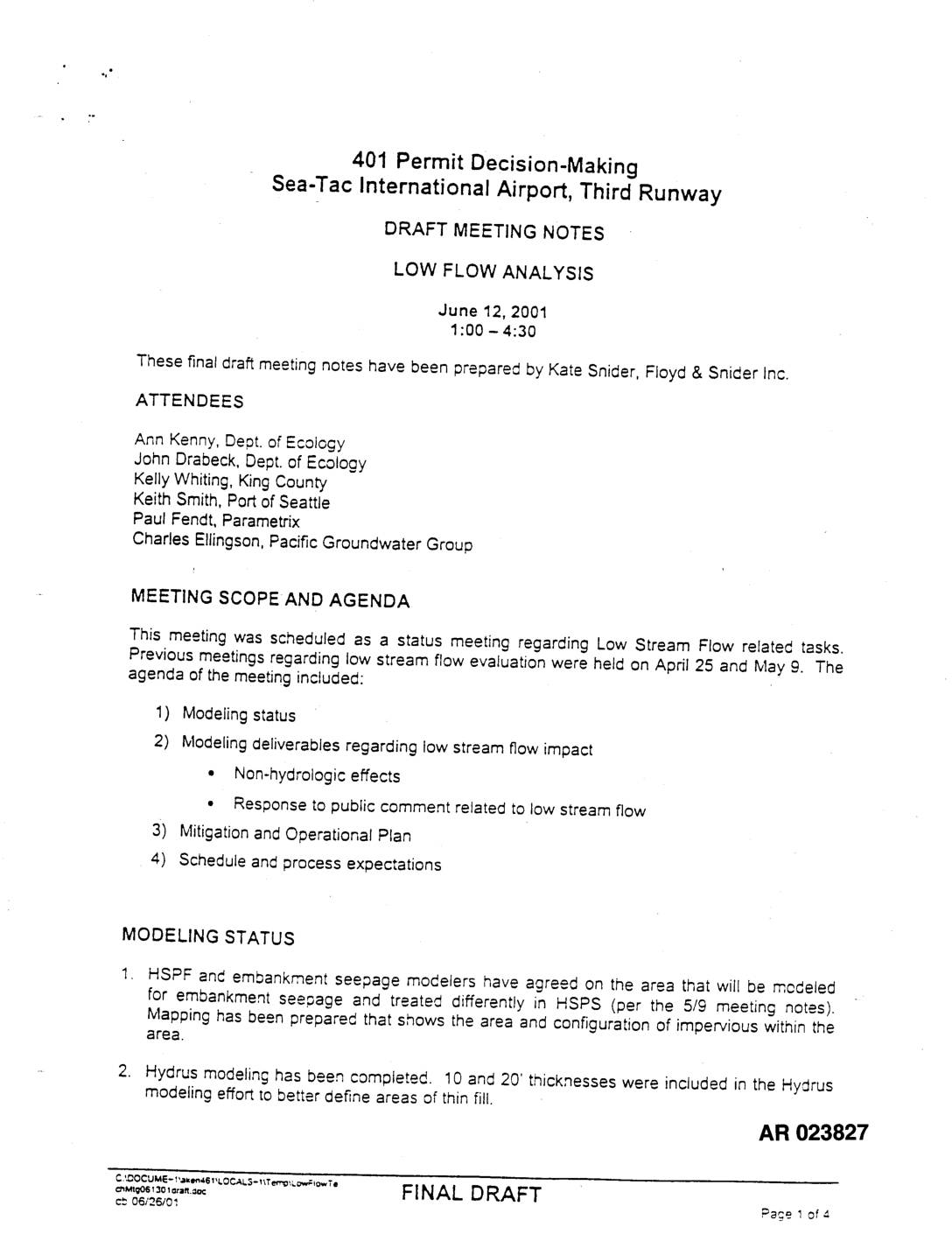
EXH AR023827: Draft Meeting Notes — Low Flow Analysis, STIA Third Runway (Jun 12, 2001)
These draft meeting notes from June 12, 2001 document a technical status meeting between the Washington Department of Ecology, King County, and the Port of Seattle regarding low stream flow analysis for the Sea-Tac International Airport Third Runway project. The group reviewed progress on hydrological modeling efforts, including HSPF and Hydrus modeling used to assess how runway embankment construction might affect nearby stream flows. Discussions also covered planned mitigation measures such as stormwater retention vaults, upcoming modeling deliverables, and a follow-up conference call that confirmed the Port team's modeling methodology was acceptable and conservative for evaluating embankment seepage. -
 2001-06-11
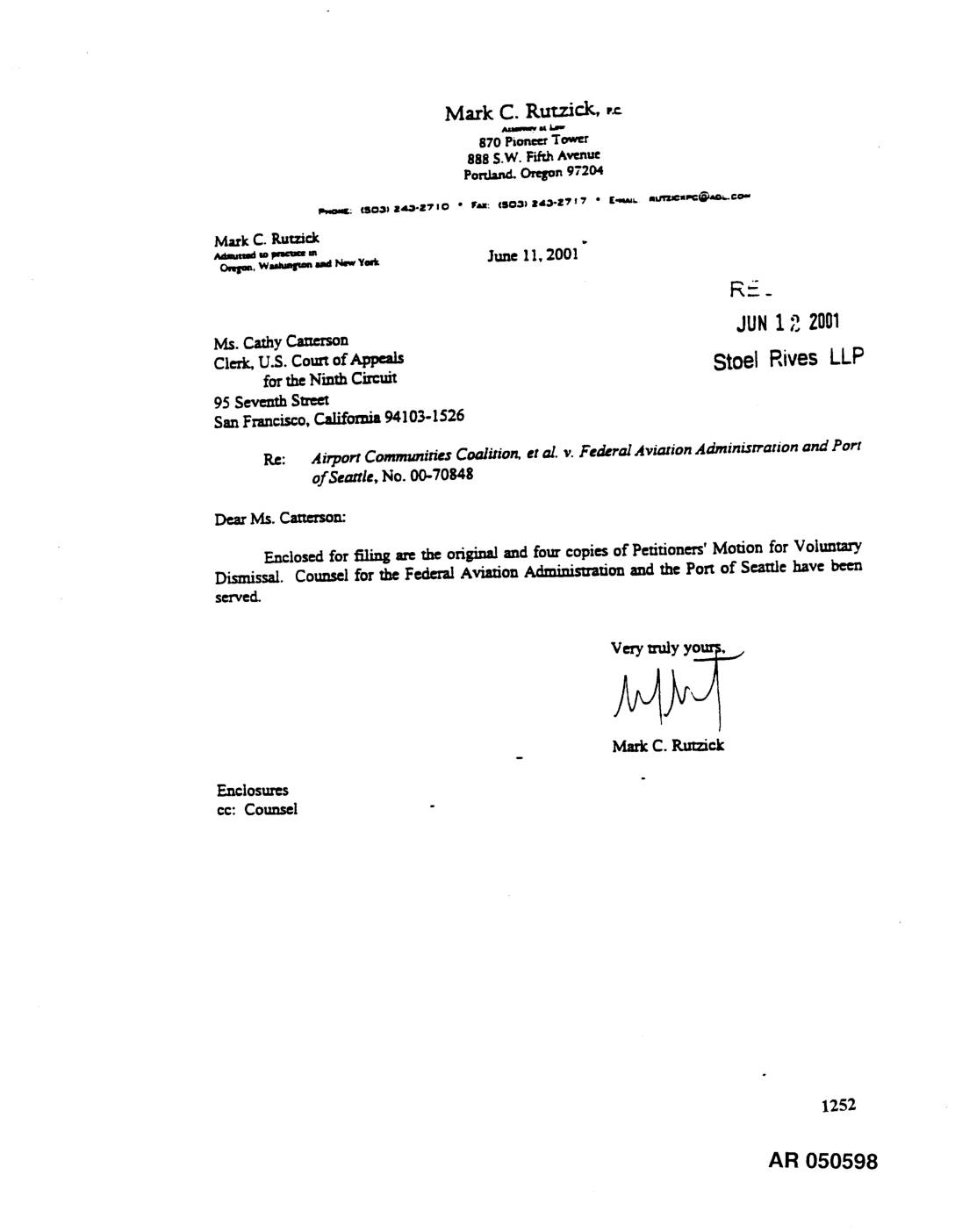
EXH AR1252: ACC Motion for Voluntary Dismissal — Airport Communities Coalition et al. v. FAA and Port Of Seattle, No. 00-70848
Motion for Voluntary Dismissal filed by Mark C. Rutzick on behalf of petitioners Airport Communities Coalition (ACC), City of Des Moines, City of Normandy Park, City of Burien, City of Federal Way, City of Tukwila, and Highline School District No. 401 in the Ninth Circuit Court of Appeals, Case No. 00-70848. Petitioners sought dismissal under -
 2001-06-08
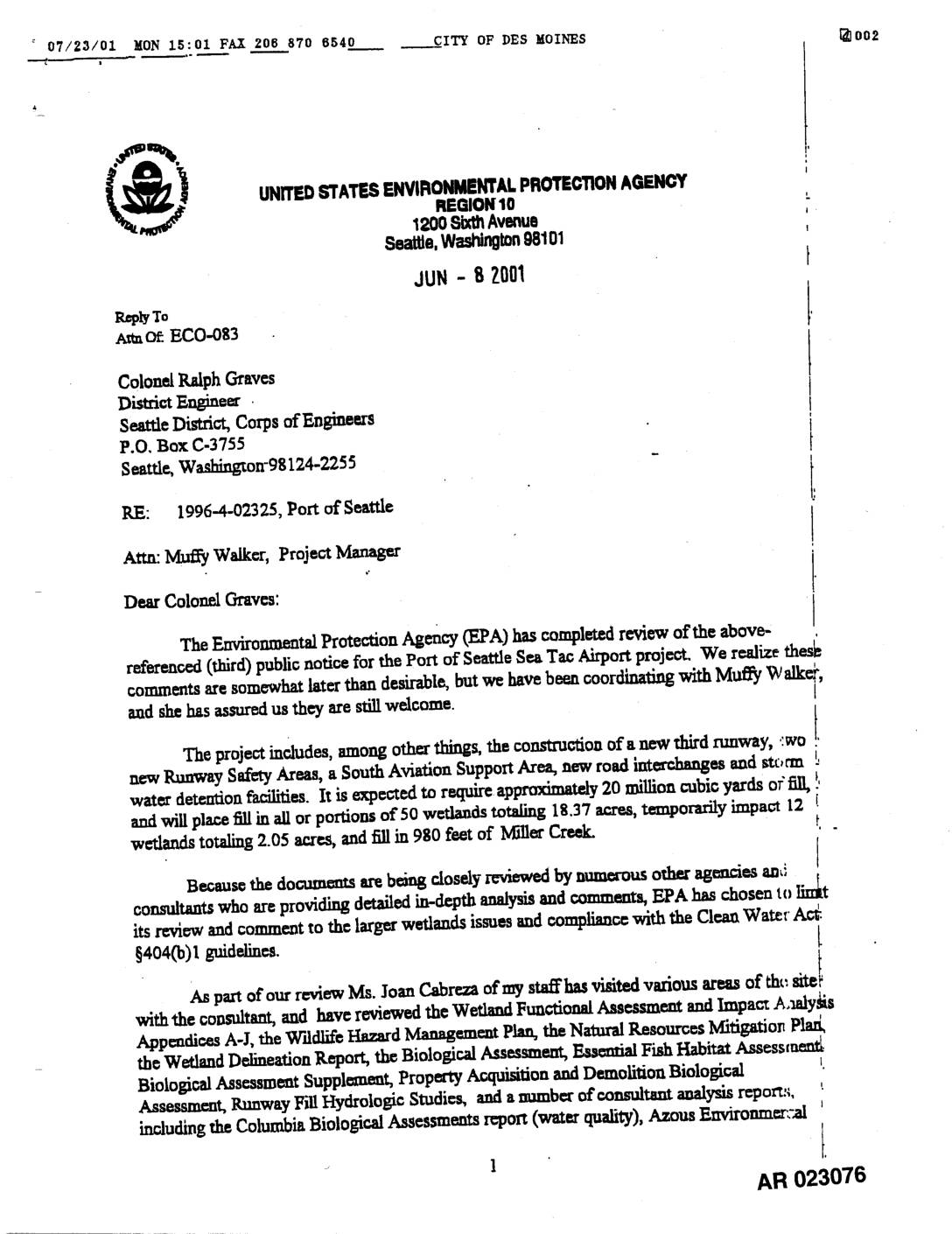
EXH AR023076: EPA Region 10 Letter to Army Corps re STIA Third Runway Wetlands Issues
In June 2001, the EPA's Region 10 office submitted formal comments to the U.S. Army Corps of Engineers regarding the Port of Seattle's Sea-Tac Airport Third Runway project, which proposed filling over 18 acres of wetlands and 980 feet of Miller Creek. The EPA raised concerns about unresolved hydrological impacts, including the effects of a proposed retaining wall on nearby wetlands and groundwater flows, the adequacy of buffers around borrow pits, and the Port's undisclosed plans for vacant land parcels in the project area. The agency urged the Corps to carefully review these wetland and Clean Water Act compliance issues before issuing a construction permit. -
 2001-06-07
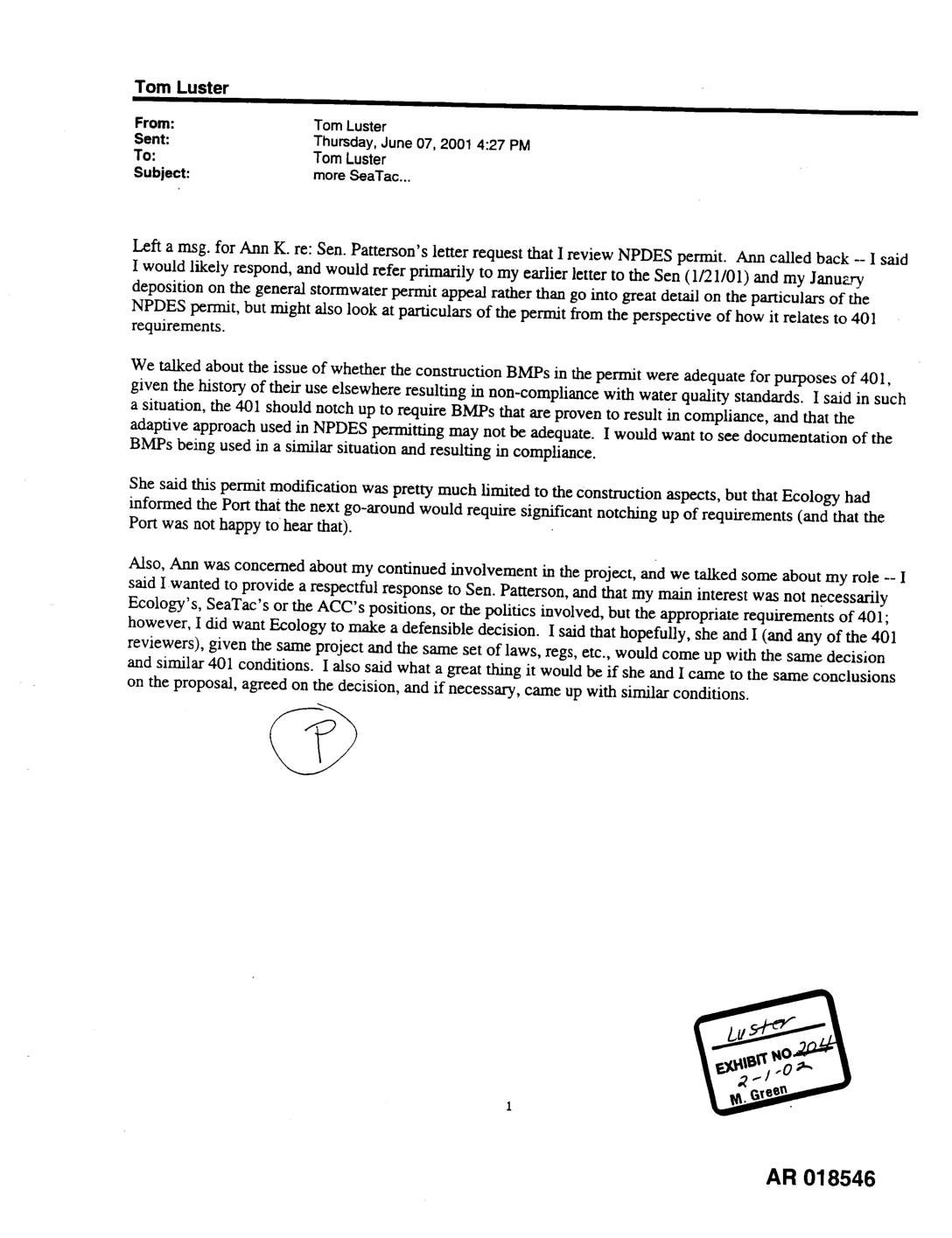
Exhibit 204: Email from Tom Luster re: Sea-Tac NPDES Permit Review, 401 Certification, and Construction BMPs
In this June 2001 internal email, Tom Luster documents a conversation with Ann K. regarding Senator Patterson's request that he review an NPDES stormwater permit related to the Sea-Tac Airport expansion project. Luster notes concerns about whether construction Best Management Practices (BMPs) in the permit were sufficient to meet water quality standards under Section 401 requirements, stating that BMPs with a history of non-compliance should be replaced with proven alternatives. He also addresses his role as an independent reviewer, emphasizing his goal of ensuring a legally defensible decision rather than advocating for any particular party's position. -
 2001-06-05
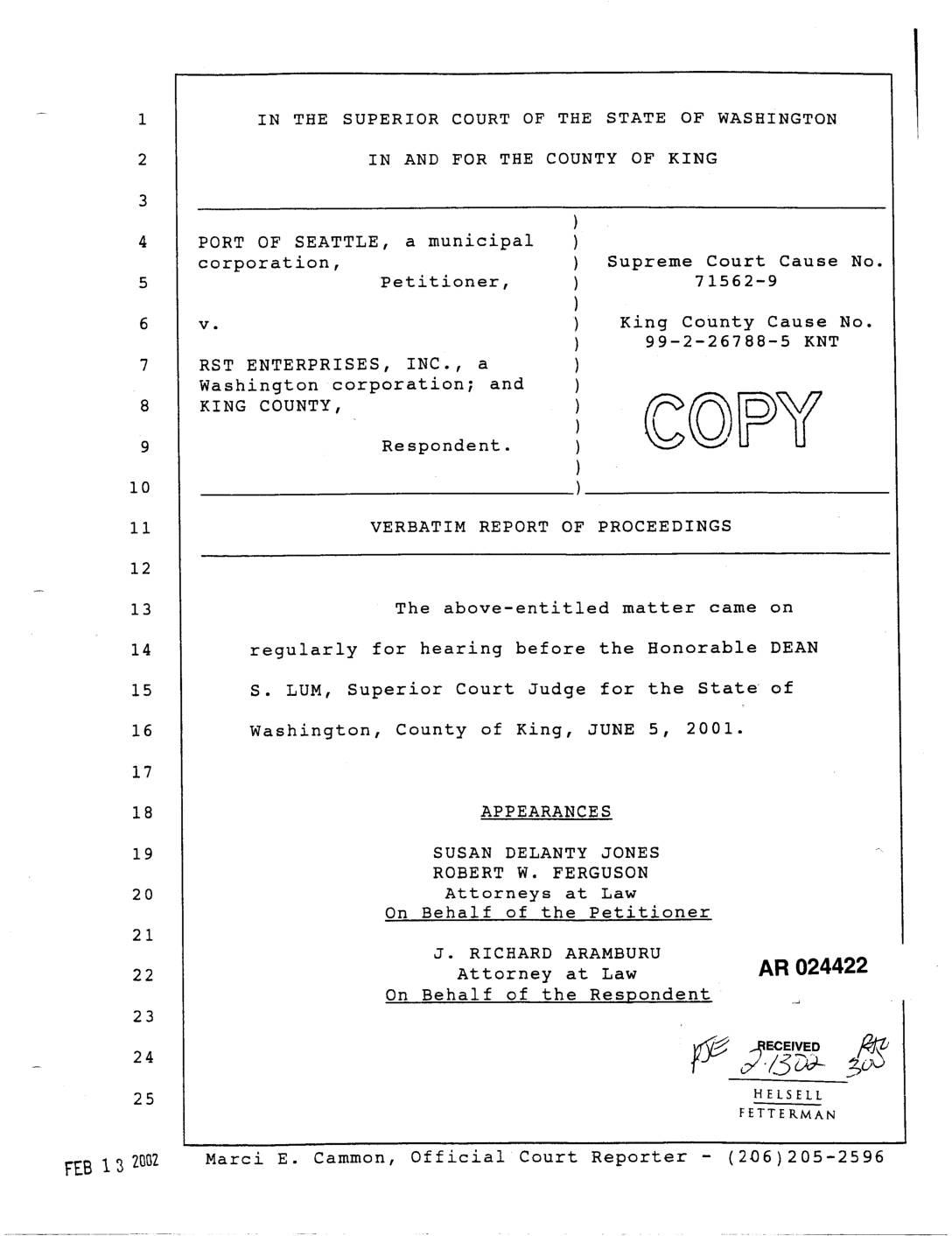
EXH AR 024422: Verbatim RP of Proceedings — Port of Seattle v. RST Enterprises Inc. & King County (June 5, 2001)
This is a verbatim transcript of a June 5, 2001 King County Superior Court hearing in the case of Port of Seattle versus RST Enterprises, Inc., presided over by Judge Dean S. Lum. The proceedings included testimony from expert witness James C. Kelley, Ph.D. and Jack Dodge, covering direct, cross, and redirect examinations across multiple sessions. The case, which also carried a Washington Supreme Court cause number, likely relates to disputes involving Port of Seattle operations or property matters in the Sea-Tac area. -
 2001-06-05
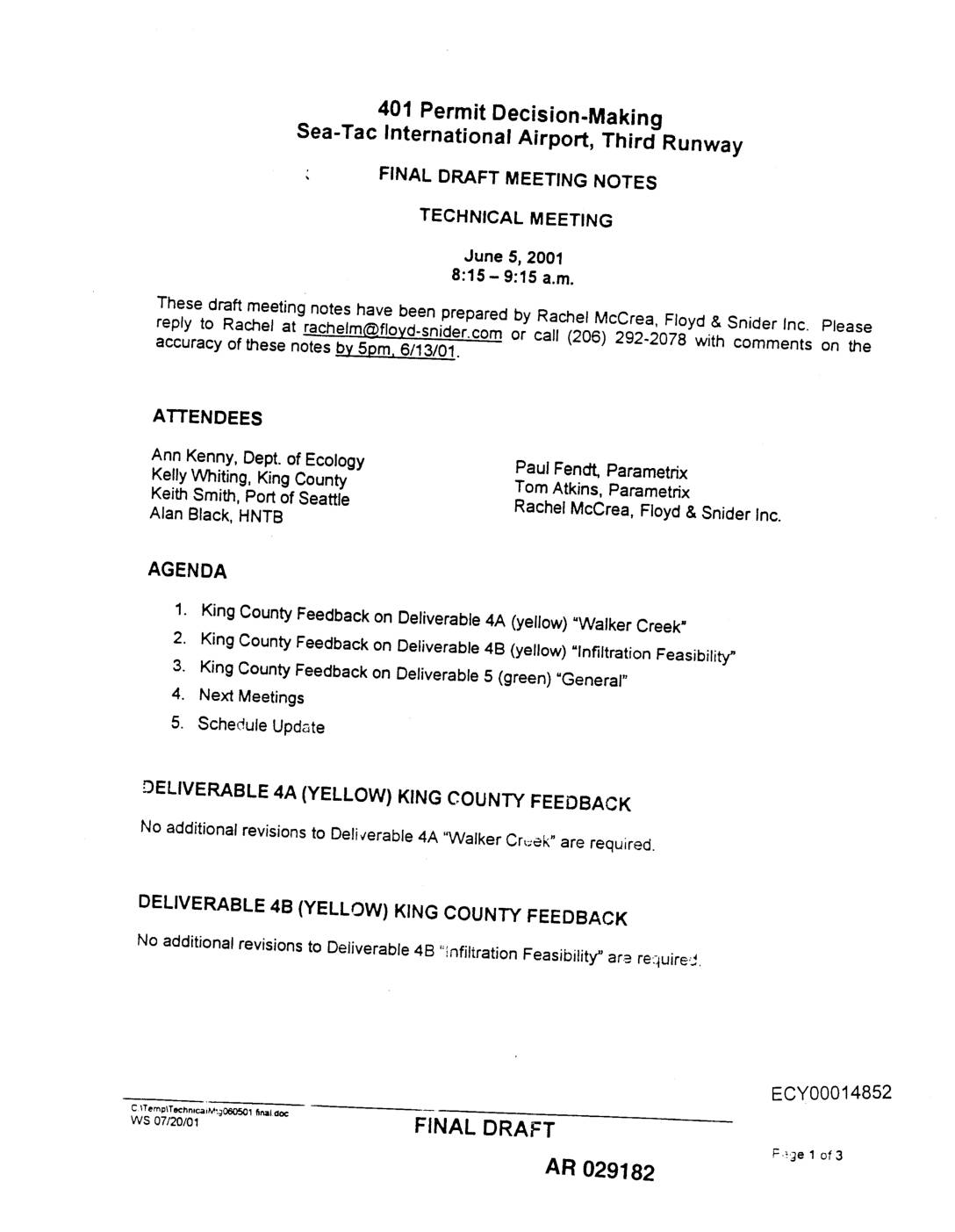
EXH AR029182: 401 Permit Decision-Making, Sea-Tac Airport Third Runway — Technical Meeting Notes, June 5, 2001
Final draft meeting notes prepared by Rachel McCrea of Floyd & Snider Inc. for a 401 Permit Decision-Making technical meeting on June 5, 2001 regarding Sea-Tac International Airport Third Runway. Attendees included Ann Kenny (Dept. of Ecology), Kelly Whiting (King County), Keith Smith (Port of Seattle), Alan Black (HNTB), Paul Fendt and Tom Atkins (Parametrix). -
 2001-06-05
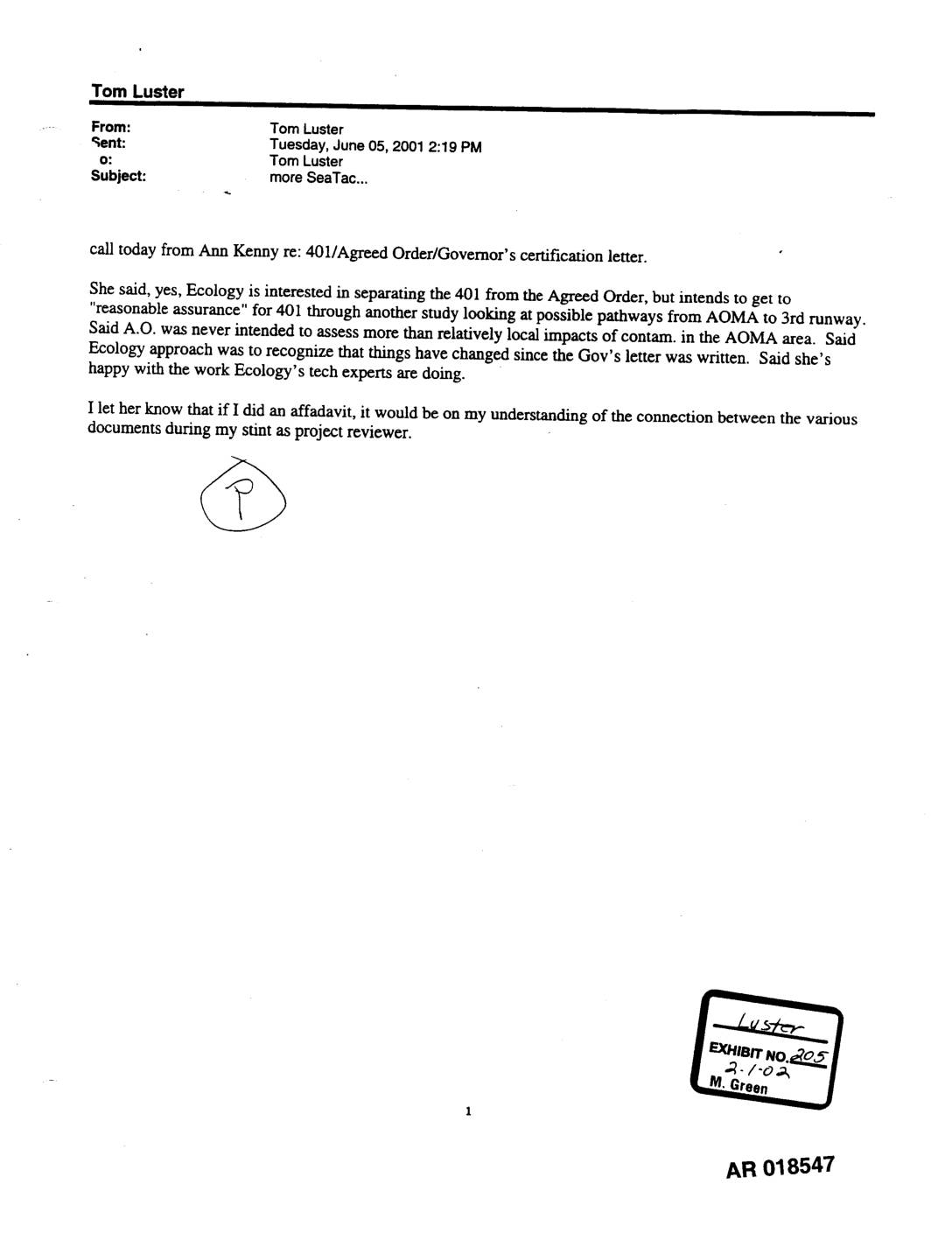
Exhibit 205: Tom Luster Notes on Call with Ann Kenny re 401/Agreed Order/Governor’s Certification Letter
In a June 2001 internal memo, Tom Luster notes a call from Ann Kenny of the Washington Department of Ecology regarding the Sea-Tac Airport third runway project. Kenny indicated that Ecology intended to separate the Section 401 water quality certification from the Agreed Order, planning a new study to examine possible contamination pathways from the Airport Operations and Maintenance Area (AOMA) to the third runway site. Luster noted that if called upon for an affidavit, his testimony would reflect his understanding of how the key documents were connected during his time as project reviewer. -
 2001-06-04
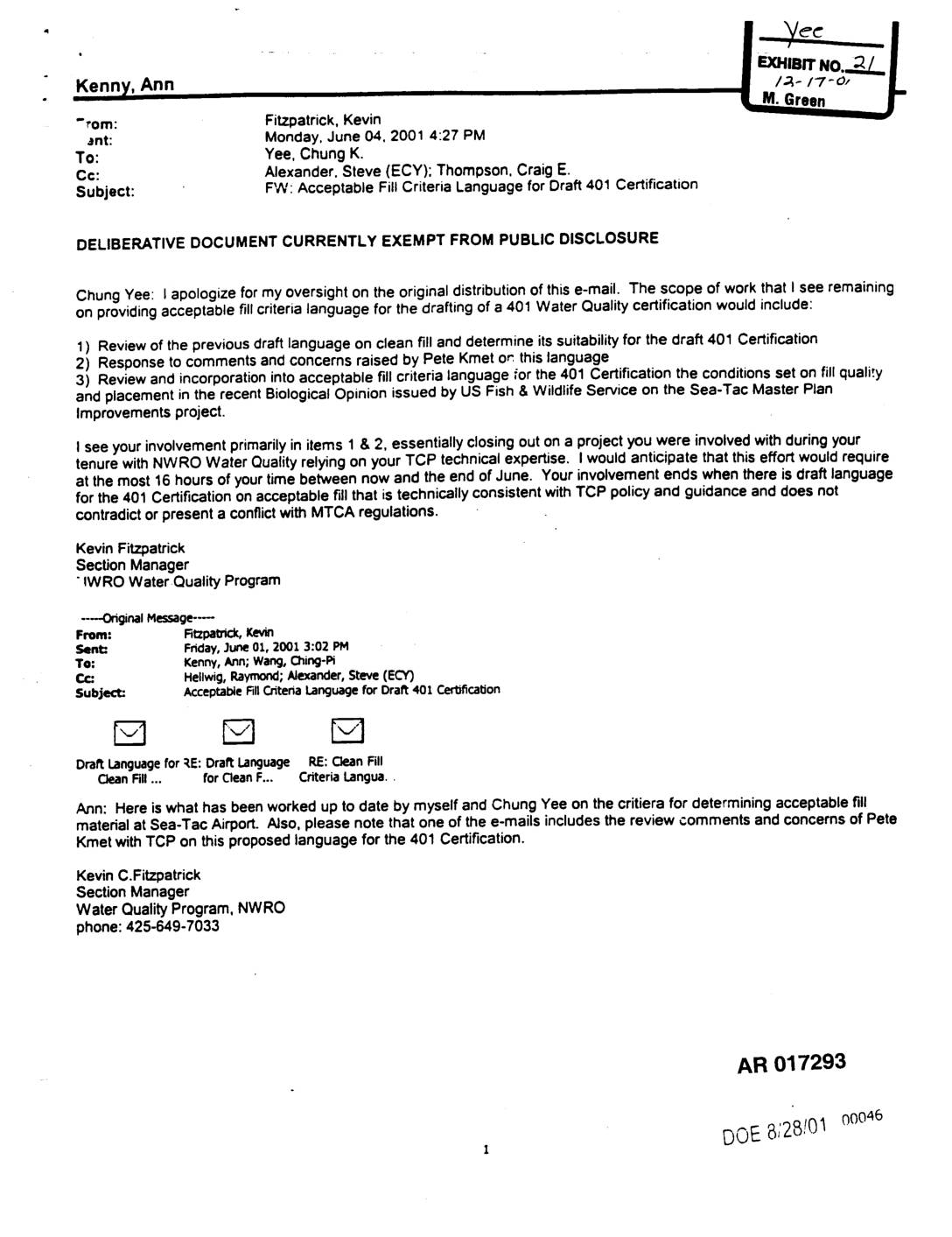
EXH AR017293: Ecology Internal Emails — Acceptable Fill Criteria Language for Draft 401 Certification, Sea-Tac Third Runway
Internal deliberative emails from Kevin Fitzpatrick (NWRO Water Quality Program Section Manager) to Chung K. Yee, Ann Kenny, Ching-Pi Wang, and others at Washington State Department of Ecology regarding development of acceptable clean fill criteria language for the 401 Water Quality Certification for the Sea-Tac Airport Third Runway (Sea-Tac Master Plan Improvements project). Emails reference -
 2001-06-01
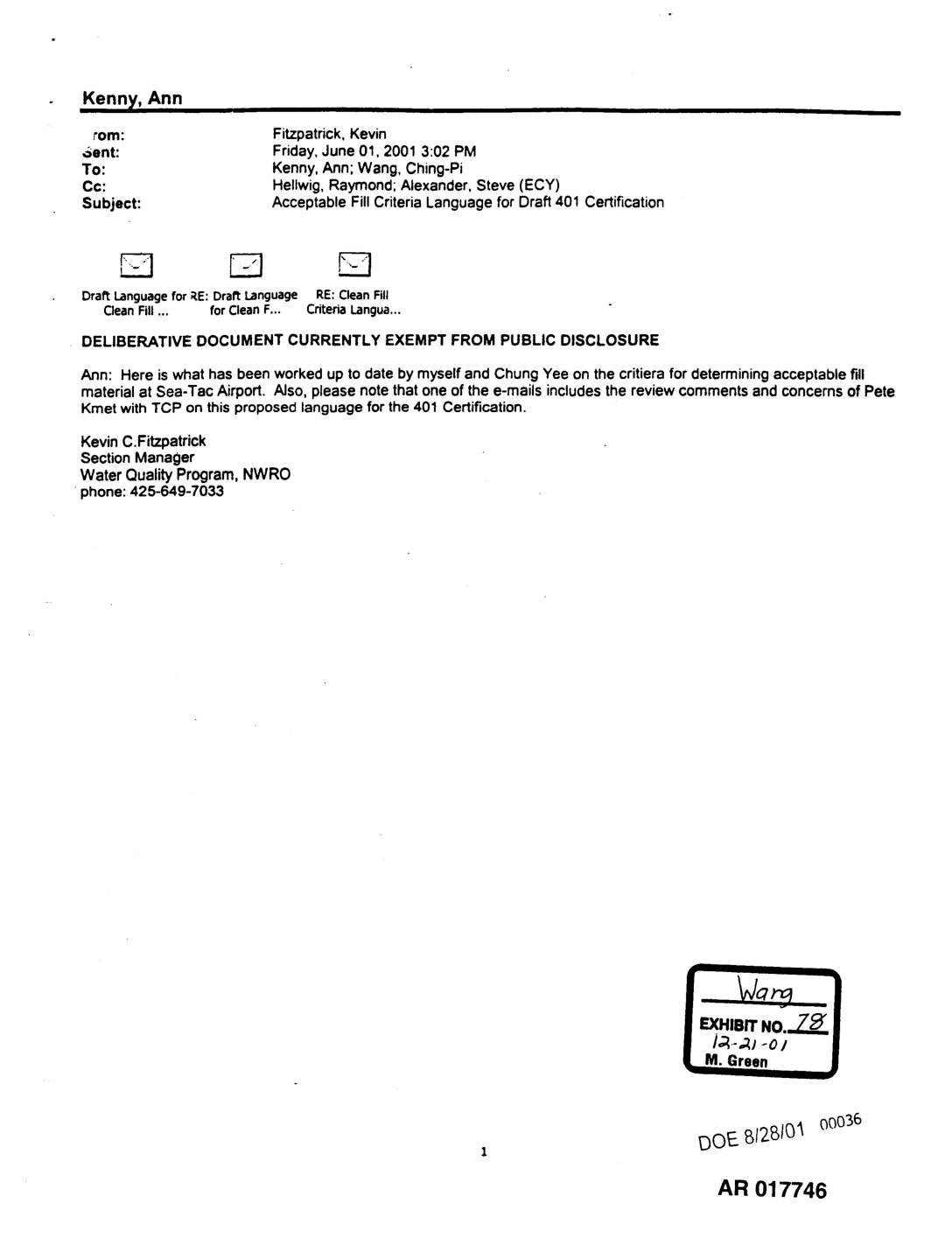
EXH AR017746: Acceptable Fill Criteria Language for Draft 401 Certification — Sea-Tac Airport Third Runway
Email chain (June 1, 2001) from Kevin Fitzpatrick, Section Manager, Water Quality Program NWRO, to Ann Kenny and Ching-Pi Wang, cc Raymond Hellwig and Steve Alexander (Ecology), forwarding deliberative draft language for clean fill criteria in the 401 Certification for Sea-Tac Airport Third Runway construction. Includes August 24, 2000 email from Fitzpatrick to Tom Luster -
 2001-05-31
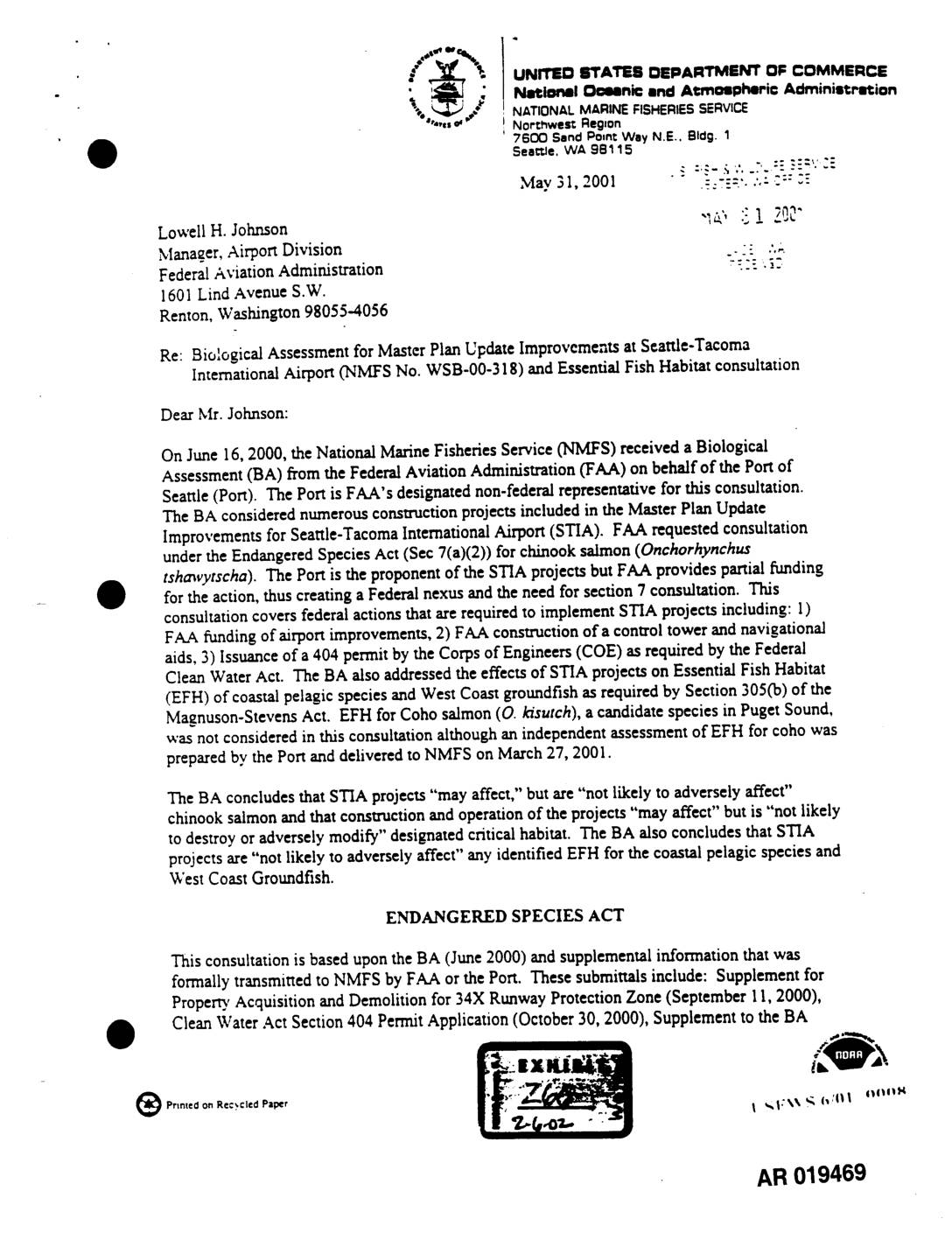
EXH AR019469: NMFS Biological Opinion — STIA Master Plan Update, ESA Section 7 & Essential Fish Habitat
In May 2001, the National Marine Fisheries Service (NMFS) issued a biological opinion concluding that planned construction and expansion projects at Seattle-Tacoma International Airport — including a new 8,500-foot runway and other facility upgrades — were not likely to adversely affect threatened Puget Sound chinook salmon or their designated critical habitat. The review, requested by the FAA under the Endangered Species Act, examined potential impacts to nearby waterways such as Miller, Des Moines, and Gilliam creeks, as well as Essential Fish Habitat for coastal and groundfish species. NMFS concurred with the airport's own Biological Assessment, determining the projects could proceed with the mitigation measures proposed.