Notes
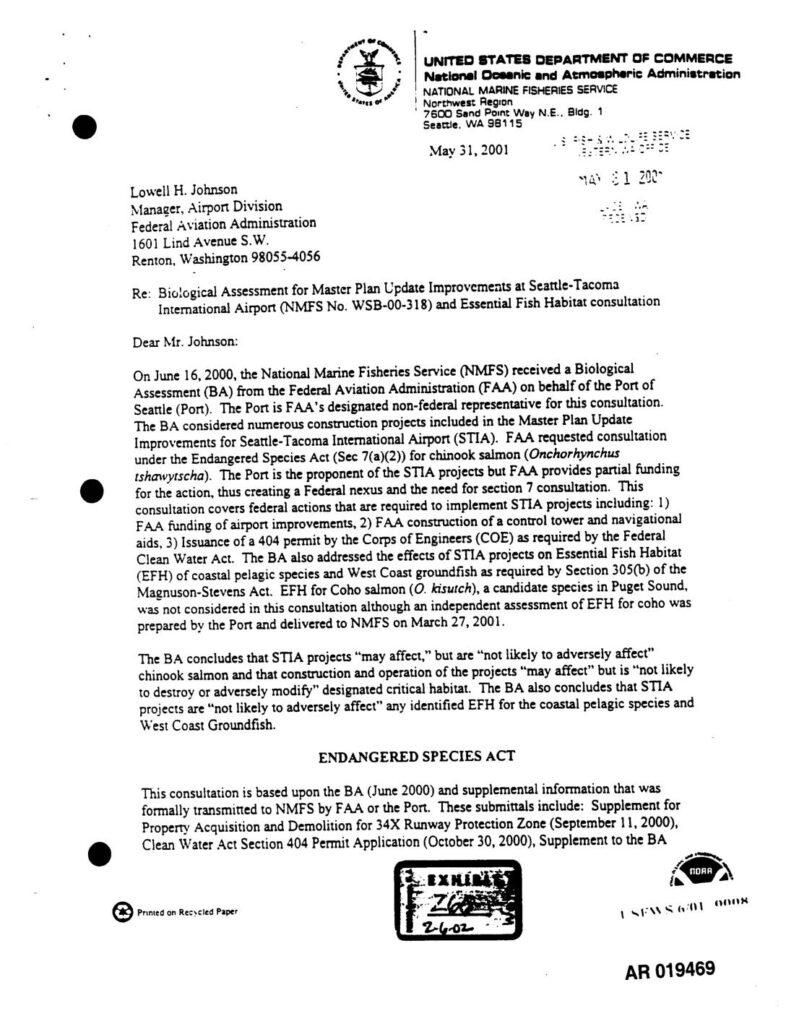
NMFS No. WSB-00-318. Letter dated May 31, 2001 from NMFS Northwest Region to FAA Manager Lowell H. Johnson concurring with the Biological Assessment’s determination of ‘may affect, not likely to adversely affect’ for threatened Puget Sound chinook salmon (Onchorhynchus tshawytscha) and designated critical habitat under ESA Section 7(a)(2). Covers Master Plan Update Improvements at Seattle-Tacoma International Airport (STIA), including construction of a new 8,500-foot air carrier runway, 600-foot runway extension, runway safety areas, Miller Creek relocation (~980-foot reach), Auburn wetland mitigation near Green River, stormwater management, and Industrial Wastewater System (IWS) discharging to Midway Sewer District in Puget Sound. Also addresses Essential Fish Habitat (EFH) under Magnuson-Stevens Act Section 305(b) for coastal pelagic species and West Coast groundfish — finds ‘not likely to adversely affect.’ Action area includes Miller Creek, Walker Creek, Des Moines Creek, Gilliam Creek, and associated estuaries. FAA, Port of Seattle, Corps of Engineers Section 404 permit, and Clean Water Act nexus discussed. Airport Communities Coalition (ACC) scientific consultants also reviewed documents.