TagStormwater(373)
-
 2000-04-19
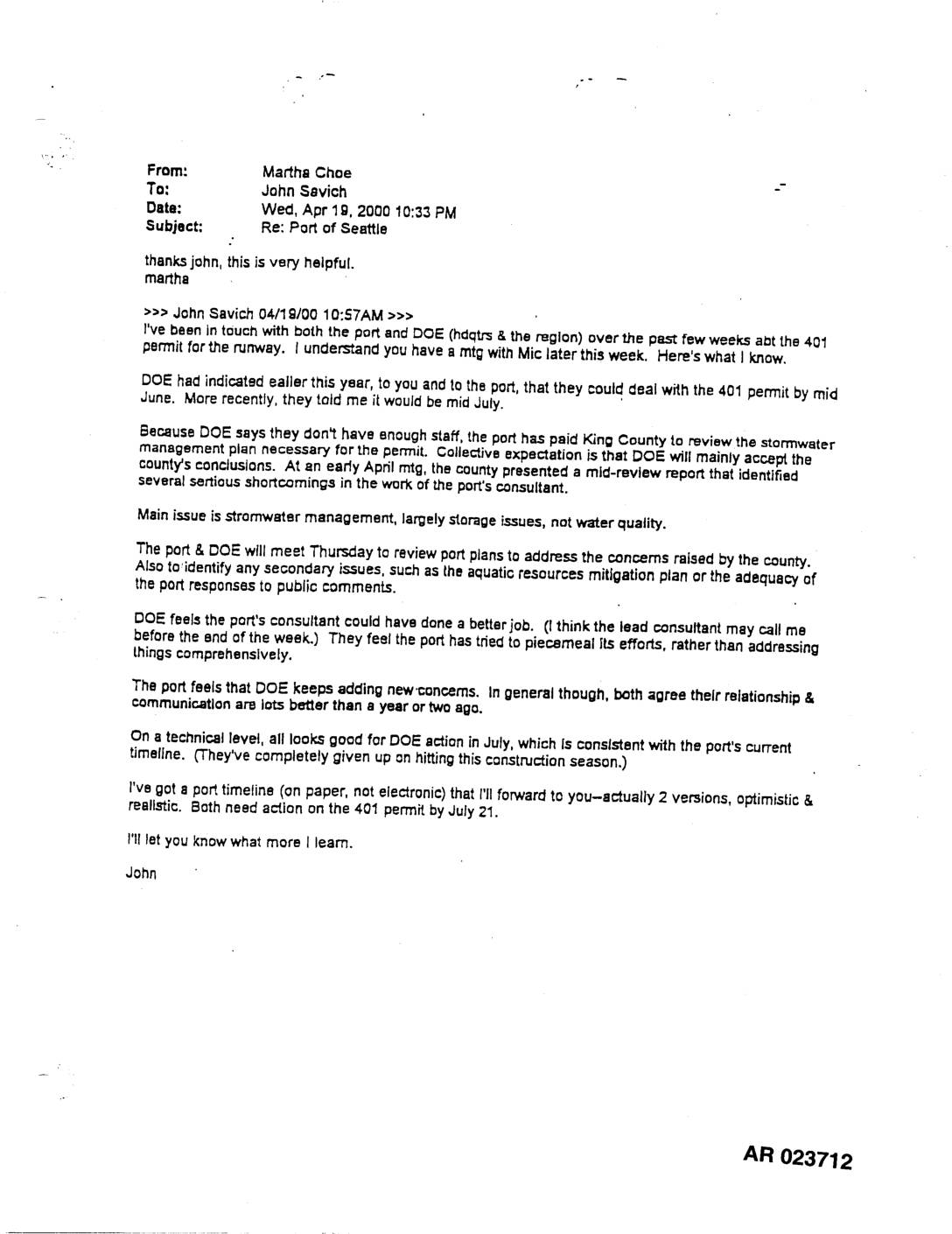
EXH AR023712: Email Exchange 401 Permit Status STIA Third Runway
A April 2000 email exchange between EPA staff members John Savich and Martha Choe provides an update on the status of a Clean Water Act Section 401 water quality permit for a Port of Seattle runway project. The main sticking point is stormwater storage management, with the Washington State Department of Ecology (DOE) targeting a mid-July decision after King County completed a review that identified serious shortcomings in the port's consultant work. Both the optimistic and realistic port timelines require DOE action on the 401 permit by July 21, meaning the port had already abandoned any hope of beginning construction that season. -
 2000-04-05
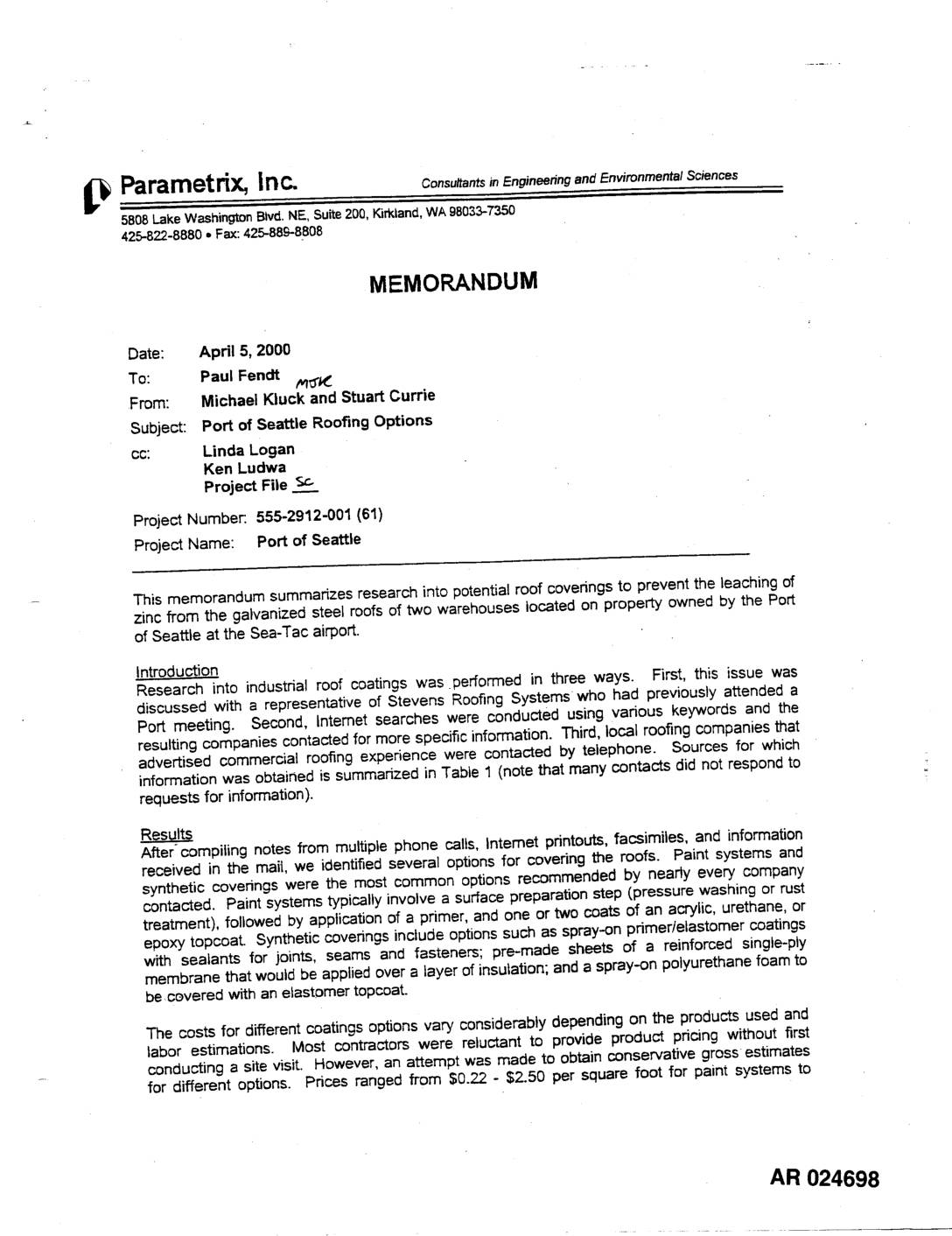
EXH AR024698: Memo — Roofing Options for Zinc Leaching Prevention
A April 2000 memo from engineering firm Parametrix, Inc. evaluates roofing options to prevent zinc leaching from galvanized steel roofs on two Port of Seattle warehouses at Sea-Tac Airport. The study compared paint systems (ranging from $21,000–$240,000 for both buildings) against synthetic coverings such as spray-on elastomers and single-ply membranes ($60,000–$330,000), finding that painting is cheaper but requires more frequent maintenance while synthetic coverings last longer but cost more upfront. The memo recommends that any chosen material be evaluated to ensure it does not release metals or other pollutants into stormwater runoff. -
 2000-02-29
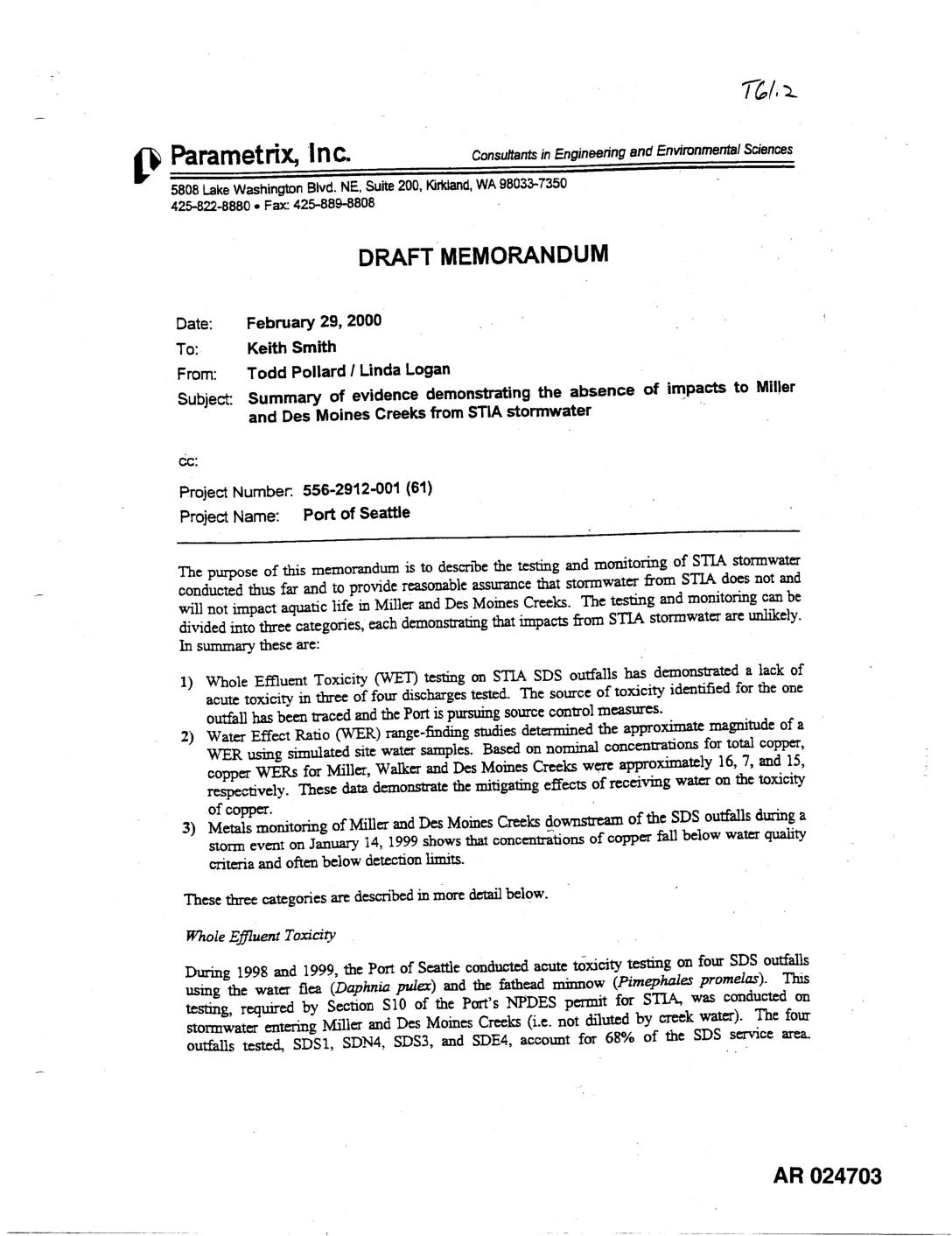
EXH AR024703: Draft Memo — Evidence Summary, No Impacts to Miller & Des Moines Creeks from STIA Stormwater
A February 2000 draft memo from environmental consultants Parametrix summarizes testing and monitoring data concluding that stormwater runoff from Seattle-Tacoma International Airport (STIA) does not harm aquatic life in nearby Miller and Des Moines Creeks. Three lines of evidence are presented: whole effluent toxicity tests showing most outfalls are non-toxic, water effect ratio studies demonstrating that creek water significantly reduces copper toxicity, and metals monitoring confirming that copper concentrations in the creeks fell below water quality standards. The one outfall found to be toxic (SDN1) was traced to zinc leaching from galvanized rooftops, with the Port of Seattle pursuing corrective measures. -
 2000-02-16
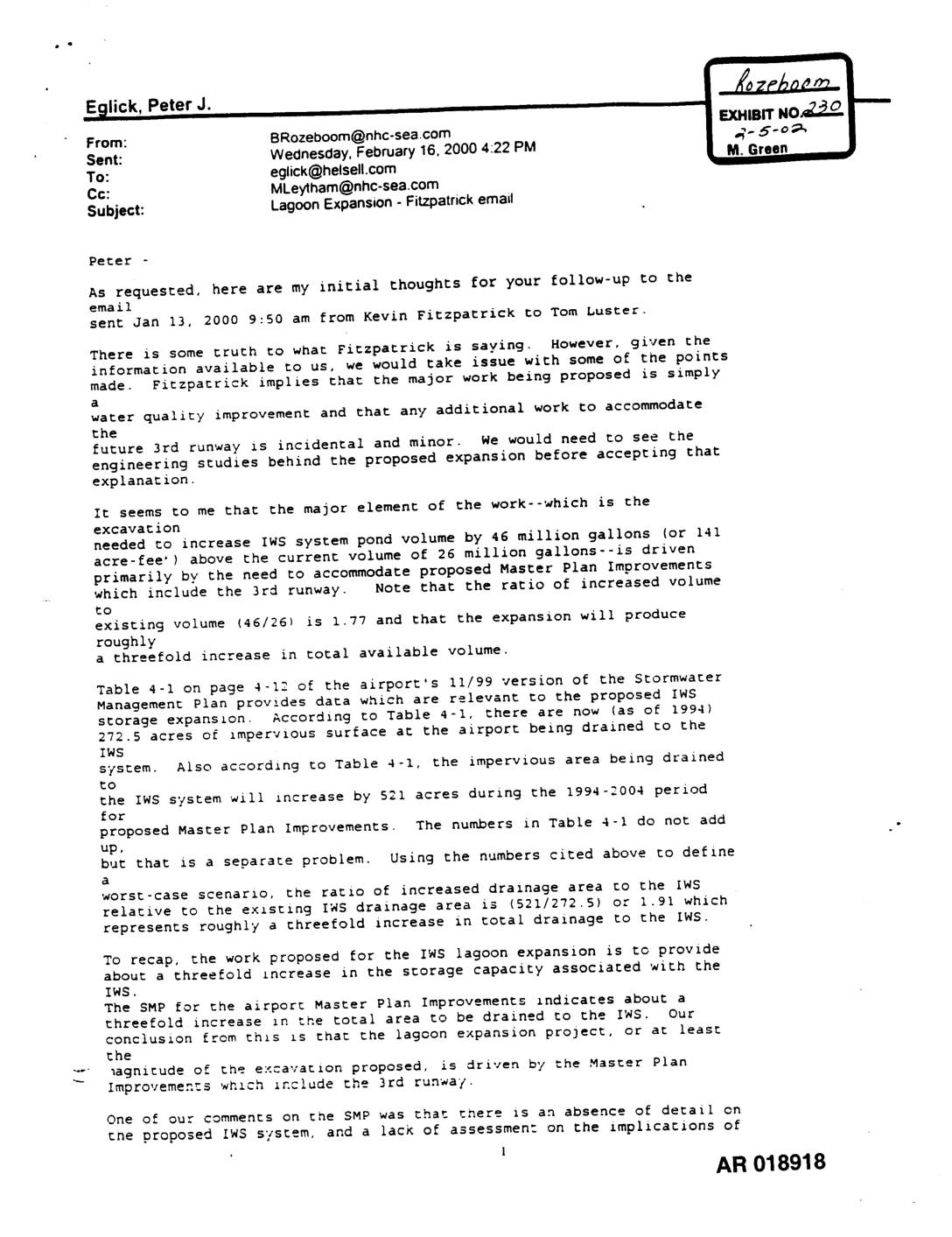
Exhibit 230: Email from Bill Rozeboom (Northwest Hydraulic Consultants) to Peter Eglick Re: IWS Lagoon Expansion and Fitzpatrick Email Analysis
A February 2000 email from hydraulic consultant Bill Rozeboom argues that the proposed expansion of Sea-Tac Airport's Integrated Wetlands System (IWS) lagoon—tripling its storage capacity—is primarily driven by the airport's Master Plan Improvements, including the proposed third runway, rather than being a routine water quality project. Rozeboom notes that the planned increase in impervious drainage area (roughly 521 additional acres) closely mirrors the proposed increase in IWS storage volume, supporting his conclusion that the third runway is the primary driver of the expansion. He also raises concerns that the environmental documents fail to adequately assess the impact of large-scale out-of-basin water transfers on aquifer recharge and stream base flows in the Miller Creek and Des Moines Creek basins. -
 2000-02-14
EXH AR024917: Draft Memo — Site-Specific WQC Status Update, Copper, Miller, Walker & Des Moines Creeks
A February 2000 draft memorandum from environmental consultants to Keith Smith summarizes efforts to develop a site-specific water quality criterion for copper in Miller, Walker, and Des Moines Creeks near Seattle-Tacoma Airport, in anticipation of stormwater runoff from a proposed third runway. The memo outlines two technical approaches—the Water-Effect Ratio (WER) and the site-specific metals translator—for potentially raising copper discharge permit limits, and describes toxicity screening and range-finding studies conducted in 1999. The phased study approach was designed to avoid unnecessary costs if the WER method proved infeasible or if the Washington Department of Ecology would not permit its use in adjusting permit limits. -
 2000-01-03
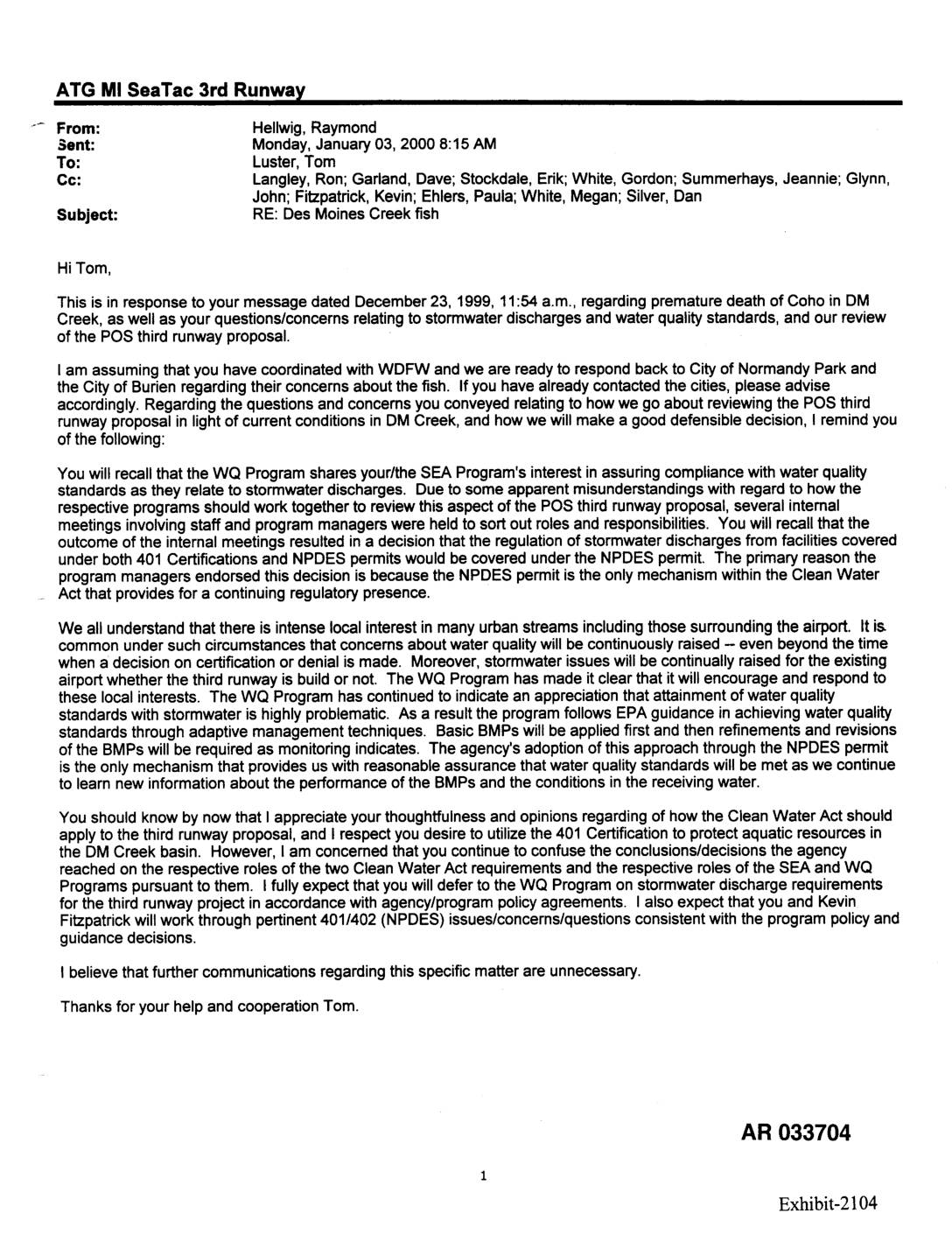
EXH AR033704: Email from Raymond Hellwig to Tom Luster RE: Des Moines Creek Fish and Third Runway Stormwater Review
Email dated January 3, 2000 from Raymond Hellwig (WQ Program) to Tom Luster (SEA Program), cc’d to Ron Langley, Dave Garland, Erik Stockdale, Gordon White, Jeannie Summerhays, John Glynn, Kevin Fitzpatrick, Paula Ehlers, Megan White, and Dan Silver. Responds to Luster’s December 23, 1999 message regarding premature death of Coho salmon in Des Moines Creek -
 2000-01-03
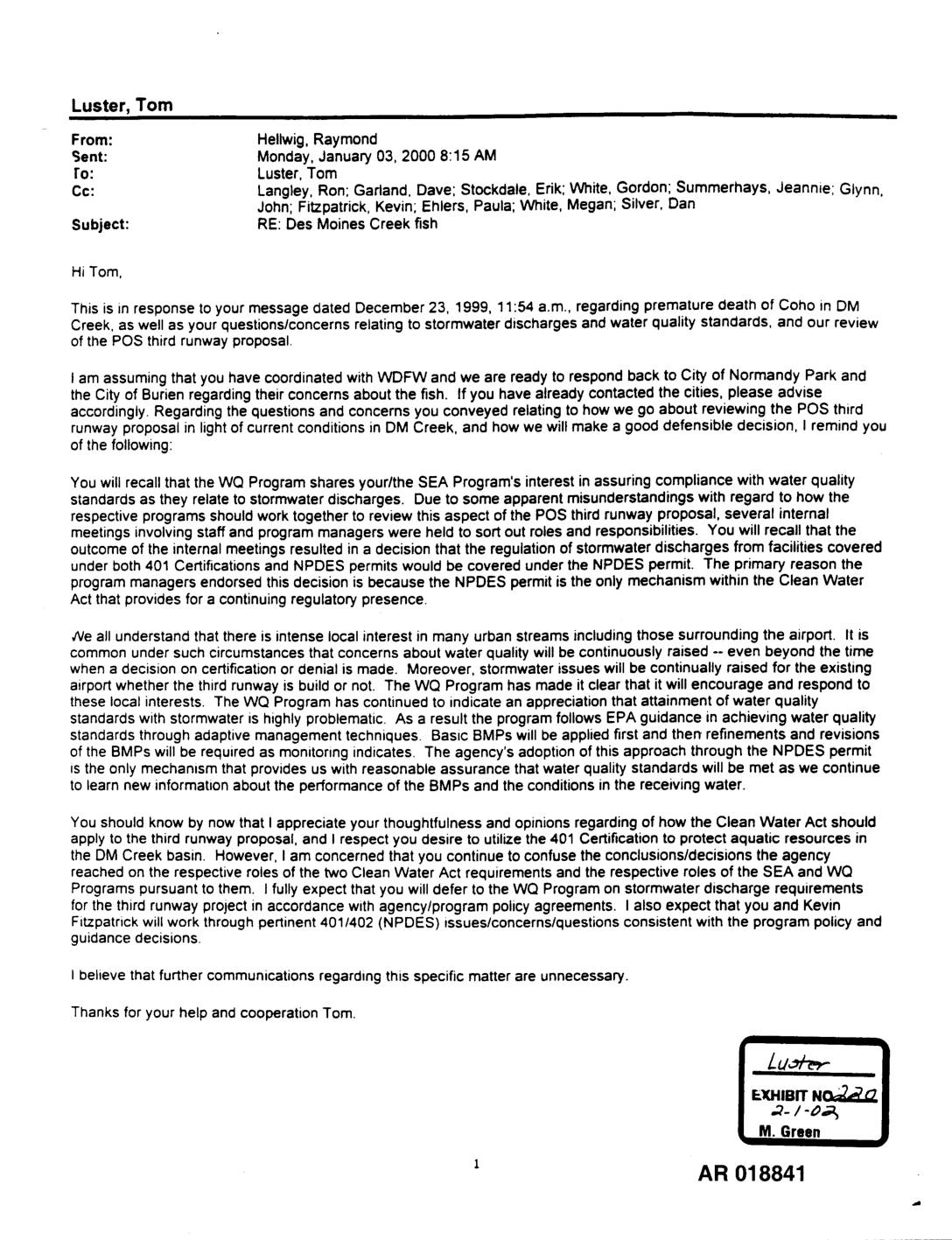
Exhibit 220: Email from Raymond Hellwig to Tom Luster re Des Moines Creek Fish and POS Third Runway Stormwater Review
A January 2000 internal email from EPA's Raymond Hellwig to Tom Luster addresses concerns about premature deaths of Coho salmon in Des Moines Creek near Sea-Tac Airport, in the context of the proposed third runway project. The email clarifies that stormwater discharge regulation will be handled through NPDES permits rather than Section 401 Water Quality Certifications, as the NPDES permit provides the only mechanism for ongoing regulatory oversight under the Clean Water Act. Hellwig directs Luster to defer to the Water Quality Program on stormwater issues and to stop raising the 401 Certification as an alternative avenue for addressing water quality standards. -
 1999-12-17
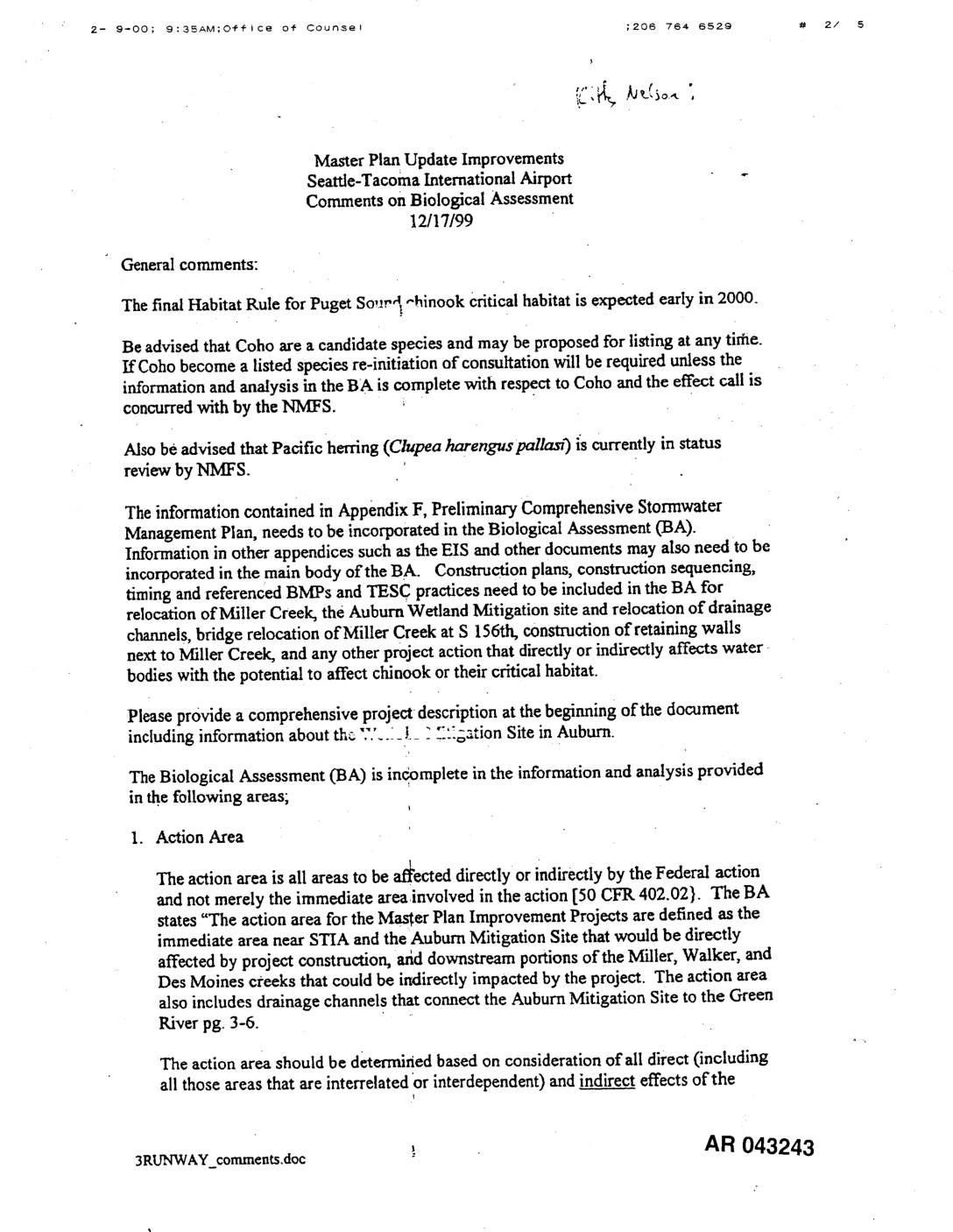
EXH AR043243: NMFS Comments on Biological Assessment for Sea-Tac Airport Master Plan Update Improvements
NMFS (National Marine Fisheries Service) Office of Counsel comments dated 12/17/99 on the Biological Assessment (BA) for Seattle-Tacoma International Airport Master Plan Update Improvements. AR 043243. Comments identify deficiencies in action area definition (50 CFR 402.02), matrix/checklist completeness, direct and indirect effects analysis, and cumulative effects regarding Puget Sound Chinook salmon critical habitat, Coho salmon, -
 1999-11-30
EXH AR026502: Letter to Seattle Public Utilities — 4th Quarterly Stormwater Monitoring Results, NEPL, STIA
A November 30, 1999 letter from Port of Seattle's Aviation Project Management Group to Seattle Public Utilities reports the fourth and final quarterly stormwater monitoring results for the Sea-Tac Airport North Employees' Parking Lot (NEPL). Testing of water samples collected throughout 1999 found pollutant levels—including metals, hydrocarbons, and suspended solids—well below Washington State residential water supply standards. Based on these results, the Port proposed ending the monitoring program and invited the City of Seattle to confer on whether further monitoring was warranted under their Interlocal Agreement. -
 1999-11-24
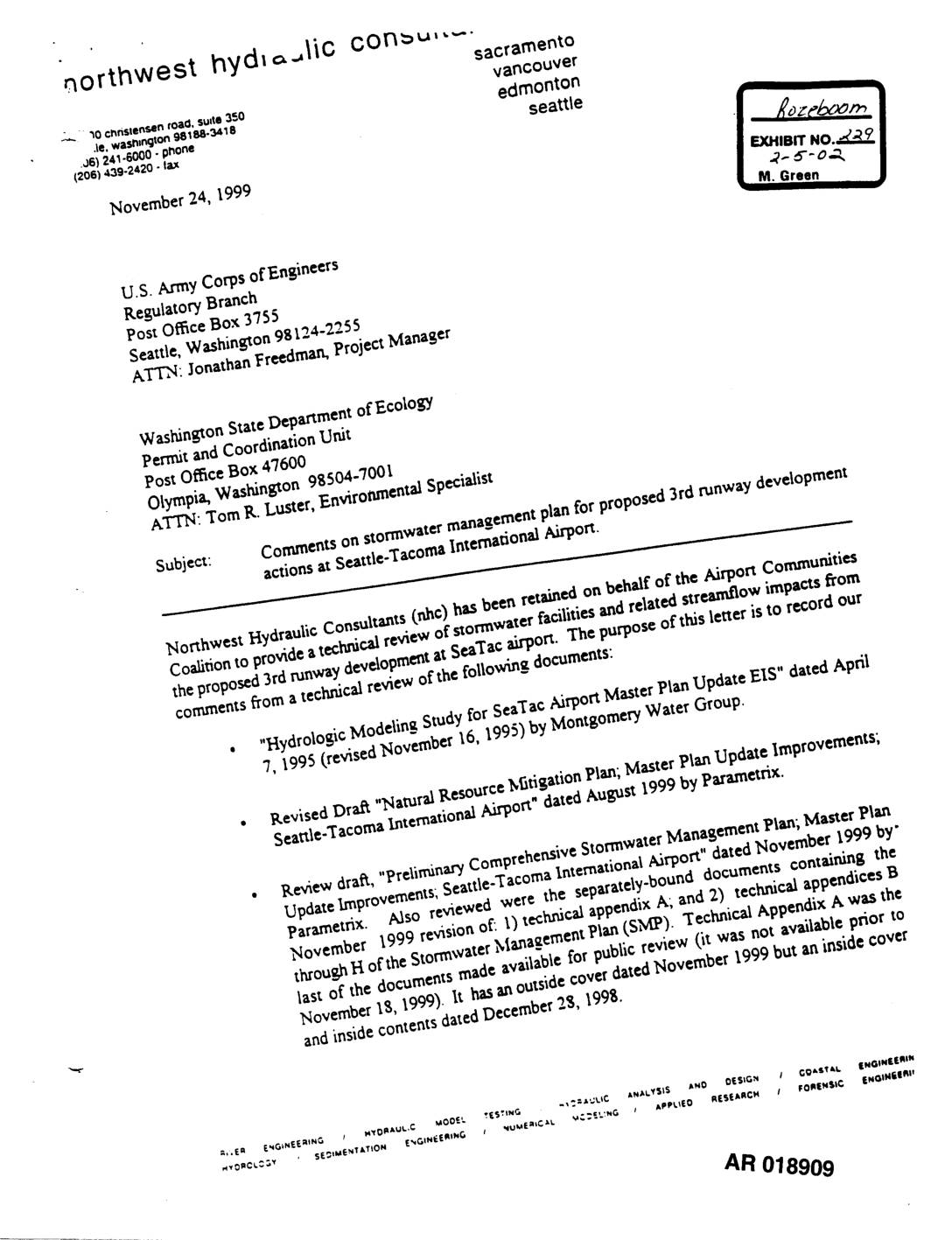
Exhibit 229: NHC Letter to U.S. Army Corps of Engineers and Ecology — Technical Comments on Stormwater Management Plan for Proposed Third Runway at Sea-Tac Airport
A November 1999 technical letter from Northwest Hydraulic Consultants, submitted on behalf of the Airport Communities Coalition, identifies major deficiencies in the proposed stormwater management plan for Seattle-Tacoma International Airport's 3rd runway development. The review finds that the plan fails to comply with the 1998 King County Surface Water Design Manual and Washington State Department of Ecology guidelines, including requirements for large-site drainage reviews, offsite analysis, and flow control. The consultants warn that if the plan is approved as written, it could cause significant adverse impacts to downstream creek systems, including Miller Creek and Des Moines Creek.