TagStormwater(373)
-
 2000-08-10
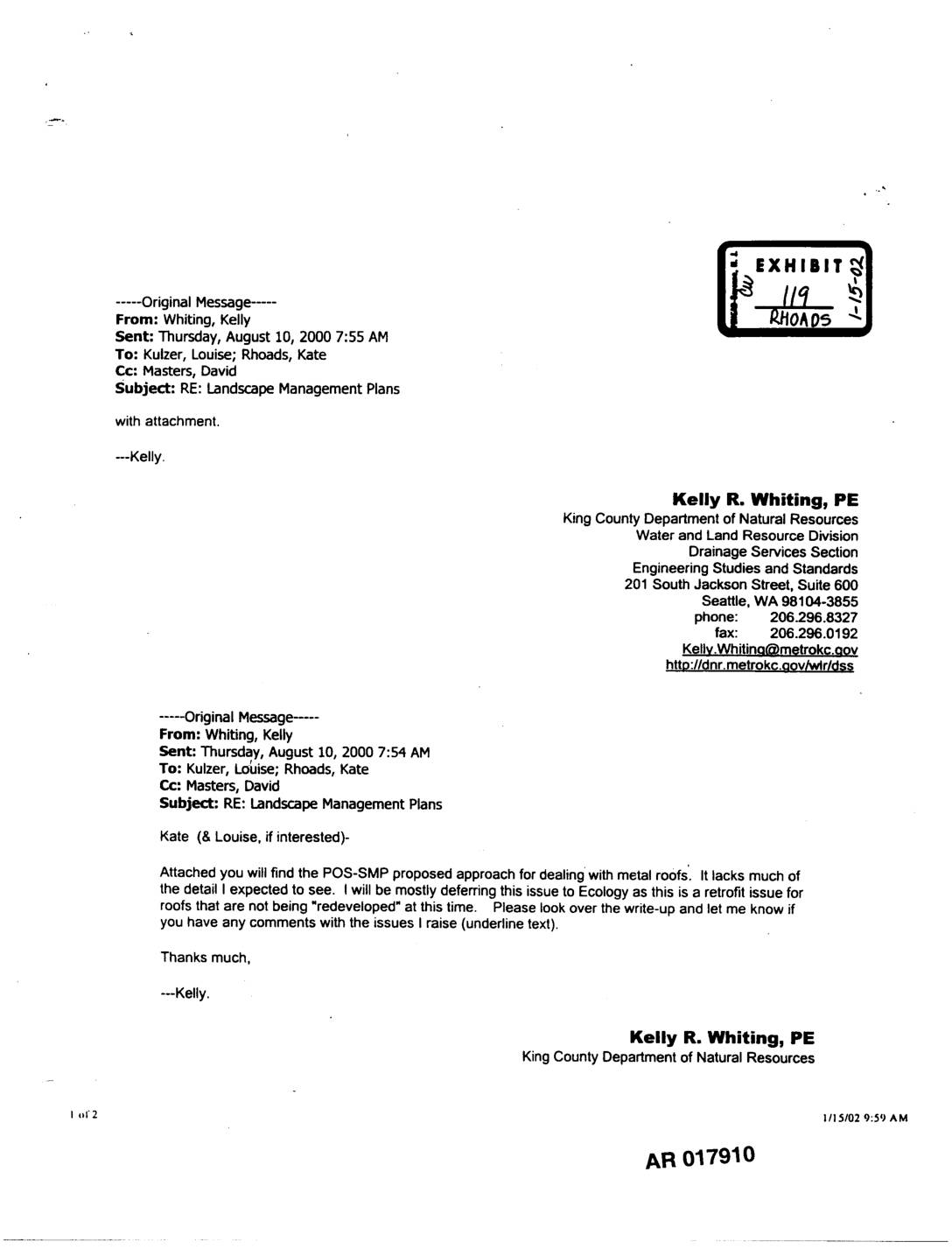
Exhibit 119: Email Chain from Kelly Whiting Re: Landscape Management Plans and Metal Rooftop Stormwater Treatment at STIA
Email chain dated August 10, 2000 from Kelly R. Whiting, PE (King County Department of Natural Resources, Water and Land Resource Division, Drainage Services Section) to Louise Kulzer and Kate Rhoads, cc David Masters, regarding Landscape Management Plans and the POS-SMP proposed approach for dealing with metal roofs at Seattle-Tacoma International Airport (STIA). Whiting raises -
 2000-07-31
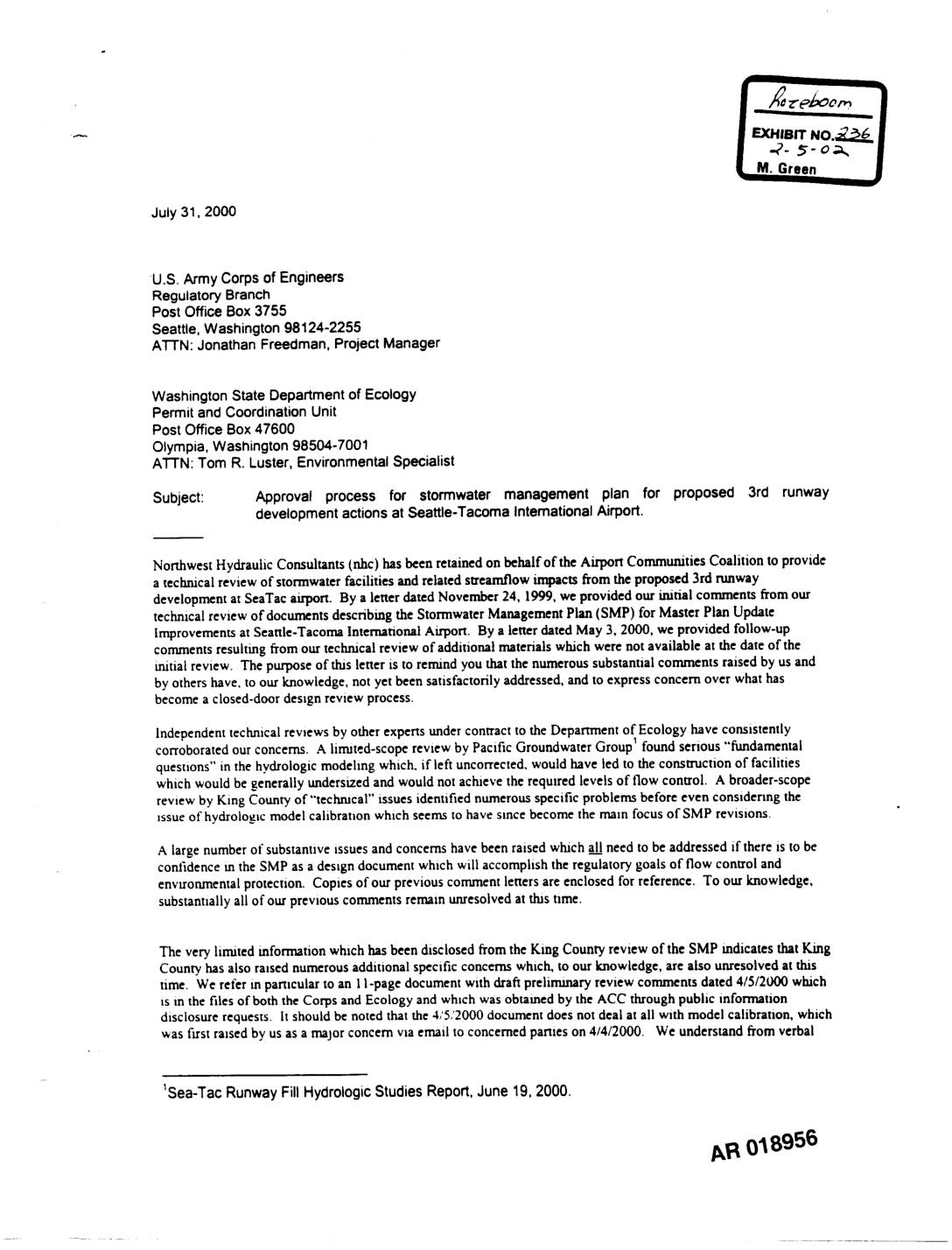
EXH 236: Letter Northwest Hydraulic Consultants to Army Corps & Ecology — STIA Third Runway Stormwater Management Plan Approval Process
In a July 31, 2000 letter to the U.S. Army Corps of Engineers and Washington State Department of Ecology, Northwest Hydraulic Consultants — representing the Airport Communities Coalition — raised concerns about unresolved technical problems with the Stormwater Management Plan (SMP) for Seattle-Tacoma International Airport's proposed third runway. Independent reviews had identified serious flaws in hydrologic modeling that could result in undersized stormwater facilities failing to meet flow control requirements. The consultants urged regulators to publicly disclose ongoing SMP discussions and allow meaningful time for further review before approving the project. -
 2000-07-31
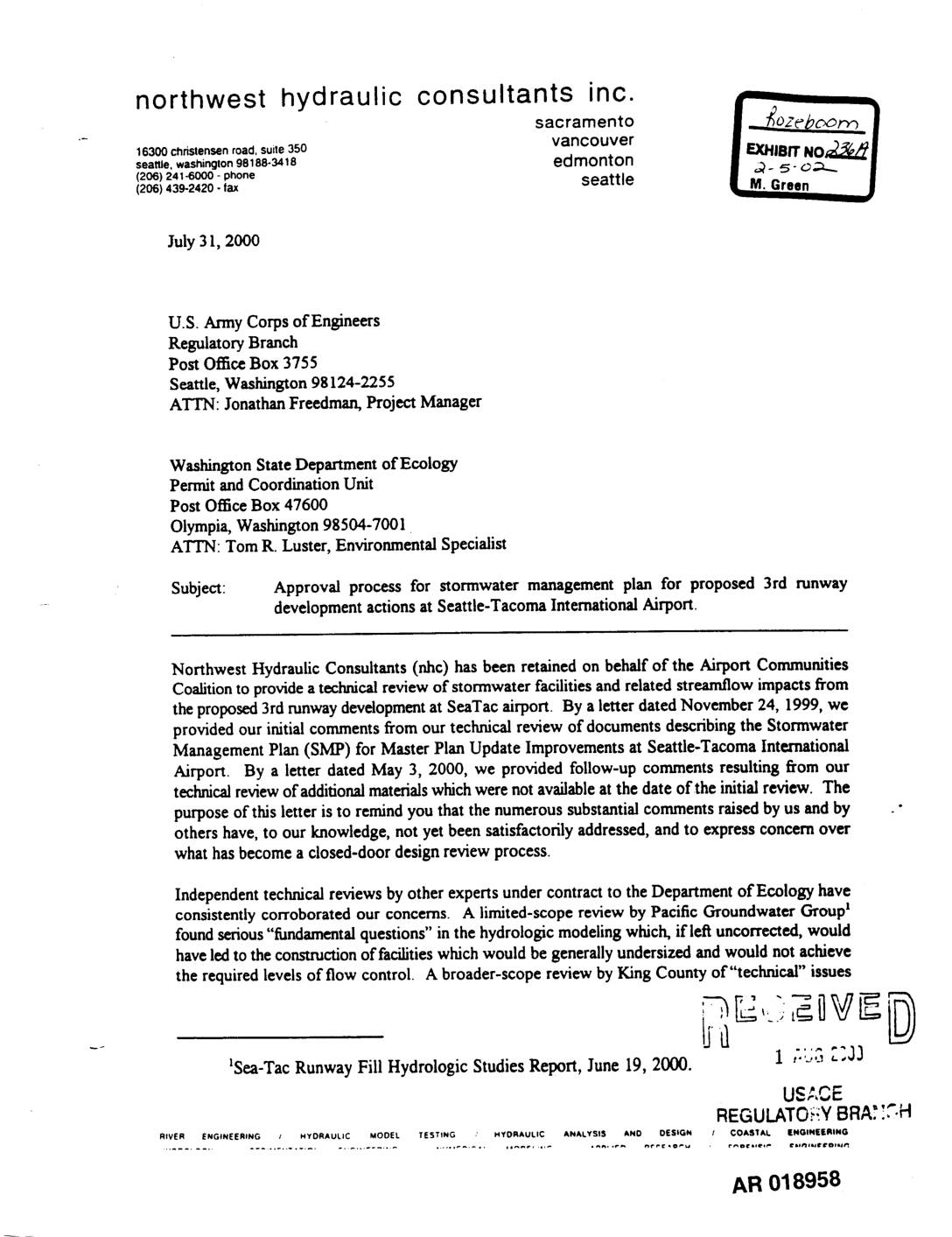
EXH 236A: NHC Letter to Army Corps & Ecology — Stormwater Mgmt Plan Approval Process, STIA Third Runway
In a July 31, 2000 letter to the U.S. Army Corps of Engineers and Washington State Department of Ecology, Northwest Hydraulic Consultants raised concerns about unresolved technical problems with the Stormwater Management Plan (SMP) for the proposed third runway at Seattle-Tacoma International Airport. Independent reviews had found serious flaws in the hydrologic modeling that could result in undersized facilities failing to meet flow control requirements. The firm requested full public disclosure of ongoing SMP discussions and a meaningful comment period before any regulatory approval of the runway project. -
 2000-07-30
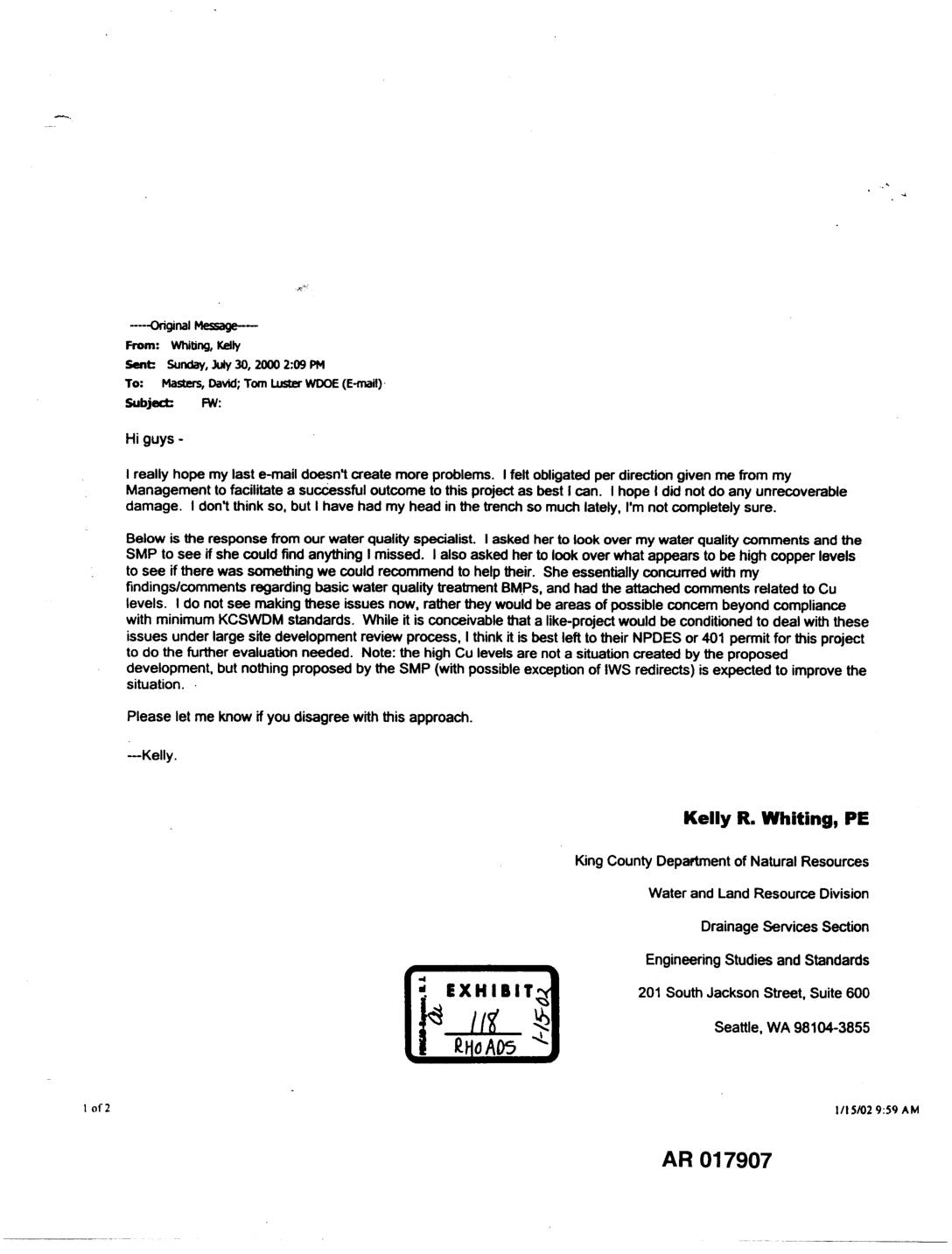
EXH AR017907: King County Drainage Services Email Chain on Copper Levels in STIA Runway Runoff and Water Quality BMPs
Email chain dated July 30, 2000 from Kelly R. Whiting, PE, King County Department of Natural Resources, Water and Land Resource Division, Drainage Services Section, to David Masters and Tom Luster (WDOE), forwarding water quality specialist Kate Rhoads’ notes on copper (Cu) levels in Seattle-Tacoma International Airport (STIA) runway stormwater runoff. Whiting discusses KCSWDM (King -
 2000-07-28
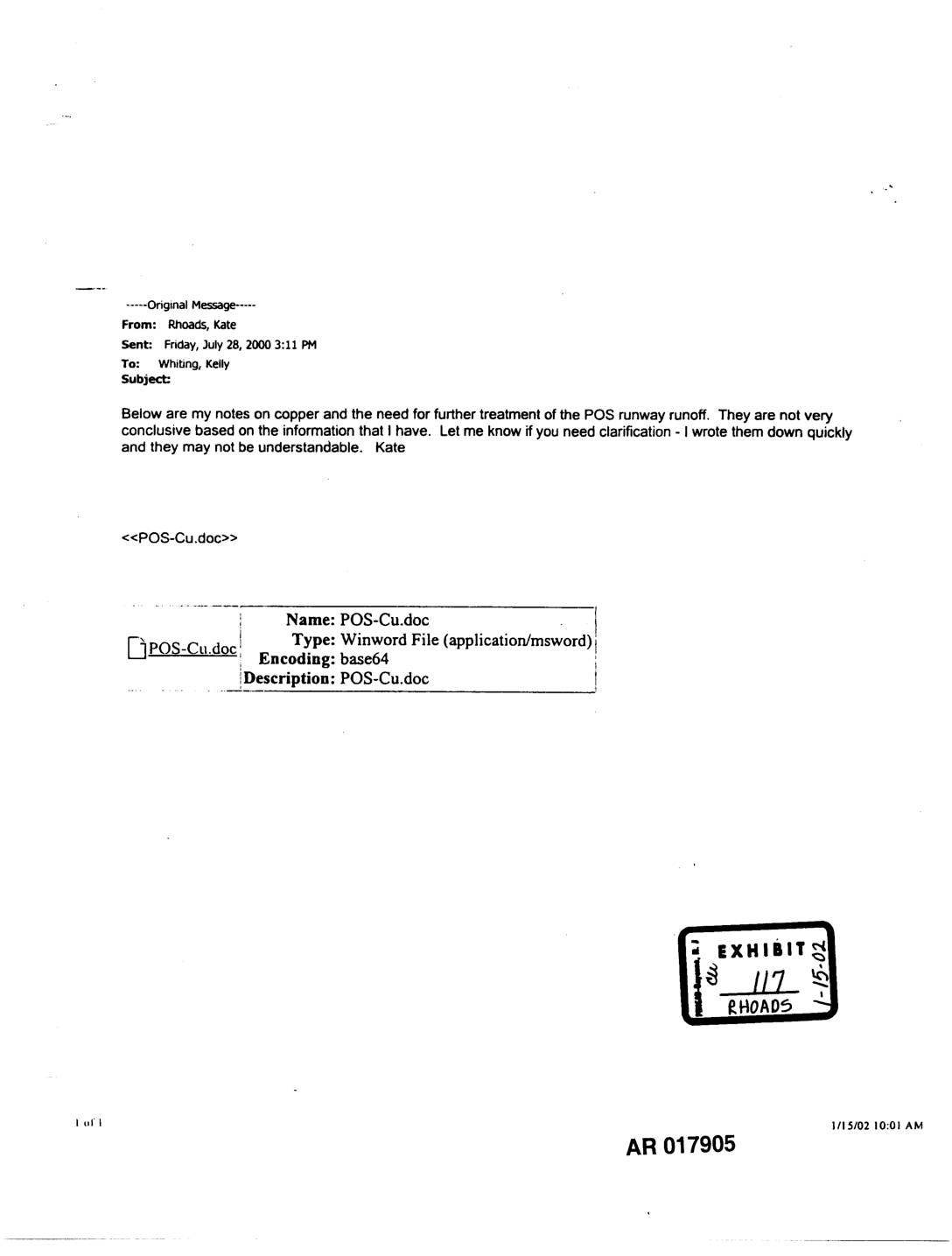
EXH AR017905: Email and Notes on Copper Levels in POS Runway Runoff
Email from Kate Rhoads to Kelly Whiting dated July 28, 2000, with attached notes (POS-Cu.doc) on copper levels in Sea-Tac Airport (STIA/POS) runway stormwater runoff and the need for further treatment. Notes discuss total recoverable (TR) copper concentrations (median 37 ug/l) from SEATAC runways versus the acute toxicity standard of 15 ug/l at hardness 100, -
 2000-06-19
EXH AR045023: Sea-Tac Runway Fill Hydrologic Studies Report
Sea-Tac Runway Fill Hydrologic Studies Report (AR 045023, project JE9907) prepared by Pacific Groundwater Group, Ecology and Environment, and Earth Tech Inc. for Washington State Department of Ecology Northwest Regional Office, dated June 19, 2000. Report covers hydrologic and hydrogeologic characterization of the Sea-Tac Airport third runway embankment fill area, including Miller Creek and Walker -
 2000-06-19
EXH 410: Sea-Tac Runway Fill Hydrologic Studies Report
This June 2000 report by Pacific Groundwater Group examines the hydrological impacts of proposed runway fill construction at Seattle-Tacoma International Airport. It covers groundwater conditions, surface water management, effects on local wetlands and fish habitat in Miller and Walker Creeks, and reviews stormwater control proposals. The study was prepared for the Washington State Department of Ecology to assess how the Third Runway embankment fill would affect the surrounding hydrologic environment. -
 2000-05-30
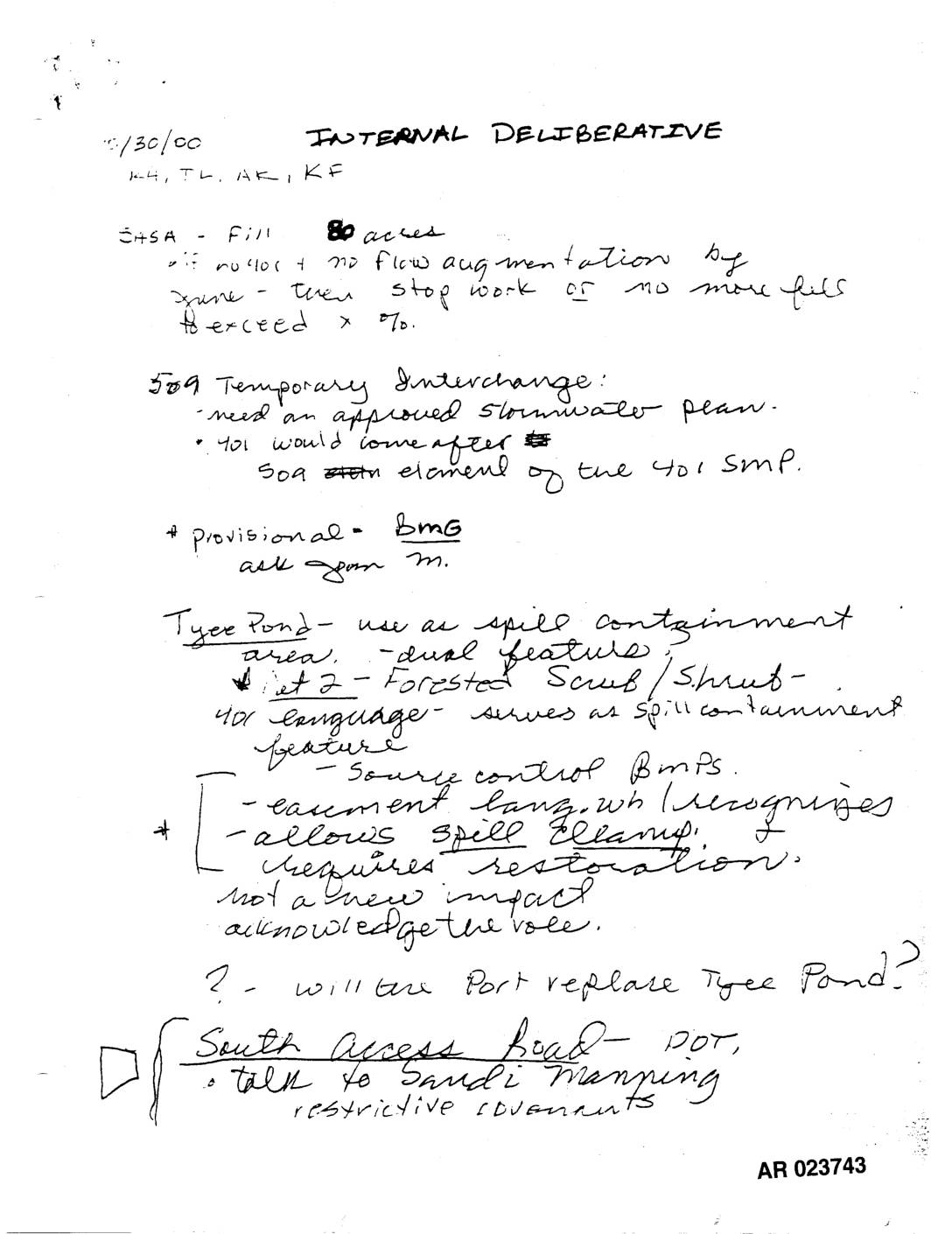
EXH AR023743: Internal Deliberative Notes — Third Runway EIS Fill, Stormwater, Tyee Pond, Soil Fill Criteria, Water Quality BMPs
These internal deliberative notes from 5/30/00 discuss fill and stormwater management issues related to a construction or development project, covering topics such as soil fill acceptance criteria, Best Management Practices (BMPs) for water quality, spill containment features at Tyee Pond, and monitoring requirements for dissolved metals. The notes reference coordination among multiple regulatory frameworks including Section 401, CZM, and MTCA, and address questions about impervious liner hydrologic impacts and remediation procedures. Key action items include developing an approved stormwater plan, establishing soil sampling protocols for borrow sites, and determining upfront versus incremental BMP implementation strategies. -
 2000-05-24
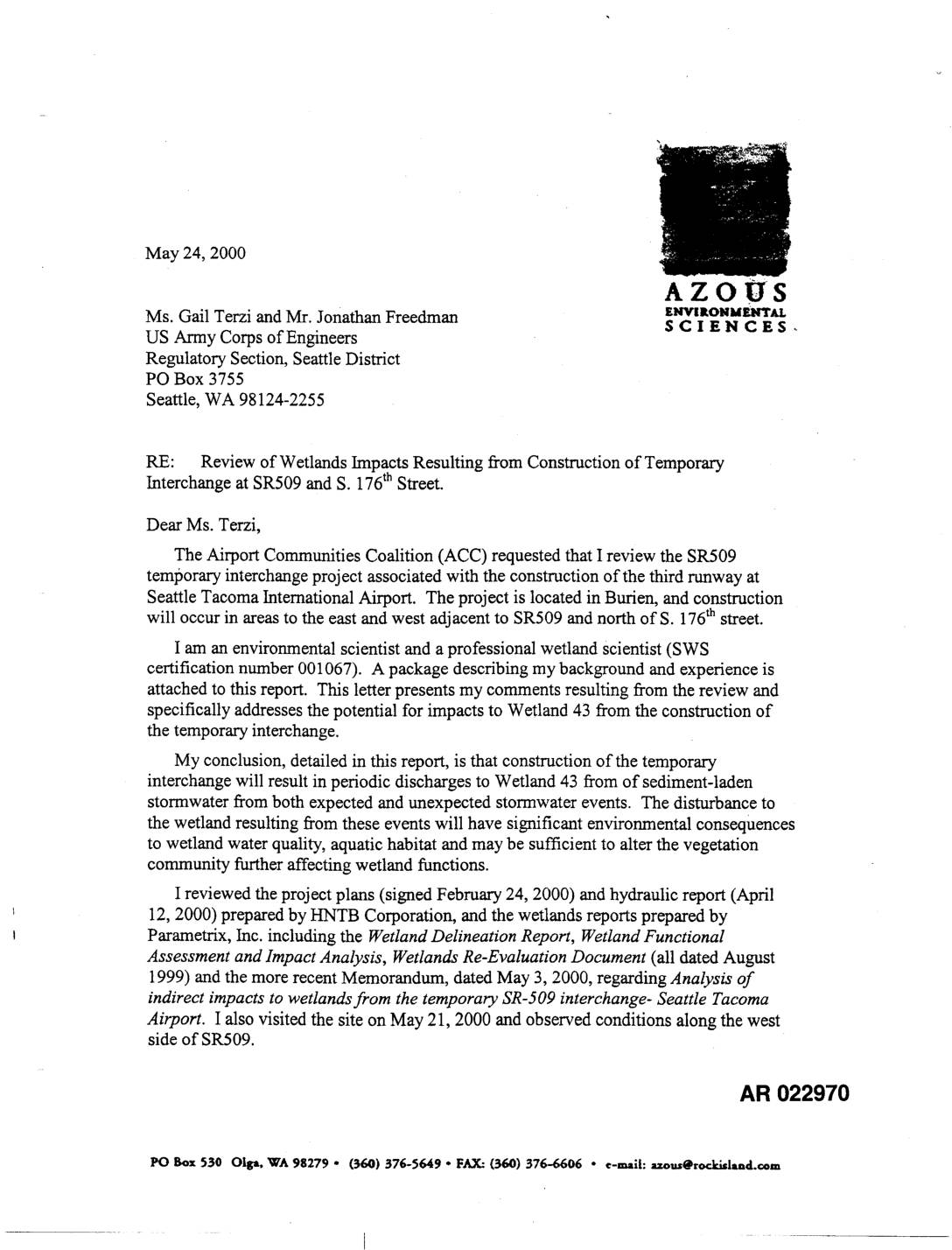
EXH AR022970: ACC Review Letter — SR509 Temp Interchange Wetland 43 Impacts
A professional wetland scientist reviewed the construction plans for a temporary SR509 interchange near Seattle-Tacoma International Airport and concluded that the project would cause harmful sediment-laden stormwater runoff to discharge into nearby Wetland 43. The report found that the wetland boundary was significantly closer to the construction zone than project documents indicated, and that the steep slopes and sparse vegetation of the construction site made sediment runoff unavoidable. The scientist determined that the planned temporary erosion control measures were inadequate to protect the wetland, particularly during unexpected storm events. -
 2000-05-23
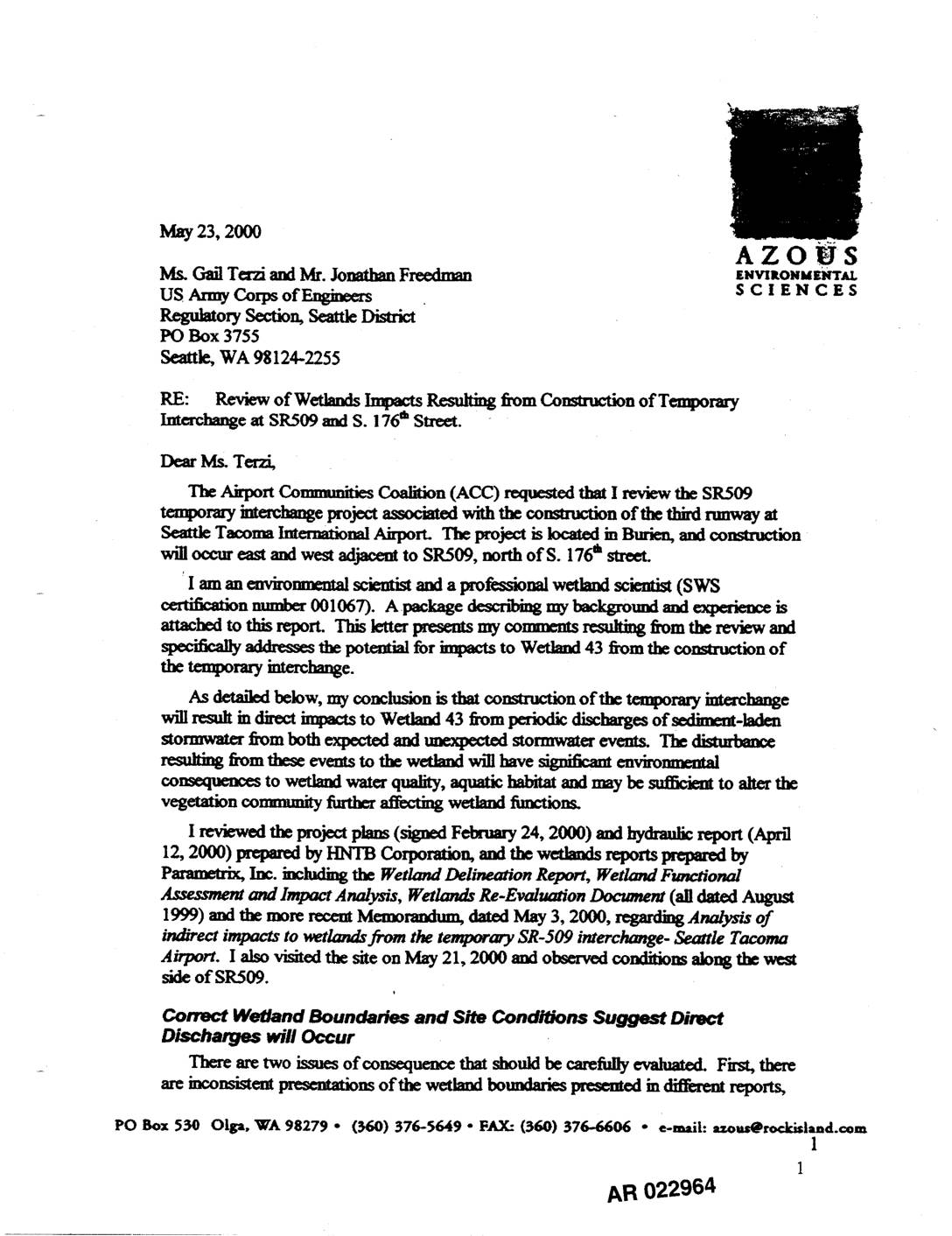
EXH AR022964: ACC Review Letter — Wetlands Impacts, Temp Interchange SR-509 & S. 176th St
A May 2000 environmental science review raised concerns that construction of a temporary highway interchange near Seattle-Tacoma International Airport's third runway would cause direct sediment runoff into the adjacent Wetland 43. The report found that the wetland boundary was up to 50 feet closer to the construction zone than project documents indicated, and that the steep slopes and inadequate erosion controls would fail to prevent sediment-laden stormwater from damaging the wetland's water quality and aquatic habitat.