Tagsoil(64)
-
 2002-10-23
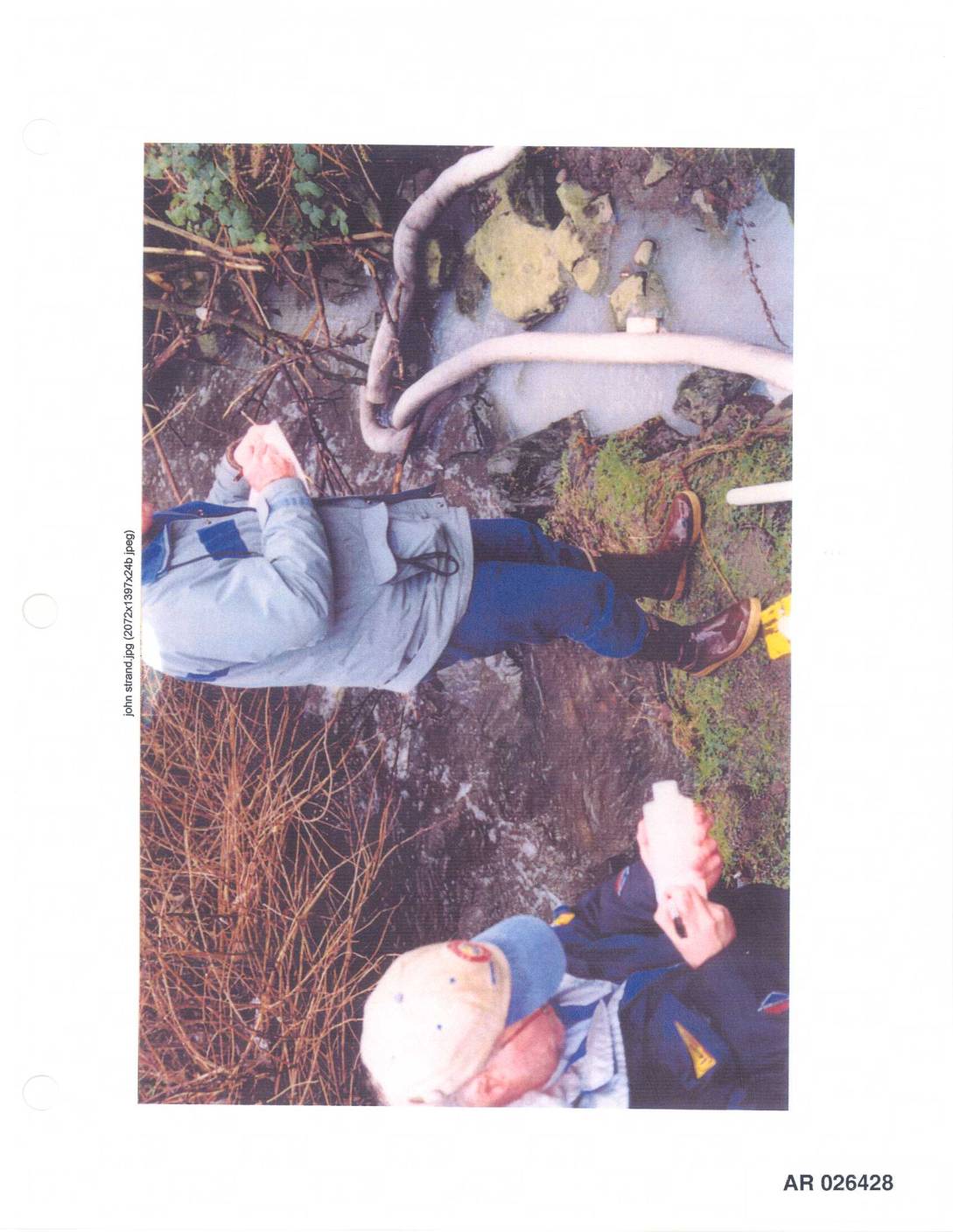
EXH AR026428: Field Photo — Third Runway EIS Site Investigation (John Strand)
This document (AR 026428) contains a photograph labeled 'john strand.jpg' showing two individuals outdoors near what appears to be environmental sampling or monitoring equipment, including hoses and collection containers, in a vegetated area. The image appears to be part of an administrative record related to environmental assessment activities, likely connected to noise or environmental impact studies near Sea-Tac Airport. -
 2002-10-22
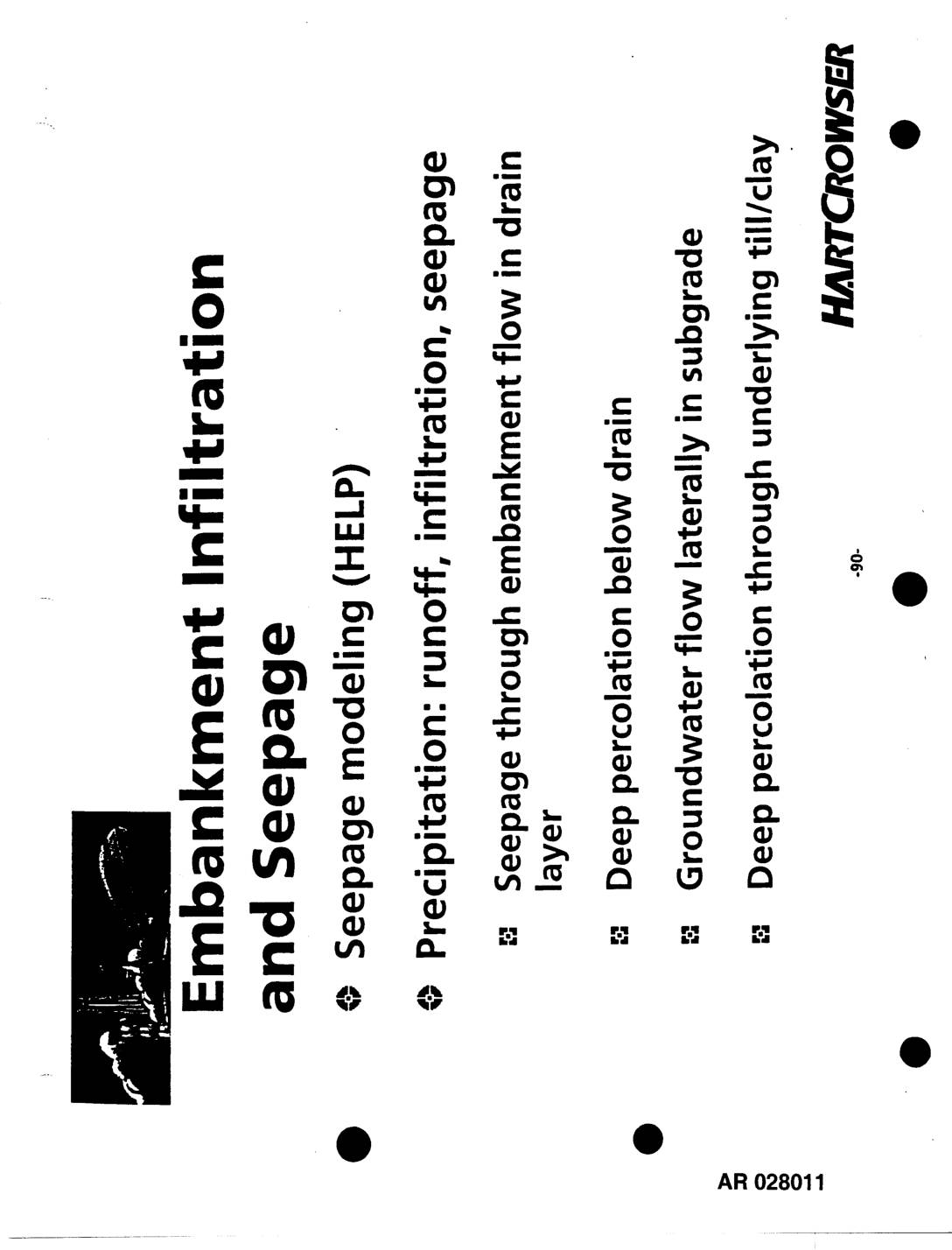
EXH AR028011: Embankment Infiltration and Seepage — HartCrowser Presentation
HartCrowser presentation on embankment infiltration and seepage modeling, covering seepage modeling using HELP (Hydrologic Evaluation of Landfill Performance), precipitation components including runoff, infiltration, and seepage, seepage through embankment flow in drain layer, deep percolation below drain, groundwater flow laterally in subgrade, and deep percolation through underlying till/clay. Includes embankment slope section diagram showing seepage parameters -
 2002-10-22
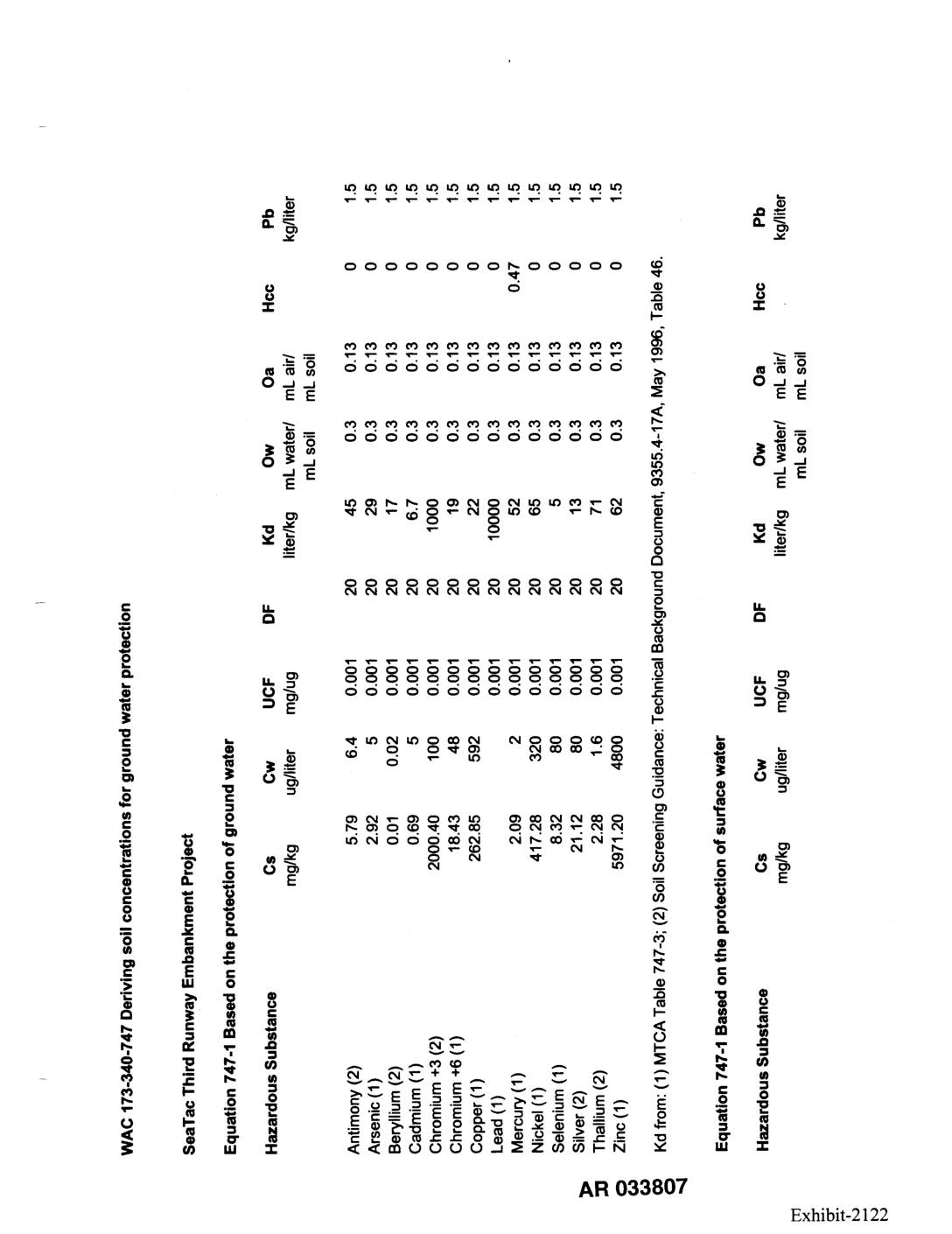
EXH AR033807: WAC 173-340-747 Deriving Soil Concentrations for Ground Water Protection — Sea-Tac Third Runway Embankment Project
Exhibit AR033807, WAC 173-340-747 soil concentration calculations for ground water and surface water protection under the Model Toxics Control Act (MTCA), SeaTac Third Runway Embankment Project. Tables derive cleanup levels for hazardous substances including antimony, arsenic, beryllium, cadmium, chromium +3, chromium +6, copper, mercury, nickel, selenium, silver, thallium, zinc, and lead using Equations 747-1 and -
 2002-10-22
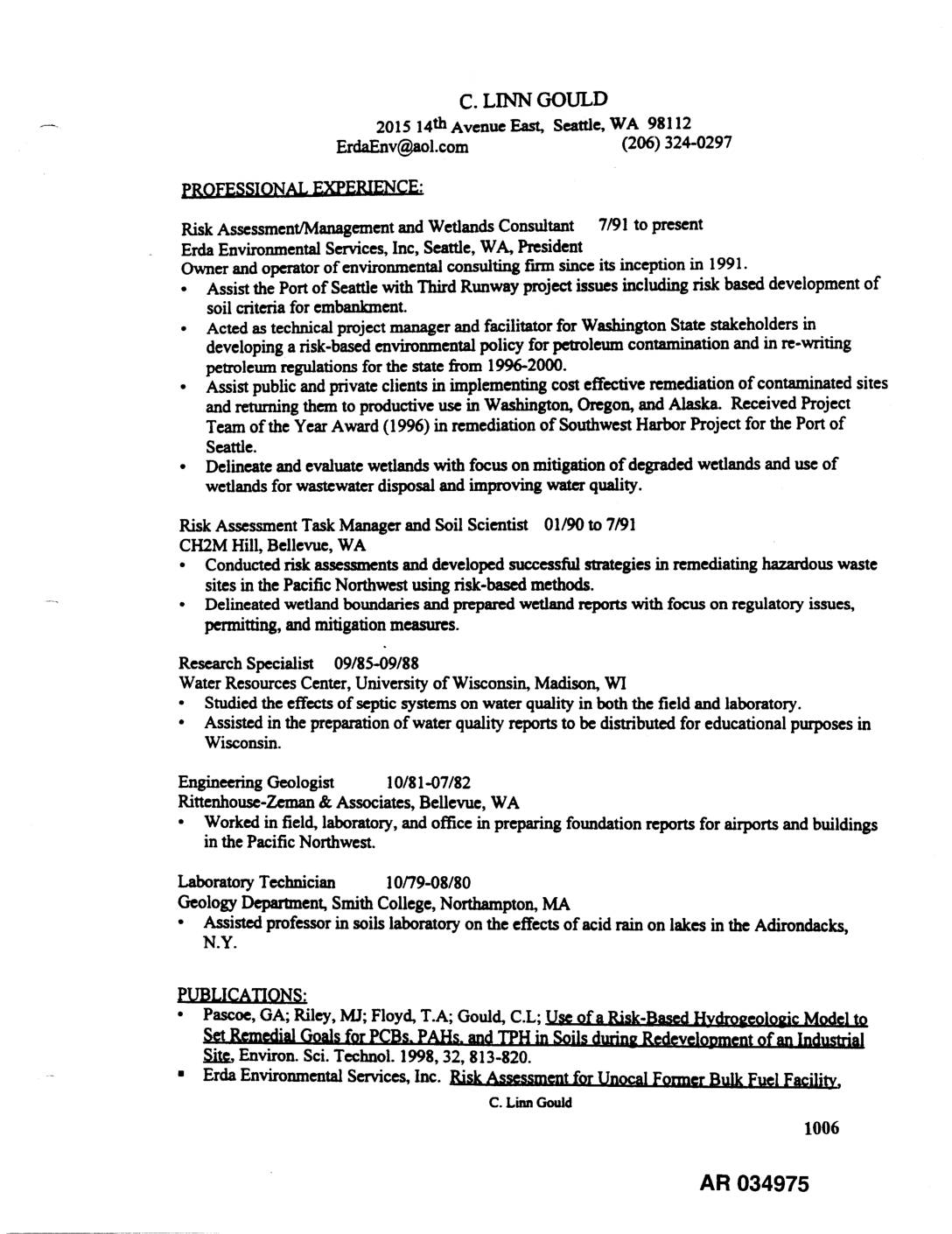
EXH AR034975: Curriculum Vitae of C. Linn Gould, Erda Environmental Services
Curriculum vitae of C. Linn Gould, President of Erda Environmental Services, Inc., Seattle, WA. Gould worked as Risk Assessment/Management and Wetlands Consultant from 1991 onward, including work for the Port of Seattle Third Runway project (risk-based soil criteria for embankment), Washington State petroleum contamination risk-based environmental policy (1996-2000), and remediation of the Southwest Harbor Project -
 2002-10-22
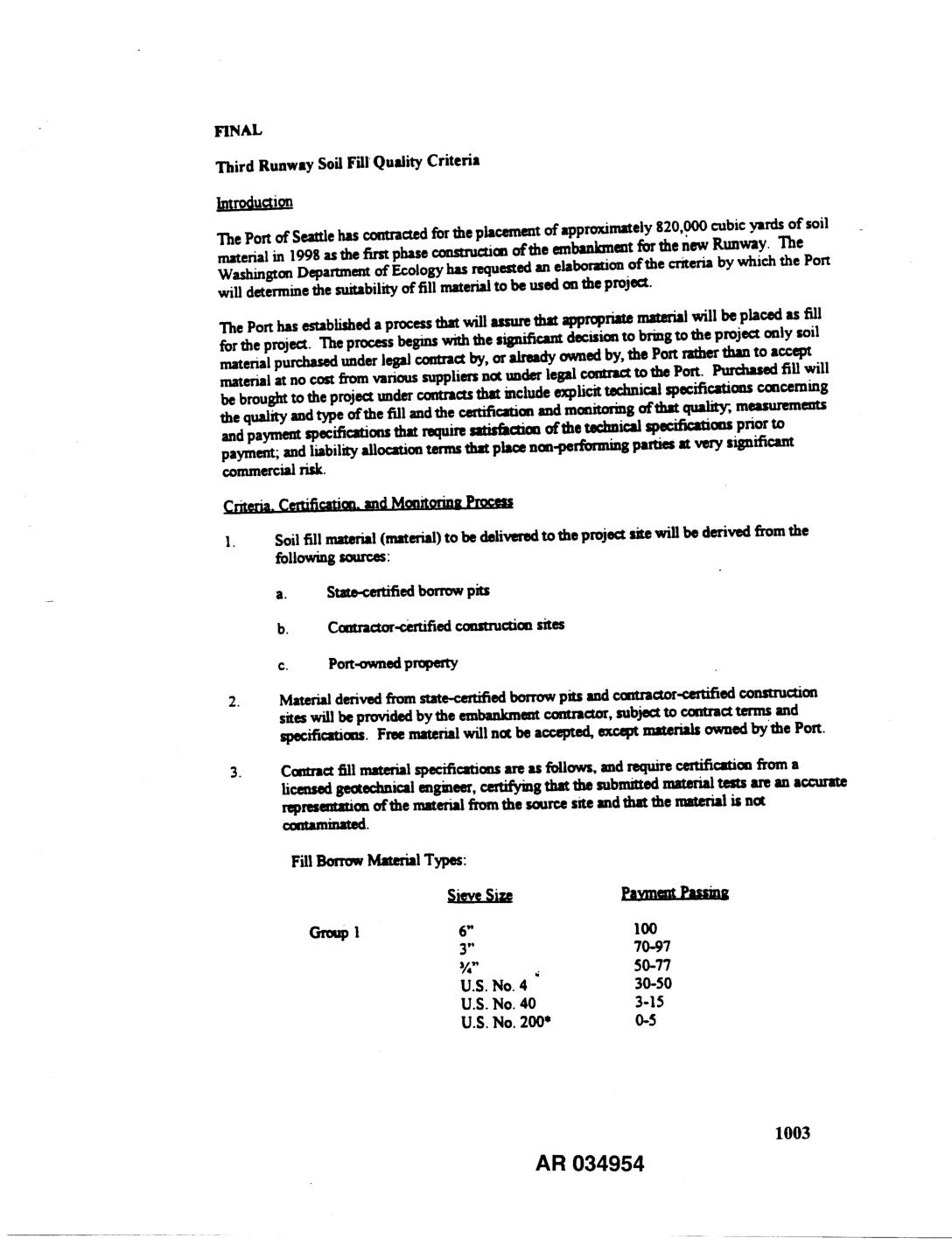
EXH AR034954: Third Runway Soil Fill Quality Criteria
Port Of Seattle document establishing soil fill quality criteria for Third Runway embankment construction in 1998, covering approximately 820,000 cubic yards of fill material. Specifies Fill Borrow Material Types (Group 1, Group 2, Group 3) with sieve size gradation requirements (6″, 3″, ¾”, U.S. No. 4, U.S. No. 40, U.S. No. 200), MTCA Method A -
 2002-10-21
EXH 325: VS2DT Solute Transport Variably Saturated Porous Media Table of Contents
This technical report documents VS2DT, a computer program that models how chemical solutes move through variably saturated porous soil and rock, accounting for processes such as advection, hydrodynamic dispersion, decay, adsorption, and ion exchange. The document includes the underlying mathematical theory, numerical methods, data input instructions, and verification problems comparing the program's results against known analytical solutions. While primarily a groundwater contaminant transport modeling tool, it has no direct connection to airport noise policy. -
 2002-10-20
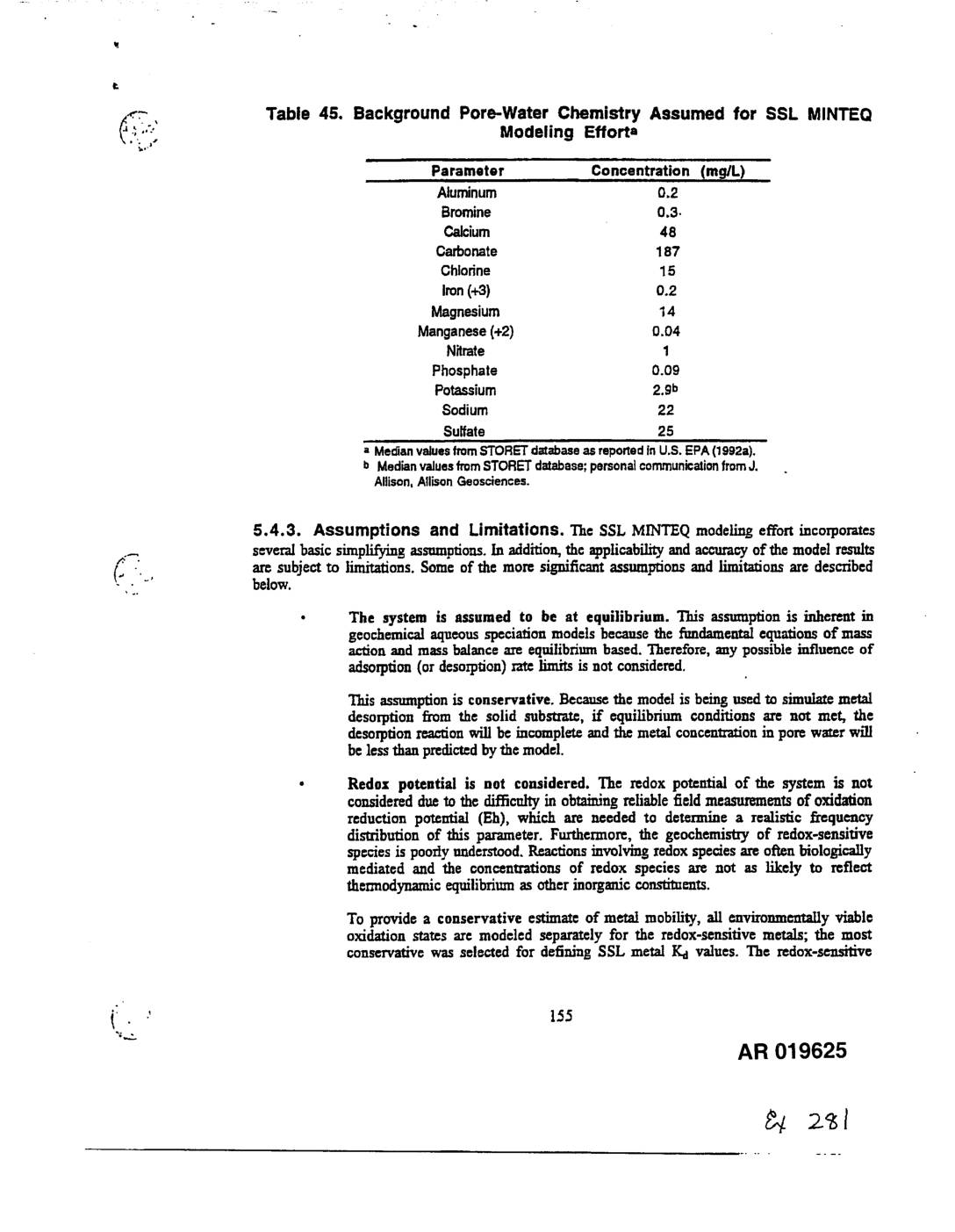
EXH AR019625: SSL MINTEQ Modeling — Background Pore-Water Chemistry, Assumptions, Limitations, Metal Kd Results
This technical document describes the background water chemistry and modeling assumptions used to estimate how metals move through soil and groundwater at contaminated sites. It outlines key simplifications in the MINTEQ geochemical model, including the assumption of chemical equilibrium and the exclusion of redox potential, and presents soil-sorption values (Kd) for various metals such as arsenic, chromium, and cadmium that vary with soil pH. The results show that metal mobility is most strongly influenced by pH levels in the subsurface environment. -
 2002-10-20
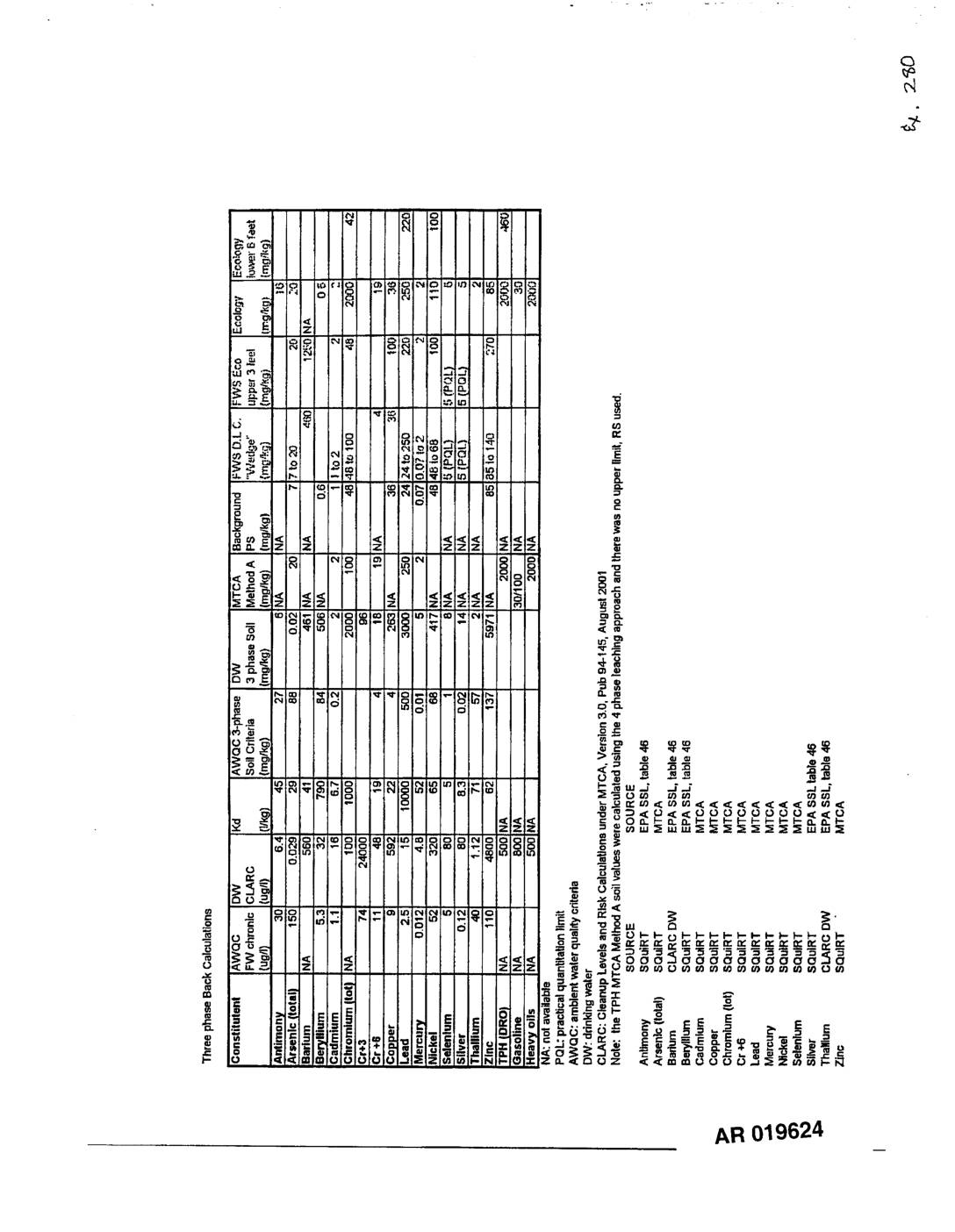
EXH AR019624: Three Phase Back Calculations Table — Soil Cleanup Levels
This document presents three-phase back calculations for soil contamination levels at a site, listing various chemical constituents including heavy metals (arsenic, cadmium, chromium, lead, mercury, zinc) and petroleum products (TPH, gasoline, heavy oils). The table compares cleanup criteria from multiple regulatory frameworks including ambient water quality criteria (AWQC), drinking water standards, Model Toxics Control Act (MTCA) methods, and Fish and Wildlife Service ecological screening levels. The calculations were used to evaluate soil remediation thresholds based on leaching potential and ecological risk, with source references including EPA and MTCA SSL tables dated August 2001. -
 2002-06-01
Results from Soil Contamination Study of King County
A soil contamination study by Washington State's Department of Ecology and Public Health – Seattle & King County found elevated levels of arsenic and lead in southern King County soils, linked primarily to the former Asarco smelter in Ruston. Contamination levels were highest near the smelter and on Vashon and Maury Islands, with concentrations decreasing further from the source and following prevailing wind patterns. While the findings are a concern rather than an emergency, officials stress that the study reflects regional trends only and cannot predict contamination levels at individual properties. -
 2002-02-01
Tacoma Smelter Plume Project: Overview Presentation
The Washington State Department of Ecology's Tacoma Smelter Plume Project investigates soil contamination caused by air emissions from the former Asarco smelter, with the primary goal of protecting public health and the environment from low-level, area-wide contamination. The project aims to keep local governments and citizens informed while developing long-term solutions to manage contamination over time. As part of a broader Area-Wide Contamination Strategy, the state is also addressing similar issues at other sites, including the Everett Smelter and former agricultural lands.