Tagsoil(64)
-
 1993-11-24
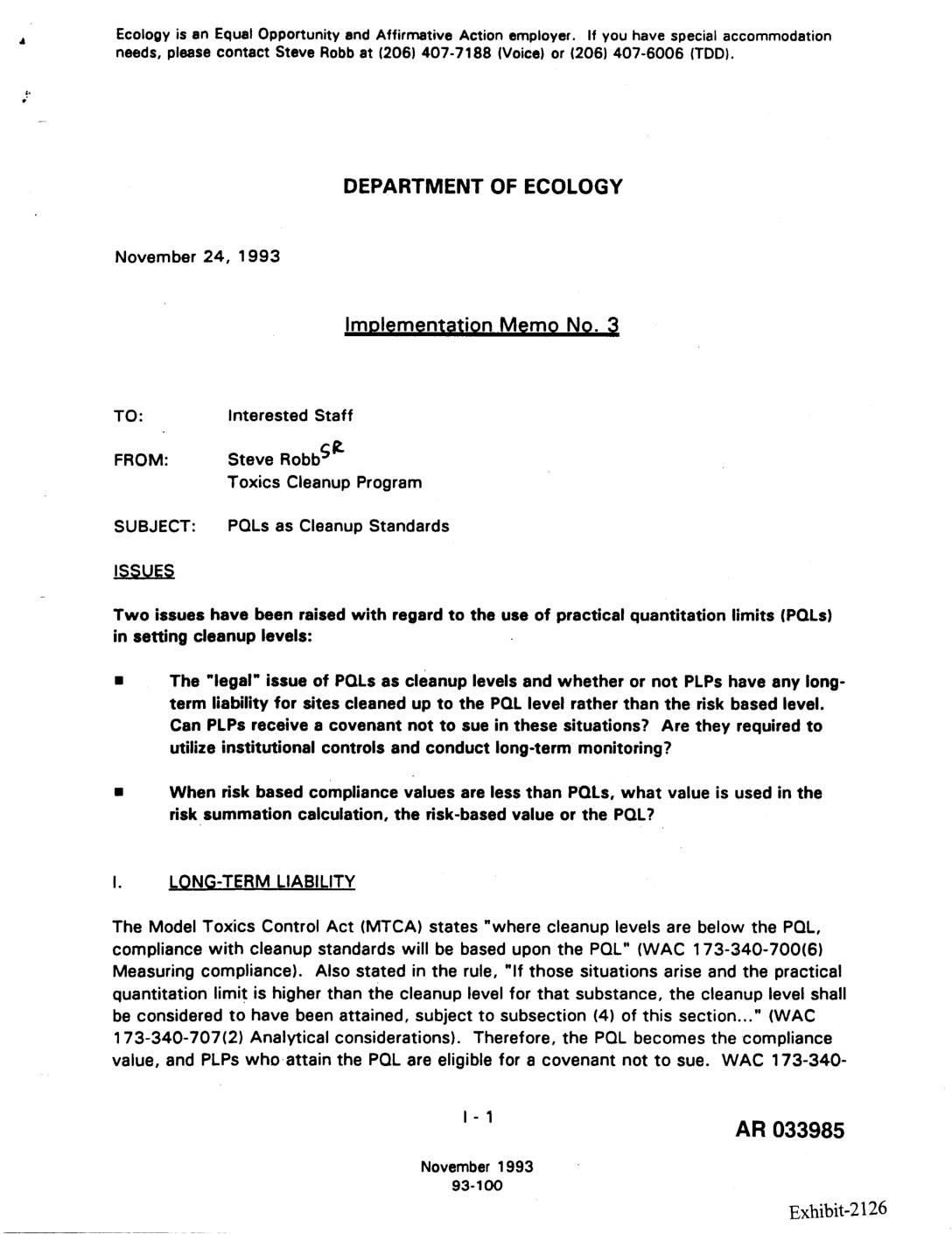
Exhibit 2126: Implementation Memo No. 3 — PQLs as Cleanup Standards
Implementation Memo No. 3 dated November 24, 1993, from Steve Robb of the Washington State Department of Ecology Toxics Cleanup Program to Interested Staff, addressing two issues regarding practical quantitation limits (PQLs) as cleanup standards under the Model Toxics Control Act (MTCA). Covers long-term liability for potentially liable persons (PLPs) who clean up to PQL -
 1990-05-01
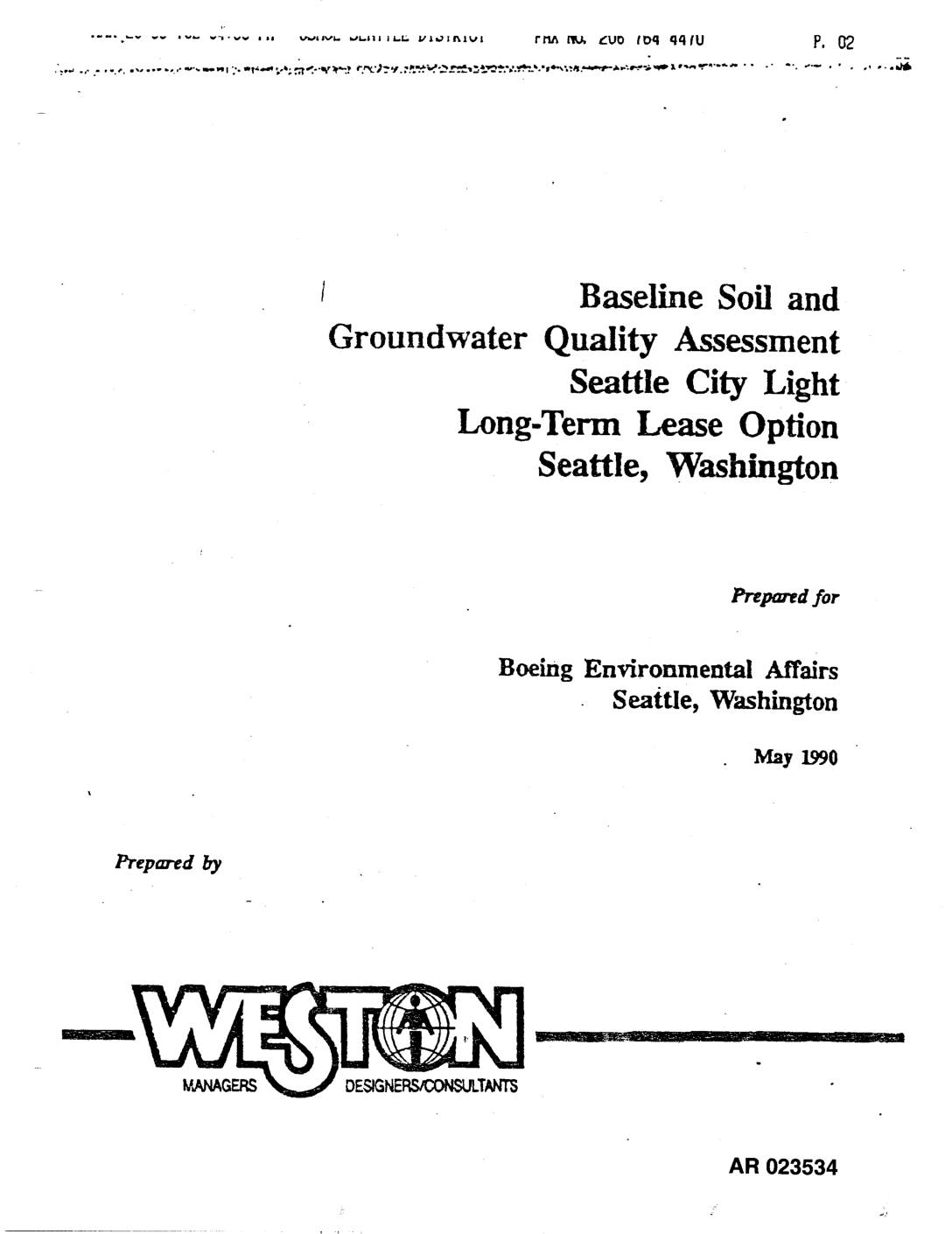
EXH AR023534: Baseline Soil & Groundwater Quality Assessment — Seattle City Light Long-Term Lease Option
A 1990 environmental assessment by Roy F. Weston Inc. evaluated soil and groundwater quality on an undeveloped Seattle property along the Duwamish Waterway, where Boeing was considering a 50-year lease with Seattle City Light. The study examined areas where dredged sediment from the Duwamish Waterway had been deposited in 1968 and 1985, testing for contaminants including PCBs, pentachlorophenols, PAHs, and metals. Prior sampling had found contaminant levels generally below state-regulated thresholds, and this baseline assessment was conducted to document existing conditions before any lease agreement was finalized. -
 1989-05-03
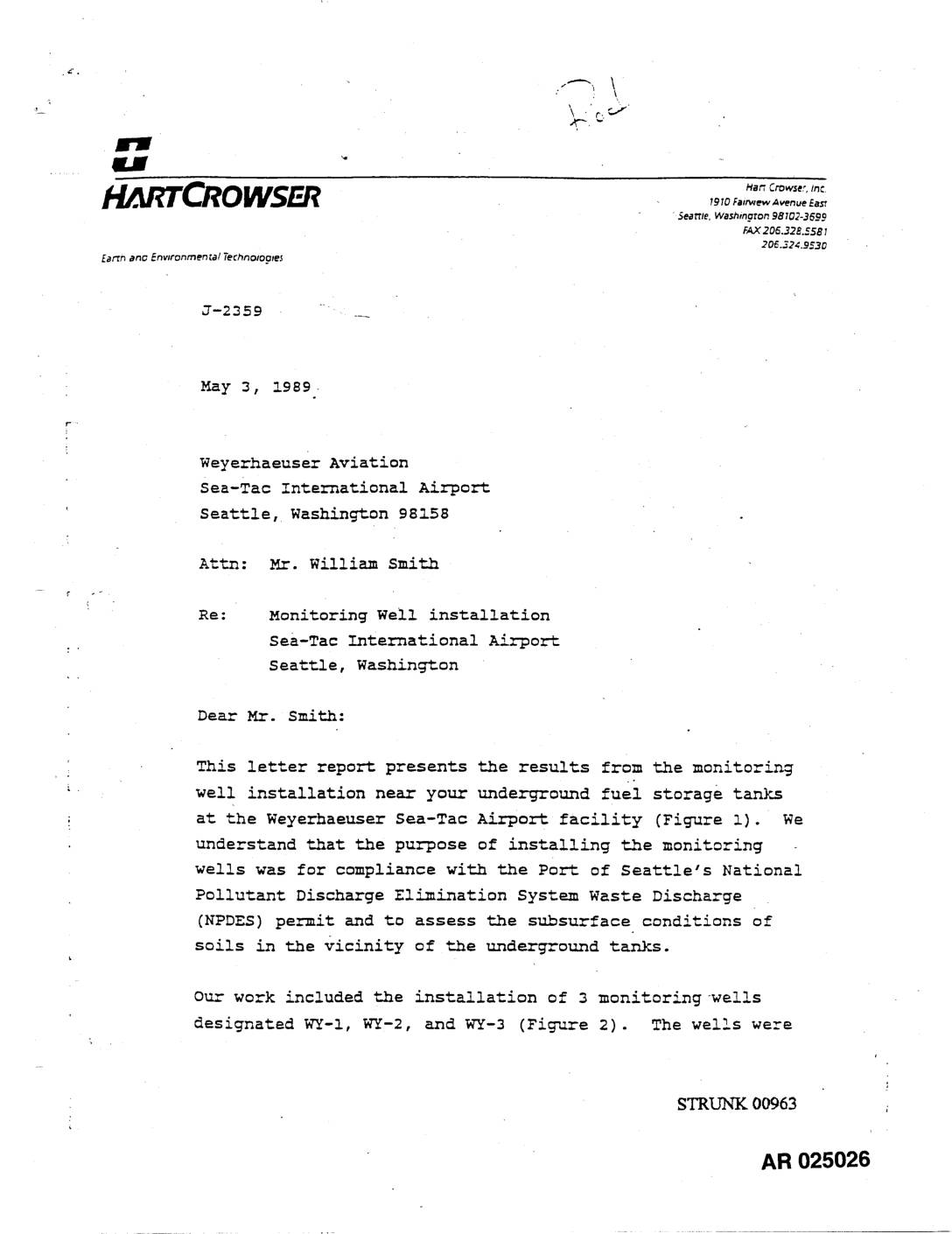
EXH AR025026: Hart Crowser Monitoring Well Installation RP, Weyerhaeuser Aviation, STIA
A May 1989 environmental report from Hart Crowser, Inc. details the installation of three groundwater monitoring wells (WY-1, WY-2, WY-3) near underground fuel storage tanks at the Weyerhaeuser Aviation facility at Sea-Tac International Airport. Soil samples collected during drilling showed no detectable petroleum contamination, and no groundwater was encountered at the site. The report was prepared to help Weyerhaeuser comply with the Port of Seattle's NPDES permit requirements and to assess subsurface soil conditions around the tanks. -
 1980-01-01
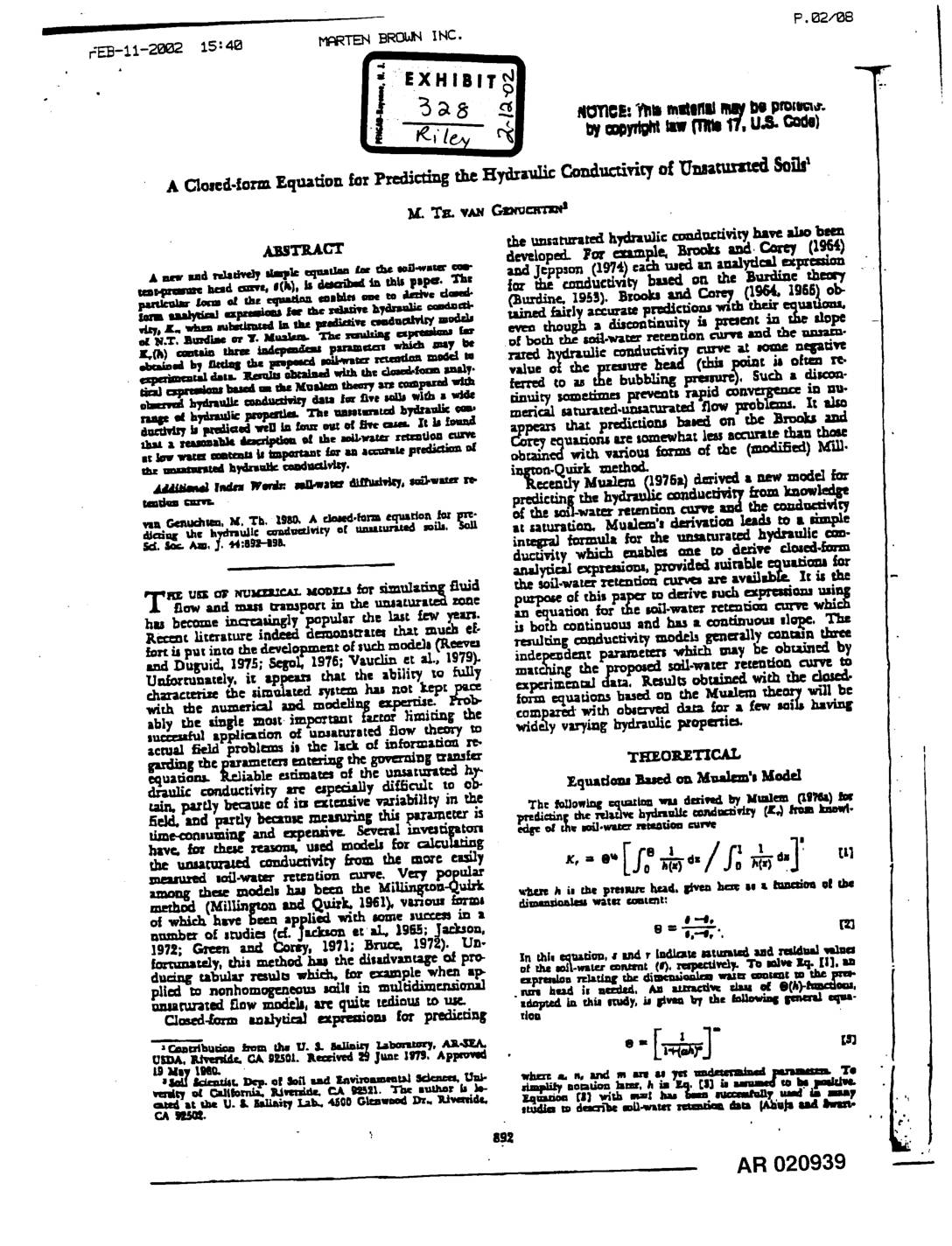
EXH AR020939: Closed-Form Equation Predicting Hydraulic Conductivity Unsaturated Soils
This 1980 soil science paper by M.Th. van Genuchten presents a closed-form mathematical equation for predicting how well water moves through unsaturated (partially dry) soils. The equation relates soil-water retention to hydraulic conductivity using a small set of measurable parameters, offering a simpler and more computationally reliable alternative to earlier methods. The model was validated against observed data for several soils with widely varying properties.