TagPuget Sound Regional Council(191)
-
 2019-03-19
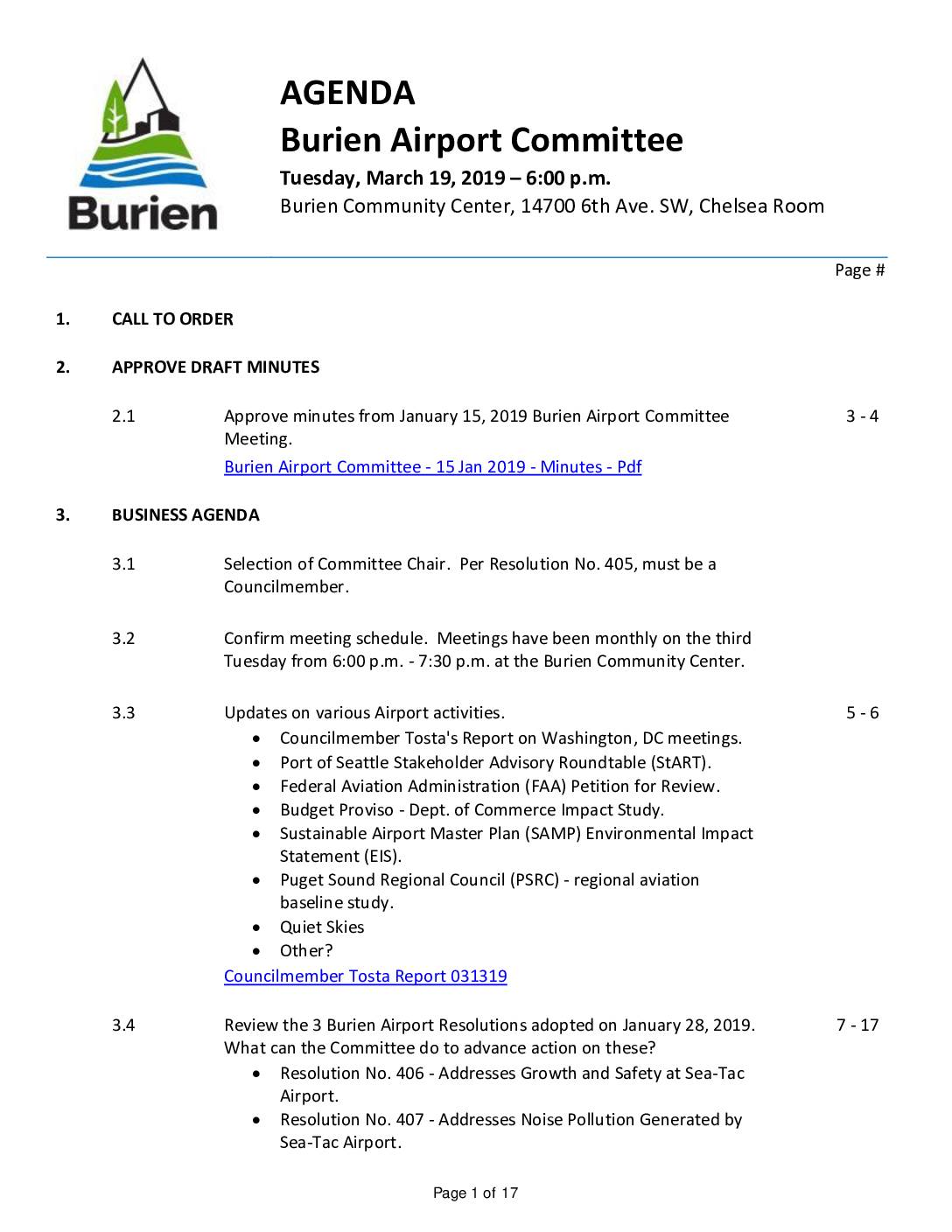
Burien Airport Committee meeting agenda, March 19, 2019
The Burien Airport Committee met on March 19, 2019 to discuss concerns about Sea-Tac Airport's impact on the surrounding community, including noise pollution, safety, and health effects. The agenda included updates on federal and regional aviation policy efforts, and a review of three resolutions adopted by the Burien City Council on January 28, 2019, addressing airport growth, noise pollution, and requests for health impact monitoring. The committee also discussed priorities for 2019 and how to advance action on these resolutions at the local, state, and federal levels. -
 2019-02-01
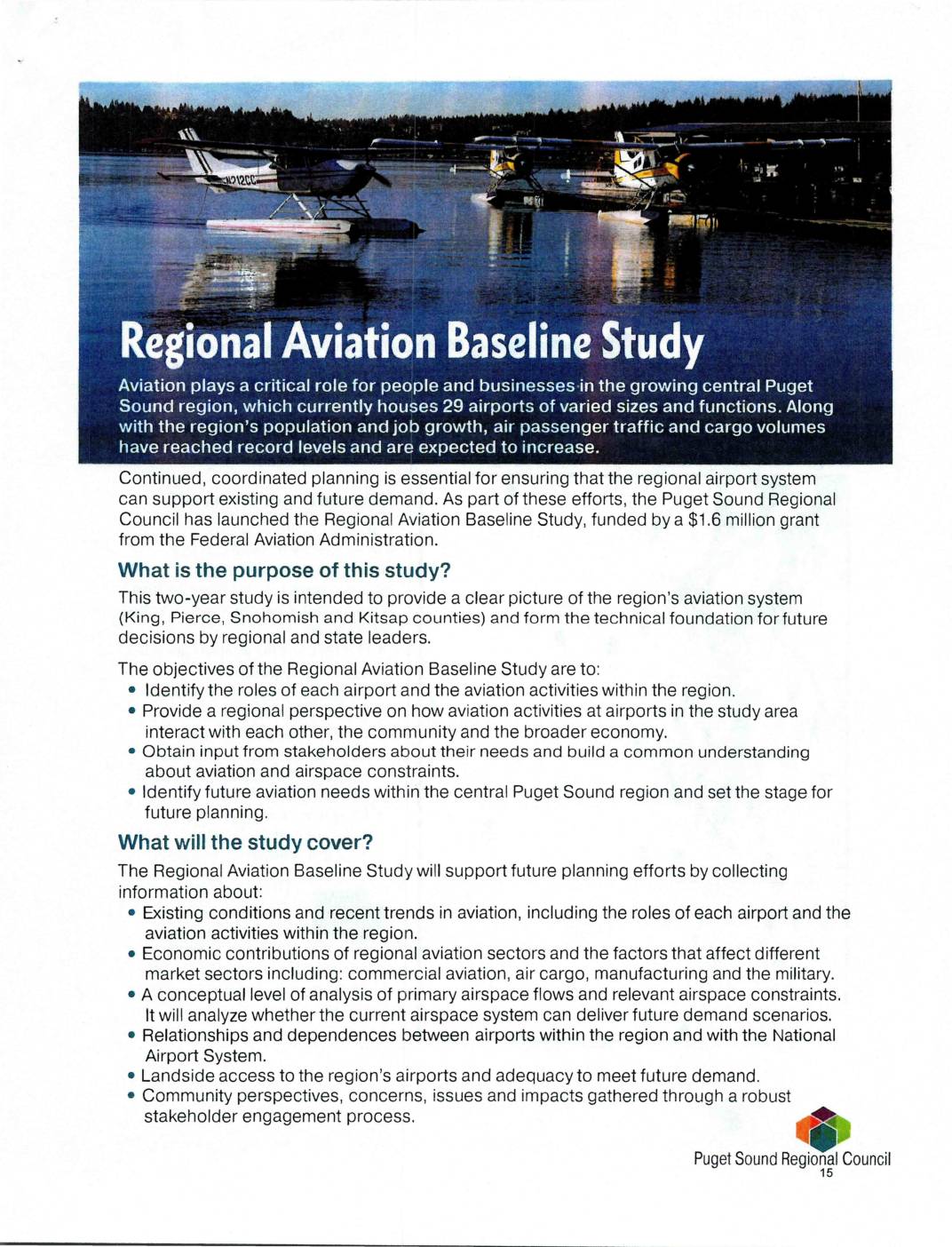
Regional Aviation Baseline Study
The Puget Sound Regional Council launched a two-year Regional Aviation Baseline Study, funded by a $1.6 million FAA grant, to assess the aviation system across King, Pierce, Snohomish, and Kitsap counties. The study examined existing airport roles, economic contributions, airspace capacity, and community impacts to build a technical foundation for future regional aviation planning decisions. Conducted in phases from 2019 to 2020, the study included stakeholder engagement, public meetings, and a final report outlining strategies for accommodating future aviation demand in the central Puget Sound region. -
 2019-01-24
Regional Aviation Baseline Study: PSRC Executive Board Presentation
A January 2019 report to the Puget Sound Regional Council examines aviation demand in the Central Puget Sound region, where the population grew from 3.7 million to 4.1 million people and jobs increased from 1.9 million to 2.3 million between 2010 and 2018. Over roughly the same period, passenger traffic at Seattle-Tacoma International Airport rose 43% to 46.9 million passengers, while aircraft operations increased 32% to 416,000 annually. The study establishes a baseline for understanding how this rapid regional growth is driving increased aviation activity, with implications for noise and capacity planning. -
 2018-12-21
Washington State air cargo movement study: Final report
This December 2018 final report, prepared by WSP and KPA for Washington State's Joint Transportation Committee, examines air cargo movement across Washington State, including operations at major facilities such as Seattle-Tacoma International Airport (Sea-Tac), Boeing Field, Paine Field, Spokane International, and the Port of Moses Lake. The study involved a broad stakeholder panel of legislators, port representatives, airlines, freight forwarders, and transportation agencies to assess the state's air cargo infrastructure and needs. It serves as a planning resource for understanding freight aviation activity in the region, though it is not primarily focused on airport noise policy. -
 2018-12-14
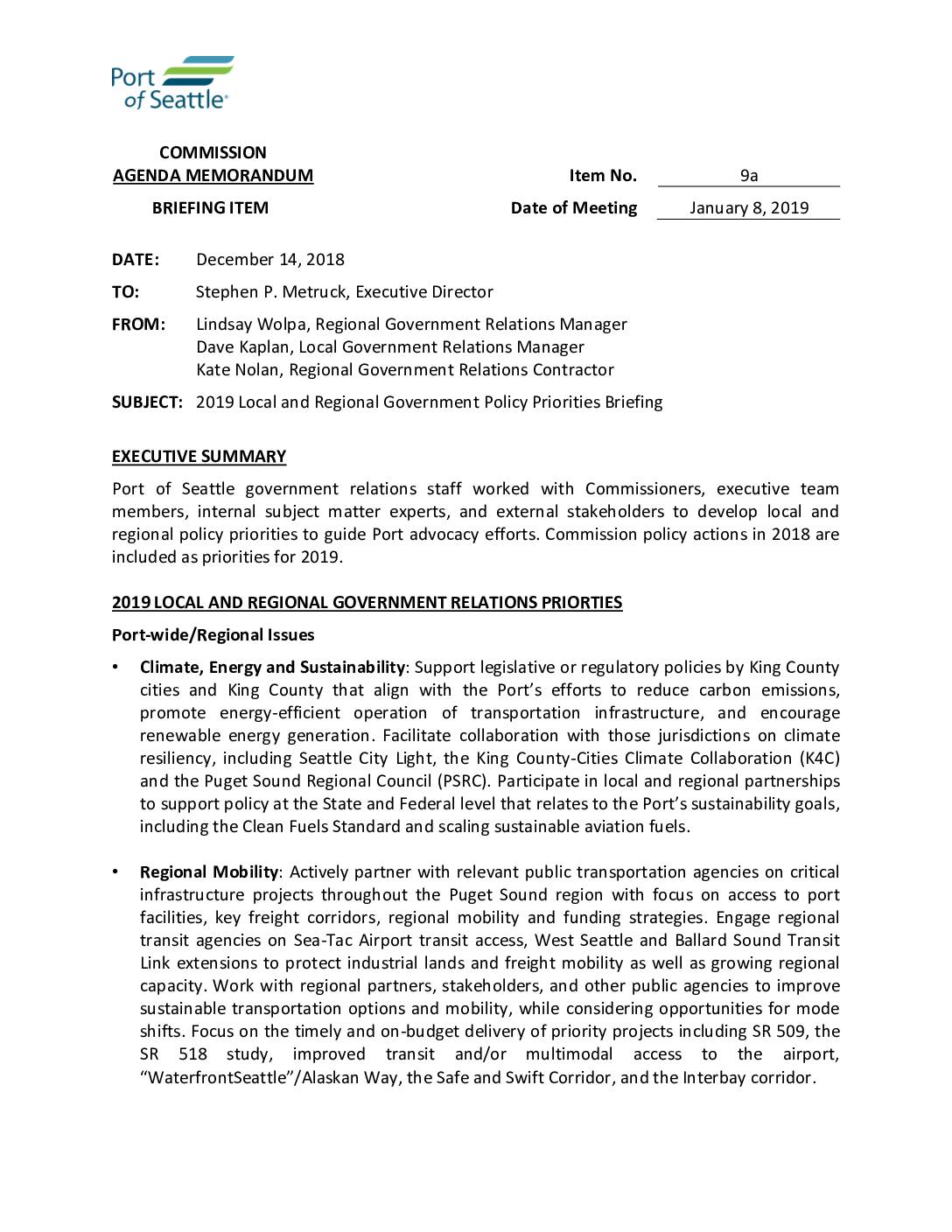
2019 local and regional government policy priorities briefing
This January 2019 Port of Seattle Commission briefing outlines the agency's local and regional government policy priorities for 2019, covering areas such as climate and sustainability, regional transportation, workforce development, maritime projects, and aviation. On the airport side, key priorities include advancing the Sustainable Airport Master Plan (SAMP) near-term projects to address regional demand, and engaging surrounding South King County communities through forums like the Sea-Tac Stakeholder Advisory Round Table (StART). The document reflects the Port's broader effort to balance airport growth with community concerns, economic opportunity, and environmental responsibility. -
 2018-11-28
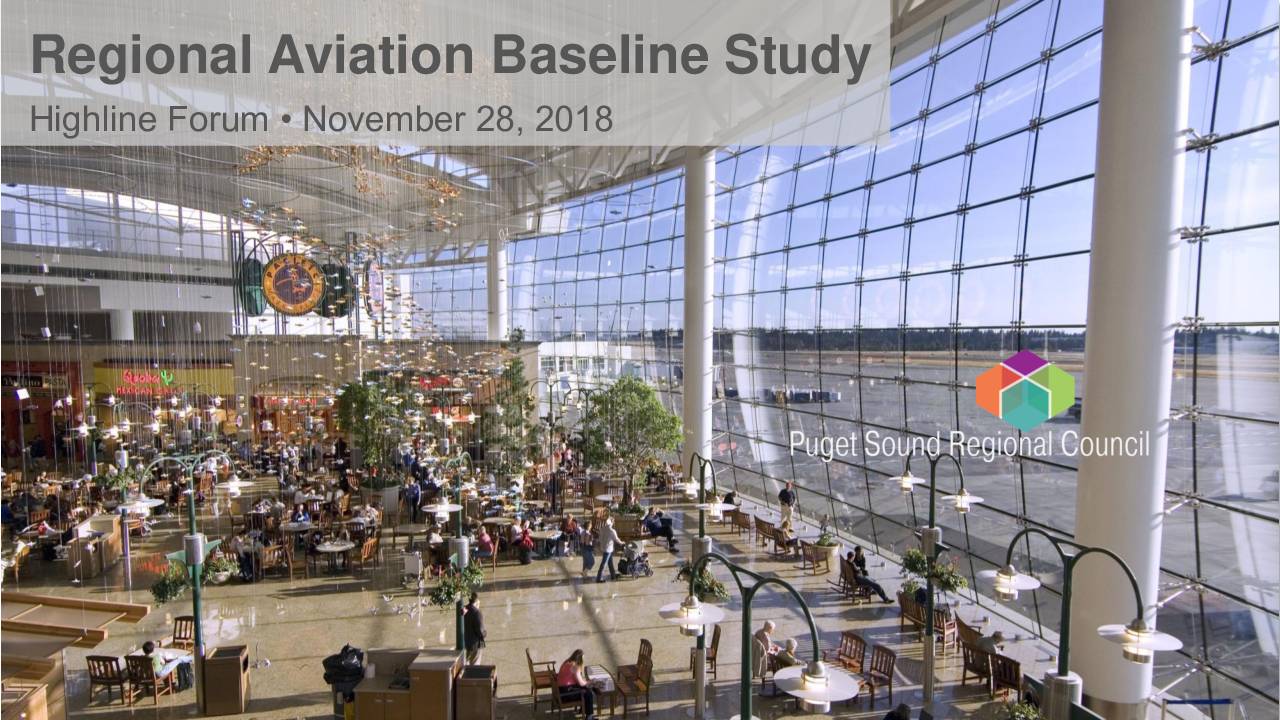
Regional Aviation Baseline Study
A November 2018 presentation by the Puget Sound Regional Council examined regional aviation needs against a backdrop of rapid growth in the central Puget Sound area, where the population rose from 3.7 million to 4.1 million people between 2010 and 2018. Over the same period, the region's job count grew from 1.9 million to 2.3 million, reflecting a strong and expanding economy. The study established a baseline for understanding how this growth affects aviation demand and, by extension, noise and capacity pressures at airports such as Sea-Tac. -
 2018-11-28
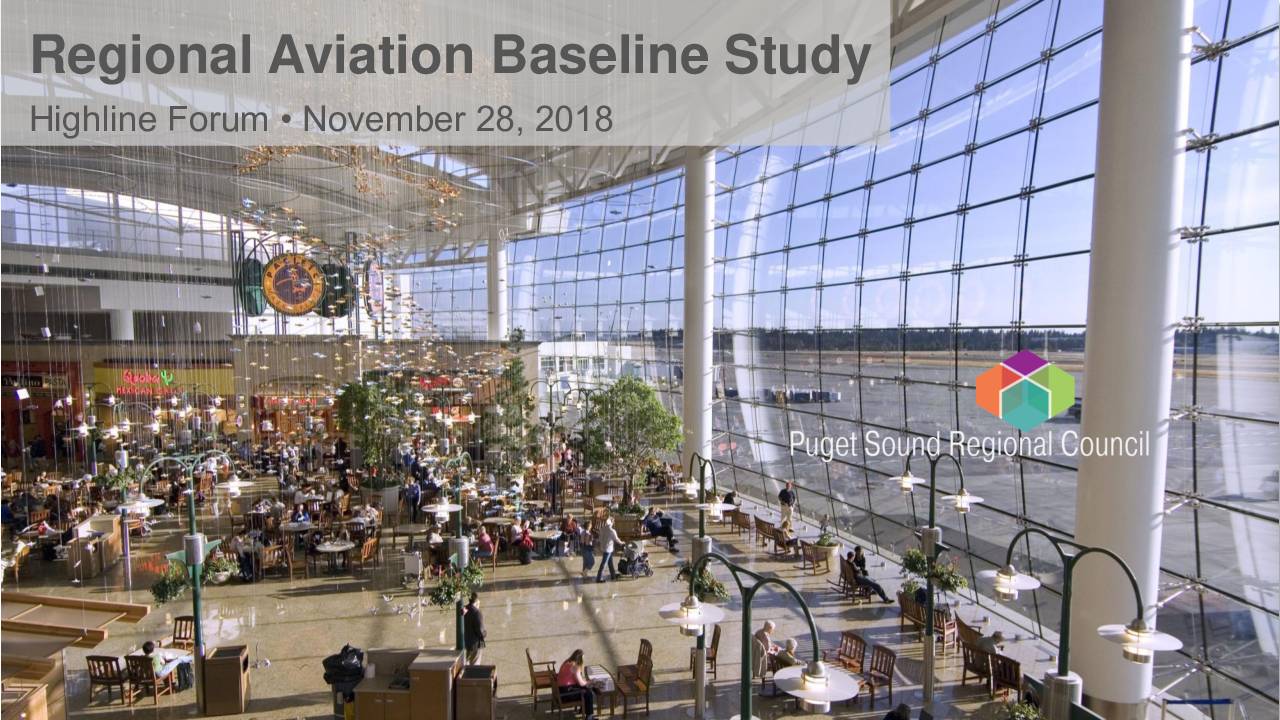
Regional Aviation Baseline Study
A November 2018 presentation by the Puget Sound Regional Council examined the growing demand for aviation in the central Puget Sound region, driven by rapid population growth from 3.7 million to 4.1 million people and job growth from 1.9 million to 2.3 million jobs between 2010 and 2018. The Regional Aviation Baseline Study was presented to the Highline Forum to establish a foundation for understanding how the region's booming economy and population are shaping future airport capacity needs. The study provides context for ongoing policy discussions around Sea-Tac Airport and regional aviation planning. -
 2018-06-21
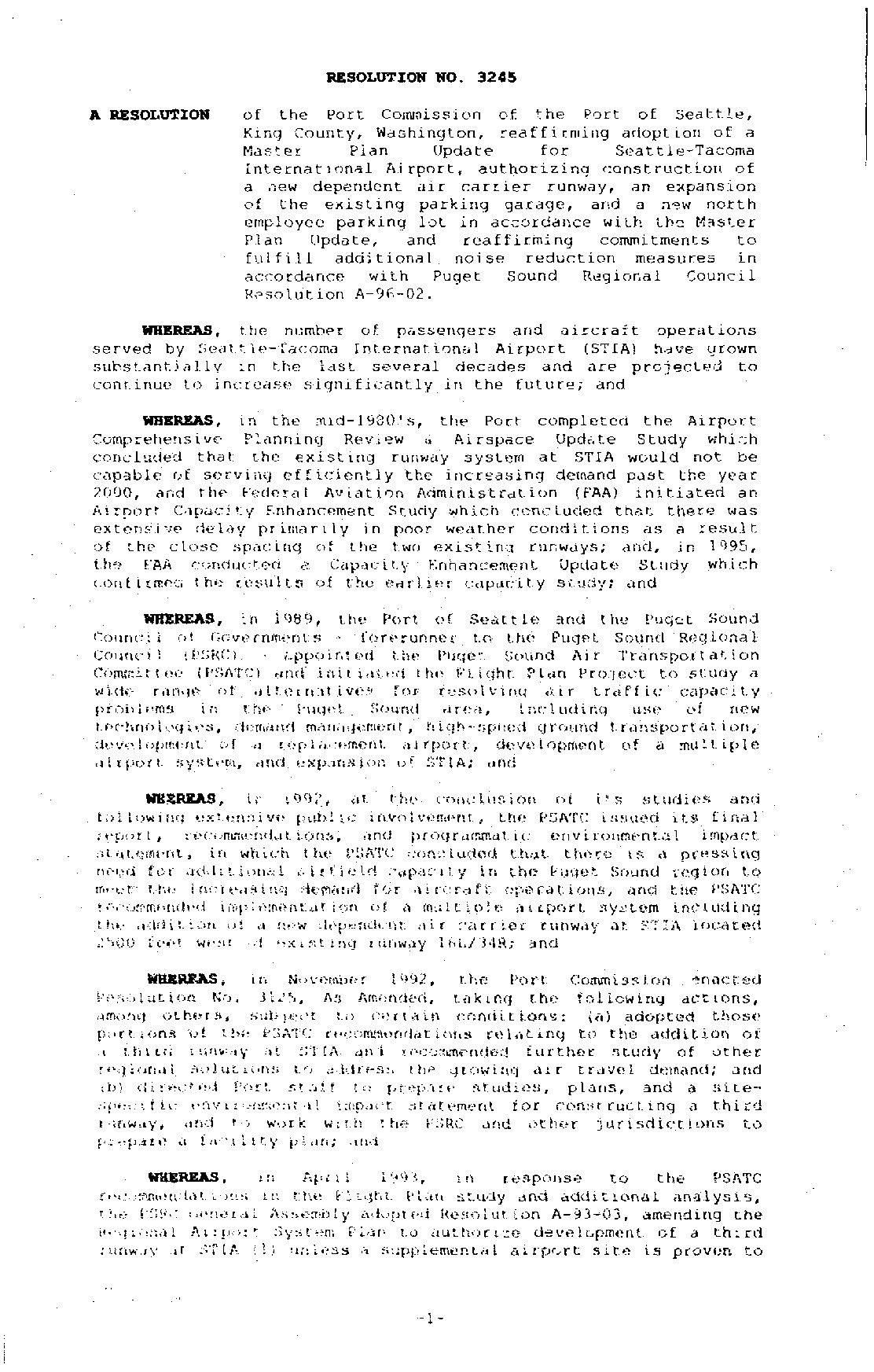
Resolution No. 3245: Reaffirming adoption of a Master Plan Update for Seattle-Tacoma International Airport
Passed before 3rd Runway -
 2018-05-31
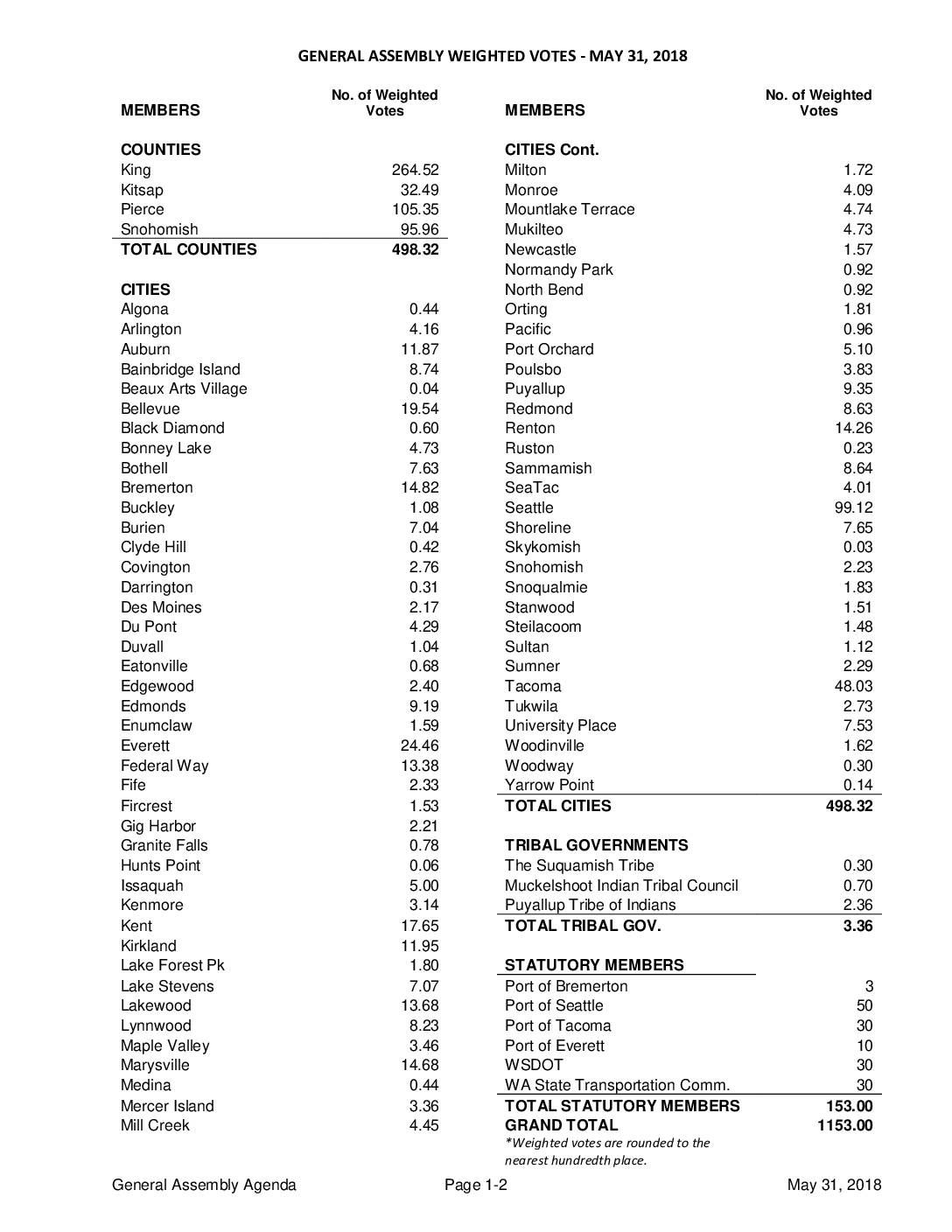
General Assembly weighted votes – May 31, 2018
This document lists the weighted voting allocations for the General Assembly meeting held on May 31, 2018, covering member jurisdictions including counties, cities, tribal governments, and statutory members in the Puget Sound region. King County holds the largest county share at 264.52 votes, while Seattle leads all cities at 99.12 votes, and ports, WSDOT, and the Washington State Transportation Commission collectively contribute 153 statutory votes. The grand total of all weighted votes across all member categories equals 1,153.00. -
 2018-05-01
The Regional Transportation Plan — 2018
The Regional Transportation Plan — 2018 is a draft planning document produced by the Puget Sound Regional Council (PSRC) in May 2018, outlining the regional transportation vision and investment priorities for the greater Puget Sound area, including King, Pierce, Snohomish, and Kitsap counties. Funded in part by federal transportation agencies and Washington State, the plan addresses multimodal transportation networks including roads, transit, and non-motorized travel. Note: this document does not specifically address Sea-Tac Airport noise policy and may have limited relevance to airport noise concerns.