TagPuget Sound Regional Council(191)
-
2019-11-26
Regional Aviation Baseline Study
PSRC is leading a baseline study to provide a clear picture of the aviation activities and needs in the region and set the stage for future planning efforts. Aviation plays a critical role for people and businesses in the growing central Puget Sound region, which is currently home to 29 airports of varied sizes and functions. Continued, -
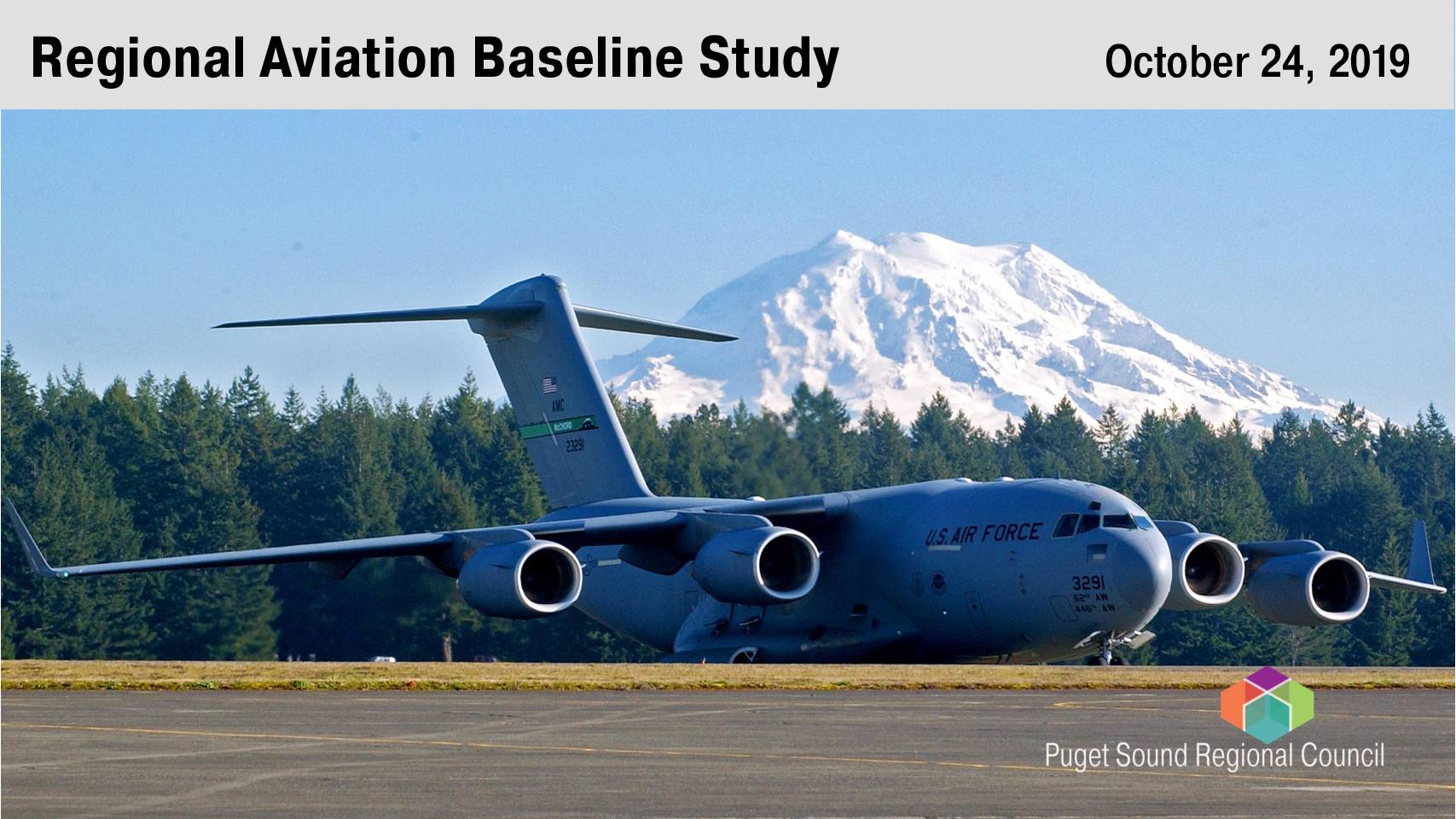 2019-10-24
Regional Aviation Baseline Study
The Regional Aviation Baseline Study, published October 24, 2019 by the Puget Sound Regional Council, examines the roles and interactions of 29 airports across the central Puget Sound region, including Sea-Tac, Boeing Field, and Tacoma Narrows. The study aims to provide a regional perspective on how aviation activities affect communities and the broader economy, while gathering stakeholder input on aviation and airspace constraints. Its findings are intended to identify future aviation needs and inform long-term regional planning efforts. -
Puget Sound Gateway program kicks off
Connecting SR 167 and SR 509 to I-5 Puget Sound Gateway program will help move freight faster. (Photo – Port of Tacoma) State and regional leaders celebrated the beginning of the Puget Sound Gateway Program this month. This multiyear program will complete SR 167 in Pierce County and SR 509 in King County. These new -
Where’s the next Sea-Tac? Aviation here is expected to soar
A new study predicts demand for airline service in the Puget Sound region will double by 2050. By Janice Podsada • July 2, 2019 11:30 am SEATTLE — Demand for passenger air service and air cargo capacity in the Puget Sound region is expected to soar over the next three decades, an ongoing aviation study says. Passenger -
 2019-07-01
Regional Aviation Baseline Study: Working Paper 1 — Airport and Aviation Activity
This 2019 Working Paper, prepared by WSP for the Puget Sound Regional Council, examines airport and aviation activity across the greater Seattle-Tacoma region as part of a Regional Aviation Baseline Study. It covers commercial aviation, general aviation, and air cargo trends and forecasts, along with multimodal access and economic context for the region's airports. The study establishes baseline data and metrics to inform future regional aviation planning and policy decisions. -
2050 Forecasts for Aviation Demand
Aviation plays a critical role for people and businesses in the growing central Puget Sound region. Along with the region’s population and job growth, air passenger traffc and cargo volumes have reached record levels and are expected to increase. PSRC is leading a Regional Aviation Baseline Study to provide a clear picture of the aviation -
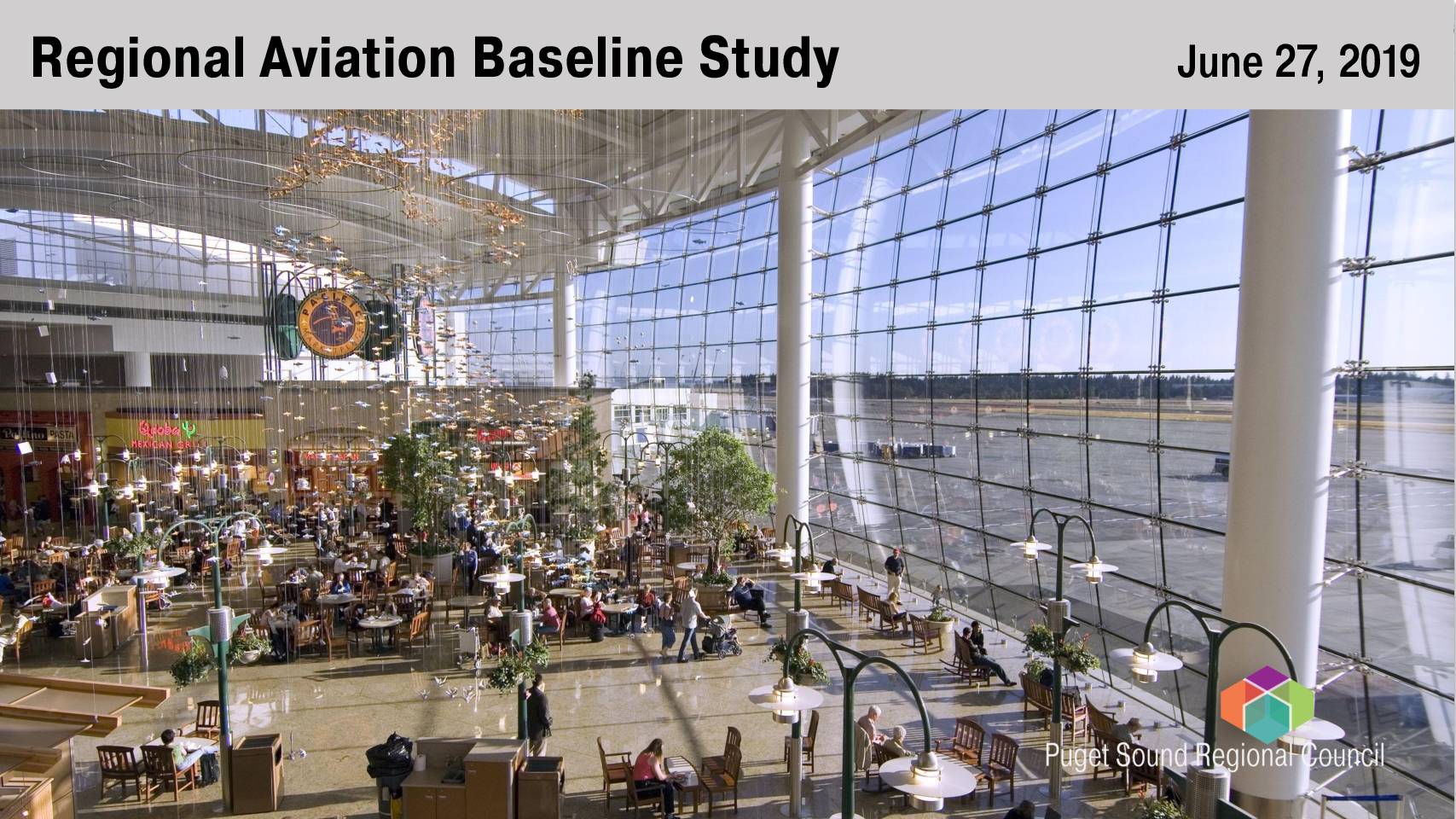 2019-06-27
Regional Aviation Baseline Study
The Regional Aviation Baseline Study, published June 27, 2019 by the Puget Sound Regional Council, examines the roles and interactions of 29 airports across the central Puget Sound region, including Sea-Tac as the area's sole large hub. The study aims to gather stakeholder input on aviation and airspace constraints, assess how airport activities affect surrounding communities and the broader economy, and lay the groundwork for future regional aviation planning. -
 2019-06-27
Regional Aviation Baseline Study
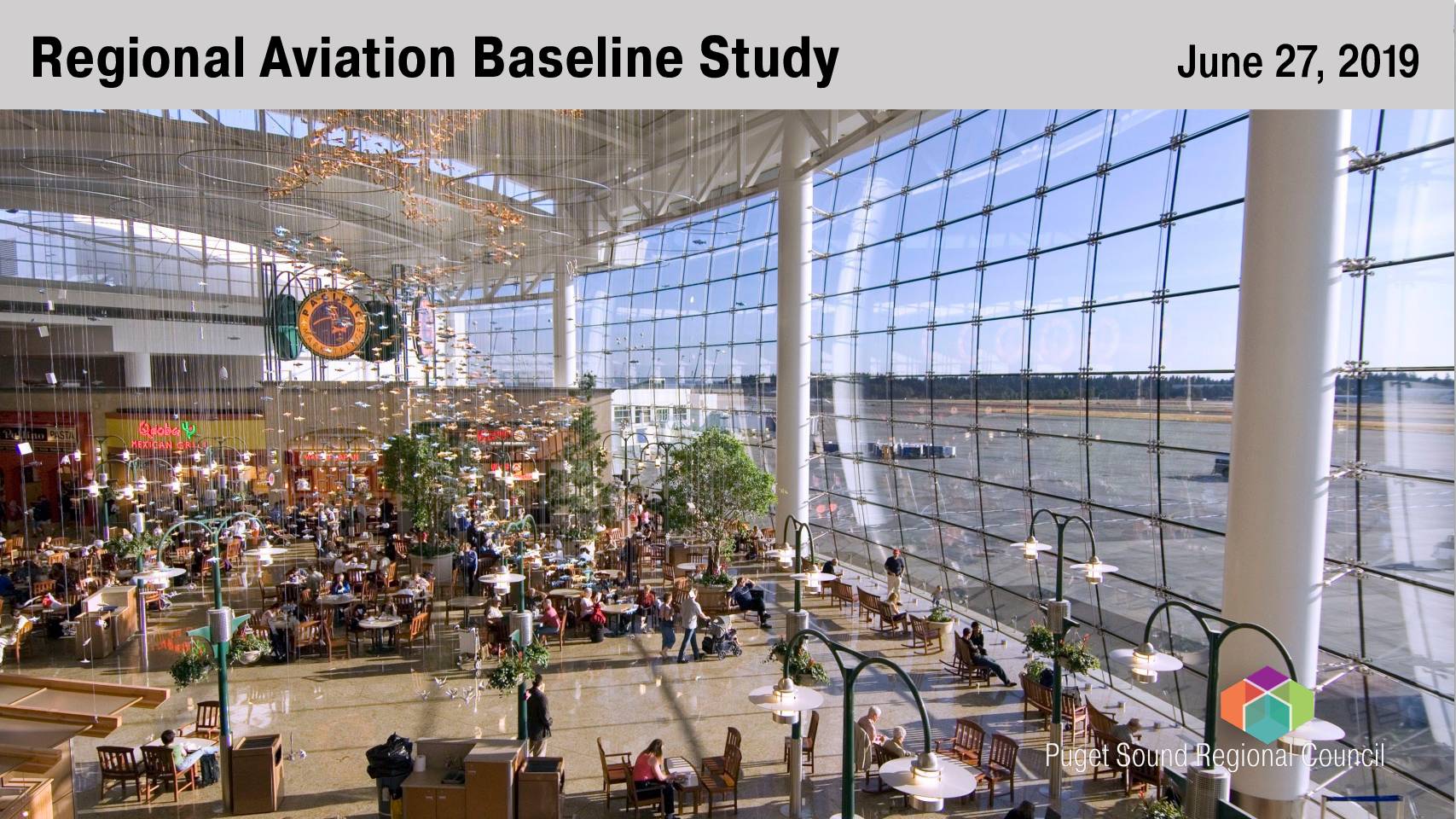
The Regional Aviation Baseline Study, published by the Puget Sound Regional Council in June 2019, examines the roles and interactions of 29 airports across the central Puget Sound region, including Sea-Tac as the area's primary large hub. The study aims to provide a regional perspective on how aviation activities affect communities and the broader economy, while gathering stakeholder input on aviation and airspace constraints. Its findings are intended to identify future aviation needs and lay the groundwork for long-term regional planning. -
 2019-06-11
Regional Aviation Baseline Study: Technical Workshop #1 Presentation
This document is a presentation from the first Technical Workshop of the Regional Aviation Baseline Study, held on June 11, 2019. It covers an overview of airport and aviation activities in the region, including data collection, economic context, trends and forecasts, and multimodal transportation connections. The workshop also addressed goal areas, objectives, and performance metrics to inform future regional aviation policy. -
 2019-05-01
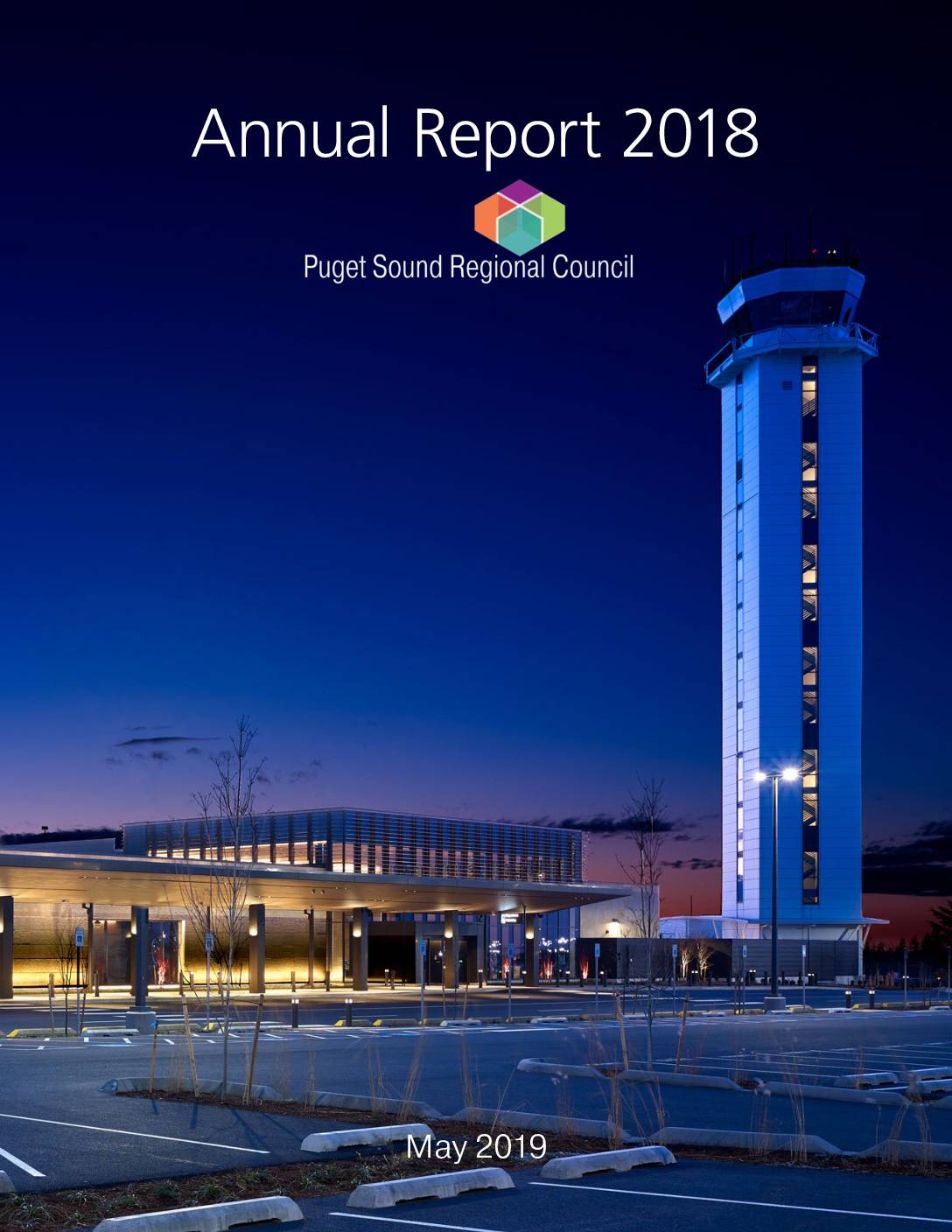
Puget Sound Regional Council Annual Report 2018
The Puget Sound Regional Council's 2018 Annual Report highlights regional transportation milestones, including the opening of the new Paine Field Passenger Terminal in Snohomish County — a project described as decades in the making. The report features a message from PSRC President and Snohomish County Executive Dave Somers and Executive Director Josh Brown, celebrating the terminal as a major economic and travel resource for the greater Puget Sound region. Note: this document focuses on regional planning and infrastructure progress and does not directly address Sea-Tac Airport noise policy.