TagPuget Sound Regional Council(191)
-
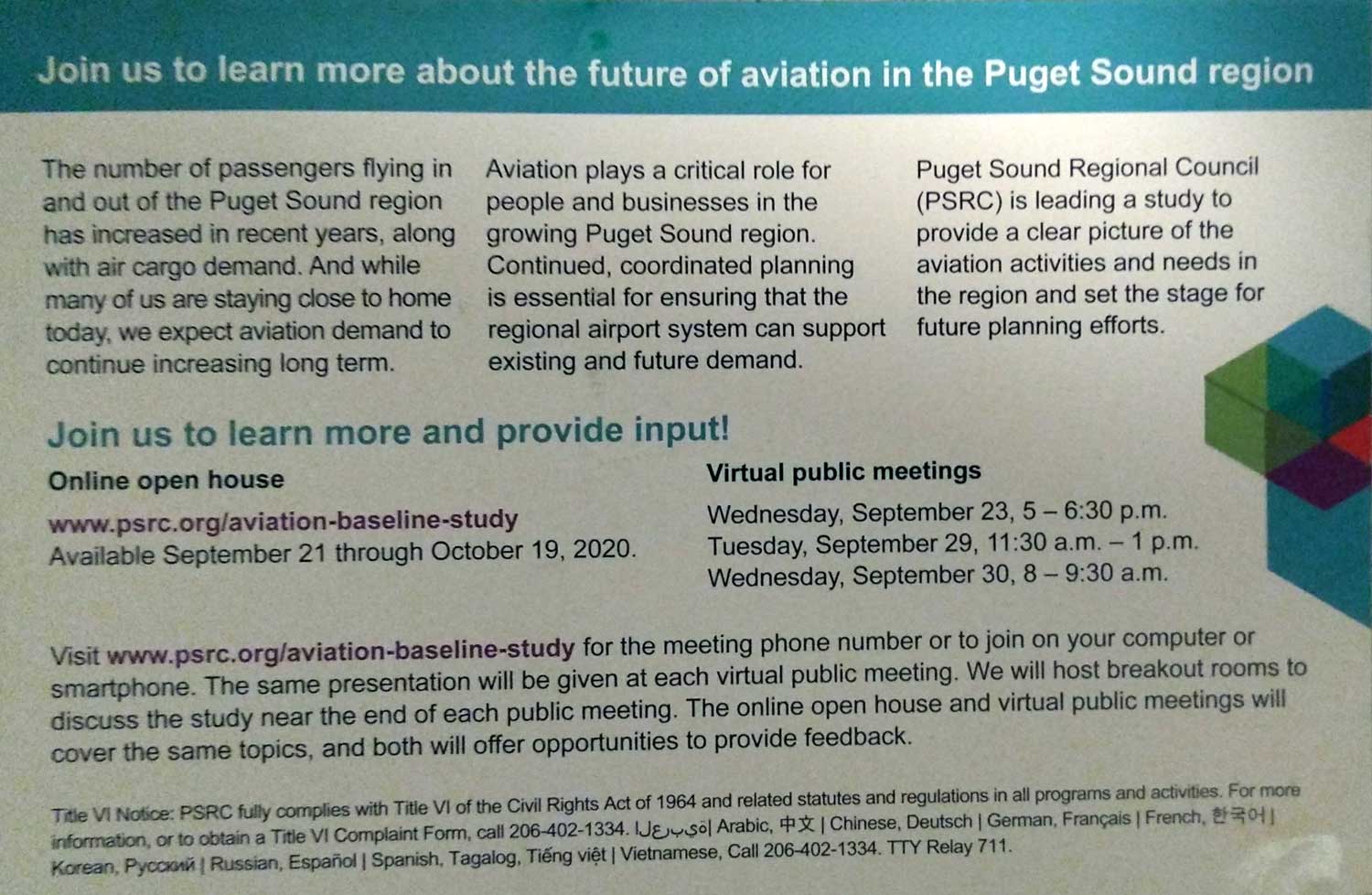
PSRC Baseline Study Virtual Public Meeting Postcard (09-23-2020)
A public outreach flyer from the Puget Sound Regional Council (PSRC) inviting community members to learn about the future of aviation in the Puget Sound region. The flyer advertises an online open house at www.psrc.org/aviation-baseline-study (available September 21–October 19, 2020) and three virtual public meetings scheduled for September 23, 29, and 30, 2020. -
 2020-09-20
Regional Aviation Baseline Study
The Regional Aviation Baseline Study, produced by the Puget Sound Regional Council, examines the current state and future challenges of aviation in the Puget Sound region, covering scenario development, airport analysis, and public engagement. The study highlights near-term disruptions to air travel, noting that passenger volume at Seattle-Tacoma International Airport dropped to just 27% of normal levels during the COVID-19 pandemic, with daily travelers falling to 17,200 and aircraft operations declining from 1,160 to 840 takeoffs and landings per day. The findings provide a foundation for regional planning decisions related to airport capacity, operations, and policy. -
 2020-07-23
Regional Aviation Baseline Study Presentation
The Regional Aviation Baseline Study, conducted by the Puget Sound Regional Council, examines aviation activity and infrastructure across the Puget Sound region. The study covers scenario development, economic analysis, and a detailed assessment of the region's airports, including major facilities like Sea-Tac. It provides a foundational framework for understanding current and future aviation capacity, demand, and related policy considerations in the greater Seattle area. -
Puget Sound Regional Council General Assembly
The General Assembly is PSRC’s annual meeting where members vote on major decisions, including adoption of PSRC’s budget and election of officers. All mayors, county executives, commissioners, and councilmembers of PSRC member jurisdictions and tribes have votes at the Assembly and are encouraged to participate. We need at least one elected official from your jurisdiction -
 2020-06-09
Regional Aviation Baseline Study
The Regional Aviation Baseline Study, conducted by the Puget Sound Regional Council, examines 29 airports across King, Snohomish, Kitsap, and Pierce counties to understand how aviation activities interact with communities and the broader regional economy. The study identifies each airport's role, gathers stakeholder input on aviation and airspace constraints, and establishes a foundation for future regional aviation planning. Sea-Tac Airport is the region's primary large hub, and the study provides context for understanding the broader network of aviation activity that shapes noise and land-use policy decisions across the central Puget Sound area. -
 2020-06-01
Regional Aviation Baseline Study: Working Paper 2 — Airport Needs Analysis
This June 2020 working paper, prepared by WSP for the Puget Sound Regional Council, analyzes the aviation needs of the greater Seattle-Tacoma region across commercial passenger service, air cargo, and general aviation. It evaluates current airport performance, benchmarks regional airports against comparable systems, and identifies infrastructure challenges and opportunities to meet future demand. The study assesses system-wide requirements and multimodal access needs to guide long-term regional aviation planning. -
 2020-06-01
Puget Sound Regional Council Annual Report, June 2020
The Puget Sound Regional Council (PSRC) 2020 Annual Report outlines the organization's response to COVID-19 challenges in the Central Puget Sound region, including the distribution of $538 million in federal CARES Act funding to local transit agencies such as King County Metro, Sound Transit, and Washington State Ferries. The report also highlights an ongoing competitive process to allocate over $540 million in federal transportation funding for 2023–2024, evaluated on criteria including health and equity, safety, emissions reduction, and accessibility. PSRC continues its mission of regional planning and transportation funding coordination across four counties in the greater Seattle-Tacoma-Everett area. -
 2020-04-07
Regional Aviation Baseline Study: Technical Workshop #3 Presentation
This document presents Technical Workshop #3 of the Regional Aviation Baseline Study, held on April 7, 2020 via BlueJeans video conferencing. The workshop covered study status updates, development and evaluation of aviation scenarios (including current planned development and options to accommodate 50–100% of future demand gaps), and airport evaluation criteria. Participants reviewed potential supplemental airports and discussed next steps for the regional aviation planning process. -
 2020-03-26
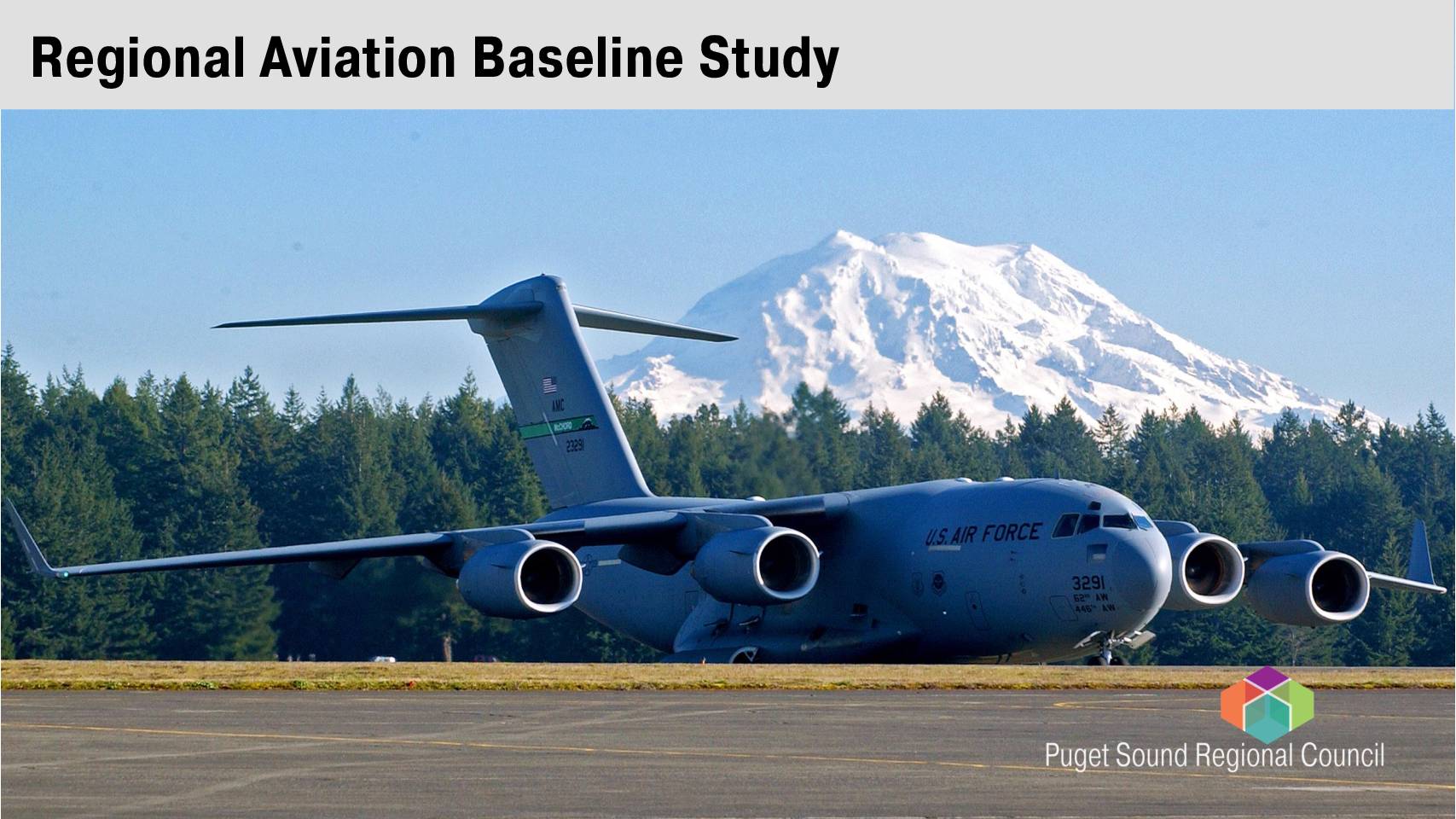
Regional Aviation Baseline Study
The Regional Aviation Baseline Study, conducted by the Puget Sound Regional Council, examines 29 airports across King, Snohomish, Kitsap, and Pierce counties to understand how aviation activities interact with communities and the broader regional economy. The study identifies each airport's role, gathers stakeholder input on aviation and airspace constraints, and sets the groundwork for future regional aviation planning. While Sea-Tac Airport serves as the region's primary large hub, the study provides context for understanding how operations across all regional airports—and their associated noise and community impacts—fit into the larger Puget Sound air transportation network. -
 2020-02-03
Adoption of 2020 local and regional policy priorities
This February 2020 Port of Seattle Commission memorandum outlines the organization's top local and regional policy priorities for 2020, including industrial lands protection, clean fuels and sustainability, cruise terminal development, and equity and inclusion initiatives. The document covers Port-wide priorities such as reducing carbon emissions, supporting regional transportation mobility, and workforce development across King County. While the document addresses broad Port operations and planning, it does not specifically focus on Sea-Tac Airport noise policy.