TagNoise Mitigation(218)
-
 2019-08-02
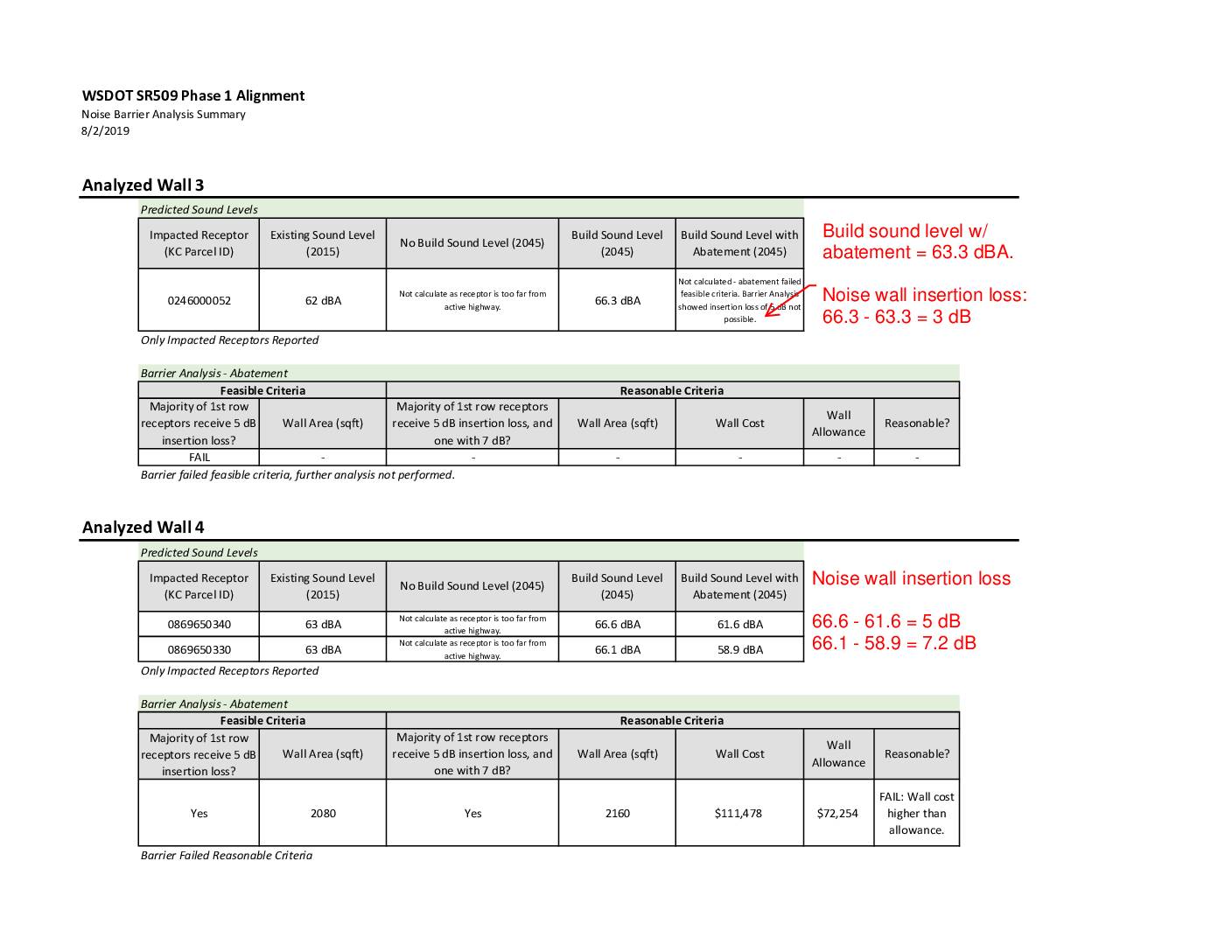
WSDOT SR509 Phase 1 alignment noise barrier analysis summary
This 2019 WSDOT report analyzes noise barriers along the SR509 Phase 1 highway alignment near the Sea-Tac area, evaluating whether proposed sound walls meet feasibility and cost-reasonableness standards. Wall 3 was rejected because it could not achieve the required 5 dB noise reduction for nearby residents. Wall 4 met the technical noise-reduction threshold but was ultimately rejected because its estimated cost of $111,478 exceeded the allowable budget of $72,254. -
 2019-07-31
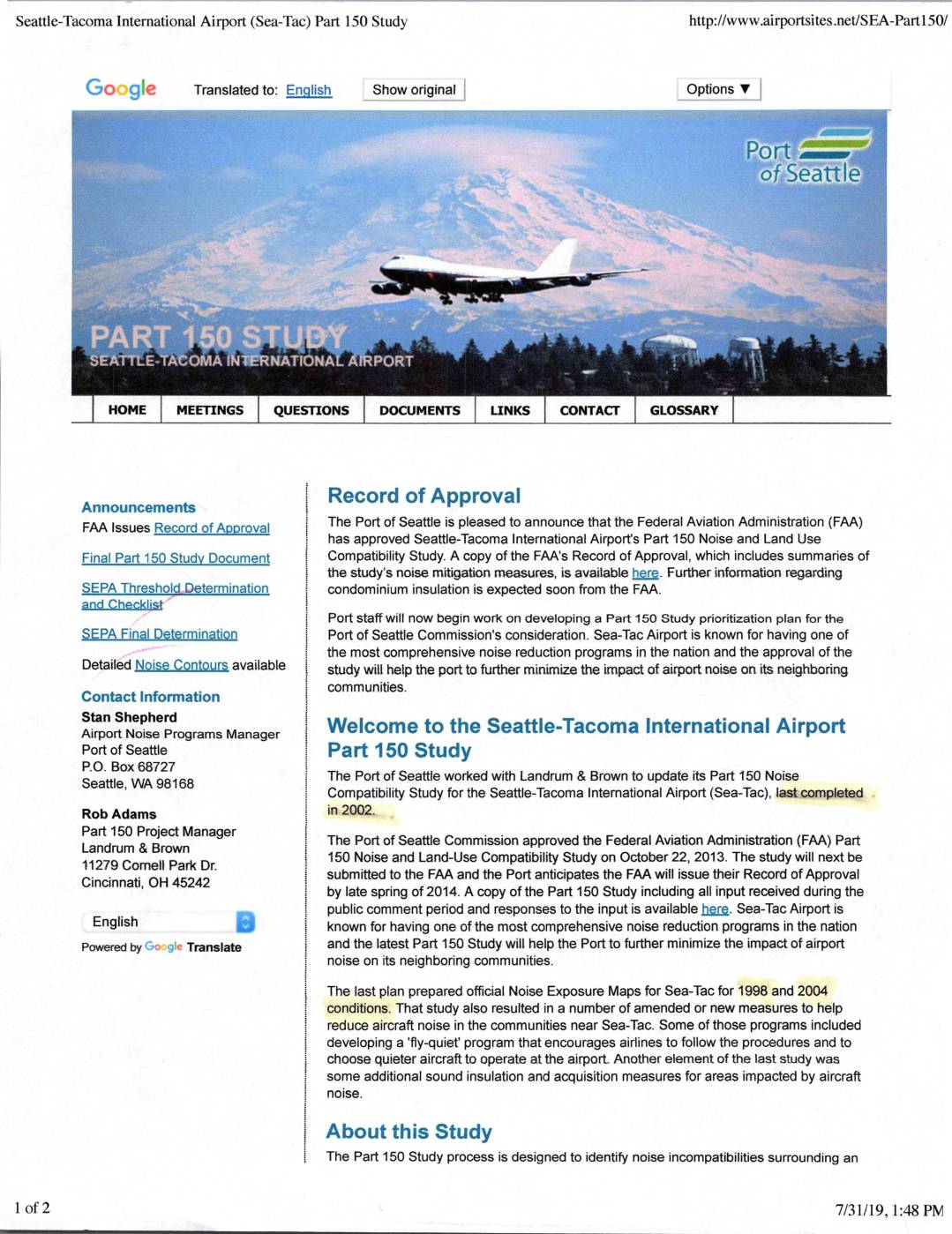
Seattle-Tacoma International Airport (Sea-Tac) Part 150 study
The Seattle-Tacoma International Airport (Sea-Tac) Part 150 Noise and Land Use Compatibility Study, approved by the Port of Seattle Commission in October 2013 and later by the FAA, aims to identify and reduce aircraft noise impacts on surrounding communities. The study developed noise exposure maps for 2013 and projected 2018 conditions, evaluated air traffic control procedures, and considered land use controls to limit noise-sensitive development in high-noise areas. Sea-Tac is recognized for having one of the most comprehensive airport noise reduction programs in the nation, with measures including a 'fly-quiet' program and sound insulation assistance for affected residents. -
 2019-07-31
Sound mitigation briefing: Highline Forum
This July 2019 briefing presented to the Highline Forum outlines Sea-Tac Airport's sound mitigation efforts under the FAA's Part 150 program, a voluntary federal framework that helps airports address noise and land use conflicts while qualifying for up to 80% federal grant funding. Sea-Tac's program, which began in 1985 and has undergone three updates (most recently in 2014), has involved extensive public outreach including workshops, city council presentations, and community forums. The briefing highlights that Sea-Tac Airport has been actively working to reduce aviation noise impacts on surrounding communities for more than 30 years. -
 2019-06-11
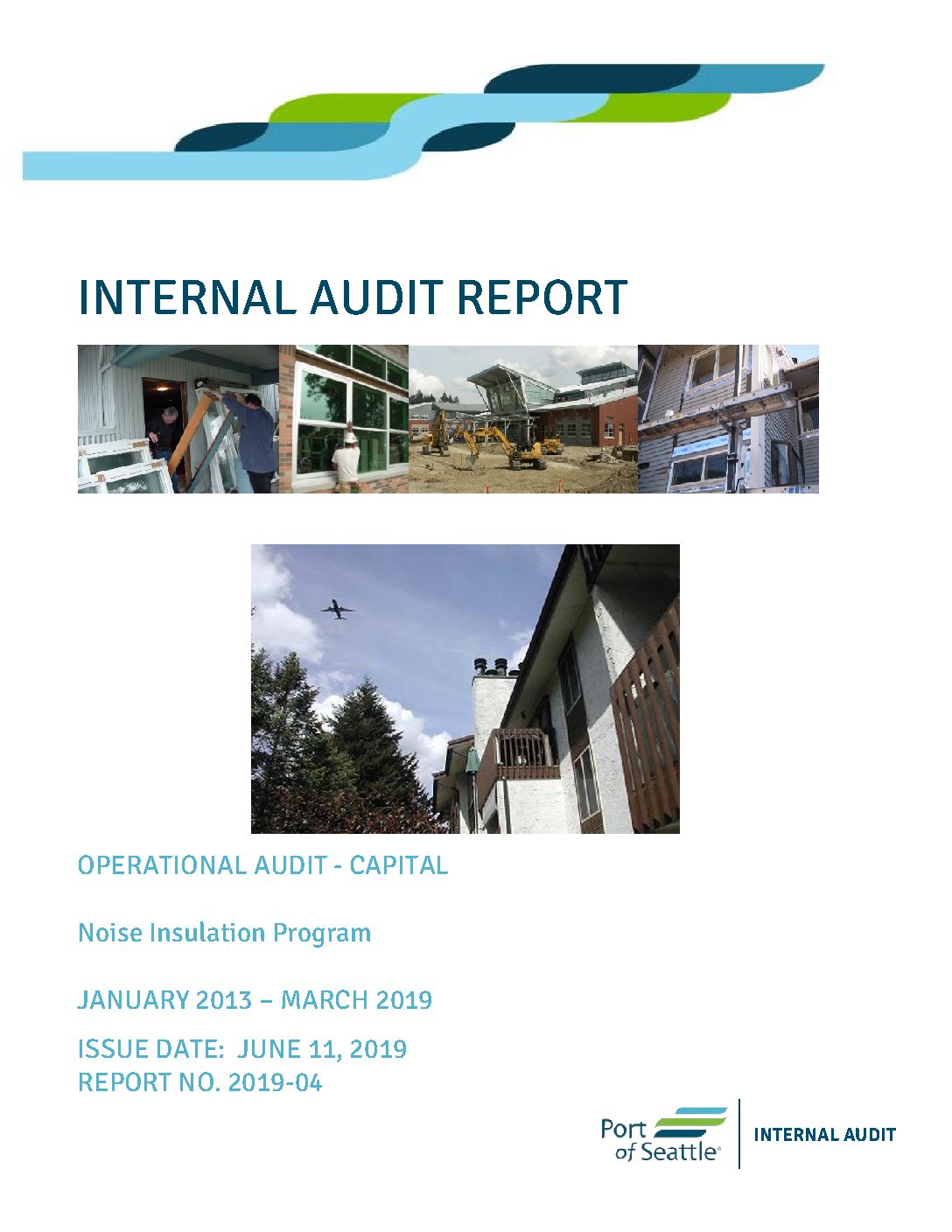
Internal Audit Report: Noise Insulation Program, January 2013 – March 2019
A 2019 Port of Seattle internal audit of the Noise Insulation Program — which has invested over $400 million since 1985 to reduce aircraft noise in homes and schools near Sea-Tac Airport — found two key problems: a contractor called Burton Construction overbilled the Port by an average markup of 51% above subcontractor costs, and the Highline School District failed to consistently meet federal grant requirements for disadvantaged business enterprises and Buy American standards. The audit covered January 2013 through March 2019 and assessed compliance with FAA federal grant rules. -
 2019-06-07
BAC SP2 ABCx2 review of Arlynn Purcell’s presentation to Burien
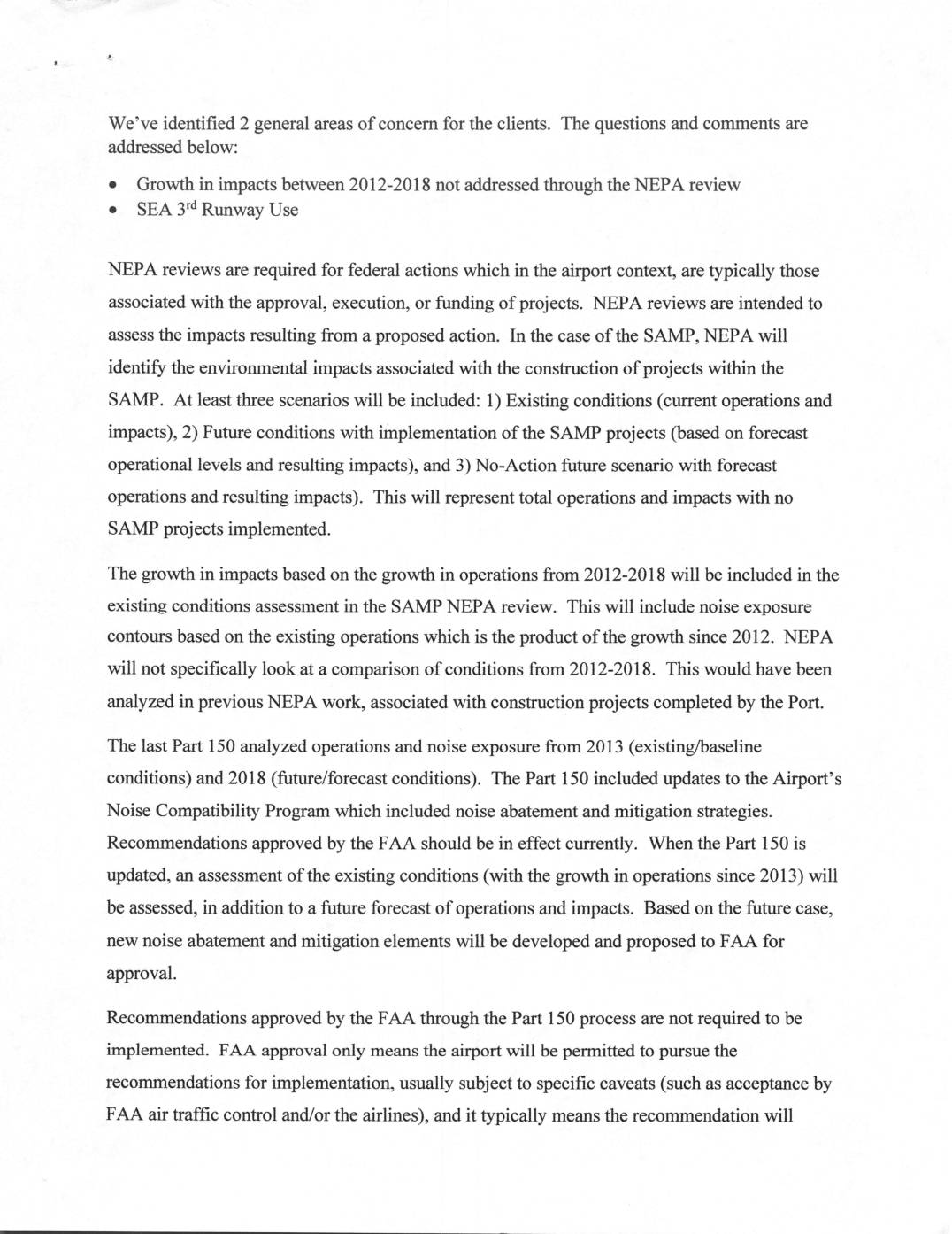
A consulting team addresses two community concerns about Seattle-Tacoma International Airport: the lack of a direct NEPA environmental review covering noise impact growth between 2012 and 2018, and questions about how the airport's third runway is being used. The document explains that while current NEPA and Part 150 processes will capture existing noise conditions, they will not specifically compare 2012 versus 2018 impacts, and that federally funded runways like the third runway must be made available whenever air traffic control deems it necessary. The consultants propose reviewing historical Part 150 studies, past NEPA documents, and third-runway records to assess noise impacts on surrounding communities, while also supporting clients in engaging the Port, FAA, and airlines through the StART committee and other channels. -
Poor neighborhood endures worst LAX noise but is left out of home soundproofing program
By Doug Smith May 31, 2019 | 8:10 PM Inglewood spent millions of dollars in public funds to soundproof middle-class areas of the city while bypassing one of the poorest neighborhoods where the roar from the Los Angeles International Airport flight path is loudest, according to a Times data analysis. Over the last several decades, -
Port Of Seattle Port Package Doors And Windows
These are the products the Port Of Seattle are currently using in their Port Package retro-fits Windows: Larsen SCS P-series ‘extreme’ Doors: PEM Millworks ‘Quiet Door’ Storm Doors: Larsen In the past they have also successfully used products from Milgard and VPI. Milgard seems to be the brand favored by builders on new construction in -
Milgard: Understanding Noise
Milgard understands the importance of peace and quiet in your home and engineers windows to help reduce unwanted noise. Unwanted outside noise can occur in homes by a highway, airport or in a loud urban setting. This can have a significant impact on the enjoyment of your home, particularly if it disrupts your sleep. Windows are -
Airport Improvement Program Comparison
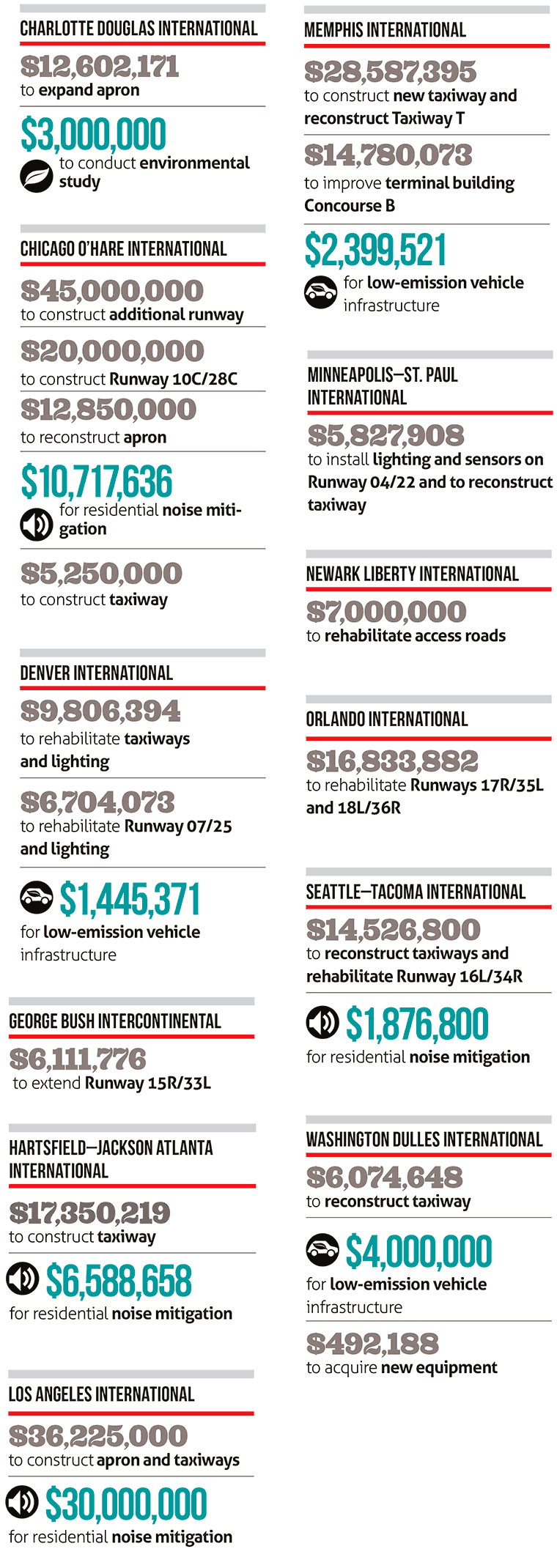
Seattle-Tacoma International Airport received $14,526,800 to reconstruct taxiways and rehabilitate Runway 16L/34R, plus $1,876,800 for residential noise mitigation, as part of a multi-airport FAA funding infographic covering major U.S. airports. -
Airport Improvement Program
The Airport Improvement Program (AIP) provides grants to public agencies — and, in some cases, to private owners and entities — for the planning and development of public-use airports that are included in the National Plan of Integrated Airport Systems (NPIAS). See the AIP Glossary for a description of AIP-related terms. Grant History Look Up