TagNEPA(390)
-
 2024-02-01
Seattle-Tacoma International Airport SAMP Near Term Projects: Wetlands and Streams Report
This technical report, prepared by Parametrix for the Port of Seattle in February 2024, documents the wetlands and streams found at Seattle-Tacoma International Airport as part of the Sustainable Airport Master Plan (SAMP) Near Term Projects. It covers the delineation of wetland and stream boundaries, assesses potential impacts to these aquatic areas from planned airport improvements, and outlines mitigation measures and permitting approaches to address those impacts. -
 2024-01-01
Hazardous Materials, Solid Waste, and Pollution Prevention Technical Report: Appendix F — Hazardous Materials and Solid Waste
This technical report, prepared by Landrum & Brown for the Port of Seattle in January 2024, covers hazardous materials, solid waste, and pollution prevention as part of the Sustainable Airport Master Plan's near-term projects at Seattle-Tacoma International Airport. It includes assessments of contaminated fuel farm sites, regulated building materials such as asbestos and lead in airport structures, and environmental investigation reports for fueling sites. Supporting attachments document findings from agencies like Washington State Ecology and surveys of specific airport buildings managed by tenants including United Airlines and Swissport. -
 2024-01-01
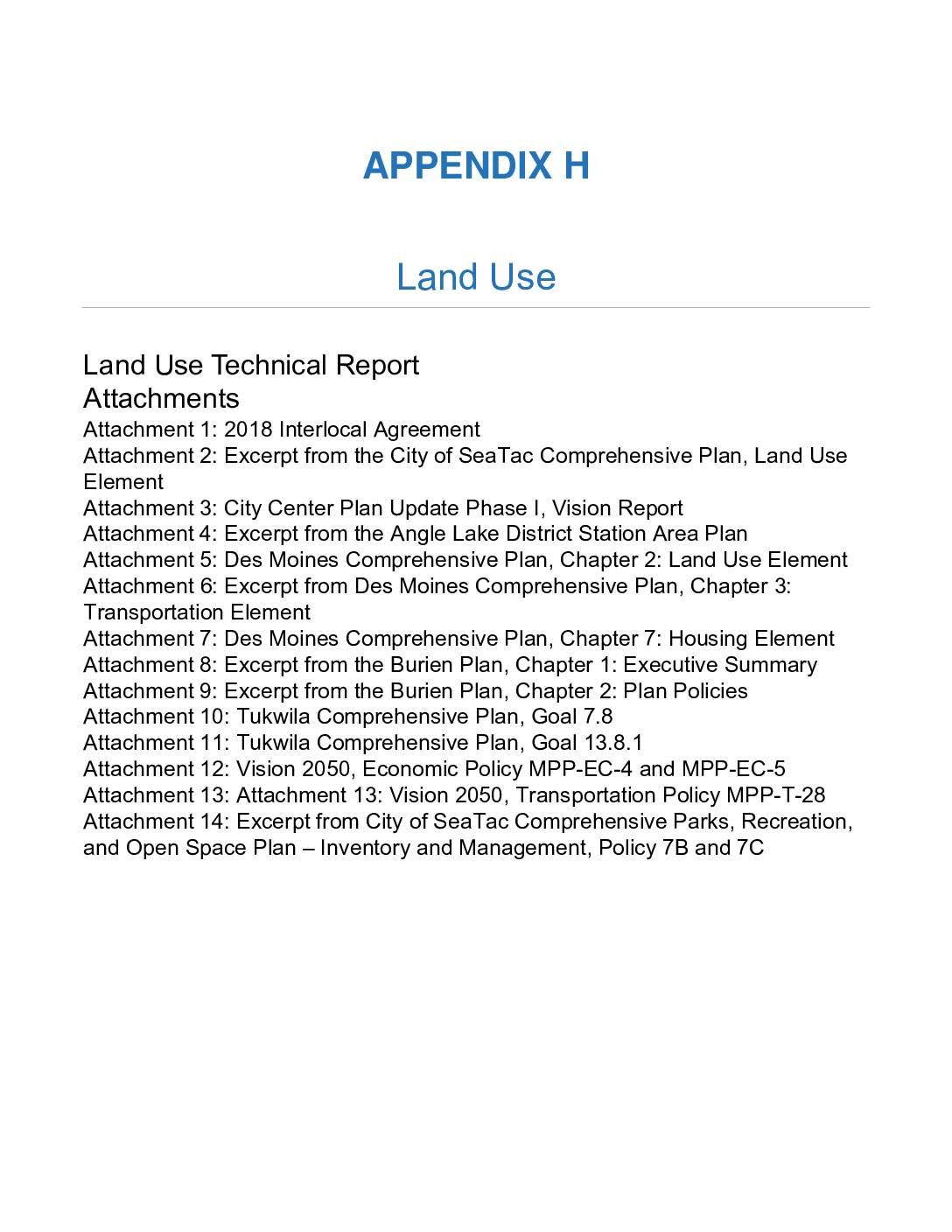
Sustainable Airport Master Plan Near-Term Projects: Land Use Technical Report
This Land Use Technical Report, prepared by Landrum & Brown for the Port of Seattle in January 2024, examines how near-term construction projects outlined in the Seattle-Tacoma International Airport Sustainable Airport Master Plan align with existing and planned land use regulations in surrounding communities. The report reviews local plans from cities including SeaTac, Des Moines, Burien, and Tukwila, as well as a 2018 Interlocal Agreement between the Port and the City of SeaTac, to assess potential land use impacts of the proposed airport expansion alternatives. It concludes by evaluating the consistency of the proposed action and a hybrid terminal option with applicable local and regional planning policies. -
 2024-01-01
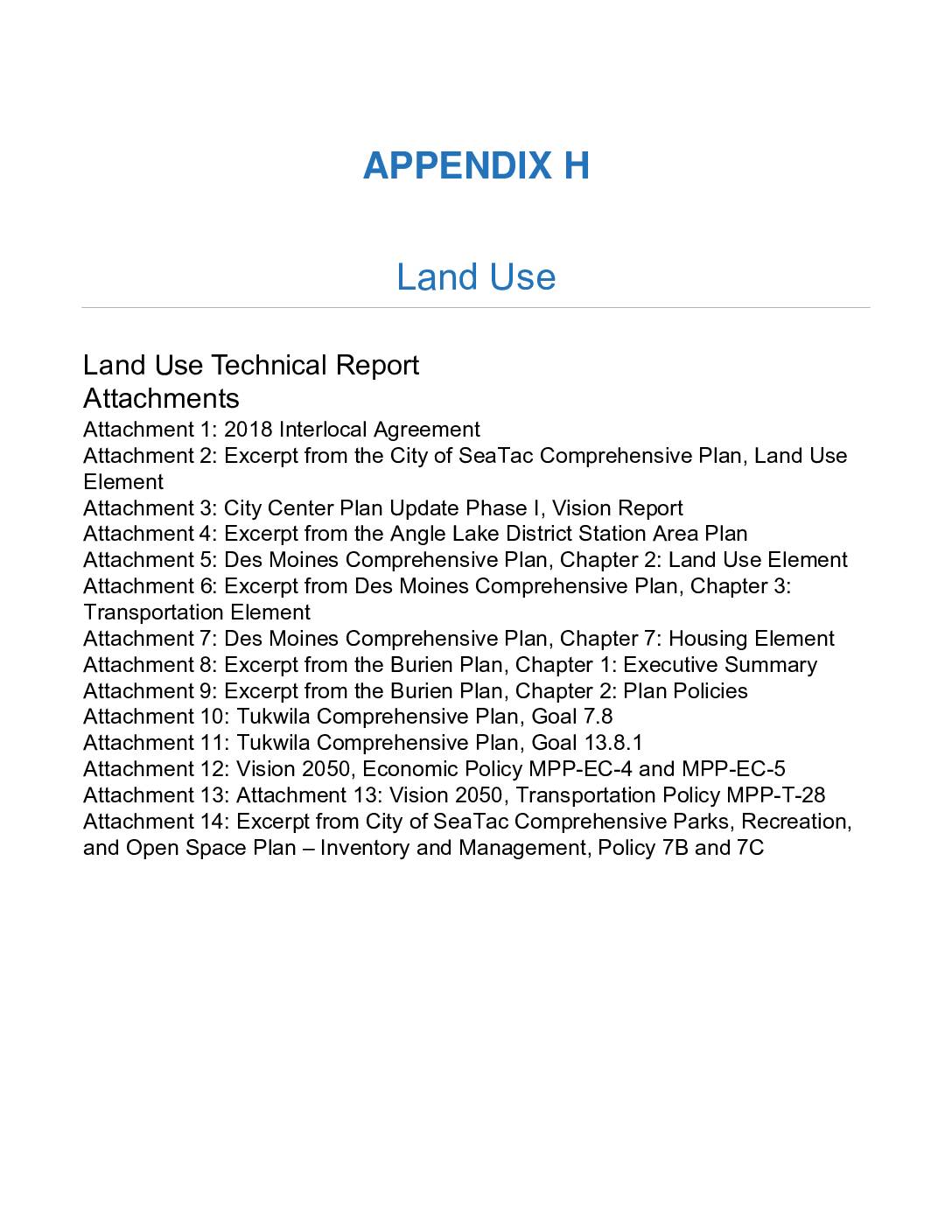
Appendix H: Land Use Technical Report — Sustainable Airport Master Plan Near-Term Projects
This January 2024 Land Use Technical Report, prepared by Landrum & Brown for the Port of Seattle, examines how near-term construction projects at Seattle-Tacoma International Airport align with local and regional land use plans. It reviews existing and planned land uses in surrounding cities—including SeaTac, Des Moines, Burien, and Tukwila—and evaluates the potential land use impacts of proposed action alternatives. The report draws on key planning documents such as a 2018 Interlocal Agreement and the Puget Sound Regional Council's Vision 2050 to assess consistency with community goals. -
 2024-01-01
Hazardous Materials, Solid Waste, and Pollution Prevention Technical Report: Sustainable Airport Master Plan – Near-Term Projects
This technical report, prepared by Landrum & Brown for the Port of Seattle in January 2024, addresses hazardous materials, solid waste, and pollution prevention as part of the Sustainable Airport Master Plan's near-term projects at Seattle-Tacoma International Airport. It documents environmental assessments of various airport sites, including fuel farm areas, cargo buildings, and airline maintenance facilities, examining issues such as soil contamination, regulated building materials like asbestos and lead, and fueling site investigations. The report compiles findings and supporting attachments from multiple environmental studies conducted across the airport campus. -
 2023-11-15
State of Washington Executive order 23-02: Plain Language
Washington Governor Jay Inslee signed Executive Order 23-02 on November 15, 2023, requiring all state executive agencies to create plain language policies to make public documents easier to understand. Agencies must prioritize rewriting their most-used public forms and documents, and the Department of Enterprise Services will provide plain language training for state employees by June 30, 2024. The order aims to ensure all Washingtonians, including non-native English speakers, can access and understand government information. -
 2023-09-26
SAMP Near Term Projects EA: Scoping Comments Received (Attachment 4a-c)
This document compiles public and agency scoping comments received during the environmental review process for Seattle-Tacoma International Airport's SAMP (Sustainable Airport Master Plan) Near Term Projects. Comments are organized into 22 topical categories, covering issues such as noise, air quality, transportation, water resources, and human health, and are labeled to indicate whether they directly relate to the SAMP Near Term Projects or address broader airport concerns. Each comment is coded for easy reference, allowing readers to track specific concerns raised by the public and agencies throughout the scoping process. -
 2023-09-26
Attachment 4f: Scoping Comments Received — Actual Comments with Assigned Topic Code
This document contains scoping comments submitted to the Port of Seattle regarding the Sustainable Airport Master Plan (SAMP) environmental review process, compiled by the Quiet Skies Coalition. Community members raised concerns about the lack of long-term human health and environmental impact studies related to aircraft noise and emissions, questioning why the Port had not studied the effects of a four-year increase of 97,000 additional annual flights. The comments request comprehensive assessments covering neighborhoods such as Des Moines, Burien, Tukwila, and Normandy Park, and call for the Port to include worldwide scientific studies on the health effects of aircraft noise and pollution in its environmental review. -
 2023-09-01
Aviation Activity Forecast Update: Seattle-Tacoma International Airport (2023)
This technical memorandum, prepared by Leigh Fisher for the Port of Seattle in September 2023, presents an updated aviation activity forecast for Seattle-Tacoma International Airport. It includes constrained operating growth scenarios, FAA-approved forecast data, and airside simulation modeling documentation used to support environmental review planning at Sea-Tac. -
 2023-09-01
Aviation Activity Forecast Update: Seattle-Tacoma International Airport (2023)
This technical memorandum, prepared by Leigh Fisher for the Port of Seattle in September 2023, presents an updated aviation activity forecast for Seattle-Tacoma International Airport. It includes constrained operating growth scenarios (COGS), FAA approval documentation, and airside modeling data used to support environmental review planning. The forecast serves as a foundational planning tool for understanding future airport capacity and operational assumptions.