TagMiller Creek(252)
-
 1998-11-16
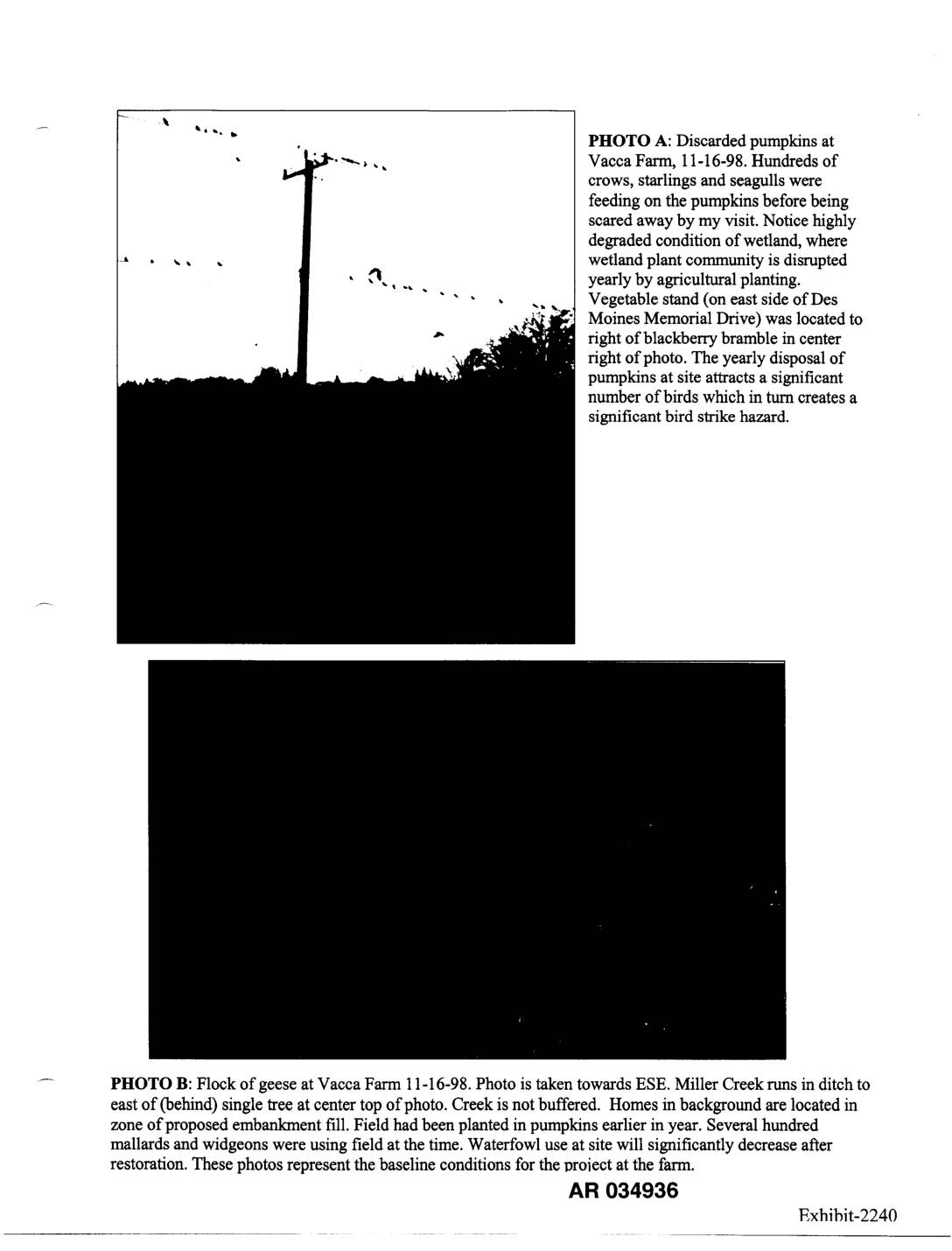
Exhibit 2240: Vacca Farm Baseline Condition Photos — Wetland, Miller Creek, Bird Hazard, and Agricultural Impacts
Exhibit 2240 (AR 034936–034938) presents six baseline condition photographs of Vacca Farm dated November 16, 1998 and April 29, 1997, documenting environmental conditions near Sea-Tac Airport. Photos show discarded pumpkins attracting hundreds of crows, starlings, and seagulls creating a bird strike hazard; a flock of geese with several hundred mallards and widgeons using the pumpkin -
 1998-10-31
Declaration of Helen Kludt Supporting Plaintiff’s Petition for a Writ of Review
Helen Kludt, a Normandy Park resident who has lived near Miller Creek since 1956, submitted this 1998 court declaration supporting a legal challenge against the Port of Seattle's plans to expand Sea-Tac Airport with a third runway. She argues that the Port's proposal to destroy wetlands in the Miller Creek Basin and offset environmental impacts through out-of-basin mitigation in Auburn is inadequate and violates the State Environmental Policy Act (SEPA). Kludt contends the expansion will harm her property value, degrade local wildlife habitat, and worsen flooding along Miller Creek. -
 1998-08-19
EXH AR041760: Miller Creek Enhancement Program — Seattle-Tacoma International Airport Master Plan Update Improvements
Draft report prepared by Parametrix, Inc. for Port of Seattle regarding the Miller Creek Enhancement Program associated with Seattle-Tacoma International Airport Master Plan Update Improvements. Document AR 041760 covers Miller Creek relocation and enhancement, floodplain compensation, floodplain enhancement, Lora Lake buffer enhancement, and Miller Creek riparian buffer enhancement. Includes ecological assessment of Miller Creek (fish -
 1998-07-20
EXH AR041680: Ecology Water Quality Certification and Coastal Zone Consistency Determination for Port Of Seattle Master Plan Improvement Projects (Order #96-4-02325)
Order #96-4-02325 dated July 20, 1998, from Washington State Department of Ecology (Gordon White, Program Manager, Shorelands and Environmental Assistance Program) to Barbara Hinkle (Port Of Seattle) and Tom Mueller (Corps of Engineers Regulatory Branch). Ecology certifies that proposed work in and adjacent to Miller Creek and Des Moines Creek at Seattle-Tacoma International Airport complies -
 1998-07-01
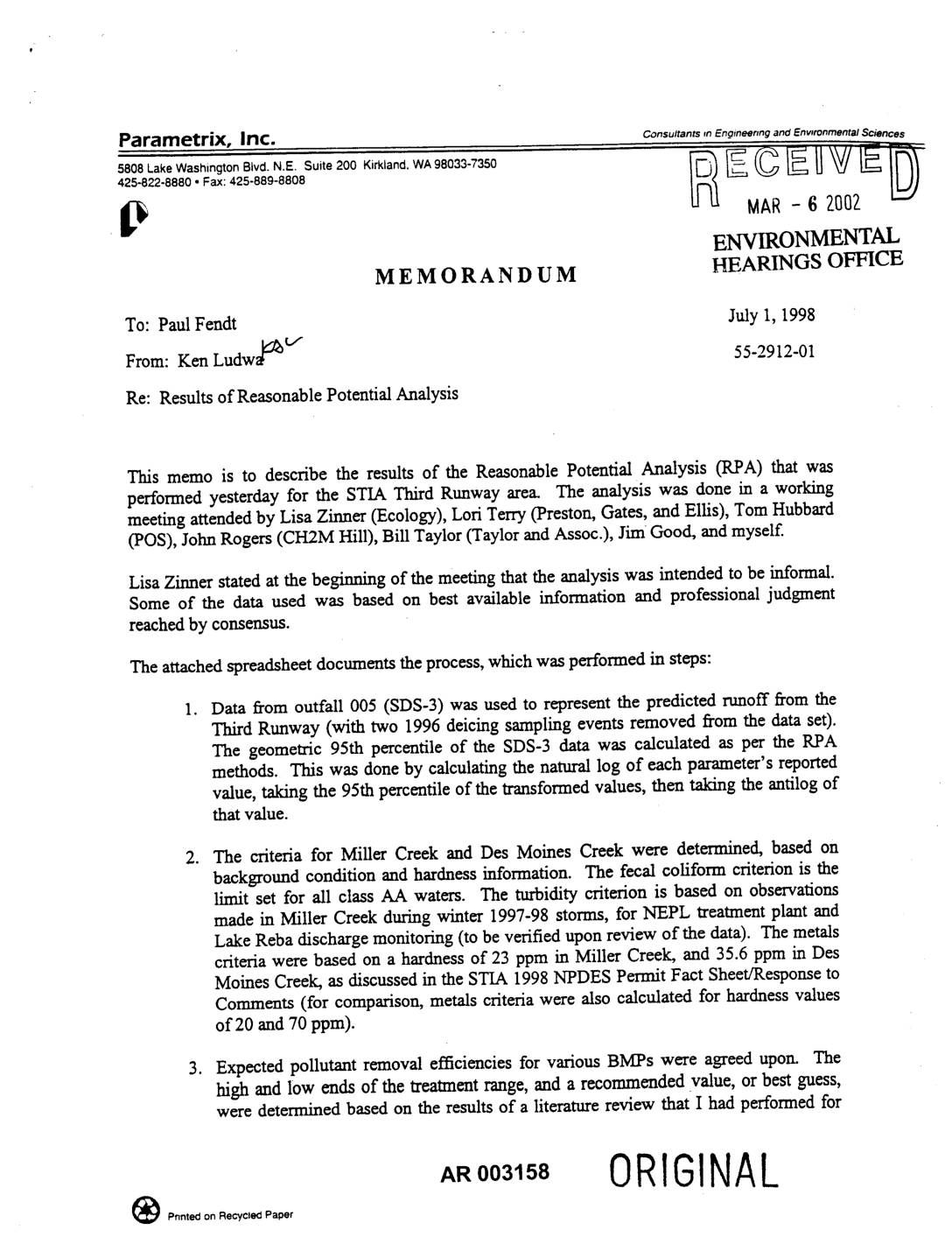
EXH AR003158: Memorandum — Results of Reasonable Potential Analysis for STIA Third Runway Stormwater
Memorandum from Ken Ludwa (Parametrix, Inc.) to Paul Fendt dated July 1, 1998, project number 55-2912-01, describing results of a Reasonable Potential Analysis (RPA) for the STIA Third Runway area stormwater runoff. Analysis conducted at a working meeting with Lisa Zinner (Ecology), Lori Terry (Preston, Gates, and Ellis), Tom Hubbard (POS), John Rogers (CH2M Hill), -
 1998-07-01
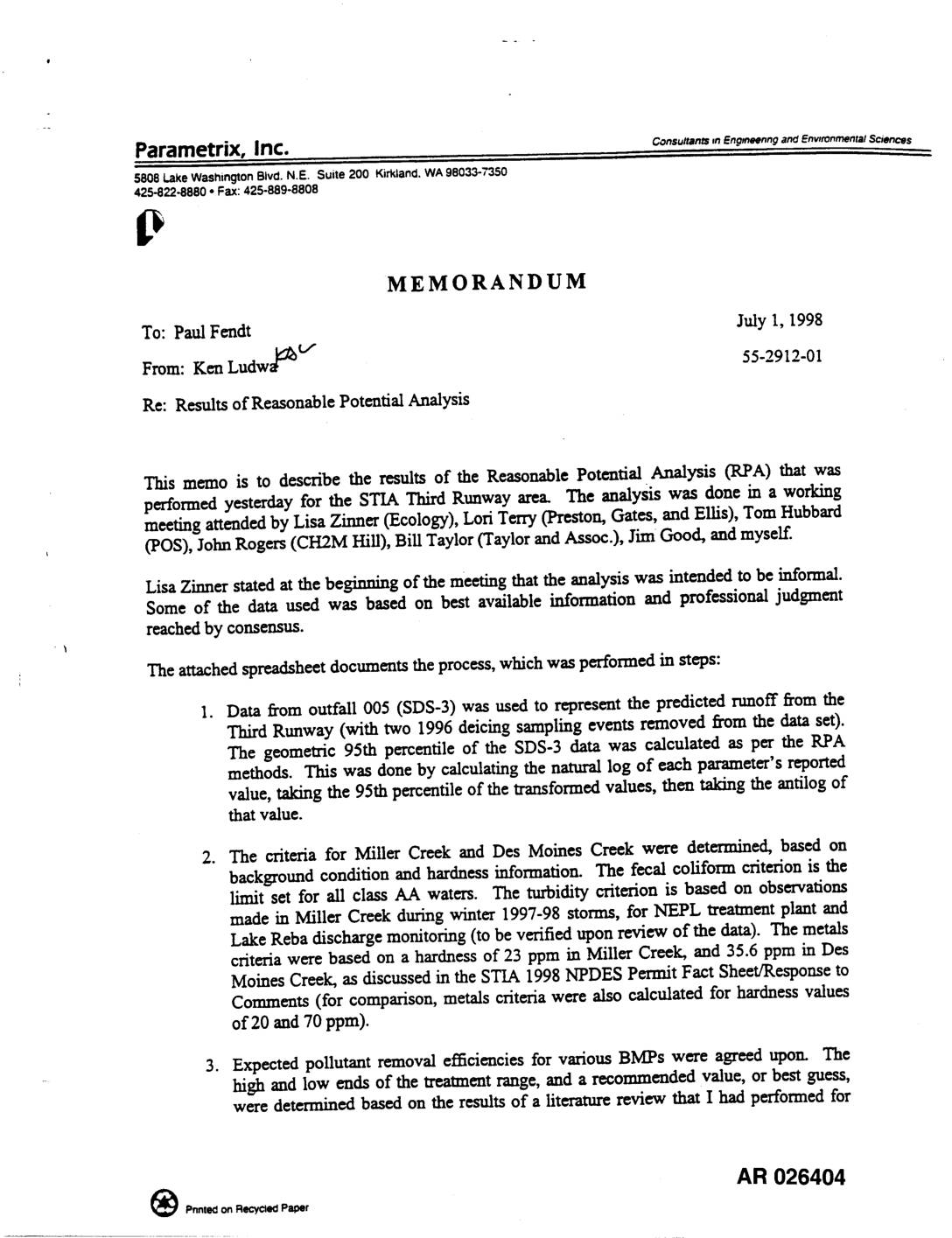
EXH AR026404: Memo — Reasonable Potential Analysis Results, STIA Third Runway
A 1998 internal memo from Parametrix, Inc. summarizes the results of a Reasonable Potential Analysis (RPA) conducted for the Seattle-Tacoma International Airport (STIA) Third Runway project, assessing whether stormwater runoff from the new runway could exceed water quality criteria in Miller Creek and Des Moines Creek. The analysis found that most pollutant concentrations after treatment with best management practices (BMPs) such as bioswales, sand filters, and wet ponds would meet criteria, with the exception of copper, which remained above acceptable levels. The memo also notes that existing pollutant concentrations in the receiving waterways during storms already exceeded criteria, even before accounting for Third Runway runoff. -
 1998-07-01
EXH AR024691: Memo — Reasonable Potential Analysis Results, STIA Third Runway
A July 1, 1998 memorandum from Parametrix, Inc. summarizes the results of a Reasonable Potential Analysis (RPA) conducted for the Seattle-Tacoma International Airport (STIA) Third Runway project, assessing stormwater runoff quality against water quality criteria for Miller Creek and Des Moines Creek. The analysis found that most pollutant concentrations after treatment with best management practices (BMPs) such as bioswales, sand filters, and wet ponds would meet criteria, with the exception of copper, which remained above acceptable levels. The memo also notes that during storms, pollutant concentrations already present in the receiving waters exceeded criteria and were higher than those predicted from Third Runway stormwater runoff. -
 1998-04-09
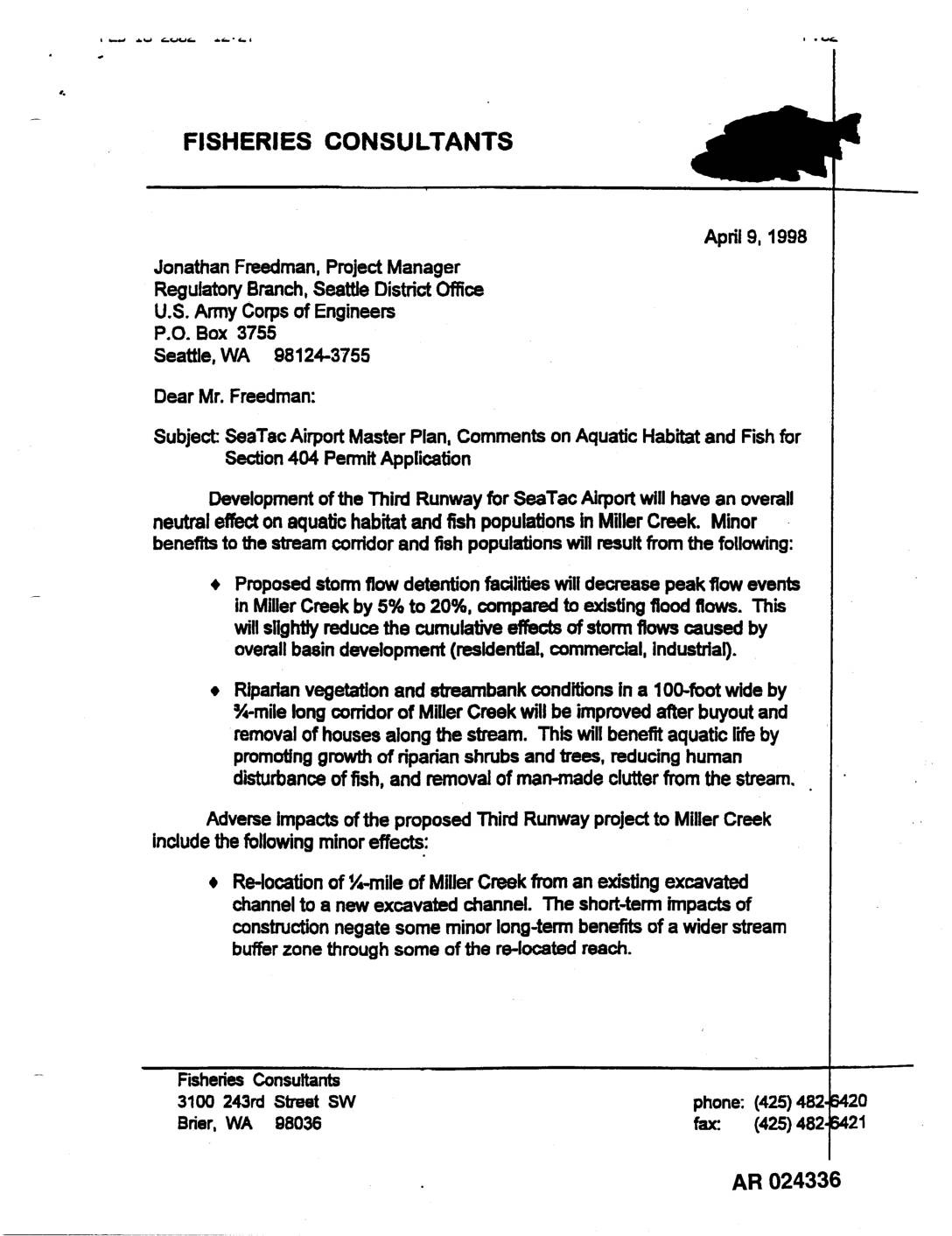
EXH AR024336: Fisheries Consultants Letter to Army Corps – STIA Third Runway Aquatic Habitat & Fish Impacts, Miller Creek
A 1998 letter from Fisheries Consultants to the U.S. Army Corps of Engineers concludes that SeaTac Airport's proposed Third Runway will have an overall neutral effect on aquatic habitat and fish populations in Miller Creek. Minor benefits are expected from new storm flow detention facilities, which will reduce peak flood flows by 5–20%, and from a planned 100-foot-wide stream buffer created through residential buyouts along the creek. Adverse impacts are limited to the temporary disruption of a quarter-mile creek relocation and an approximate 8% reduction in late-summer low stream flows due to increased paved surfaces and wetland fill. -
 1998-04-09
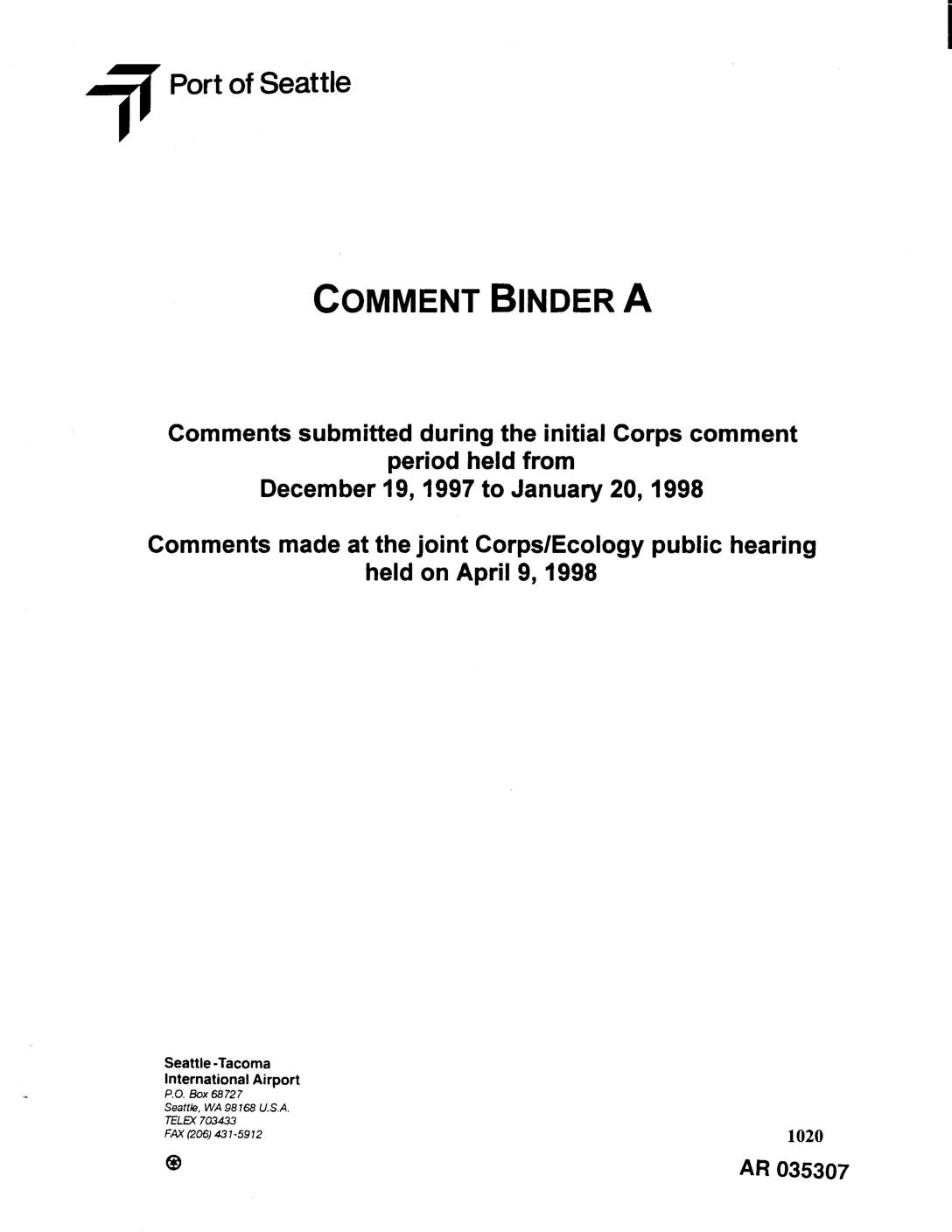
EXH AR035307: Comment Binder A — Third Runway Corps/Ecology Public Comments, December 1997–April 1998
Comment Binder A compiled by Port of Seattle for Sea-Tac Airport (Seattle-Tacoma International Airport) third runway project, containing letters submitted to the U.S. Army Corps of Engineers during the initial comment period (December 19, 1997 to January 20, 1998) and comments from the joint Corps/Ecology public hearing held April 9, 1998. Includes a January 15, -
 1998-04-06
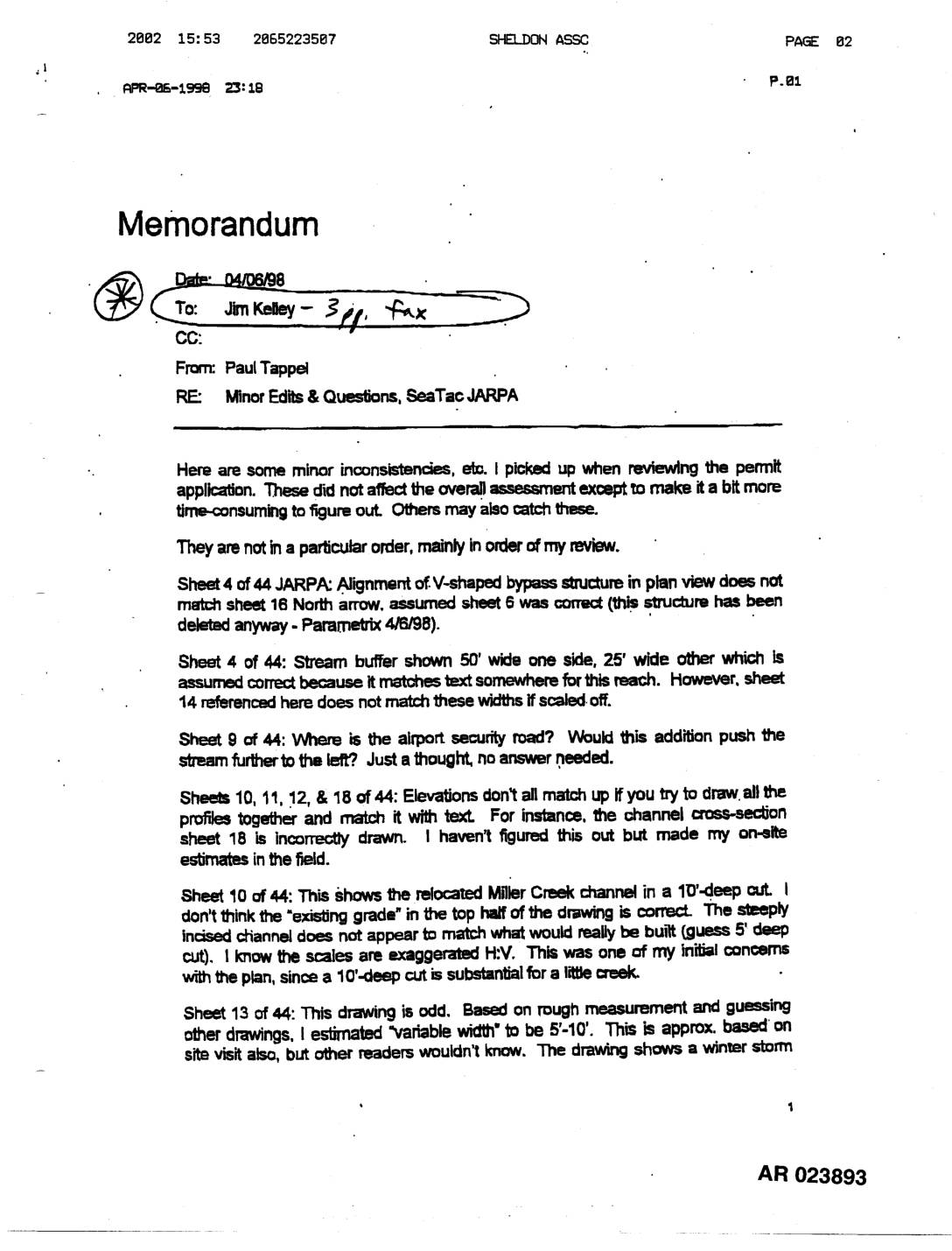
EXH AR023893: Memo Tappel to Kelley — Minor Edits & Questions, STIA JARPA
A April 6, 1998 internal memorandum from Paul Tappel to Jim Kelley identifies minor technical inconsistencies and questions in the Sea-Tac Airport JARPA permit application, focusing on discrepancies in engineering drawings, stream buffer widths, channel elevation profiles, and hydraulic calculations for a proposed Miller Creek relocation. Tappel raises concerns that the plan overstates the environmental benefits of the reconstructed creek channel and contains contradictory goals regarding wildlife habitat and airport bird-strike safety. He notes these issues are not critical to the overall assessment but could cause confusion as the design moves forward.