TagLead(24)
-
 2022-08-24
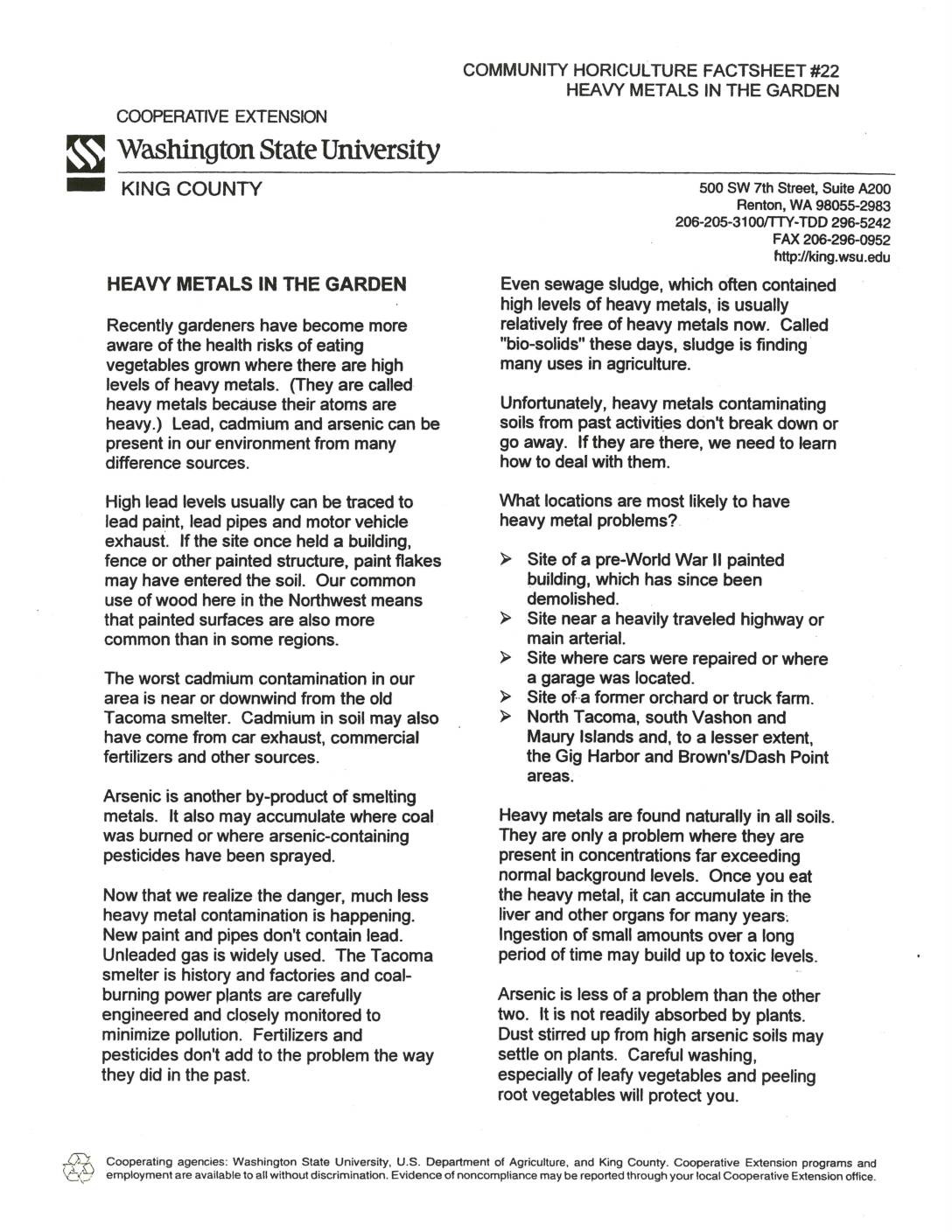
Heavy metals in the garden
This Washington State University Cooperative Extension factsheet explains the risks of heavy metals such as lead, cadmium, and arsenic in garden soils, with a focus on the greater Seattle-Tacoma region. It identifies locations most likely to have contamination, including sites near old painted buildings, heavily traveled roads, and areas affected by the former Tacoma smelter. The factsheet offers practical gardening tips to reduce exposure, such as growing fruiting crops, adding organic matter, liming soil, and washing produce thoroughly. -
2022-08-13
*Where’s my Clair Patterson?
There is this form of air pollution, which you probably have not heard of, called ultrafine particulates (UFPs). Though they are invisible, they seem to have some particularly nasty effects on human health. UFPs have not been well-studied, they are unregulated, and yet they are prevalent in commercial jet engine emissions. But this is not -
 2022-07-28
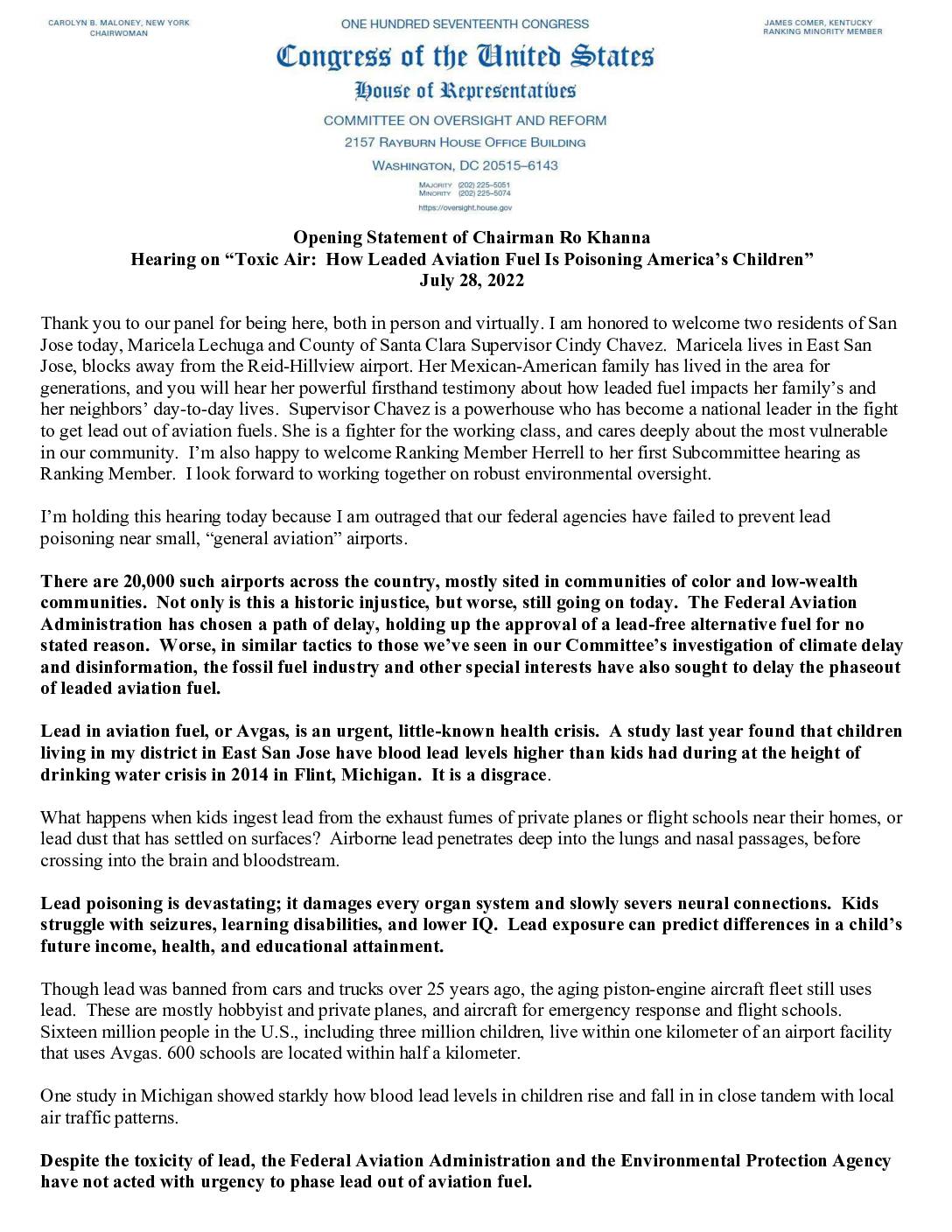
Opening Statement of Chairman Ro Khanna: Hearing on “Toxic Air: How Leaded Aviation Fuel Is Poisoning America’s Children”
In a July 2022 congressional hearing, Chairman Ro Khanna highlighted the health dangers of leaded aviation fuel (Avgas) still used in small general aviation aircraft, noting that children near airports in communities of color face blood lead levels exceeding those seen during the Flint water crisis. The statement criticizes the FAA and EPA for failing to act urgently on phasing out leaded fuel, despite the existence of viable unleaded alternatives, and accuses oil companies and aviation industry groups of deliberately delaying the transition. Khanna calls on federal agencies to accelerate approval of lead-free fuel options, involve affected communities in decision-making, and use infrastructure funding to support the switch to unleaded aviation fuel. -
 2021-09-24
Radiolab (Heavy Metals)
A mini-bio of Clair Patterson, the man who got lead out of (most) of our environment [RADIOLAB INTRO] LATIF NASSER: I’m Latif Nasser. This is Radiolab. Today, a story about how we humans rearrange the elemental stuff all around us, and how one man’s pursuit of a basic truth about the Earth revealed in an extraterrestrial -
 2021-08-03
Leaded aviation gasoline exposure risk at Reid-Hillview Airport in Santa Clara County, California
This 2021 report by Mountain Data Group, commissioned by Santa Clara County, examines the health risks posed to children living near Reid-Hillview Airport in California due to lead emissions from leaded aviation gasoline. It analyzes statistical associations between children's blood lead levels and factors such as residential distance from the airport, aircraft traffic, and fuel sales. Note that while this report focuses on lead exposure from aviation fuel at a California airport, it does not address noise policy or Sea-Tac Airport operations. -
 2020-02-01
Model-extrapolated estimates of airborne lead concentrations at U.S. airports
This EPA technical report estimates airborne lead concentrations near U.S. airports caused by piston-engine aircraft burning leaded aviation gasoline (avgas). Using air quality modeling and extrapolation methods, the study identifies airports where lead levels may exceed national air quality standards, particularly in areas close to aircraft run-up zones. While not specific to Sea-Tac Airport, the findings are relevant to understanding aviation-related air quality impacts at airports nationwide. -
 2017-02-10
Lead, isotopes and ice: a deadly legacy revealed
This academic paper traces the history of human lead use from the Neolithic period through modern times, exploring how smelting, leaded fuel, water pipes, and paint contributed to widespread environmental and health contamination. Using lead isotope signatures found in Greenland ice cores, researchers identified a 200-fold increase in atmospheric lead levels between 800 BCE and the 1960s, with the sharpest rise after 1940. The study also examines the measurable impact of lead exposure on human health through analysis of ancient and modern skeletal remains. -
The Ethyl-Poisoned Earth
Long-Form: Chronically catastrophic chemist Thomas Midgley accidentally poisons the world with a neurotoxin, and Clair Patterson tries to stop him. Written by Alan Bellows • Non-Fiction • December 2007 Thomas Midgley At the turn of the twentieth century, as the age of automobiles was afoot, the newfangled gasoline-powered internal combustion engine began to reach the limitations of the fuel that fed it. As -
 2002-06-10
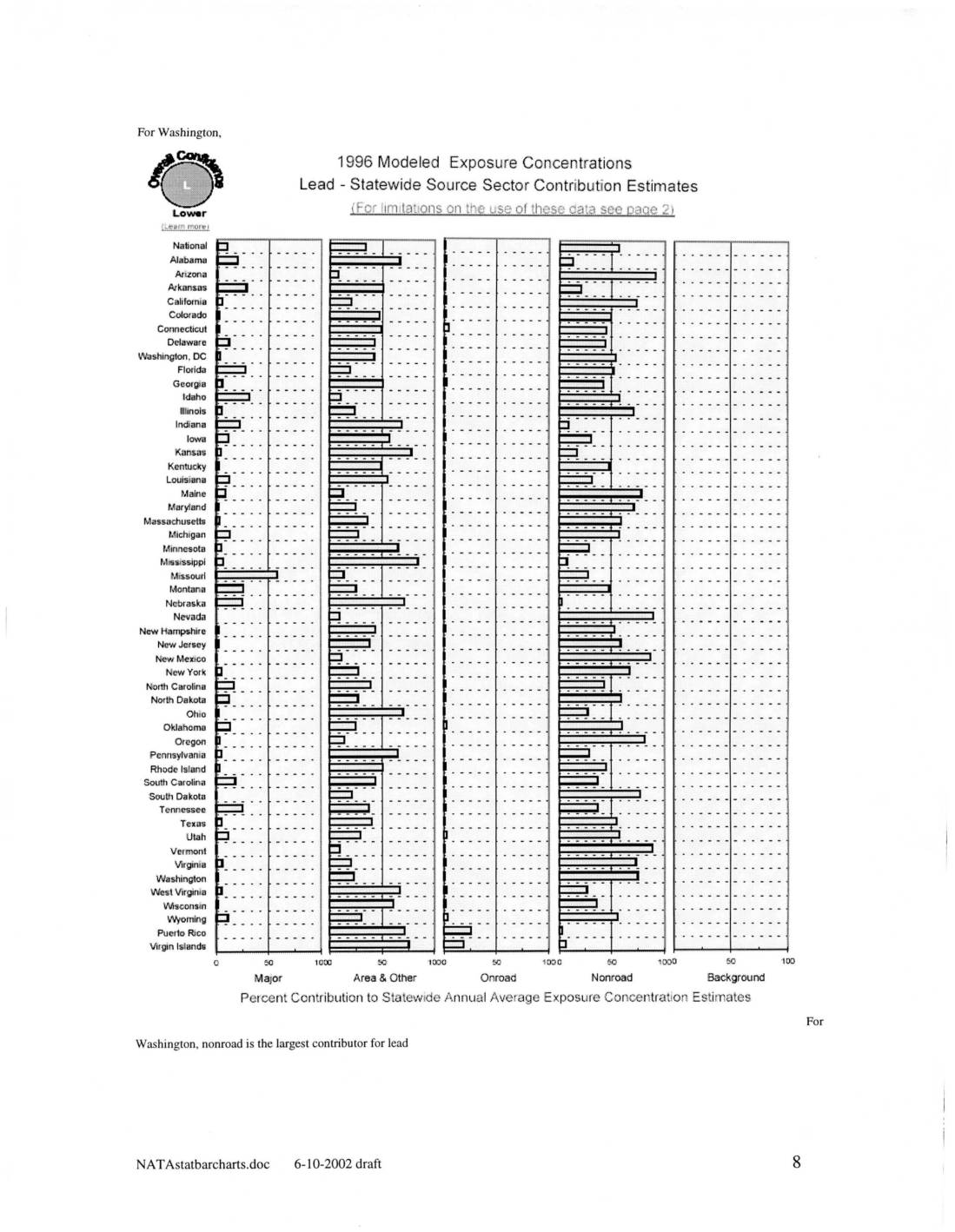
1996 modeled exposure concentrations: Lead, manganese, and arsenic statewide concentration distribution estimates
This 2002 draft document presents 1996 modeled air exposure concentration estimates for toxic pollutants including lead, manganese, and arsenic across all U.S. states. It compares statewide source contributions from major industrial areas, onroad vehicles, nonroad sources, and background levels. Supplementary 2001 monitoring data from Sea-Tac Airport and nearby Seattle sites shows measured concentrations of these pollutants, with some local readings—such as a single manganese measurement exceeding 36 ng/m³ and an arsenic reading surpassing 12 ng/m³—notably higher than regional averages. -
 2002-06-01
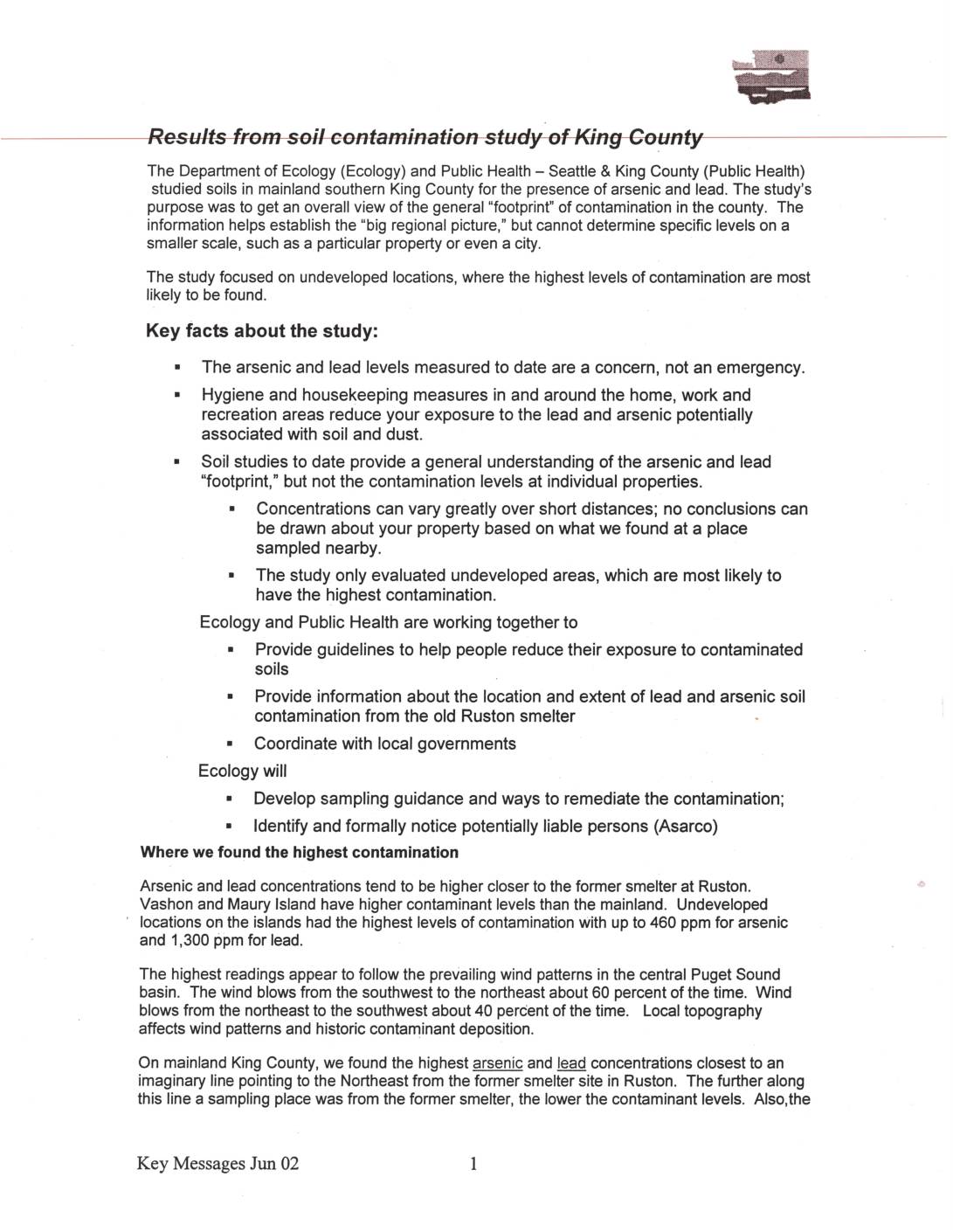
Results from Soil Contamination Study of King County
A soil contamination study by Washington State's Department of Ecology and Public Health – Seattle & King County found elevated levels of arsenic and lead in southern King County soils, linked primarily to the former Asarco smelter in Ruston. Contamination levels were highest near the smelter and on Vashon and Maury Islands, with concentrations decreasing further from the source and following prevailing wind patterns. While the findings are a concern rather than an emergency, officials stress that the study reflects regional trends only and cannot predict contamination levels at individual properties.