TagFAA(687)
-
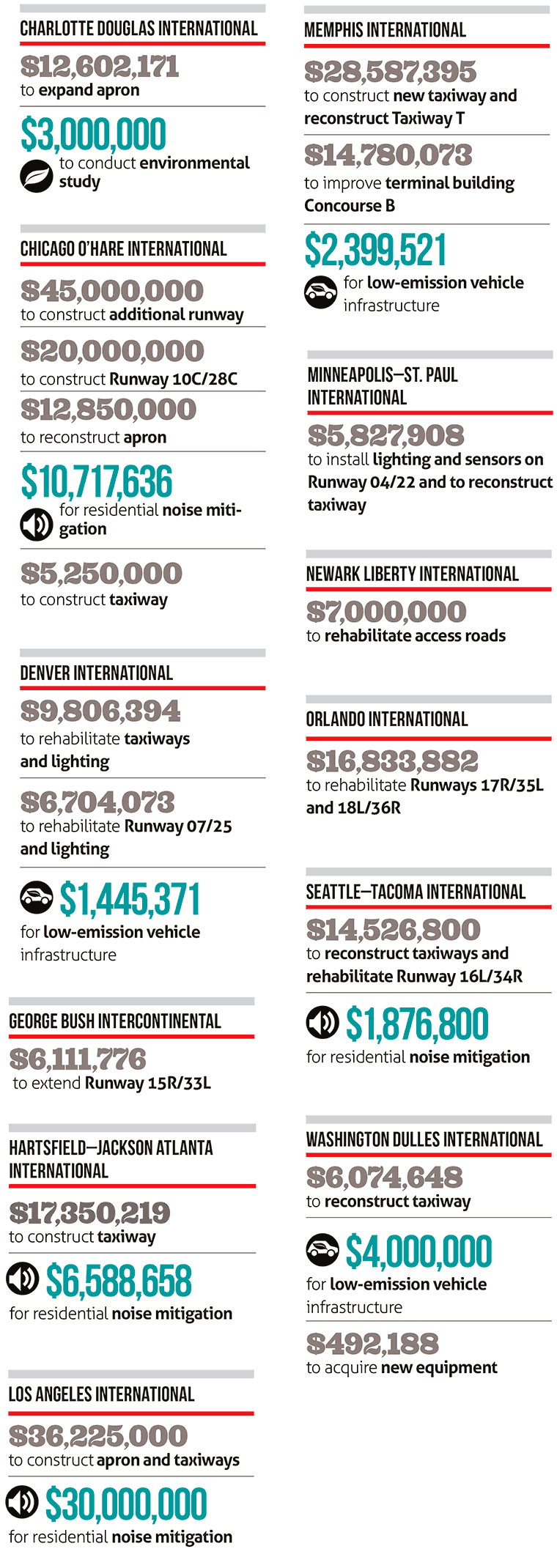
Airport Improvement Program Comparison
Seattle-Tacoma International Airport received $14,526,800 to reconstruct taxiways and rehabilitate Runway 16L/34R, plus $1,876,800 for residential noise mitigation, as part of a multi-airport FAA funding infographic covering major U.S. airports. -
 2019-01-01
Report to Congress on the aging of sound insulation
This FAA Report to Congress examines the aging of federally funded sound insulation installed in homes near airports to reduce aircraft noise, focusing on treatments installed before 2007 such as window and door replacements, weatherstripping, and other upgrades. The report identifies key factors affecting long-term effectiveness, including product quality, installer workmanship, deterioration over time, and lack of homeowner maintenance. It draws on research covering over 143,000 residences treated since the early 1980s and offers recommendations for repairing or replacing insulation that has exceeded its effective lifespan. -
 2019-01-01
Terminally challenged: Addressing the infrastructure funding shortfall of America’s airports
This Airports Council International – North America (ACI-NA) report, covering 2019–2023, examines the gap between what U.S. airports need to spend on infrastructure and the funding currently available to them. It estimates total development costs by airport size, project type, and location, and compares ACI-NA findings with FAA projections. The report highlights growing pressures from rising construction costs, increasing passenger and cargo demand, and insufficient federal funding mechanisms. -
Airport Improvement Program
The Airport Improvement Program (AIP) provides grants to public agencies — and, in some cases, to private owners and entities — for the planning and development of public-use airports that are included in the National Plan of Integrated Airport Systems (NPIAS). See the AIP Glossary for a description of AIP-related terms. Grant History Look Up -
Passenger Facility Charge (PFC)
The Passenger Facility Charge (PFC) Program allows the collection of PFC fees up to $4.50 for every enplaned passenger at commercial airports controlled by public agencies. PFCs are capped at $4.50 per flight segment with a maximum of two PFCs charged on a one-way trip or four PFCs on a round trip, for a maximum -
 2018-12-19
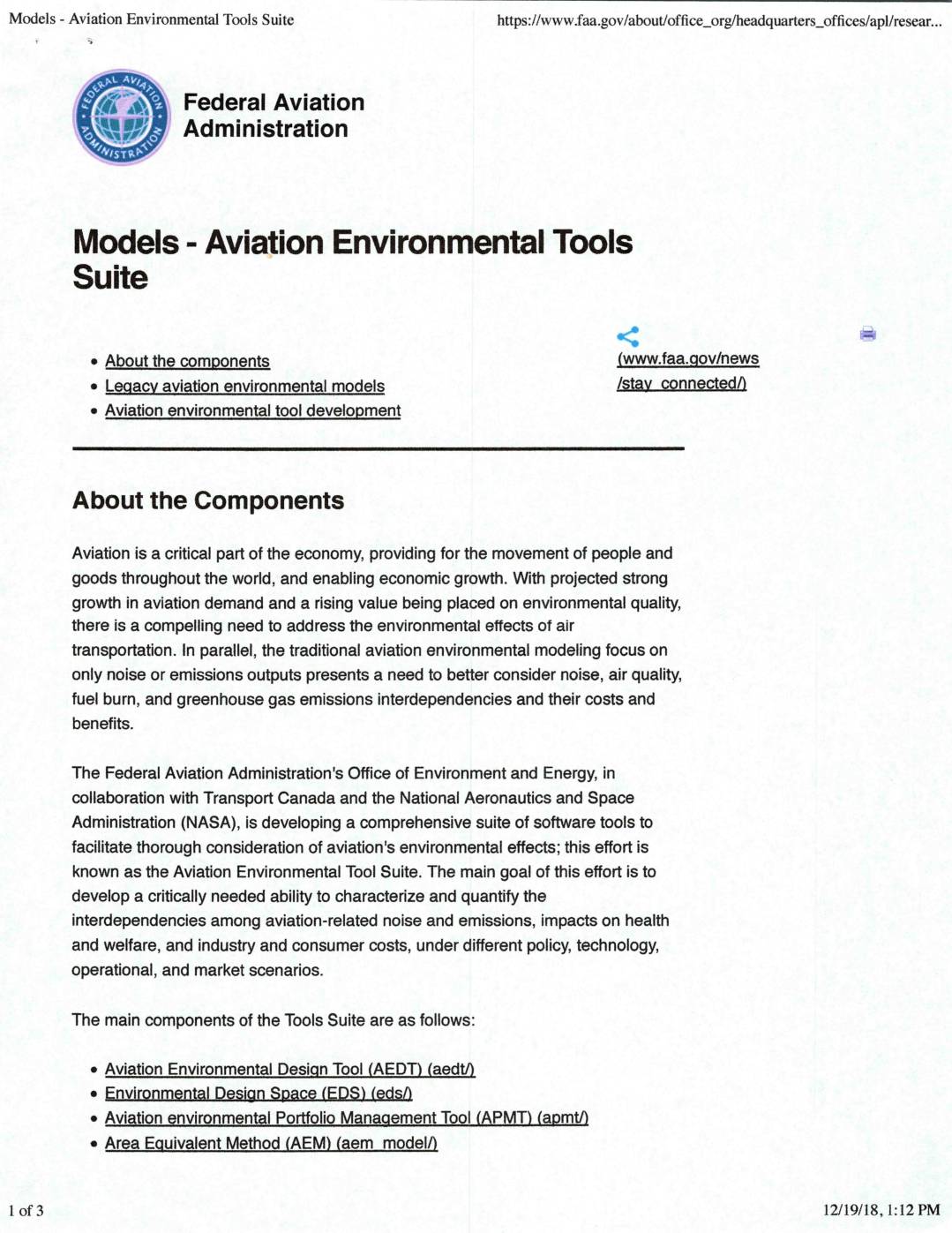
Models – Aviation Environmental Tools Suite
The FAA, in collaboration with NASA and Transport Canada, has developed a suite of software tools called the Aviation Environmental Tool Suite to assess the environmental impacts of aviation, including noise, air quality, fuel burn, and greenhouse gas emissions. The suite's main components include the Aviation Environmental Design Tool (AEDT), Environmental Design Space (EDS), and the Aviation environmental Portfolio Management Tool (APMT), which together help quantify the relationships between aviation-related noise, emissions, and costs. These tools are designed to support policy, technology, and operational decision-making at local, regional, national, and international levels, and are released to the public only after rigorous validation testing. -
 2018-12-19
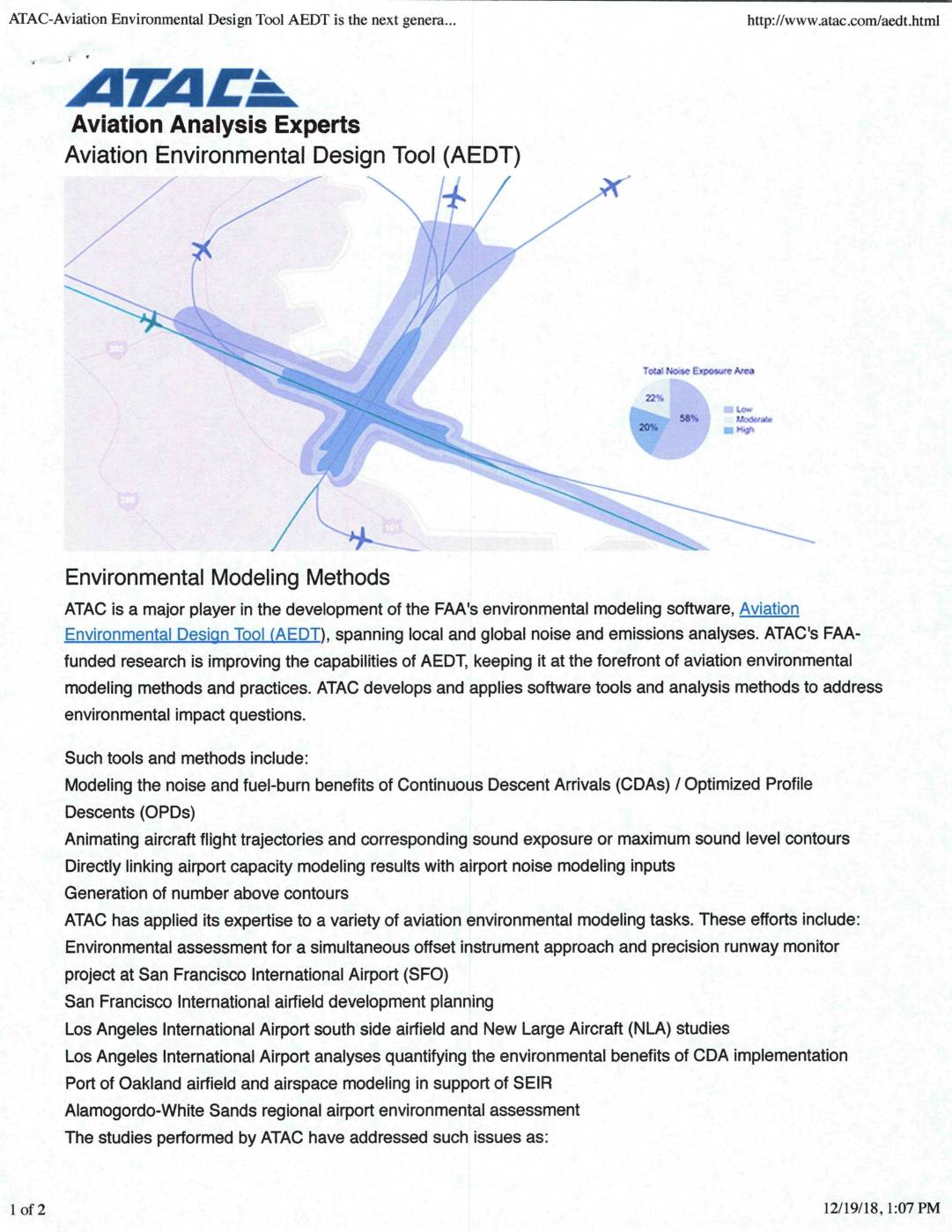
Aviation Environmental Design Tool (AEDT)
ATAC Corporation, an aviation analysis firm based in Santa Clara, CA, plays a major role in developing the FAA's Aviation Environmental Design Tool (AEDT), which models aircraft noise and emissions at both local and global scales. The document also includes a letter from the FAA's Seattle Airports District Office congratulating an airport on the approval of its Part 150 Noise Compatibility Program, a formal plan aimed at reducing or eliminating incompatible land uses around the airport. The FAA notes that approval of the program does not guarantee federal funding, and encourages the airport to periodically review and update the plan as conditions change. -
 2018-12-07
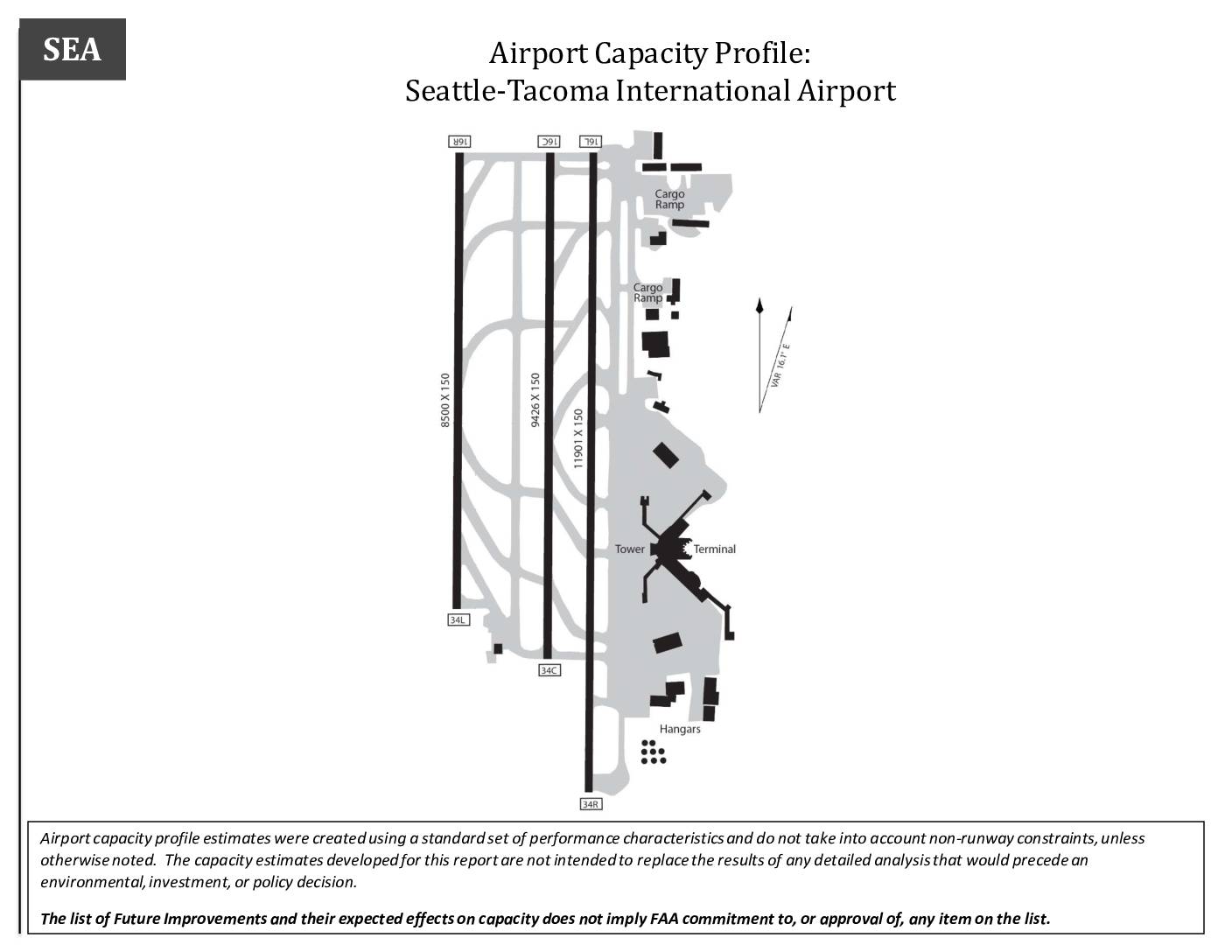
FAA Airport Capacity Profile: Sea-Tac International Airport
This FAA Airport Capacity Profile for Seattle-Tacoma International Airport (SEA) outlines the airport's runway configurations and hourly flight capacity under different weather conditions, including visual, marginal, and instrument scenarios. The document describes recent improvements such as Time-Based Flow Management and Reduced Diagonal Spacing, as well as future enhancements like improved runway delivery accuracy and Wake Recategorization Phase 2, all aimed at increasing the number of aircraft the airport can handle safely. Data covering December 2015 through December 2016 shows that visual conditions prevail 57% of the year, with instrument conditions occurring 25% of the time. -
Airline Pilots Magazine: Investing On The Ground To Improve Aviation Safety
The FAA’s Airport Improvement Program (AIP) provides grants that fund airport planning and infrastructure projects such as constructing or rehabilitating runways, taxiways, ramps, and runway safety areas in addition to airport signage, lighting, and markings. The grants strengthen U.S. aviation infrastructure by improving safety, efficiency, and the overall travel experience for pilots and passengers alike.