TagFAA(687)
-
 2026-09-06
49 USC 47110j: Allowable Project Costs (Includes Smith NDAA Amendment 8801)
Full text of 49 USC §47110, governing allowable project costs under the Airport Improvement Program (AIP). Covers allowable cost standards including grant agreement compliance, incentive payments for early contractor completion (capped at 5% of initial contract or $1,000,000), noise compatibility programs, letters of intent for primary, reliever, nonhub, and small airports, nonallowable costs (public parking, -
2026-09-06
49 USC 47110j: Allowable Project Costs (Includes Smith NDAA Amendment 8801)
Full text of 49 USC §47110, governing allowable project costs under the Airport Improvement Program (AIP). Covers allowable cost standards including grant agreement compliance, incentive payments for early contractor completion (capped at 5% of initial contract or $1,000,000), noise compatibility programs, letters of intent for primary, reliever, nonhub, and small airports, nonallowable costs (public parking, -
 2026-09-06
49 U.S.C. § 47110 Allowable Project Costs
49 U.S.C. § 47110 from Title 49 Transportation, governing allowable project costs under the Airport Improvement Program (AIP). Covers standards for allowable costs including grant agreement compliance, incentive payments for early contractor completion, noise compatibility programs, letters of intent for primary, reliever, nonhub, and non-primary airports, nonallowable costs (public parking, airport buildings, decorative landscaping, sculpture), -
 2026-08-29
Appendix O: Agency & Public Engagement (with responses)
Appendix O of the FAA NEPA Draft Environmental Assessment (EA) for the Sustainable Airport Master Plan (SAMP) at Sea-Tac Airport. Documents agency and public engagement activities during the EA process, including coordination under NEPA (42 U.S.C. 4321 et seq.), FAA Orders 1050.1F and 5050.4B, and CEQ regulations (40 CFR parts 1500-1508). Notes regulatory changes including -
 2026-08-19
Hurtado’s Aviation Infrastructure Bill Clears Assembly and Returns to Senate for Final Legislative Push
August 20, 2026 Sacramento, Calif. (August 20, 2026)— Senator Melissa Hurtado’s SB 661 cleared a major legislative hurdle after passing the Assembly with unanimous support, moving California one step closer to strengthening regional airports, modernizing aviation infrastructure and expanding air service across the state. The Assembly amended SB 661 before passage, sending the measure back -
 2026-08-09
The FAA wants to reboot the nation’s airspace. This airline shows how it might work
National August 10, 20265:00 AM ET Heard on Morning Edition Joel Rose Transcript Download Transcript Dispatchers in Alaska Airlines’ Network Operations Center near the Seattle-Tacoma International Airport. Joe Nicholson/Alaska Airlines On a typical day, Alaska Airlines operates roughly 1,500 flights, most of them guided by a team of dispatchers on the sixth floor of an -
 2026-08-09
KCIA Vision 2045 Airport Plan and Part 150 Study
King County International Airport is planning for the future. Learn more about the Vision 2045 Airport Plan and the Part 150 Study and how to provide your input throughout the planning process. Help us plan for the future of King County International Airport King County International Airport (KCIA) is undertaking two important studies to plan -
2026-07-30
August Plane Talk: Boeing Seafair Air Show, New VFR Routes, and Airport News
Boeing Seafair Air Show runs today through Sunday The U.S. Navy Blue Angels during practice yesterday at King County International Airport-Boeing Field. The Boeing Seafair Air Show kicks off today and runs through Sunday. Along with the U.S. Navy Blue Angels, performers include Torrey Ward’s Microjet and the U.S. Marine Corps F-35B, a vertical takeoff -
 2026-07-25
Connecting flights would be less of a gamble with this data
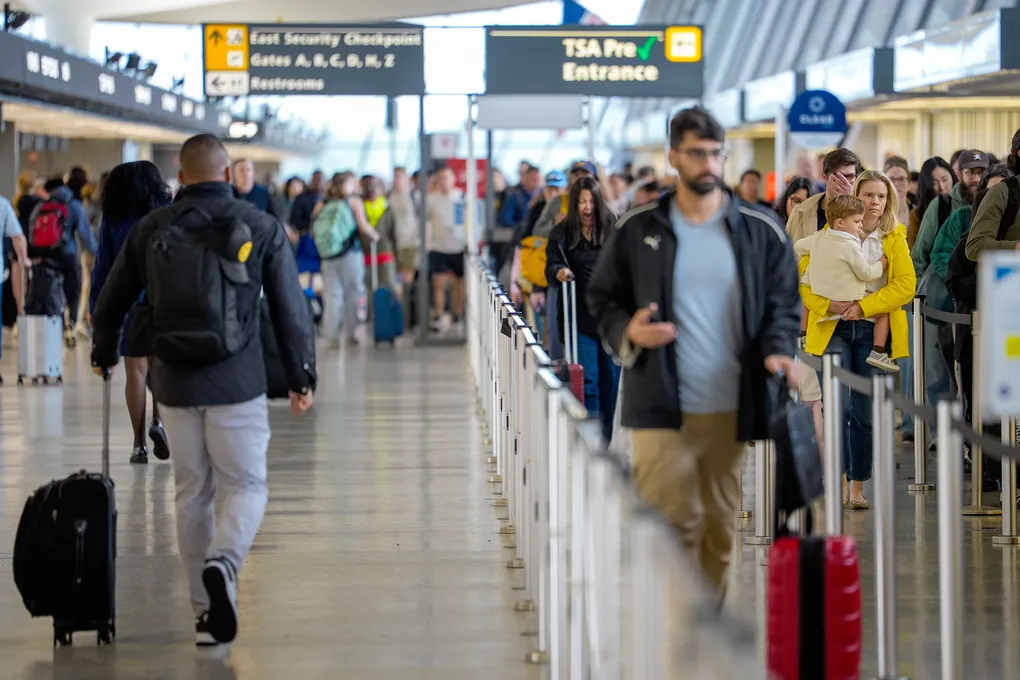
There are nearly 20,000 airports in the United States with more than 16 million flights handled by the FAA annually, the author writes. Pictured are travelers at Washington Dulles International Airport on May 22. (Andrew Harnik/Getty Images North America/TNS) By Sheldon H. Jacobson Special to Tribune News Service The summer travel period is here, with -
 2026-07-21
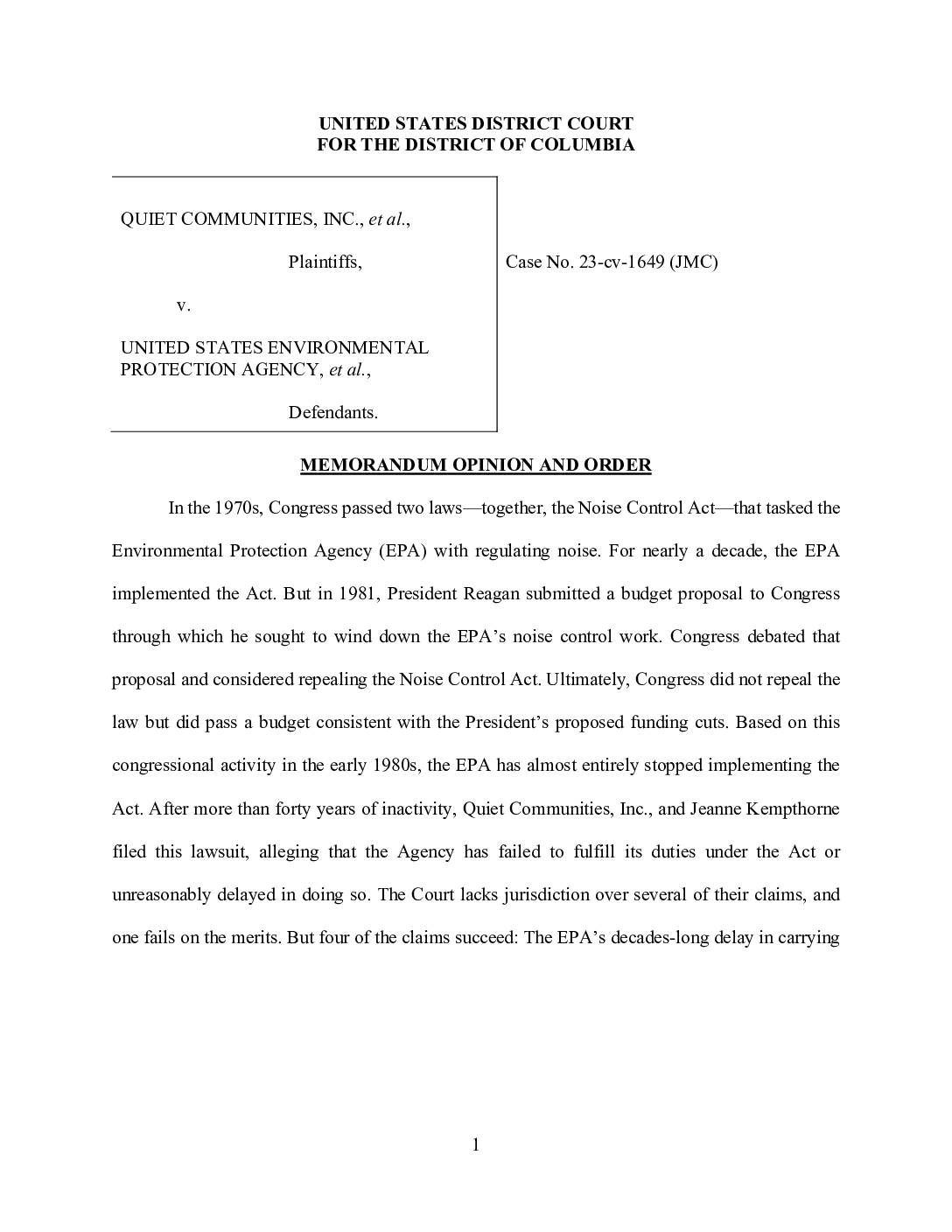
Quiet Communities, Inc. et al. v. United States Environmental Protection Agency et al., Case No. 23-cv-1649 (JMC) — Memorandum opinion and order
A federal court ruled in 2023 that the EPA had unreasonably delayed for over 40 years in carrying out its legal duties under the Noise Control Act of 1972, which requires the agency to regulate environmental noise, publish noise-related reports, and help state and local governments develop noise control programs. Although President Reagan defunded the EPA's noise office in 1982, Congress never actually repealed the Noise Control Act, meaning the EPA's obligations under the law remained in force. The court granted partial summary judgment in favor of the plaintiffs, finding the EPA's inaction on four key counts unlawful.