TagAir Traffic Control(102)
-
 2017-10-12
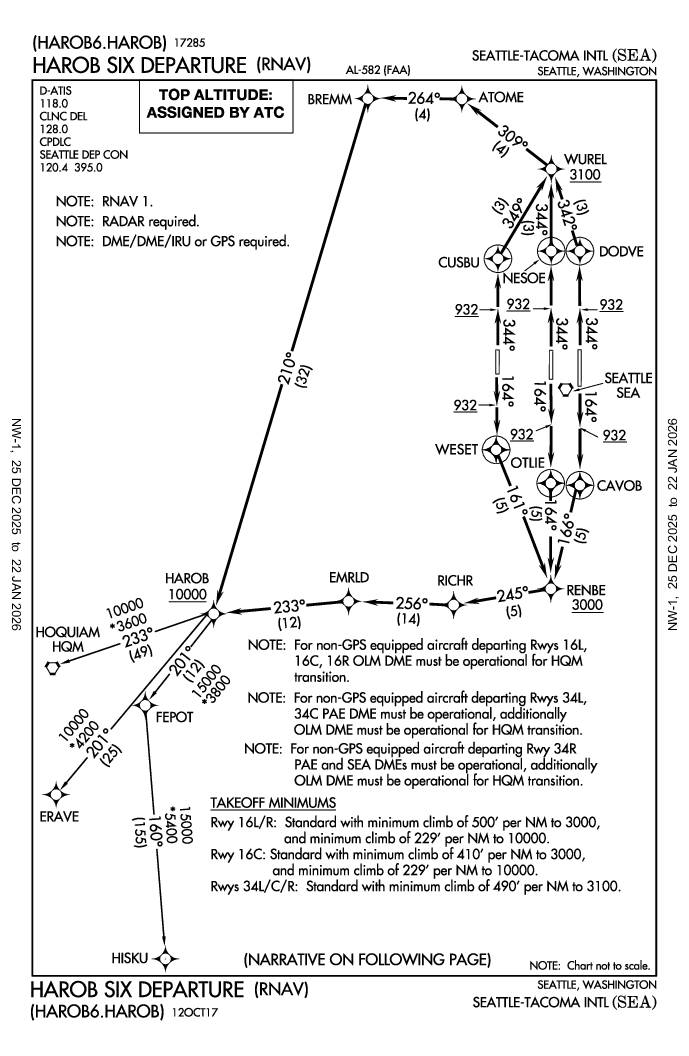
HAROB6 Departure (RNAV)
FAA instrument departure procedure chart for the HAROB SIX DEPARTURE (RNAV) at Seattle-Tacoma International Airport. This chart provides navigation waypoints, altitudes, and takeoff minimums for aircraft departing SEA using RNAV navigation procedures. -
 2016-03-17
Aviation roundtable members argue over structure at meeting – QNS
By Madina Toure Posted on March 17, 2016 By Madina Toure (clarifying the history of the roundtable structure) The highly anticipated New York Community Aviation Roundtable meeting was marked by tension last week as people spent nearly three hours debating everything from the roundtable’s structure to individuals directly affected by airplane noise. The March 10 -
 2016-02-29
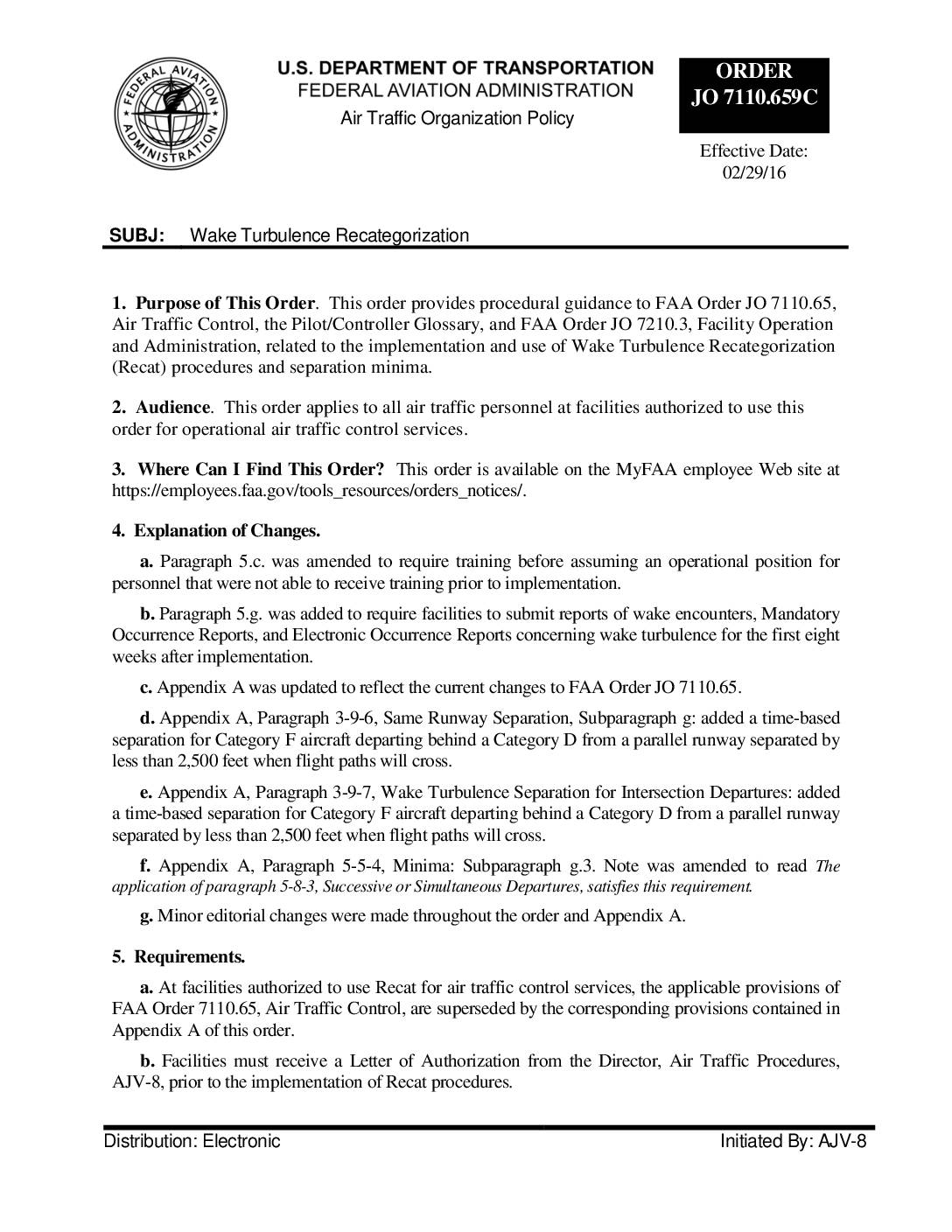
FAA Wake Recategorization JO7110659C
FAA Order JO 7110.659C, effective February 29, 2016, updates air traffic control procedures for Wake Turbulence Recategorization (Recat), which changes how aircraft are grouped for safe separation purposes. Instead of the traditional three weight classes (heavy, large, and small), Recat introduces six categories based on wingspan, takeoff weight, and an aircraft's ability to withstand wake turbulence, allowing for more precise separation distances and improved airport efficiency. Facilities must obtain authorization, train personnel, and submit weekly wake encounter reports for the first eight weeks after implementing these new procedures. -
 2015-08-17
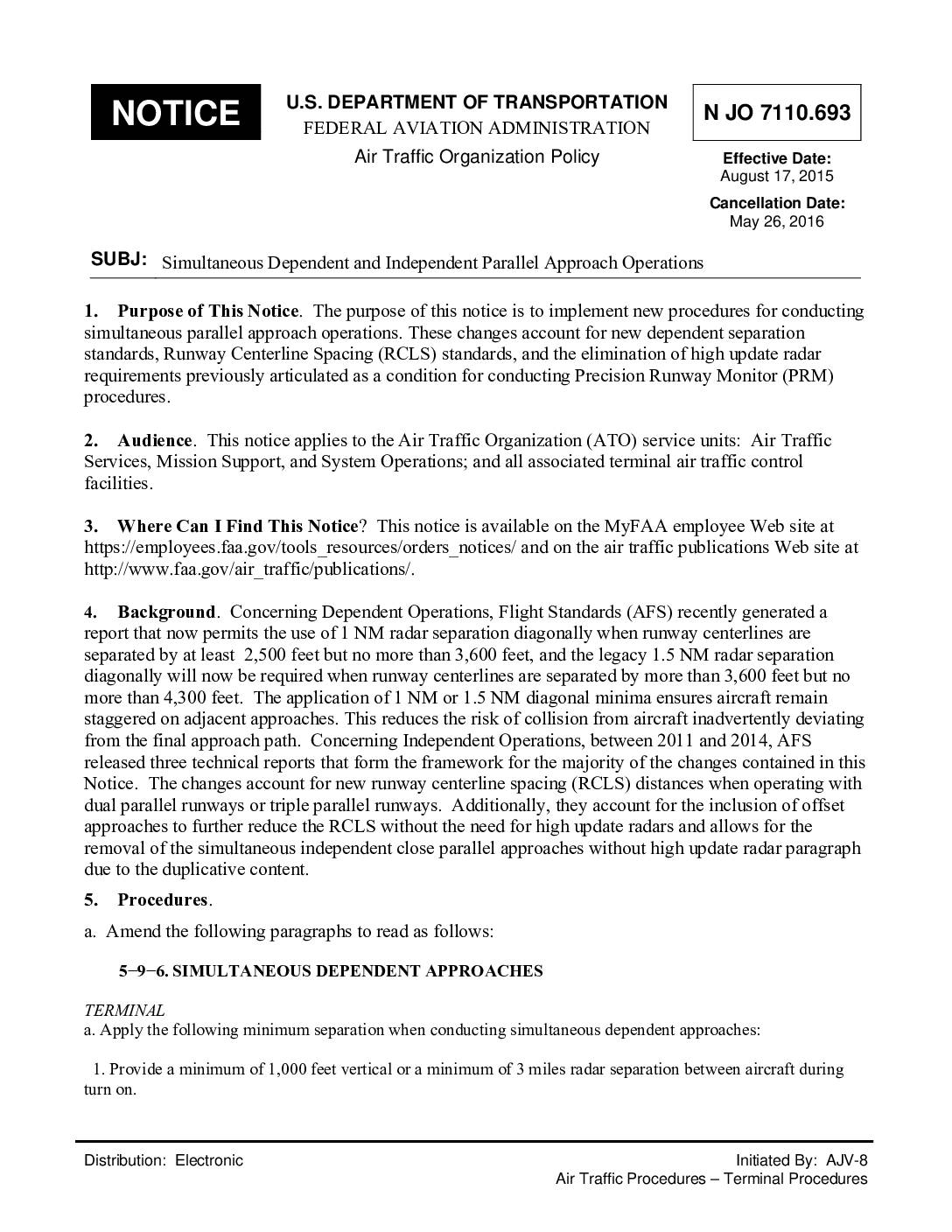
JO7110.693 Simultaneous dependent and independent parallel approach operations
This FAA notice (effective August 2015) updates the rules for how air traffic controllers manage aircraft making simultaneous approaches to parallel runways. It introduces new diagonal radar separation distances between aircraft based on how far apart the runway centerlines are, ranging from 1 mile of separation for runways 2,500–3,600 feet apart to 2 miles for runways 4,301–9,000 feet apart. While focused on controller procedures rather than noise policy directly, these standards govern how closely aircraft can be spaced during parallel runway approaches, which is relevant to arrival patterns affecting communities near airports like Sea-Tac. -

Frustrated Residents Fire Back at FAA Officials
Several individuals participate in what appears to be a public meeting or hearing in a wood-paneled room. A blue flag (possibly Washington State) is visible in the background along with a speaker system, suggesting an official or government-related gathering. -
2012-10-26
Frustrated Residents Fire Back at FAA Officials
Joseph Kellard, Patch Staff Posted Fri, Oct 26, 2012 at 4:00 pm ET Story and photos by Tara Conry Is the Federal Aviation Administration compromising safety and ignoring an agreement to reduce noise pollution in order to maximize efficiency at JFK airport? Those were the charges residents made at the Oct. 23 meeting of the -
 2012-10-18
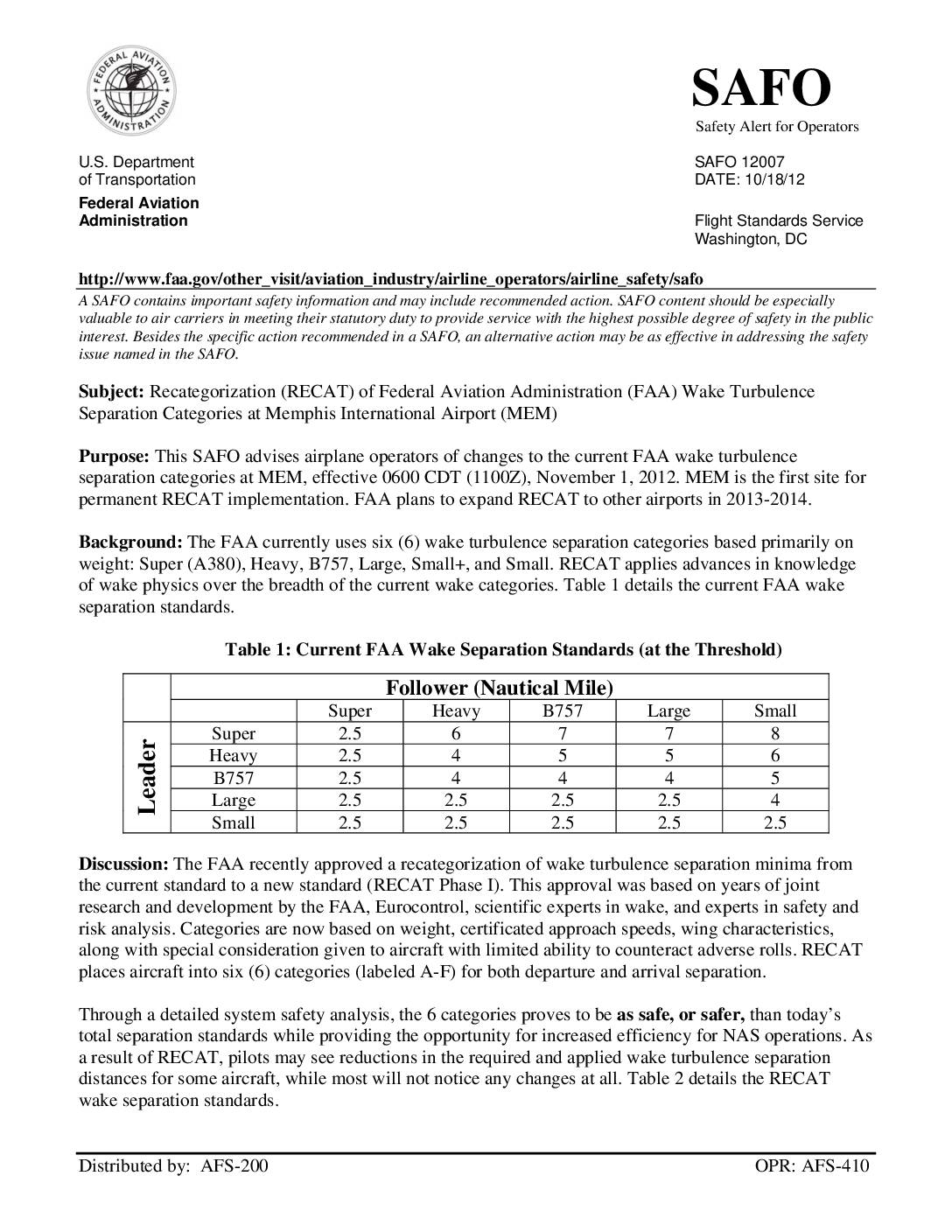
Recategorization (recat) of federal aviation administration (FAA) wake turbulence separation categories at memphis international airport (mem)
FAA Safety Alert for Operators announcing the implementation of new wake turbulence separation categories (RECAT Phase I) at Memphis International Airport, effective November 1, 2012. The document details changes from the current 6-category system to a new system based on weight, approach speeds, and wing characteristics, with specific separation standards and aircraft assignments. -
 2012-06-11
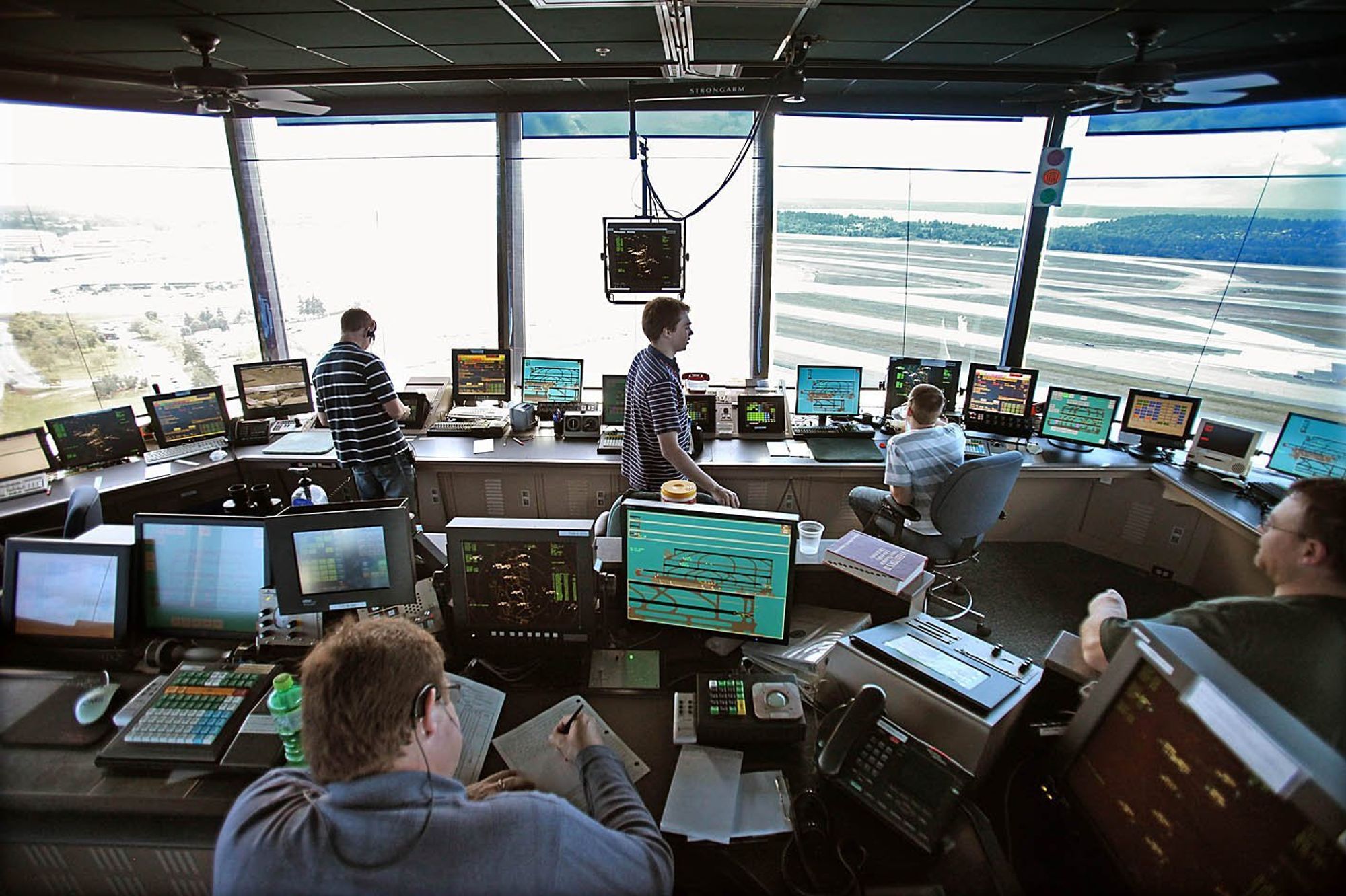
Sea-Tac Airport Air Traffic Control Tower Interior
Interior of an airport traffic control tower cab showing multiple controllers at workstations equipped with radar displays, surface movement screens, and radio equipment. A label reading 'STRONGARM' is visible on ceiling-mounted equipment, and runway infrastructure is visible through the wraparound windows below. -
 2012-05-01
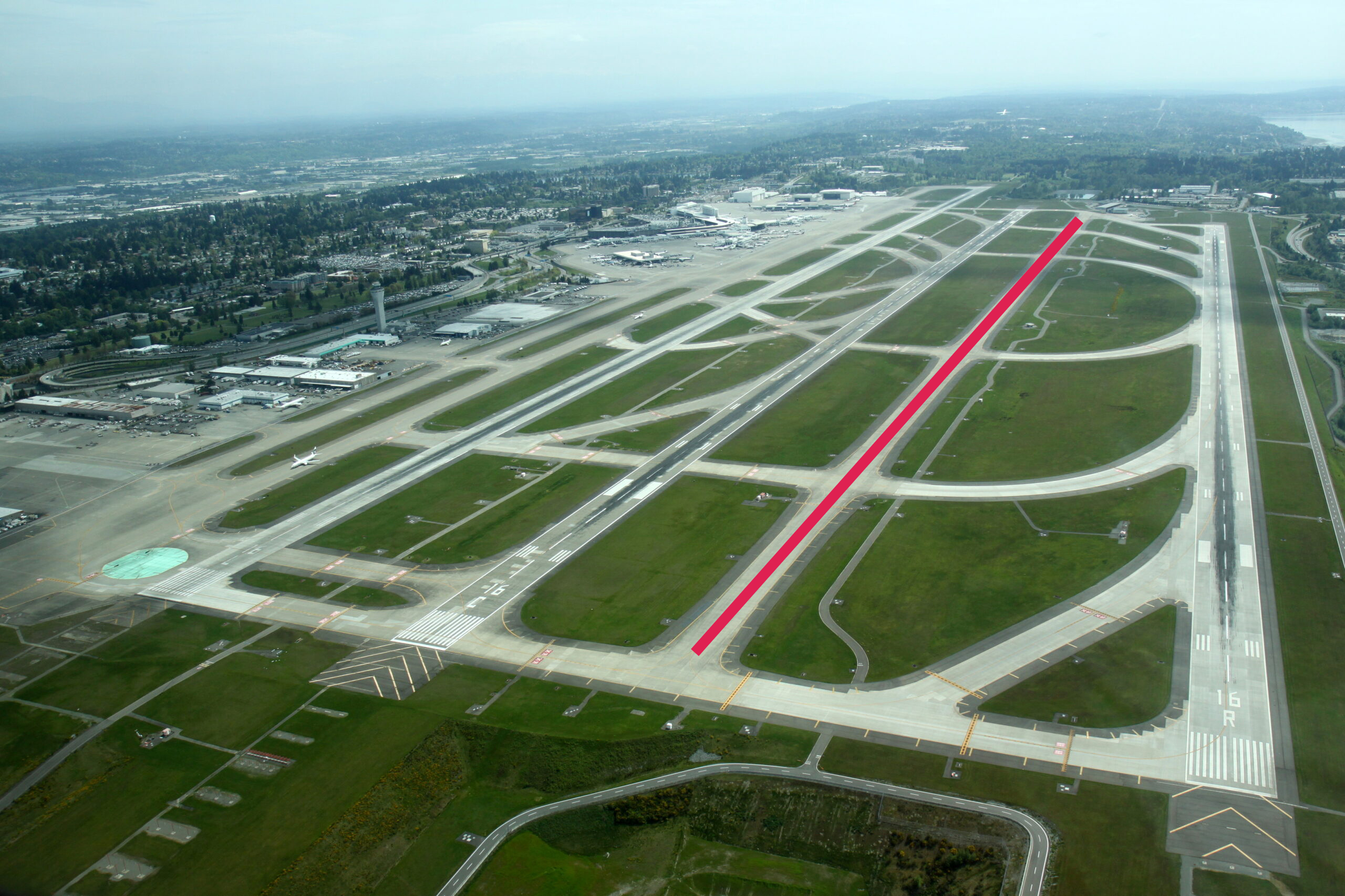
Sea-Tac Airport Parallel Runway Complex Aerial, May 2012
Aerial photograph of Seattle-Tacoma International Airport showing the parallel runway complex, with runway designation '16R' visible in the lower right. A red line is overlaid on what appears to be a taxiway or runway segment between the center and east runways, likely marking a specific infrastructure element for noise-policy or planning documentation purposes. -
 2009-10-01
Traffic flow management in the National Airspace System
This October 2009 FAA Air Traffic Organization document explains the terms, techniques, and programs used to manage the flow of air traffic across the National Airspace System. It covers topics such as ground delay programs, ground stops, severe weather avoidance, rerouting strategies, and coordination tools used by traffic management specialists. While focused on national-level airspace operations rather than airport-specific noise policy, it provides useful background on how flight scheduling and routing decisions are made system-wide.