TagAir Traffic Control(102)
-
 1989-05-01
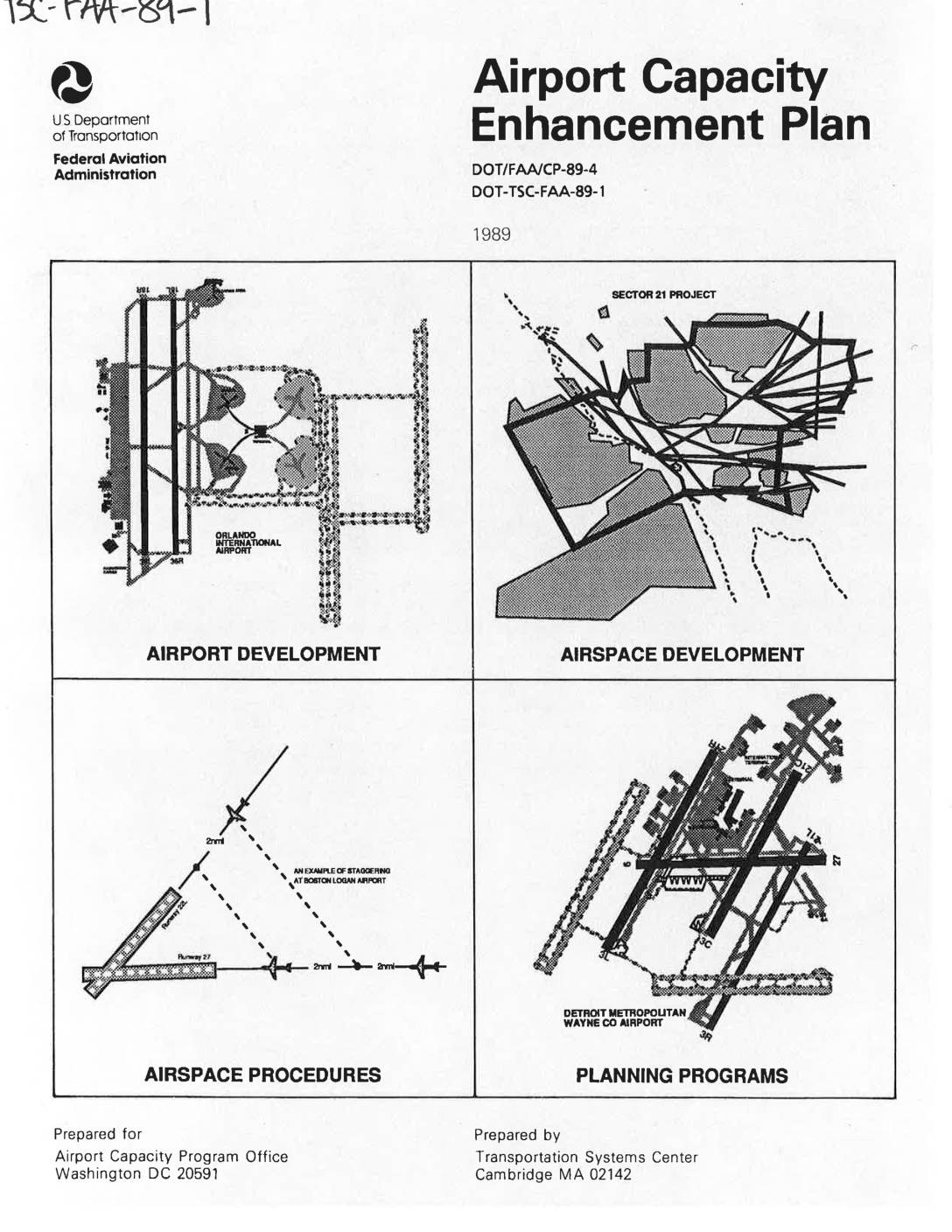
Airport Capacity Enhancement Plan 1989
The 1989 Airport Capacity Enhancement Plan, produced by the FAA and U.S. Department of Transportation, outlines efforts to increase airport capacity and efficiency across the U.S. air system without compromising passenger safety or the environment. It identifies causes of capacity and delay problems, projects the impact of increased air traffic over the following decade, and describes planned projects covering airport development, airspace procedures, new equipment, and capacity planning studies. Note: this document addresses national airport capacity issues broadly and does not focus specifically on Sea-Tac Airport or local noise policy. -
 1988-04-01
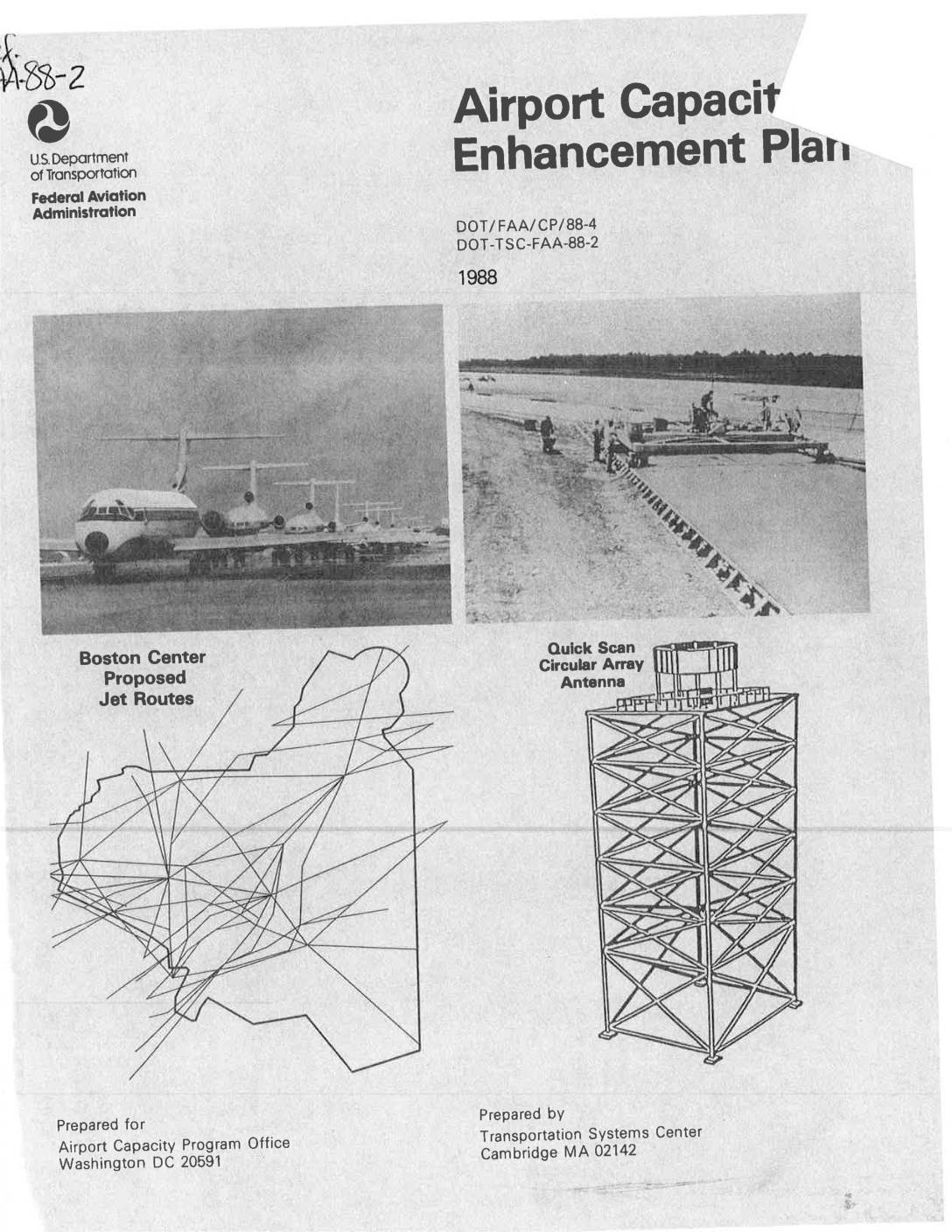
Airport Capacity Enhancement Plan 1988
This 1988 Federal Aviation Administration report outlines the Airport Capacity Enhancement Plan, which aimed to increase airport capacity and efficiency across the U.S. air system without compromising passenger safety or environmental impact. It identifies causes of capacity and delay problems, forecasts the effects of growing air traffic over the following decade, and describes FAA projects targeting four key areas: airport development, airspace control procedures, equipment and systems upgrades, and capacity planning studies. Note that while this document addresses national airport capacity issues broadly, it does not specifically focus on Sea-Tac Airport noise policy. -
 1983-09-23
Airport capacity and delay
This FAA Advisory Circular (AC 150/5060-5), issued September 23, 1983, provides procedures for computing airport capacity and aircraft delay for use in airport planning and design. It defines capacity as the maximum number of operations that can occur in an hour, and delay as the time difference between a constrained and unconstrained aircraft operation. The document updates and replaces earlier FAA capacity criteria circulars to reflect changes in the national aircraft fleet and improvements in air traffic control practices. -
 1982-10-27
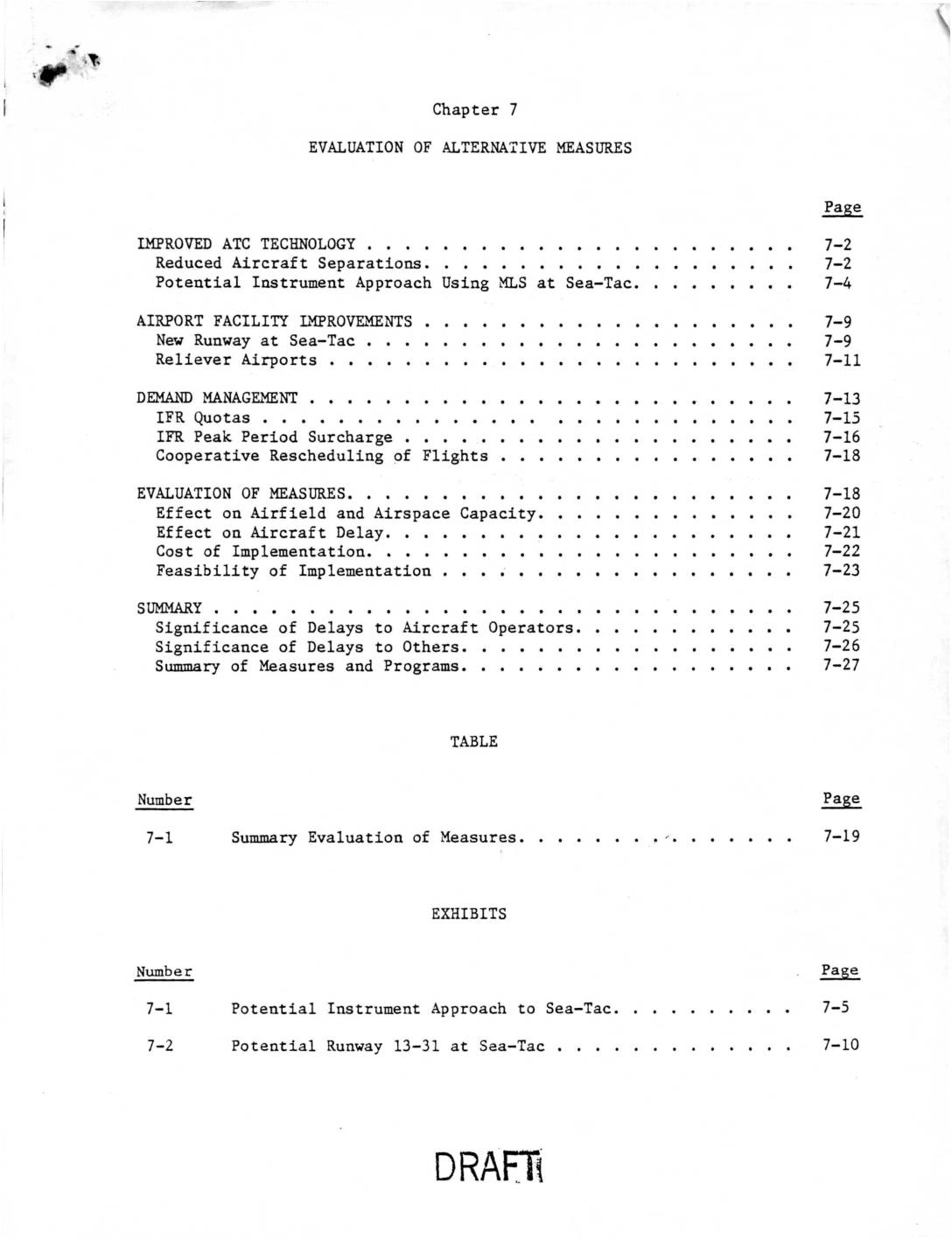
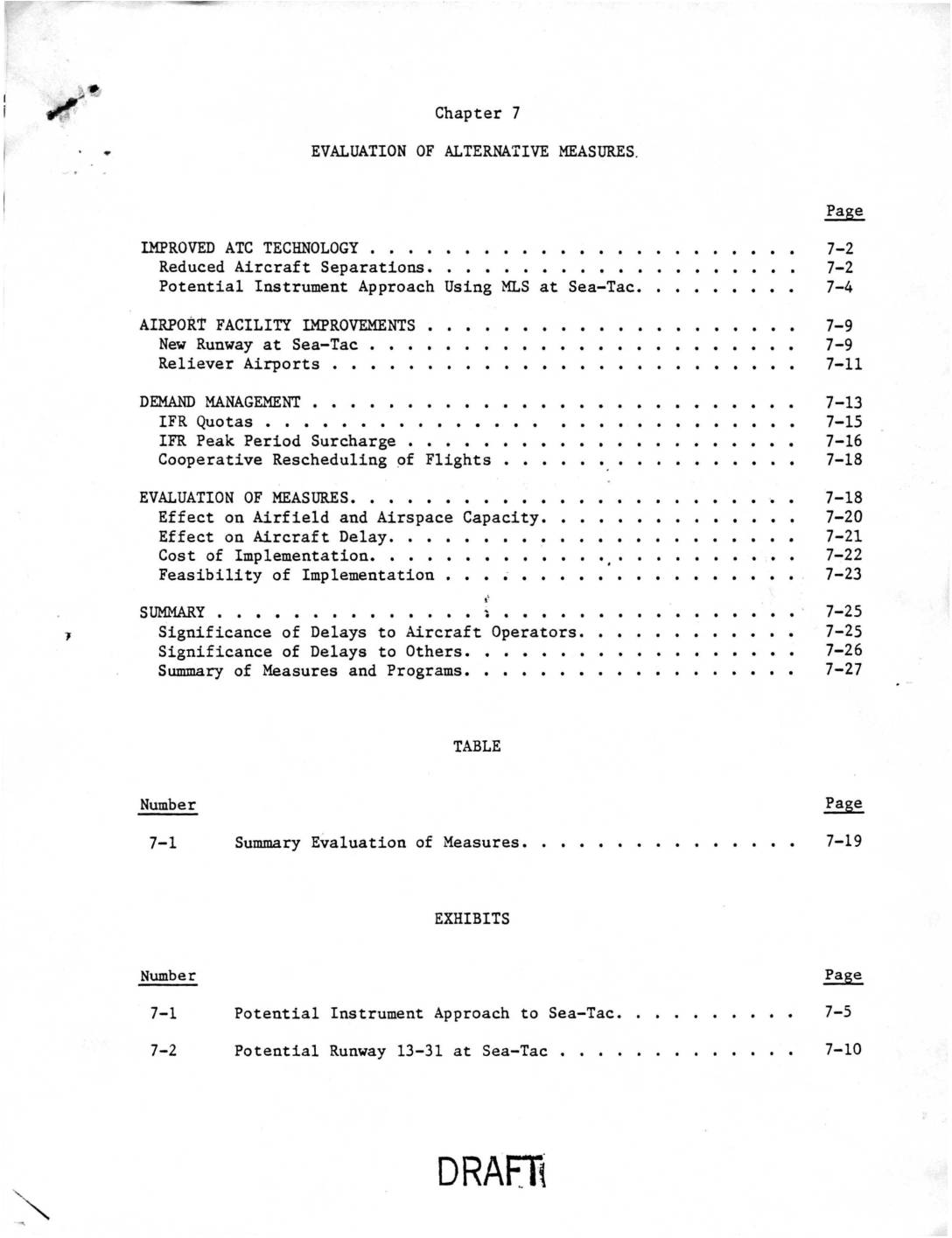
Evaluation of Alternative Measures: Chapter 7, Shared Airspace Study
This draft chapter evaluates alternative measures to reduce growing aircraft delays caused by airspace interactions between Seattle-Tacoma International Airport (Sea-Tac) and Boeing Field, which are projected to worsen significantly between 1990 and 2000. Three main approaches are examined: improving air traffic control (ATC) technology to allow reduced aircraft separations, expanding airport facilities through new runways or reliever airports, and managing demand through flight quotas or peak-period pricing. The chapter concludes that a combination of these measures will likely be necessary, and that action should begin immediately since implementation could take until 1990 when the delays are expected to become critical. -
 1982-09-01
Evaluation of Alternative Measures: Chapter 7
This draft chapter evaluates alternative measures to address growing aircraft delays caused by airspace interactions between Seattle-Tacoma International Airport (Sea-Tac) and Boeing Field, which are projected to worsen significantly from 1990 through 2000. The measures examined include improved air traffic control (ATC) technology, airport facility improvements such as a new runway and reliever airports, and demand management strategies like flight quotas and peak-period surcharges. The chapter emphasizes that, despite delays not being critical until around 1990, immediate planning and commitment from various agencies is necessary given the lengthy implementation timelines involved. -
 1982-02-24
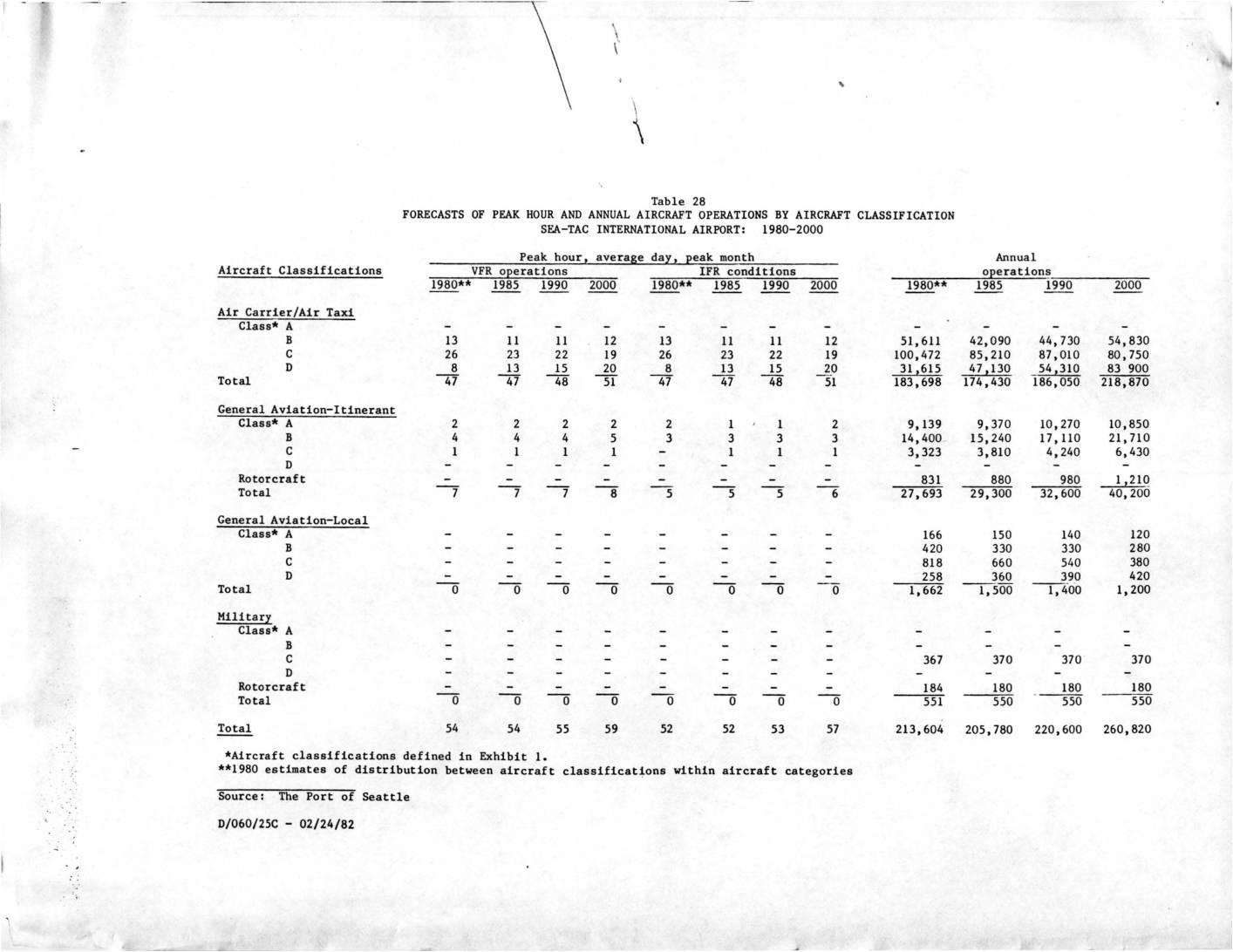
Forecasts of Peak Hour and Annual Aircraft Operations by Aircraft Classification: Sea-Tac International Airport and King County International Airport, 1980–2000
This document presents forecasts of aircraft operations at Seattle-Tacoma (Sea-Tac) International Airport and King County International Airport from 1980 to 2000, broken down by aircraft classification and flight category including air carrier, general aviation, and military. It projects that total annual operations at Sea-Tac will grow from approximately 213,600 in 1980 to over 260,800 by 2000, driven largely by increases in larger Class D air carrier aircraft. Peak hour operation estimates are provided for both Visual Flight Rules (VFR) and Instrument Flight Rules (IFR) conditions, offering planners a detailed basis for noise impact and capacity assessments. -
 1981-11-16
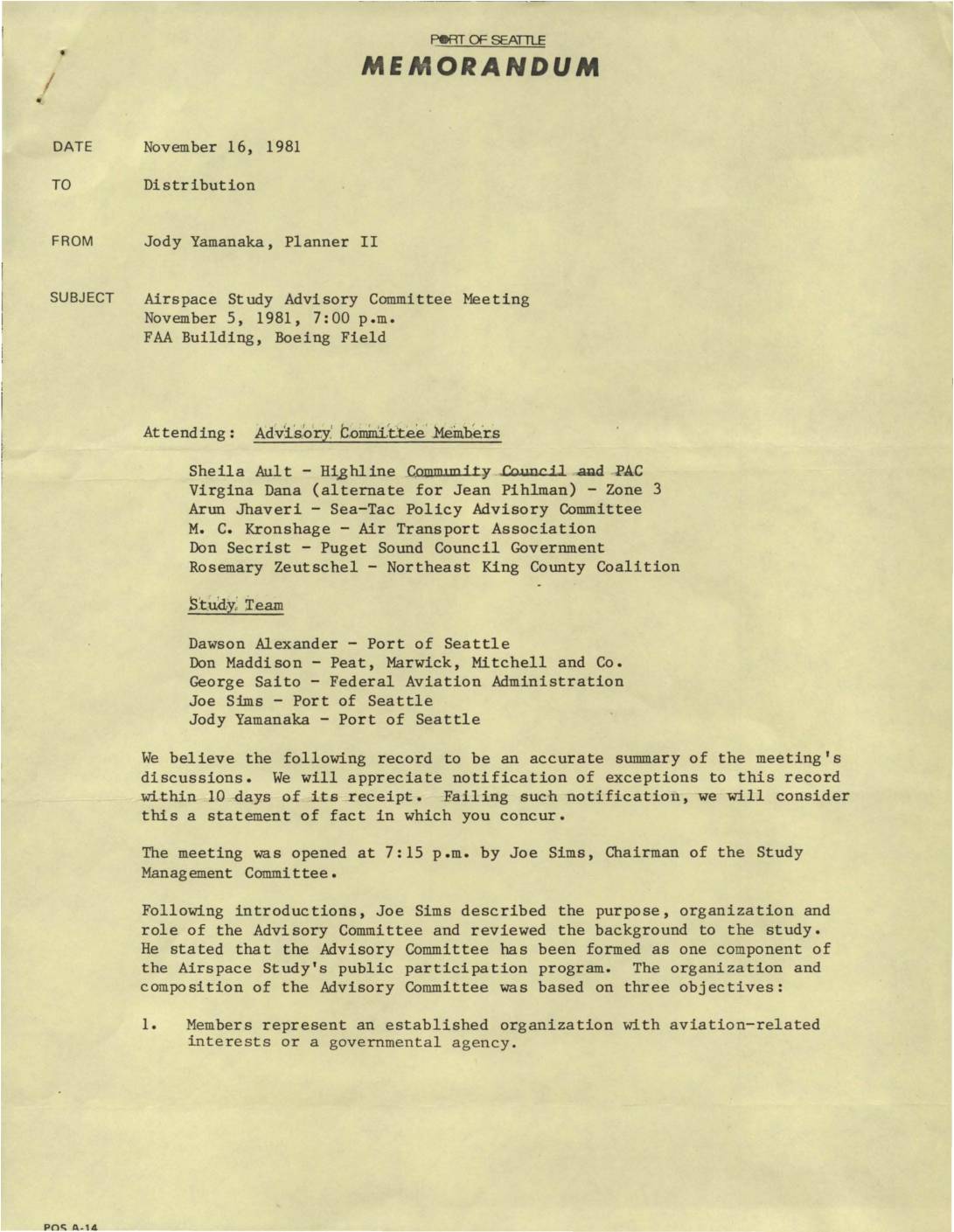
Airspace Study Advisory Committee Meeting November 5, 1981
Meeting minutes from the Airspace Study Advisory Committee discussing the study of airspace interaction between Sea-Tac Airport and Boeing Field. The committee reviewed the study’s purpose, organization, scope, and schedule, with presentations on air traffic control and local airspace structure. -
 1981-11-05
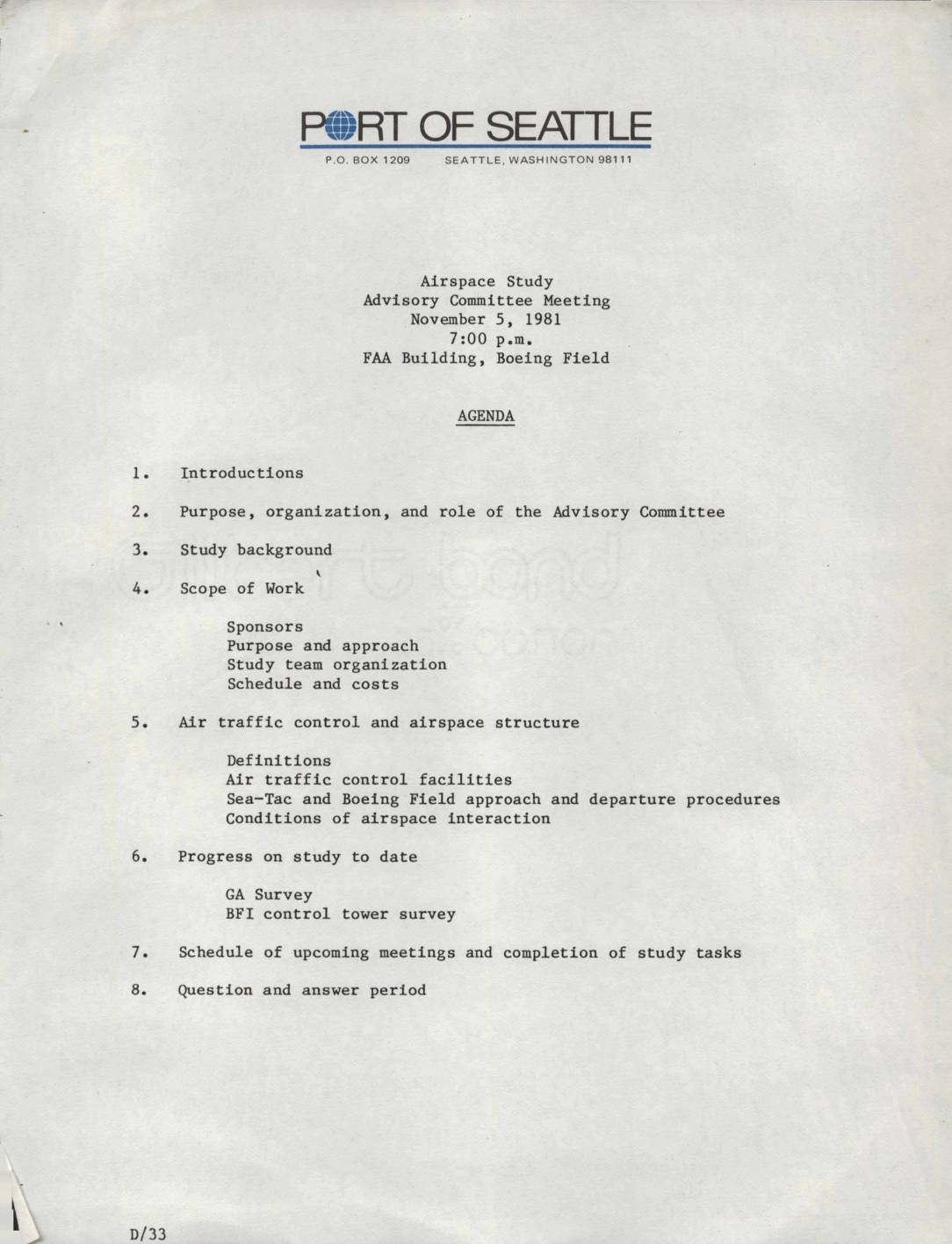
Airspace Study Advisory Committee Meeting Agenda, November 5, 1981
This document is the agenda for a Port of Seattle Airspace Study Advisory Committee meeting held on November 5, 1981, at the FAA Building at Boeing Field. The meeting covered the study's background, scope of work, and an overview of air traffic control and airspace structure, including approach and departure procedures for Sea-Tac and Boeing Field. Progress updates on a general aviation survey and a Boeing Field control tower survey were also scheduled for discussion. -
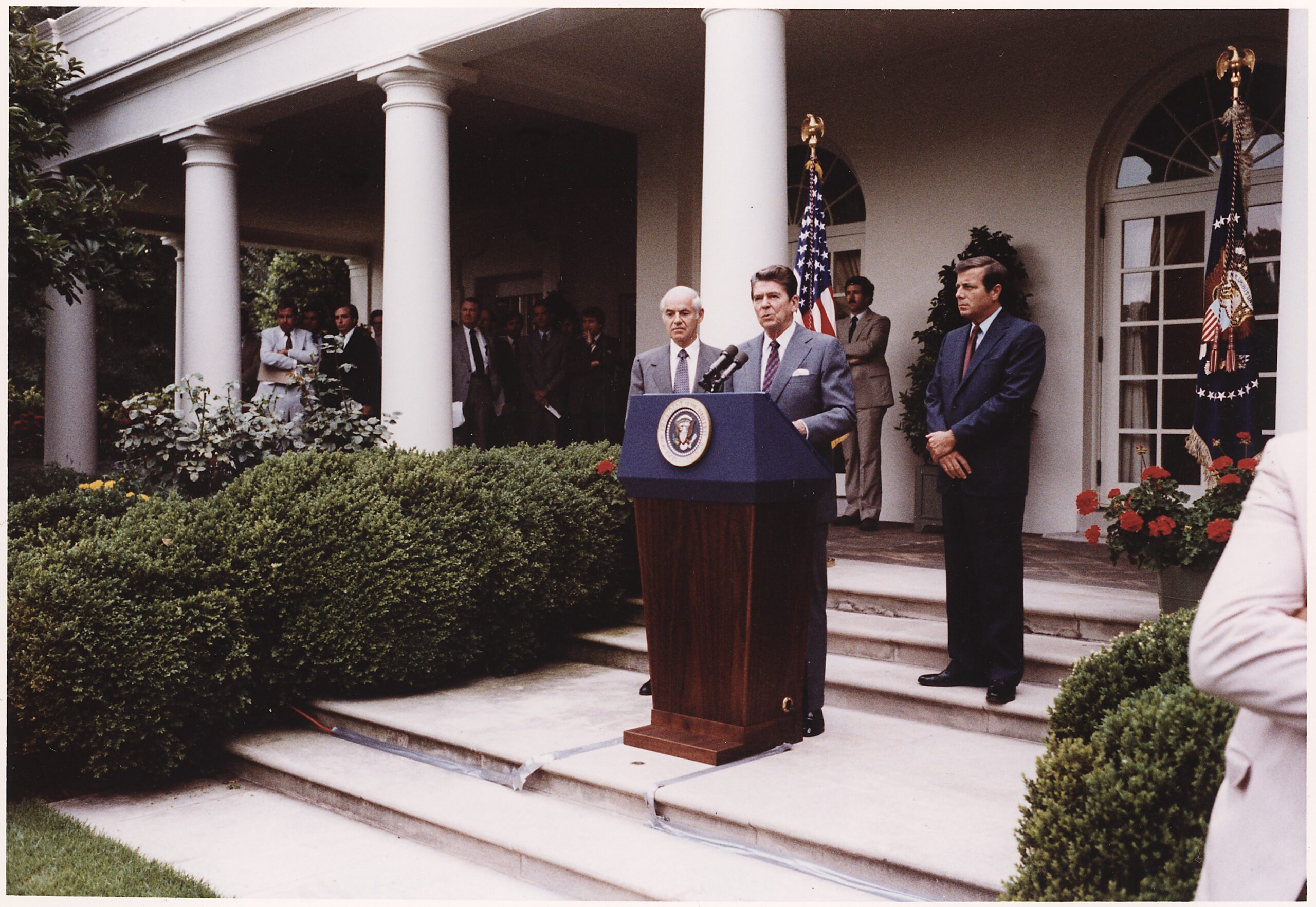 1981-08-03
Ronald Reagan Press Conference PATCO 1981 at White House
Three men stand at a presidential podium bearing the Presidential Seal in what appears to be the White House Rose Garden. The setting includes American flags, white columns, and a gathered audience of officials and press in the background, consistent with an official White House announcement or press conference. -
1981 Professional Air Traffic Controllers Organization strike – Wikipedia
From Wikipedia, the free encyclopedia Failed U.S. air traffic controllers strike in 1981 Air traffic controllers working in a control tower, showing the typical environment and equipment used before the 1981 PATCO strike. The PATCO Strike of 1981 was a union-organized work stoppage by air traffic controllers (ATCs) in the United States. the Professional Air