TagWSDOT(129)
-
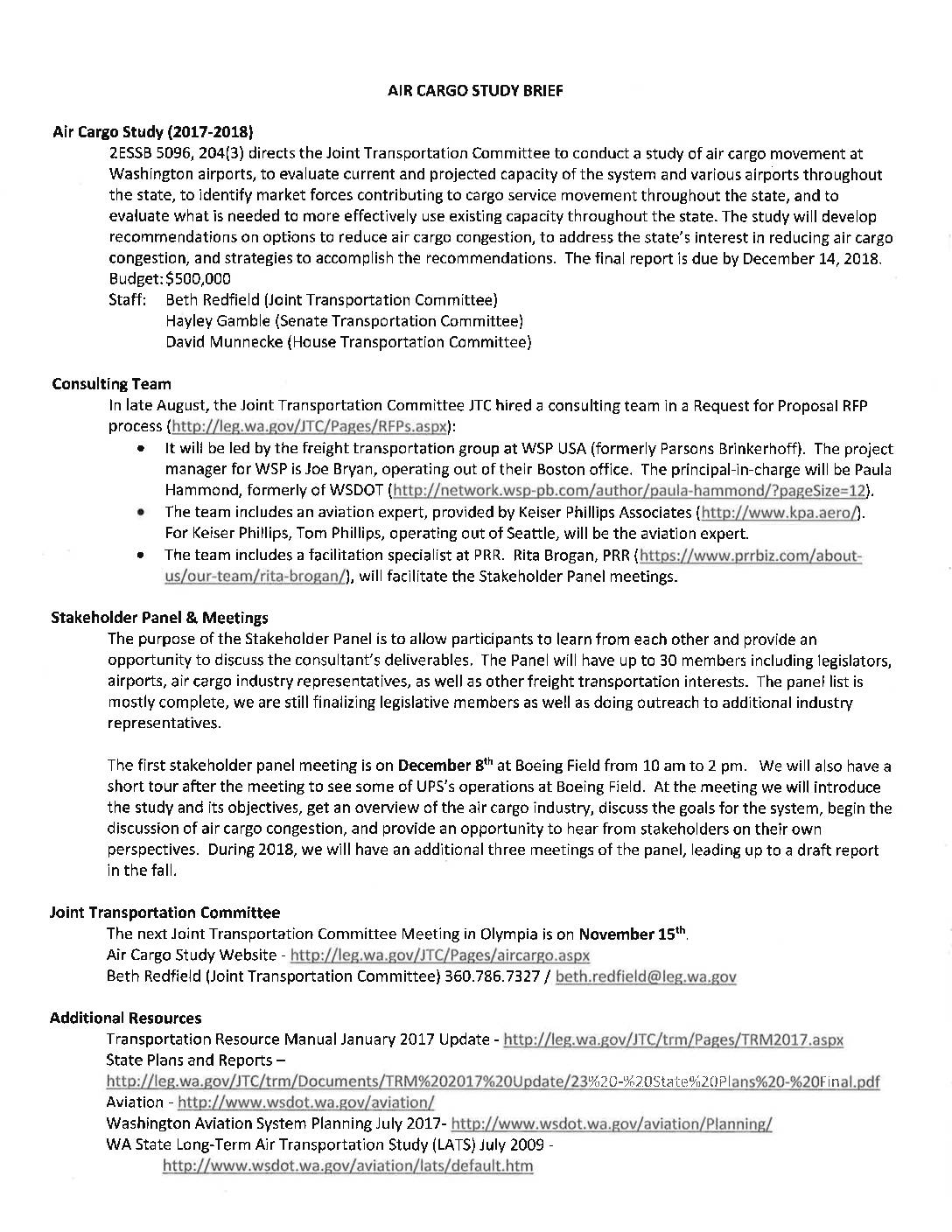
-
 2017-08-15
Puget Sound Gateway Program SR 509 Completion Project
WSDOT presentation by Senior Transportation Planner Thomas Noyes to the SDOT Freight Advisory Board on August 15, 2017, covering the Puget Sound Gateway Program SR 509 Completion Project and SR 167. Topics include direct freight links from Port of Seattle and Port of Tacoma to regional distribution centers and Eastern Washington, direct access to Seattle-Tacoma -
 2017-08-15
Puget Sound Gateway Program SR 509 Completion Project
WSDOT presentation by Senior Transportation Planner Thomas Noyes to the SDOT Freight Advisory Board on August 15, 2017, covering the Puget Sound Gateway Program SR 509 Completion Project and SR 167. Topics include direct freight links from Port of Seattle and Port of Tacoma to regional distribution centers and Eastern Washington, direct access to Seattle-Tacoma -
 2017-07-26
Puget Sound Gateway Program SR 509 Completion Project: Highline Forum presentation
A July 2017 presentation by the Washington State Department of Transportation outlines the Puget Sound Gateway Program's SR 509 Completion Project, which aims to build new freeway connections linking the region's major ports and Seattle-Tacoma International Airport to surrounding communities and Eastern Washington. The project includes plans for tolling to help fund construction and is intended to improve freight movement, airport access for passengers and air cargo, and regional economic development. -
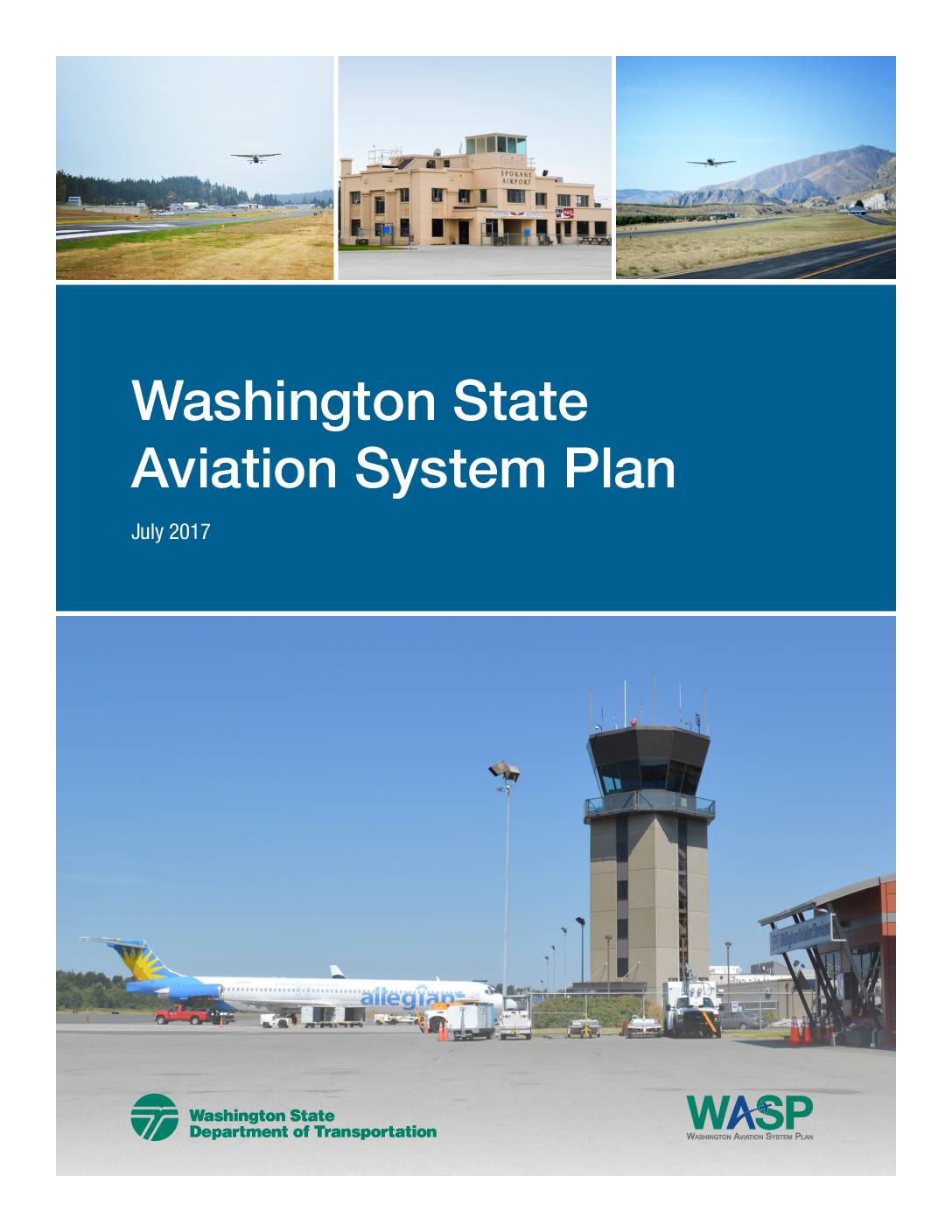 2017-07-01
Washington State Aviation System Plan
The Washington State Aviation System Plan (WASP), published in July 2017 by the Washington State Department of Transportation (WSDOT), provides a comprehensive assessment of the state's airport system, covering infrastructure inventory, safety, economic development, and long-term planning goals. The plan examines runways, taxiways, landside facilities, and aviation services across both federally recognized and non-NPIAS airports throughout Washington State. Funded in part by a Federal Aviation Administration planning grant, it serves as a guiding framework for aviation investment and policy decisions statewide. -
 2017-07-01
Washington Aviation System Plan (WASP): Executive Summary
The Washington Aviation System Plan (WASP), completed in July 2017 by the Washington State Department of Transportation (WSDOT), is a statewide assessment of Washington's public-use airports covering both commercial and general aviation facilities. The plan evaluates how individual airports perform and interact as a system, identifies needed improvements, and develops policy recommendations to support communities, economic activity, and emergency services across the state. Funding was provided by the Federal Aviation Administration (FAA), and the plan builds on the earlier 2009 Long-term Air Transportation Study (LATS). -
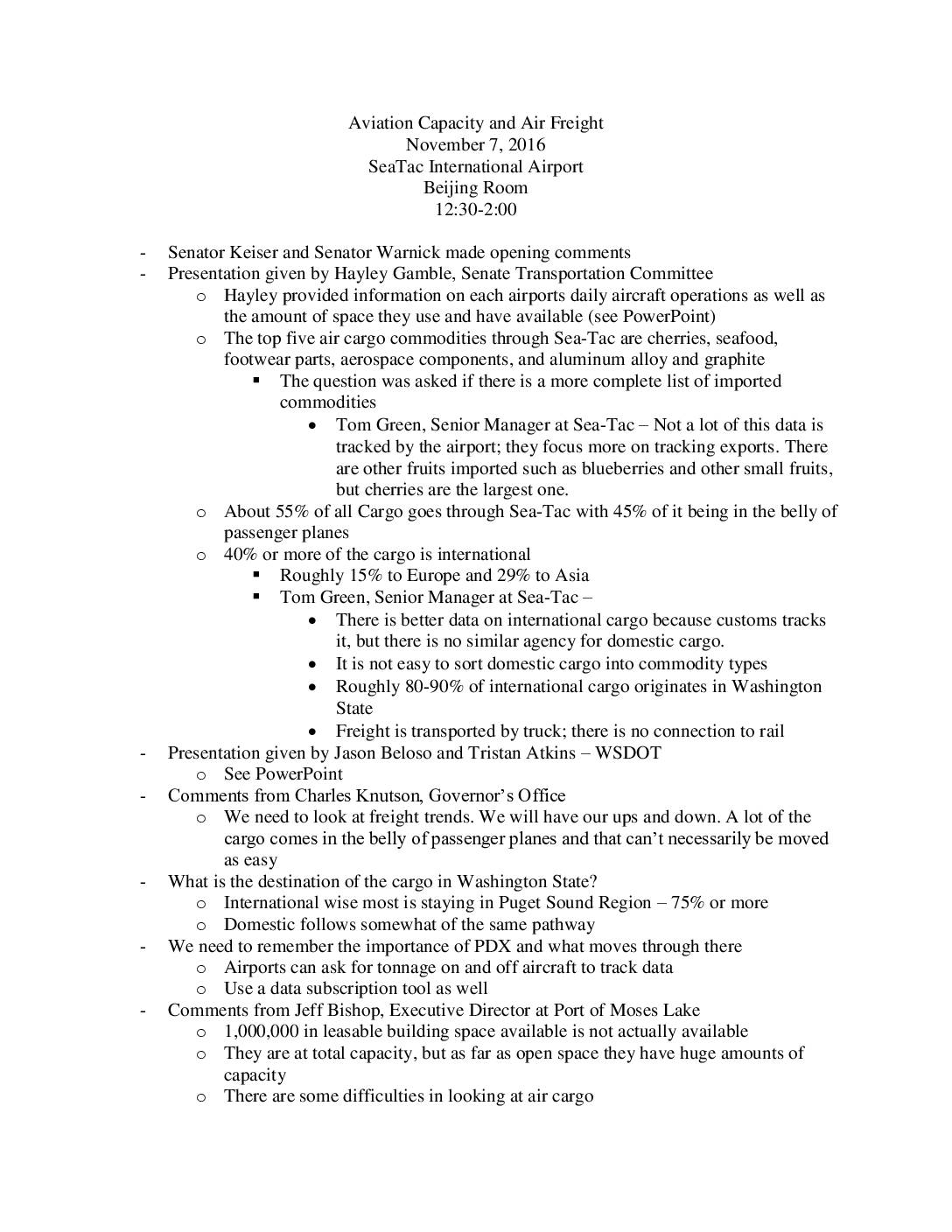 2016-11-07
Aviation Capacity and Air Freight Meeting Notes: November 7, 2016
Meeting notes from a November 7, 2016 aviation capacity and air freight session held at SeaTac International Airport, covering topics such as top cargo commodities, airport capacity constraints, and cargo data tracking challenges. Speakers including port commissioners, WSDOT representatives, and airport managers discussed Sea-Tac's approaching operational capacity, the heavy reliance on passenger belly cargo, and the potential for other Washington airports like Spokane and Moses Lake to absorb freight demand. The group explored possible next steps including an air freight study, shipper outreach, and intermodal coordination strategies. -
 2016-07-20
Washington Aviation System Plan (WASP) Update
This July 2016 presentation by WSDOT's Aviation Division outlines an update to the Washington Aviation System Plan (WASP), covering the state's network of public-use airports. It reviews aviation system goals, airport classifications, and performance metrics across Washington State. The document does not specifically address Sea-Tac Airport noise policy. -
 2016-05-25
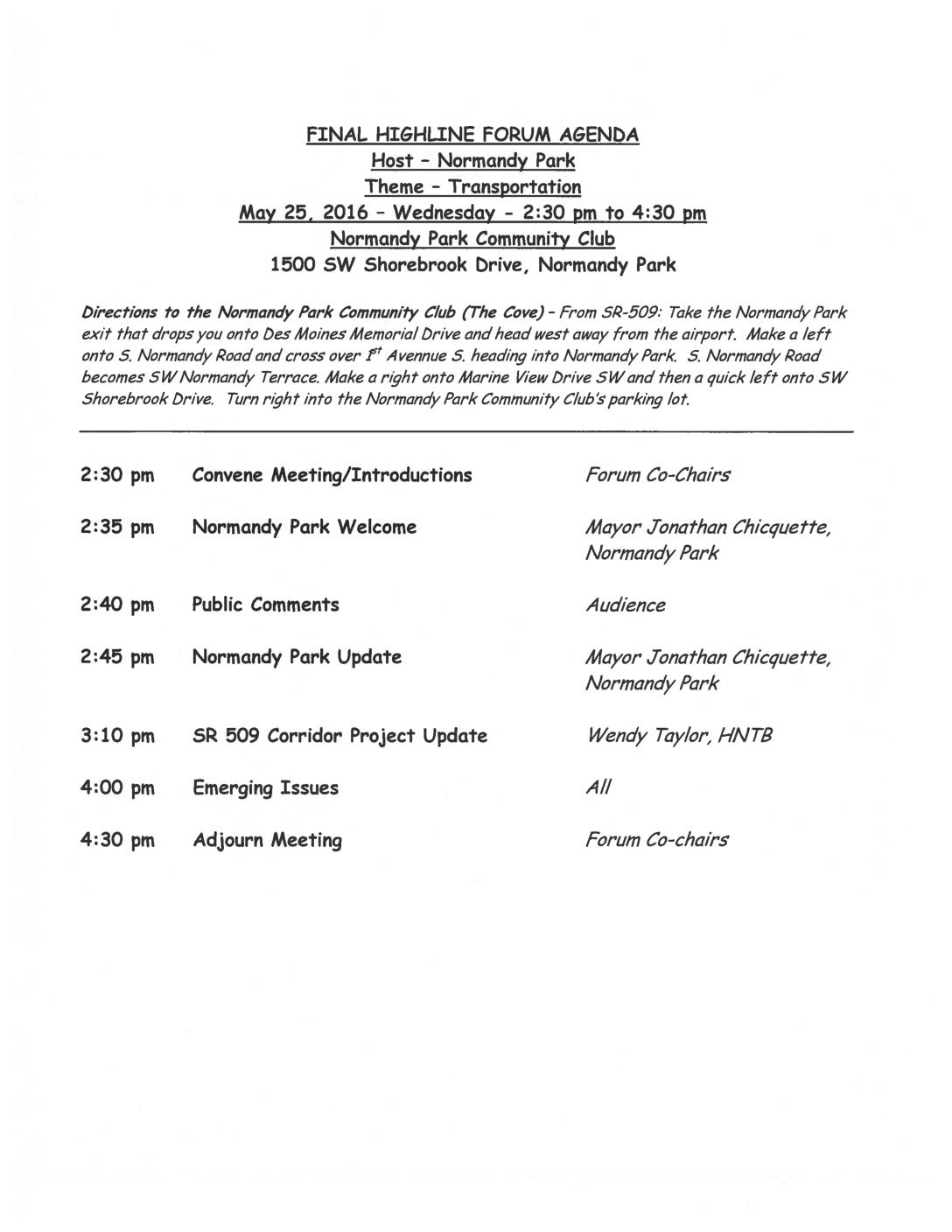
Highline Forum Agenda: Transportation — SR 509 Puget Sound Gateway Program, May 25, 2016
This document contains the agenda for a Highline Forum meeting held on May 25, 2016, at the Normandy Park Community Club, focused on the theme of transportation. The meeting featured a presentation by Wendy Taylor of HNTB on the SR 509 Puget Sound Gateway Program, a highway corridor project in the Seattle area near Sea-Tac Airport. The forum brought together local officials, including Normandy Park Mayor Jonathan Chicquette, to discuss regional transportation updates and emerging issues affecting the Highline area. -
 2015-07-01
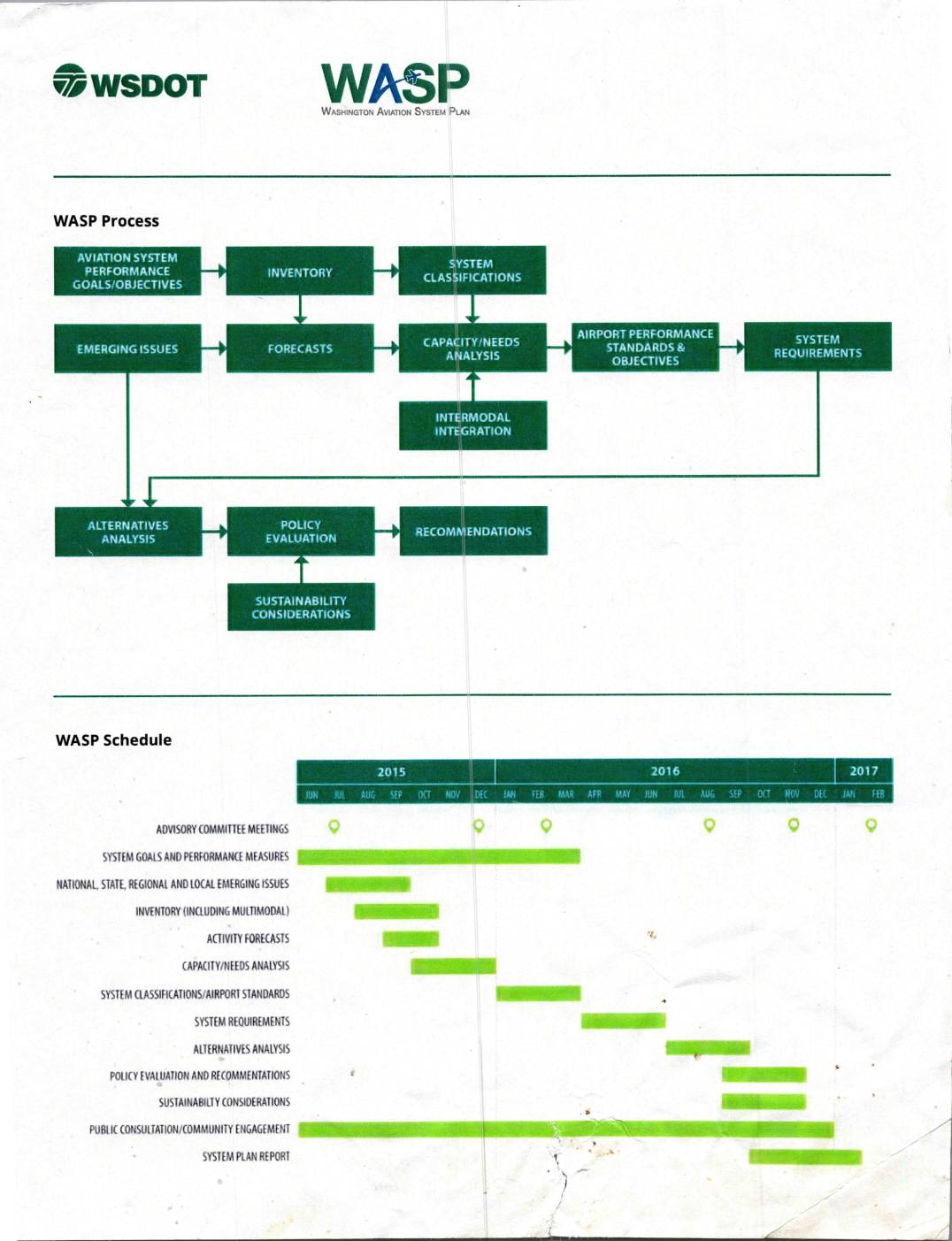
Washington Aviation System Plan Update: WASP Process and Schedule Flyer
The Washington State Department of Transportation (WSDOT) launched an update to the Washington Aviation System Plan (WASP) in July 2015, aimed at studying the performance of Washington's entire aviation system and identifying needed airport improvements. The plan involves analyzing aviation user requirements, airport capacity, and emerging issues such as unmanned aircraft systems, aviation fuels, and airport infrastructure funding challenges. A broad advisory committee representing airports, airlines, government agencies, and aviation associations was assembled to guide the process, which was scheduled for completion by early 2017.