TagWSDOT(129)
-
 2019-05-30
SR 509 NEPA Re-evaluation: Traffic, Emissions, and Noise Impacts on Burien and Environmental Justice Communities
A community analysis of the SR 509 highway extension near Sea-Tac Airport warns that the project will significantly increase truck and vehicle traffic through Burien, worsening air quality and noise for nearby residents. Critics argue that neither WSDOT nor the FAA has conducted adequate site-specific or cumulative impact studies, despite actual emissions being nearly three times higher than 1996 projections and the area already being identified as an environmental justice community. The document calls for a comprehensive cumulative analysis of combined highway traffic and airport operations to properly assess public health risks. -
2019-05-30
SR 509 NEPA Re-evaluation: Traffic, Emissions, and Noise Impacts on Burien and Environmental Justice Communities
Analysis citing the WSDOT SR 509 Phase 1 Environmental Re-evaluation (May 2019) comparing 2003 FEIS forecasts of 7,900 vph against re-evaluation forecasts of 4,700 vph on the SR 509 extension between I-5 and 24th Avenue S/28th Avenue S interchange, with tolling assumed. Documents that the 2045 Build condition adds 500–1,400 vph on existing SR 509 -
 2018-09-26
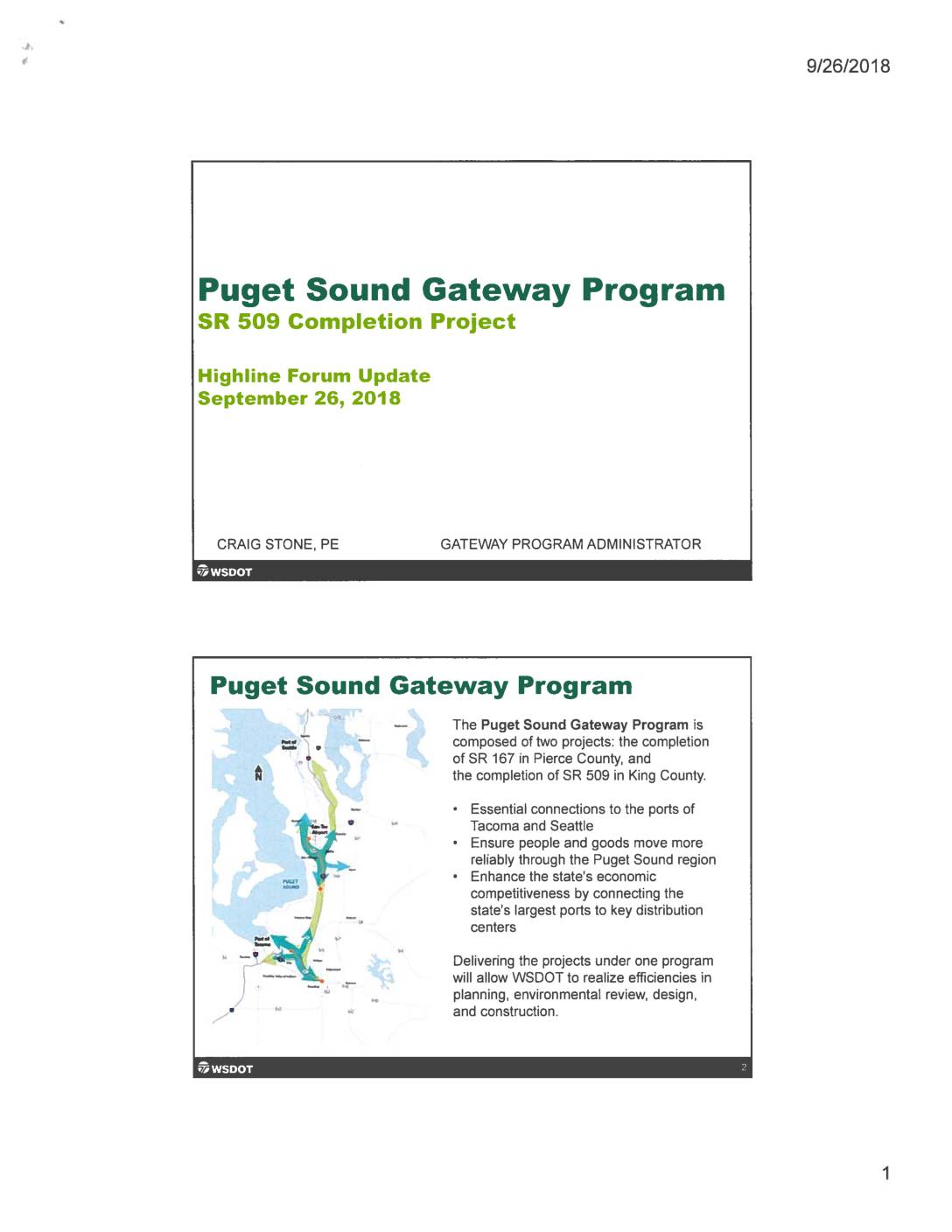
Puget Sound Gateway Program SR 509 Completion Project: Highline Forum update
The Puget Sound Gateway Program, presented at a Highline Forum in September 2018, outlines two highway completion projects—SR 509 in King County and SR 167 in Pierce County—designed to improve freight movement between the ports of Seattle and Tacoma and key distribution centers. Among its key benefits, the program includes a new south access point to Sea-Tac Airport and aims to reduce congestion on local roads surrounding the airport. Funding for the program combines state, local, federal, and toll revenue sources, with electronic tolling on all new lanes expected to begin as early as 2025. -
 2018-09-26
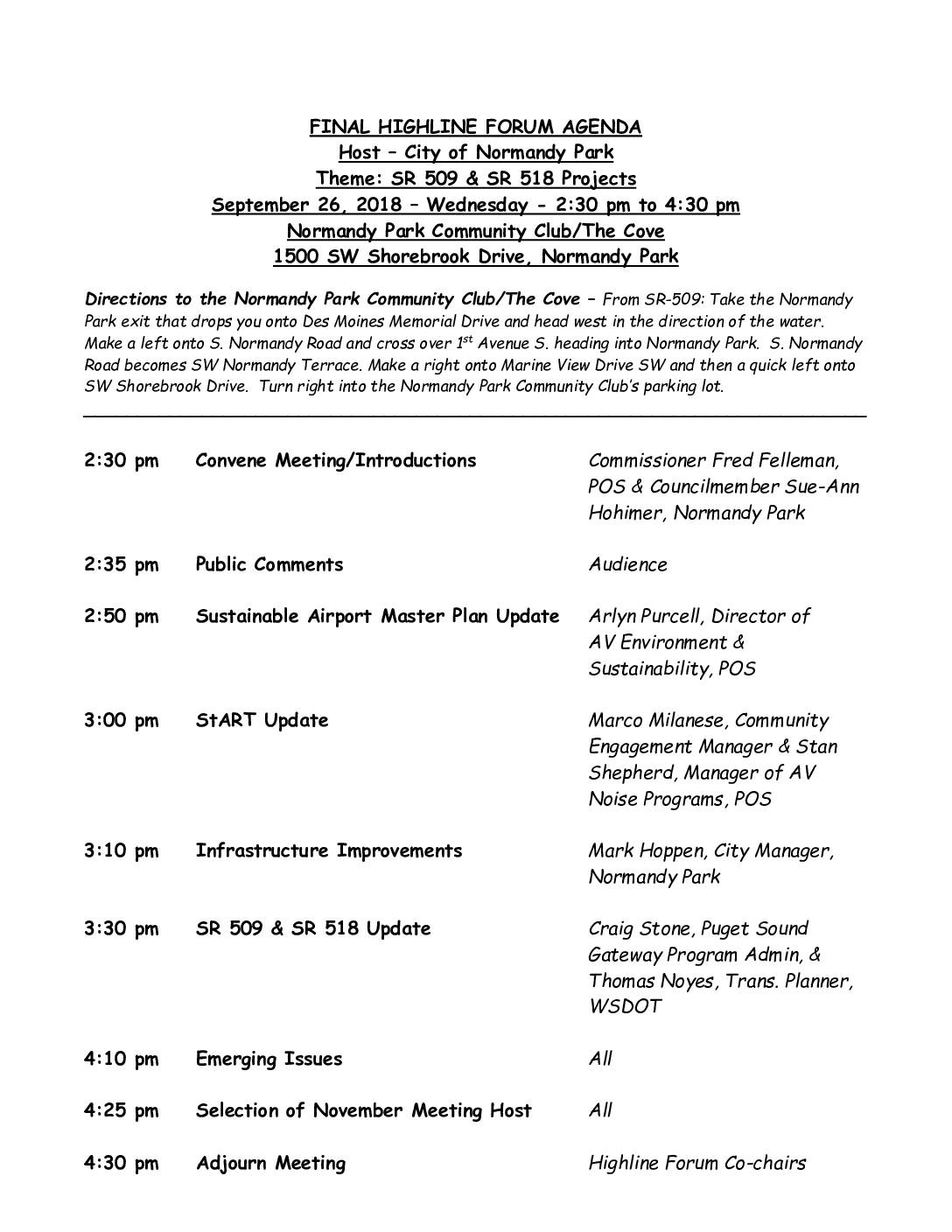
Final Highline Forum agenda: SR 509 & SR 518 projects
The Highline Forum held its September 26, 2018 meeting in Normandy Park, focusing on SR 509 and SR 518 transportation projects alongside Seattle-Tacoma International Airport-related topics. The agenda included updates on the Sustainable Airport Master Plan, the StART (Sea-Tac Airport Roundtable) community engagement program, and airport noise programs, presented by Port of Seattle officials. Infrastructure improvements in Normandy Park and a WSDOT briefing on regional highway gateway projects were also on the agenda. -
 2018-09-01
Construction and Implementation Plan
Construction and Implementation Plan for the Puget Sound Gateway Program, prepared by the Washington State Department of Transportation (WSDOT) in September 2018. Covers SR 167 Completion Project and SR 509 Completion Project, including project phasing, construction stages, delivery method, funding sources (toll funding, local funding, grants), expenditure and sequencing plan, and community and stakeholder engagement. -
 2018-09-01
Construction and Implementation Plan
Construction and Implementation Plan for the Puget Sound Gateway Program, prepared by the Washington State Department of Transportation (WSDOT) in September 2018. Covers SR 167 Completion Project and SR 509 Completion Project, including project phasing, construction stages, delivery method, funding sources (toll funding, local funding, grants), expenditure and sequencing plan, and community and stakeholder engagement. -
 2018-07-13
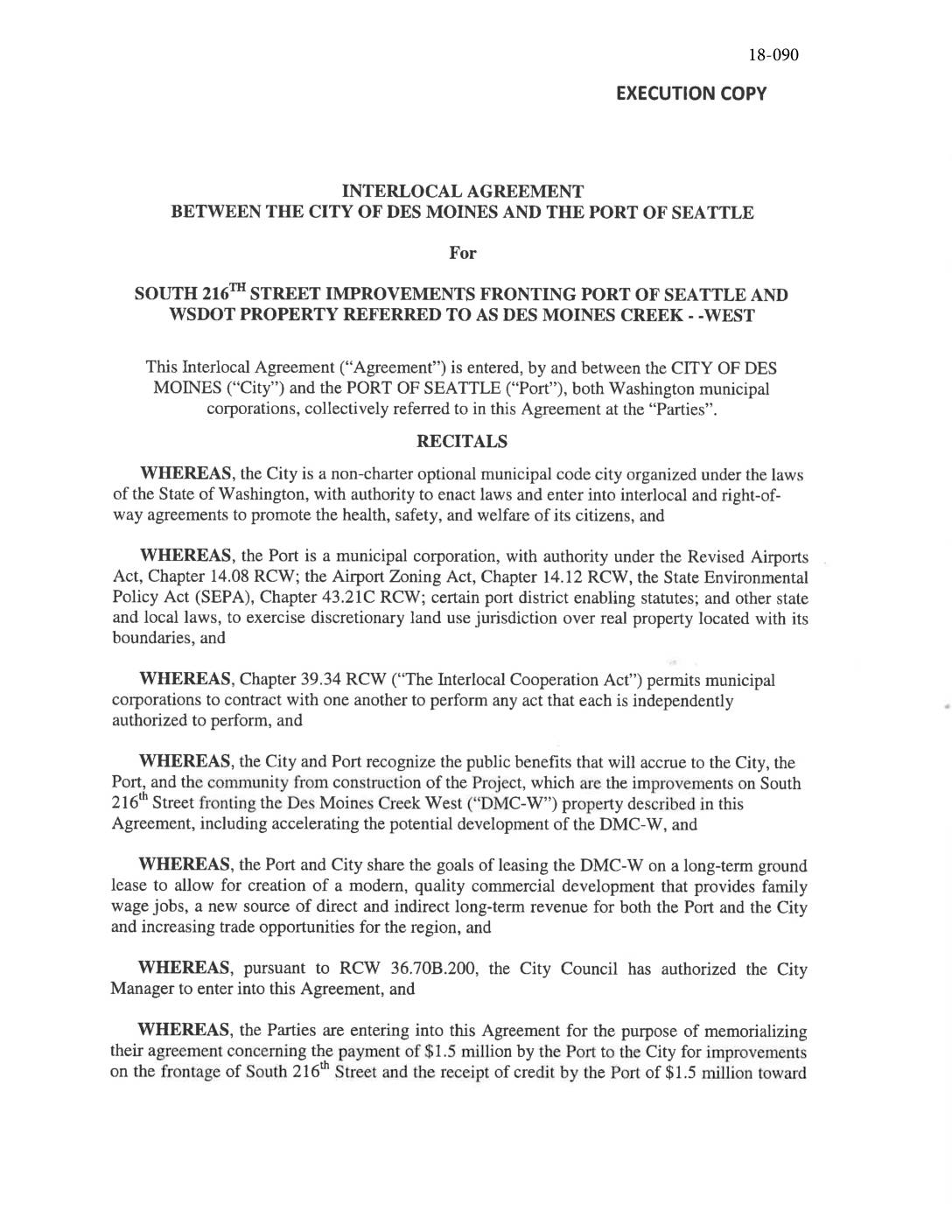
Interlocal Agreement Between the City of Des Moines and the Port Of Seattle for South 216th Street Improvements Fronting Port Of Seattle and WSDOT Property Referred to as Des Moines Creek West
This 2018 interlocal agreement between the City of Des Moines and the Port of Seattle outlines a cost-sharing arrangement for street improvements along South 216th Street, adjacent to the Des Moines Creek West (DMC-W) property near Sea-Tac Airport. The Port agreed to pay $1.5 million toward road upgrades accommodating pedestrians, cyclists, transit, and freight, with that payment credited against any future transportation impact fees tied to DMC-W development. The agreement also sets the stage for long-term ground leasing and commercial development of the approximately 20-acre DMC-W site to generate jobs and revenue for both parties. -
 2018-07-01
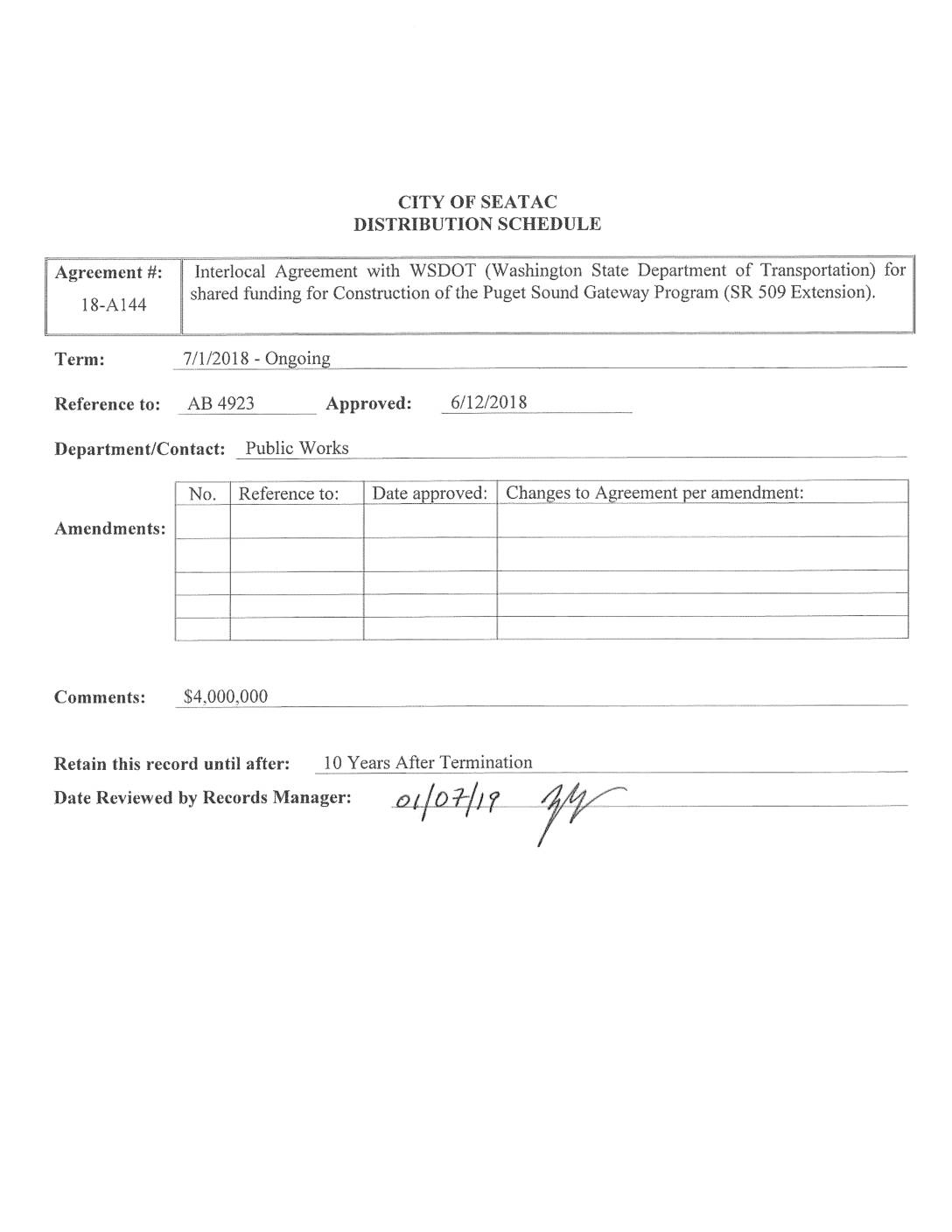
Interlocal agreement for the construction of the Puget Sound Gateway Program
The City of SeaTac entered into an interlocal agreement (Agreement No. 18-A144) with the Washington State Department of Transportation (WSDOT) to provide up to $4,000,000 in local matching funds for the construction of the Puget Sound Gateway Program, specifically the State Route 509 Extension Project. The funding is split into two stages: up to $2,000,000 in real estate and/or cash for the SeaTac Access Local Nexus Project, and up to $2,000,000 in cash toward the South 188th Street Interchange once construction sales tax is received. WSDOT is responsible for designing, constructing, and managing the project, which includes improvements such as interchange ramps and access roads largely within the City of SeaTac. -
 2017-11-16
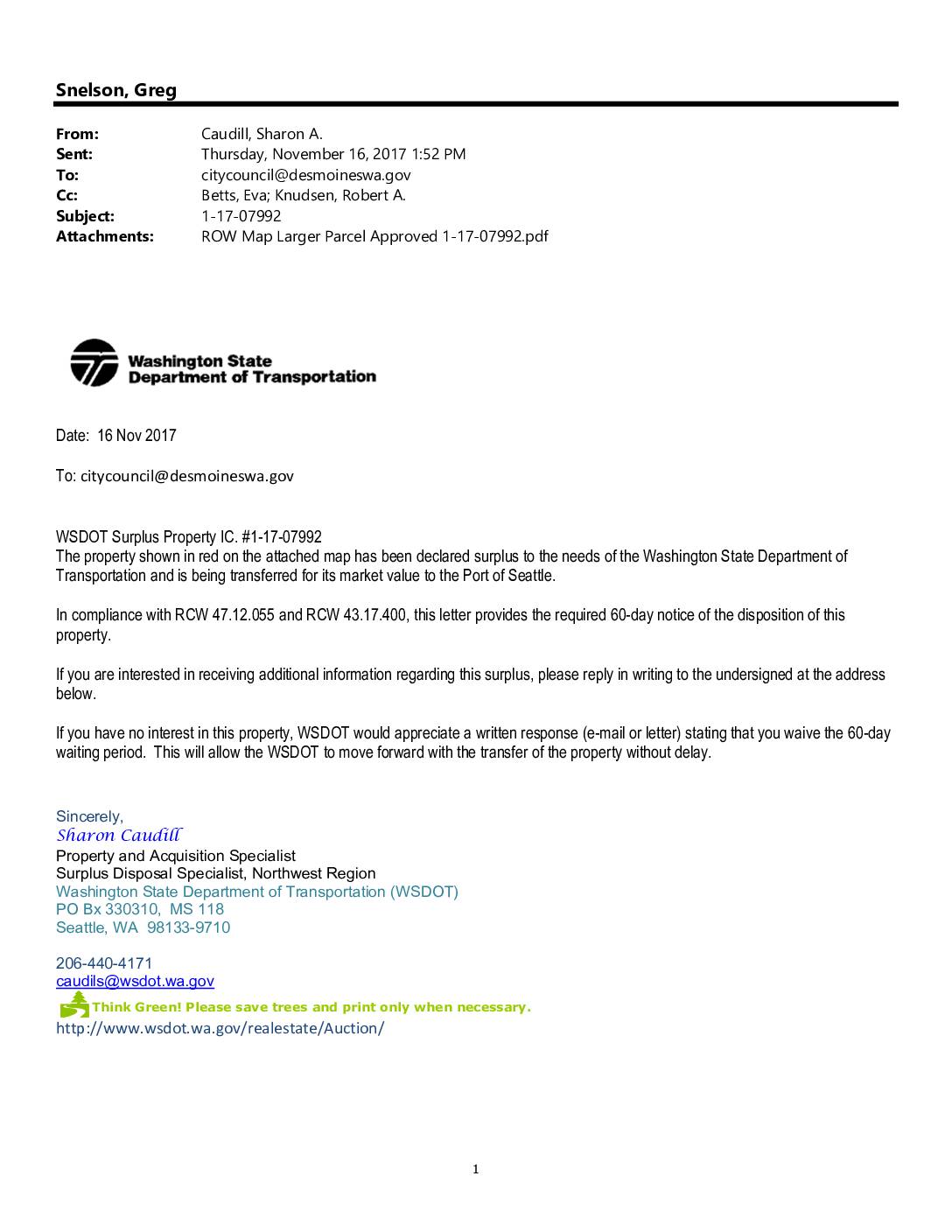
WSDOT surplus property notice IC. #1-17-07992
In November 2017, the Washington State Department of Transportation (WSDOT) notified the Des Moines City Council that a parcel of surplus state-owned property was being transferred at market value to the Port of Seattle. The notice was issued in compliance with RCW 47.12.055 and RCW 43.17.400, which require a 60-day waiting period before such property transfers can be completed. The city was invited to request additional information or waive the waiting period in writing to allow the transfer to proceed without delay. -
 2017-11-01
Puget Sound Gateway Program – Phase 1 of the SR 509 Completion Project: Noise technical report
This 2017 Noise Technical Report, prepared by The Greenbusch Group for the Washington State Department of Transportation, evaluates the noise impacts of Phase 1 of the SR 509 Completion Project near Seattle-Tacoma International Airport. It compares the proposed highway improvements against a 2003 environmental impact study, assessing changes in noise levels, affected residents, and noise abatement measures such as sound walls. The report concludes with recommendations for minimizing construction and long-term traffic noise impacts on surrounding communities.