TagSEPA(232)
-
 2015-09-01
Technical Memorandum No. 4: Forecasts of Aviation Activity, Seattle-Tacoma International Airport
This September 2015 technical report, prepared by Leigh Fisher for the Port of Seattle, provides long-range forecasts of aviation activity at Seattle-Tacoma International Airport as part of the Sustainable Airport Master Plan. It examines historical and projected trends in enplaned passengers, air cargo, and aircraft operations, drawing on regional socioeconomic data such as population growth, employment, and income in the Seattle-Tacoma area. The forecasts are intended to support future airport planning decisions, including infrastructure and capacity needs. -
 2015-07-01
Technical Memorandum No. 1: Background, Process, Goals, and Objectives — Seattle-Tacoma International Airport Sustainable Airport Master Plan
This July 2015 technical memorandum outlines the background, goals, and objectives for Seattle-Tacoma International Airport's Sustainable Airport Master Plan (SAMP), prepared by Leigh Fisher for the Port of Seattle. It describes how the SAMP differs from a traditional airport master plan by integrating financial, environmental, and community sustainability considerations into long-term airport development planning. The document also explains how sustainability goals—drawn from national, regional, and Port of Seattle policies—will be used to evaluate and screen future development alternatives for Sea-Tac Airport. -
 2015-03-01
Technical Memorandum No. 2: Inventory of Existing Conditions — Seattle-Tacoma International Airport
This 2015 technical memorandum prepared by Leigh Fisher for the Port of Seattle provides a comprehensive inventory of existing conditions at Seattle-Tacoma International Airport as part of the Sustainable Airport Master Plan. It covers a wide range of airport infrastructure and operations, including airfield runways and taxiways, passenger terminal facilities, ground transportation, air cargo, general aviation, and airline and airport support systems. The document serves as a baseline assessment of the airport's physical and operational state to inform future planning decisions. -
 2014-12-02
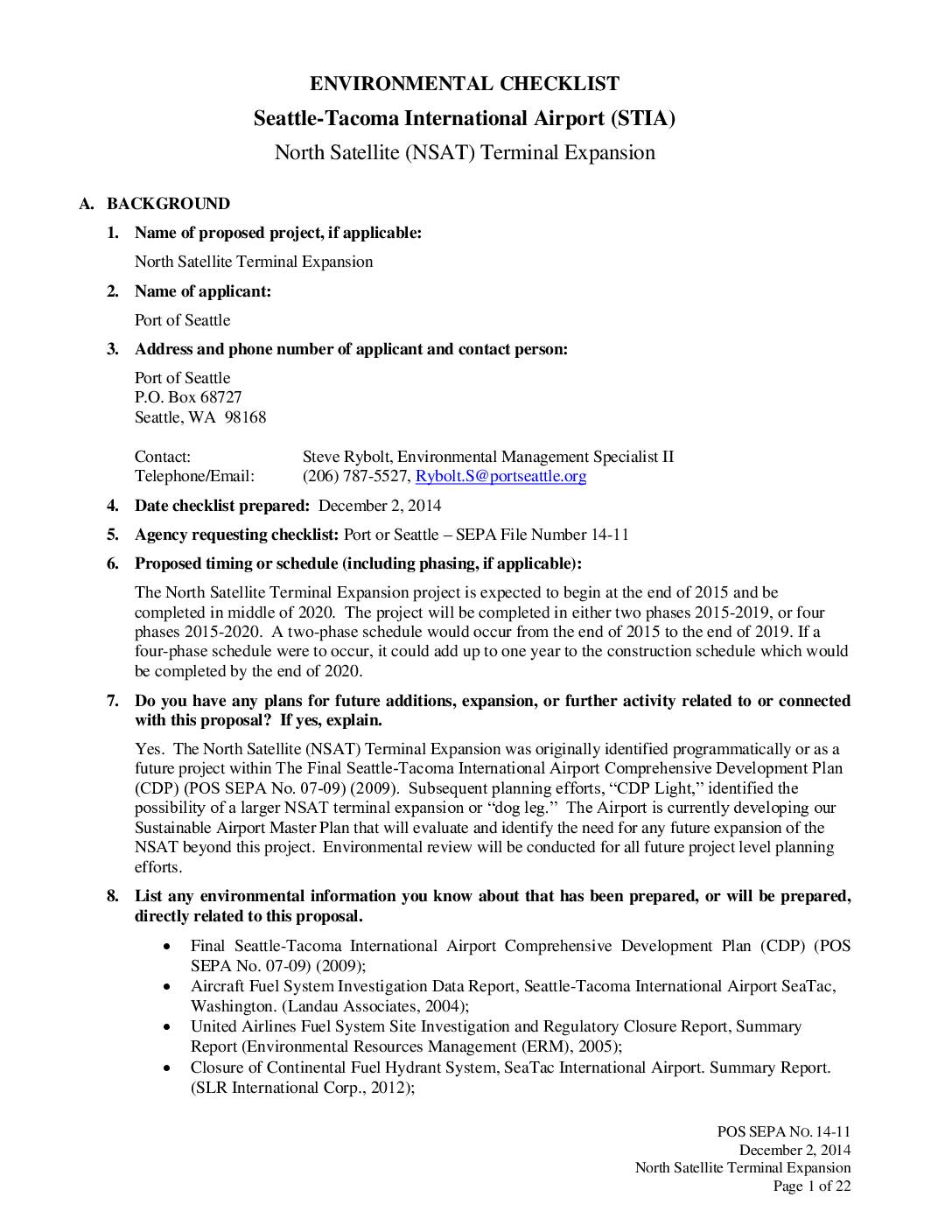
SEPA Environmental checklist: Seattle-Tacoma International Airport (STIA) North Satellite (NSAT) Terminal Expansion
This SEPA environmental checklist prepared by the Port of Seattle covers the proposed renovation and expansion of the North Satellite Terminal at Seattle-Tacoma International Airport. The project would expand the terminal footprint from 91,500 to 154,500 square feet, adding eight new airplane gates for a total of twenty contact gates. Construction was planned in two -
 2014-05-01
Air Cargo Market Assessment: Seattle-Tacoma International Airport
This May 2014 technical report, prepared by Leigh Fisher and Webber Air Cargo, Inc. for the Port of Seattle, assesses the air cargo market at Seattle-Tacoma International Airport (Sea-Tac). It examines industry trends, carrier market shares, competing gateways, international trade flows, and the airport's cargo facilities and handling service providers. The report concludes with an outlook and recommendations to support future cargo growth at Sea-Tac. -
 2013-10-24
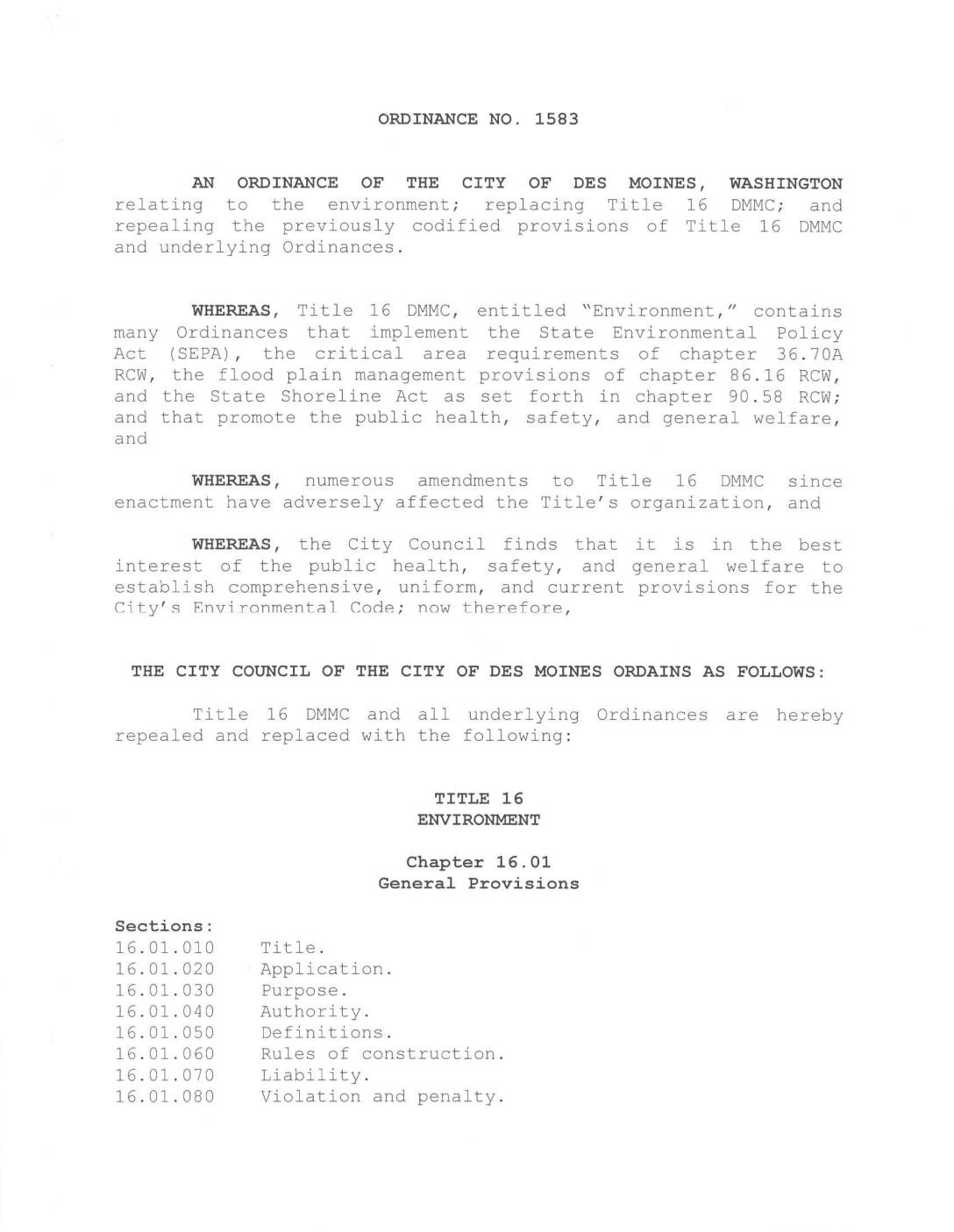
Ordinance No. 1583: An ordinance of the City of Des Moines, Washington relating to the environment
Ordinance No. 1583 is an environmental regulations ordinance from the City of Des Moines, Washington, that replaces and reorganizes the city's Title 16 Environmental Code. It implements state laws covering environmental policy, critical areas, floodplain management, and shoreline protection, while providing definitions and general provisions applicable across all related chapters. -
 2013-09-24
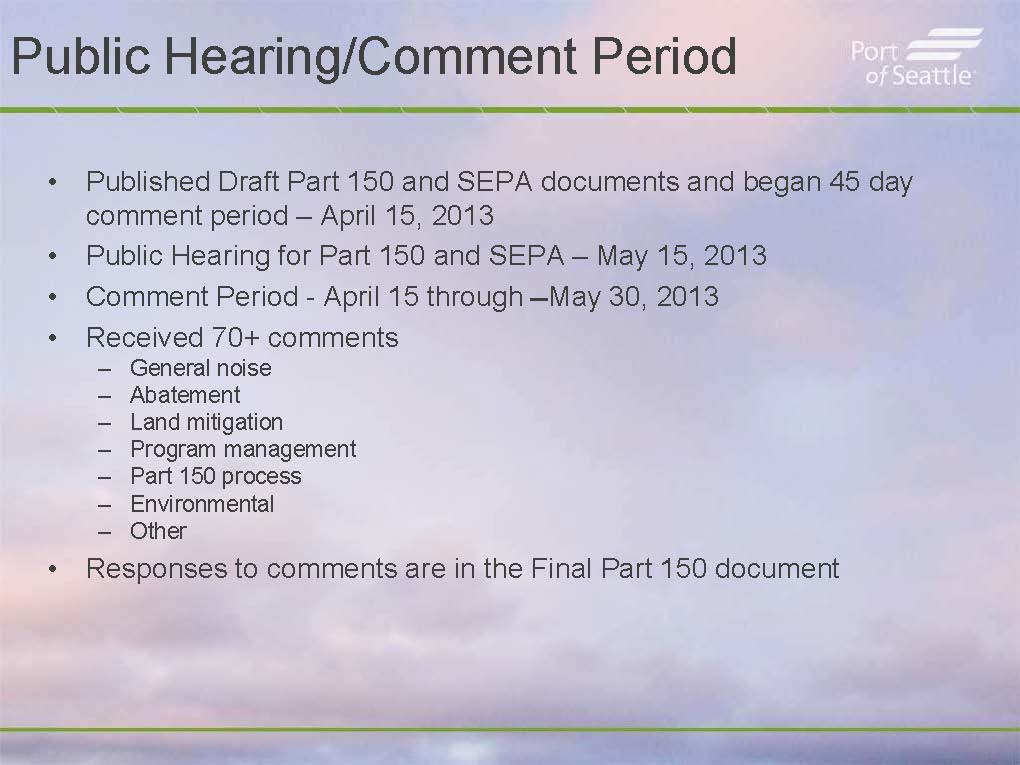
Part 150 Public Comment Process Summary — Commission Presentation, September 24, 2013 (Slide 13)
A Port of Seattle presentation slide summarizing the Part 150 and SEPA public comment process: Draft documents were published and a 45-day comment period began April 15, 2013; a public hearing was held May 15, 2013; the comment period ran April 15 through May 30, 2013; over 70 comments were received covering general noise, abatement, land mitigation, program management, Part 150 process, environmental issues, and other topics. Responses to all comments are contained in the Final Part 150 document. -
 2013-04-12
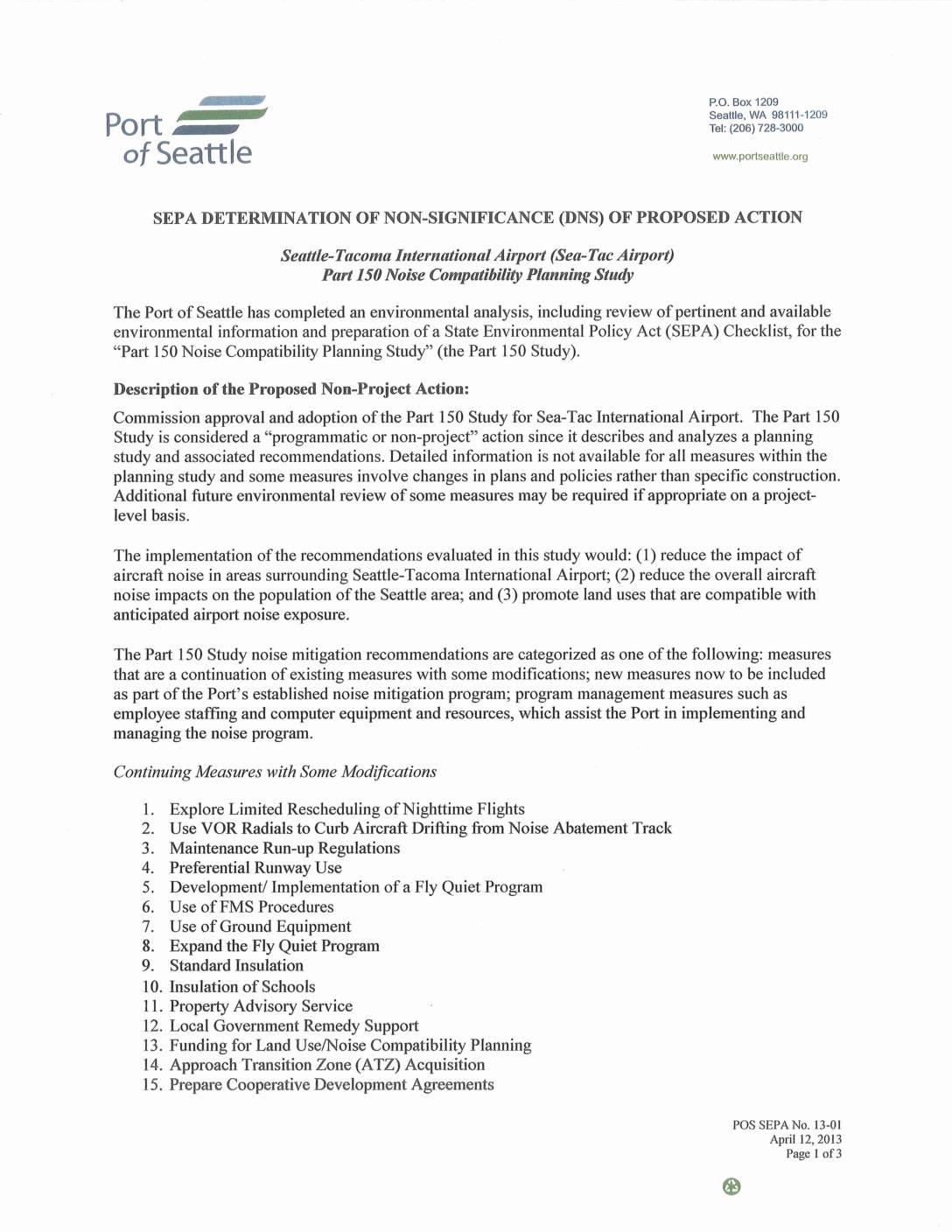
SEPA Determination of Non-Significance (DNS) of Proposed Action: Sea-Tac Airport Part 150 Noise Compatibility Planning Study
The Port of Seattle issued a State Environmental Policy Act (SEPA) Determination of Non-Significance for the Sea-Tac Airport Part 150 Noise Compatibility Planning Study, concluding the plan would not have a significant adverse impact on the environment. The study outlines 23 noise mitigation measures—including limiting nighttime flights, sound-insulating homes and schools, and constructing a Ground Run-Up Enclosure—aimed at reducing aircraft noise for communities surrounding Seattle-Tacoma International Airport. A 45-day public comment period was open through May 30, 2013, with the determination signed by Elizabeth Leavitt, Director of Aviation Planning and Environmental Programs. -
 2012-06-15
Second Development Agreement: City of Des Moines and Port Of Seattle — Des Moines Creek Business Park
This Second Development Agreement, dated June 15, 2012, is a formal planning contract between the City of Des Moines, Washington, and the Port of Seattle governing the development of the Des Moines Creek Business Park (DMCBP), a multi-phase commercial and logistics project located near Sea-Tac Airport. The agreement outlines development regulations, zoning, environmental review requirements under SEPA, transportation infrastructure improvements, and land use phases including a logistics park, retail or business park, and an area for Puget Sound Energy/Benaroya. It also addresses mitigation measures, master plan approvals, recreation path requirements, and a purchase option for retail development on Port-owned property. -
 2012-06-15
Second Development Agreement: City of Des Moines and Port Of Seattle
This Second Development Agreement, dated June 15, 2012, is a formal contract between the City of Des Moines, Washington, and the Port of Seattle governing the planned development of the Des Moines Creek Business Park (DMCBP). The agreement outlines development regulations, phased project areas including a logistics park and retail or business park, transportation infrastructure improvements, and environmental review requirements under the State Environmental Policy Act (SEPA). It serves as a key planning document shaping land use and development near Seattle-Tacoma International Airport, with direct implications for surrounding communities affected by airport-related growth and noise policy.