Notes
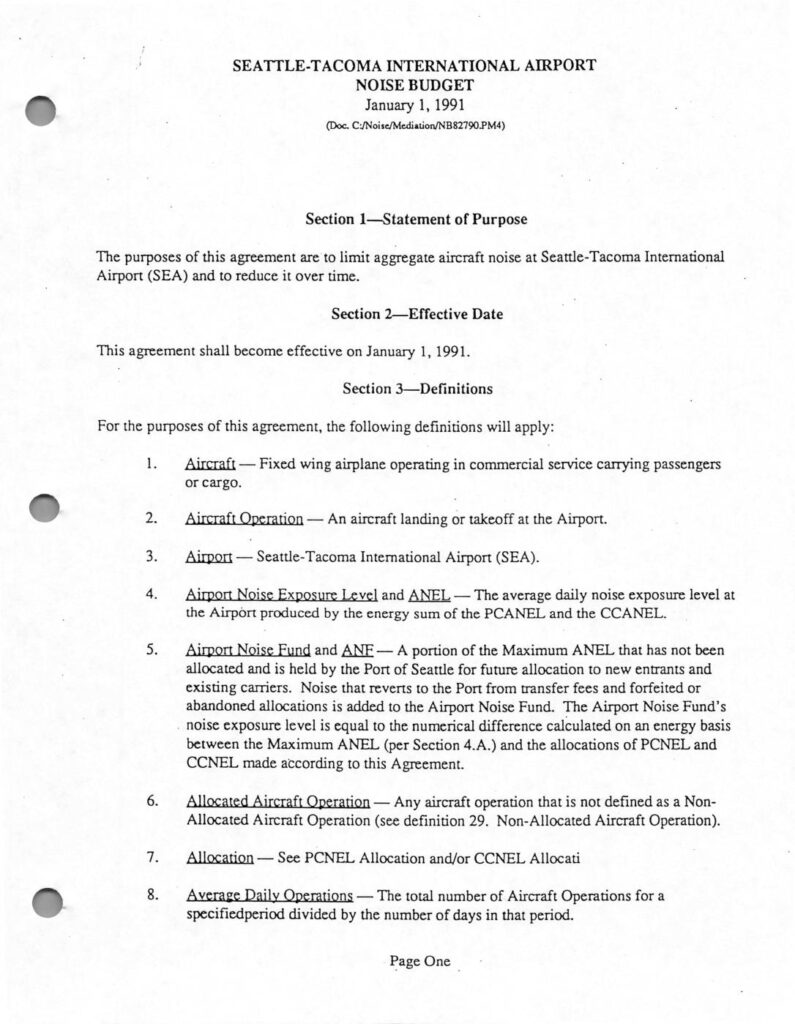
Seattle-Tacoma International Airport (Sea-Tac, SEA) Noise Budget agreement effective January 1, 1991, establishing the Maximum Airport Noise Exposure Level (ANEL), PCANEL, CCANEL, Airport Noise Fund (ANF), Noise Certificates, PCNEL and CCNEL allocations, Compliance Periods, Enforcement Periods, and definitions for Allocated and Non-Allocated Aircraft Operations. Defines terms including Cargo Carrier, Equivalent Aircraft Cycle (Boeing 727-200 with JT8D-15QN engines), Daytime (7:00 a.m.–9:59:59 p.m.), Nighttime (10:00 p.m.–6:59:59 a.m.), Base Period (August 1–31, 1989), International Service, Government Aircraft, Foreign Carrier, and Stage 3 percentage rules. Published by Port of Seattle, document reference C:/Noise/Mediation/NB82790.PM4.