TagSea-Tac Airport(1855)
-
 1997-06-01
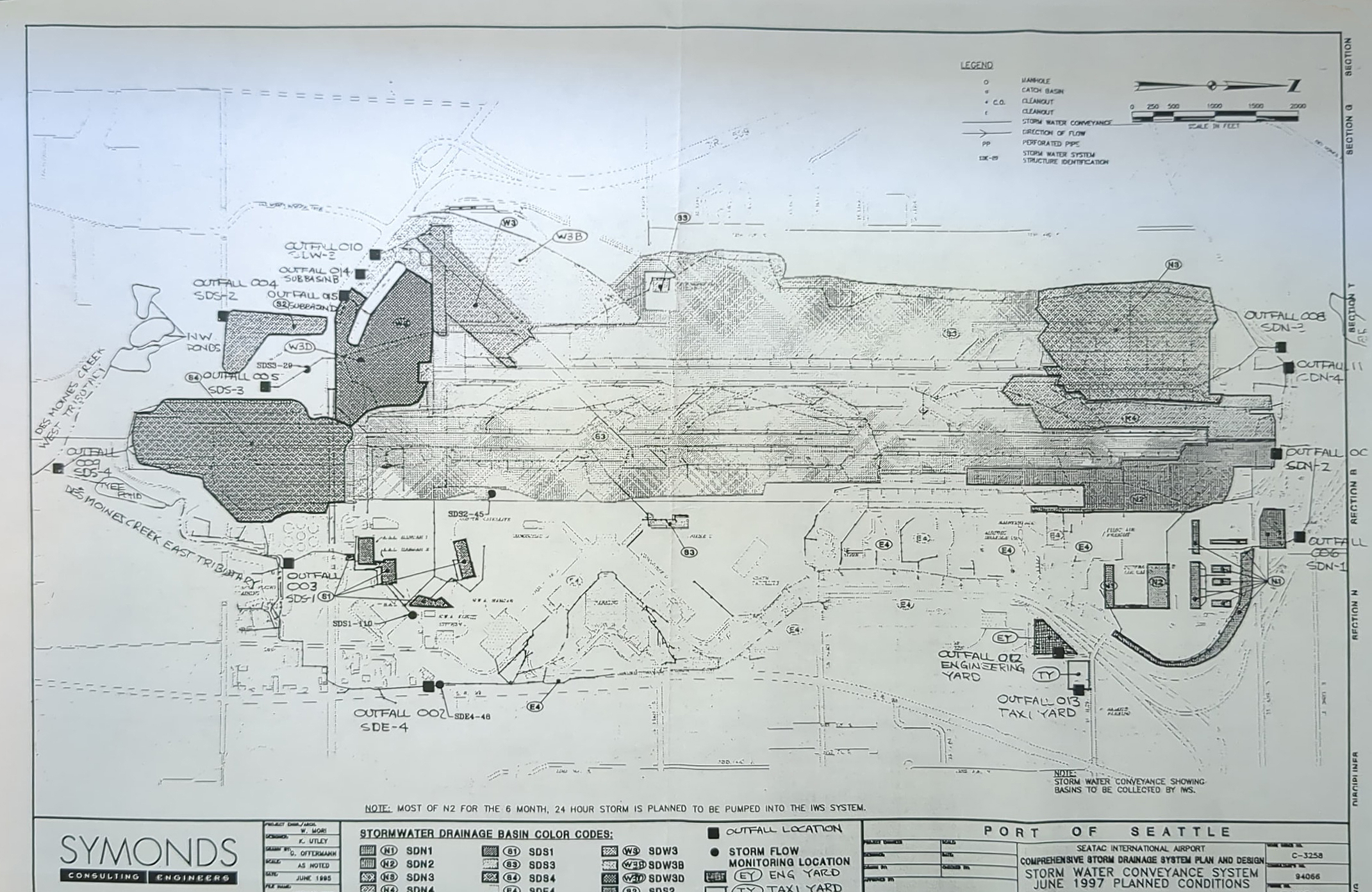
Symonds Stormwater System June 1997
Engineering drawing prepared by Symonds Consulting Engineers for the Port of Seattle, titled 'Comprehensive Storm Drainage System Plan and Design – Storm Water Conveyance System, June 1997 Planned Conditions' (Drawing No. C-3258, Project No. 94066). The plan depicts SeaTac International Airport's stormwater drainage basins, outfall locations (Outfalls 002–016), storm flow monitoring locations, and drainage connections to Des Moines Creek and its east tributary. -
 1997-05-13
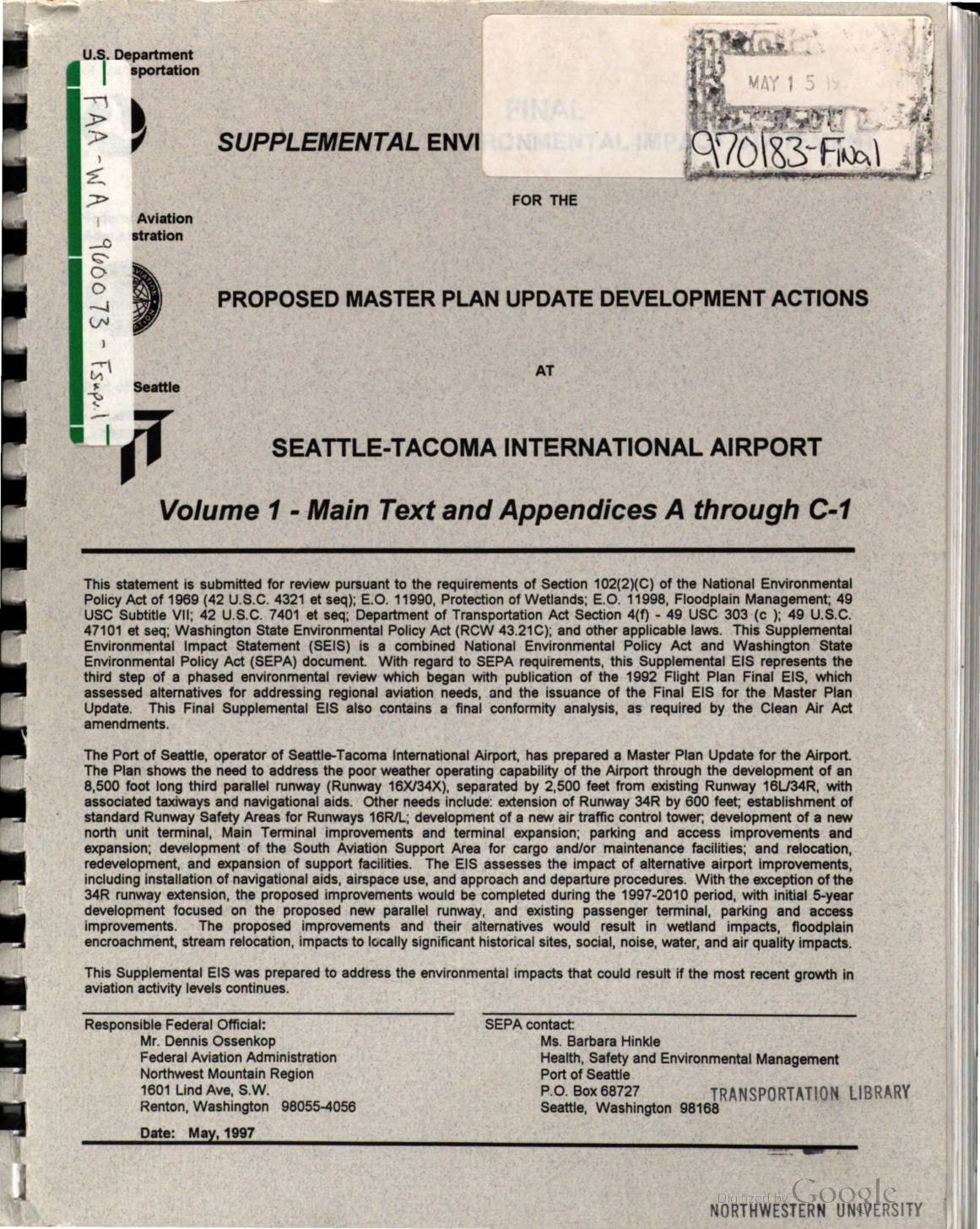
Final Supplemental Environmental Impact Statement for the Proposed Master Plan Update Development Actions at Seattle-Tacoma International Airport, Volume 1: Main Text and Appendices A through C-1
This 1997 Final Supplemental Environmental Impact Statement (SEIS) examines the environmental effects of proposed expansion plans at Seattle-Tacoma International Airport, including construction of a new third parallel runway, terminal improvements, and parking upgrades. The study was prompted by faster-than-expected growth in air travel demand during the mid-1990s, which exceeded earlier forecasts and required updated analysis of noise, air quality, wetland, and community impacts. The document was jointly prepared by the FAA and the Port of Seattle to ensure the proposed developments met federal and Washington State environmental policy requirements. -
 1997-05-07
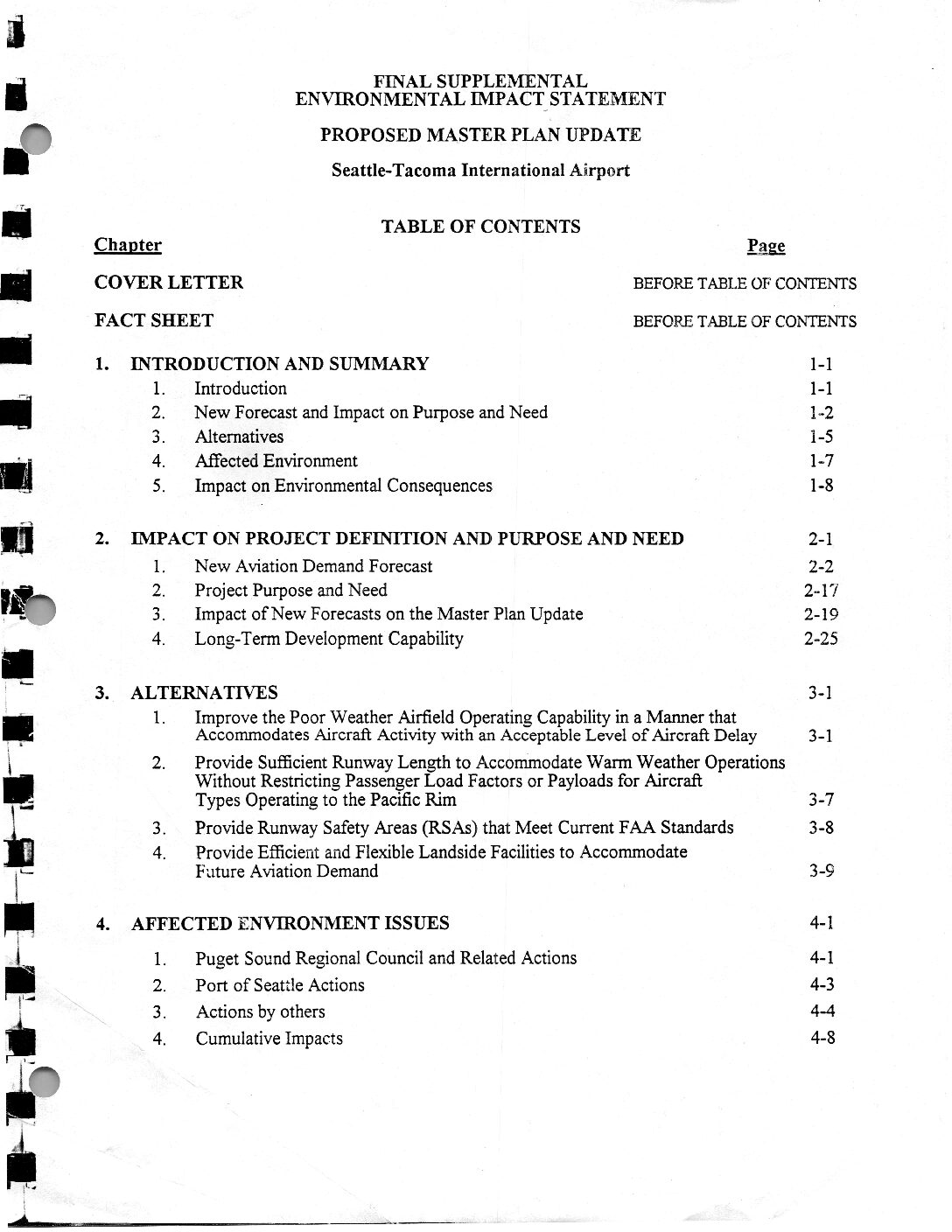
Final supplemental environmental impact statement: Proposed master plan update, Seattle-Tacoma International Airport
★ 32This Final Supplemental Environmental Impact Statement (FSEIS) evaluates proposed updates to the Master Plan for Seattle-Tacoma International Airport, examining the effects of revised aviation demand forecasts on runway capacity, safety improvements, and landside facilities. It analyzes a range of alternatives to address poor-weather airfield performance, runway length needs for Pacific Rim flights, and runway safety area compliance with FAA standards. The document also assesses environmental consequences including noise impacts on surrounding communities, air quality, wetlands, and construction effects. -
 1997-05-01
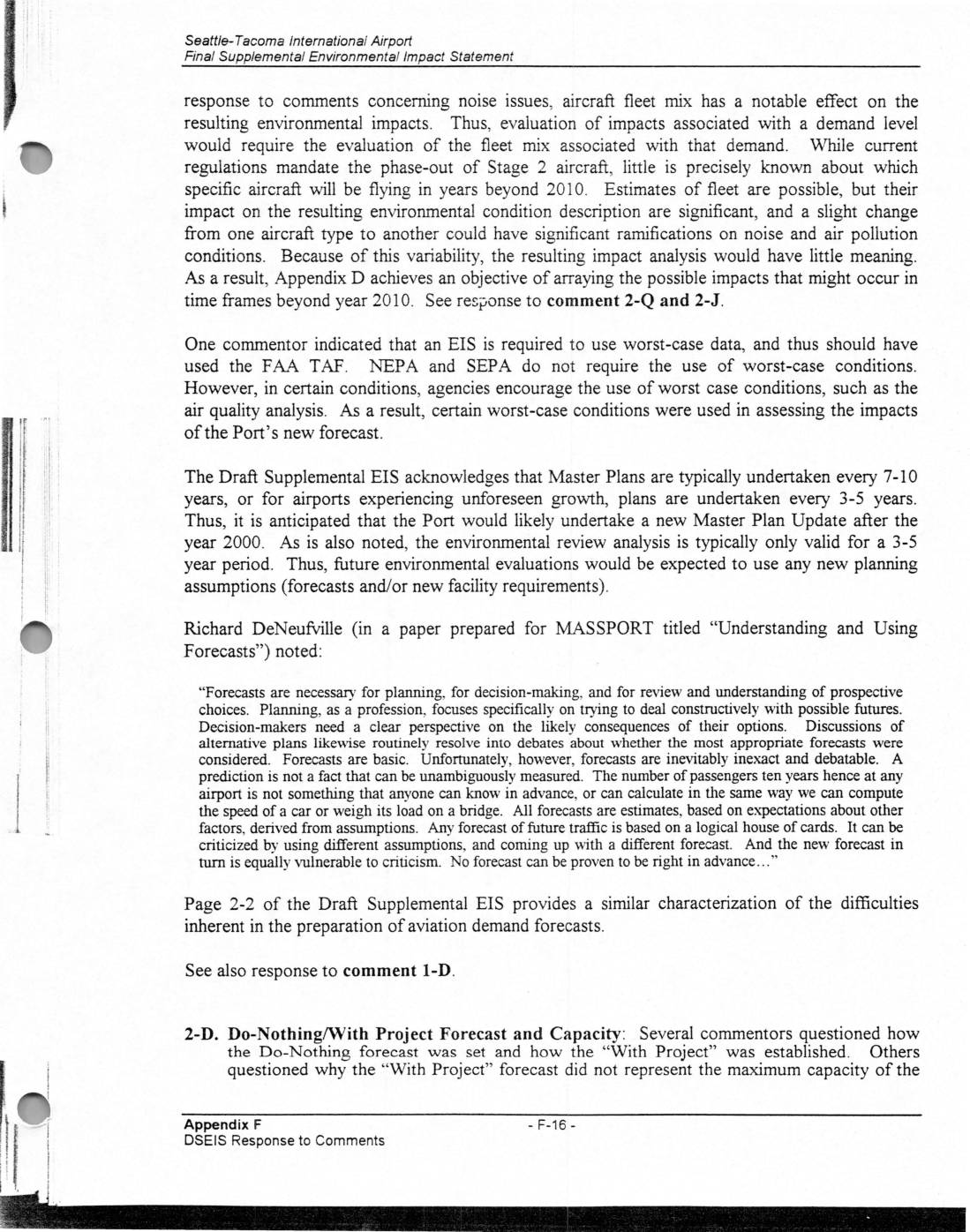
Final Supplemental EIS, Appendix F: DSEIS Response to Comments — Forecasts, Do-Nothing/With Project Capacity, and Forecast Ranges
This document is part of the Final Supplemental Environmental Impact Statement for Seattle-Tacoma International Airport, addressing public comments on aviation demand forecasts and runway capacity planning. It explains how the 'Do-Nothing' and 'With Project' (Third Runway) alternatives were evaluated based on projected passenger and operations data through 2010, noting that the existing airfield has a maximum capacity of 460,000 annual operations. The document also acknowledges the inherent uncertainty in long-range aviation forecasts and clarifies that neither NEPA nor SEPA require the use of worst-case data in environmental reviews. -
 1997-05-01
Appendix D: Environmental Evaluation of Year 2020 Impacts and a Forecast Greater Than the New Forecast
This appendix from Seattle-Tacoma International Airport's Final Supplemental Environmental Impact Statement evaluates potential environmental impacts through the year 2020 under three scenarios, including the new Port forecast and cases where aviation demand grows 10% faster than projected. Key findings indicate that noise impacts are expected to remain below current levels in all scenarios, with 'With Project' improvements producing roughly 53% of current noise conditions by 2020. The analysis also examines air quality, enplanement levels, and aircraft operations across both Do-Nothing and preferred alternatives to guide long-term airport planning. -
 1997-05-01
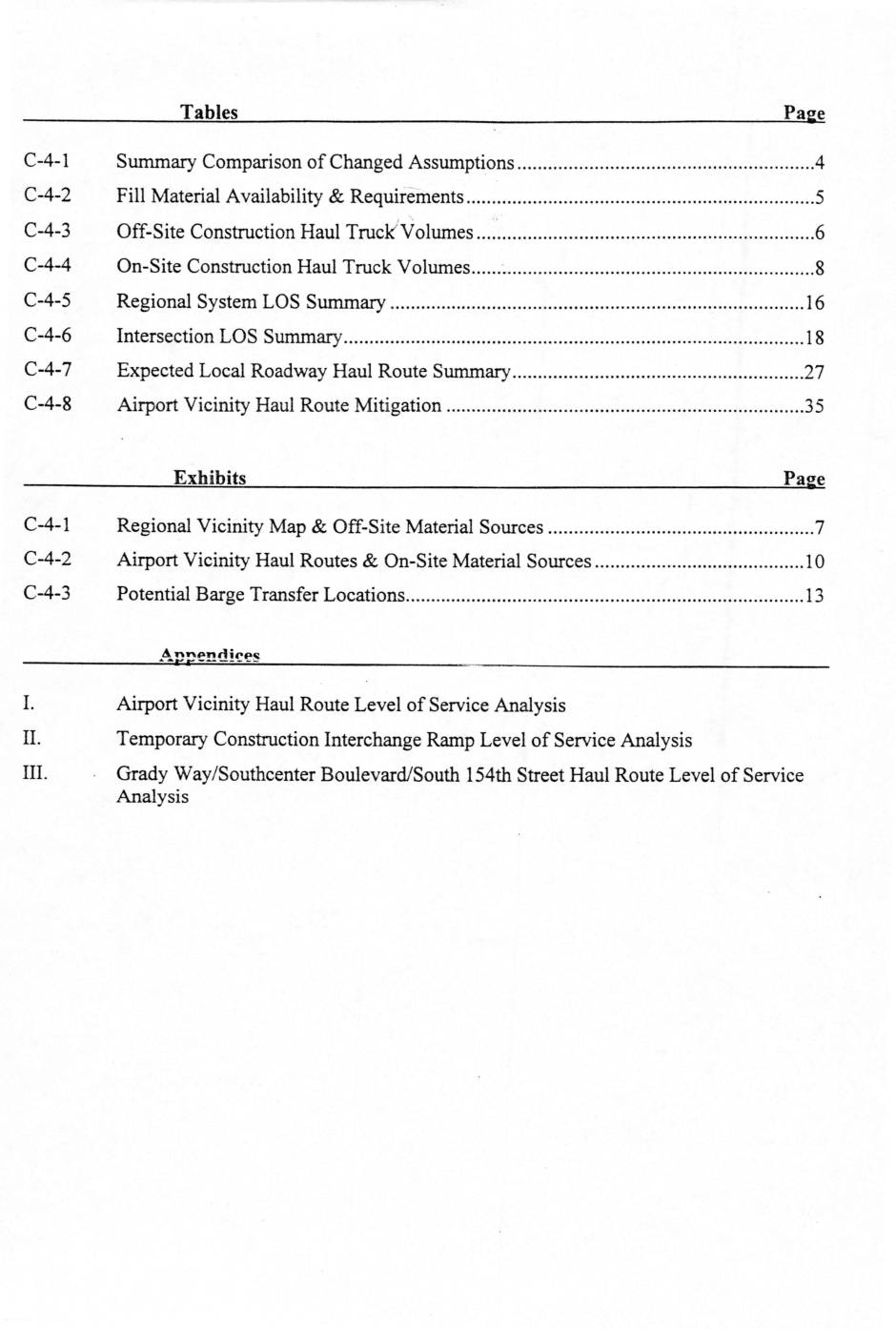
Appendix C-4: Construction Impacts Report — Seattle-Tacoma International Airport Final Supplemental Environmental Impact Statement
This technical report supplements the Final Environmental Impact Statement for Seattle-Tacoma International Airport's Master Plan Update, focusing on construction impacts related to the proposed Third Runway and associated projects. It analyzes fill material requirements estimated at 17.25 million cubic yards, haul routes, and truck traffic volumes, noting that the construction timeline was extended from three to five years, which reduced the number of average daily truck trips compared to earlier estimates. The report examines both on-site and off-site material sources and assesses potential traffic congestion impacts on regional roadways during the construction period. -
 1997-04-25
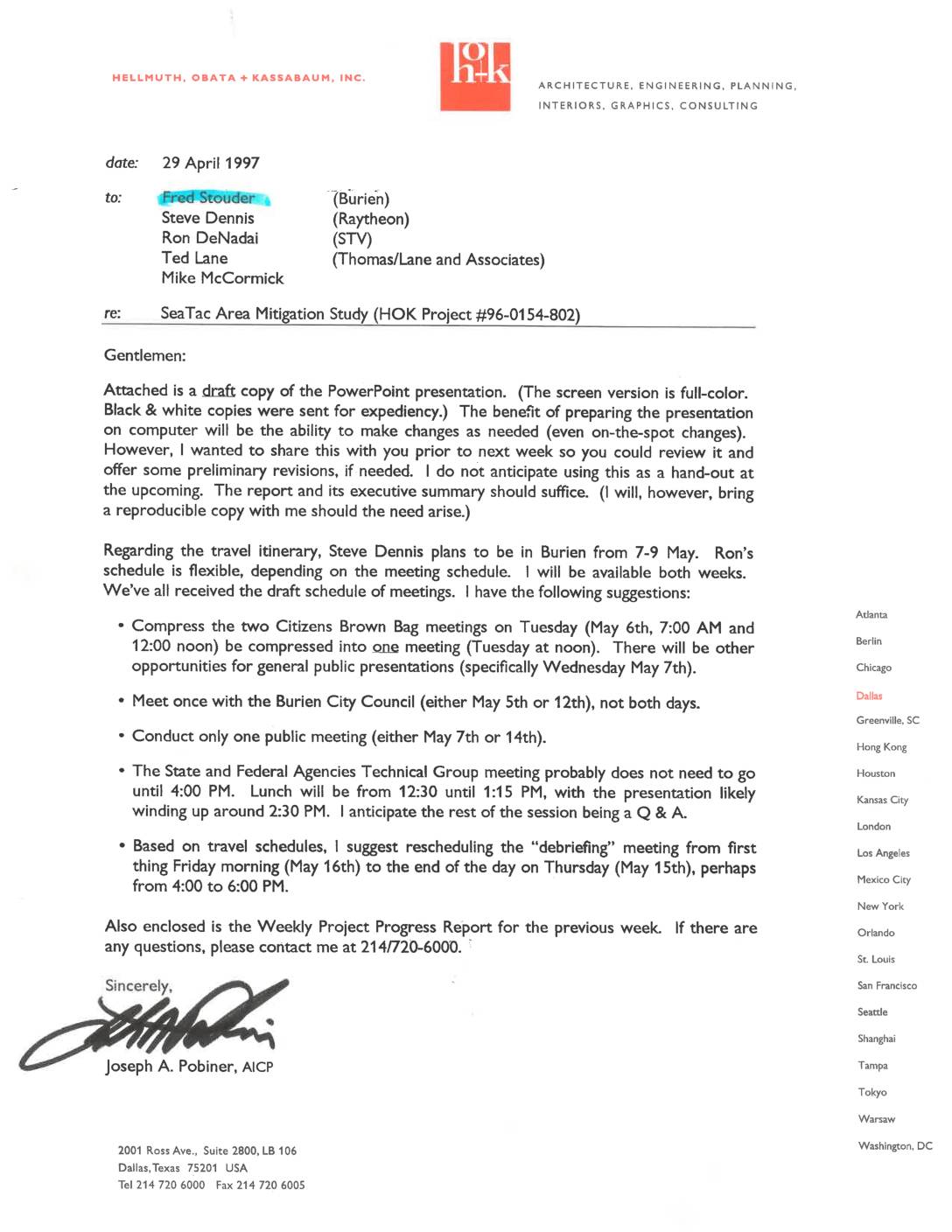
HOK Weekly Project Progress Report: Sea-Tac Impact Mitigation Study (April 25, 1997)
A April 1997 memo and progress report from Hellmuth, Obata + Kassabaum, Inc. (HOK) summarizes the near-complete Sea-Tac Area Mitigation Study, which assessed environmental, traffic, and socio-economic impacts related to Sea-Tac Airport. The memo outlines scheduling recommendations for a series of public and stakeholder meetings planned for May 1997 in Burien, Washington, including suggestions to consolidate citizen meetings and limit City Council sessions. As of the report date, all major project tasks were at 100% completion except the Mitigation Plan, which stood at 99%, with the consultant team preparing to present final findings to the community. -
 1997-01-01
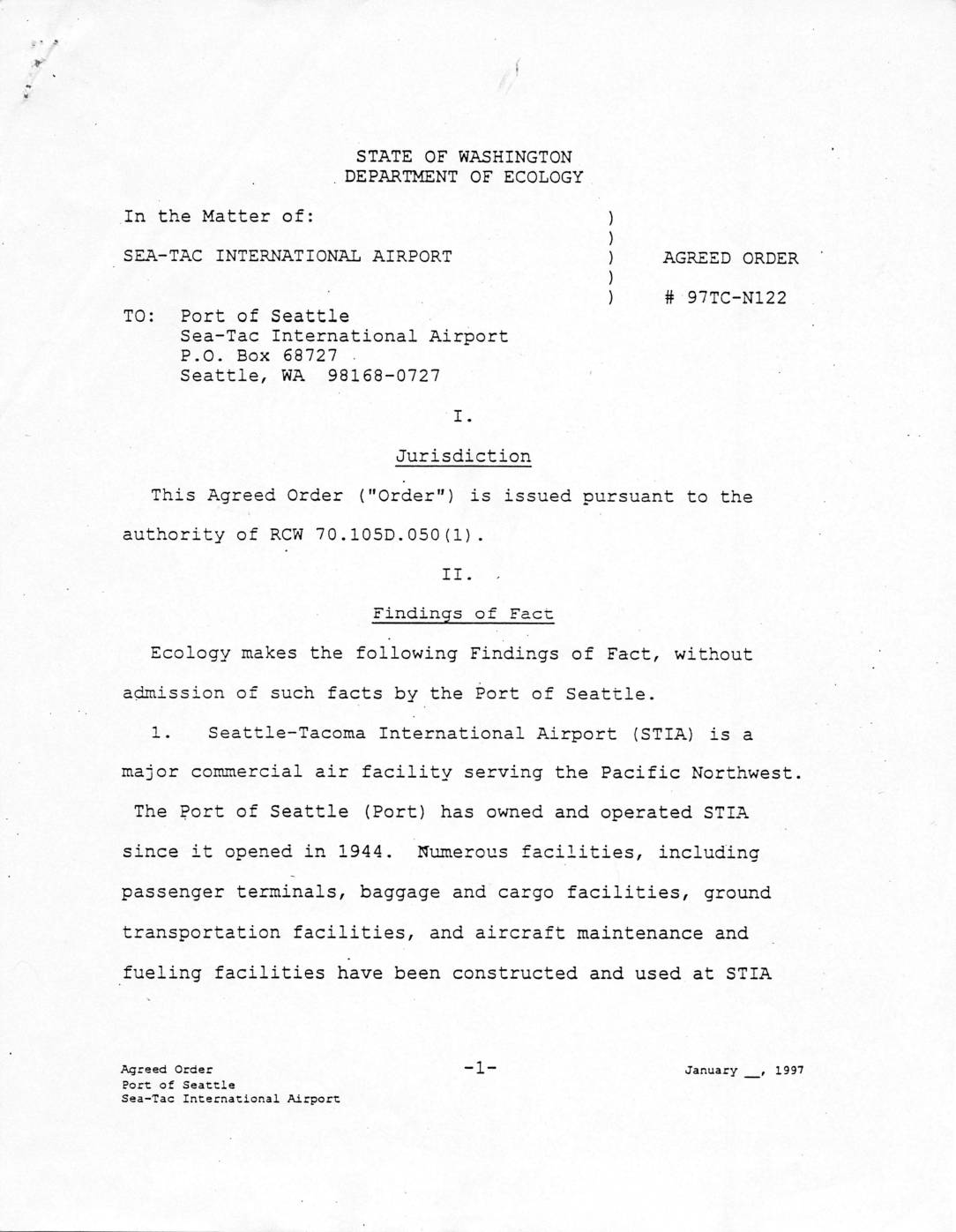
Agreed Order #97TC-N122: Ecology and Port Of Seattle — Sea-Tac International Airport Hazardous Substance Contamination
A 1997 Agreed Order issued by the Washington State Department of Ecology directed the Port of Seattle to address hazardous substance contamination at Seattle-Tacoma International Airport. Jet fuel, gasoline, industrial solvents, and other chemicals had been released across twelve separate sites within a half-square-mile Aircraft Operations and Maintenance Area, impacting both soil and groundwater. The order established a framework for ongoing environmental investigation and cleanup while acknowledging the operational challenges of working in an active airport environment. -
 1996-12-18
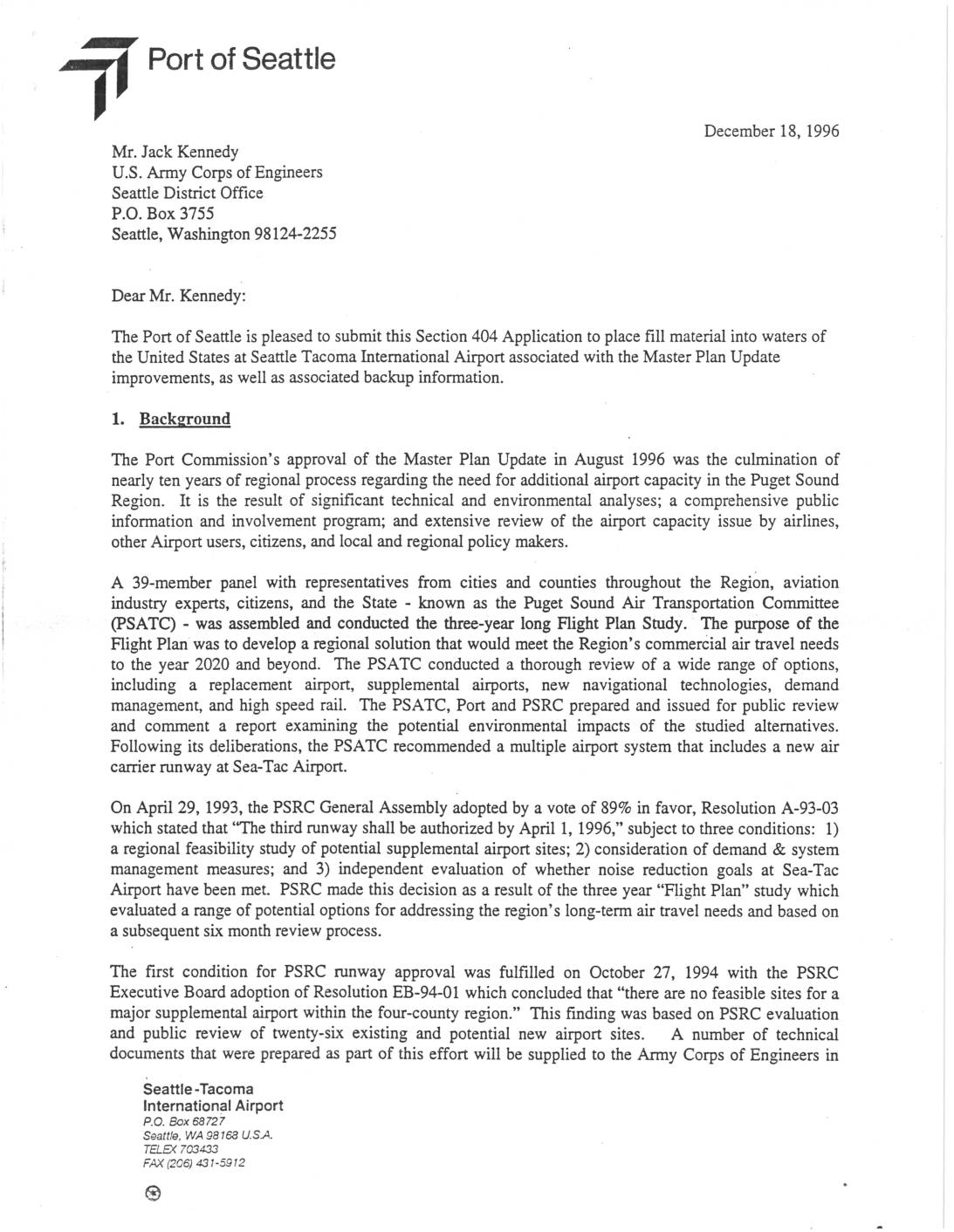
Section 404 Permit Application: Port Of Seattle to U.S. Army Corps of Engineers for Sea-Tac Airport Third Runway Fill Material
In December 1996, the Port of Seattle submitted a Section 404 permit application to the U.S. Army Corps of Engineers to place fill material in waters of the United States as part of Sea-Tac Airport's Master Plan Update, which included construction of a third parallel runway. The application explains that the new runway, located 2,500 feet west of the existing 16R/34L runway, was needed to reduce severe arrival delays during poor weather conditions, which were costing airlines approximately $42 million annually. The project was the outcome of nearly a decade of regional planning, including the PSRC's Flight Plan Study, which evaluated numerous alternatives before recommending the runway expansion as the best solution for the region's long-term air travel needs. -
 1996-12-01
Miller Creek Relocation Plan for Proposed Master Plan Update Improvements at Seattle-Tacoma International Airport
This 1996 plan by Parametrix, Inc. outlines the proposed relocation of Miller Creek to accommodate expansion improvements at Seattle-Tacoma International Airport. It assesses the creek's existing ecological conditions—including fish habitat, hydrology, and riparian vegetation—and identifies the construction impacts the relocation would cause. The document then presents mitigation goals, site selection rationale, and engineering details for redesigning the creek channel to offset environmental impacts.