2026-06-01
**Discover why environmental progress stalled for airport communities while cars got cleaner**
Ever wonder why your car's emissions have dramatically improved over decades, but aviation seems stuck in the past? In this eye-opening episode of The Airport Communities Podcast, we explore the fascinating tale of two environmental paths that diverged after 1970.
While Washington Senator Scoop Jackson spearheaded NEPA—one of the largest expansions of environmental policy in American history—and California secured game-changing carve-outs in the Clean Air Act that led to massive air quality improvements, aviation somehow got left behind. Despite Boeing being headquartered in Washington, aviation environmental standards never caught up.
UW Meteorologist Cliff Mass delivers some stark perspective: those two annual flights to Europe generate more greenhouse gases than most people produce in their entire homes over a year. Meanwhile, Boeing's monopoly status has eliminated market incentives for cleaner technology.
This wasn't an oversight—it was intentional. Today, every airport community continues paying the price for decisions made decades ago that exempted aviation from automotive-level engineering standards.
2026-05-31
**Discover why environmental progress stalled for airport communities while cars got cleaner**
Ever wonder why your car's emissions have dramatically improved over decades, but aviation seems stuck in the past? In this eye-opening episode of The Airport Communities Podcast, we explore the fascinating tale of two environmental paths that diverged after 1970.
While Washington Senator Scoop Jackson spearheaded NEPA—one of the largest expansions of environmental policy in American history—and California secured game-changing carve-outs in the Clean Air Act that led to massive air quality improvements, aviation somehow got left behind. Despite Boeing being headquartered in Washington, aviation environmental standards never caught up.
UW Meteorologist Cliff Mass delivers some stark perspective: those two annual flights to Europe generate more greenhouse gases than most people produce in their entire homes over a year. Meanwhile, Boeing's monopoly status has eliminated market incentives for cleaner technology.
This wasn't an oversight—it was intentional. Today, every airport community continues paying the price for decisions made decades ago that exempted aviation from automotive-level engineering standards.
2026-05-29
Commission President Caukins: This is Commission President Ryan Caukins reconvening the regular meeting of May 26, 2026. The time is 12:05 p.m. We’re meeting in person today at the SEA Conference Center and virtually on Microsoft Teams. Clerk Hart, please call the roll of all commissioners in attendance. Clerk Hart: Thank you. Beginning with Commissioner
2026-05-27
**[~1:13] Council Member Joe Vinson (Chair, SeaTac):** It is 2:31 p.m. I’m Council Member Joe Vinson. I would like to welcome everyone to the third Highline forum meeting of 2026. For those who don’t know, I am a CATAC council member. We are here in Burien and continuing our hybrid format which we initiated a
2026-05-27
Introduction of SAMP-NTP 2026 05 26 Regular Meeting Packet At almost four hours, the May 26 Port Commission meeting had several lengthy presentations. The longest was not the one of interest to airport communities: the first public briefing on the Sustainable Airport Master Plan Near-Term Projects SEPA Draft EIS. The practical outcomes: no required mitigations
2026-05-26
**Discover why environmental progress stalled for airport communities while cars got cleaner**
Ever wonder why your car's emissions have dramatically improved over decades, but aviation seems stuck in the past? In this eye-opening episode of The Airport Communities Podcast, we explore the fascinating tale of two environmental paths that diverged after 1970.
While Washington Senator Scoop Jackson spearheaded NEPA—one of the largest expansions of environmental policy in American history—and California secured game-changing carve-outs in the Clean Air Act that led to massive air quality improvements, aviation somehow got left behind. Despite Boeing being headquartered in Washington, aviation environmental standards never caught up.
UW Meteorologist Cliff Mass delivers some stark perspective: those two annual flights to Europe generate more greenhouse gases than most people produce in their entire homes over a year. Meanwhile, Boeing's monopoly status has eliminated market incentives for cleaner technology.
This wasn't an oversight—it was intentional. Today, every airport community continues paying the price for decisions made decades ago that exempted aviation from automotive-level engineering standards.
2026-05-26
Item 11b is the SAMP/SEPA EIS introduction and presentation
2026-05-25
**Discover why environmental progress stalled for airport communities while cars got cleaner**
Ever wonder why your car's emissions have dramatically improved over decades, but aviation seems stuck in the past? In this eye-opening episode of The Airport Communities Podcast, we explore the fascinating tale of two environmental paths that diverged after 1970.
While Washington Senator Scoop Jackson spearheaded NEPA—one of the largest expansions of environmental policy in American history—and California secured game-changing carve-outs in the Clean Air Act that led to massive air quality improvements, aviation somehow got left behind. Despite Boeing being headquartered in Washington, aviation environmental standards never caught up.
UW Meteorologist Cliff Mass delivers some stark perspective: those two annual flights to Europe generate more greenhouse gases than most people produce in their entire homes over a year. Meanwhile, Boeing's monopoly status has eliminated market incentives for cleaner technology.
This wasn't an oversight—it was intentional. Today, every airport community continues paying the price for decisions made decades ago that exempted aviation from automotive-level engineering standards.
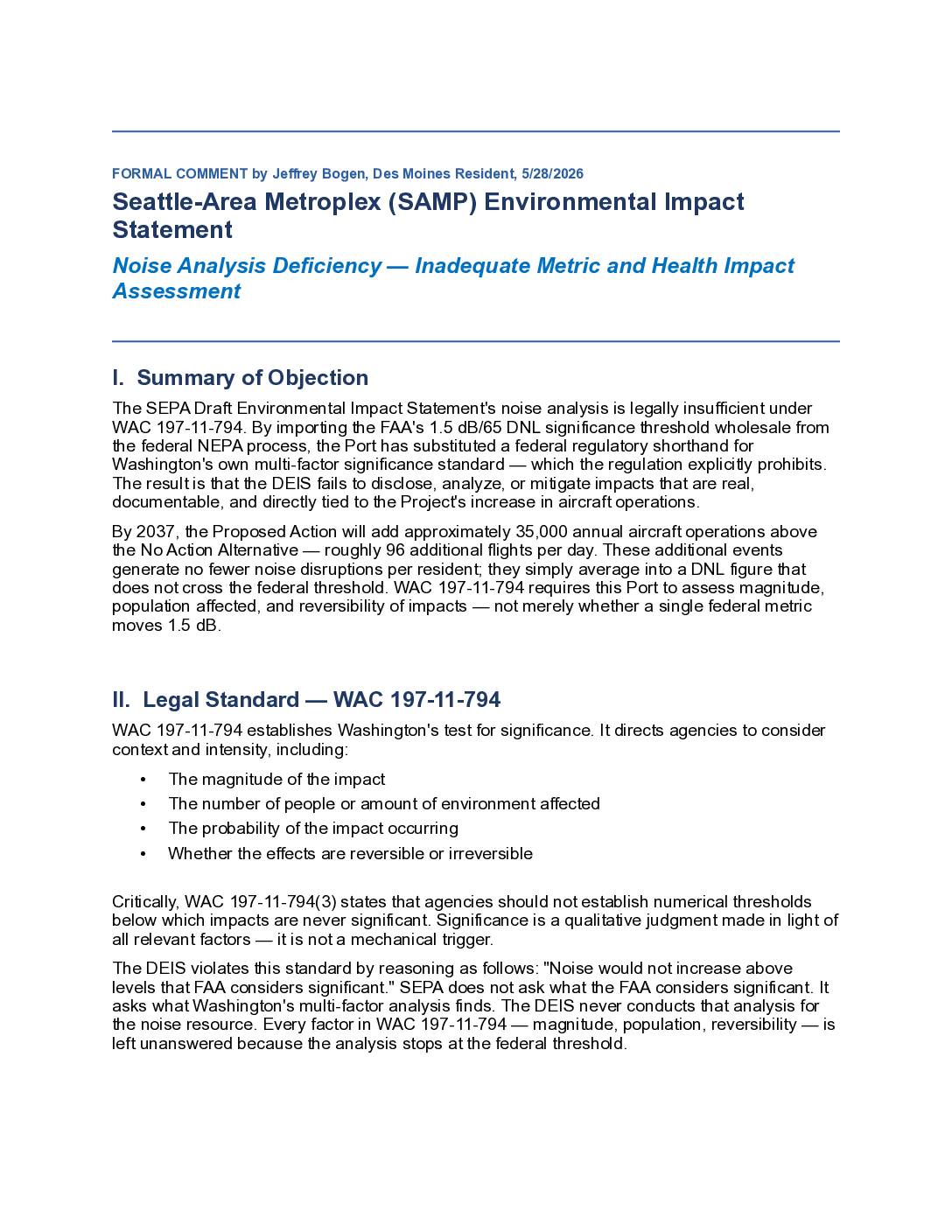 2026-05-28
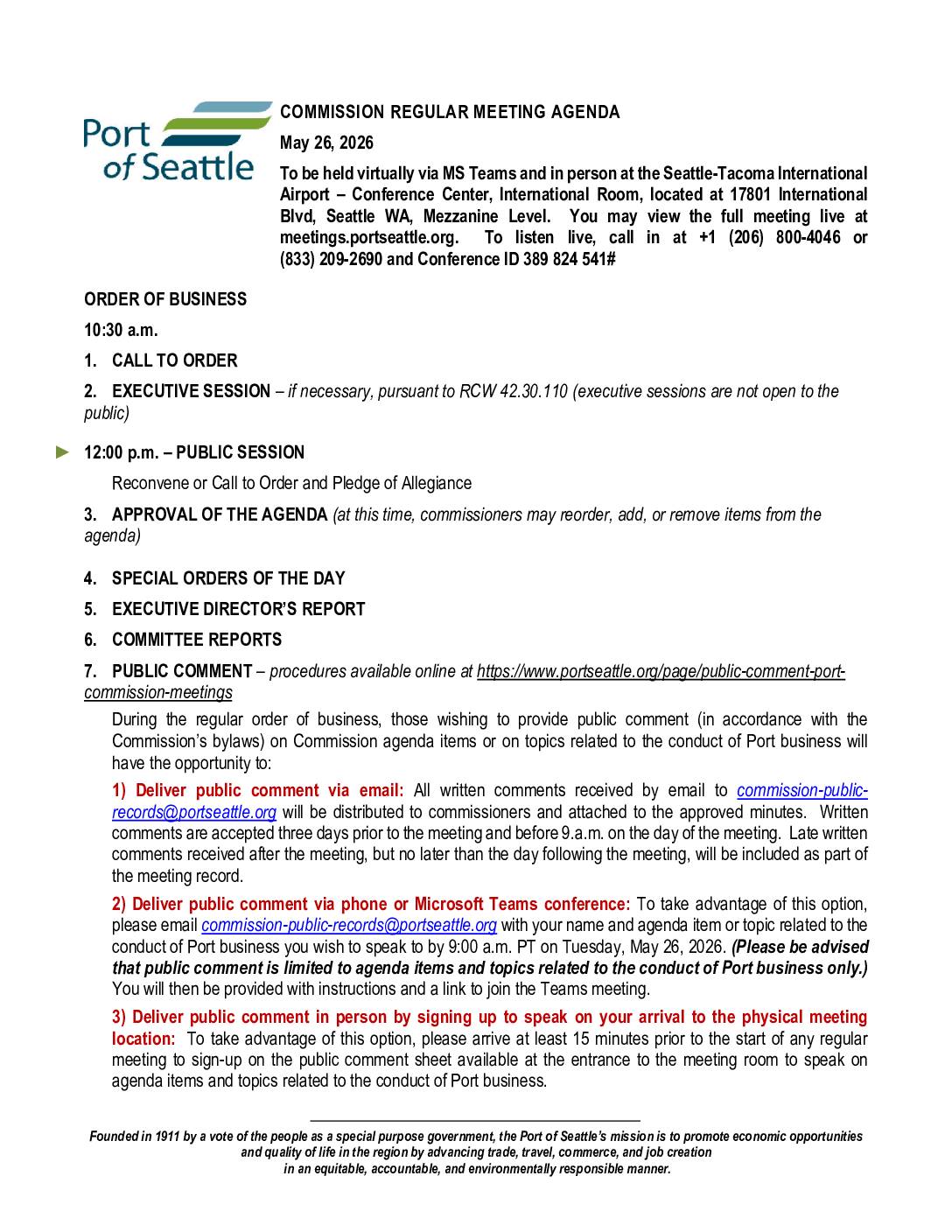 2026-05-26
 2026-05-26