The Airport Communities Podcast
On May 22, 2026 the Sustainable Airport Master Plan DEIS was released and a sixty day public comment period began.
Our third 3 minute explainer on how you can help your community by being patient and providing high quality comments. It is not click bait to say: It’s easier than you think. It’s not what you think.
In our last one Ep #27 (2/3), we said that the documents weren’t too long, they were too short.
We may have have added fuel to the fire by noting the large amount of shared material with the federal NEPA EA — and almost identical page counts. That never meant they were copy/pasted. They were using the same sources and same categories. Despite what anyone said, if the NEPA and SEPA documents had been radically different that would have been surprising.
No matter how much time is made available, the public will always want more. They will always complain that the documents are too hard to read. At least in the latter case the Port has complied!
Plain Language
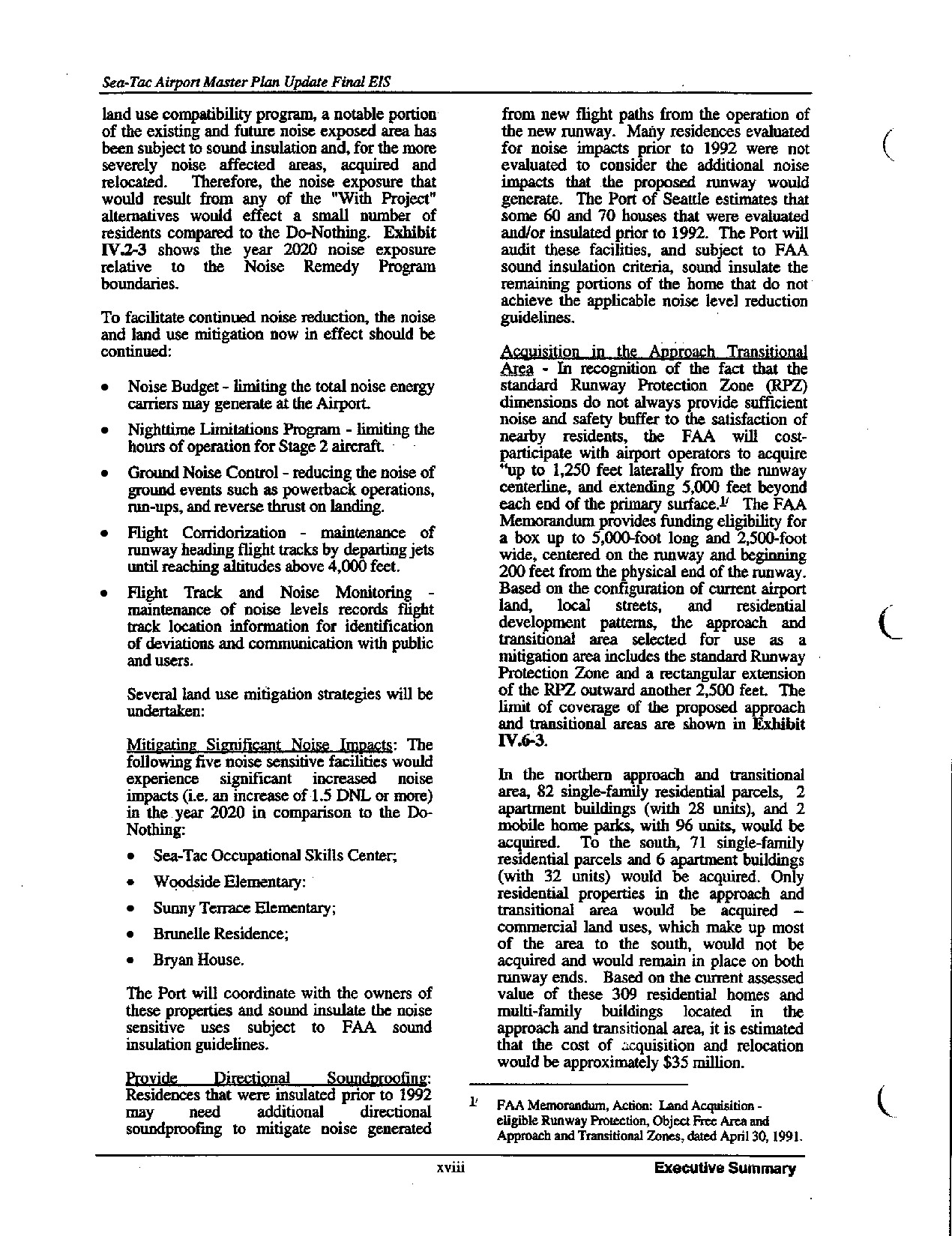 Take a look at a page from the 1996 Third Runway EIS, which is very typical of environmental documents from that era. Every page is very dense by today’s standards. Since the 2010’s agency documents are intentionally written to be far less intimidating. That is now the law. A short front end, with as much of the technical analysis as possible (which almost no one reads) pushed to the back.
This begs the question of what an Environmental Impact Statement is meant to accomplish. Back in the day, that density limited the audience to specialists, which seemed discriminatory. If you couldn’t afford professionals to interpret them you were out of luck. But on other hand, this meant that the people you had to hire to read them for you had the skills to identify find flaws, push back on the conclusions, and provide truly meaningful suggestions to improve the project.
You want both: readability when possible, but always with the most rigorous available analysis. But if success tilts too much towards “digestible for laypersons”, it runs the risk of convincing the public that a reasonable sounding document is genuinely reasonable. It also might provide cover to agencies (including your cities) who want to look concerned about a project, without putting in the effort it takes to understand what to do about it.
Topics
- 1996 – Sea-Tac Airport Third Runway EIS
- 2010 Federal Plain language guide
- 2023 State of Washington Executive Order on Plain Language
- 2025 – Trump Executive Orders on EJ and Cumulative Impacts
- 2025 – FAA SAMP NEPA Final ROD/FONSI
- 2025 – Port of Seattle press release on SAMP-NTP/SAMP-SEPA DEIS
- 2026 – SAMP/SEPA Draft EIS
To learn how you can make a difference:
- STNI.info/subscribe
- Find us on all the best platforms, including Apple and Spotify, or subscribe via SSAppleSpotifyYoutube