2026-07-17
Higher quality materials, lower turnout, more time… Community Development Directors from Burien, Des Moines and SeaTac held a joint presentation to help residents provide more effective public comment on the SAMP. The video and poster boards were much better than previous efforts and we urge residents to watch. Turnout was less than forty. So, if
2026-07-17
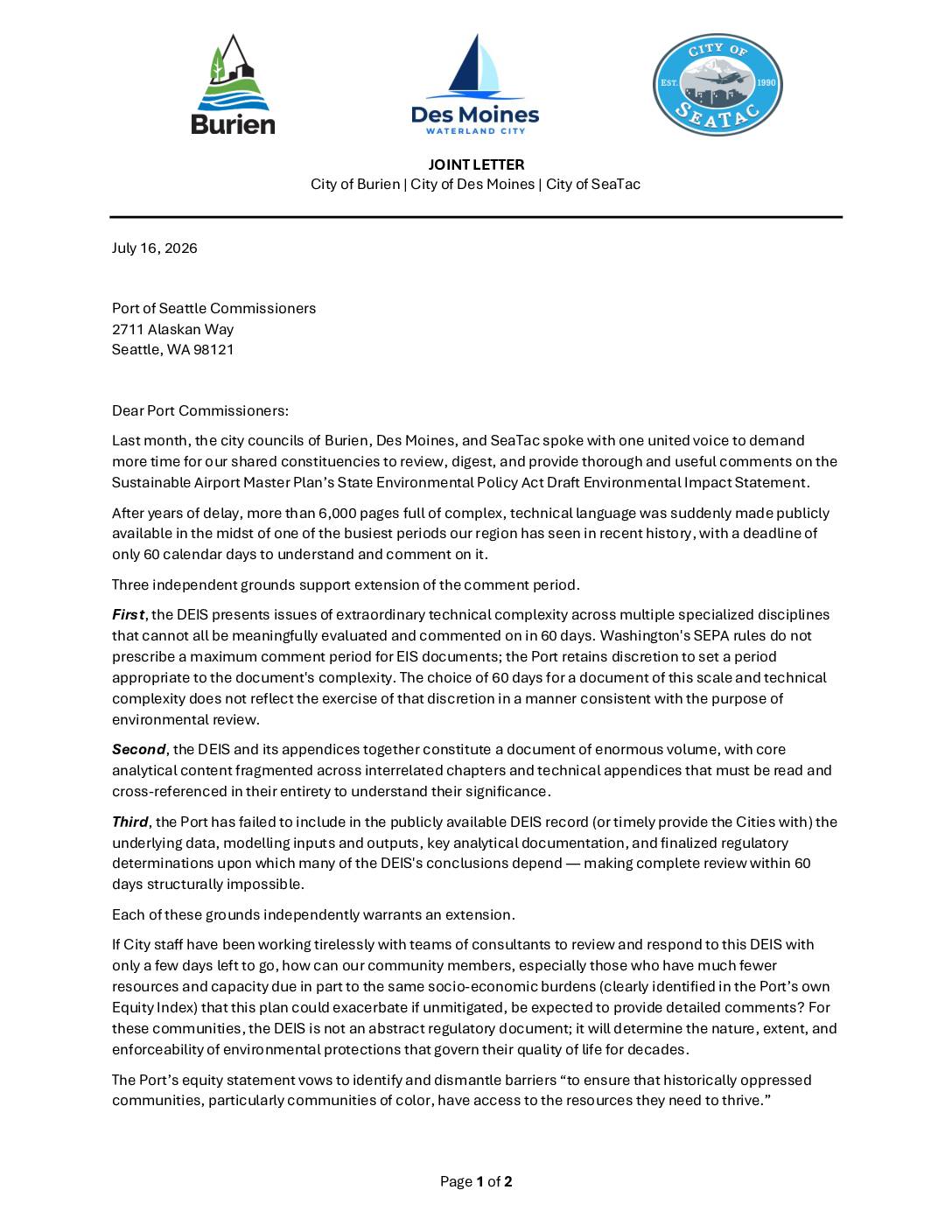
Extended Comment Period End Date: August 20, 2026 Project Name: Sustainable Airport Master Plan Near-Term Projects (SEPA No. 2026-01) Location: Seattle-Tacoma International Airport, 17801 International Blvd., SeaTac, WA 98158 Lead Agency: Port of Seattle This notice is to announce the extension of the public comment period for the State Environmental Policy Act (SEPA) Draft Environmental
2026-07-08
What if the solution to decades of airport noise and community impacts has been hiding in plain sight all along? In this open letter to city managers across airport communities, we revisit a landmark yet largely forgotten document: the Sea-Tac Communities Plan of 1976. Built on the Port of Seattle's promise — *"As we do better, you'll do better"* — this collaborative plan was supposed to be the long-term answer for neighborhoods living under the flight path. So why has it been reduced to little more than an expensive property buyout program? The answer reveals a critical gap that neither elected officials nor community advocates can fill alone. Real, lasting solutions require sustained professional commitment to airport community planning — something that should have been established 50 years ago. If you work in city management, this episode speaks directly to you and the unique role only you can play in finally delivering on that broken promise.
2026-07-04
It’s all about construction permits The Sustainable Airport Master Plan Near Term Projects Draft Environmental Impact Statement is a description of the effects of the largest expansion in airport history. But at bottom, it consists of thirty-one construction projects. What we find striking is the absence of detail on most of those projects. In most
2026-06-28
**Discover why environmental progress stalled for airport communities while cars got cleaner**
Ever wonder why your car's emissions have dramatically improved over decades, but aviation seems stuck in the past? In this eye-opening episode of The Airport Communities Podcast, we explore the fascinating tale of two environmental paths that diverged after 1970.
While Washington Senator Scoop Jackson spearheaded NEPA—one of the largest expansions of environmental policy in American history—and California secured game-changing carve-outs in the Clean Air Act that led to massive air quality improvements, aviation somehow got left behind. Despite Boeing being headquartered in Washington, aviation environmental standards never caught up.
UW Meteorologist Cliff Mass delivers some stark perspective: those two annual flights to Europe generate more greenhouse gases than most people produce in their entire homes over a year. Meanwhile, Boeing's monopoly status has eliminated market incentives for cleaner technology.
This wasn't an oversight—it was intentional. Today, every airport community continues paying the price for decisions made decades ago that exempted aviation from automotive-level engineering standards.
2026-06-24
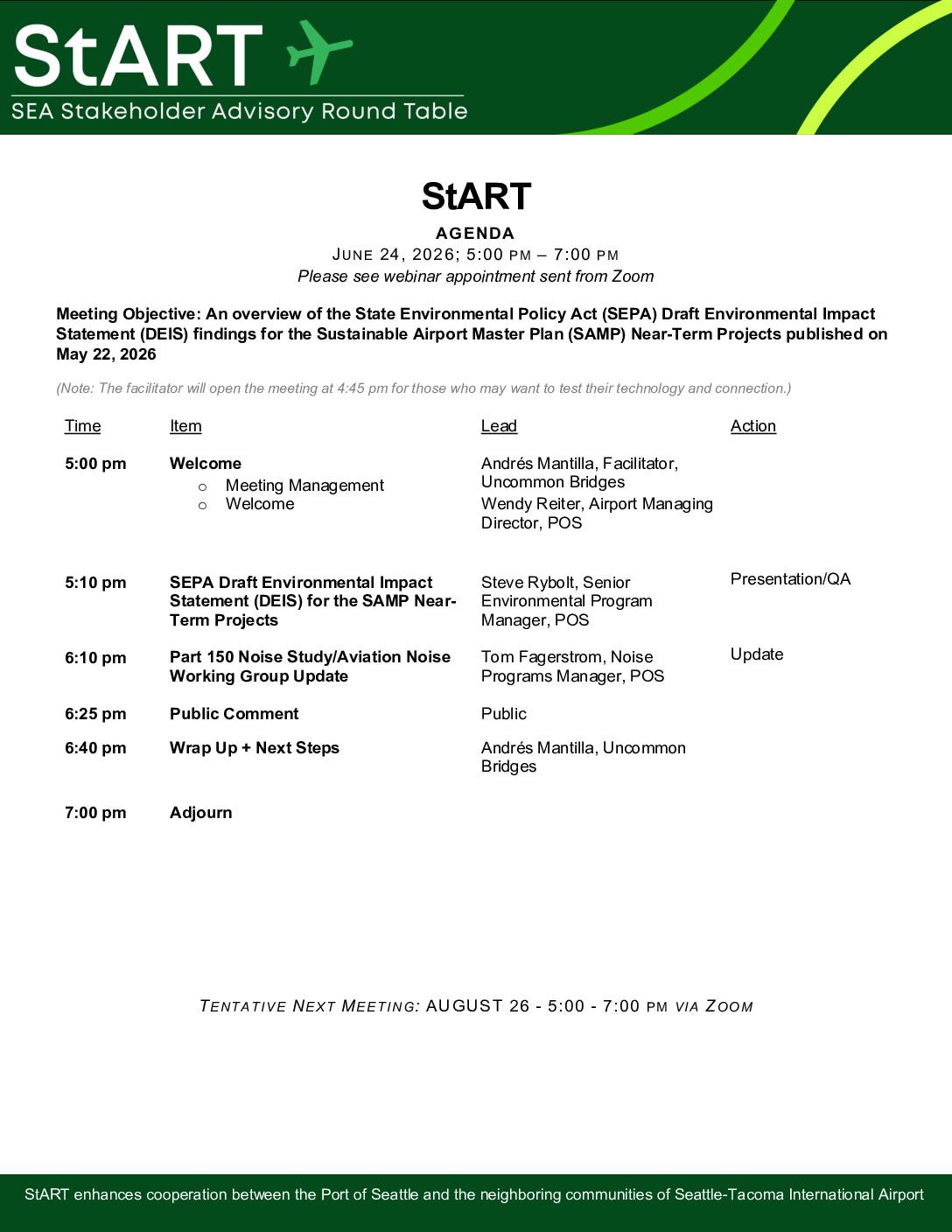
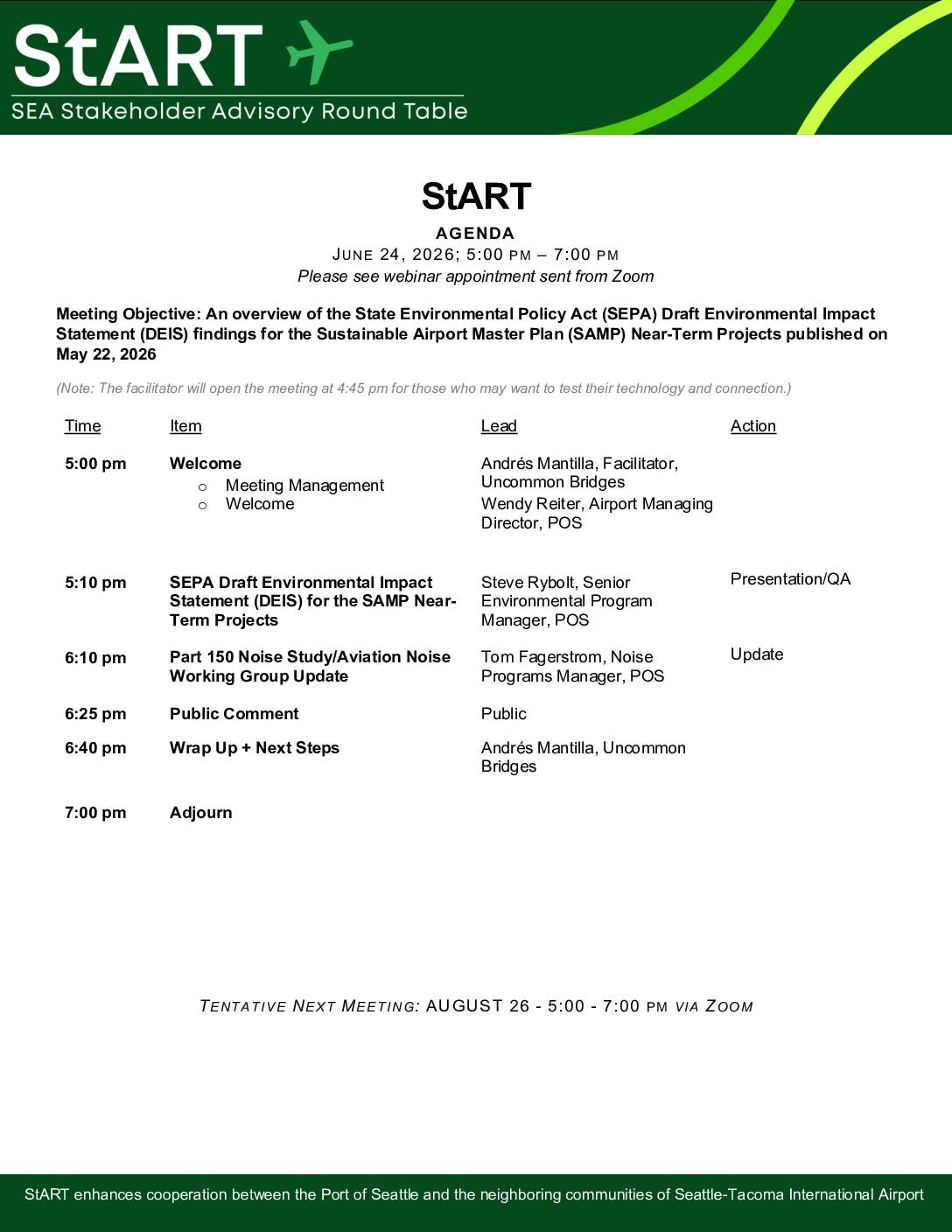
Overview of (SEPA) Draft Environmental Impact Statement (DEIS) (SAMP) Near-Term Projects, Part 150 update
2026-06-17
No experts in the room Port government relations manager Dave Kaplan gave the city council background on the SAMP SEPA/EIS process and then took some sharp questions. He would be the first to say that he is not an airport expert. He is paid to take flack for the Empire. But he said some things
2026-06-14
As the 2026 Sustainable Airport Master Plan public comment period moves ahead, focus more on the worst aspects of opens, activists face the same challenges tackled in 2018, but with less preparation and smaller budgets. Rather than drowning in thousands of SAMP pages, this episode reveals a powerful shortcut: use the extensive work already completed by hundreds of concerned residents and professionals.
This isn't just about avoiding wheel reinvention; it's about standing on the shoulders of previous advocates to make stronger, more informed public comments that actually address systemic community impacts.
 2026-07-17
 2026-07-16
 2026-07-04
 2026-06-24
 2026-06-24