TagRCAA(206)
-
 1998-06-11
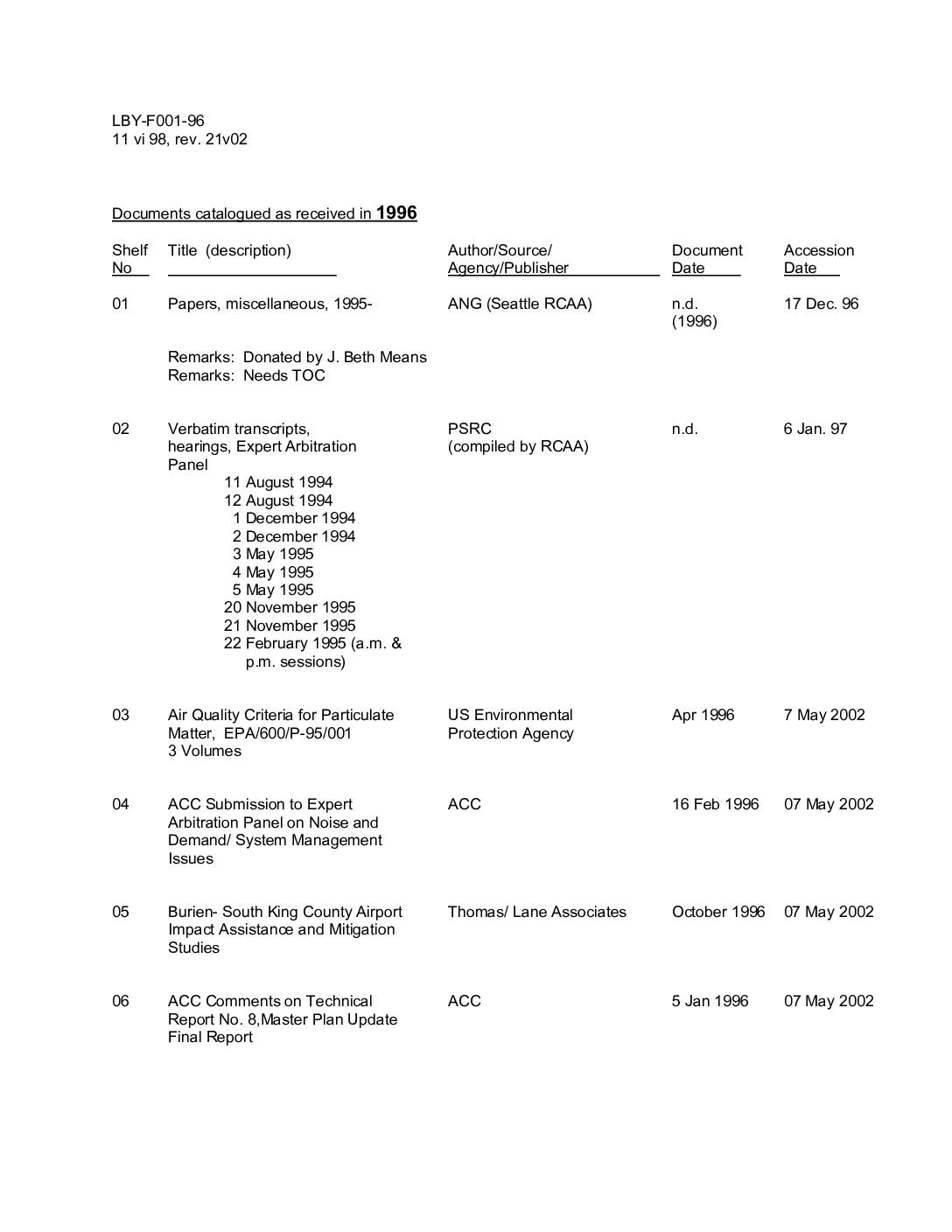
Documents catalogued as received in 1996
This catalog lists documents received in 1996 related to Seattle-Tacoma International Airport planning and policy, including environmental impact statements, noise arbitration hearing transcripts, air quality studies, and budget documents. Key sources include the Port of Seattle, the FAA, the Airport Communities Coalition (ACC), and various consulting firms, covering topics such as the proposed Sea-Tac Master Plan Update, a third runway, groundwater studies, and community noise mitigation. The collection reflects ongoing disputes between the Port of Seattle and surrounding communities over airport expansion impacts during the mid-1990s. -
 1998-06-11
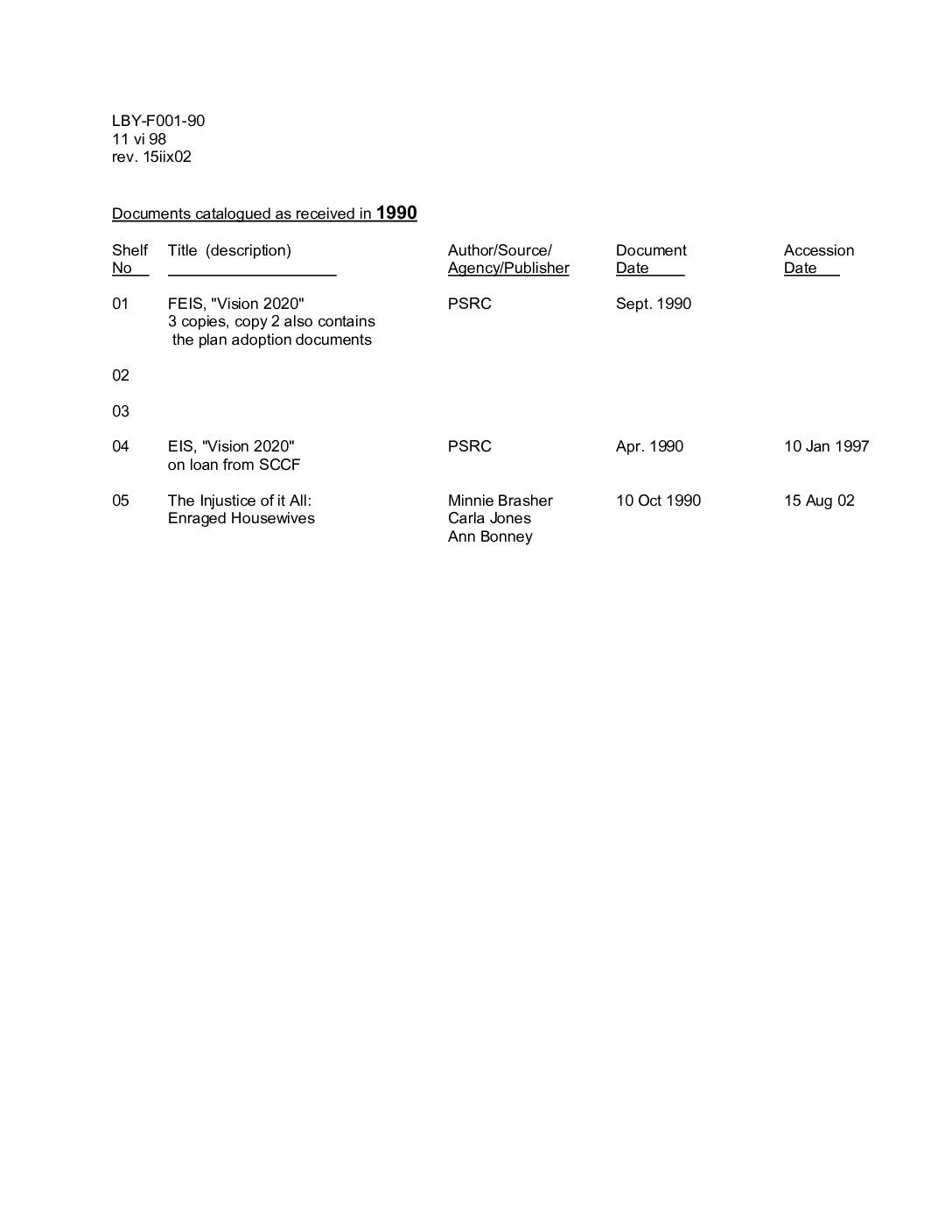
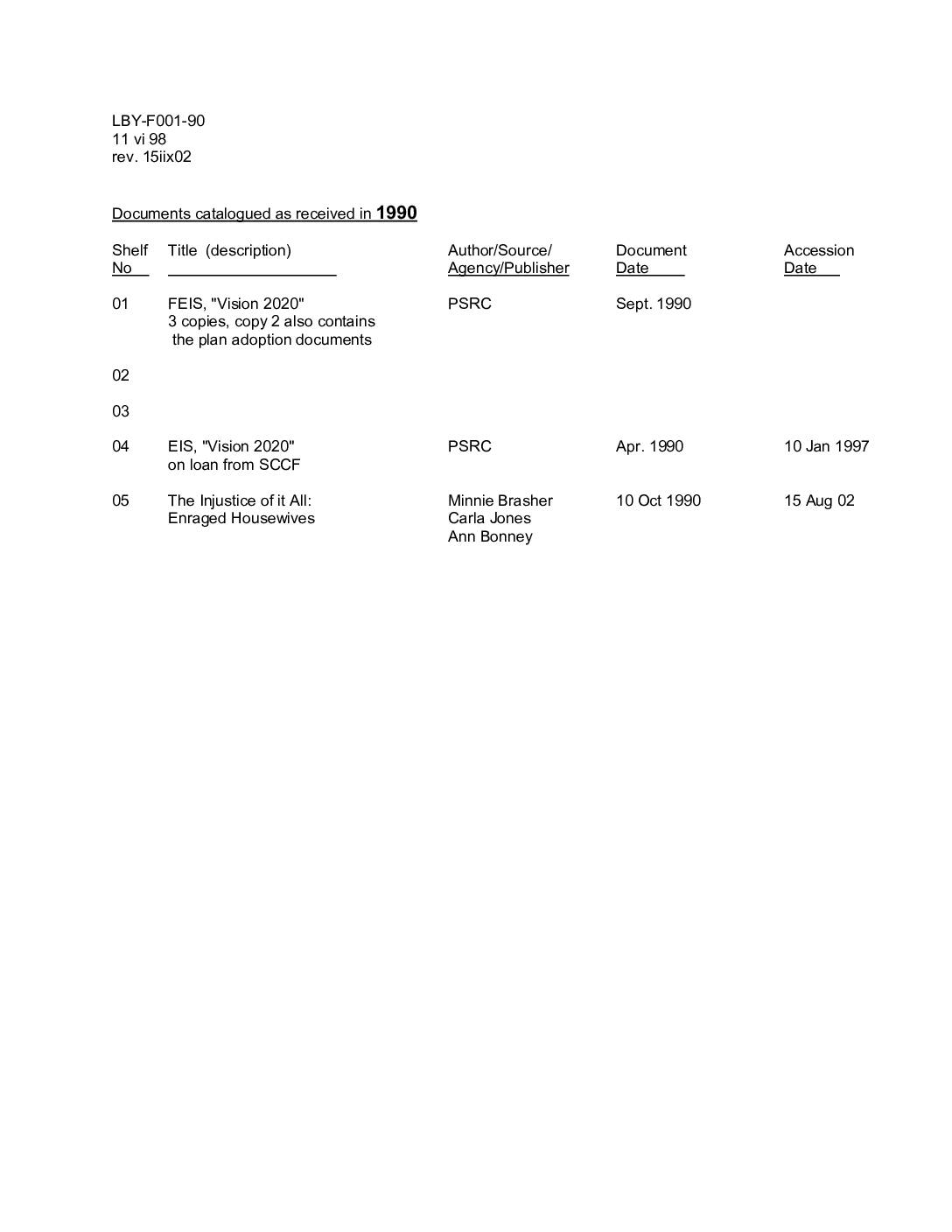
Documents catalogued as received in 1990
This is a library catalog sheet listing documents received in 1990 related to regional planning and community concerns in the Seattle-Tacoma area. It includes two versions of the 'Vision 2020' environmental impact statement published by the Puget Sound Regional Council (PSRC), as well as a community document titled 'The Injustice of It All' authored by a group called Enraged Housewives. The catalog was originally created in June 1998 and last revised in August 2002. -
 1998-06-11
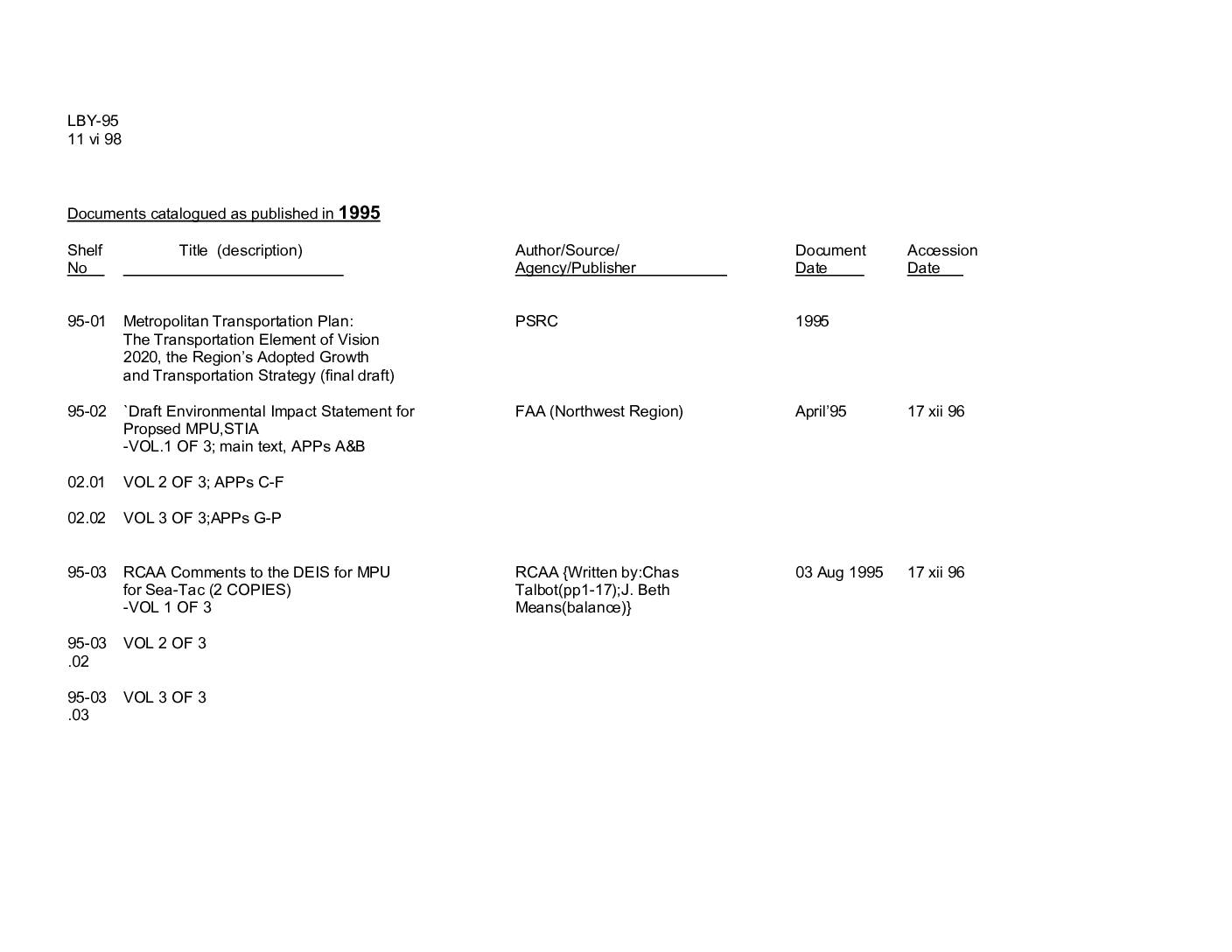
Documents catalogued as published in 1995: Library bibliography LBY-95
This is a library catalog listing documents from 1995 related to Sea-Tac International Airport's planned expansion, including a third runway proposal. The documents cover environmental impact statements, noise studies, community group objections, legal appeals, and financial analyses from sources such as the FAA, Port of Seattle, and local community associations. The catalog was compiled to track public records and research materials relevant to airport noise policy and development decisions in the Seattle region. -
 1998-06-11
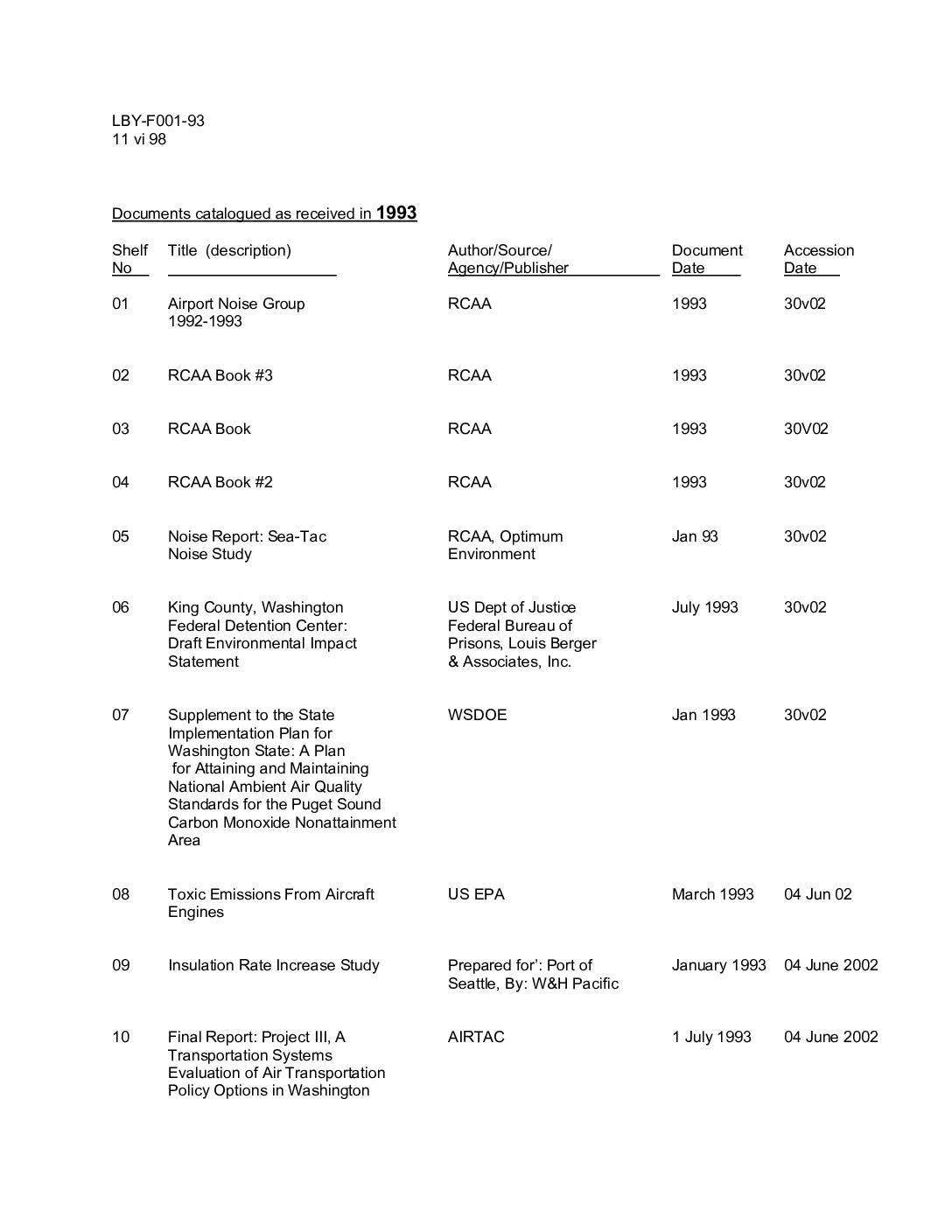
Documents catalogued as received in 1993
This catalog lists documents received in 1993 related to Sea-Tac International Airport and regional air transportation policy, covering topics such as airport noise studies, environmental impact statements, and air quality plans for the Puget Sound area. Sources include the FAA, US EPA, Washington State DOE, and various consulting firms. The collection spans noise compatibility programs, aircraft deicing environmental concerns, wetlands restoration, and long-range aviation forecasts for the Pacific Northwest. -
 1998-06-11
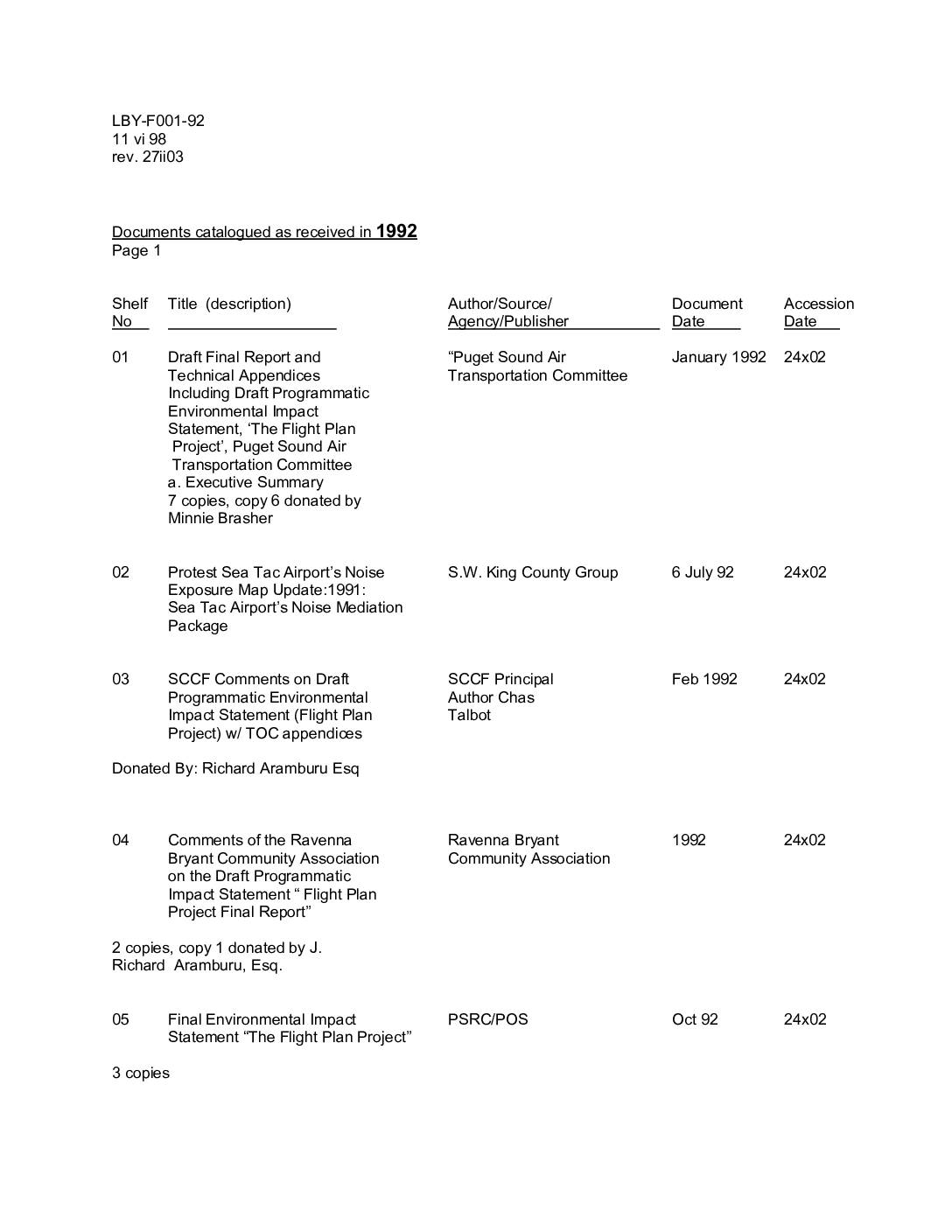
Documents catalogued as received in 1992
This catalog lists documents received in 1992 related to aviation planning and noise policy in the Puget Sound region, with a focus on Sea-Tac International Airport (STIA). It includes environmental impact statements, noise exposure maps, community association comments, budget documents, and FAA regulatory guides, many connected to the 'Flight Plan Project' — a regional air transportation study. Several items were donated by attorney J. Richard Aramburu and other community stakeholders involved in airport noise and development issues. -
 1998-06-11
Documents catalogued as received in 1990 and 1992
This library catalog covers documents received in 1990 and 1992 relating to aviation planning and noise policy in the Puget Sound region, with a focus on Sea-Tac Airport. Key items include environmental impact statements for the 'Vision 2020' and 'Flight Plan Project' plans, Sea-Tac noise exposure map updates, community association comments on airport expansion, and technical reports on aircraft modifications. The catalog records each document's title, author or agency, original publication date, and accession date, and notes donor information where applicable. -
 1998-06-11
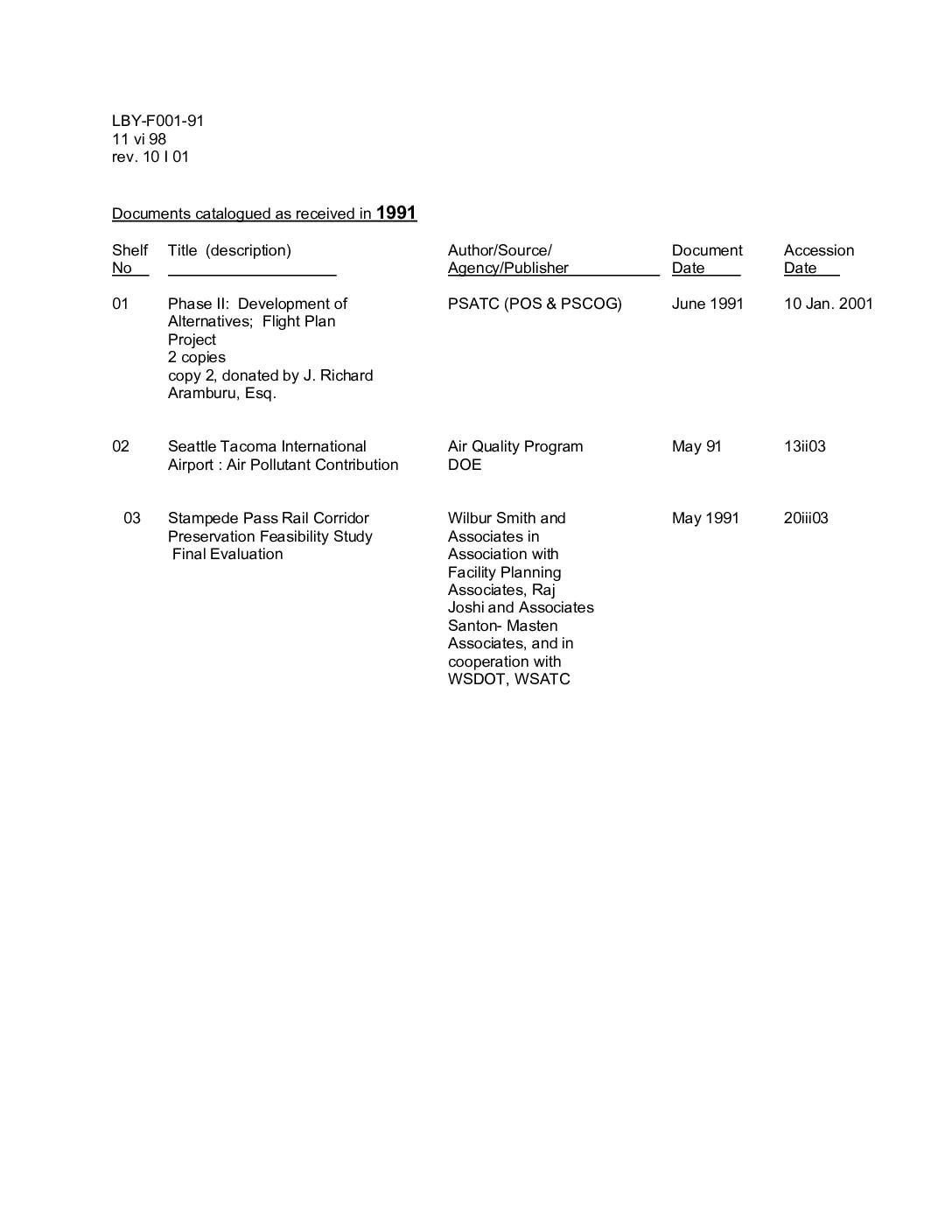
Documents catalogued as received in 1991
This catalog log lists three transportation planning documents received in 1991 and accessioned into an archive between 2001 and 2003. The documents cover Puget Sound regional transportation alternatives (the Flight Plan Project), air pollutant contributions at Seattle-Tacoma International Airport, and a feasibility study for preserving the Stampede Pass Rail Corridor. Together they represent early 1990s regional planning efforts related to air quality, rail, and transportation policy in the greater Seattle-Tacoma area. -
 1998-03-30
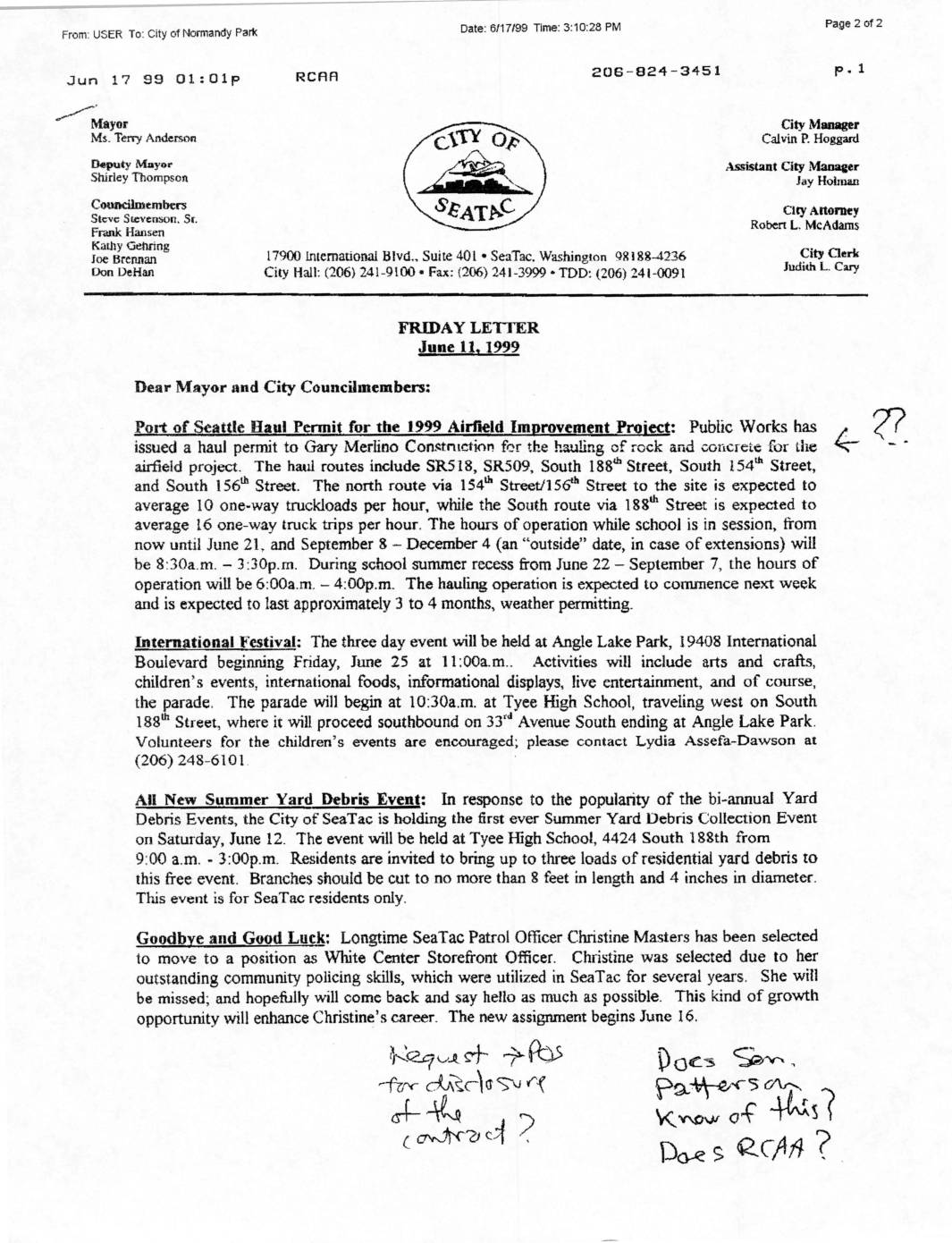
RCAA Letter to City of Des Moines: EMT Conveyor Belt Proposal for Sea-Tac Airport Fill Material Hauling, with Sea-Tac Friday Letter on Port Of Seattle 1999 Airfield Improvement Project Haul Permit
These documents relate to the 1999 Sea-Tac Airport airfield improvement project, including a haul permit issued to Gary Merlino Construction for trucking rock and concrete along designated routes near the airport, with restricted operating hours during the school year. Also included is a 1998 letter from the Regional Commission on Airport Affairs describing a proposal by Environmental Materials Transport LLC to build a temporary barge terminal near Des Moines Creek Beach Park, with a conveyor system to move fill material to Sea-Tac Airport as an alternative to truck hauling. The materials reflect community and municipal concerns about construction traffic, noise, and environmental impact associated with airport expansion activities in the greater Sea-Tac area. -
 1998-03-01
Truth in Aviation: The newsletter of the Regional Commission on Airport Affairs, Vol. 5, No. 1, Spring 1998
This 1998 newsletter from the Regional Commission on Airport Affairs covers several controversies surrounding Sea-Tac Airport's expansion, including a 24% cost overrun on the new parking garage, Port staff admitting they lack the capacity to manage over 100 simultaneous expansion projects, and the Highline School District launching an independent study of airport noise impacts on classrooms after failed negotiations with the Port. Additional issues covered include a proposed wetlands destruction permit for the third runway site, plans to extend King County International Airport's runway closer to Georgetown neighborhoods, and legal battles over city comprehensive plans that opposed airport expansion. -
 1997-03-01
Why the Port Of Seattle’s 3rd runway EIS fails adequately to examine impacts to wetlands and prescribes inadequate mitigation
This 1997 document argues that the Port of Seattle's Environmental Impact Statement (EIS) for a proposed third runway at Sea-Tac Airport inadequately examines impacts on wetlands and fails to prescribe sufficient mitigation measures. It contends that the FAA and Port must meet federal and state legal requirements — including Section 404 of the Clean Water Act and Washington's Growth Management Act — before any construction affecting wetlands can proceed. The document asserts that the EIS does not consider a broad enough range of alternatives, making it legally insufficient as a basis for approving the runway project.