TagRCAA(206)
-
 2001-09-01
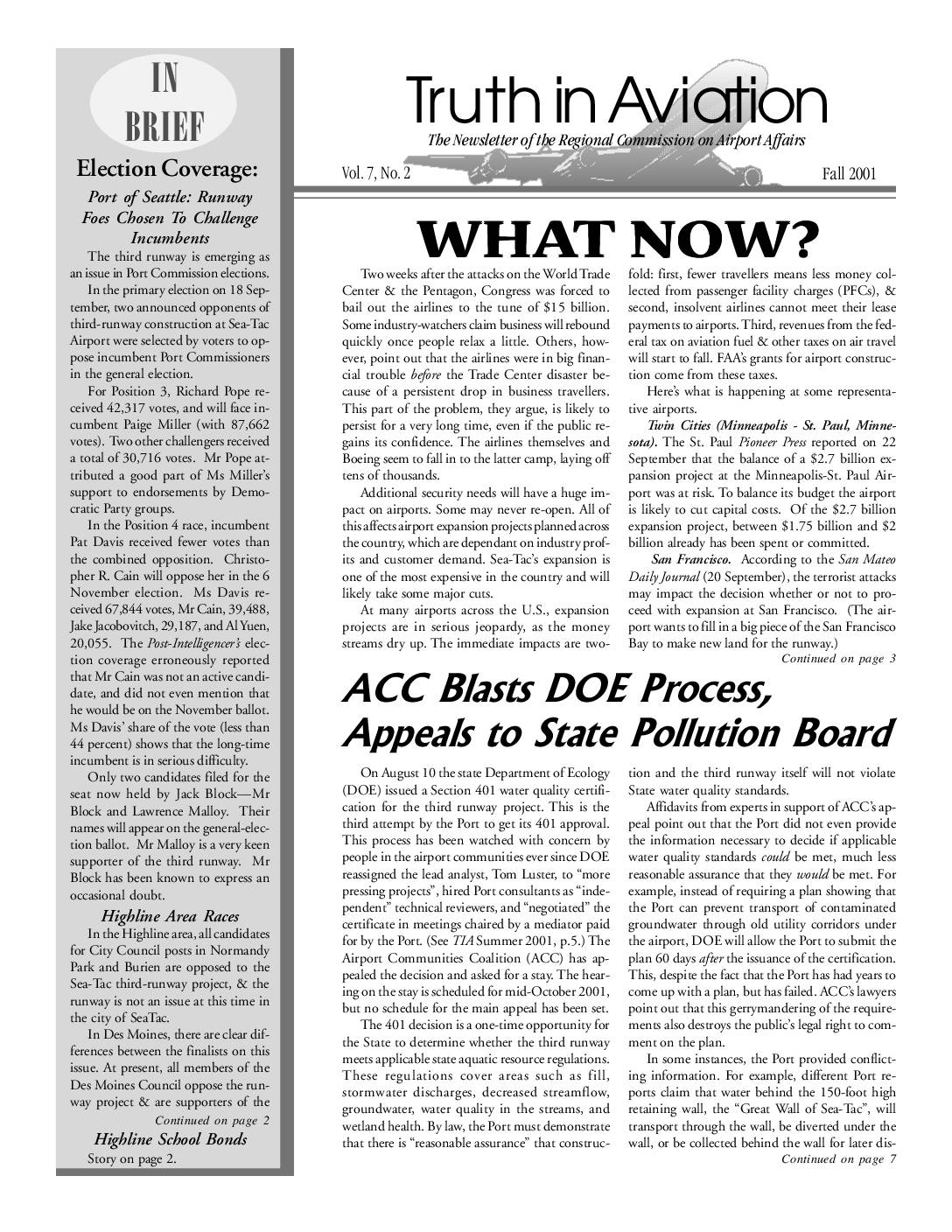
Truth in Aviation: The newsletter of the Regional Commission on Airport Affairs, Vol. 7, No. 2, Fall 2001
This Fall 2001 newsletter from the Regional Commission on Airport Affairs covers several developments surrounding the proposed third runway at Seattle-Tacoma (Sea-Tac) Airport, including a legal appeal of the state's water quality certification, concerns about the Port's environmental plans, and the financial impact of the September 11 attacks on airport expansion projects nationwide. The newsletter also reports on local election races where third-runway opposition has become a key issue, and examines whether airlines will be able to meet lease payments needed to fund the costly expansion project. -
 2001-05-01
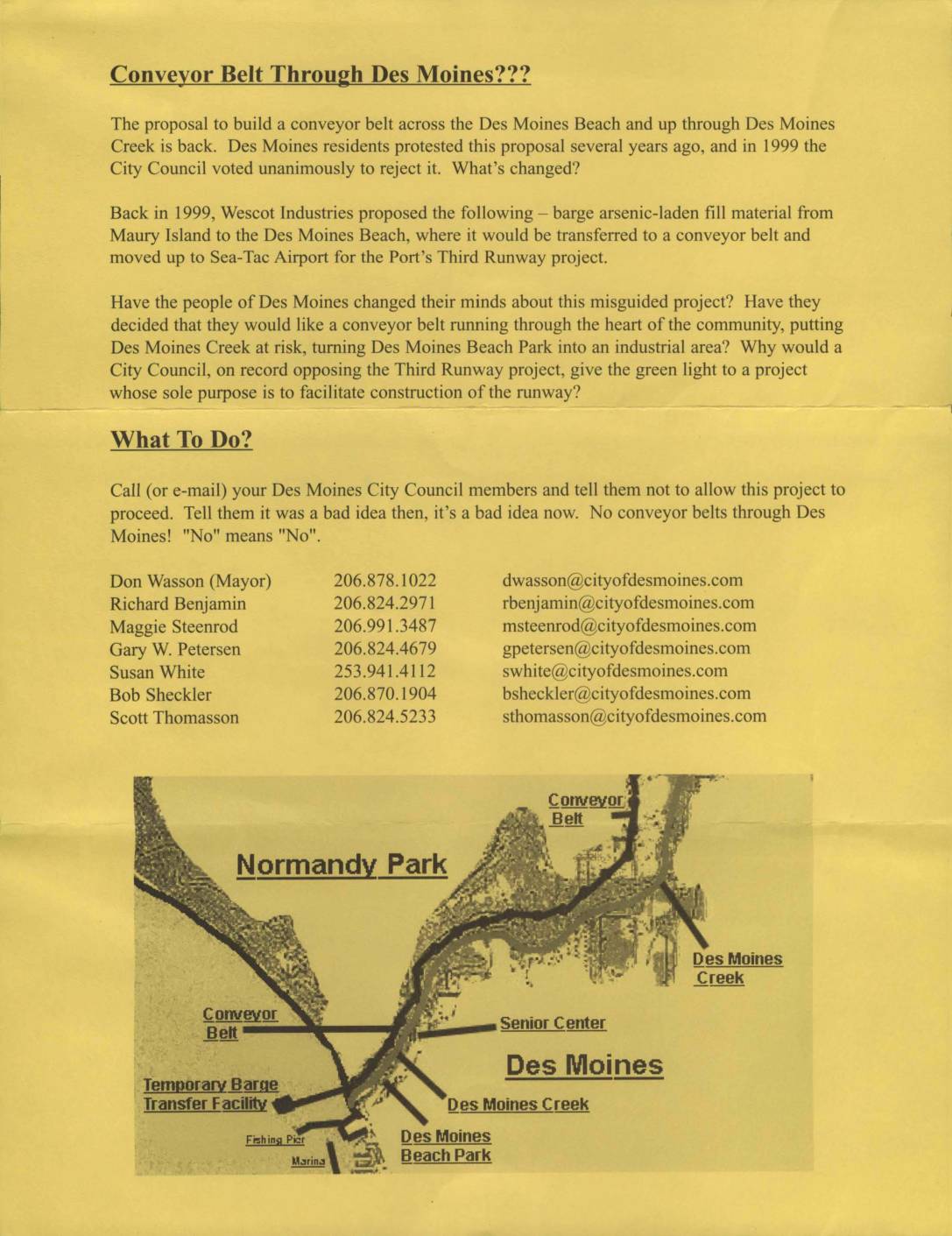
Conveyor belt through Des Moines???
A community flyer opposing a proposed conveyor belt system through Des Moines, Washington, that would transport arsenic-laden fill material from Maury Island to Sea-Tac Airport in support of the Port's Third Runway construction project. The Des Moines City Council had unanimously rejected the same proposal in 1999, and residents were urged to contact their council members to block the revived plan. Opponents argued the project would industrialize Des Moines Beach Park and put Des Moines Creek at environmental risk. -
 2001-04-17
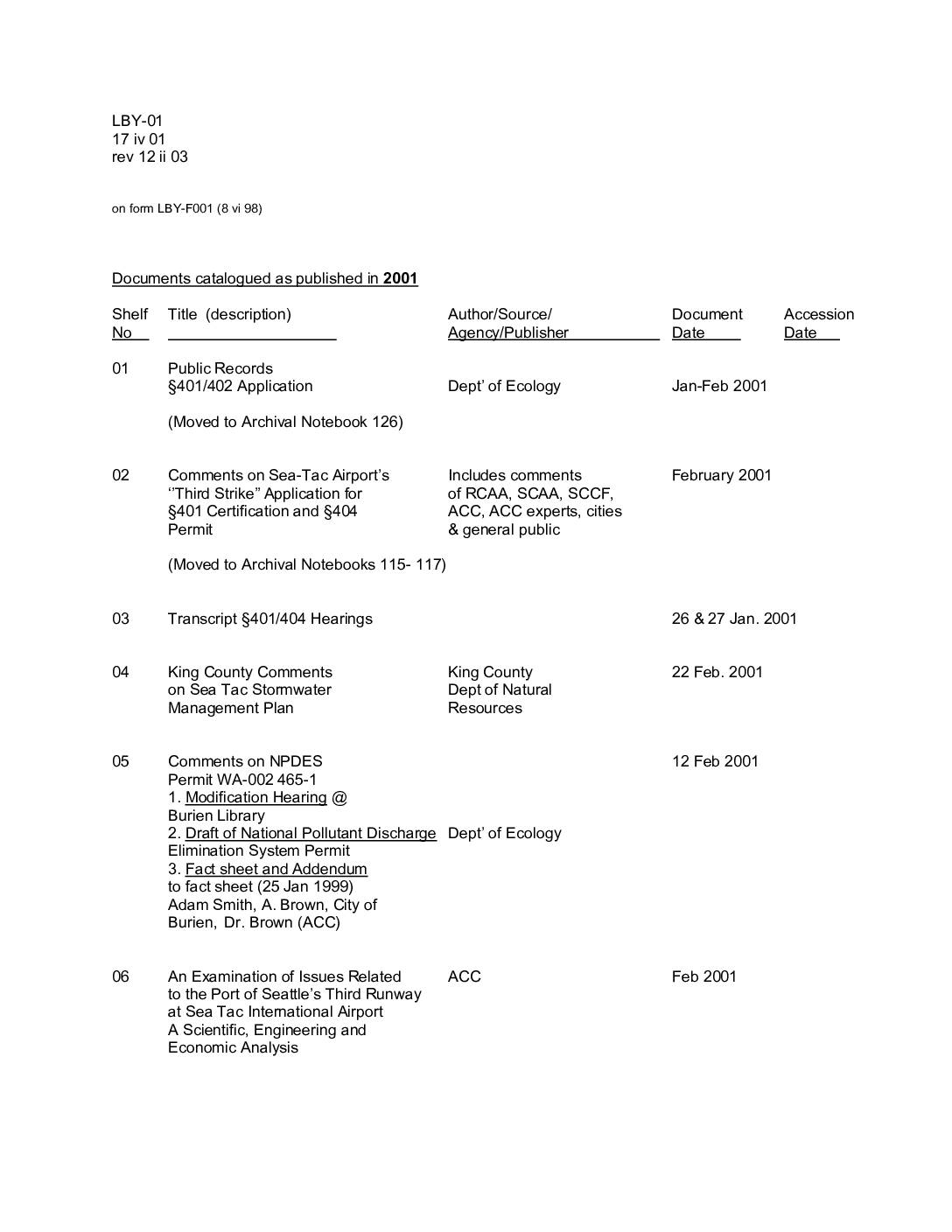
Documents catalogued as published in 2001
This is a catalogued index of documents from 2001 related to the proposed Third Runway at Seattle-Tacoma International Airport, covering regulatory filings, public comments, and environmental studies. It includes records from agencies such as the Department of Ecology, the Corps of Engineers, and King County, addressing topics like stormwater management, NPDES permits, groundwater studies, and the impact of the February 2001 Nisqually Earthquake on airport structures. The catalog serves as a reference guide directing researchers to archival notebooks and specific shelf locations where the full documents are stored. -
 2001-04-17
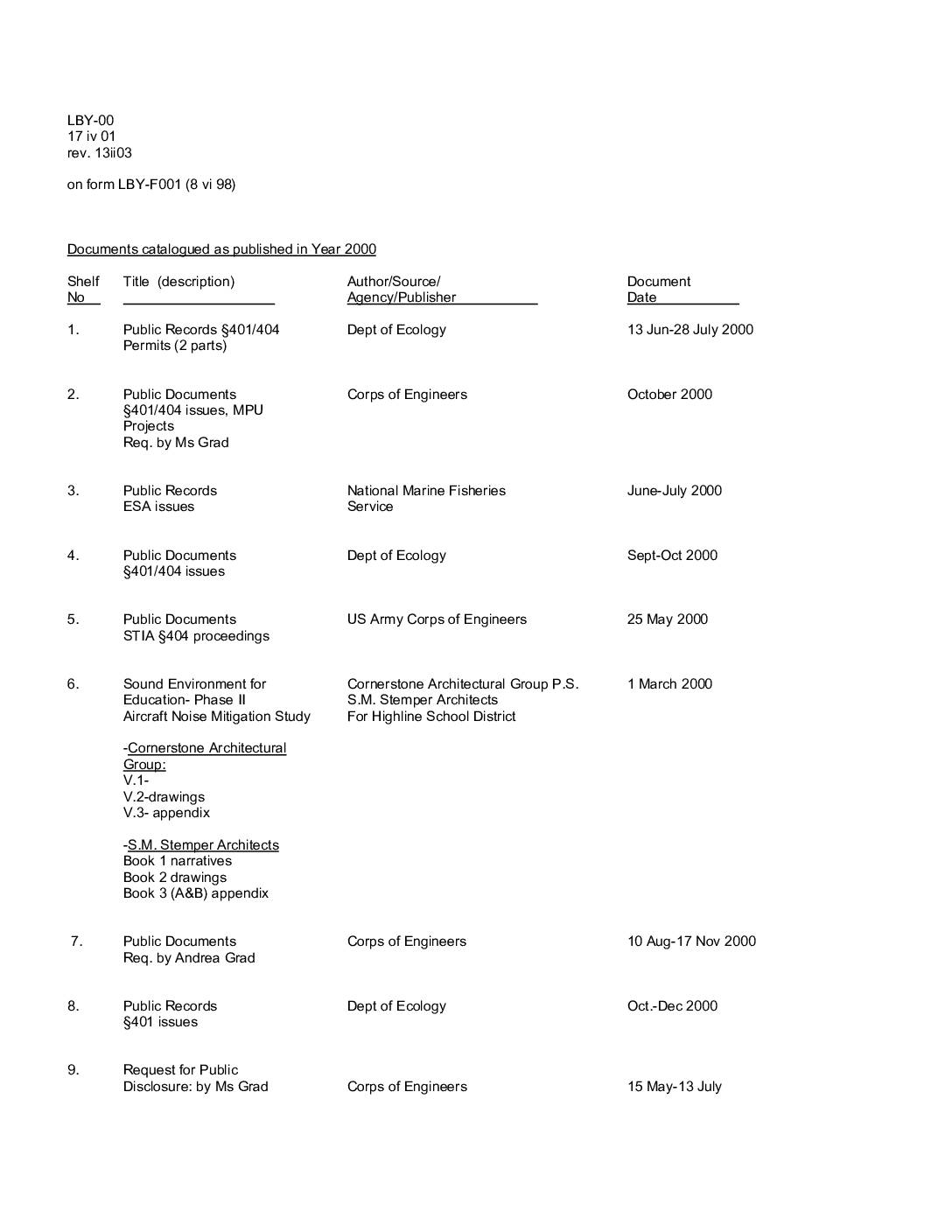
Documents catalogued as published in Year 2000
This is a library catalog listing documents published in the year 2000 related to Seattle-Tacoma International Airport (Sea-Tac) and its surrounding environment. The records cover a wide range of regulatory and planning topics, including §401/404 wetland permits, aircraft noise mitigation studies for the Highline School District, stormwater management plans, wildlife hazard management, and the airport's Third Runway construction project. Sources include the Port of Seattle, the U.S. Army Corps of Engineers, the Department of Ecology, and various environmental consulting firms. -
 2001-03-01
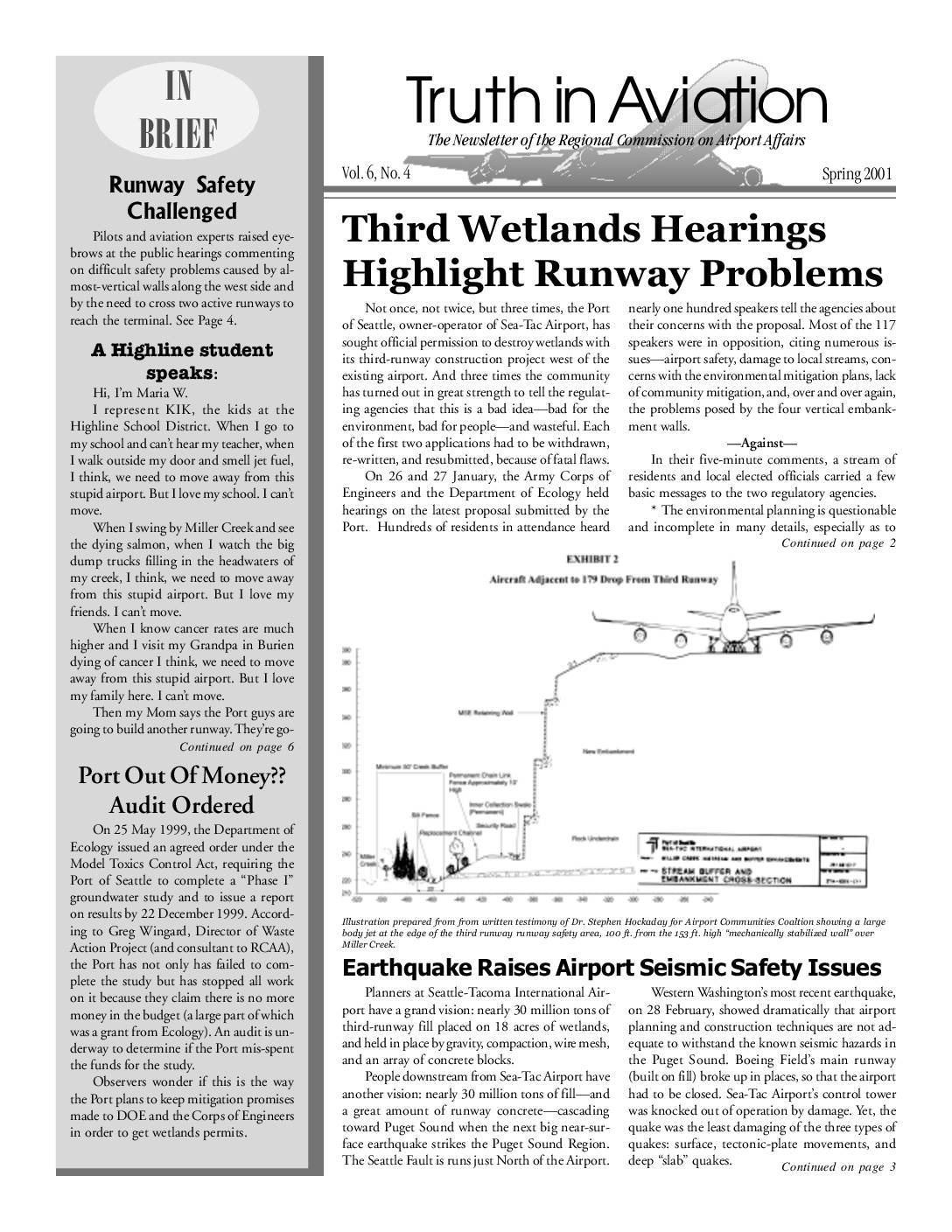
Truth in Aviation: Third wetlands hearings highlight runway problems
A 2001 community newsletter details strong opposition to Seattle-Tacoma International Airport's proposed third runway, highlighting concerns about destruction of local wetlands, earthquake safety risks from massive earthen retaining walls built on unstable soil, and damage to nearby streams and salmon habitat. Nearly 100 of 117 speakers at January 2001 Army Corps of Engineers and Department of Ecology hearings spoke against the project, including 22 elected officials from surrounding communities. Critics also questioned the Port of Seattle's trustworthiness in fulfilling environmental mitigation promises, citing a history of incomplete studies and unfulfilled commitments. -
 2001-03-01
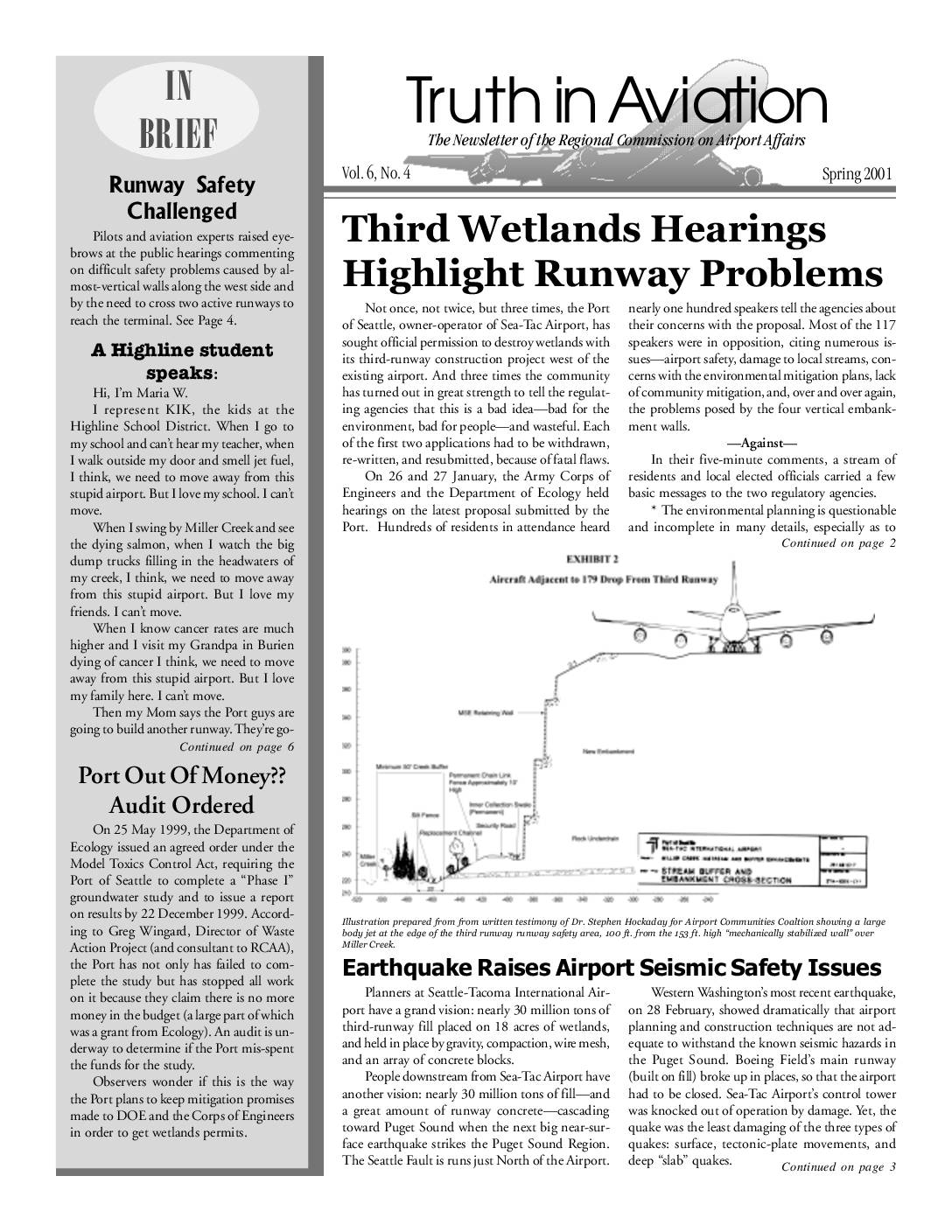
Truth in Aviation: The newsletter of the Regional Commission on Airport Affairs, Vol. 6, No. 4, Spring 2001
A 2001 community newsletter documenting widespread opposition to Sea-Tac Airport's proposed third runway construction, which required destroying 18 acres of wetlands. Residents, local elected officials, and independent experts raised serious concerns about earthquake safety, environmental damage to local streams and salmon habitat, and the structural integrity of four unprecedented earthen retaining walls planned for the project. The Port of Seattle's applications were repeatedly challenged and withdrawn due to fatal flaws in environmental planning and seismic risk analysis. -
 2001-02-16
Comments on Seattle Tacoma International Airport Project: Third Runway – Embankment Fill and West MSE Wall, and Industrial Wastewater System Lagoon #3 Expansion Project on Second Public Notice
In February 2001, engineering firm GeoSyntec Consultants submitted a technical review letter on behalf of the Airport Communities Coalition, raising serious concerns about the proposed Third Runway expansion at Seattle-Tacoma International Airport. The review identified significant deficiencies in the geotechnical investigation and analysis supporting construction of the embankment fill and West MSE Wall, including insufficient soil strength data and inadequate seismic safety assessments. GeoSyntec warned that the proposed design — which would result in the world's tallest MSE wall built over weak, potentially unstable soils in a seismically active region — could fail under earthquake conditions, threatening both airport operations and nearby natural resources. -
 2001-01-01
Airport Capacity Benchmark Report 2001
The FAA's Airport Capacity Benchmark Report 2001 measures the maximum number of flights 31 of the nation's busiest airports can handle per hour under both good and adverse weather conditions. The benchmarks were developed between October 2000 and April 2001 by the FAA and MITRE/CAASD to help understand the relationship between airline demand and runway capacity, and to inform long-term aviation policy decisions. While useful as a reference point, the report notes that these benchmarks are starting points for discussion rather than definitive guides for major investment or scheduling decisions. -
 2000-12-01
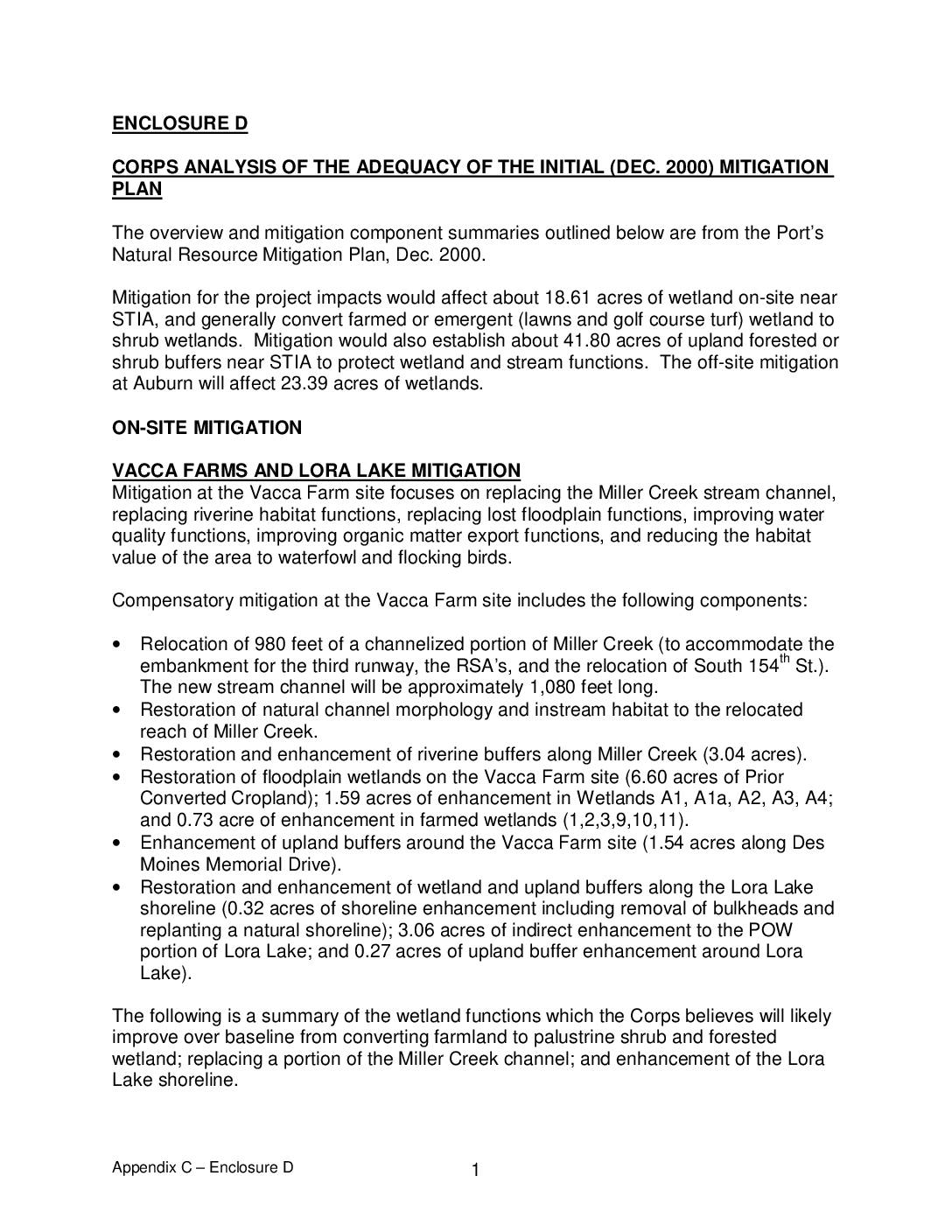
Corps analysis of the adequacy of the initial (Dec. 2000) mitigation plan
This document outlines the U.S. Army Corps of Engineers' analysis of a December 2000 mitigation plan developed by the Port of Seattle to offset wetland impacts caused by the construction of a third runway at Seattle-Tacoma International Airport. The plan covers roughly 18.6 acres of on-site wetland restoration near the airport—including the relocation of a stretch of Miller Creek and improvements to Lora Lake's shoreline—as well as 23.39 acres of off-site wetland mitigation in Auburn. Key goals include improving water quality, restoring floodplain and fish habitat, and managing vegetation to reduce wildlife hazards such as bird strikes near the airfield. -
 2000-10-01
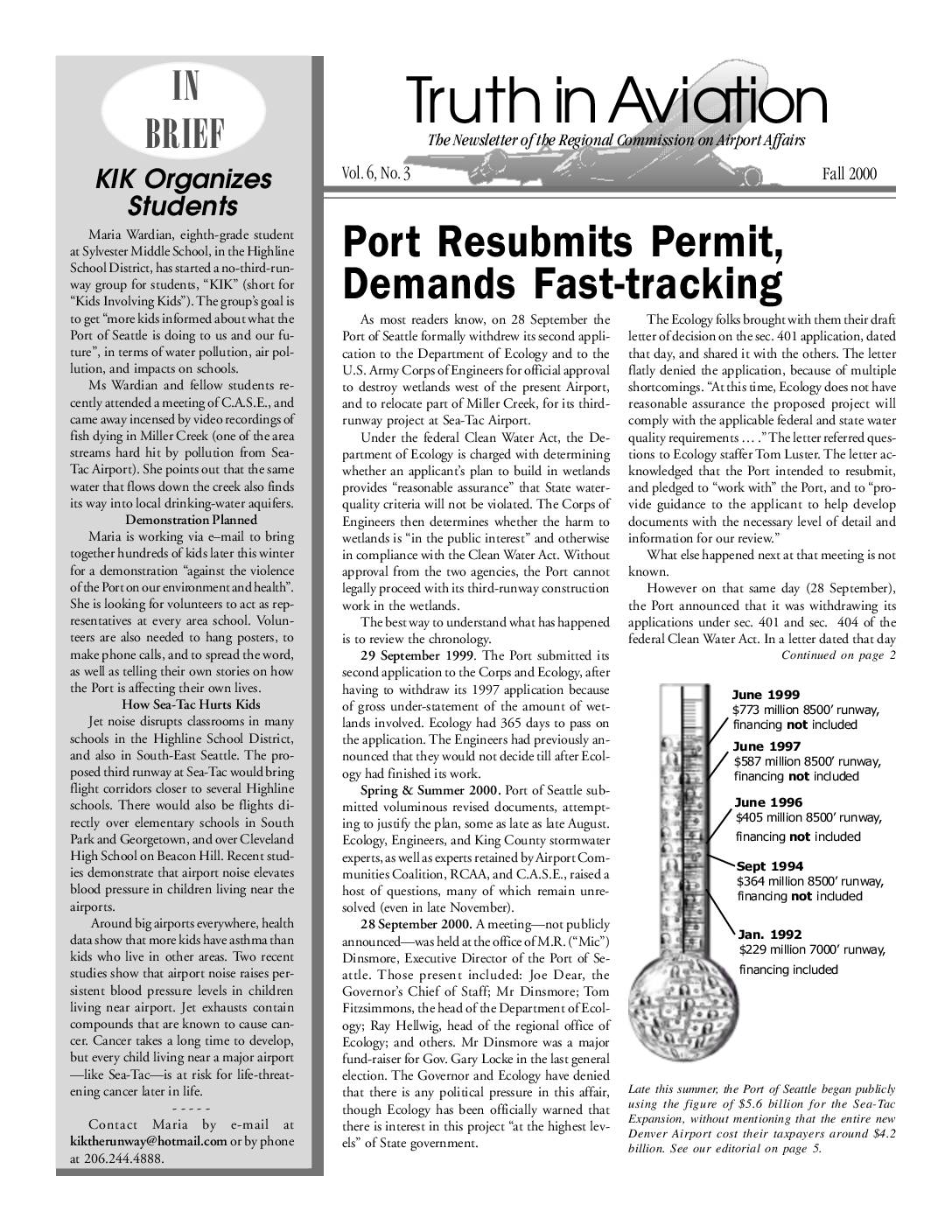
Truth in Aviation: Port resubmits permit, demands fast-tracking
This Fall 2000 newsletter from the Regional Commission on Airport Affairs covers the Port of Seattle's controversial third-runway expansion at Sea-Tac Airport, focusing on the Port's withdrawal and resubmission of its wetlands permit application after regulators were poised to deny it, amid allegations of political interference. It also reports on the reassignment of veteran Department of Ecology analysts critical of the project, community opposition including a student activist group called KIK, and a proposed state legislative effort to study alternative airport sites rather than expand Sea-Tac.