TagPort Of Seattle(2349)
-
 2019-11-20
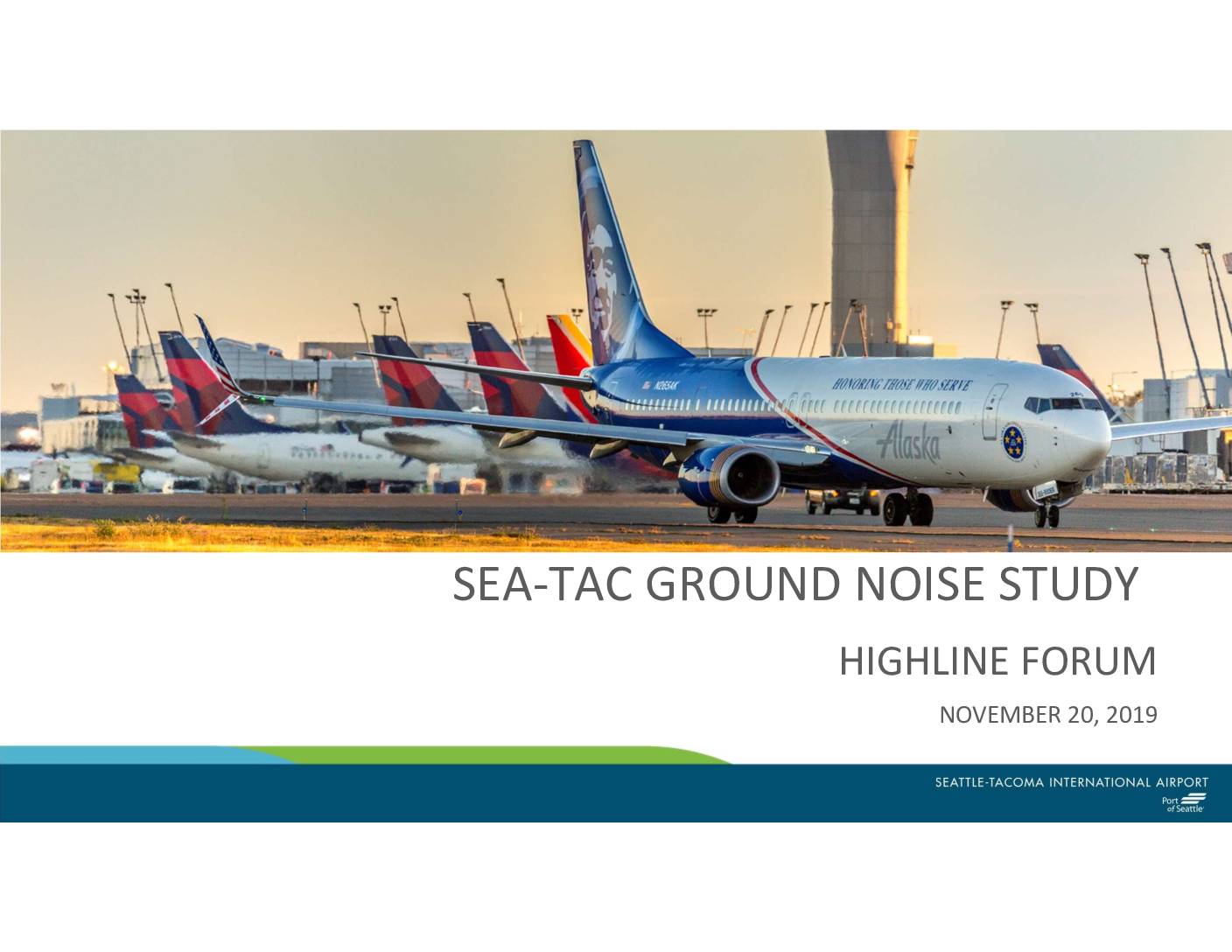
Sea-Tac ground noise study: Highline Forum
This document presents findings from a Sea-Tac Airport Ground Noise Study, shared at the Highline Forum on November 20, 2019. It explains how aircraft ground noise travels and changes with distance, noting that sound levels drop by 6 dB every time the distance doubles and are further reduced by atmospheric absorption and soft ground surfaces. The study also covers how temperature gradients affect noise, with sound bending upward in normal conditions and downward during temperature inversions, potentially increasing noise impacts on nearby communities. -
 2019-11-20
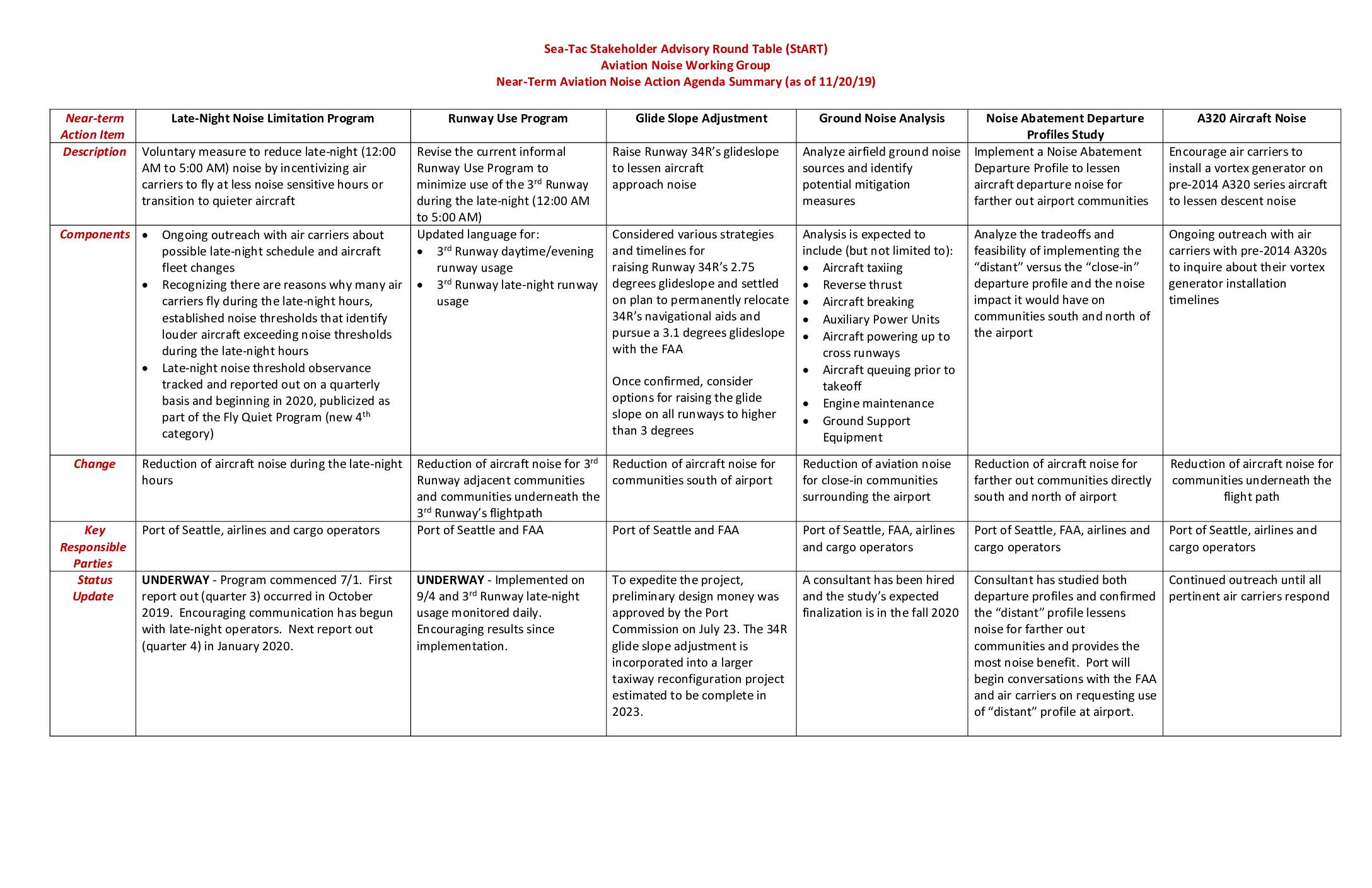
Sea-Tac Stakeholder Advisory Round Table (StART) Aviation Noise Working Group near-term aviation noise action agenda summary (as of 11/20/19)
This document summarizes six near-term action items developed by the Sea-Tac Airport Stakeholder Advisory Round Table (StART) Aviation Noise Working Group as of November 2019, aimed at reducing aircraft noise for surrounding communities. The actions include a Late-Night Noise Limitation Program, a revised Runway Use Program to limit 3rd Runway use at night, a glide slope adjustment for Runway 34R, a ground noise analysis study, a Noise Abatement Departure Profiles Study, and outreach encouraging airlines to install vortex generators on older A320 aircraft. Each action identifies the responsible parties, current status, and the specific communities expected to benefit from reduced noise levels. -
Port Of Seattle Special Meeting
Conference Center, Mezzanine, Sea-Tac Airport. Vote on 2020 Budget and 2020 Tax Levy. Environmental Remediation program 2020. -
 2019-11-19
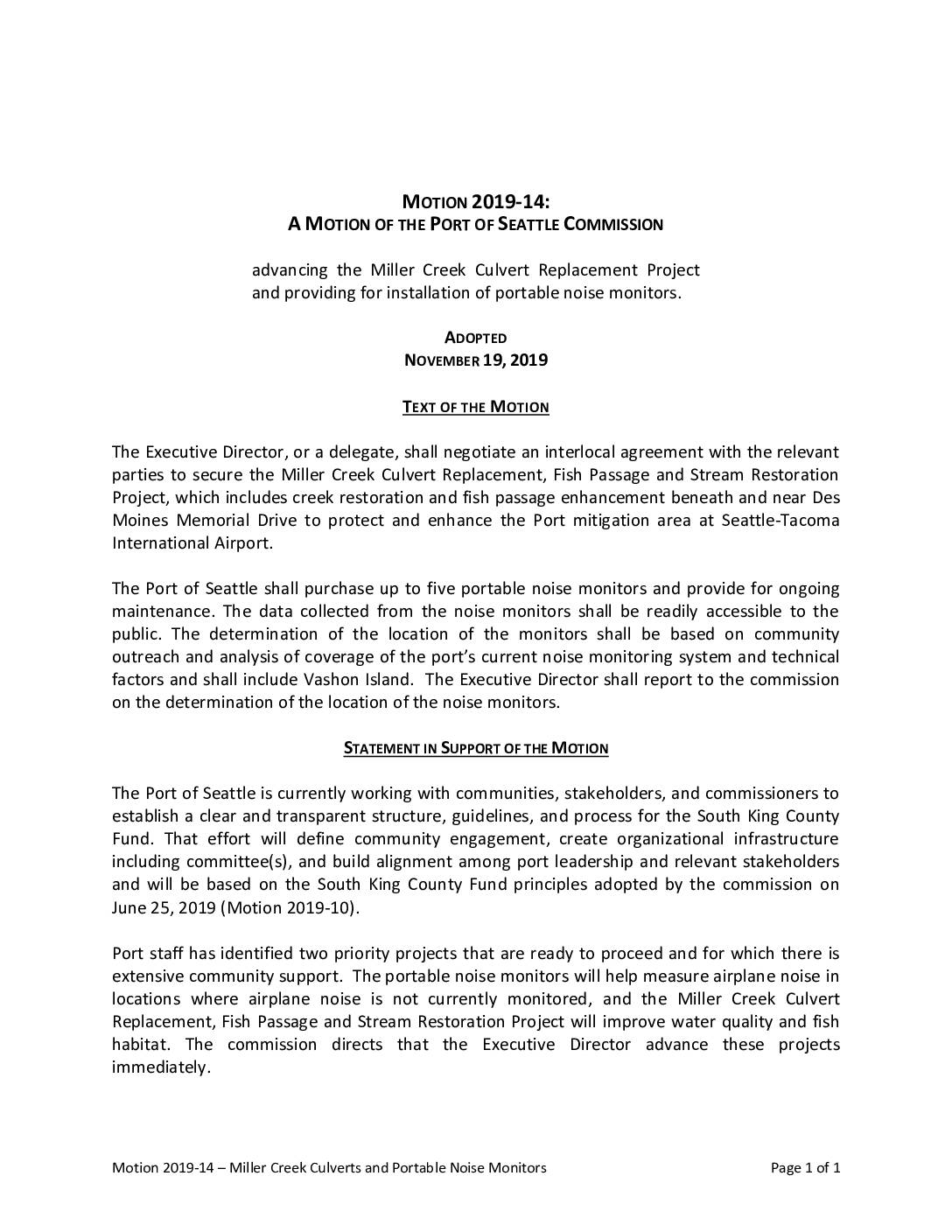
Motion 2019-14 – Miller Creek Culverts and Portable Noise Monitors
In November 2019, the Port of Seattle Commission approved Motion 2019-14, directing the purchase of up to five portable noise monitors to measure airplane noise in areas not currently covered by existing monitoring systems, with data made publicly accessible and at least one monitor placed on Vashon Island. The motion also authorized negotiating an agreement to advance the Miller Creek Culvert Replacement, Fish Passage and Stream Restoration Project near Des Moines Memorial Drive to improve water quality and fish habitat near Seattle-Tacoma International Airport. Both projects were identified as community-supported priorities under the South King County Fund initiative. -
 2019-11-18
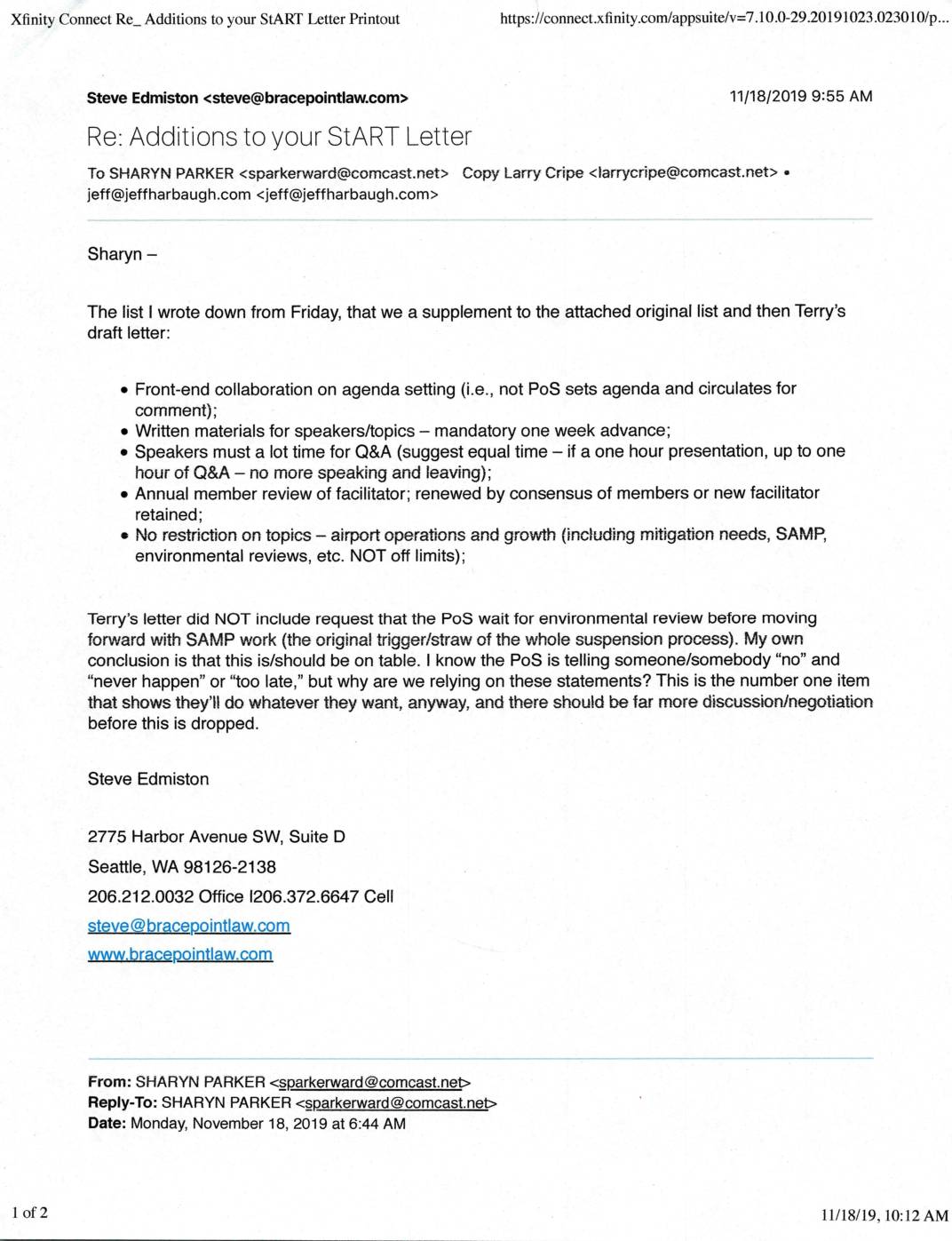
Re: Additions to your StART letter
In November 2019, attorney Steve Edmiston and community members Sharyn Parker and others discussed conditions for re-engaging with the StART (Sea-Tac Airport Roundtable) community advisory process, which had been suspended. Key demands included collaborative agenda-setting, mandatory advance distribution of written materials, equal time for public Q&A, annual review of the facilitator, no restrictions on topics including the airport's growth and environmental reviews, and a request that the Port of Seattle pause its SAMP (Sustainable Airport Master Plan) work pending environmental review. Sharyn Parker's written responses indicated support for re-engagement only if those conditions were met, and called for the Port to conduct a new Part 150 noise study, accelerate sound mitigation, and create a 'second-chance' insulation program for affected residents. -
Port Of Seattle Special Meeting
Note the early start time: 9:00AM Central Auditorium, Sea-Tac Airport. Public Hearing on 2020 Budget. Public Hearing on 2020 Tax Levy. -
 2019-11-01
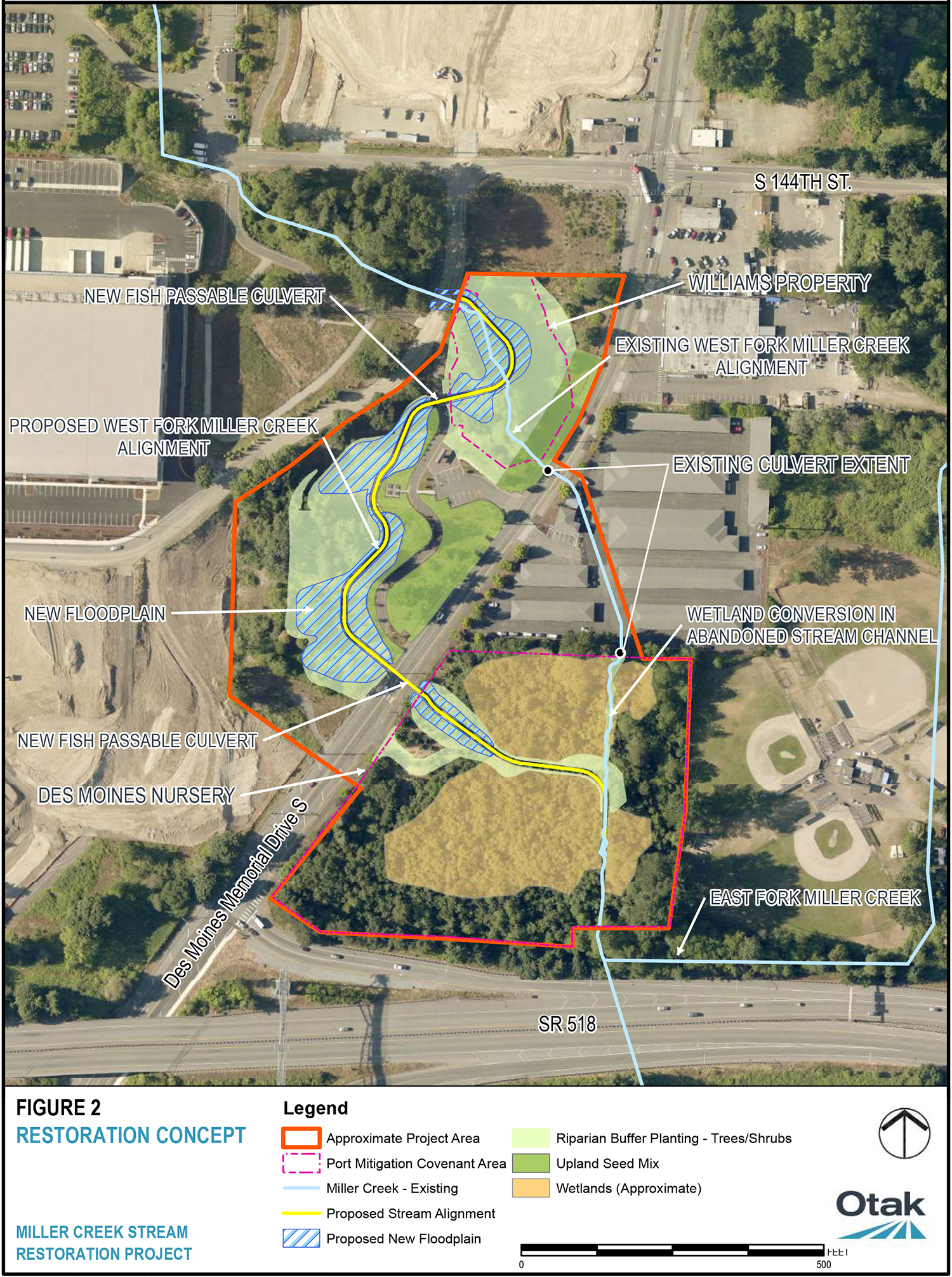
Miller Creek Stream Restoration Project – Restoration Concept
An aerial project map prepared by Otak engineering firm showing the Miller Creek Stream Restoration Project restoration concept, located near S 144th St, Des Moines Memorial Drive S, and SR 518 in the Sea-Tac area. The map depicts the proposed West Fork Miller Creek realignment, new fish-passable culverts, new floodplain areas, riparian buffer planting zones, wetlands, and the Des Moines Nursery site within the approximate project boundary. -
 2019-10-31
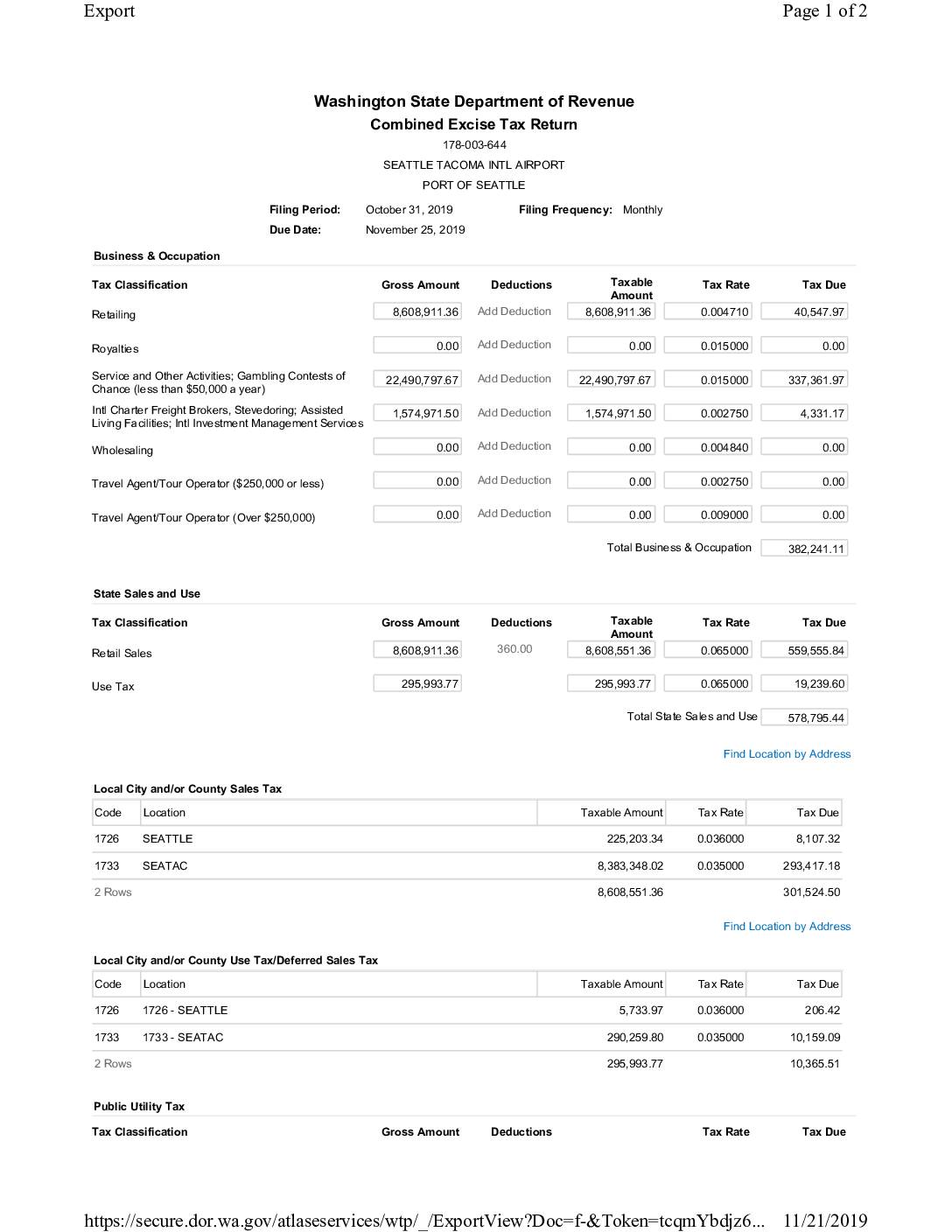
Combined Excise Tax Return: Seattle Tacoma International Airport, Port Of Seattle — October 2019
This document is a Washington State Combined Excise Tax Return filed by the Port of Seattle for Seattle-Tacoma International Airport, covering the period ending October 31, 2019. It details Business & Occupation taxes, state and local sales and use taxes, and Public Utility taxes across categories such as retailing, services, power, water distribution, and sewer collection. The total tax amount of $1,304,787.71 was submitted on November 21, 2019, with payment scheduled via ACH debit on November 25, 2019. -
Port of Seattle commissioner arrested on suspicion of domestic violence
Ryan Calkins was booked into the King County jail Thursday morning and released Friday. David Kroman Port of Seattle Commissioner Ryan Calkins was arrested early Thursday morning and booked into the King County Correctional Facility in downtown Seattle on suspicion of domestic violence assault. Calkins spent just over 24 hours in custody before he was -
 2019-10-22
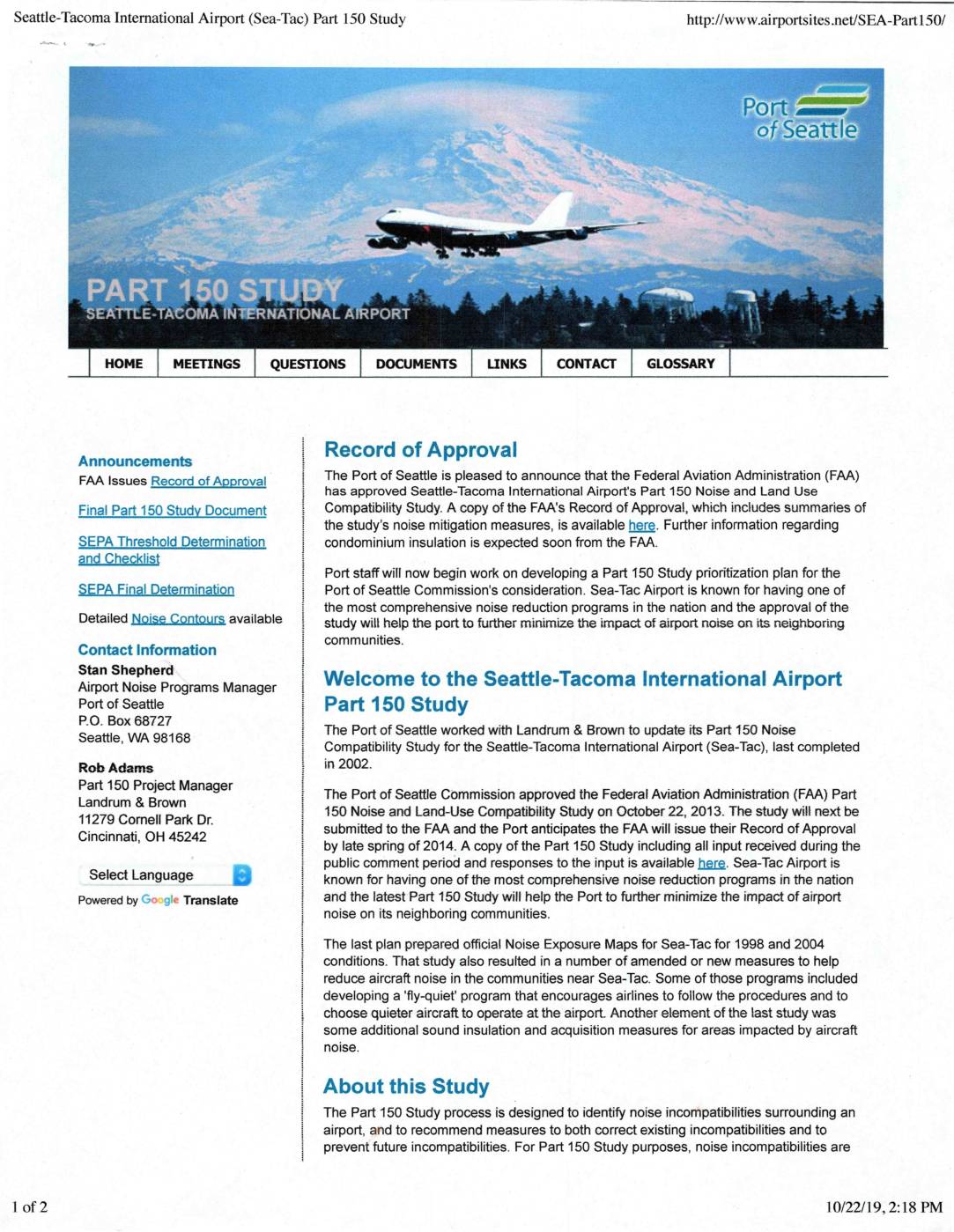
Seattle-Tacoma International Airport (Sea-Tac) Part 150 Study
The Port of Seattle completed an updated Part 150 Noise and Land Use Compatibility Study for Seattle-Tacoma International Airport (Sea-Tac), which was approved by the Port of Seattle Commission in October 2013 and subsequently received a Record of Approval from the Federal Aviation Administration (FAA). The study identifies noise incompatibilities in communities surrounding Sea-Tac and recommends measures to reduce aircraft noise, building on earlier programs such as a 'fly-quiet' initiative and sound insulation efforts. Sea-Tac is recognized as having one of the most comprehensive airport noise reduction programs in the nation, and this updated study is intended to further minimize the impact of aircraft noise on neighboring communities.