TagPort Of Seattle(2405)
-
 2000-12-01
EXH AR009210: Wetland Functional Assessment and Impact Analysis — Master Plan Update Improvements, Seattle-Tacoma International Airport
Wetland Functional Assessment and Impact Analysis prepared by Parametrix, Inc. (Kirkland, Washington) for Port Of Seattle, Seattle-Tacoma International Airport, December 2000, project number 556-2912-001 (03). Document filed in PCHB No. 01-133, received October 1, 2001 by Environmental Hearings Office, submitted as part of Port of Seattle’s Memo Opposing ACC’s Motion for Stay, Declaration of James -
 2000-12-01
EXH AR009646: Natural Resource Mitigation Plan — Master Plan Update Improvements, Seattle-Tacoma International Airport
Final Natural Resource Mitigation Plan prepared by Parametrix, Inc. for Port Of Seattle covering Master Plan Update Improvements at Seattle-Tacoma International Airport, dated December 2000. Filed as part of PCHB No. 01-133, Port of Seattle’s memo opposing ACC’s motion for stay, Volume 3 of 3, received by Environmental Hearings Office on October 1, 2001. Includes -
 2000-11-30
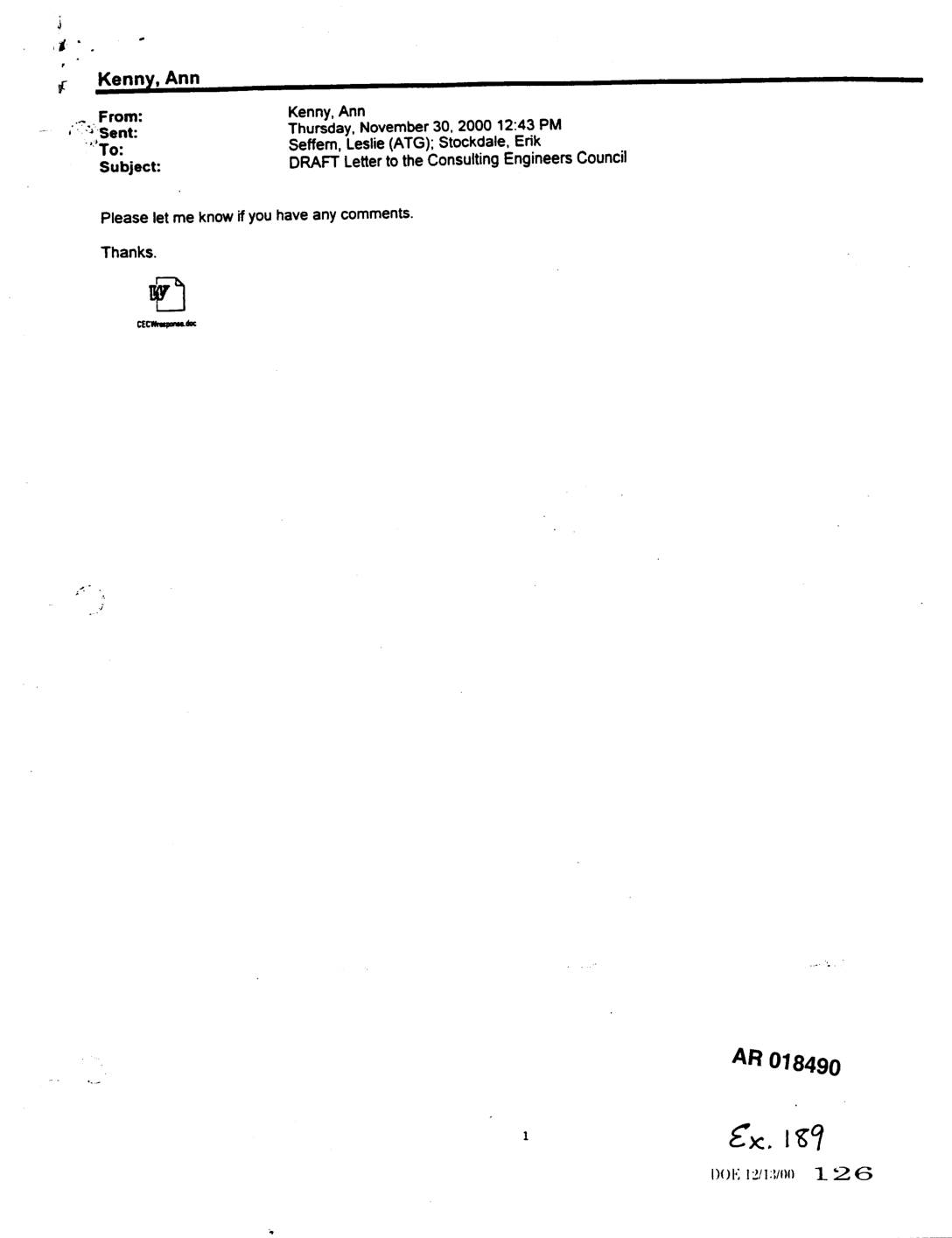
Exhibit 189: Draft Letter to the Consulting Engineers Council of Washington Regarding RCW 39.80 and Professional Wetland Scientist Selection for Sea-Tac Third Runway
Email from Ann Kenny (Ecology, Shorelands and Environmental Assistance Program) dated November 30, 2000, to Leslie Seffern (ATG) and Erik Stockdale, circulating a draft response letter to Bill Garrity, Executive Director of CECW (Consulting Engineers Council of Washington), regarding his November 22, 2000 letter challenging Ecology’s Request for Bid process for selecting a wetland consultant. -
 2000-11-29
EXH AR046207: Subsurface Conditions Data Report, Phase 4 Fill, Third Runway Embankment, Sea-Tac Airport
Draft Subsurface Conditions Data Report for Phase 4 Fill of the Third Runway Embankment at Sea-Tac International Airport, prepared by Hart Crowser (HartCrowser) for Port of Seattle and HNTB, dated November 29, 2000, project J-4978-28, AR 046207. Report covers generalized geologic conditions, subsurface soil conditions, hydrogeologic conditions, field exploration methods including auger borings, Standard Penetration -
 2000-11-29
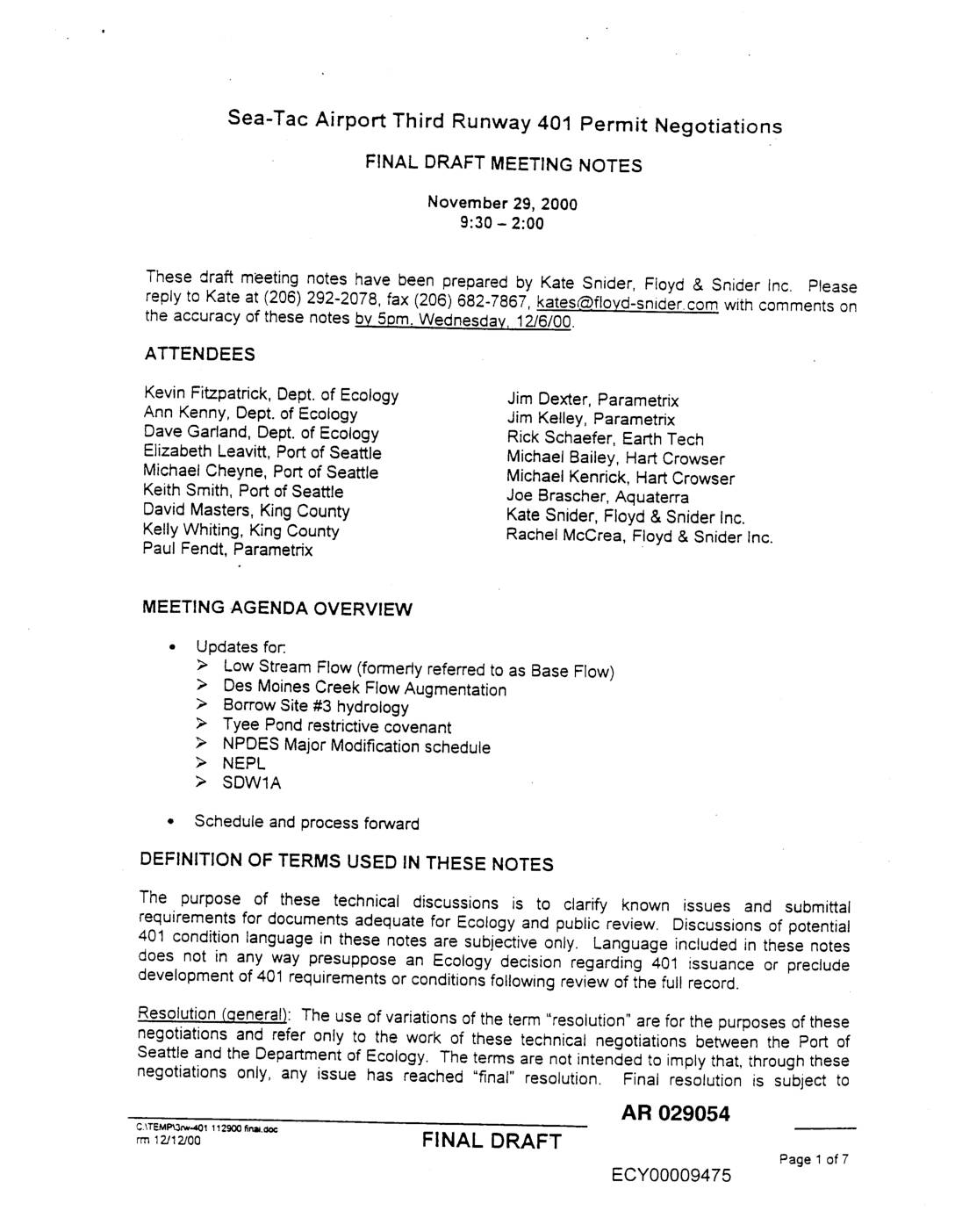
EXH AR029054: Sea-Tac Airport Third Runway 401 Permit Negotiations — Final Draft Meeting Notes, November 29, 2000
Final draft meeting notes from November 29, 2000 (9:30am–2:00pm) prepared by Kate Snider of Floyd & Snider Inc. for Sea-Tac Airport Third Runway 401 permit negotiations between Port Of Seattle (Elizabeth Leavitt, Michael Cheyne, Keith Smith) and Washington State Department of Ecology (Kevin Fitzpatrick, Ann Kenny, Dave Garland), with King County (David Masters, Kelly Whiting) -
 2000-11-27
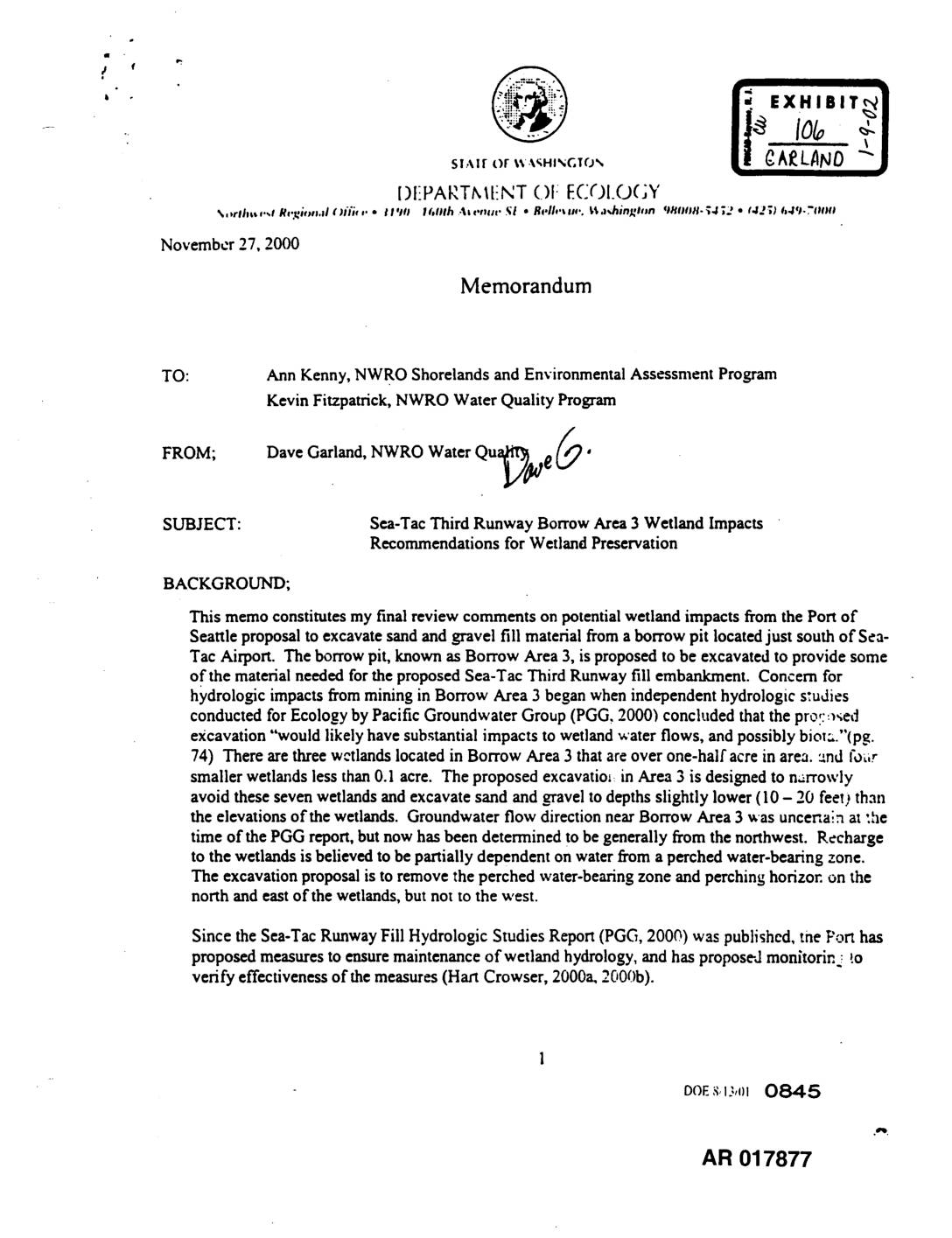
Exhibit 106: Ecology Memorandum on Sea-Tac Third Runway Borrow Area 3 Wetland Impacts and Recommendations for Wetland Preservation
Memorandum dated November 27, 2000 from Dave Garland, NWRO Water Quality, Washington State Department of Ecology, to Ann Kenny and Kevin Fitzpatrick regarding Sea-Tac Third Runway Borrow Area 3 wetland impacts. Addresses Port Of Seattle proposal to excavate sand and gravel from Borrow Area 3 south of Sea-Tac Airport for Third Runway fill embankment. References -
 2000-11-27
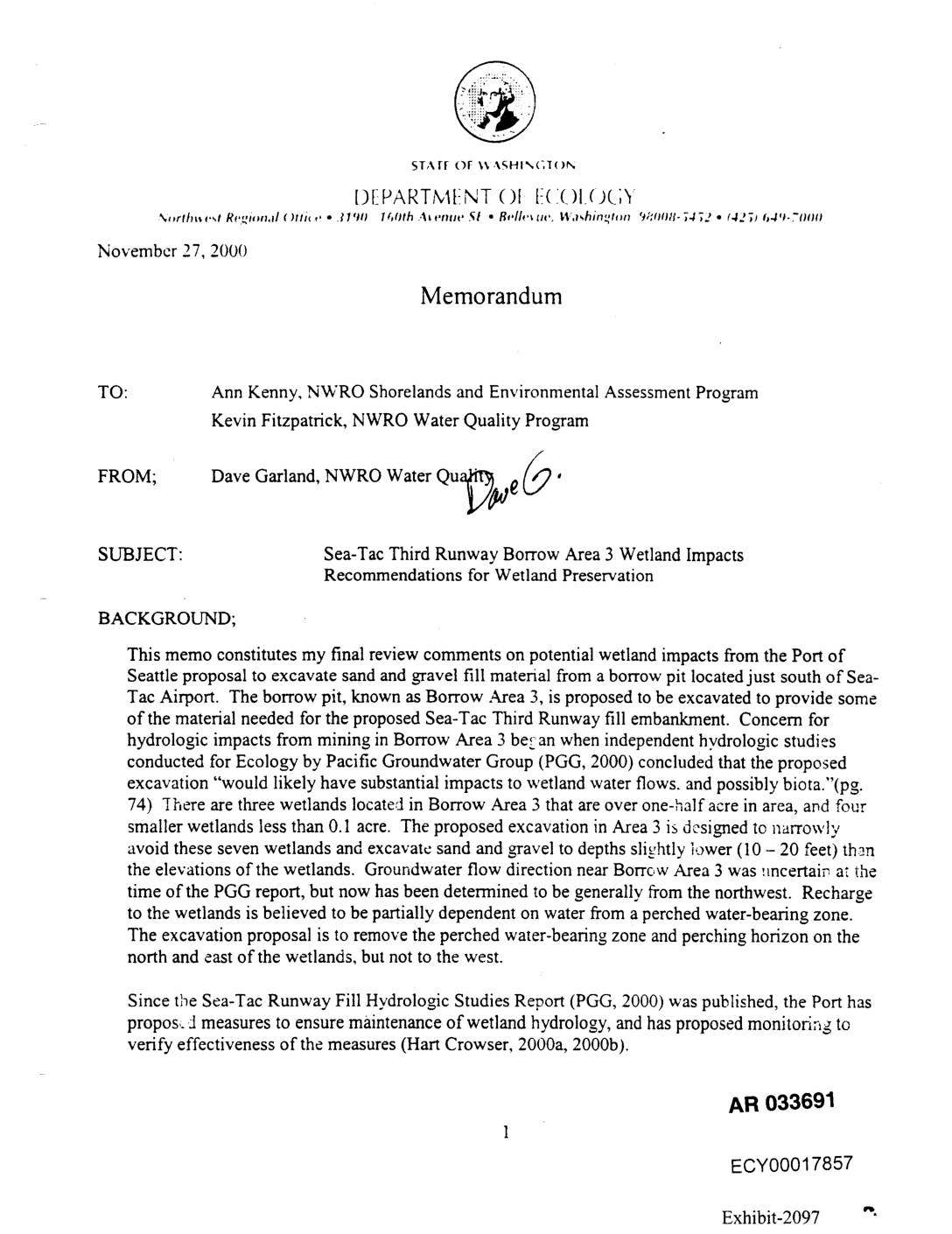
Exhibit 2097: Memorandum — Sea-Tac Third Runway Borrow Area 3 Wetland Impacts Recommendations for Wetland Preservation
Memorandum dated November 27, 2000 from Dave Garland, NWRO Water Quality Program, Washington State Department of Ecology, to Ann Kenny (Shorelands and Environmental Assessment Program) and Kevin Fitzpatrick (Water Quality Program). Subject is wetland hydrology impacts from Port Of Seattle’s proposed excavation of Borrow Area 3 sand and gravel fill for the Sea-Tac Third Runway -
 2000-11-14
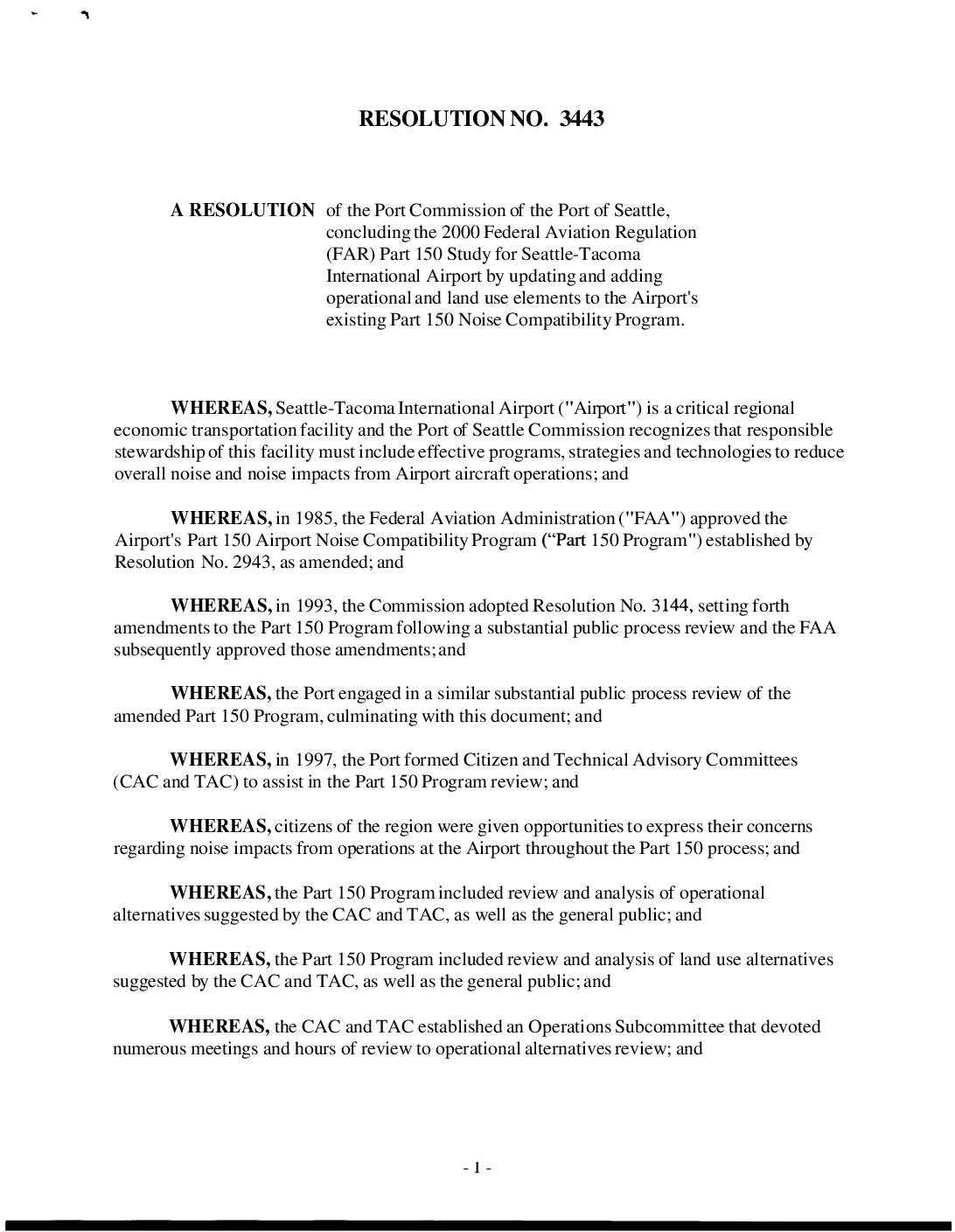
Resolution No. 3443: Concluding the 2000 FAR Part 150 Study for Seattle-Tacoma International Airport
Resolution No. 3443 is a Port of Seattle Commission decision that updates the Seattle-Tacoma International Airport's Noise Compatibility Program following a multi-year public review process. It adopts a range of measures to reduce aircraft noise impacts on surrounding communities, including restrictions on nighttime engine maintenance run-ups, exploration of a Ground Run-up Enclosure, noise barriers, and preferential nighttime runway use. The resolution also directs Port staff to submit these changes to the FAA for approval and to begin implementation once approved. -
 2000-11-13
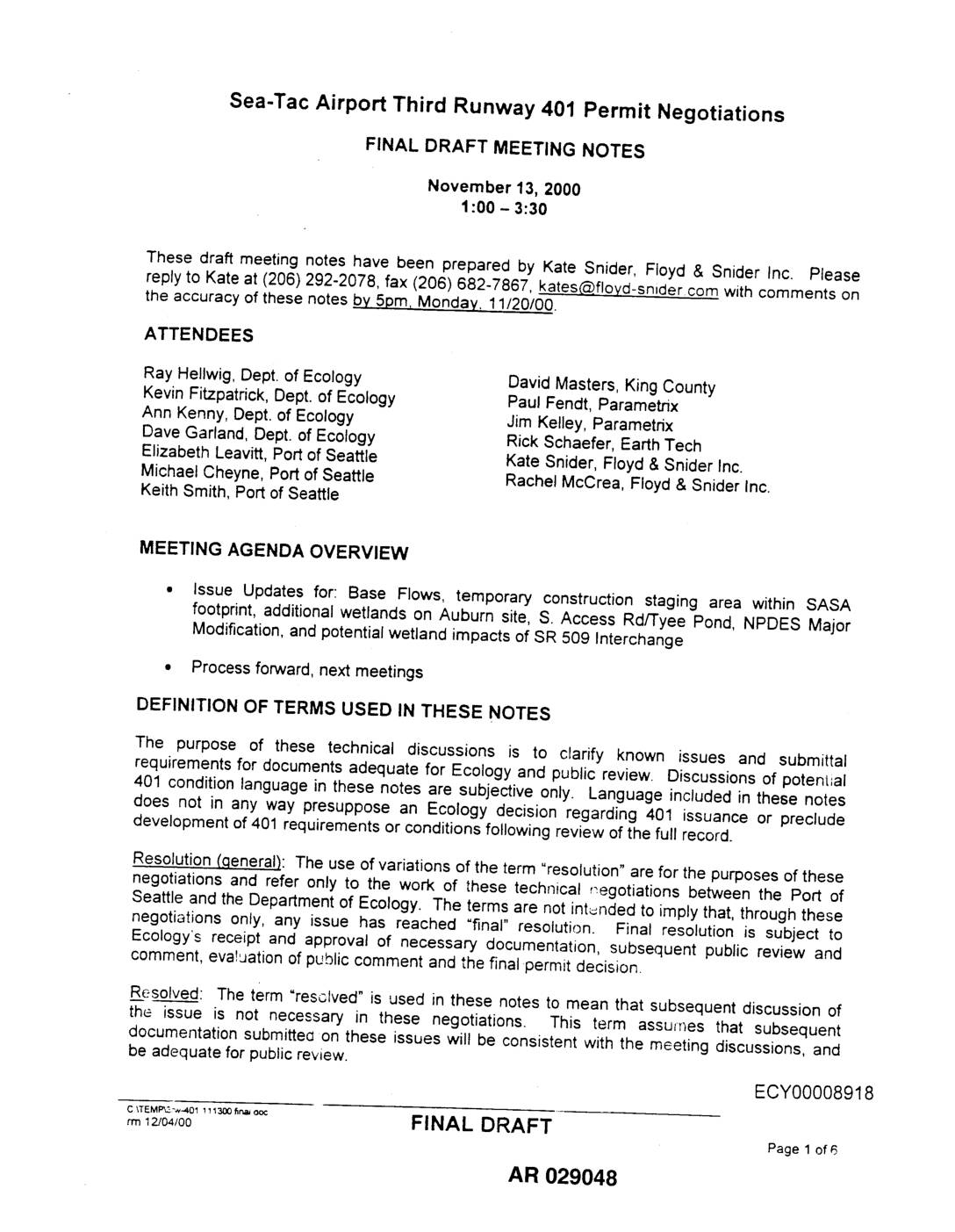
EXH AR029048: Sea-Tac Airport Third Runway 401 Permit Negotiations Final Draft Meeting Notes, November 13, 2000
Final draft meeting notes prepared by Kate Snider of Floyd & Snider Inc. for Sea-Tac Airport Third Runway 401 Permit Negotiations meeting held November 13, 2000, 1:00–3:30 PM. Attendees include representatives from Washington State Department of Ecology (Ray Hellwig, Kevin Fitzpatrick, Ann Kenny, Dave Garland), Port Of Seattle (Elizabeth Leavitt, Michael Cheyne, Keith Smith), King -
 2000-11-13
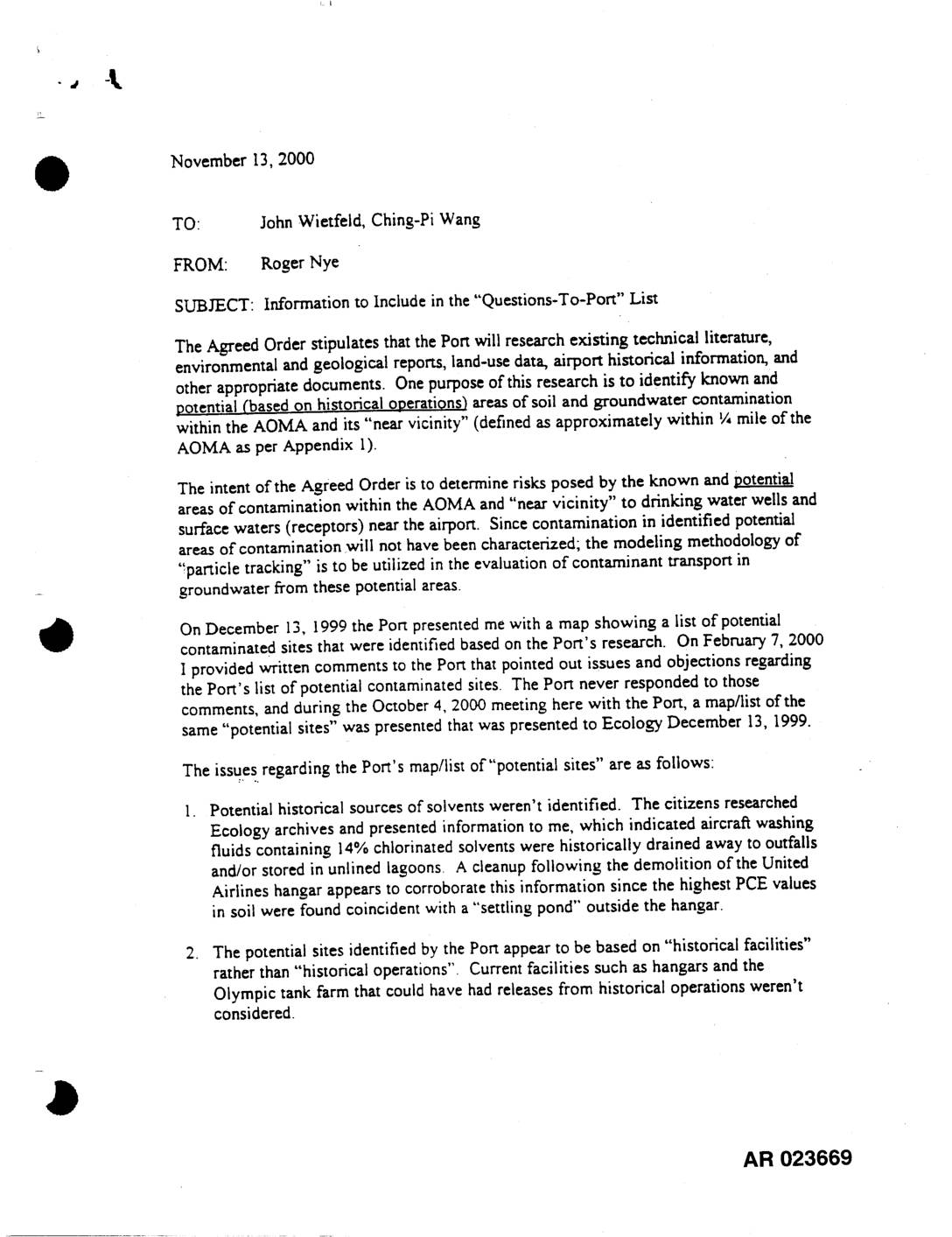
EXH AR023669: Memo to Wietfeld & Wang — Info for Questions-To-Port List
A November 2000 memo from Washington State Department of Ecology's Roger Nye raises concerns that the Port of Seattle failed to adequately identify potential soil and groundwater contamination sites at Sea-Tac Airport, as required by an Agreed Order. Nye outlines four key deficiencies, including the Port's failure to account for historical use of chlorinated solvents in aircraft washing, overlooked fueling facilities, and incomplete identification of contamination sources based on historical operations rather than just historical facilities. The memo calls for a thorough, honest effort to identify all potential contamination areas that could pose risks to nearby drinking water wells and surface waters.