TagPollution Control Hearings Board(1531)
-
 2001-04-17
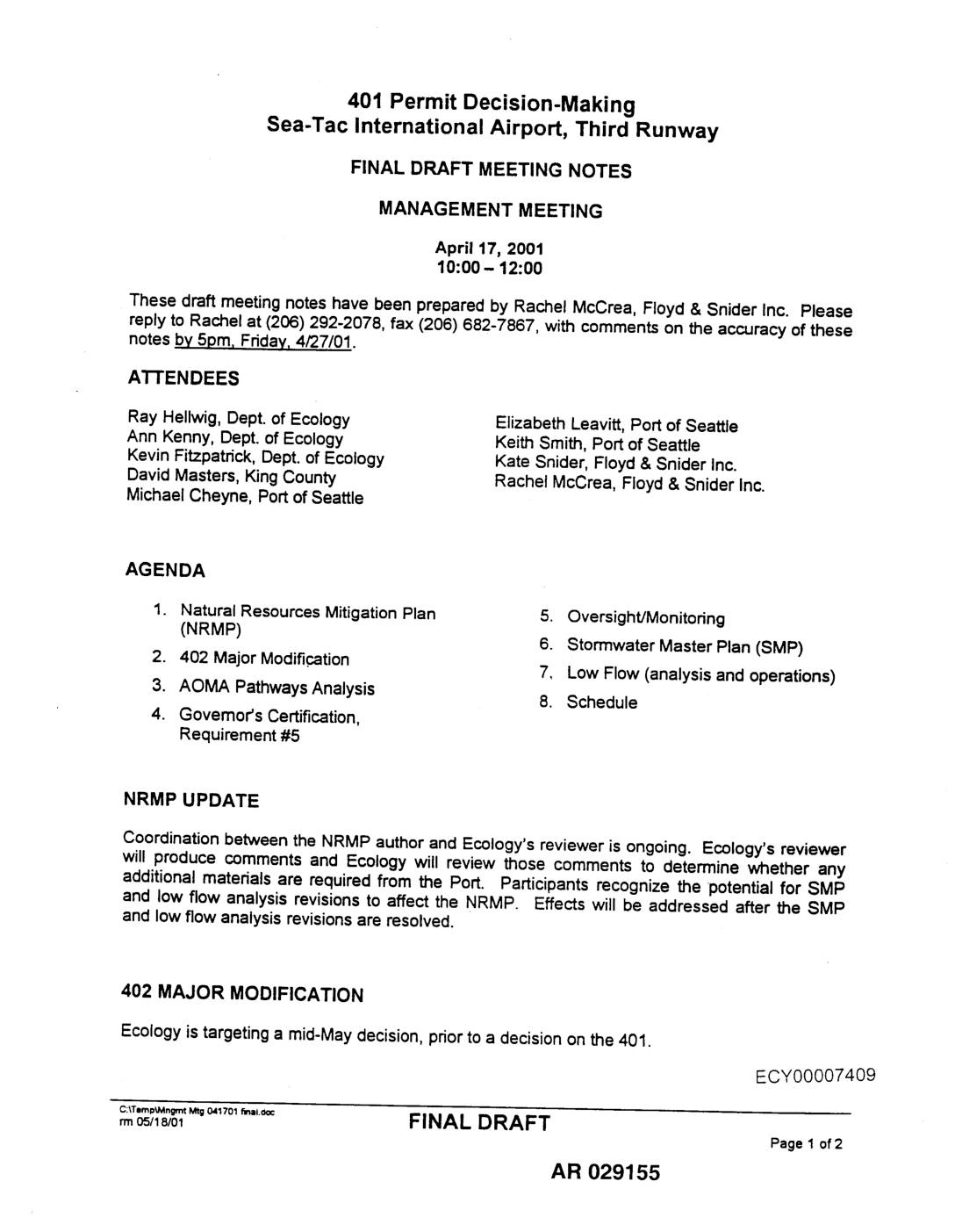
EXH AR029155: 401 Permit Decision-Making, Sea-Tac Airport Third Runway — Management Meeting Final Draft Notes, April 17, 2001
Final draft meeting notes from April 17, 2001 management meeting on 401 Permit Decision-Making for Sea-Tac International Airport Third Runway, prepared by Rachel McCrea of Floyd & Snider Inc. Attendees include Ray Hellwig, Ann Kenny, Kevin Fitzpatrick (Dept. of Ecology), David Masters (King County), Michael Cheyne, Elizabeth Leavitt, Keith Smith (Port Of Seattle), Kate Snider -
 2001-04-16
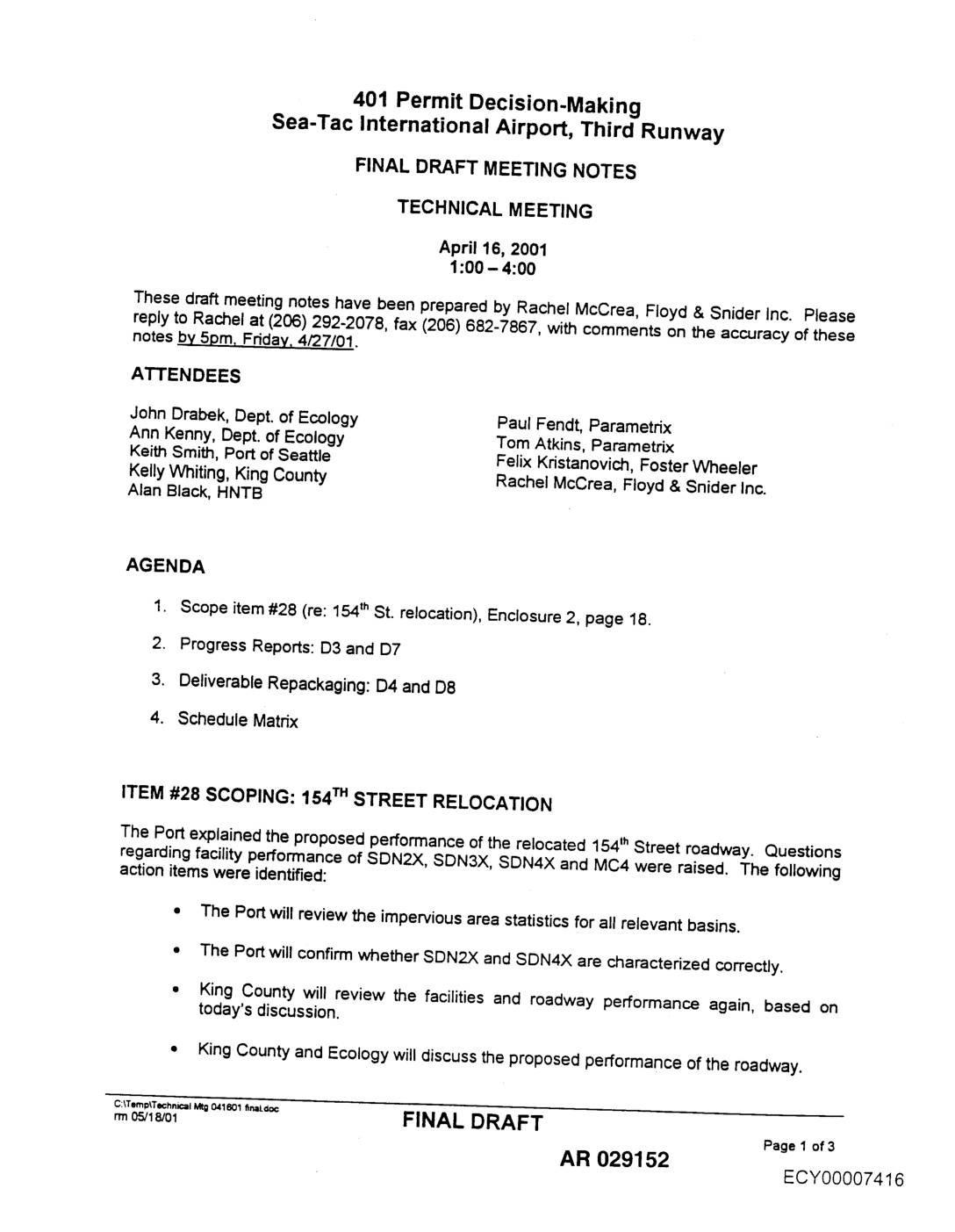
EXH AR029152: 401 Permit Decision-Making, Sea-Tac Airport Third Runway — Technical Meeting Minutes, April 16, 2001
Final draft meeting notes from April 16, 2001 technical meeting on 401 Permit Decision-Making for Sea-Tac Airport Third Runway, prepared by Rachel McCrea of Floyd & Snider Inc. Attendees included John Drabek and Ann Kenny (Dept. of Ecology), Keith Smith (Port of Seattle), Kelly Whiting (King County), Alan Black (HNTB), Paul Fendt and Tom Atkins -
 2001-04-11
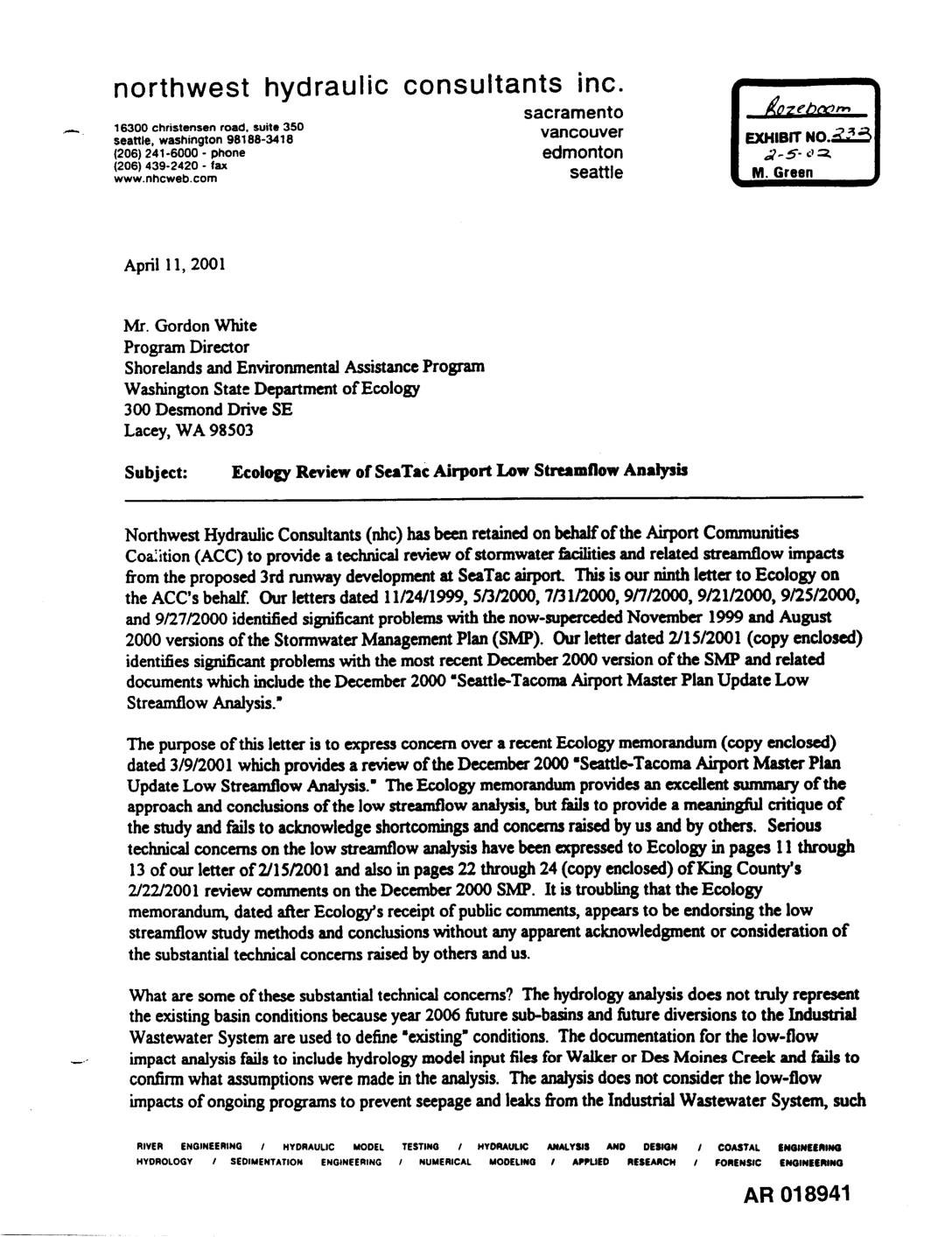
Exhibit 233: NHC Letter to Ecology — Review of Sea-Tac Airport Low Streamflow Analysis
In an April 2001 letter to the Washington State Department of Ecology, Northwest Hydraulic Consultants raised serious concerns about the adequacy of a low streamflow analysis conducted for the proposed third runway expansion at Seattle-Tacoma (Sea-Tac) Airport. The firm argued that Ecology's March 2001 review memo effectively endorsed the study's methods and conclusions without addressing significant technical flaws, including the use of future rather than existing basin conditions and the failure to account for impacts from gravel mining, lagoon lining programs, and embankment seepage. The consultants, representing the Airport Communities Coalition, requested that Ecology revisit its review, consider all submitted technical comments, and require the airport's applicant to formally respond to outstanding concerns before any regulatory certification was granted. -
 2001-04-11
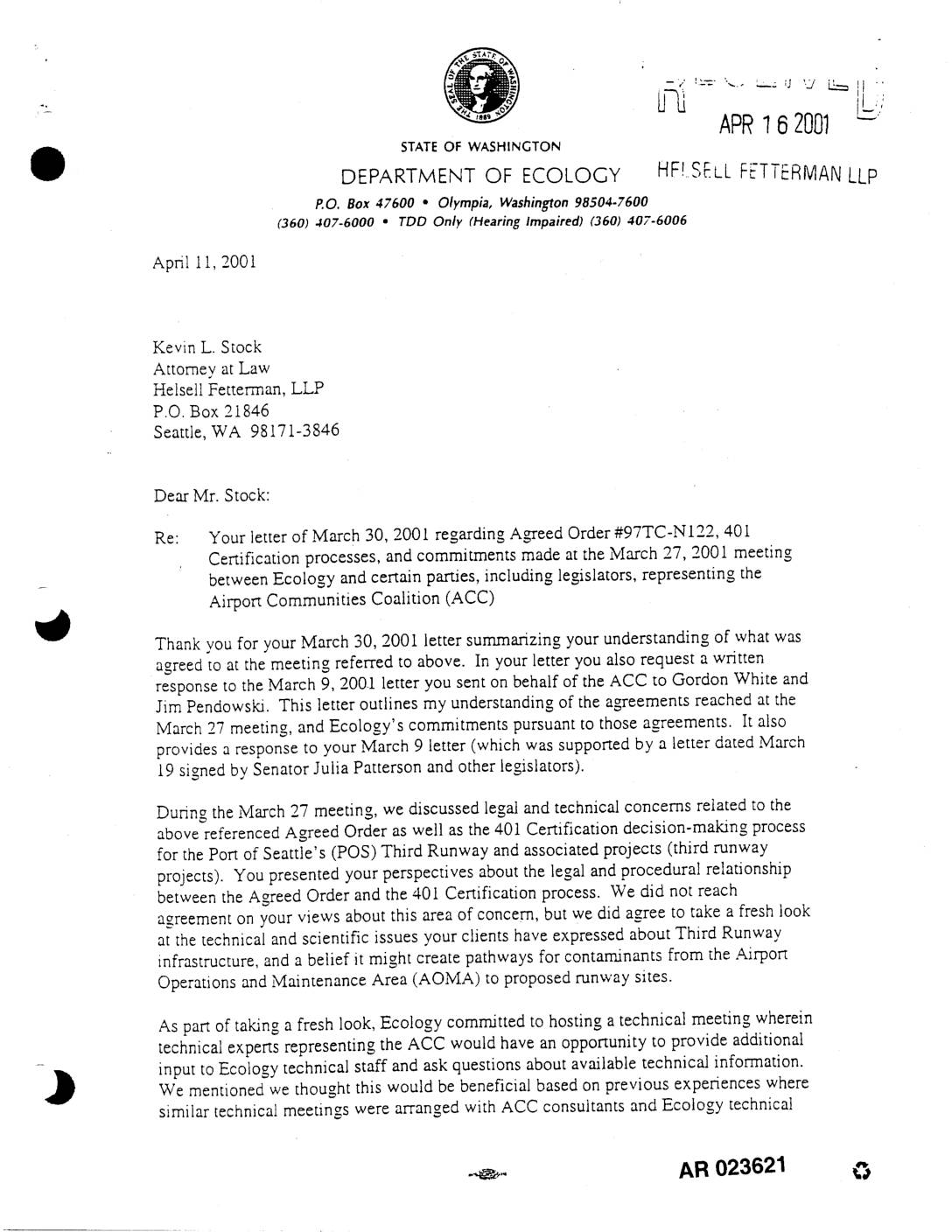
EXH AR023621: Ecology Letter to Kevin Stock re Agreed Order #97TC-N122 401 Certification Third Runway
In this April 11, 2001 letter, Washington State Department of Ecology Director Tom Fitzsimmons responds to attorney Kevin Stock regarding concerns raised by the Airport Communities Coalition (ACC) about the Port of Seattle's proposed Third Runway. Ecology agrees to host a technical meeting with ACC experts to examine whether Third Runway infrastructure could create pathways for contaminants from the Airport Operations and Maintenance Area (AOMA) to proposed runway sites, but declines to halt the 401 water quality certification process pending completion of a separate groundwater study. Ecology assures the ACC that it will not approve or deny the Third Runway projects until a 'pathway' analysis addressing contamination concerns is completed. -
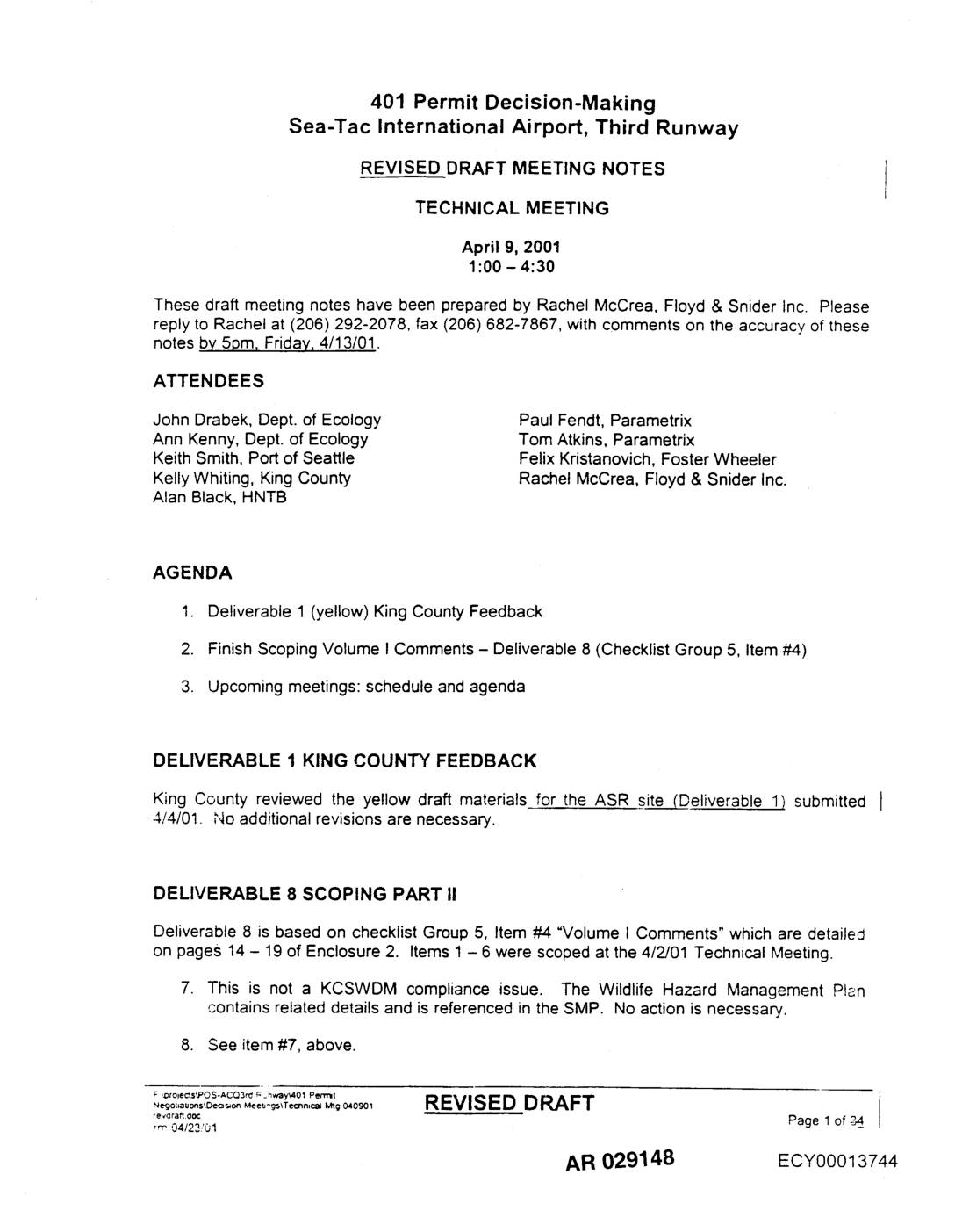 2001-04-09
EXH AR029148: 401 Permit Decision-Making Technical Meeting — Sea-Tac Airport Third Runway, April 9, 2001
Revised draft meeting notes from April 9, 2001 technical meeting on 401 Permit Decision-Making for Sea-Tac International Airport Third Runway, prepared by Rachel McCrea of Floyd & Snider Inc. Attendees included John Drabek and Ann Kenny (Dept. of Ecology), Keith Smith (Port of Seattle), Kelly Whiting (King County), Alan Black (HNTB), Paul Fendt and Tom -
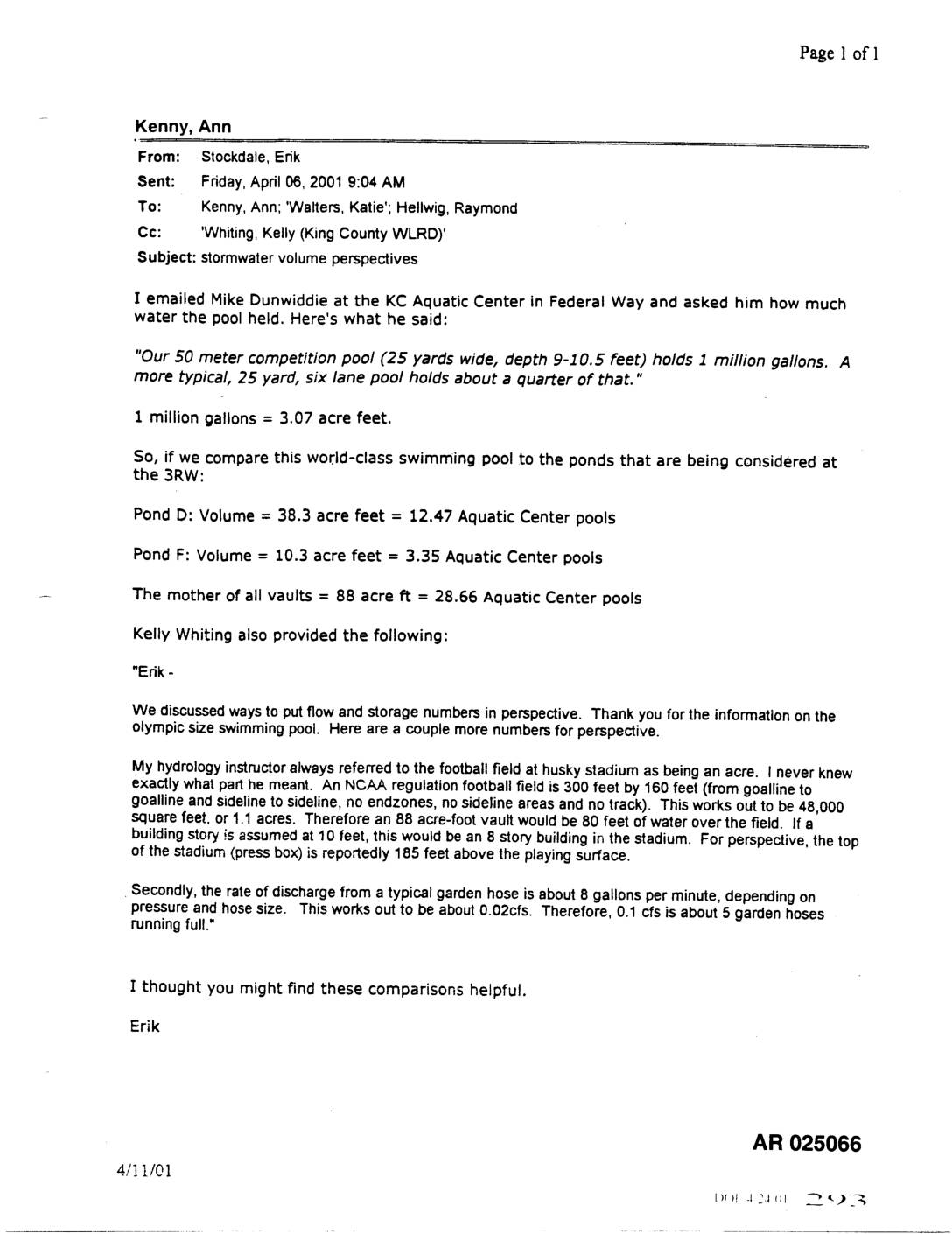 2001-04-06
EXH AR025066: Email Stormwater Volume Perspectives Third Runway West Ponds
A 2001 internal email from King County staff puts stormwater storage volumes for the Third Runway project (3RW) into everyday perspective. It compares proposed retention ponds and vaults to familiar landmarks: Pond D would hold the equivalent of over 12 Olympic-size swimming pools, and the largest vault considered (88 acre-feet) would cover a football field with 80 feet of water—roughly an 8-story building. The email also notes that 0.1 cubic feet per second of water flow is equivalent to about five garden hoses running at full pressure. -
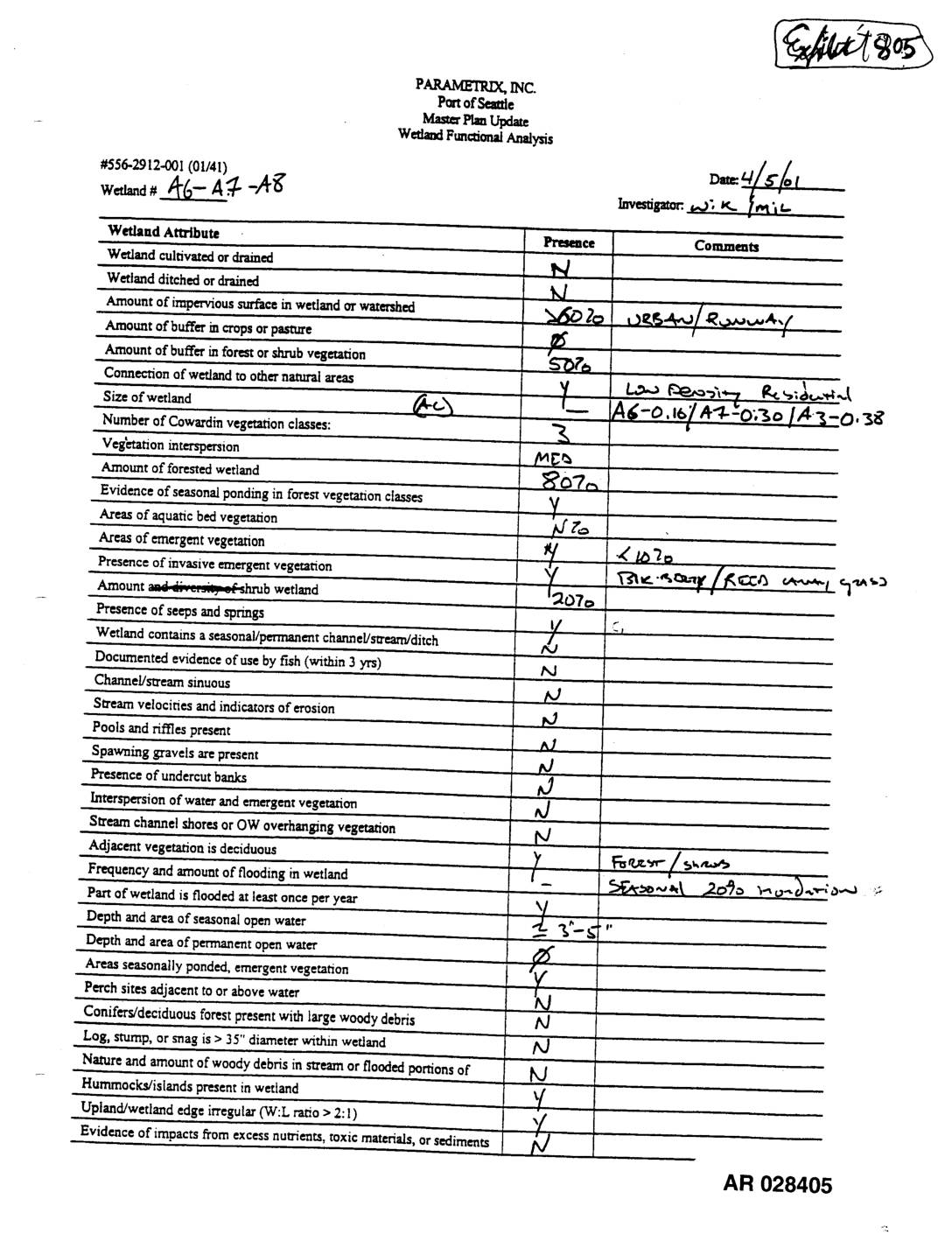 2001-04-05
EXH AR028405: Port Of Seattle Master Plan Update — Wetland Functional Analysis, Wetlands A6-A7-A8, A12-A13-A18
Parametrix, Inc. wetland functional analysis forms prepared for the Port Of Seattle Master Plan Update, documenting wetland attributes for wetlands A6-A7-A8 and A12-A13-A18, dated 4/5/01, investigator W.K./Mil. Records presence/absence of wetland attributes including vegetation classes (Cowardin), forested wetland coverage (80%, 30%), impervious surface (>60% urban/runway), buffer conditions, seasonal ponding, emergent vegetation, seeps and springs, flooding -
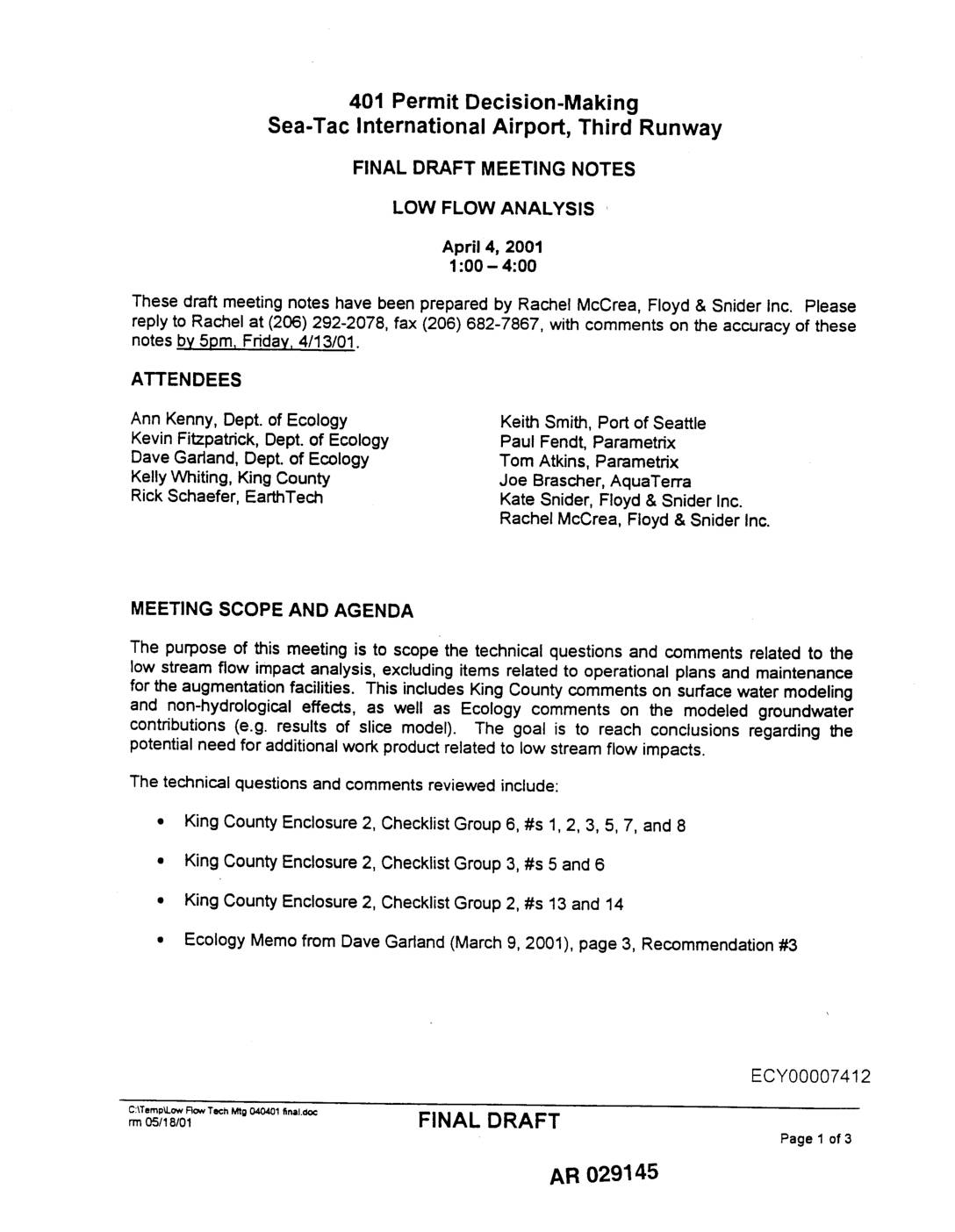 2001-04-04
EXH AR029145: 401 Permit Decision-Making, Sea-Tac Airport Third Runway — Final Draft Meeting Notes, Low Flow Analysis
Final draft meeting notes prepared by Rachel McCrea of Floyd & Snider Inc. from a April 4, 2001 technical meeting on low streamflow impact analysis for the Sea-Tac Airport Third Runway 401 Permit Decision-Making process. Attendees included representatives from Washington Dept. of Ecology (Ann Kenny, Kevin Fitzpatrick, Dave Garland), King County (Kelly Whiting), EarthTech (Rick -
 2001-04-01
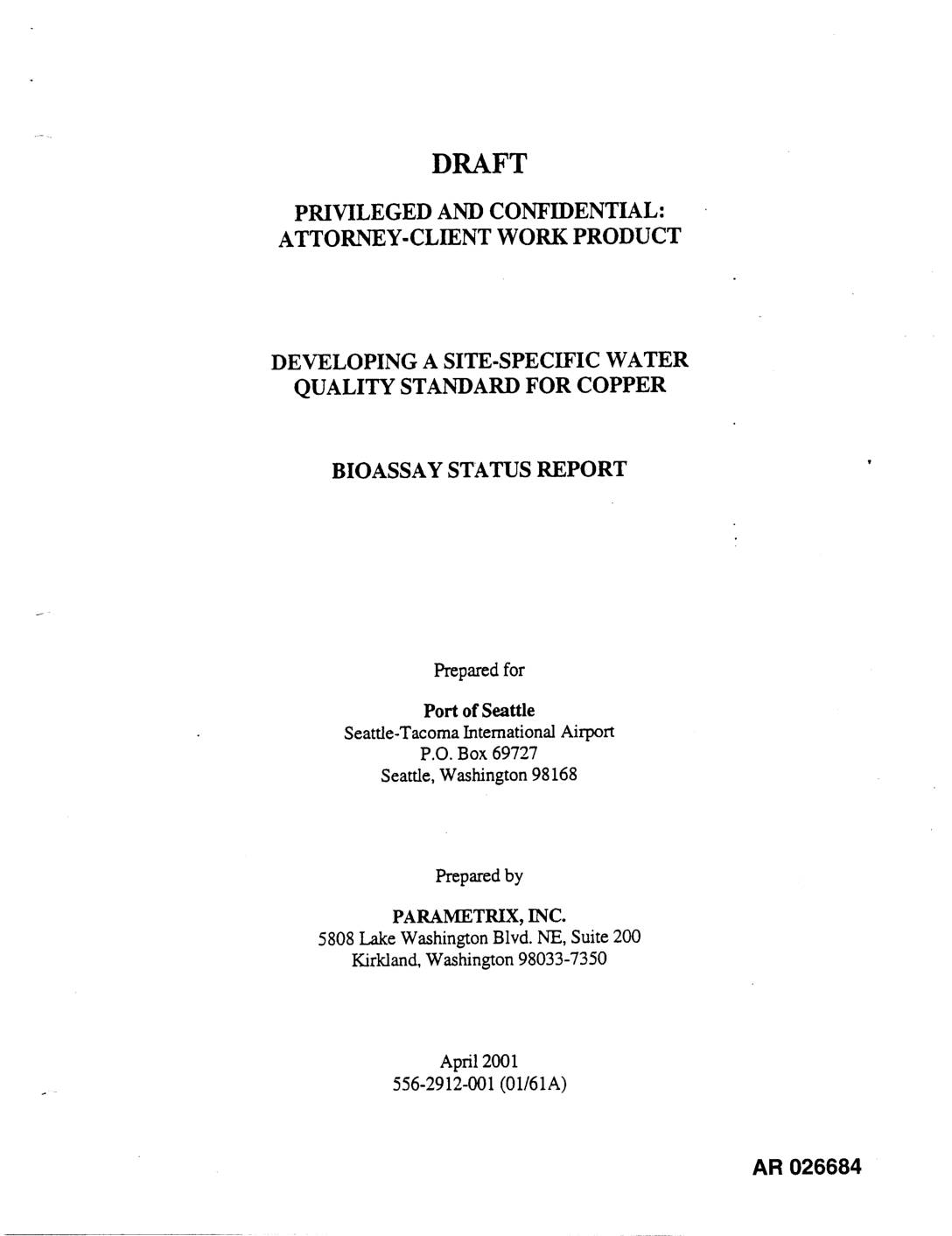
EXH AR026684: Site-Specific Water Quality Standard Copper Bioassay Status RP
This 2001 draft report by Parametrix, Inc. describes a water quality study conducted for the Port of Seattle to assess the feasibility of meeting state water quality standards following construction of a third runway at Seattle-Tacoma International Airport. The study focused on developing a site-specific water-effect ratio (WER) for copper in Miller, Walker, and Des Moines Creeks by conducting toxicity bioassays on stormwater samples collected during storm events. The report summarizes results from initial screening and range-finding phases, with the final site-specific water quality standard still pending completion at the time of publication. -
 2001-03-30
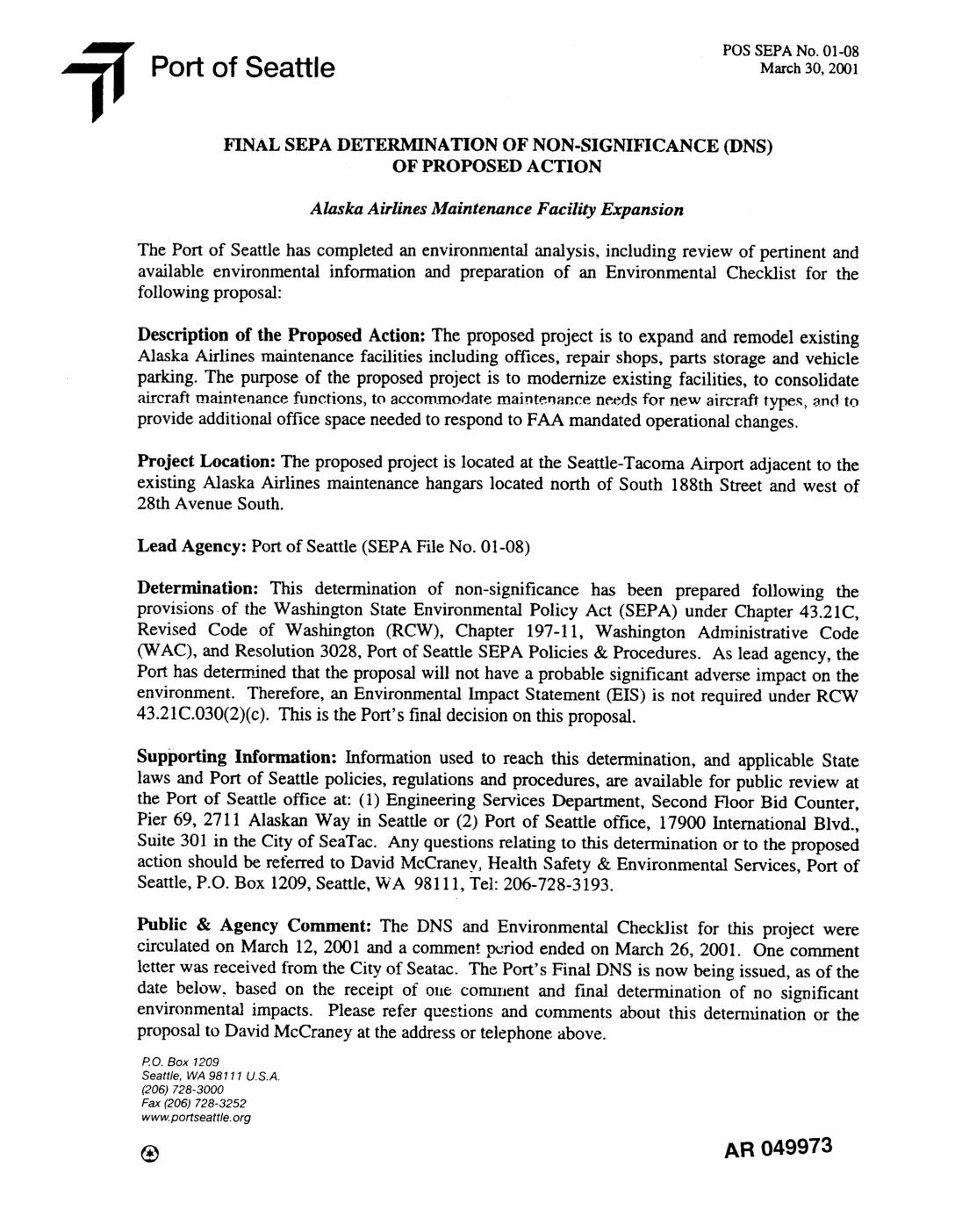
EXH AR049973: Final SEPA Determination of Non-Significance (DNS) — Alaska Airlines Maintenance Facility Expansion
Port of Seattle Final SEPA Determination of Non-Significance (DNS), POS SEPA No. 01-08, dated March 30, 2001, for the Alaska Airlines Maintenance Facility Expansion at Seattle-Tacoma Airport, north of South 188th Street and west of 28th Avenue South. The proposed project expands and remodels existing Alaska Airlines maintenance facilities including offices, repair shops, parts storage,