TagPCHB(607)
-
 2000-04-19
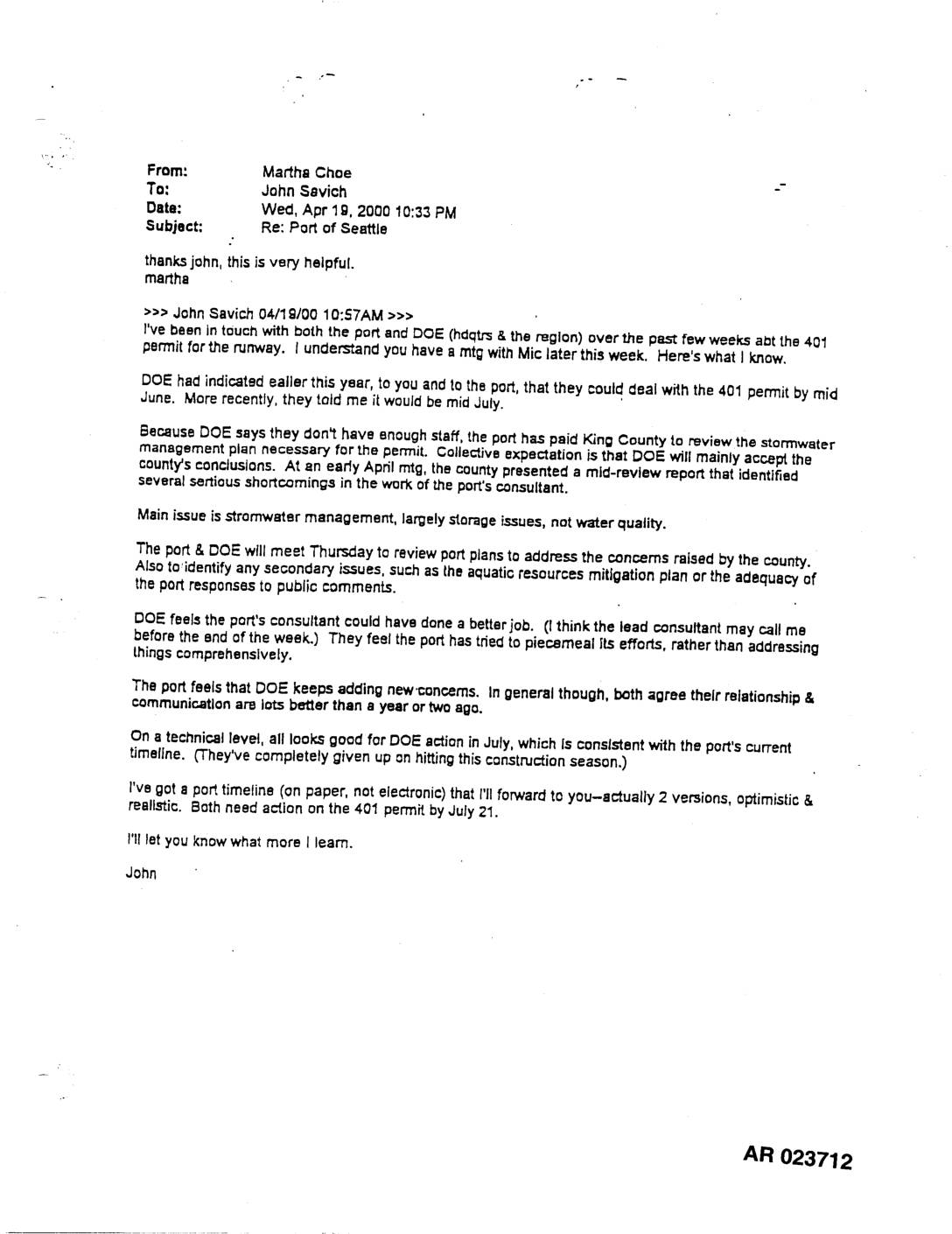
EXH AR023712: Email Exchange 401 Permit Status STIA Third Runway
A April 2000 email exchange between EPA staff members John Savich and Martha Choe provides an update on the status of a Clean Water Act Section 401 water quality permit for a Port of Seattle runway project. The main sticking point is stormwater storage management, with the Washington State Department of Ecology (DOE) targeting a mid-July decision after King County completed a review that identified serious shortcomings in the port's consultant work. Both the optimistic and realistic port timelines require DOE action on the 401 permit by July 21, meaning the port had already abandoned any hope of beginning construction that season. -
 2000-02-28
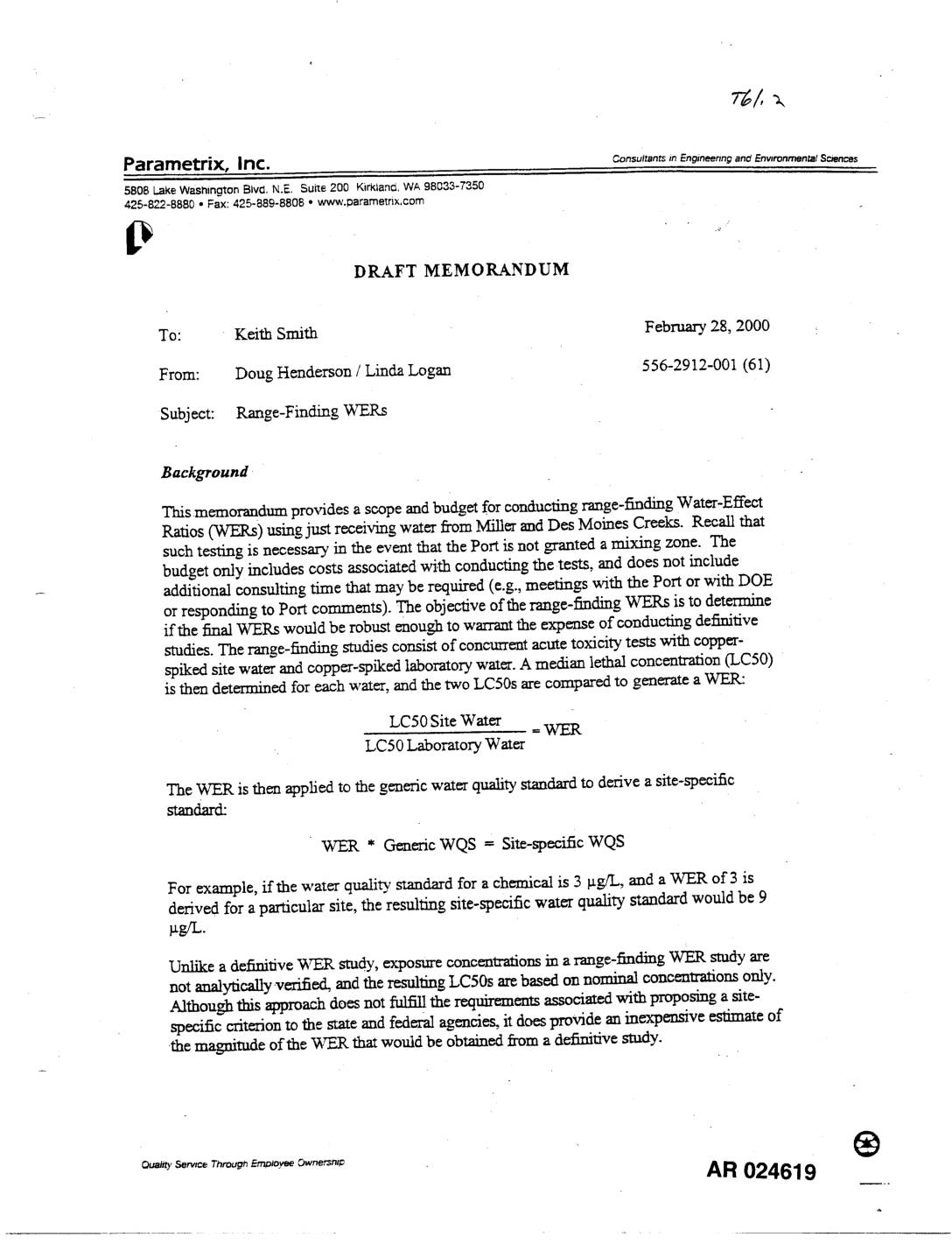
EXH AR024619: Draft Memo Range-Finding Water-Effect Ratios Miller & Des Moines Creeks
A February 2000 draft memorandum from Parametrix, Inc. outlines a scope and budget for range-finding Water-Effect Ratio (WER) studies using receiving water from Miller and Des Moines Creeks, intended to help determine whether copper discharge standards at a Port facility could be adjusted through site-specific water quality criteria. The studies involve acute toxicity tests comparing copper-spiked site water to copper-spiked laboratory water, with estimated costs ranging from $2,110 for one site to $2,650 for two sites. Results from earlier 1999 range-finding tests suggested WERs high enough to potentially justify more definitive studies, but new tests without mixing zone assumptions were recommended to better assess achievable permit limits. -
 2000-02-28
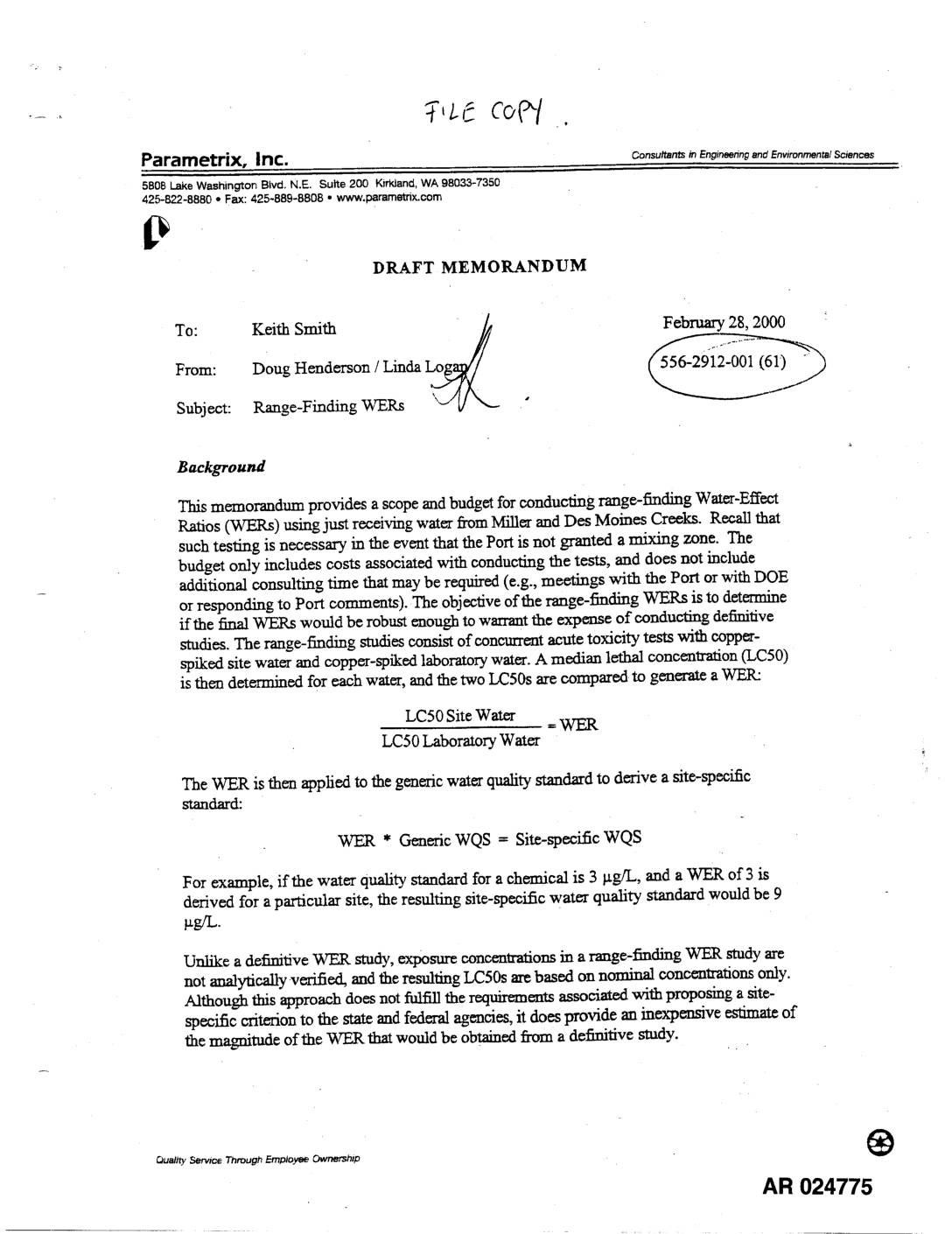
EXH AR024775: Draft Memo Range-Finding WERs Miller and Des Moines Creeks
A February 2000 draft memorandum from Parametrix, Inc. outlines a scope and budget for range-finding Water-Effect Ratio (WER) studies using receiving water from Miller and Des Moines Creeks, conducted in connection with stormwater discharge permitting near the Port. The studies involve acute toxicity tests with copper-spiked water to determine whether site-specific water quality standards could be higher than generic state standards, potentially eliminating the need for a mixing zone. Estimated costs range from $2,110 for one creek site to $2,650 for two sites. -
 2000-02-17
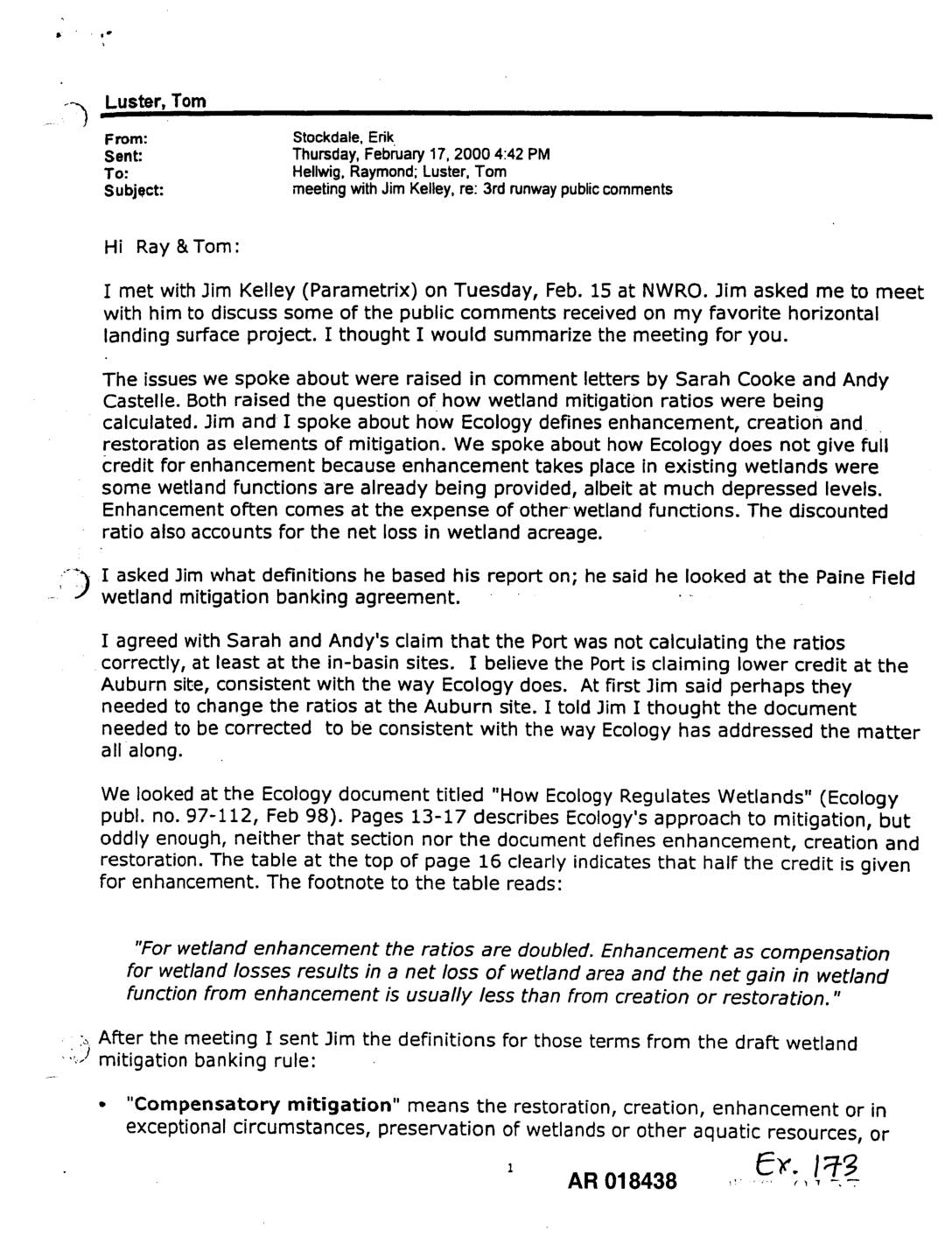
Exhibit 173: Email — Meeting with Jim Kelley (Parametrix) Re Third Runway Public Comments on Wetland Mitigation Ratios
Email from Erik Stockdale (Ecology NWRO) to Raymond Hellwig and Tom Luster, dated February 17, 2000, summarizing a February 15 meeting with Jim Kelley of Parametrix regarding public comments on the Sea-Tac Airport third runway project (AR 018438–018440, Exhibit 173). Issues raised by commenters Sarah Cooke and Andy Castelle concerned incorrect wetland mitigation ratio calculations -
 2000-02-16
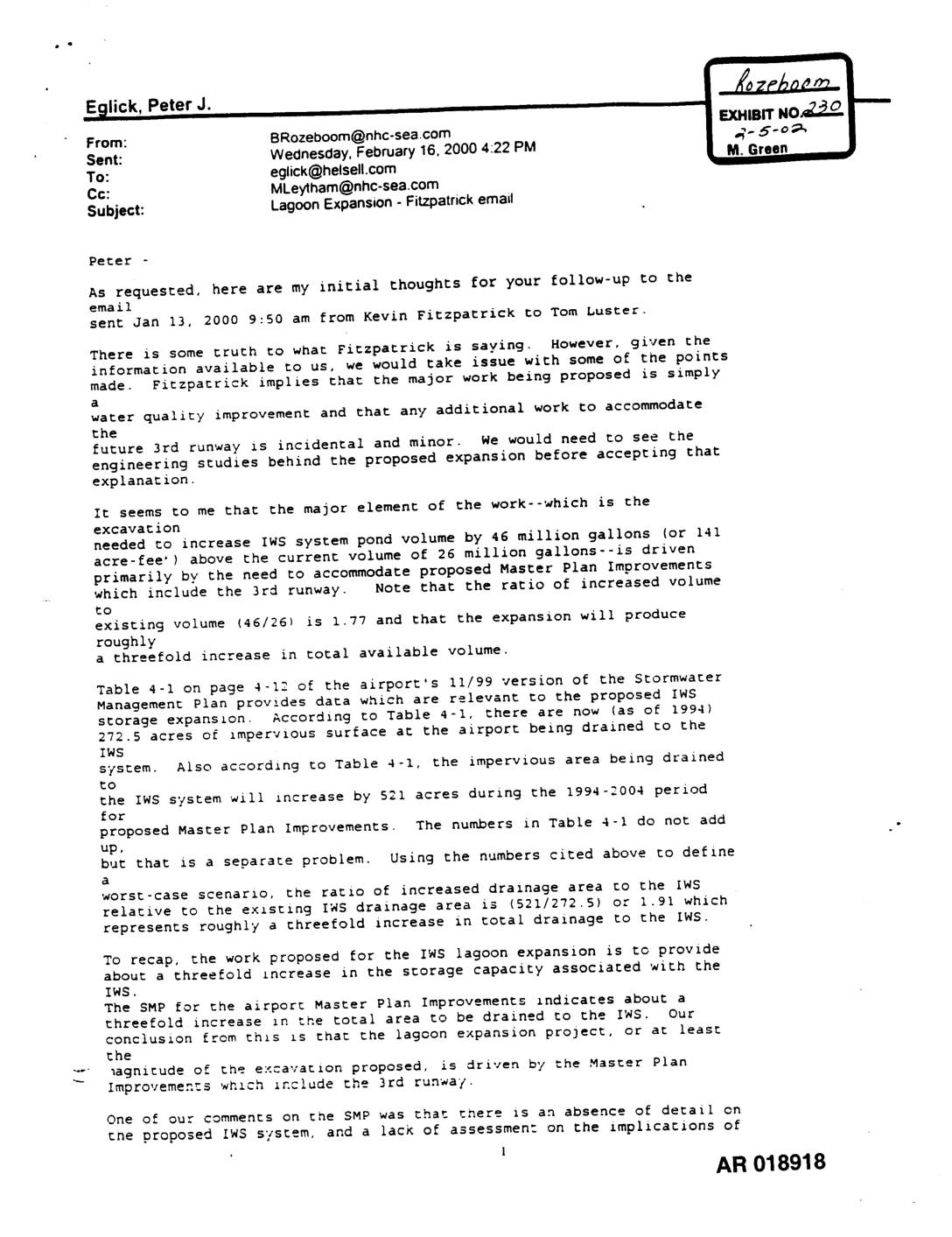
Exhibit 230: Email from Bill Rozeboom (Northwest Hydraulic Consultants) to Peter Eglick Re: IWS Lagoon Expansion and Fitzpatrick Email Analysis
A February 2000 email from hydraulic consultant Bill Rozeboom argues that the proposed expansion of Sea-Tac Airport's Integrated Wetlands System (IWS) lagoon—tripling its storage capacity—is primarily driven by the airport's Master Plan Improvements, including the proposed third runway, rather than being a routine water quality project. Rozeboom notes that the planned increase in impervious drainage area (roughly 521 additional acres) closely mirrors the proposed increase in IWS storage volume, supporting his conclusion that the third runway is the primary driver of the expansion. He also raises concerns that the environmental documents fail to adequately assess the impact of large-scale out-of-basin water transfers on aquifer recharge and stream base flows in the Miller Creek and Des Moines Creek basins. -
 2000-02-14
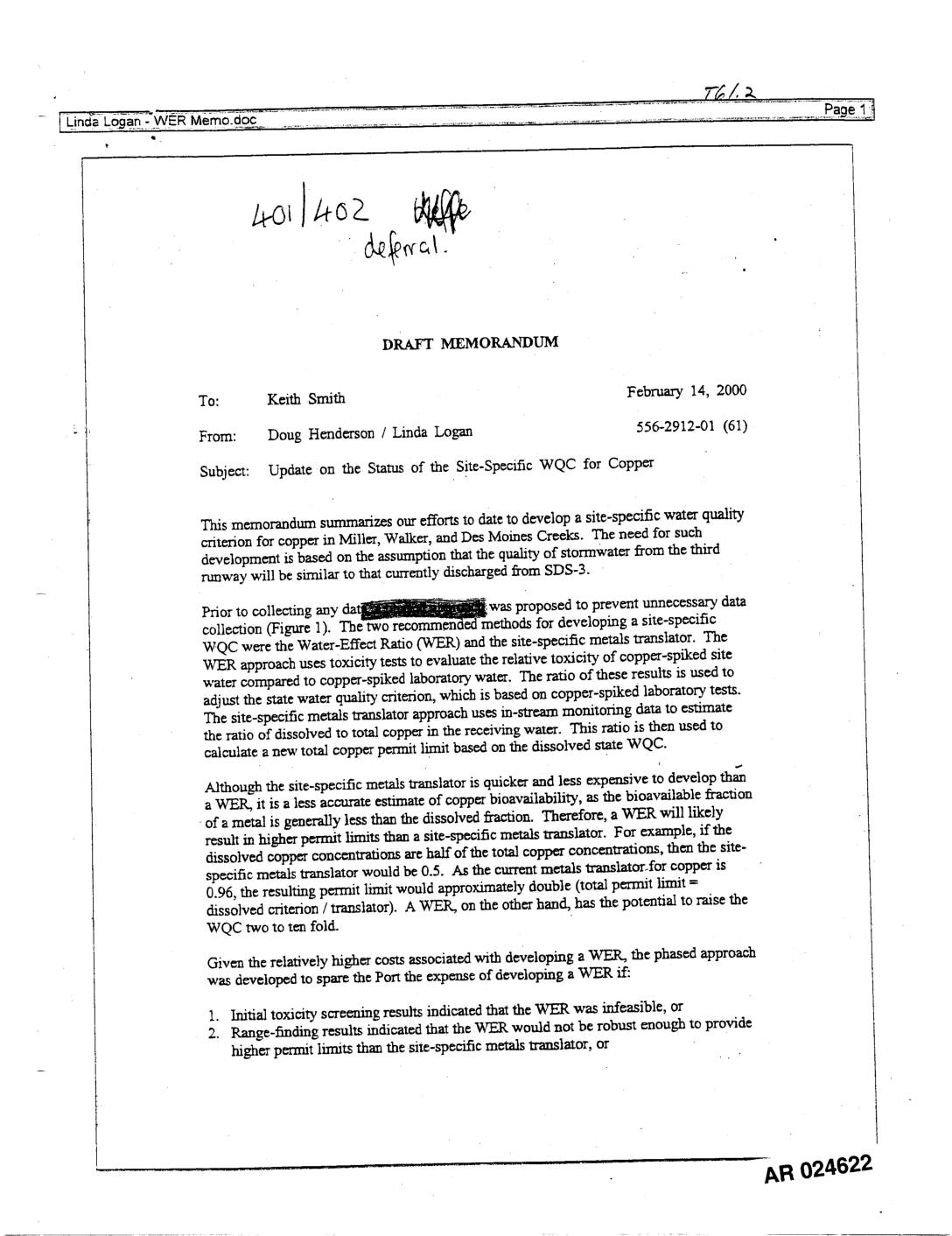
EXH AR024622: Draft Memo — Site-Specific WQC Copper Status Update, Miller, Walker & Des Moines Creeks
A February 2000 internal draft memorandum from environmental consultants to Port of Seattle staff summarizes efforts to develop a site-specific water quality criterion for copper in Miller, Walker, and Des Moines Creeks, in connection with stormwater runoff anticipated from a proposed third runway at Sea-Tac Airport. The memo evaluates two technical approaches—the Water-Effect Ratio (WER) and the site-specific metals translator—for potentially raising copper discharge permit limits, and outlines initial toxicity screening and range-finding study results. It also describes ongoing negotiations with the Washington State Department of Ecology regarding unresolved issues such as mixing zones, AKART requirements, and critical sampling conditions. -
 2000-01-01
EXH AR020493: VS2DI Graphical Software — Fluid Flow & Solute/Energy Transport, Variably Saturated Porous Media
VS2DI is a graphical software package developed by the U.S. Geological Survey for simulating how fluids flow and how solutes or energy move through variably saturated porous media such as soil and rock. The software includes a preprocessor for entering simulation data, a postprocessor for visualizing results, and a numerical model engine. It was published in 2000 as part of the USGS Water-Resources Investigations Report series. -
 1999-12-13
EXH 331: Letter to WA Dept of Ecology — MTCA Groundwater Study Potential Sites Table, STIA
A December 1999 letter from Port of Seattle Senior Environmental Program Manager Paul W. Agid to the Washington Department of Ecology transmits a 'potential sites' table and map identifying locations at Seattle-Tacoma International Airport where historical operations may have caused soil or groundwater contamination. The document, compiled in compliance with an Agreed Order under Washington's Model Toxics Control Act (MTCA), lists twelve potential sites including former gas stations, fuel tanks, hydrant lines, and maintenance areas. The sites were identified based on past operational activities that had since been discontinued or modified prior to current environmental regulations. -
 1999-12-01
EXH AR026410: Wildlife Hazard Management Airports — Manual Airport Personnel
This 1999 manual, prepared jointly by the Federal Aviation Administration and the U.S. Department of Agriculture, provides airport personnel with guidance on managing the safety risks posed by wildlife at airports. It covers topics including the FAA National Wildlife Strike Database, the roles of various federal agencies, and strategies for reducing bird and animal strikes on aircraft. The manual draws on strike records from 1990–1998 to illustrate the frequency, types, and impacts of wildlife encounters with aircraft. -
 1999-10-29
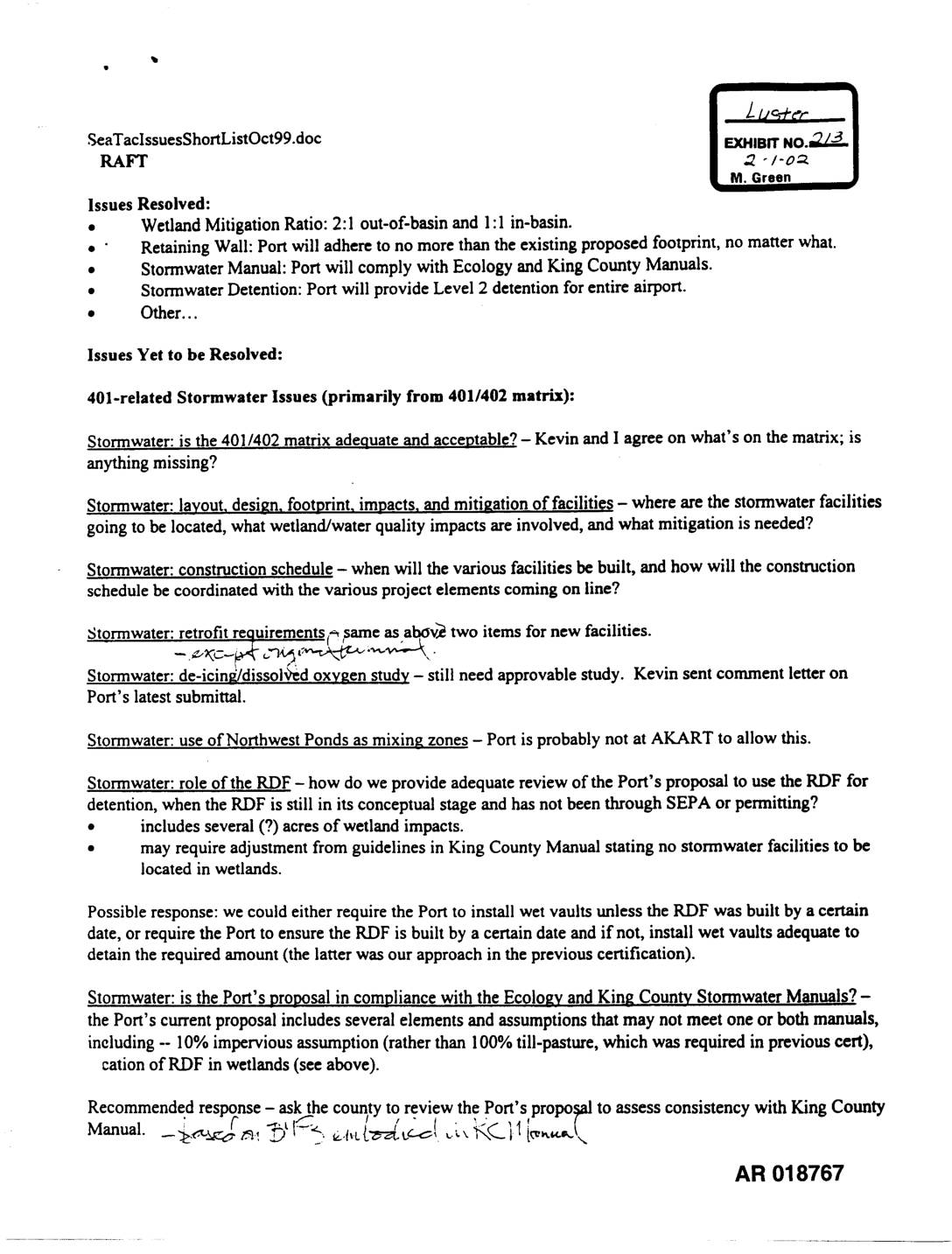
Exhibit 213: DRAFT Sea-Tac Issues Short List – Unresolved 401/402 Stormwater, Water Quality, and Permitting Issues (October 1999)
This October 1999 draft document outlines resolved and unresolved regulatory issues related to a Sea-Tac Airport expansion project, focusing primarily on stormwater management, wetland mitigation, and water quality concerns. Key unresolved issues include compliance with Ecology and King County Stormwater Manuals, the role of a proposed Regional Detention Facility (RDF) in wetlands, de-icing impacts on dissolved oxygen levels, and instream flow reductions in Des Moines Creek. Additional concerns involve NPDES permit compliance, clean fill criteria, legal proceedings before the Pollution Control Hearings Board, and whether a shoreline permit is needed for an Auburn mitigation site.