TagNoise Pollution(31)
-
 2018-02-13
Environmental noise and the cardiovascular system
Research published in the Journal of the American College of Cardiology found that environmental noise from traffic, aircraft, and railways is linked to serious cardiovascular health risks, including high blood pressure, heart attack, heart failure, and stroke. Studies in both humans and animals show that aircraft noise — especially at night — triggers stress hormones and harmful oxidative stress in blood vessels, impairing their ability to function properly. These findings suggest that airport noise exposure is not just a quality-of-life issue but a measurable public health concern with direct effects on heart and vascular health. -
 2015-05-01
Residential Sorting and Environmental Externalities: the Case of Non-linearities and Stigma in Aviation Noise Values
Academic journal article by Sotirios Thanos, Abigail L. Bristow, and Mark R. Wardman, published in the Journal of Regional Science (May 2015), examining residential sorting in response to aviation noise exposure in a housing market. Uses Spatiotemporal Hedonic Pricing (HP) and Stated Choice (SC) methods to quantify nonlinear noise depreciation ranging from 0.40 to 2.38 -
2015-05-01
Residential Sorting and Environmental Externalities: the Case of Non-linearities and Stigma in Aviation Noise Values
Academic journal article by Sotirios Thanos, Abigail L. Bristow, and Mark R. Wardman, published in the Journal of Regional Science (May 2015), examining residential sorting in response to aviation noise exposure in a housing market. Uses Spatiotemporal Hedonic Pricing (HP) and Stated Choice (SC) methods to quantify nonlinear noise depreciation ranging from 0.40 to 2.38 -
 2008-04-01
Monetary value of undisturbed sleep
A Swiss study interviewed 67 patients with obstructive sleep apnea who used CPAP therapy to estimate the monetary value people place on undisturbed sleep. Patients valued a good night's sleep at an average of about 70 Swiss francs per night, and after adjusting for the difference in severity between sleep apnea and traffic noise disturbance, the researchers estimated that noise-free sleep is worth roughly 7 to 24 Swiss francs per person per night. The findings suggest that sleep disrupted by road traffic noise carries a significant monetary cost that should be factored into airport and transportation noise policy decisions. -
 2002-09-01
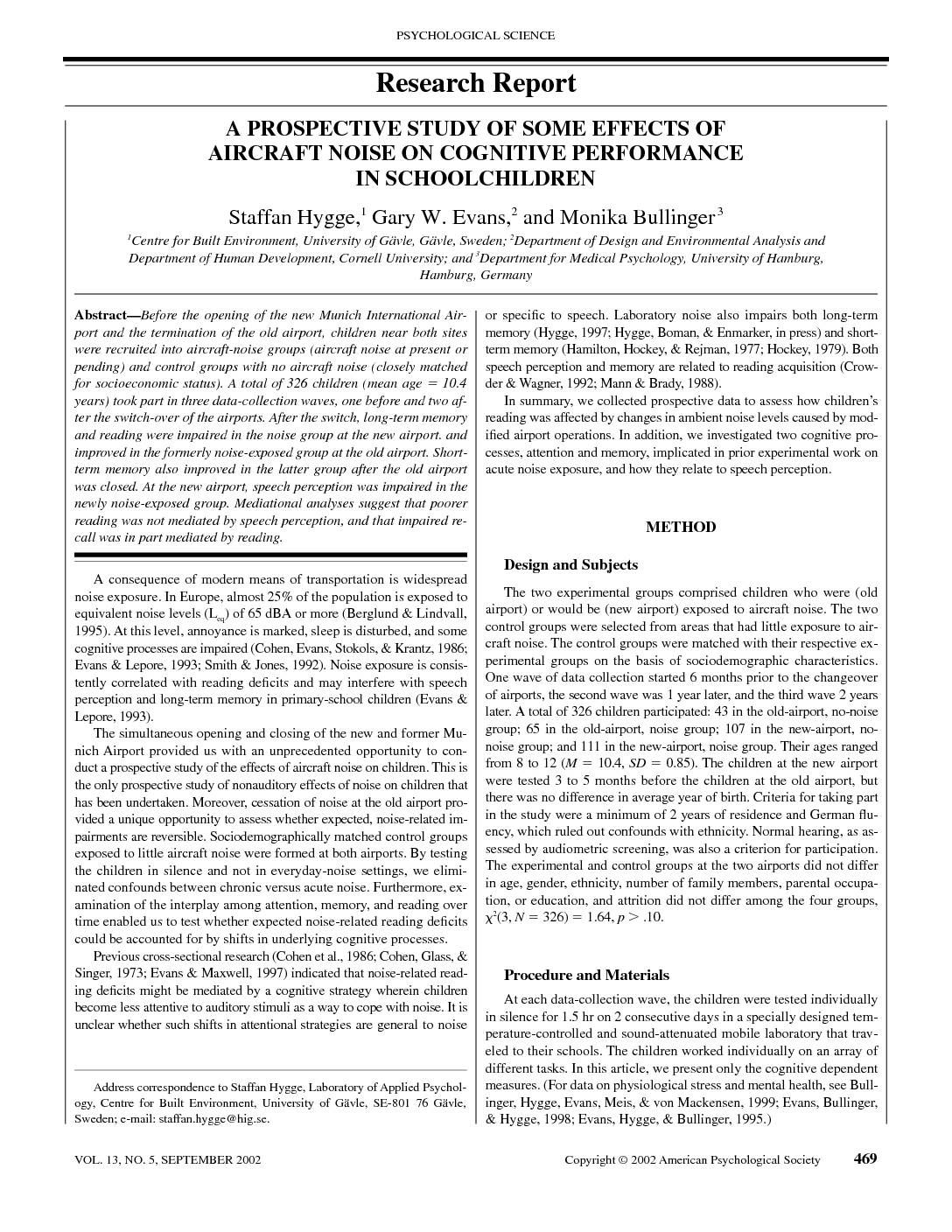
A prospective study of some effects of aircraft noise on cognitive performance in schoolchildren
A study tracking 326 schoolchildren around Munich's old and new airports found that exposure to aircraft noise impaired children's reading and long-term memory, while children who were relieved of noise when the old airport closed showed improvements in those same areas. Researchers tested the children before and after the airports switched operations, carefully matching noise-exposed and non-exposed groups by socioeconomic background. The findings suggest that aircraft noise has measurable, but potentially reversible, effects on key cognitive skills in school-age children. -
 2001-07-01
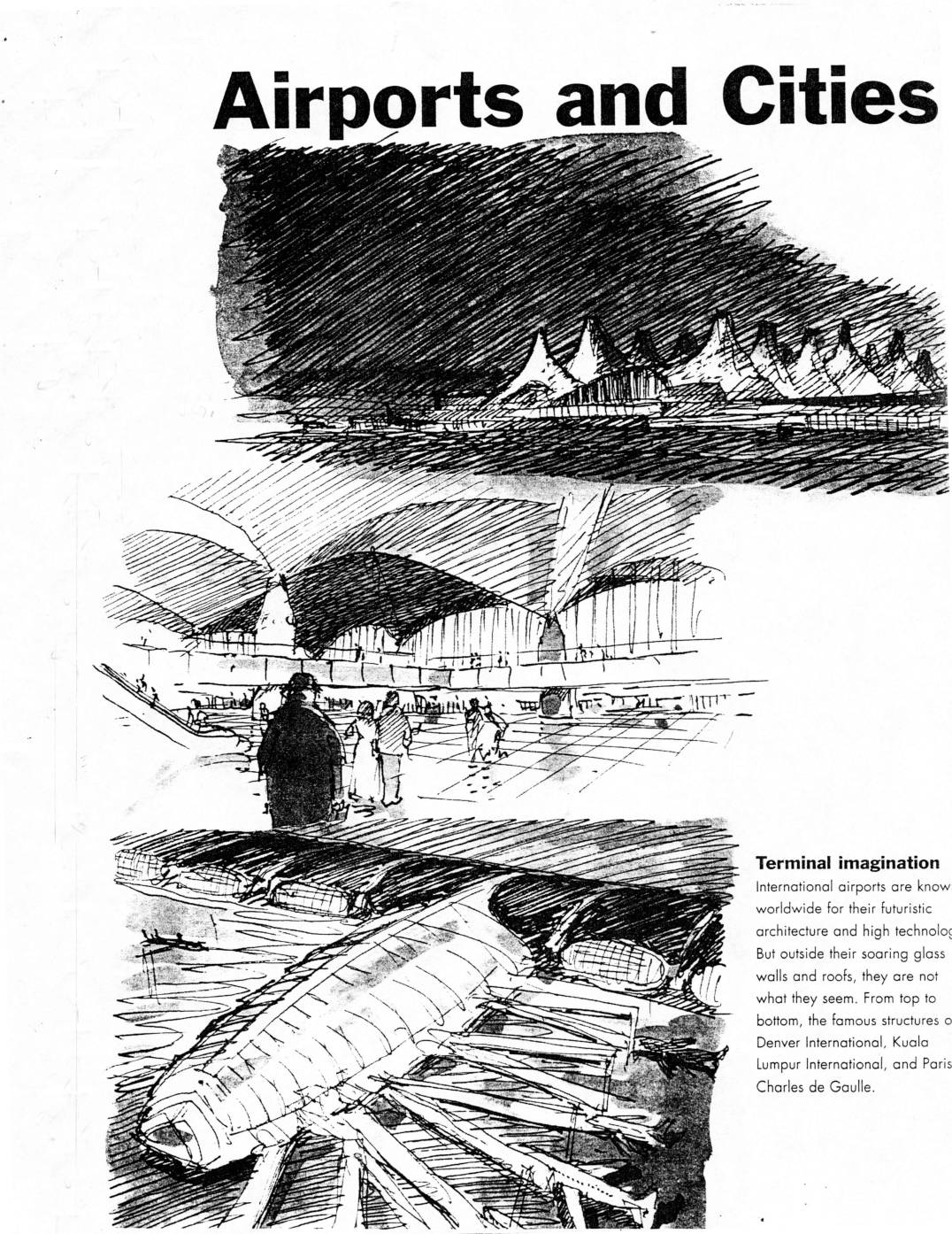
Airports and Cities: Can they coexist?
This 2001 World Watch article by Ed Ayres examines the growing conflict between expanding airports and the cities surrounding them, highlighting the serious health, environmental, and noise impacts on nearby residents. It challenges the conventional mindset of simply building more airport capacity, noting that a 747 takeoff produces as much air pollution in two minutes as 3,000 cars, and that people living near airports face higher rates of illness and psychological harm. The article explores innovative design alternatives, such as inclined runways and energy-recovering landing systems, as more sustainable solutions to meeting rising air travel demand. -
 1997-09-01
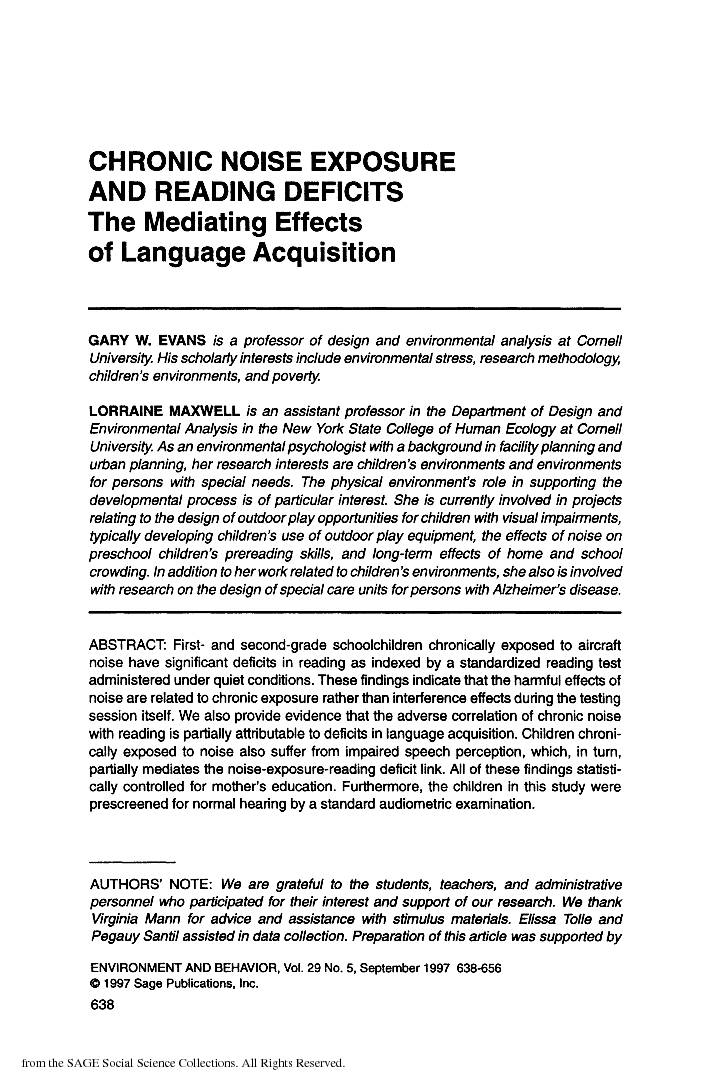
Chronic noise exposure and reading deficits: The mediating effects of language acquisition
A 1997 Cornell University study found that elementary school children chronically exposed to aircraft noise showed significant reading deficits, even when tested under quiet conditions — meaning the harm stems from long-term exposure, not just momentary distraction. The researchers identified impaired language acquisition, particularly speech perception, as a key reason why noise-exposed children fall behind in reading. These findings have direct relevance for communities near busy airports, where sustained noise levels may quietly undermine children's academic development. -
1997-04-28
Kids near airports don’t read as well because they tune out speech, Cornell study finds
Children in schools bombarded by frequent aircraft noise don’t learn to read as well as children in quiet schools, Cornell University researchers have confirmed. And they have discovered one major reason: kids tune out speech in the racket. “We’ve known for a long time that chronic noise is having a devastating effect on the academic -
 1992-06-27
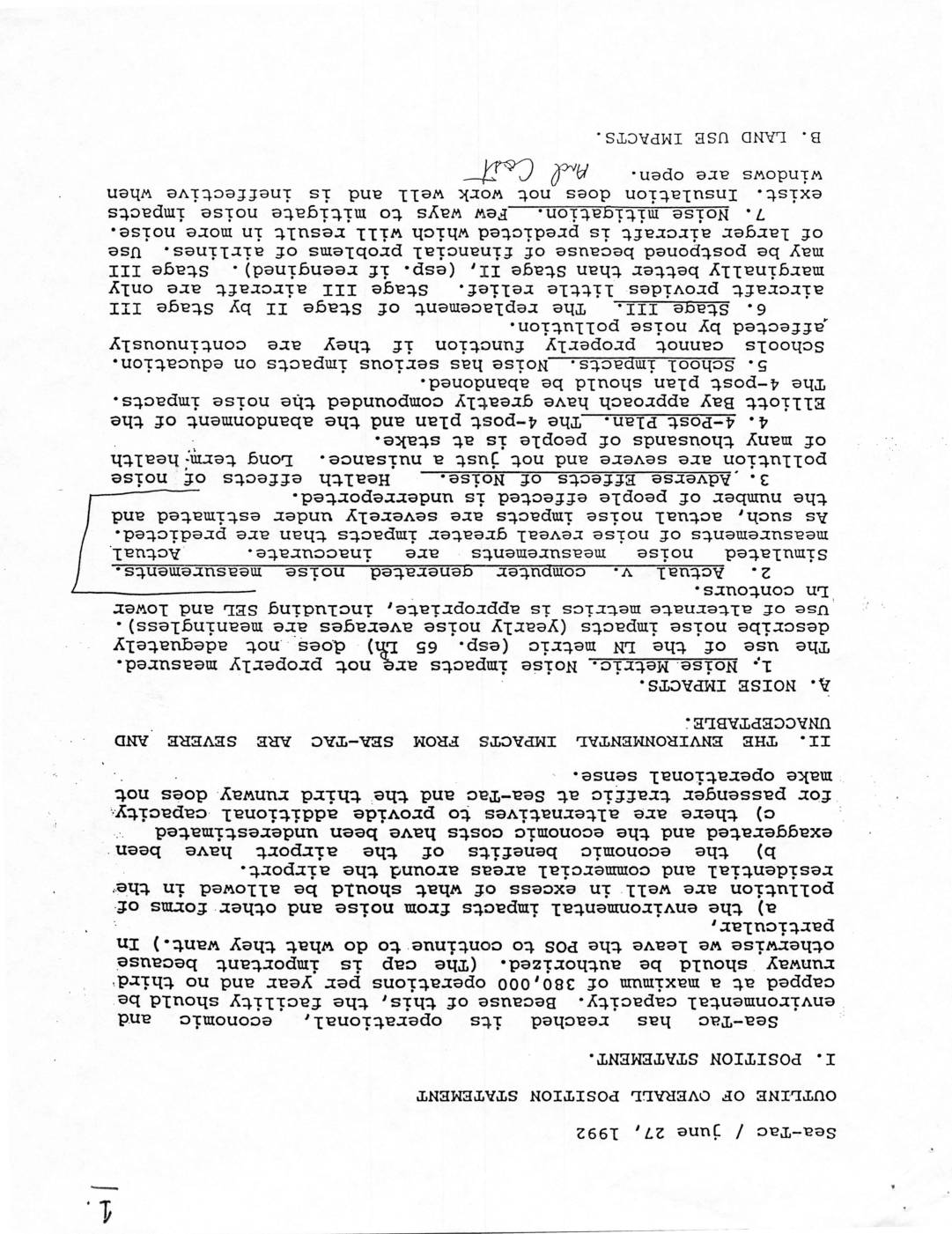
Outline of overall position statement: Sea-Tac, June 27, 1992
A 1992 position statement argues that Seattle-Tacoma International Airport (Sea-Tac) has reached its operational, economic, and environmental capacity and should be capped at a maximum of 380,000 operations per year with no third runway authorized. The document contends that noise impacts on surrounding communities are severely underestimated, that a third runway would make no operational or economic sense, and that alternatives such as demand management, use of existing regional airports, and improved transportation systems should be pursued instead. -
 1975-12-01
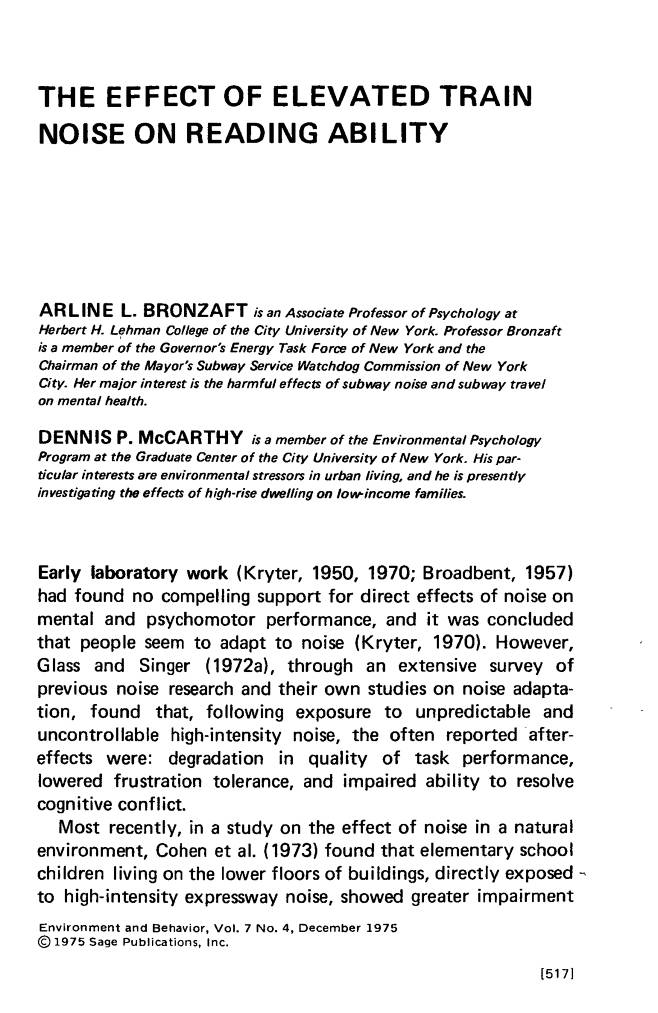
The effect of elevated train noise on reading ability
A 1975 study by Bronzaft and McCarthy examined how noise from passing elevated subway trains affected the reading ability of elementary school children at a New York City school located approximately 220 feet from the tracks. Researchers compared reading scores of students in classrooms on the noisy train-facing side of the building versus the quieter opposite side, finding that chronic exposure to loud, unpredictable noise was associated with measurable reading deficits. The findings built on earlier research suggesting that children in high-noise environments struggle to distinguish relevant speech cues, which can hinder their ability to learn to read.