TagNoise Pollution(31)
-
 2023-08-22
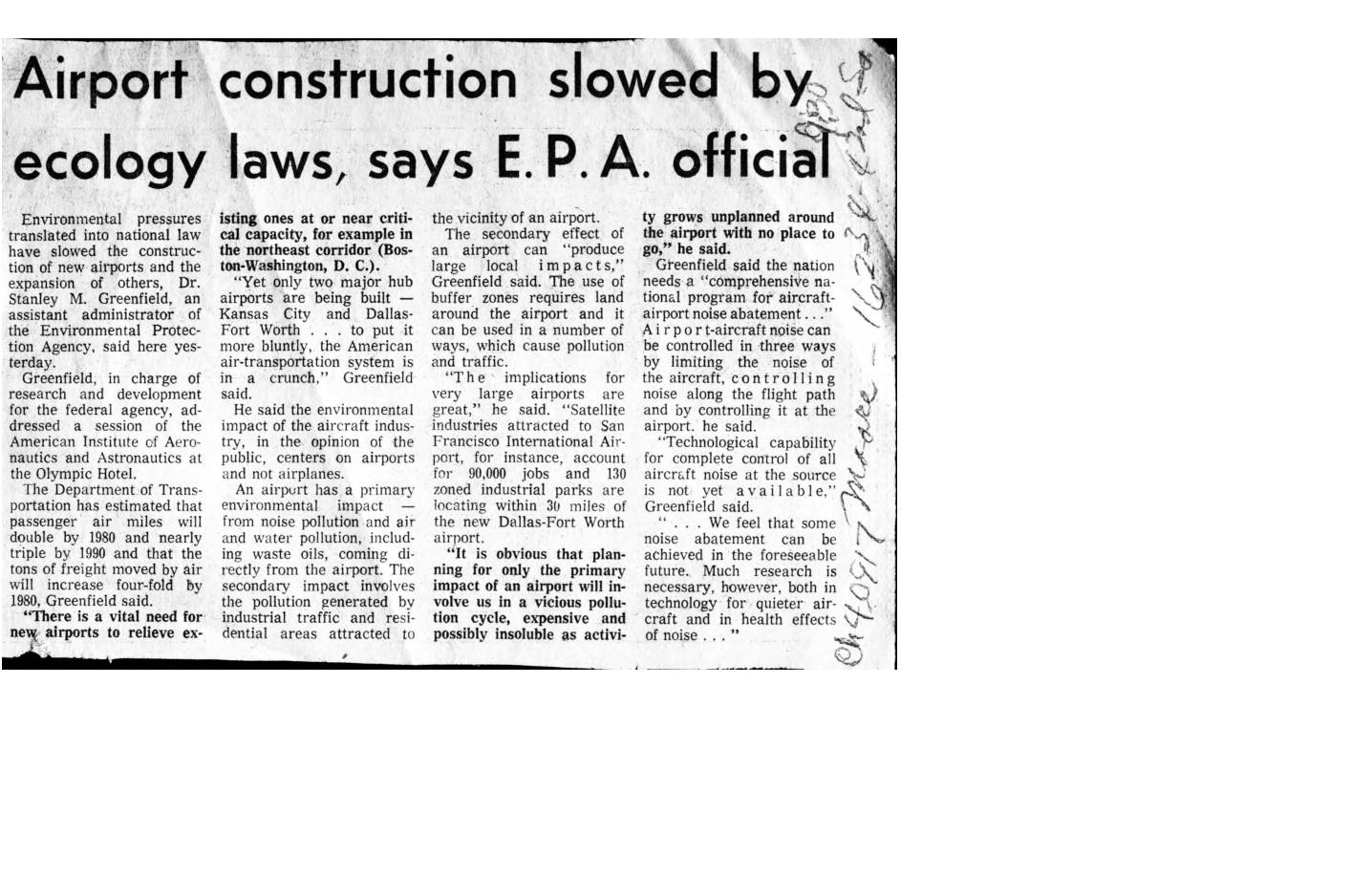
Airport construction slowed by ecology laws, says E.P.A. official
An EPA official warned that environmental and ecology laws have slowed the construction and expansion of new airports across the United States. Stanley M. Greenfield, assistant administrator of the Environmental Protection Agency, stated that airports generate significant noise, air, and water pollution, and that surrounding industrial and residential growth creates a 'vicious cycle' of expensive, hard-to-solve problems. He called for a comprehensive national program for aircraft noise abatement, noting that complete technological control of aircraft noise at the source was not yet available. -
 2023-06-27
Noise policy review
The FAA's Noise Policy Review examines the growing problem of aircraft noise around airports, comparing historical and current annoyance levels among nearby residents. A Neighborhood Environmental Survey found a substantial increase in the percentage of people highly annoyed by aircraft noise, with annoyance rising consistently across all levels of noise exposure — well above what older models like the Schultz Curve had predicted. -
 2023-06-15
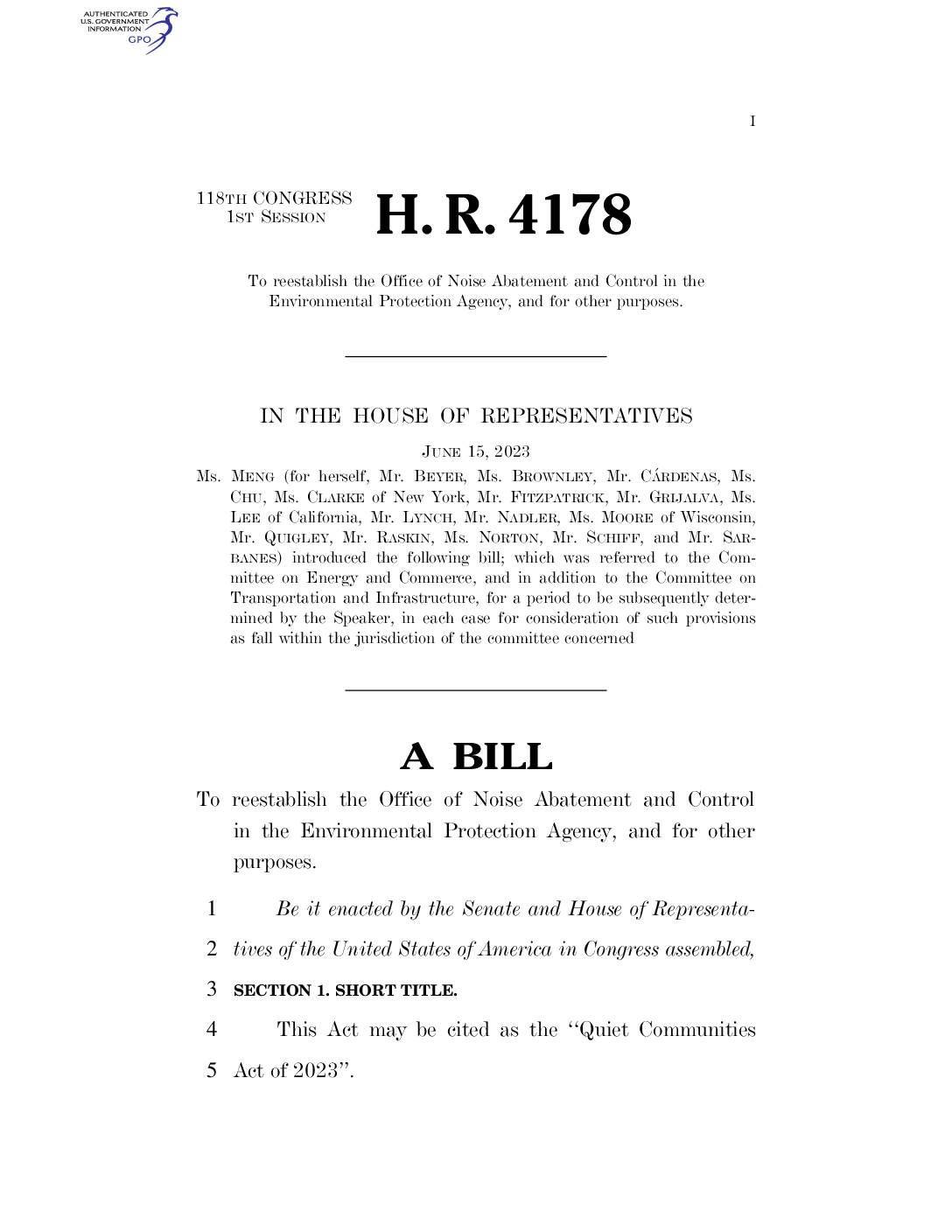
Quiet Communities Act of 2023 (H.R. 4178)
H.R. 4178, the Quiet Communities Act of 2023, is a bill introduced in the U.S. House of Representatives on June 15, 2023, that seeks to reestablish the EPA's Office of Noise Abatement and Control, which has received no funding since 1982. The bill highlights the serious health impacts of noise pollution — including hearing loss, cardiovascular disorders, sleep deprivation, and learning deficits in children — affecting millions of Americans exposed to noise from aircraft, vehicular traffic, and other sources. Because the EPA remains legally responsible for enforcing noise regulations while lacking an active office to do so, and because federal law limits state and local governments from regulating many noise sources, the bill argues that noise abatement programs across the country have effectively lain dormant. -
 2023-06-07
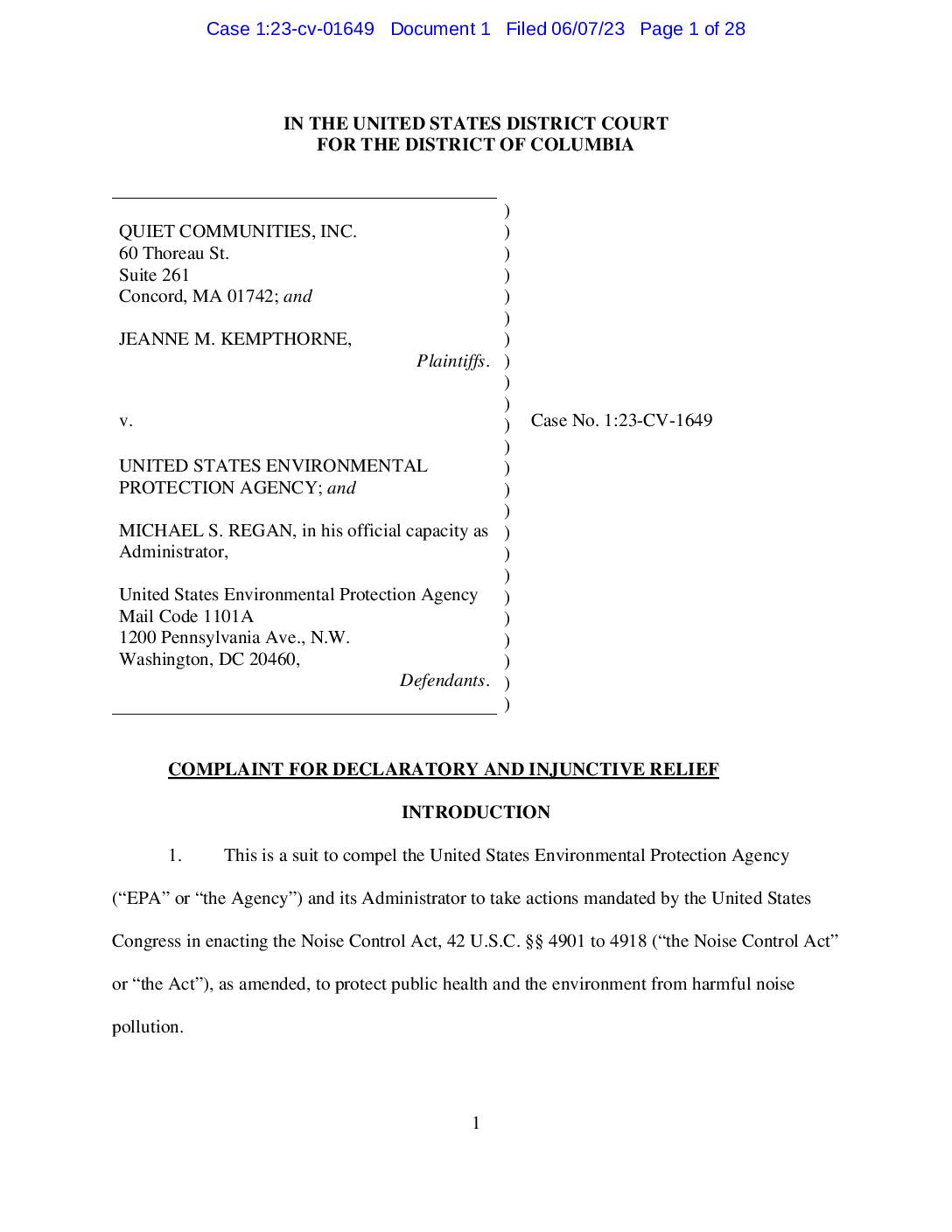
Quiet Communities, Inc. v. EPA: Complaint for Declaratory and Injunctive Relief
A 2023 federal lawsuit filed against the EPA argues that the agency has ignored its legal duties under the Noise Control Act for over 40 years, ever since it shut down its noise regulation offices in 1982. The plaintiffs, a nonprofit noise-reduction organization and an affected Massachusetts resident, are asking the court to force the EPA to resume studying and regulating noise pollution as Congress originally required. While not specific to Sea-Tac Airport, the case has broad implications for communities nationwide suffering from unregulated noise pollution, including airport noise. -
 2023-04-26
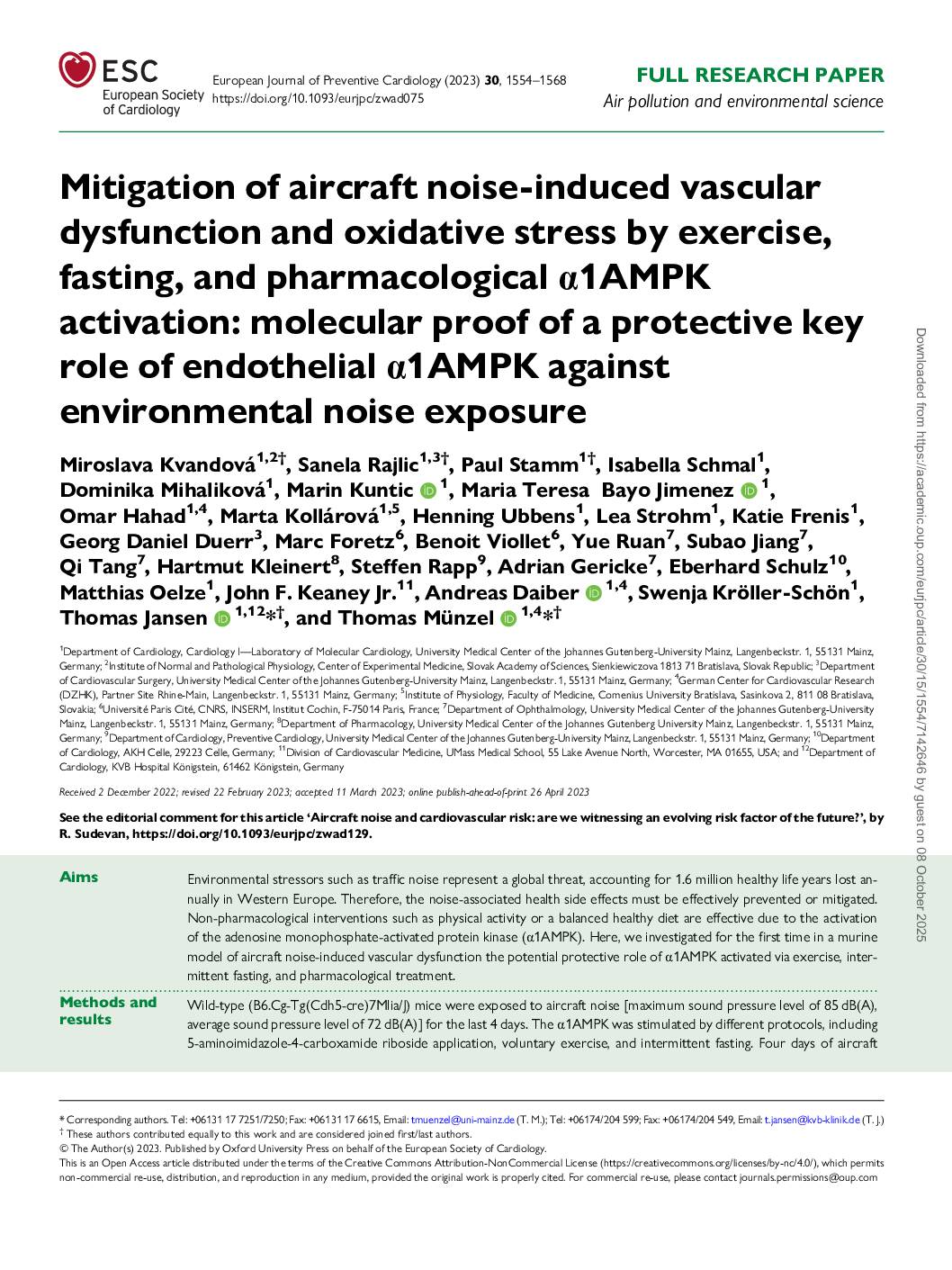
Mitigation of aircraft noise-induced vascular dysfunction and oxidative stress by exercise, fasting, and pharmacological α1AMPK activation: molecular proof of a protective key role of endothelial α1AMPK against environmental noise exposure
A scientific study found that aircraft noise exposure causes measurable damage to blood vessel function and increases harmful oxidative stress in mice, mimicking cardiovascular risks seen in human populations living near airports. Researchers demonstrated that three interventions — regular physical exercise, intermittent fasting, and a drug that activates a protective enzyme called α1AMPK — can each effectively prevent or reduce this noise-induced vascular damage. These findings suggest that lifestyle changes like exercise and dietary restriction may offer practical, evidence-based strategies for mitigating the cardiovascular health risks associated with aircraft noise exposure. -
From Lawn Mowers To Rock Concerts, Our ‘Deafening World’ Is Hurting Our Ears
Public Health Heard on Fresh Air Dave Davies Download Transcript Harsh ambient sound from even small household appliances, such as food processors and hair dryers, can reach levels that lead to permanent damage, hearing specialists say. Our ears are complicated, delicate instruments that largely evolved in far quieter times than the age we currently inhabit -
 2019-04-01
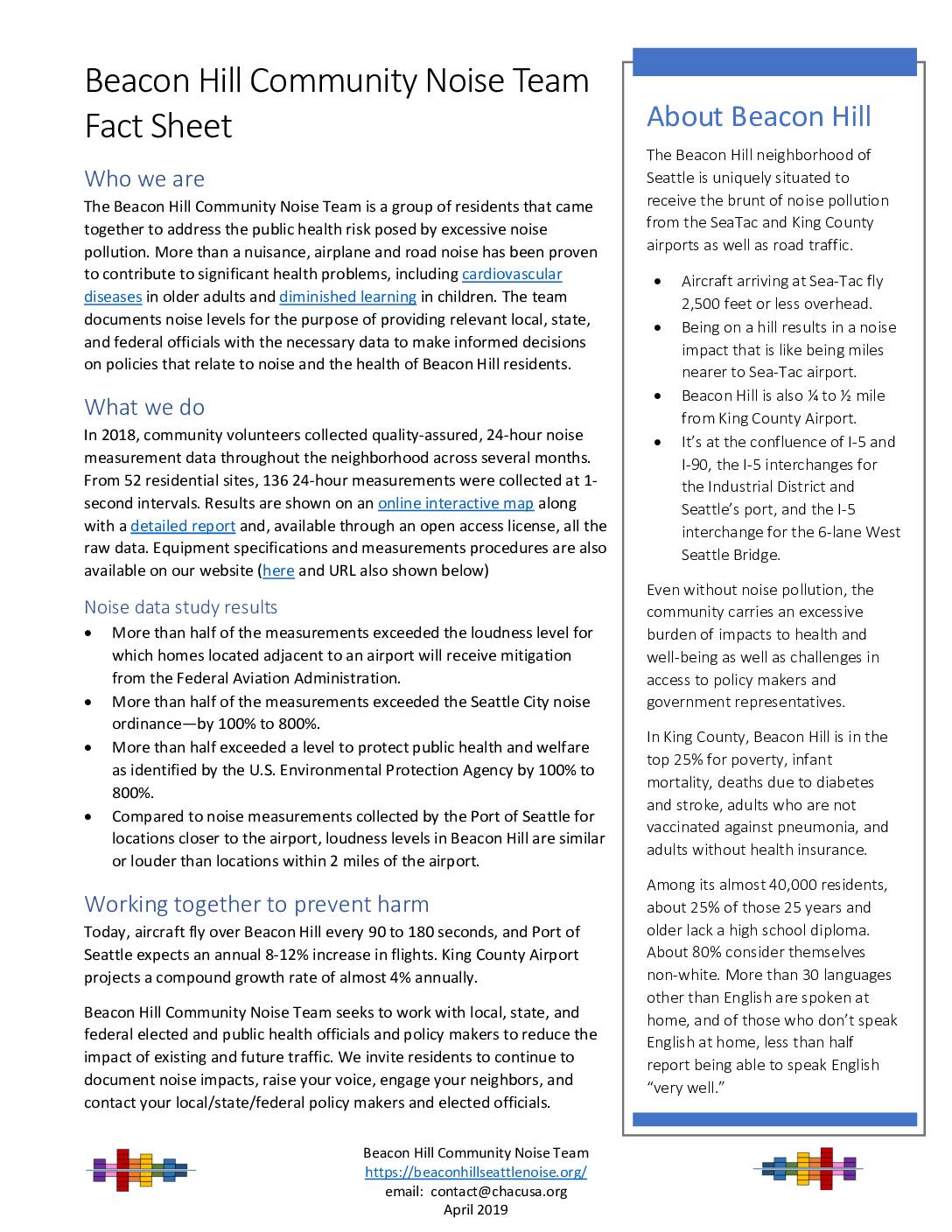
Beacon Hill Community Noise Team Fact Sheet
The Beacon Hill Community Noise Team is a Seattle resident group that documented excessive noise pollution from Sea-Tac and King County airports, as well as road traffic, across 52 neighborhood sites in 2018. Their measurements found that more than half of recorded noise levels exceeded FAA mitigation thresholds, Seattle city ordinances, and EPA public health standards by up to 800%. The group is calling on local, state, and federal officials to take action, citing compounding health and socioeconomic burdens already faced by Beacon Hill's nearly 40,000 residents. -
 2019-01-15
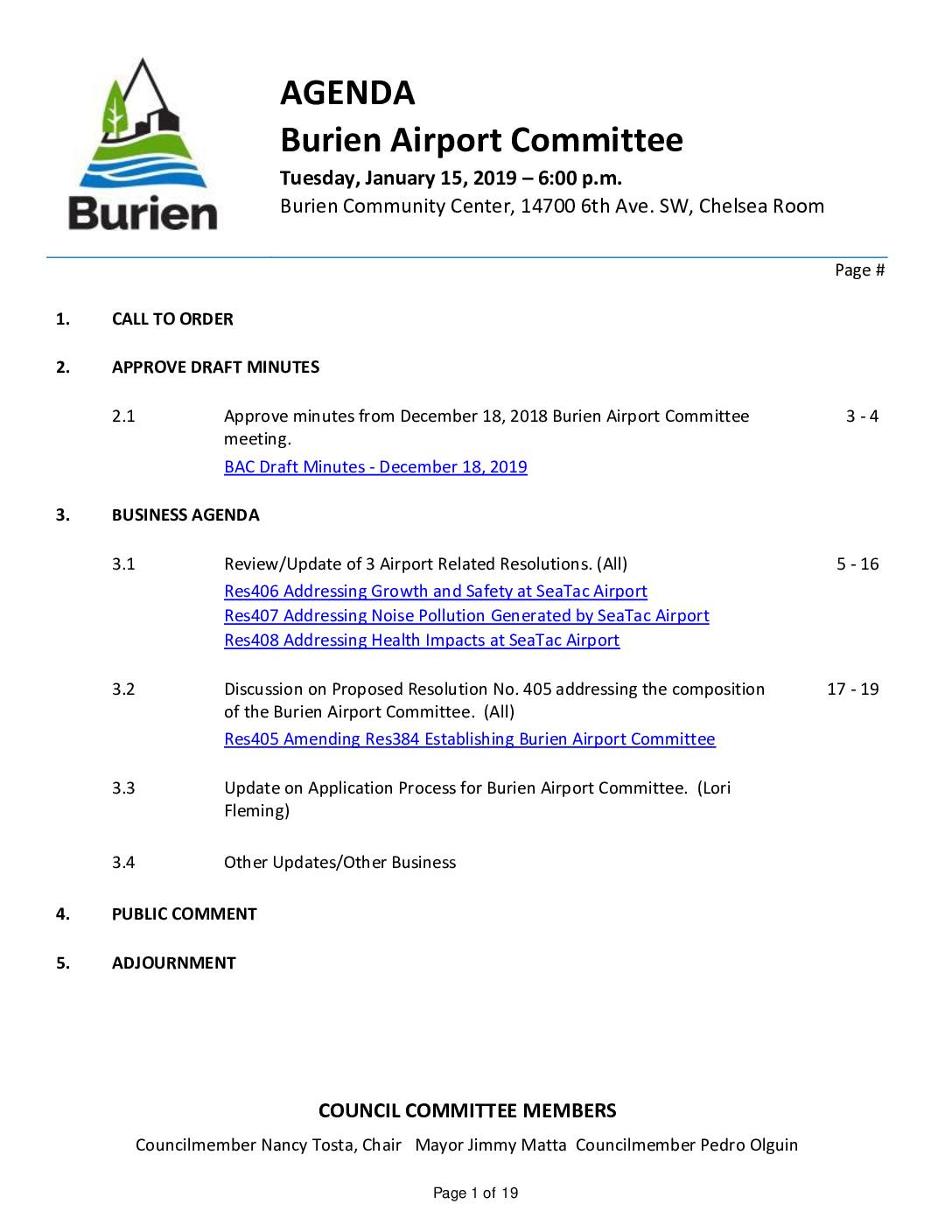
Burien Airport Committee agenda and draft minutes, January 15, 2019
The Burien Airport Committee met on January 15, 2019 to review and update three proposed city resolutions addressing growth and safety, noise pollution, and health impacts related to Seattle-Tacoma International Airport. The committee also discussed a proposed resolution to restructure its own membership by removing the distinction between business and resident members and adding ex-officio seats for representatives from other airport-related groups. Additional agenda items included an update on open applications to fill vacant committee seats. -
 2019-01-07
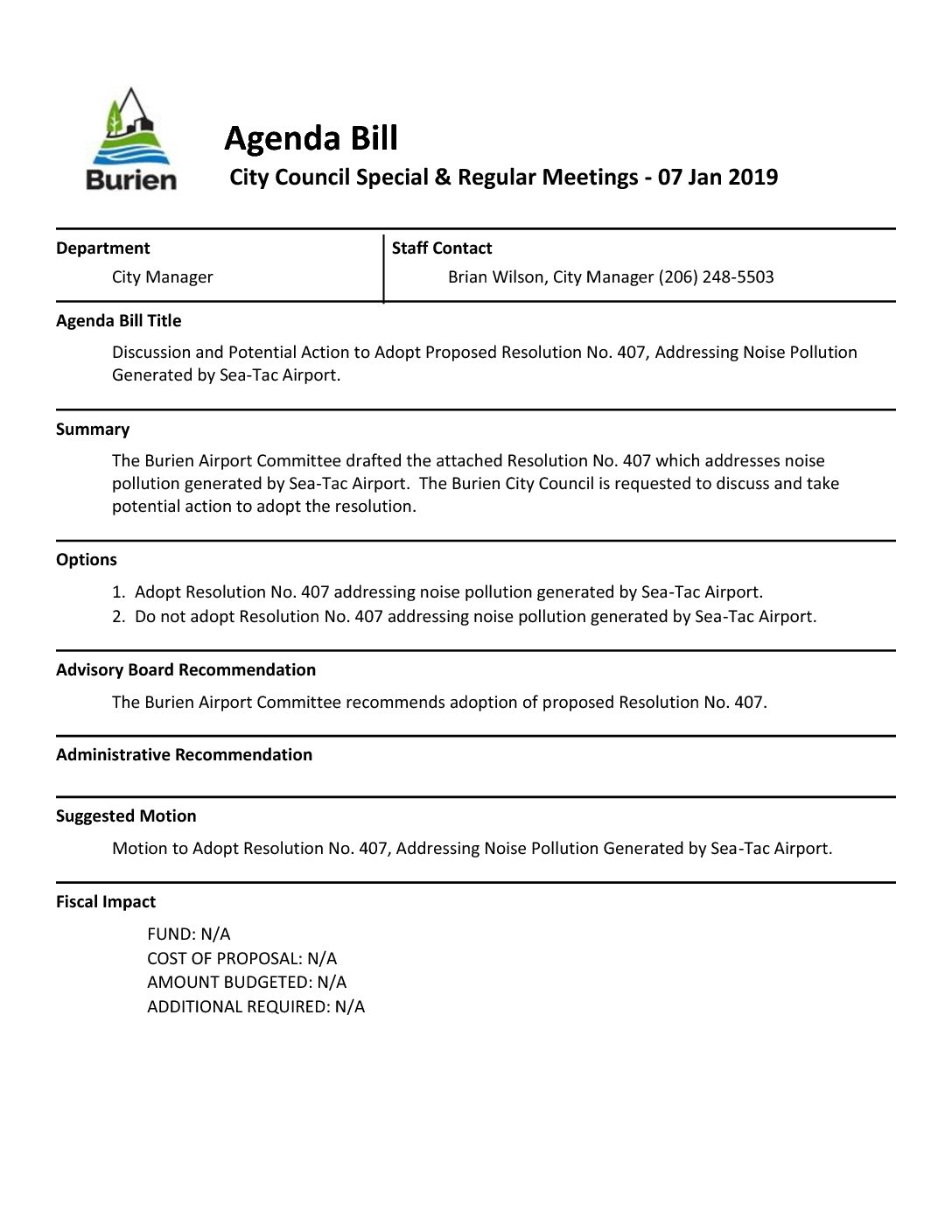
Resolution No. 407 addressing noise pollution generated by Sea-Tac Airport
In January 2019, the City of Burien, Washington considered Resolution No. 407, a measure drafted by the Burien Airport Committee to address noise pollution from nearby Sea-Tac Airport. The resolution highlighted that the airport's rapid growth had caused serious health, environmental, and economic harm to Burien residents, with current FAA noise level standards far exceeding the safer thresholds recommended by the World Health Organization. The Burien Airport Committee recommended adoption of the resolution, which called for updated noise impact assessments and greater consideration of off-site noise effects.