TagGreenhouse gases(28)
-
 2021-01-19
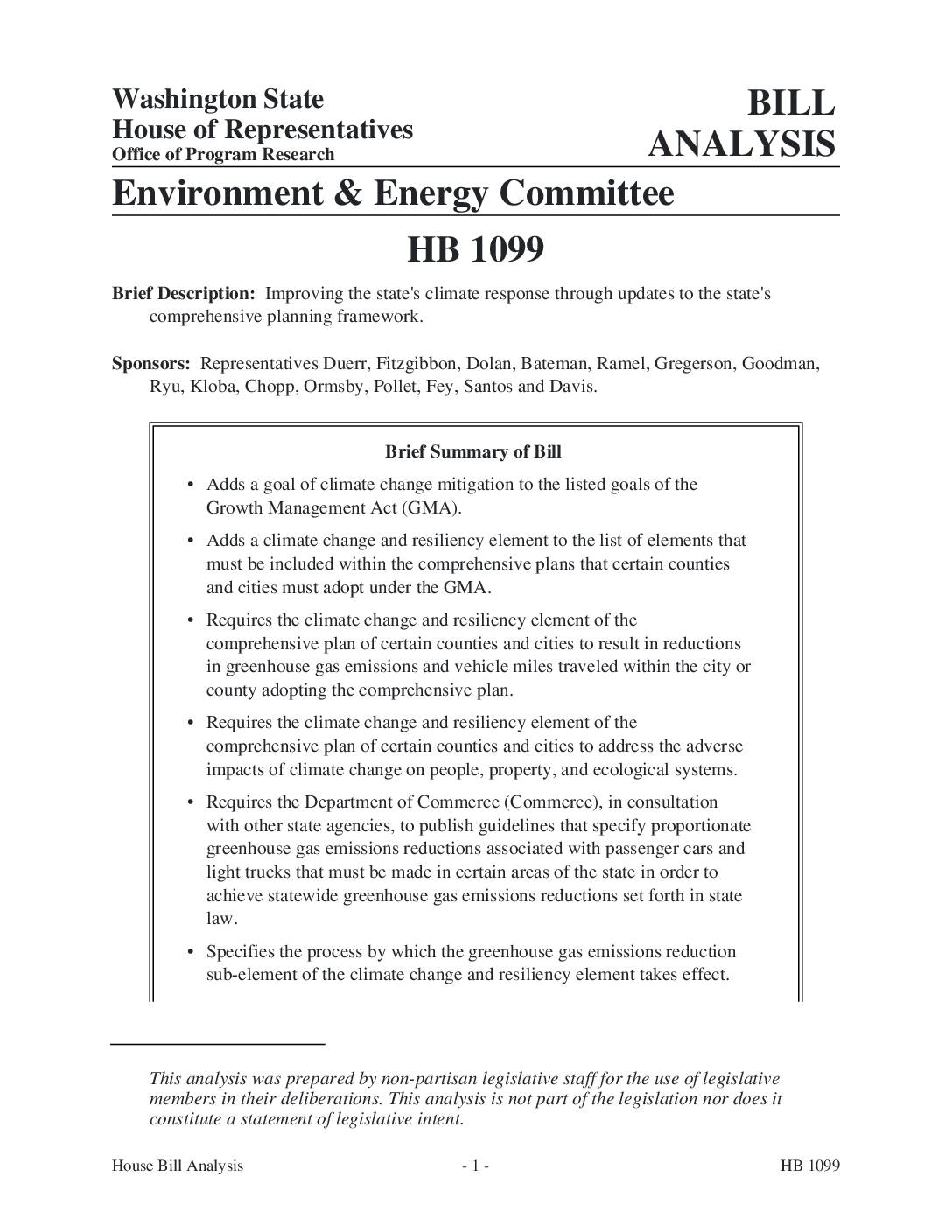
Bill analysis: HB 1099 – Improving the state’s climate response through updates to the state’s comprehensive planning framework
HB 1099 is a Washington State bill focused on improving the state's climate response by updating the Growth Management Act to require counties and cities to include climate change and resiliency planning in their comprehensive land use plans. The bill mandates reductions in greenhouse gas emissions and vehicle miles traveled, and requires the Department of Commerce to publish guidelines for achieving statewide emissions targets. It also addresses coastal resilience by requiring Shoreline Master Programs to account for sea level rise and increased storm severity. -
 2021-01-01
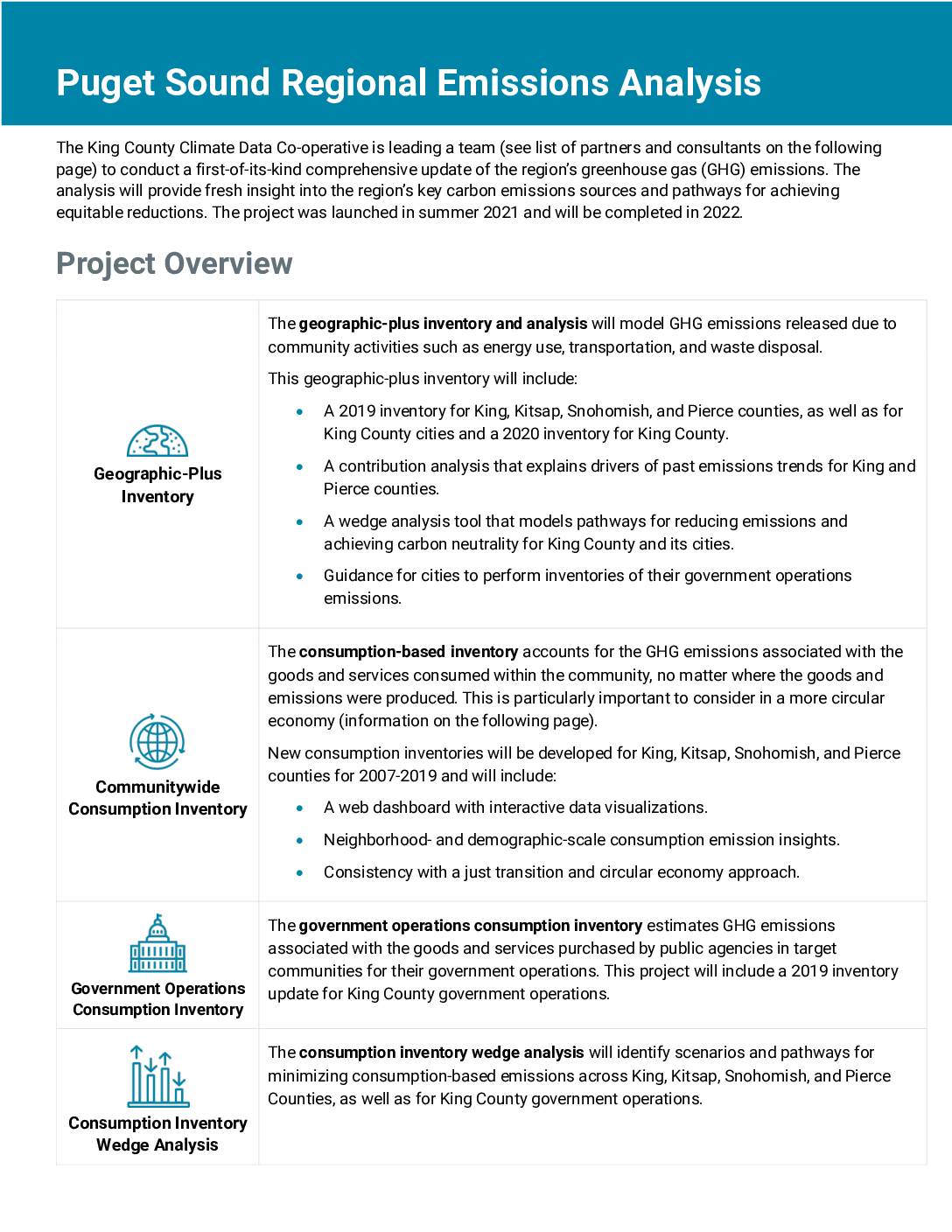
Puget Sound Regional Emissions Analysis
The Puget Sound Regional Emissions Analysis is a King County-led project launched in 2021 to comprehensively measure greenhouse gas emissions across King, Kitsap, Snohomish, and Pierce counties. The project covers multiple types of emissions inventories—including community activities, consumption of goods and services, and government operations—while also modeling pathways to reduce emissions and achieve carbon neutrality. It incorporates social equity principles to address disproportionate environmental impacts on communities of color. -
 2021-01-01
Washington State greenhouse gas emissions inventory: 1990-2018
This January 2021 report from the Washington State Department of Ecology tracks greenhouse gas emissions across Washington State from 1990 to 2018. Published by the Air Quality Program, it provides a comprehensive inventory of the state's emissions data over nearly three decades. Note that this document focuses on statewide air quality and climate data and does not specifically address Sea-Tac Airport noise policy. -
 2020-12-01
2018 Community greenhouse gas emissions inventory
★ 34Seattle's 2018 Community Greenhouse Gas Emissions Inventory, prepared by the Seattle Office of Sustainability & Environment, tracks and analyzes the city's greenhouse gas emissions across sectors including transportation, buildings, industry, and waste. The report compares 2018 emissions data against previous years, examines per capita trends, and outlines Seattle's climate reduction goals and strategies. Note: This document focuses on citywide carbon emissions and climate policy, and does not address Sea-Tac Airport noise issues. -
 2020-09-03
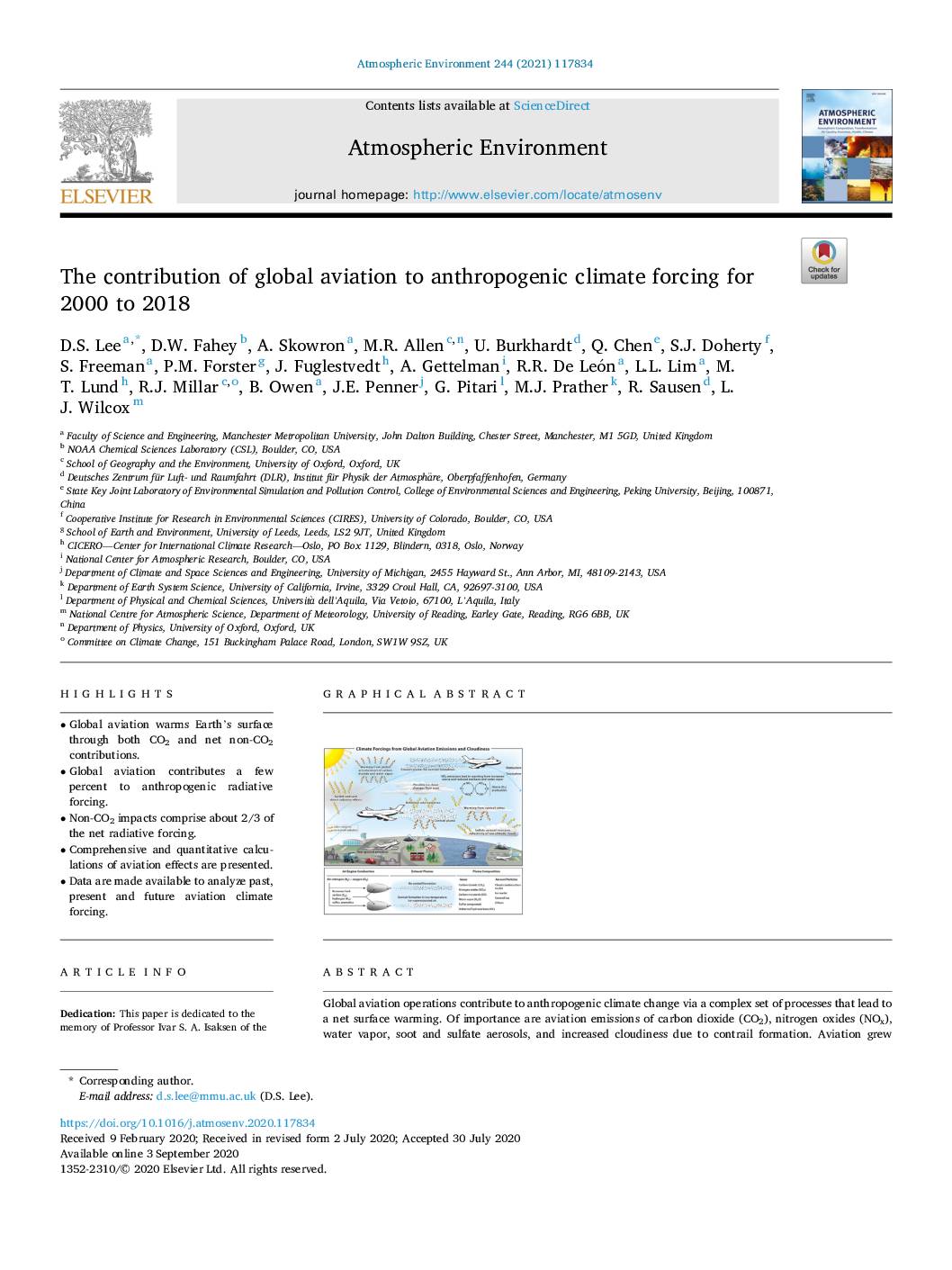
The contribution of global aviation to anthropogenic climate forcing for 2000 to 2018
A 2021 scientific study found that global aviation contributes a small but meaningful share of human-caused climate change, primarily through carbon dioxide emissions and the formation of contrail clouds at high altitude. The research, covering the years 2000 to 2018, found that non-CO2 effects such as contrails account for roughly two-thirds of aviation's total warming impact. The findings are relevant to ongoing policy discussions about reducing the climate footprint of air travel. -
 2019-12-11
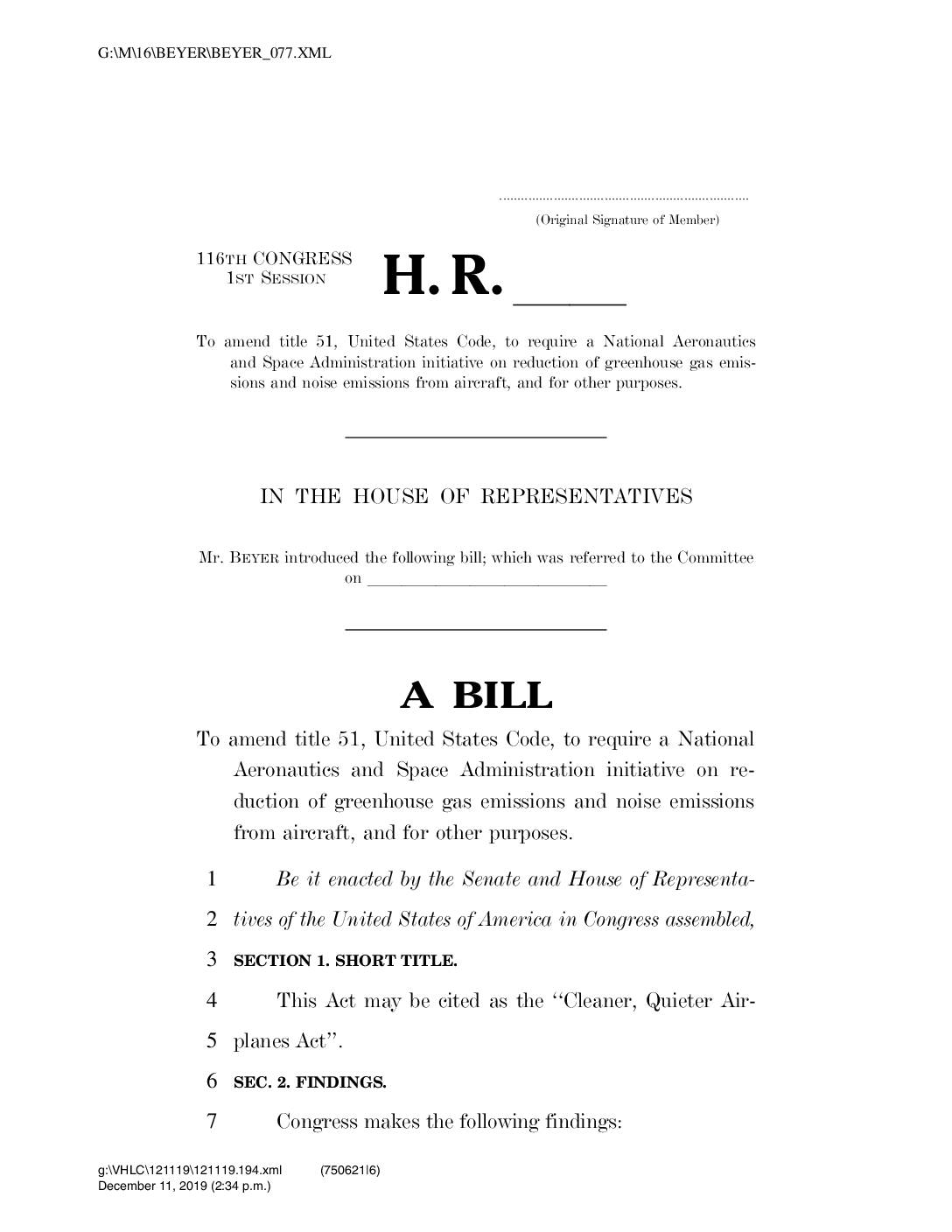
Cleaner, Quieter Airplanes Act
The 'Cleaner, Quieter Airplanes Act,' introduced in the 116th Congress by Mr. Beyer, would require NASA to establish an initiative to develop and demonstrate new aircraft technologies capable of reducing both greenhouse gas emissions and noise emissions by at least 50 percent compared to the best-performing aircraft in service as of December 31, 2019. The bill responds to findings that aviation noise pollution is worsening in some communities as air traffic increases and performance-based navigation technology is adopted. It reflects a broader U.S. goal of carbon-neutral aviation growth from 2020 onward. -
‘Worse Than Anyone Expected’: Air Travel Emissions Vastly Outpace Predictions
The findings put pressure on airline regulators to take stronger action to fight climate change as they prepare for a summit next week. Aircraft preparing to take off at Heathrow Airport.Credit…Steve Parsons/PA Images, via Getty Images By Hiroko Tabuchi Greenhouse gas emissions from commercial air travel are growing at a faster clip than predicted in previous, -
 2018-06-01
Puget Sound Clean Air Agency Greenhouse Gas Emissions Inventory
This 2018 report by Cascadia Consulting Group inventories greenhouse gas emissions across the Puget Sound region, covering sources such as transportation, buildings, industry, solid waste, water, and agriculture for the year 2015. It outlines the methodology, data sources, and findings used to measure the region's carbon footprint. While focused on regional air quality and climate impact, it provides context for understanding emissions contributors in the greater Seattle–Tacoma area. -
 2018-05-15
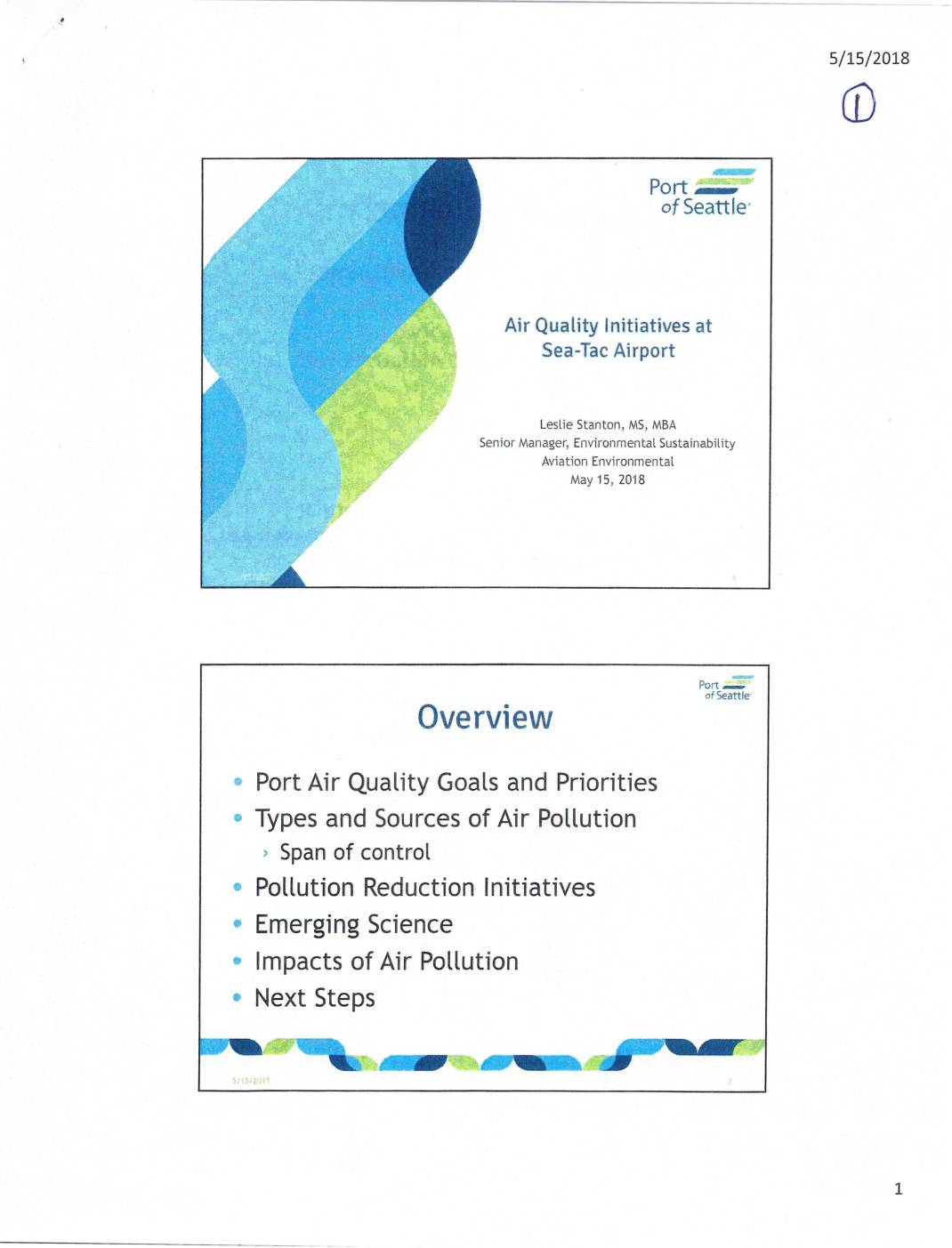
Air quality initiatives at Sea-Tac Airport
This 2018 presentation by Port of Seattle Senior Manager Leslie Stanton outlines air quality initiatives at Sea-Tac Airport, covering the types and sources of air pollution including greenhouse gases and regulated pollutants such as NOx, SOx, and particulate matter. It highlights efforts to reduce emissions through clean vehicle programs, including Sea-Tac's distinction as the first US airport to require green taxis and green TNCs, conversion of CNG buses to electric, and expanded EV charging infrastructure. The presentation also addresses passenger ground transportation planning aimed at improving public transit access and reducing the airport's overall environmental footprint. -
 2017-12-01
King County Greenhouse Gas Emissions Inventory: A 2015 Update
★ 32This December 2017 report inventories greenhouse gas emissions across King County, Washington, providing a comprehensive 2015 update that examines emissions by sector using geographic-based and consumption-based methodologies. It was prepared by Cascadia Consulting Group and Hammerschlag & Co. LLC, covering sources such as transportation, buildings, waste, and energy use. The report tracks changes in emissions over time and analyzes key data sources to help inform county-level climate and environmental policy decisions.