TagGreenhouse gases(28)
-
 2017-10-24
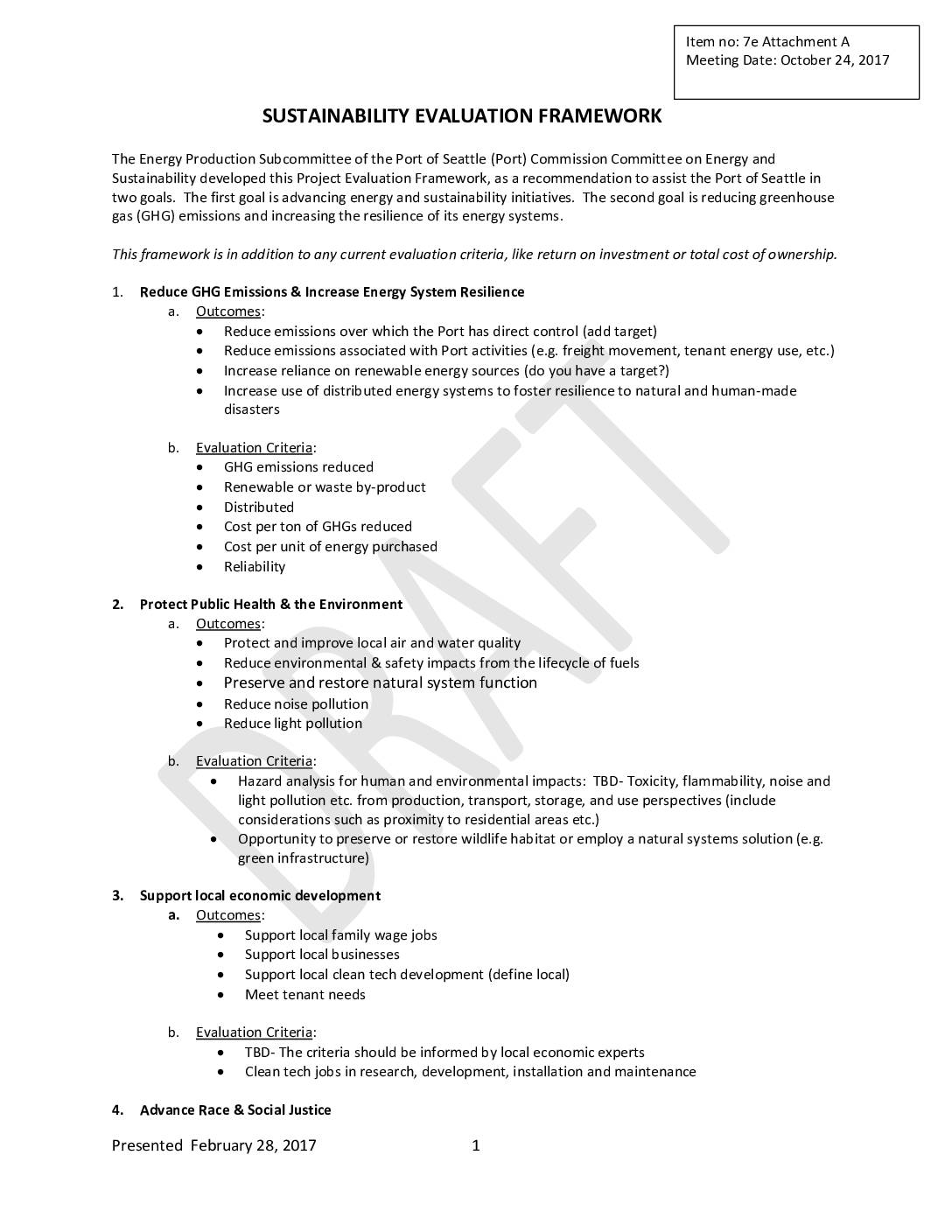
Sustainability evaluation framework
The Port of Seattle's Sustainability Evaluation Framework outlines six key goals for guiding energy and sustainability decisions: reducing greenhouse gas emissions, protecting public health and the environment, supporting local economic development, advancing race and social justice, leveraging partnerships, and encouraging innovation. Developed by the Energy Production Subcommittee, the framework provides outcomes and evaluation criteria for each goal, supplementing existing financial measures like return on investment. The subcommittee recommends the Port incorporate these considerations into its decision-making when evaluating energy sources and projects. -
 2017-10-24
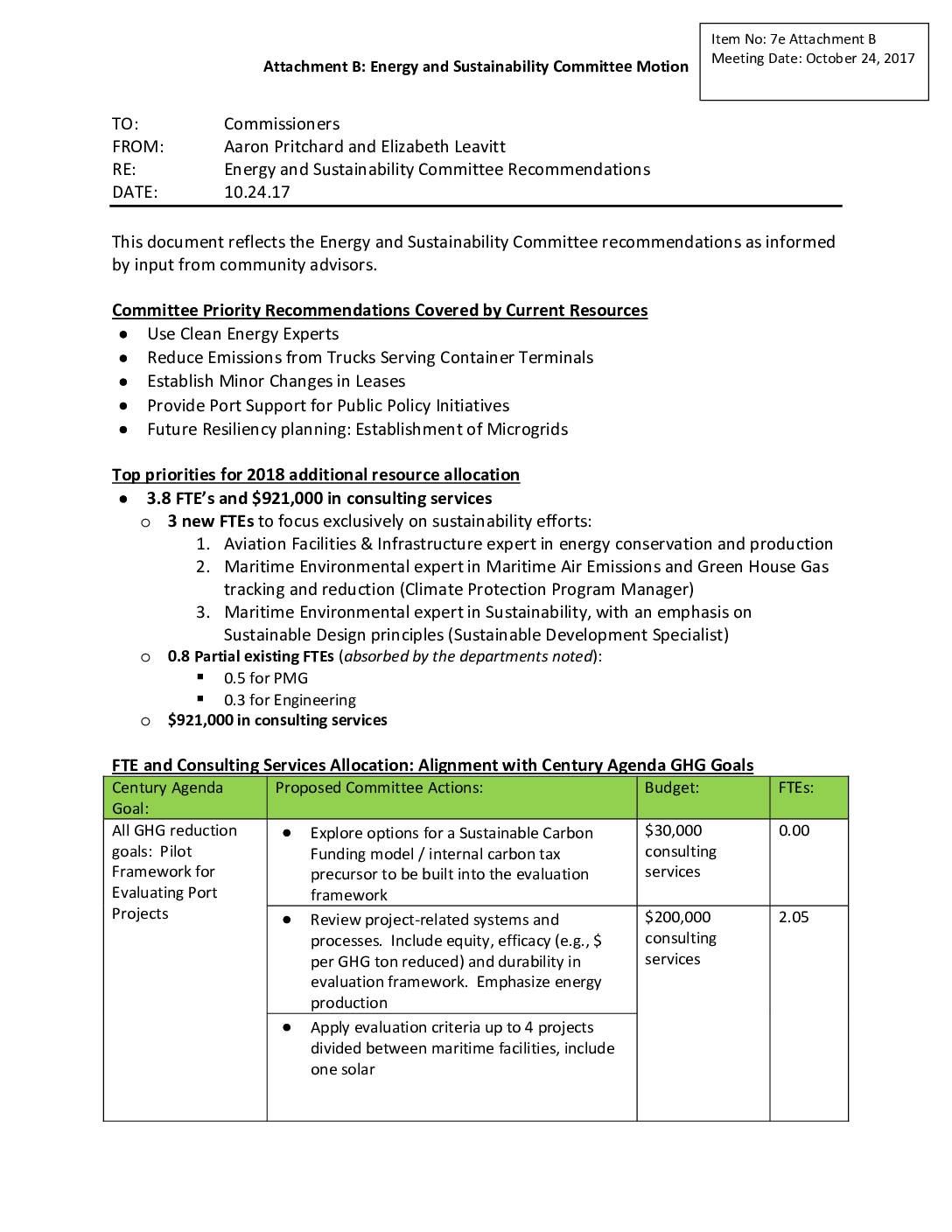
Energy and Sustainability Committee motion: recommendations for 2018 resource allocation
In October 2017, the Port of Seattle's Energy and Sustainability Committee recommended allocating 3.8 new staff positions and $921,000 in consulting services to advance greenhouse gas reduction goals for both aviation and maritime operations. Key initiatives included reducing natural gas use at airport terminals, improving energy efficiency at maritime facilities, and developing programs to cut ground transportation emissions. These efforts were designed to meet Century Agenda targets of 15% Scope 1 and 2 GHG reductions by 2020 and 50–80% Scope 3 reductions by 2030–2050. -
 2017-10-24
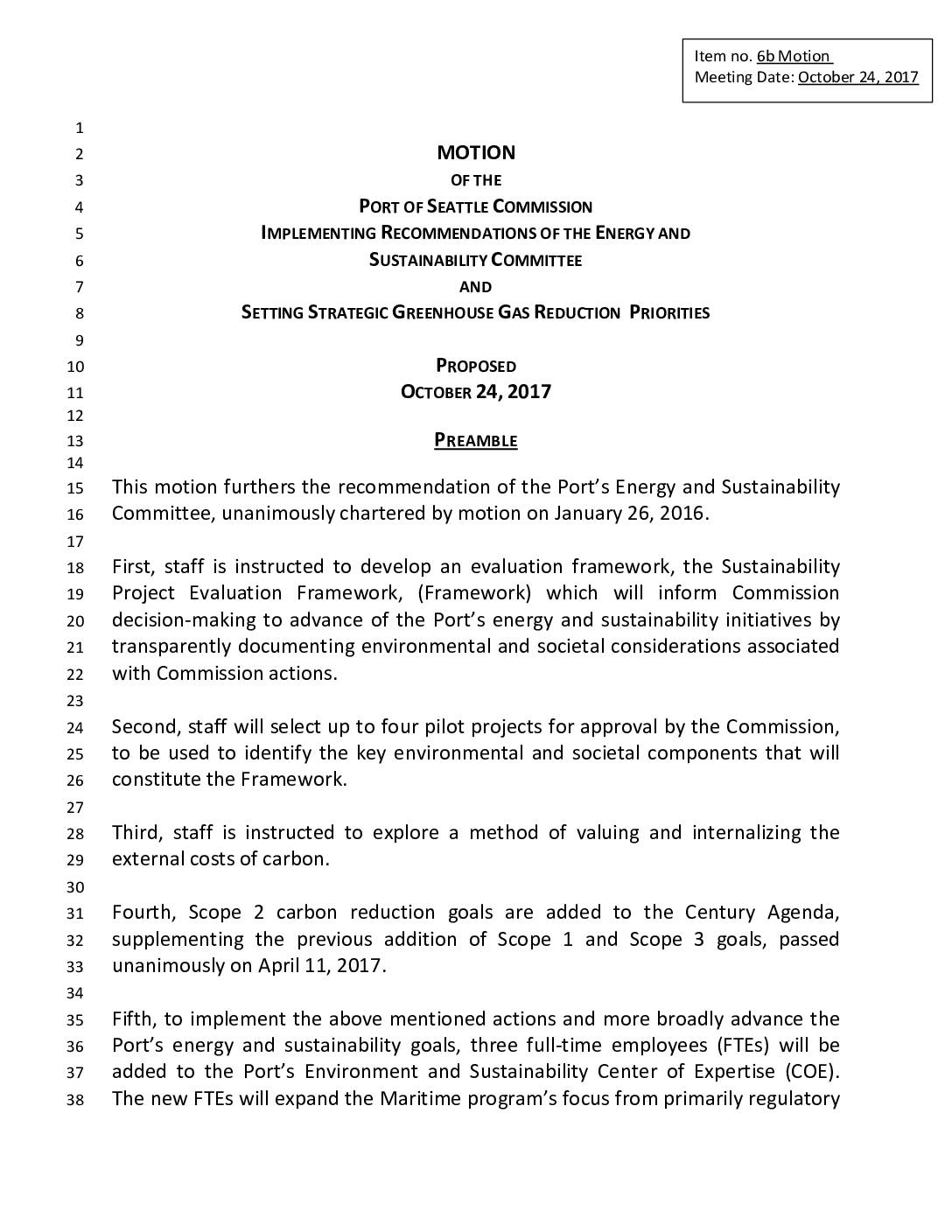
Motion of the Port Of Seattle Commission implementing recommendations of the Energy and Sustainability Committee and setting strategic greenhouse gas reduction priorities
In October 2017, the Port of Seattle Commission adopted a motion setting greenhouse gas reduction priorities and implementing recommendations from its Energy and Sustainability Committee. The motion established targets to reduce Scope 1, 2, and 3 emissions — aiming for 15% below 2005 levels by 2020, 50% below 2005 levels by 2030, and carbon neutrality by 2050. It also directed staff to develop a Sustainability Project Evaluation Framework, select pilot projects, and add three full-time employees to advance the Port's energy and sustainability goals. -
 2017-06-01
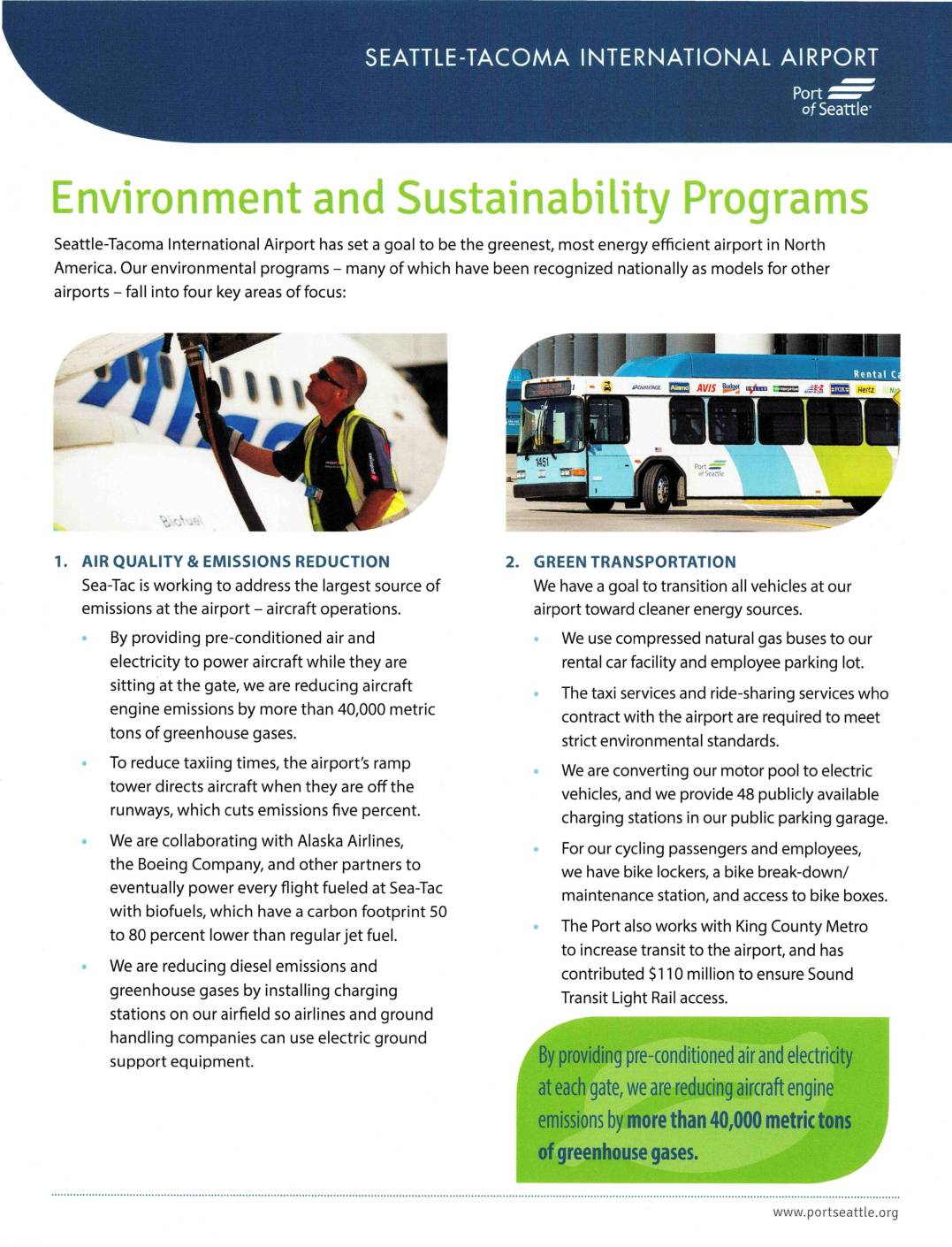
Environment and sustainability programs
Seattle-Tacoma International Airport's Environment and Sustainability Programs outline the airport's efforts to become the greenest, most energy-efficient airport in North America across four key areas: air quality and emissions reduction, green transportation, waste reduction and recycling, and water and wildlife management. Initiatives include providing pre-conditioned air and electricity at gates to cut aircraft engine greenhouse gas emissions by over 40,000 metric tons, transitioning vehicles to cleaner energy sources, and working toward recycling 60 percent of solid waste by 2020. The airport also actively manages 160 acres of wetland habitat, uses avian radar to protect wildlife, and has relocated more than 800 birds to reduce hazards to aircraft. -
 2017-04-15
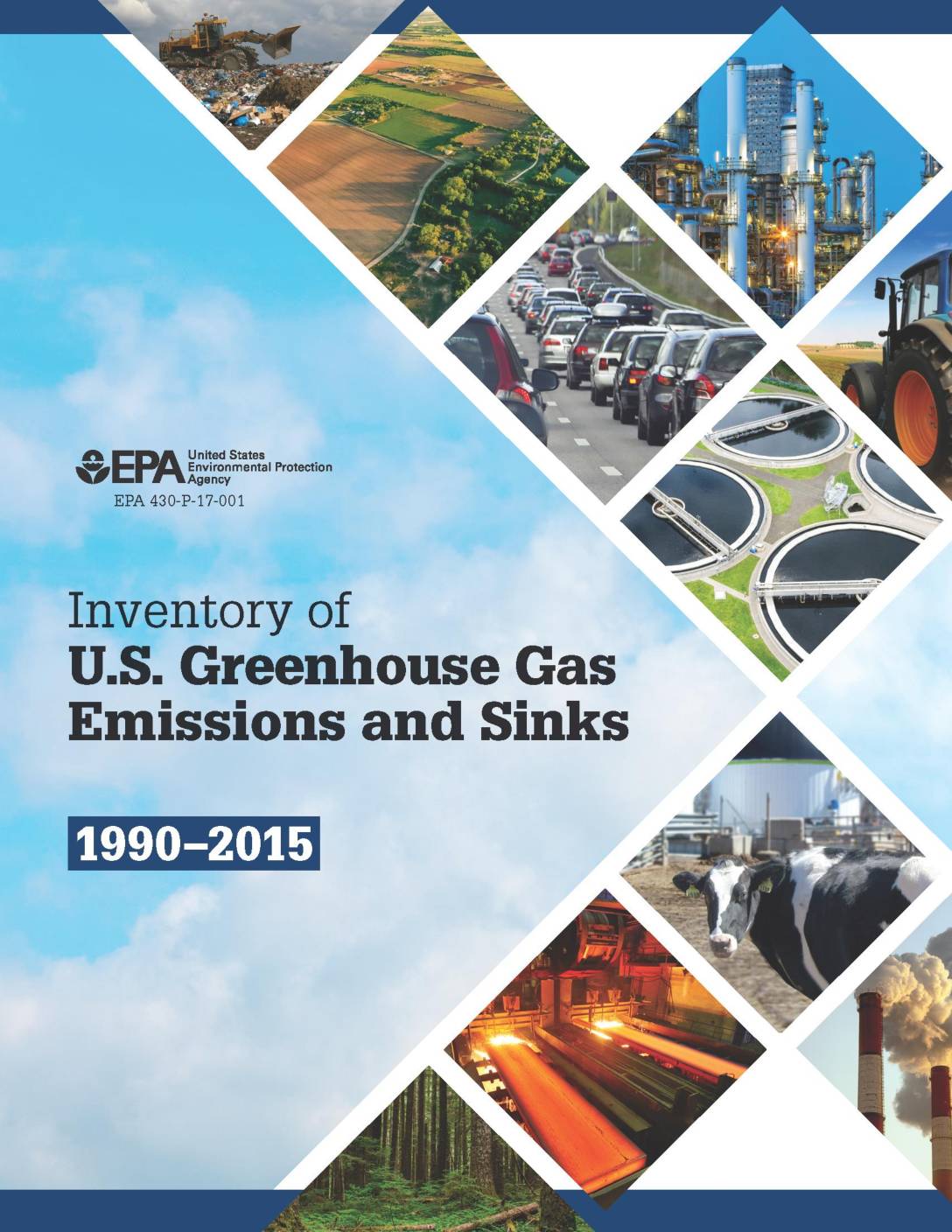
Inventory of U.S. greenhouse gas emissions and sinks: 1990–2015
This EPA report tracks U.S. greenhouse gas emissions and sinks from 1990 to 2015, covering sources such as transportation, agriculture, industry, and waste. It was published by the U.S. Environmental Protection Agency in 2017 and is available for download on the EPA website. Note: this document does not appear to contain information relevant to Sea-Tac Airport noise policy. -
 2017-04-01
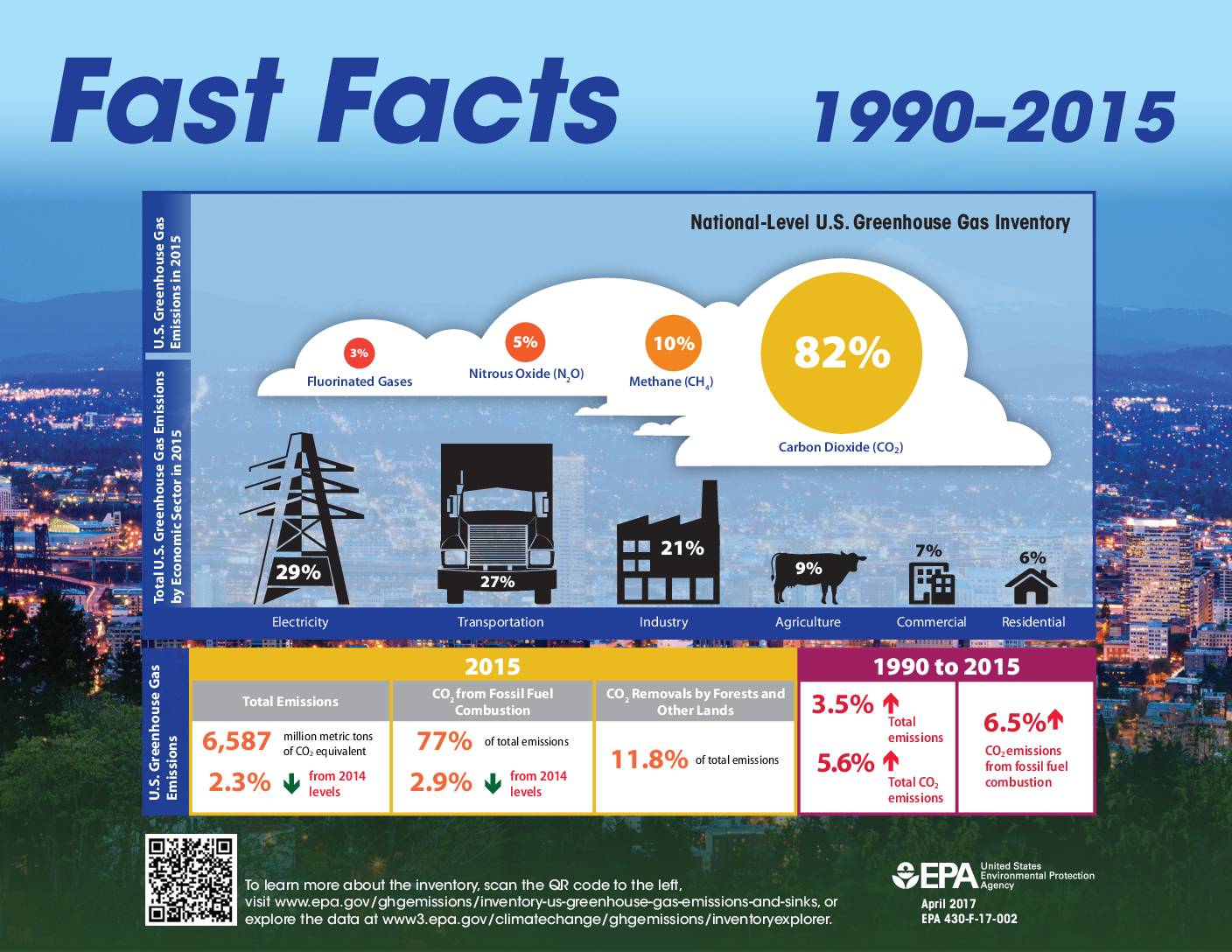
Fast facts 1990–2015: National-level U.S. greenhouse gas inventory
This EPA report summarizes U.S. greenhouse gas emissions data from 1990 to 2015, showing that total emissions reached 6,587 million metric tons of CO2 equivalent in 2015, a 2.3% decrease from 2014 levels. Carbon dioxide makes up the largest share at 82% of emissions, with electricity generation and transportation being the biggest contributing economic sectors at 29% and 27% respectively. The report includes detailed emissions breakdowns by gas type, economic sector, and fuel source, along with unit conversion tables and global warming potential values for reference. -
 2011-12-08
2008 King County Community Greenhouse Gas Emissions Inventory: “Geographic Plus” Methodology
This 2011 report by the Stockholm Environment Institute estimates King County, Washington's greenhouse gas emissions for 2008 using a 'geographic plus' methodology, covering sources such as transportation, buildings, industry, and waste. Total emissions reached approximately 23.4 million metric tons of CO2 equivalent in 2008, a 5% increase from 2003, with transportation accounting for roughly half of all emissions. The findings were used by King County and its partners to identify major emission sources and develop strategies to meet community greenhouse gas reduction goals. -
 2008-03-01
2005 inventory of Seattle greenhouse gas emissions: Community & corporate
This 2005 report from the City of Seattle's Office of Sustainability and Environment measures greenhouse gas emissions across the Seattle community and city government operations. It uses two approaches: a geographic inventory tracking emissions within Seattle's boundaries, and a corporate inventory covering the city government's facilities and operations. The report was compiled by consultant Roel Hammerschlag and audited by Envirometrics, Inc., serving as a baseline reference for Seattle's climate planning efforts.