TagESA(29)
-
 2023-12-13
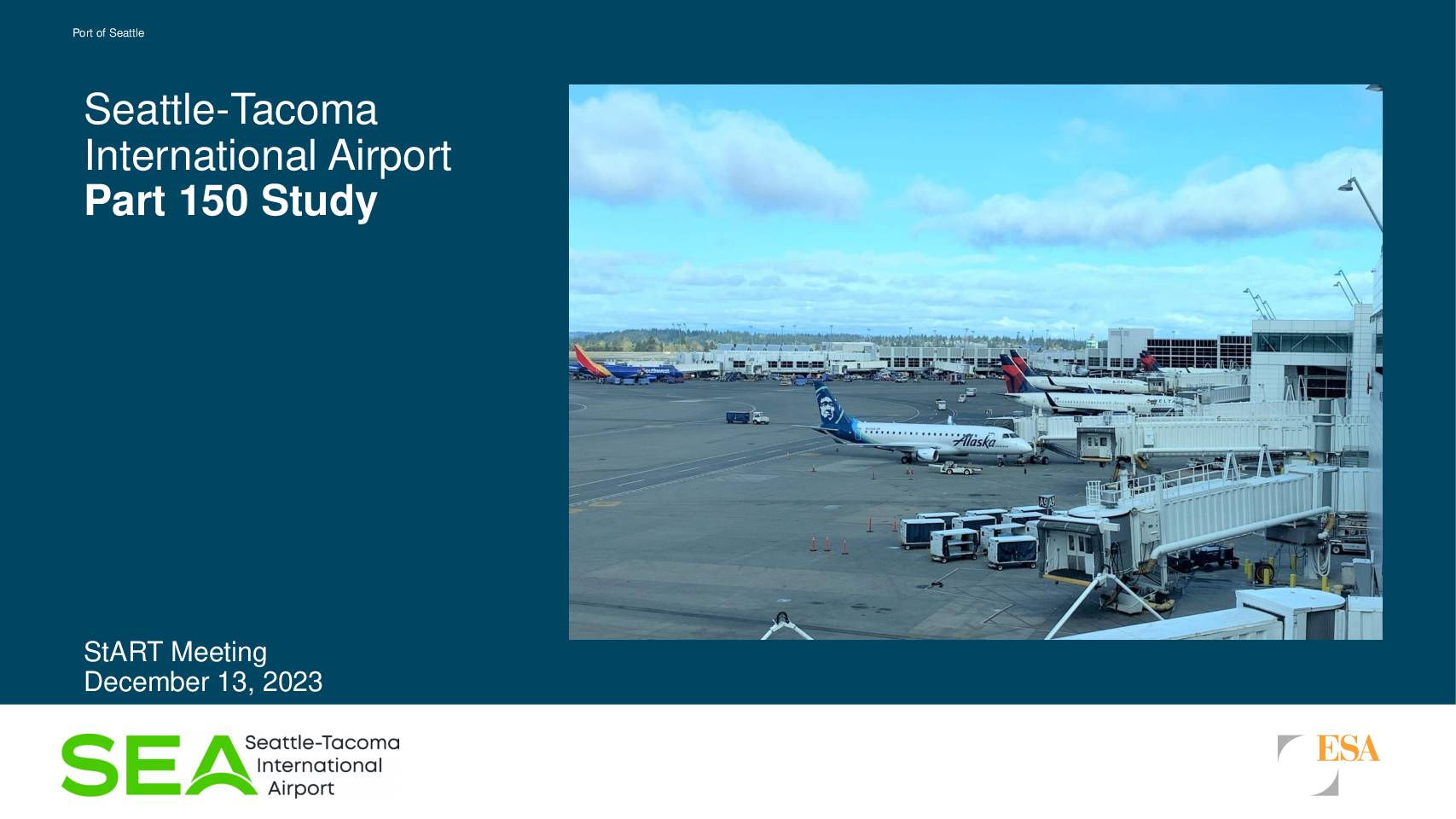
Seattle-Tacoma International Airport Part 150 Study: StART Meeting Presentation
This document presents the opening materials from a December 13, 2023 StART (Stakeholder Advisory Round Table) meeting for the Seattle-Tacoma International Airport Part 150 Study, a federally guided process for assessing and managing aircraft noise impacts. The study is being conducted by ESA, an environmental aviation consultancy with experience at more than 180 airports nationwide and over 25 completed Part 150 Studies. The meeting introduced the ESA project management team and outlined the firm's qualifications for leading Sea-Tac's noise compatibility planning effort. -
 2019-12-11
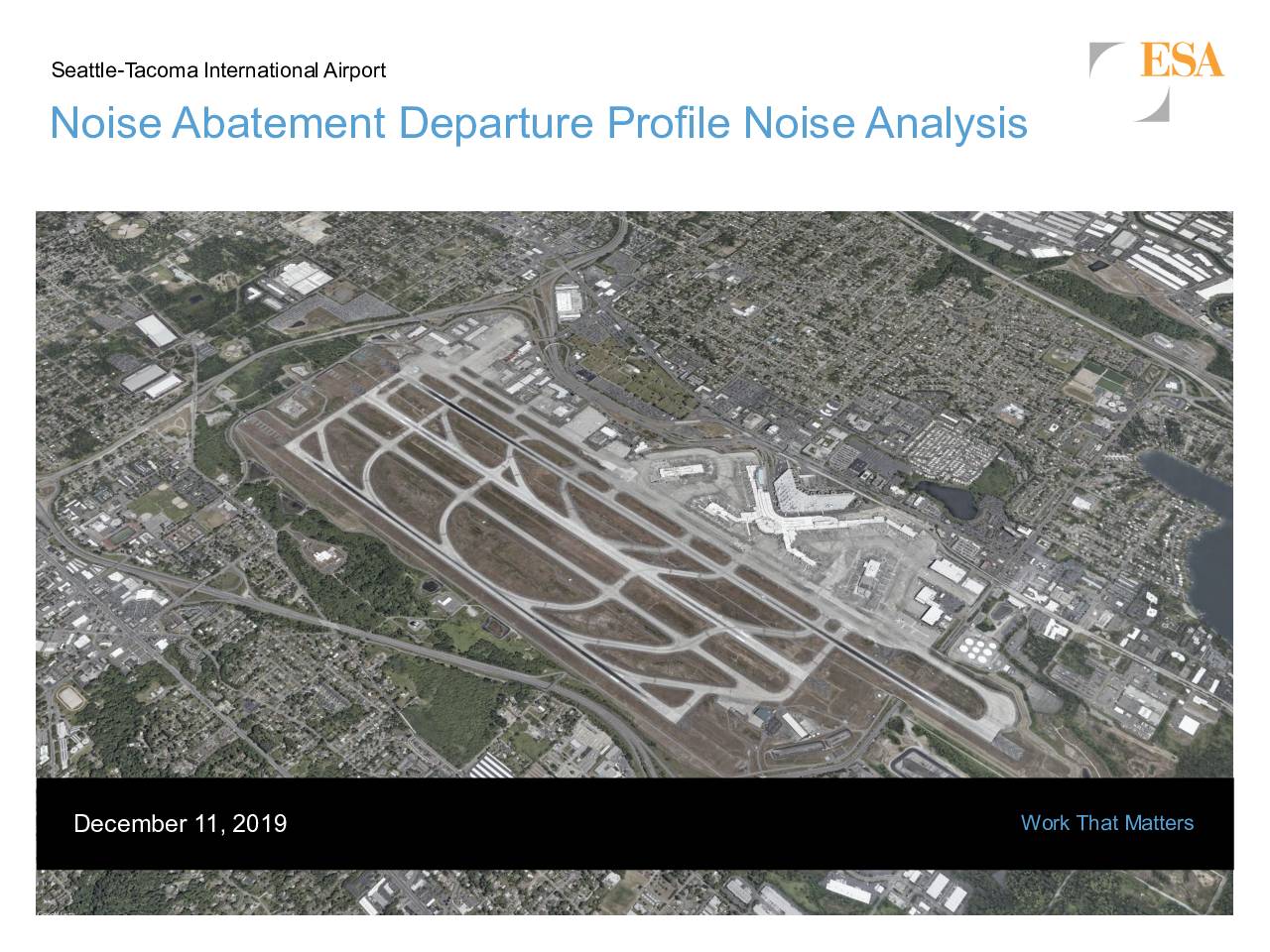
Seattle-Tacoma International Airport noise abatement departure profile noise analysis
This December 2019 report by ESA for the Port of Seattle analyzes two standard Noise Abatement Departure Profiles (NADPs) used at Seattle-Tacoma International Airport: the Close-in profile, which reduces noise near the runway end, and the Distant profile, which reduces noise farther along the departure path. The analysis finds that the Distant NADP provides the greatest noise relief to the residential and developed communities surrounding Sea-Tac Airport. The report includes background on departure profiles, noise analysis results, and recommendations for the airport's noise abatement policy. -
 2019-01-12
Noise 101 Symposium: Principles of Aviation Noise
This document is a presentation from a Noise 101 Symposium held on January 12, 2019, organized by the City of SeaTac and the Port of Seattle, and delivered by Steve Alverson of Environmental Science Associates (ESA). The symposium covered four key modules: the principles of aviation noise, methods for quantifying aircraft noise, aircraft noise regulations and guidance, and principles of aircraft noise control. The half-day session was designed to provide attendees with a foundational understanding of how aircraft noise is measured, regulated, and managed in the context of Seattle-Tacoma International Airport. -
 2018-05-23
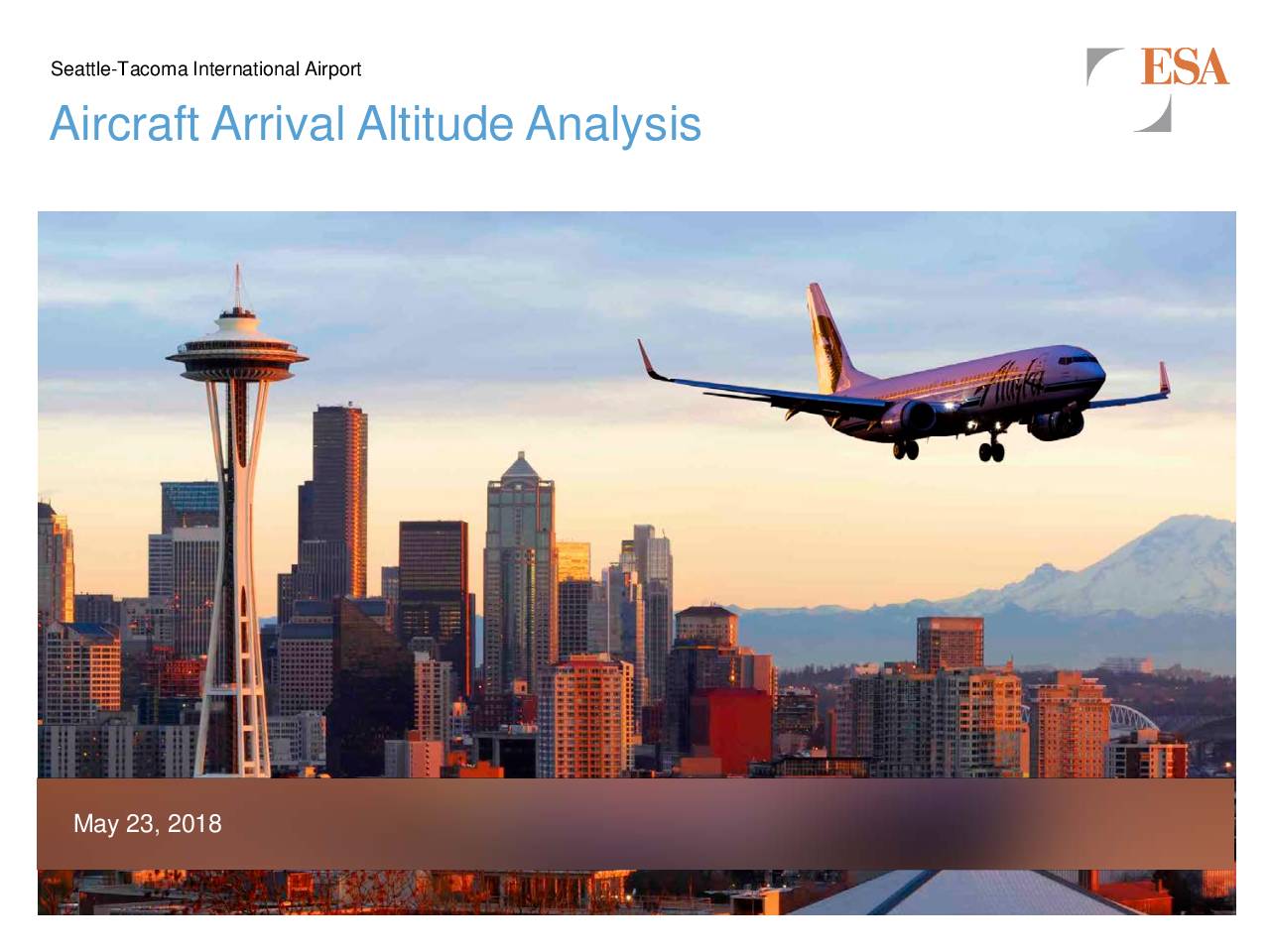
Sea-Tac Airport Aircraft Arrival Altitude Analysis
This May 2018 draft report by ESA analyzes changes in aircraft arrival altitudes at Seattle-Tacoma International Airport across 2013, 2015, and 2017, examining how those changes relate to noise exposure for surrounding communities. Key findings from earlier meetings indicate that while overall arrival numbers increased and traffic flow direction remained stable, there was a notable shift in runway use from center runways to right and left runways, along with changes in the mix of narrow-body and wide-body aircraft types serving the airport. -
 2018-05-22
Aircraft Noise 101
★ 32This presentation, sponsored by the Port of Seattle and delivered by ESA Senior Vice President Steve Alverson on May 22, 2018, provides an introductory overview of aircraft noise for community members and stakeholders. It covers the evolution and quantification of aviation noise, how it is regulated, and draws on Alverson's 37 years of experience conducting over 200 aviation noise studies. The session concluded with a question-and-answer period for attendees. -
 2018-01-24
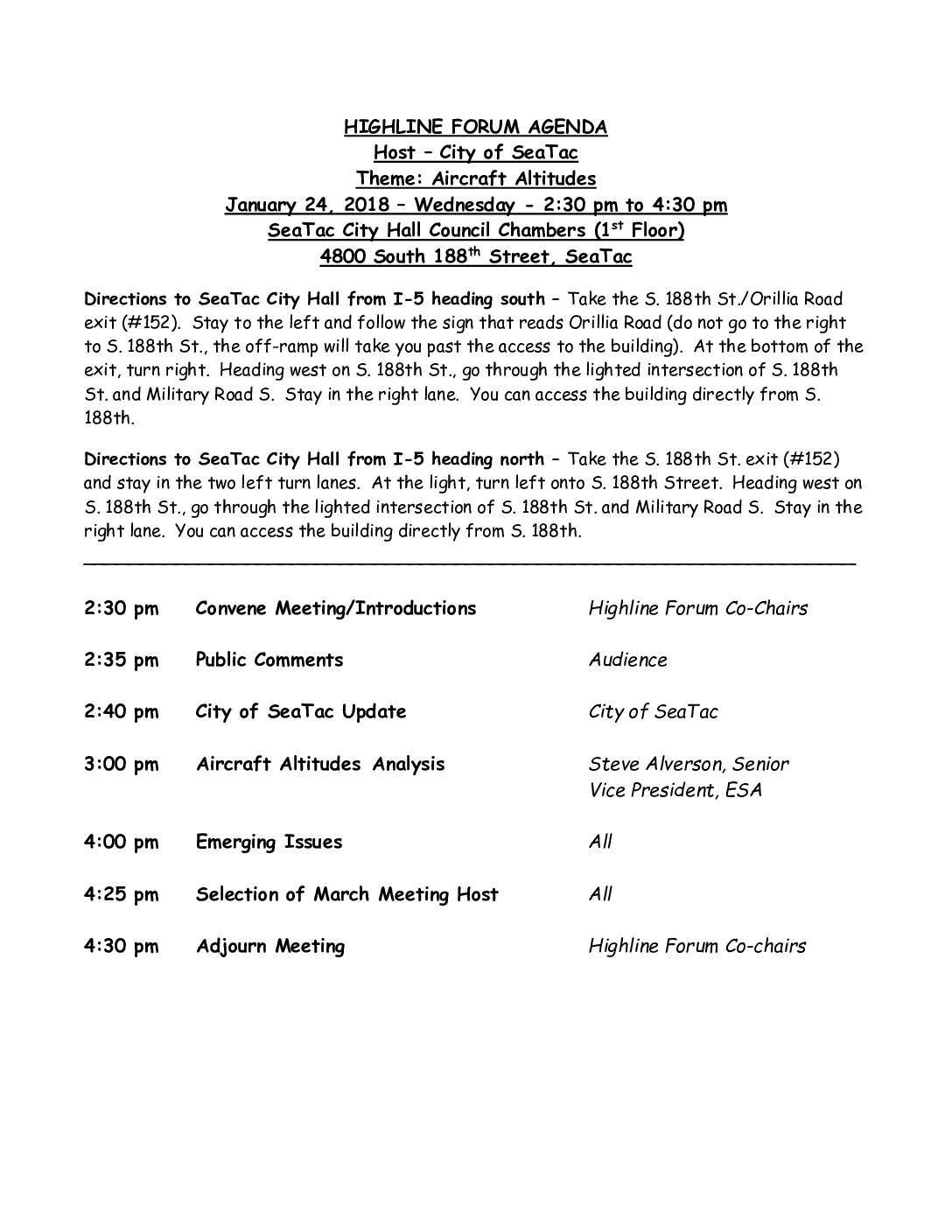
Highline Forum agenda: Aircraft altitudes
The Highline Forum held a public meeting on January 24, 2018, hosted by the City of SeaTac, focused on the theme of aircraft altitudes. The agenda included a City of SeaTac update, a presentation on Aircraft Altitudes Analysis by Steve Alverson, Senior Vice President of ESA, and a discussion of emerging issues. The meeting took place at SeaTac City Hall Council Chambers and ran from 2:30 pm to 4:30 pm. -
 2018-01-24
Aircraft arrivals analysis: Progress update
This January 2018 progress update from ESA presents an analysis of aircraft arrivals at Seattle-Tacoma International Airport (SEA), examining whether notable changes occurred between 2013, 2015, and 2017. The study uses radar flight track data from July and December of each year to compare fleet mix, runway usage, and aircraft altitudes at six nautical miles from the airport. Key questions addressed include whether arrival numbers increased, whether traffic flow patterns shifted between north and south flow, and whether arriving aircraft were flying at different altitudes over the study period. -
 2017-04-01
John F. Kennedy International Airport final noise exposure map report
A Title 14 CFR Part 150 Final Noise Exposure Map Report for JFK International Airport prepared by Environmental Science Associates and other consulting firms for the Port Authority of New York & New Jersey. The report addresses federal aviation noise regulations and mapping requirements. -
 2013-02-19
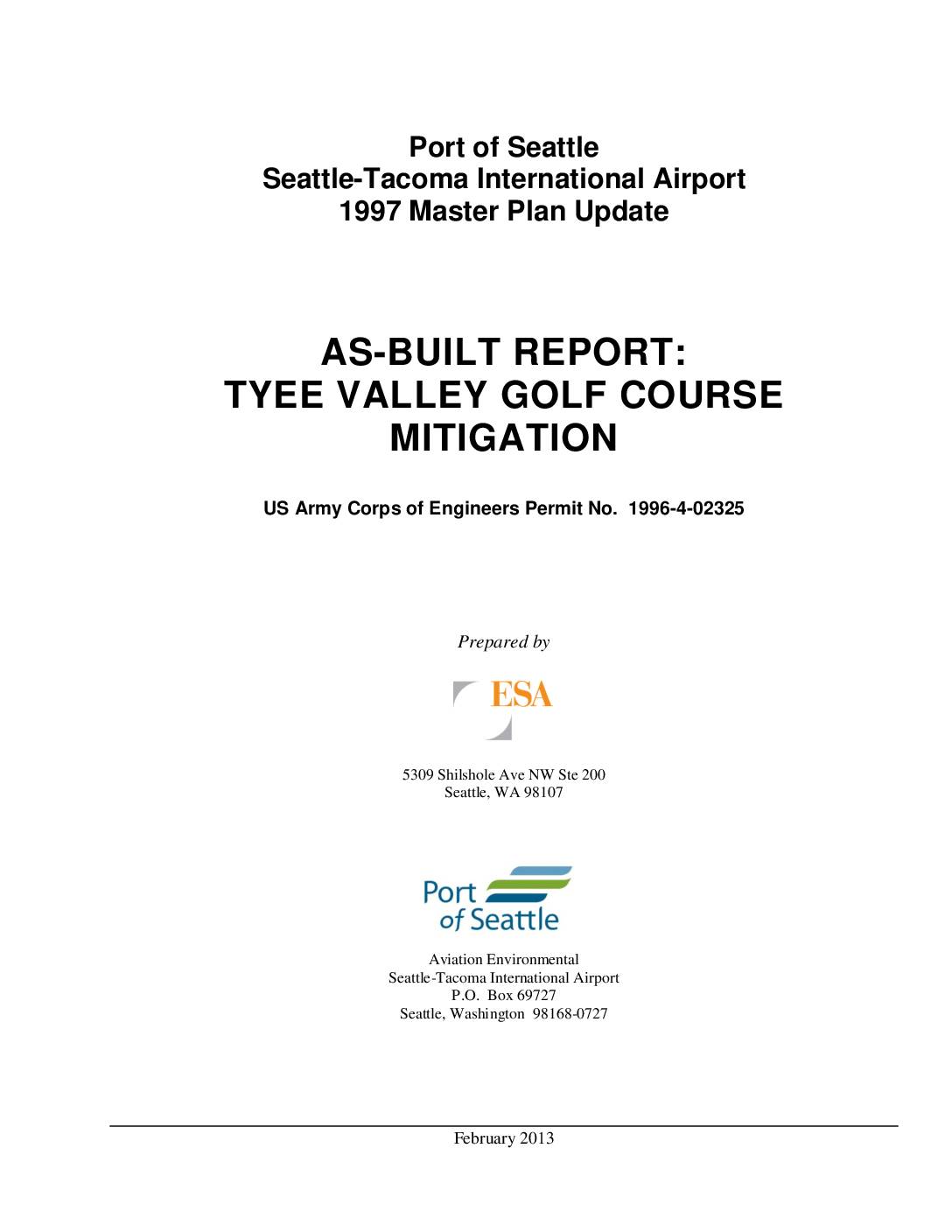
As-Built Report: Tyee Valley Golf Course Mitigation — US Army Corps of Engineers Permit No. 1996-4-02325
This February 2013 report documents the as-built conditions of a wetland mitigation project at Tyee Valley Golf Course, carried out as part of Seattle-Tacoma International Airport's 1997 Master Plan Update. Prepared by ESA for the Port of Seattle under a US Army Corps of Engineers permit, it details construction outcomes, planting plans, and habitat restoration work completed to offset environmental impacts from airport improvements. The report also outlines ongoing vegetation and hydrologic monitoring standards to ensure the mitigation site meets long-term performance goals. -
 2001-12-20
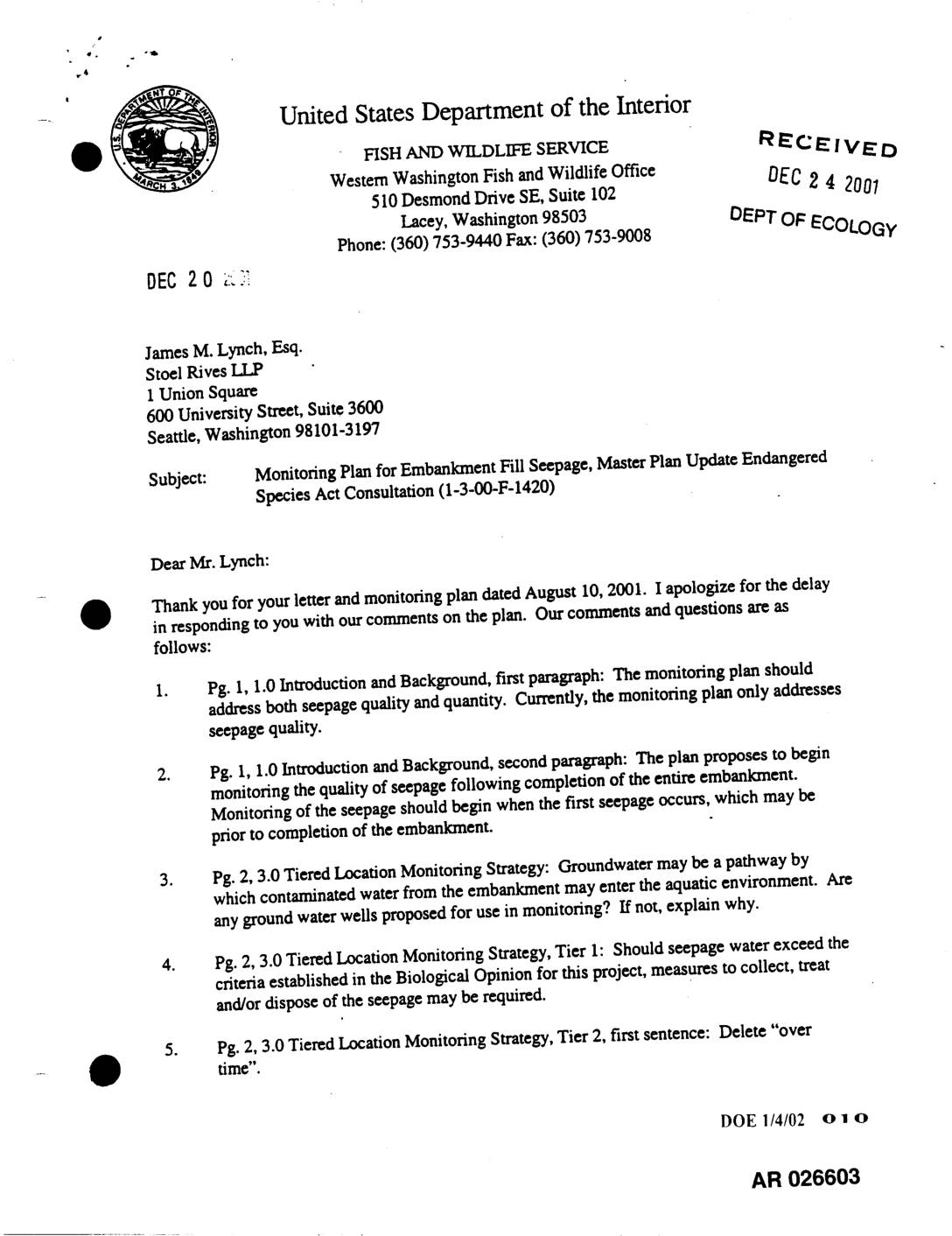
EXH AR026603: Letter USFWS to James M. Lynch — Monitoring Plan Embankment Fill Seepage, Master Plan Update ESA Consultation (1-3-00-F-1420)
This December 2001 letter from the U.S. Fish and Wildlife Service's Western Washington office provides detailed comments on a Monitoring Plan for Embankment Fill Seepage related to a Sea-Tac Airport Master Plan Update, reviewed under the Endangered Species Act. The agency requested key revisions, including monitoring both seepage quality and quantity, beginning monitoring when seepage first occurs rather than after embankment completion, and ensuring groundwater wells are considered as a monitoring pathway. The letter also clarified that any exceedances of water quality criteria must be reported promptly, and that the Federal Aviation Administration—not the Port—would be responsible for reinitiating formal consultation.