TagCity Of Des Moines(214)
-
 2002-09-26
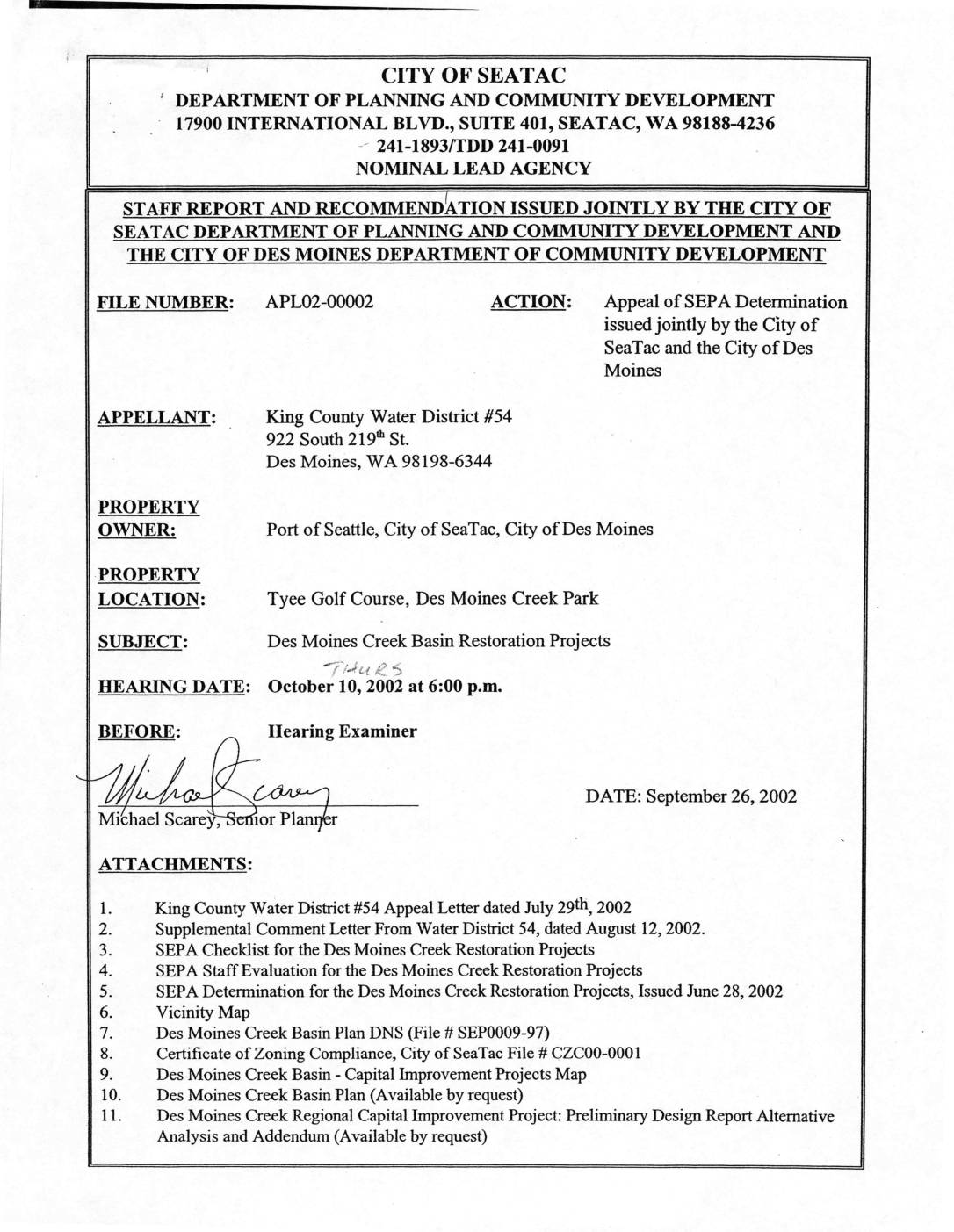
Staff Report and Recommendation: APL02-00002 — Appeal of SEPA Determination for Des Moines Creek Basin Restoration Projects
This 2002 staff report from the City of SeaTac and City of Des Moines addresses an appeal by King County Water District #54 challenging an environmental (SEPA) determination related to the Des Moines Creek Basin Restoration Projects, a multi-agency effort to reduce stormwater damage and protect water quality near the Tyee Golf Course. The water district argued that the environmental review failed to adequately address potential impacts to the Highline aquifer, which serves as its sole water supply source. The hearing was scheduled before a Hearing Examiner on October 10, 2002. -
 2002-01-01
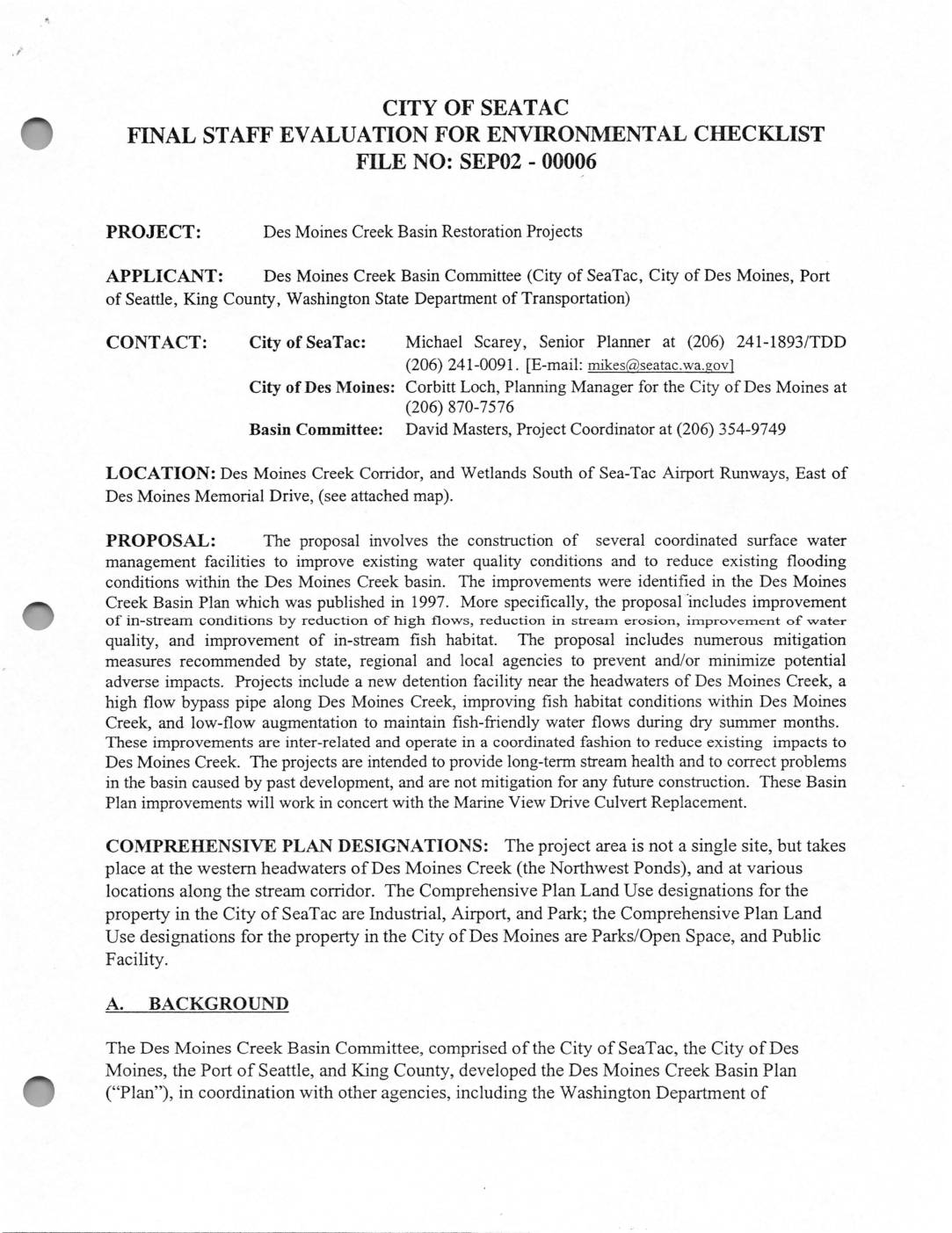
Final Staff Evaluation for SEPA Environmental Checklist – Des Moines Creek Basin Restoration Projects
★The City of SeaTac conducted an environmental review of the Des Moines Creek Basin Restoration Projects, a multi-agency effort involving the cities of SeaTac and Des Moines, the Port of Seattle, and King County. The project aims to improve water quality, reduce flooding, and restore fish habitat along Des Moines Creek by building a new detention facility, installing a high-flow bypass pipe, and maintaining low-flow water levels during dry summer months. The city's staff determined that the project does not require a full Environmental Impact Statement, as it is not expected to have a significant adverse impact on the environment. -
 2001-05-01
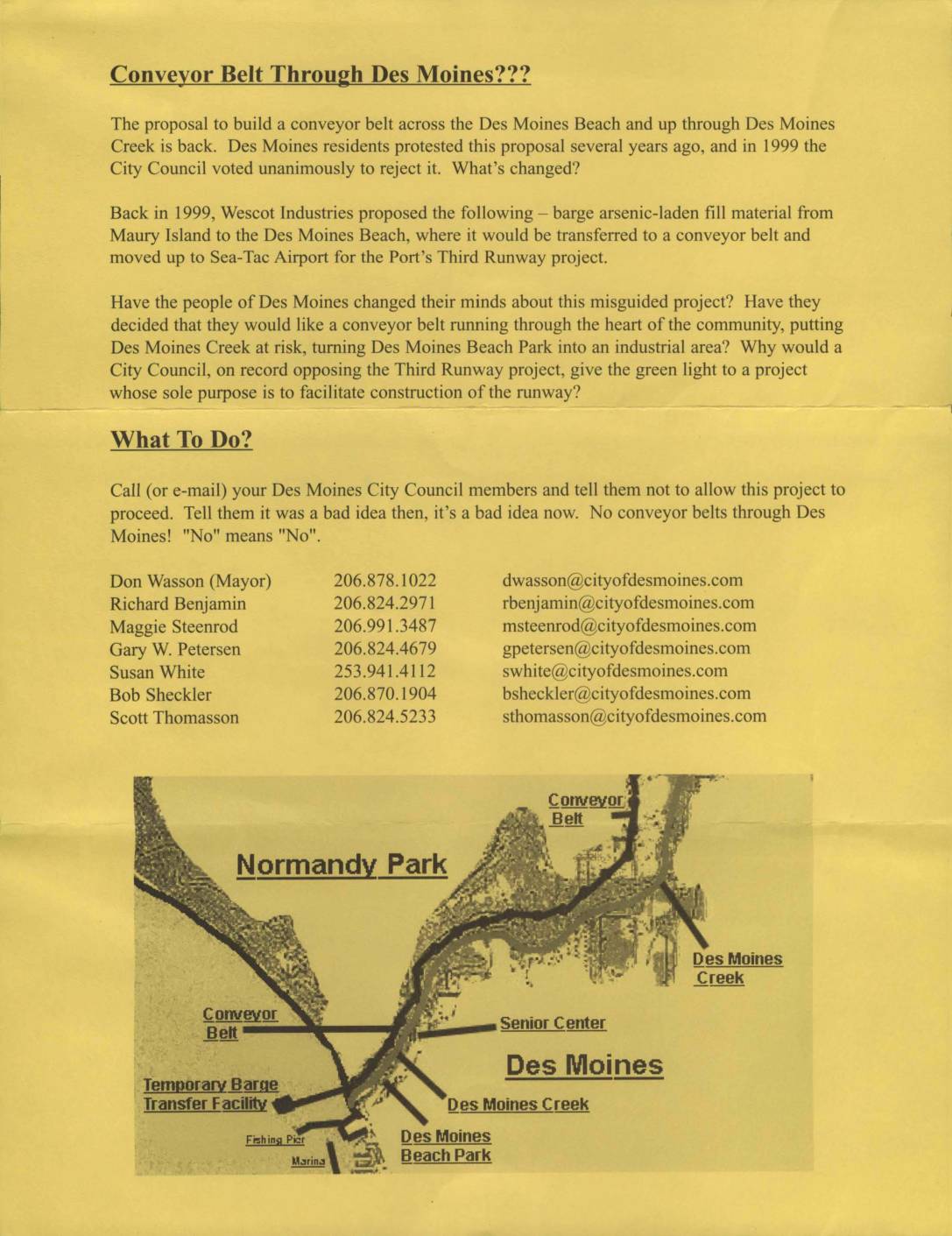
Conveyor belt through Des Moines???
A community flyer opposing a proposed conveyor belt system through Des Moines, Washington, that would transport arsenic-laden fill material from Maury Island to Sea-Tac Airport in support of the Port's Third Runway construction project. The Des Moines City Council had unanimously rejected the same proposal in 1999, and residents were urged to contact their council members to block the revived plan. Opponents argued the project would industrialize Des Moines Beach Park and put Des Moines Creek at environmental risk. -
 2000-05-19
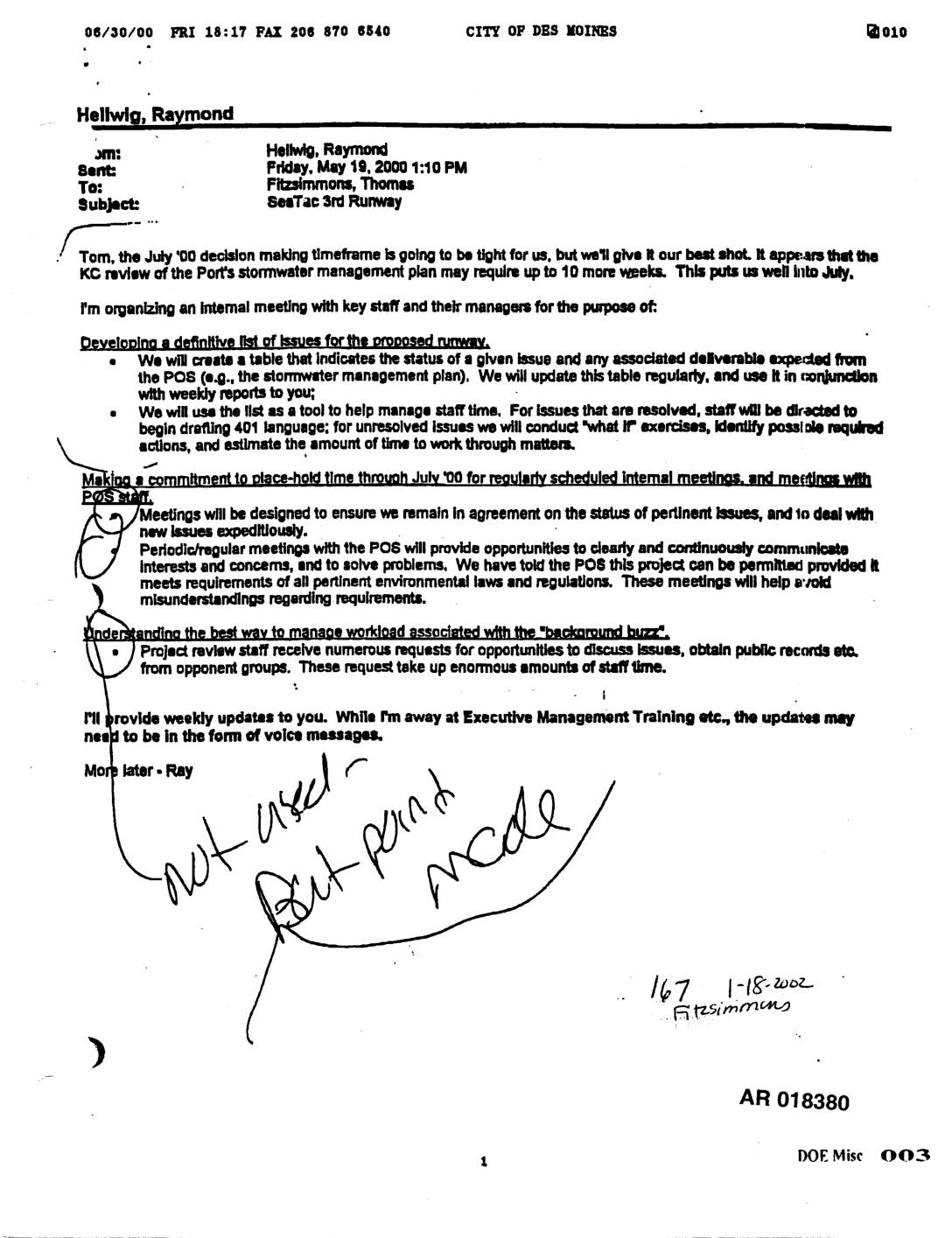
Exhibit 167: Email from Raymond Hellwig to Thomas Fitzsimmons Re: Sea-Tac 3rd Runway Permitting Timeline
Email dated May 19, 2000 from Raymond Hellwig (City of Des Moines) to Thomas Fitzsimmons regarding the SeaTac 3rd Runway permitting process. Discusses tight July 2000 decision-making timeframe, King County review of Port Of Seattle stormwater management plan requiring up to 10 more weeks, development of a definitive issues list for the proposed runway, drafting -
 2000-04-20
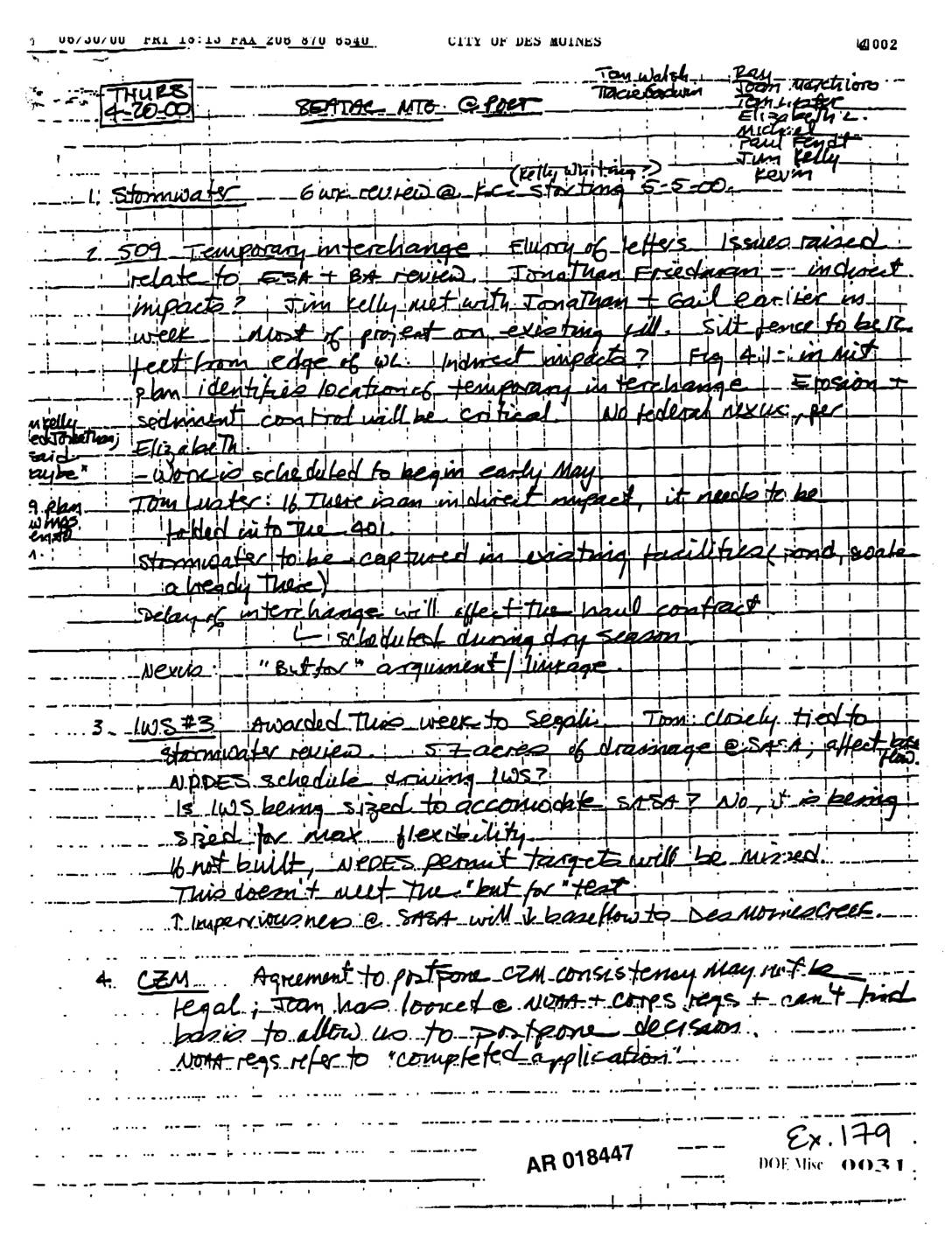
Exhibit 179: Handwritten Meeting Notes — BEATAC Meeting at Port, April 20, 2000
Handwritten notes from a BEATAC meeting at the Port on April 20, 2000, AR018447, involving City of Des Moines personnel including Tom Walsh, Tacie Borden, John Marchiloro, Jim Kelly, and others. Topics include: stormwater review at FCC starting 5-5-00; SR-509 temporary interchange issues (ESA/BA review, Jonathan Freedman indirect impacts, erosion/sediment control, no federal nexus); LWS#3 -
 2000-04-13
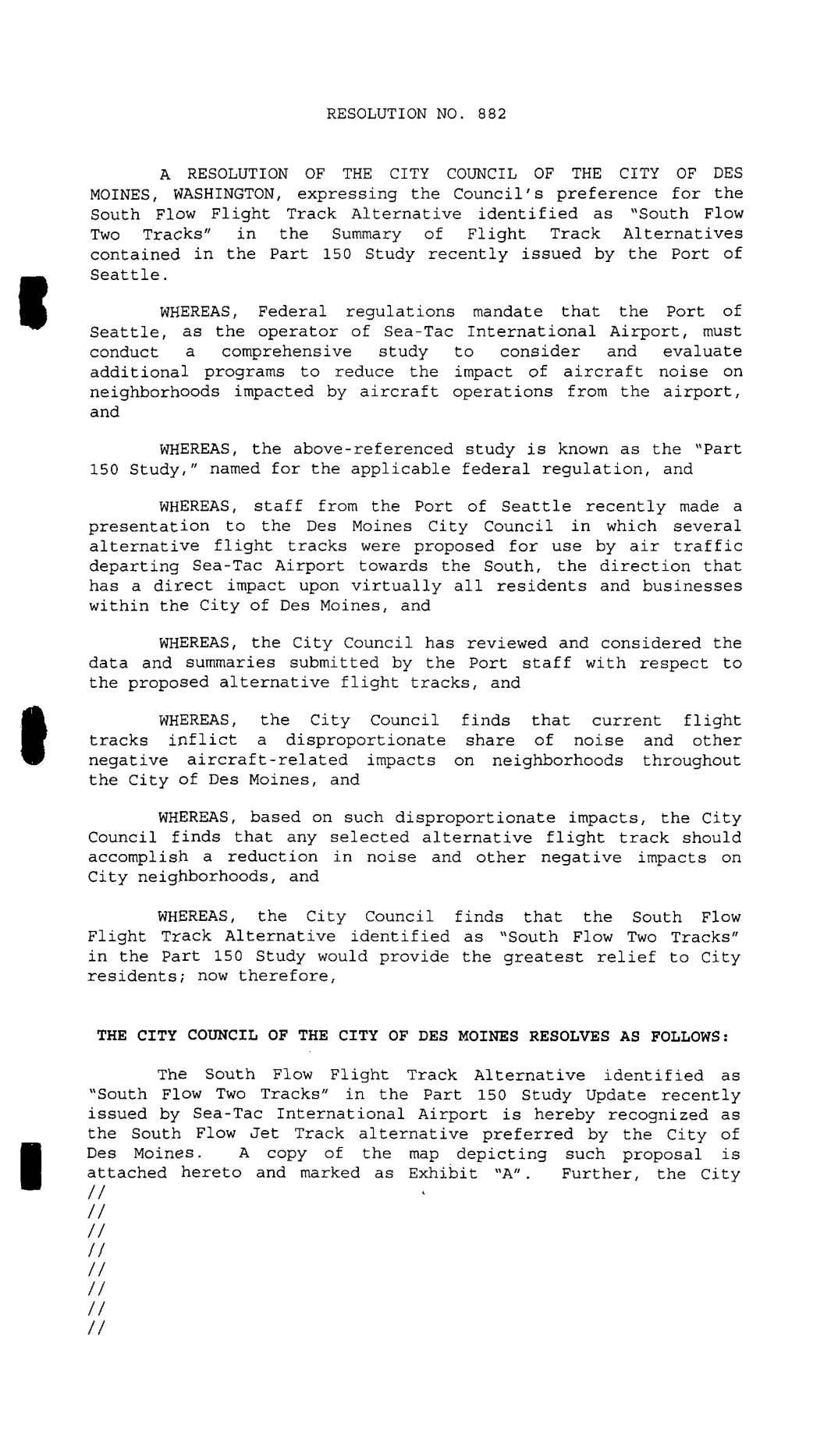
Resolution No. 882: Expressing the Council’s preference for the South Flow Two Tracks flight track alternative
In April 2000, the Des Moines, Washington City Council adopted Resolution No. 882, formally expressing its preference for the 'South Flow Two Tracks' flight path alternative proposed in the Port of Seattle's Part 150 Study. The Council found that existing flight tracks placed a disproportionate share of aircraft noise on Des Moines residents and businesses, and determined that the two-track alternative would provide the greatest noise relief. The City Manager was directed to submit the resolution to the Port of Seattle as the city's official position on southbound departure routes from Sea-Tac International Airport. -
Des Moines — Thumbnail History
The City of Des Moines, located 15 miles south of Seattle along the shores of Puget Sound, has never been a large center of industry like other Seattle suburbs. Although it incorporated as recently as 1959, it has been a Northwest community for more than 100 years. Europeans first saw the high bluffs of Des -
 1998-07-09
EXH AR041629: Memorandum Ruling on Application of WAC Ch. 365-195
King County Superior Court Memorandum Ruling by Judge Robert H. Alsdorf on Application of WAC Chapter 365-195 (Procedural Criteria for Adopting Comprehensive Plans and Development Regulations) in consolidated cases No. 96-2-20357-2 KNT, No. 97-2-13908-2 KNT, No. 97-2-22276-1 KNT, No. 98-2-04911-1 KNT. City of Des Moines, Airport Communities Coalition, and other plaintiff-petitioners argued against the Port -
 1997-11-01
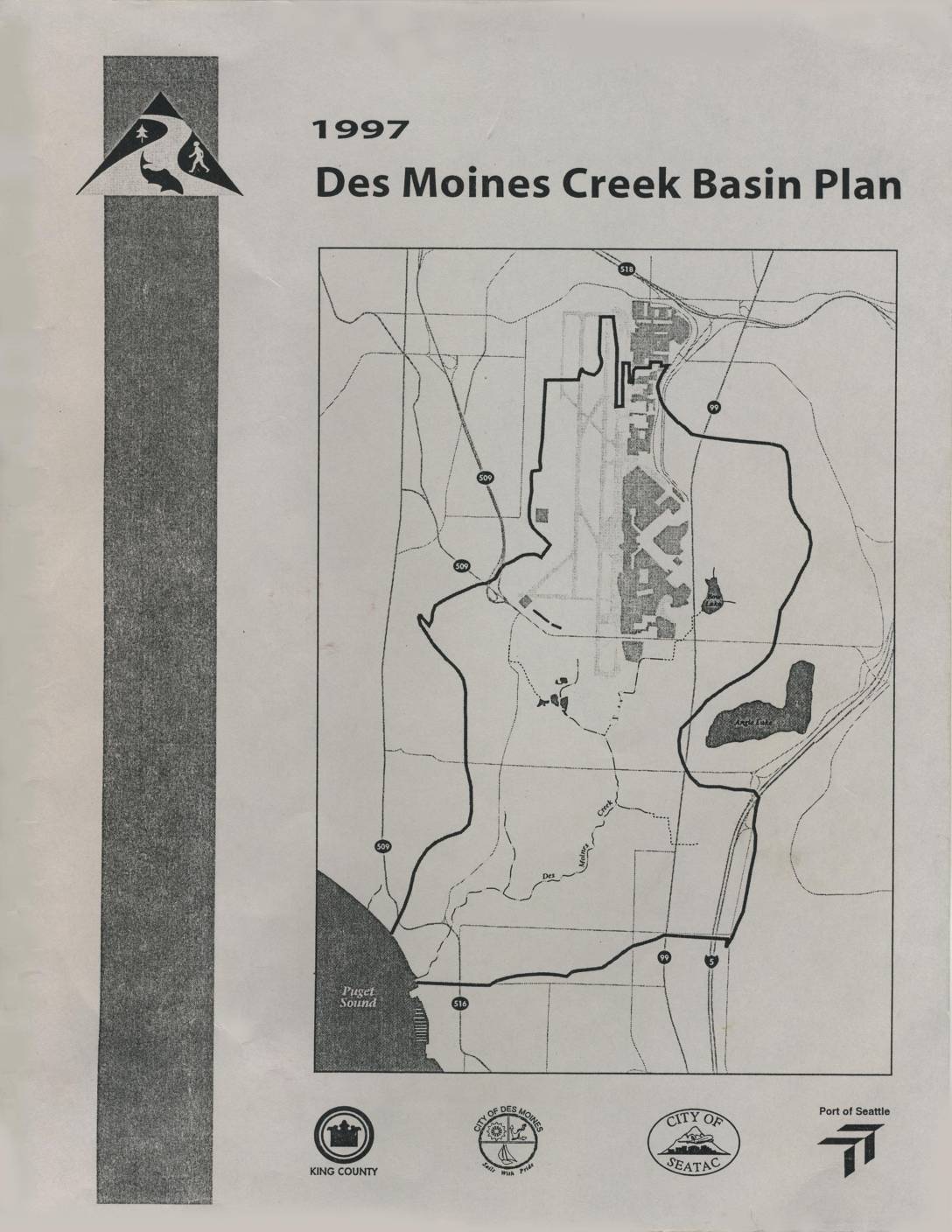
Des Moines Creek Basin Plan
The 1997 Des Moines Creek Basin Plan is a collaborative watershed management document produced by the City of SeaTac, City of Des Moines, Port of Seattle, and King County. It addresses stormwater, drainage, and environmental conditions within the Des Moines Creek basin, an area significantly influenced by Sea-Tac Airport and surrounding urban development. The plan establishes coordinated strategies among the four jurisdictions to manage water quality and flooding in this shared watershed. -
 1992-01-09
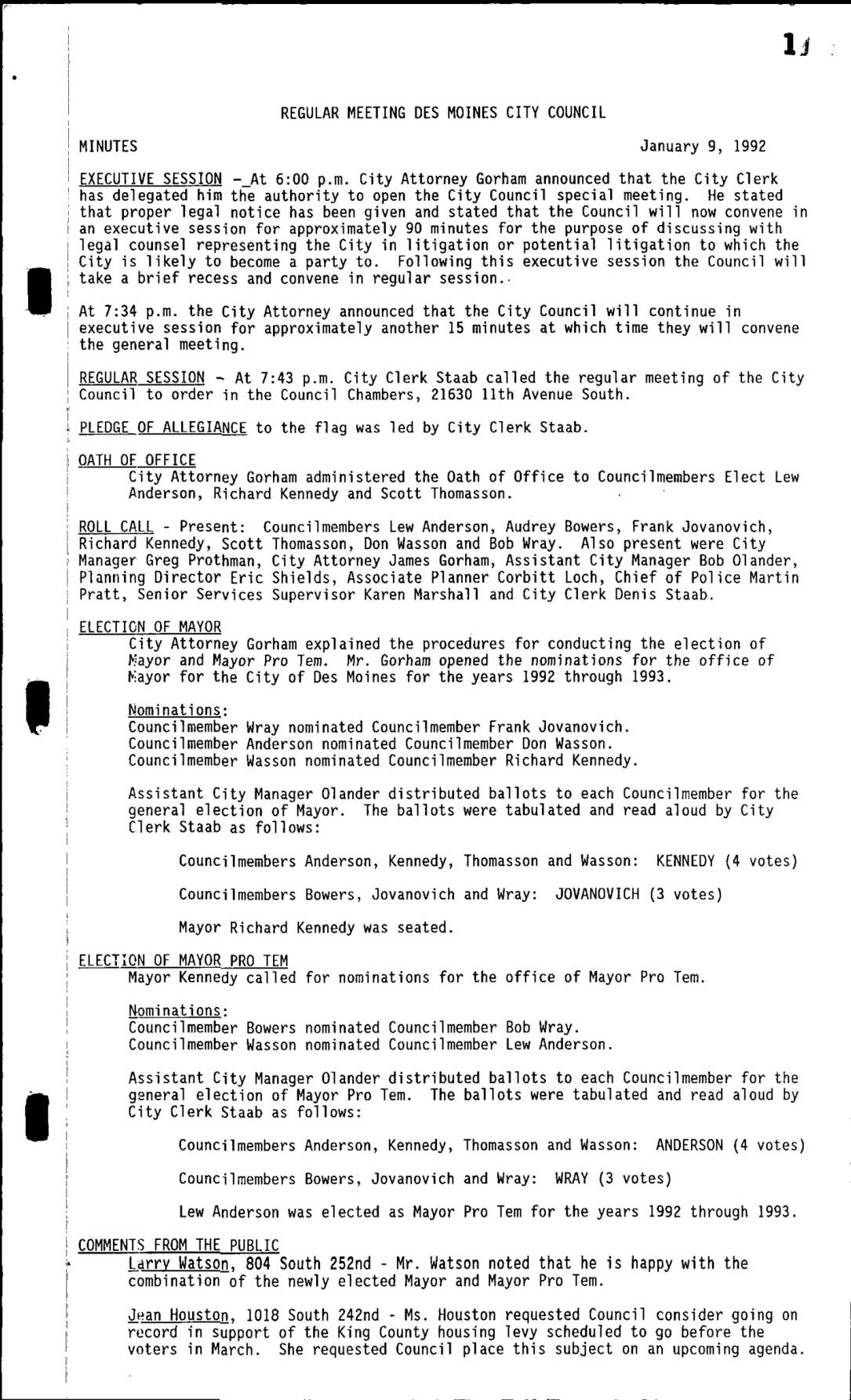
Regular meeting Des Moines City Council minutes
Minutes from the January 9, 1992 Des Moines City Council meeting include discussion of airport-related noise and emissions issues, as Mayor Kennedy distributed a written report from the National League of Cities Congress noting that airport noise and aircraft emissions fall within the domain of the Environment, Energy, and Natural Resources (EENR) Steering Committee. The report also references a vacant seat on the EENR Steering Committee specifically tied to airport issues, including noise and emissions from aircraft, for which the City of Des Moines applied. Membership would require attendance at four EENR Steering Committee meetings per year at a cost of $968 annually for NLC direct member status.