TagAlternative Fuels(34)
-
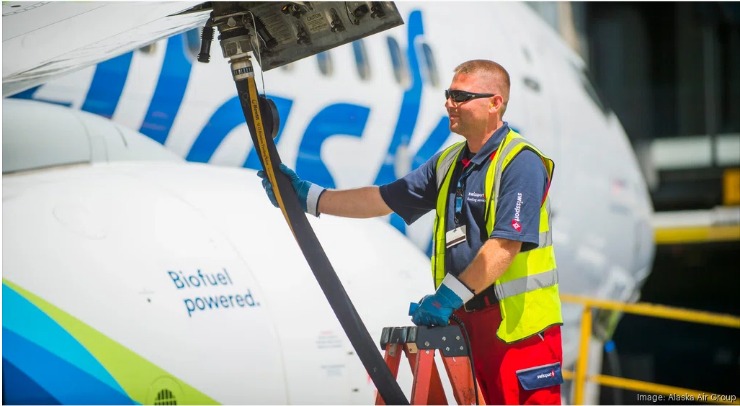
Alaska Airlines Biofuel-Powered Aircraft Refueling
A ground crew member wearing a high-visibility vest refuels an Alaska Airlines aircraft labeled 'Biofuel powered.' at what appears to be a tarmac fueling operation. The image is credited to Alaska Air Group, indicating this is an official promotional or documentary photo related to Alaska Airlines' sustainable aviation fuel initiatives. -
 2023-03-01
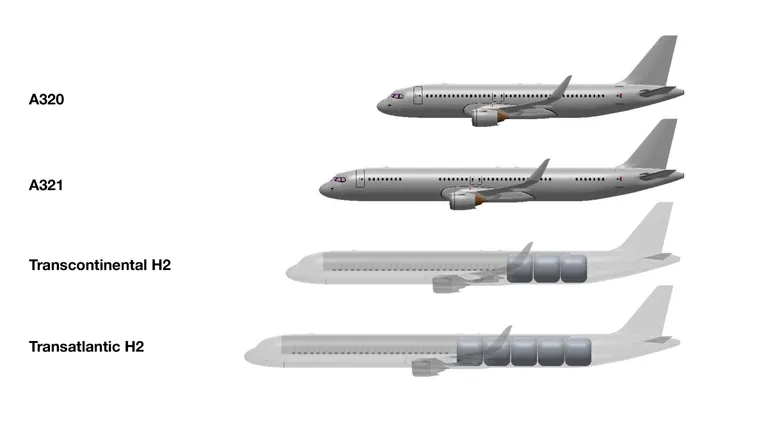
Aircraft Size Comparison – A320, A321, and Transcontinental/Transatlantic H2 Aircraft
The image compares four narrow-body aircraft configurations: the conventional Airbus A320 and A321, alongside two hydrogen-powered concept variants labeled 'Transcontinental H2' and 'Transatlantic H2.' The H2 variants show large cylindrical hydrogen fuel tanks visible in the aft fuselage section, illustrating how liquid hydrogen storage would be integrated into the A320/A321 airframe for medium- and long-range zero-emission flight. -
 2022-11-29
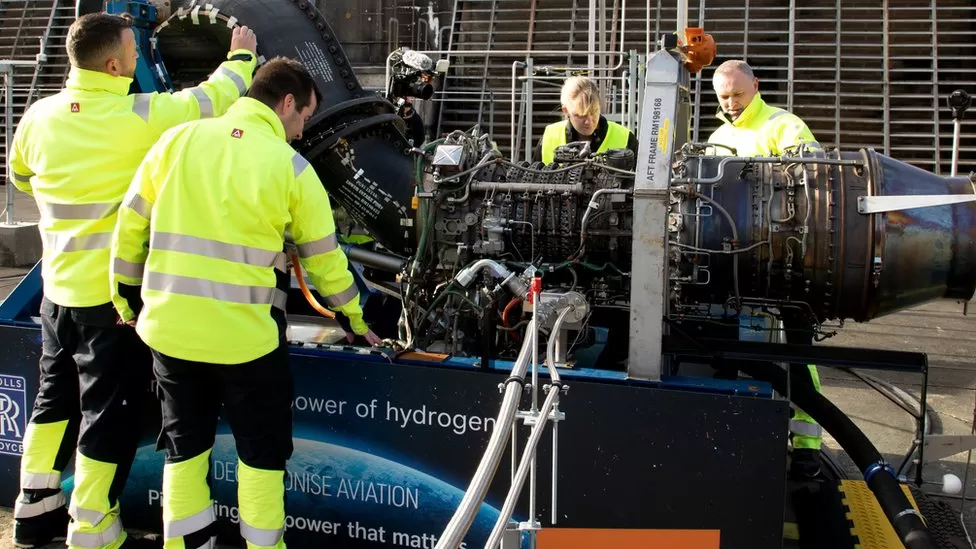
Power of hydrogen – aircraft maintenance demonstration
Rolls-Royce technicians in high-visibility safety gear work on a jet engine mounted on a test stand bearing the Rolls-Royce logo and text referencing 'power of hydrogen' and 'decarbonise aviation.' This appears to be related to Rolls-Royce's hydrogen combustion engine testing program. -
Rolls-Royce tests a jet engine running on hydrogen
By Theo Leggett Business correspondent, BBC News In a windswept corner of a military site on Salisbury Plain a small aircraft jet engine is undergoing tests that could one day lead to huge changes within the aviation industry. The engine itself is almost completely conventional. It is a Rolls-Royce AE-2100A gas turbine, a design used -
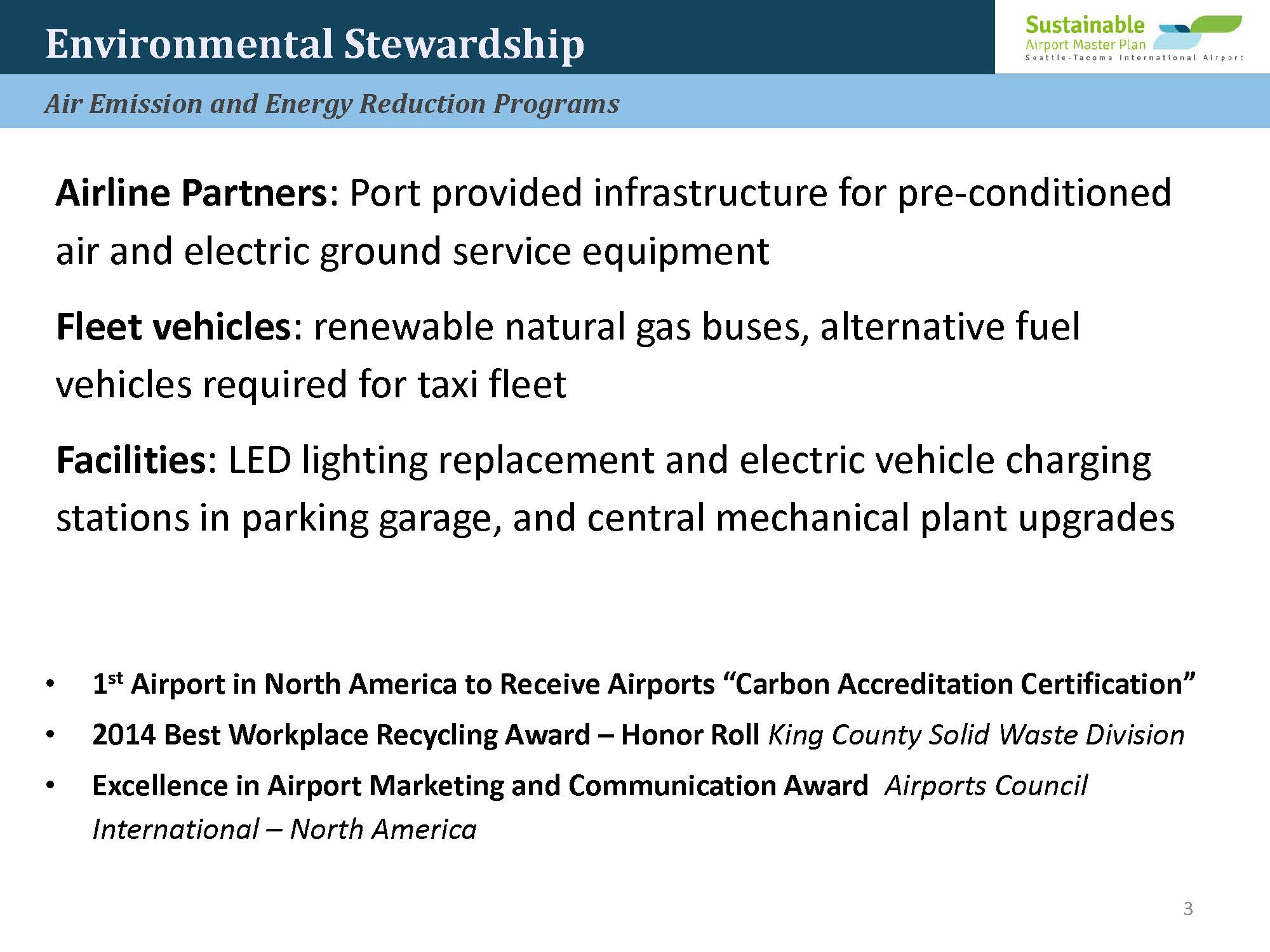
SAMP-2015-0519-BP12-PortofSeattle Page 03
A presentation slide from Seattle-Tacoma International Airport's Sustainable Airport Master Plan outlines Air Emission and Energy Reduction Programs, covering airline partner infrastructure, fleet vehicles (renewable natural gas buses, alternative fuel taxis), and facility upgrades (LED lighting, EV charging stations). The slide notes Sea-Tac was the first airport in North America to receive the Airports Council International Carbon Accreditation Certification, and lists two additional awards including the 2014 Best Workplace Recycling Award from King County Solid Waste Division. -
 2022-05-18
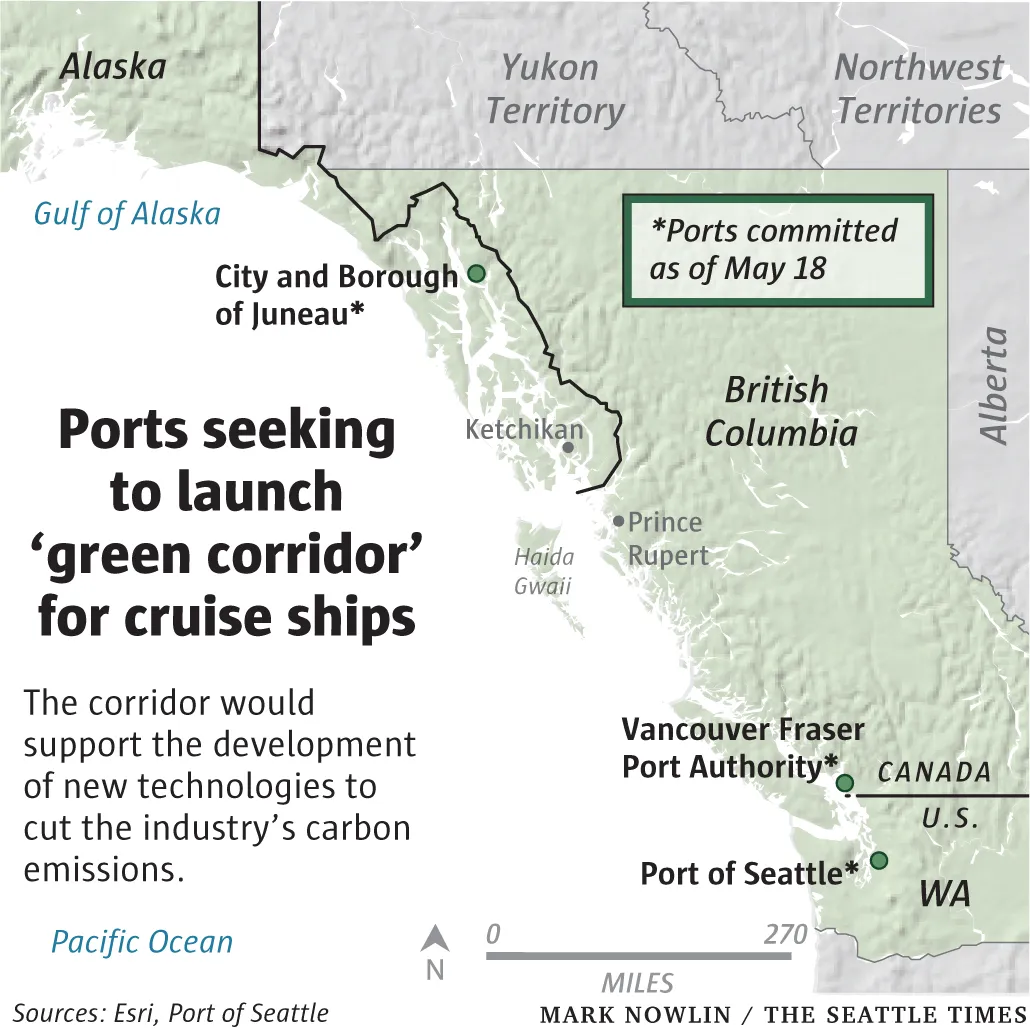
PNW Green Corridor for Cruise Ships – Seattle Times Map
A map published by The Seattle Times (credit: Mark Nowlin) shows three ports committed as of May 18 to launching a 'green corridor' for cruise ships: City and Borough of Juneau, Vancouver Fraser Port Authority, and Port of Seattle. The corridor aims to support new technologies to reduce the cruise industry's carbon emissions along the Pacific coast route from Washington state through British Columbia to Alaska. -
 2022-03-22
Sustainable Aviation Fuels (SAF): Update to FAA REDAC E&E Subcommittee
This March 2022 FAA presentation to the REDAC Energy & Environment Subcommittee provides an overview of Sustainable Aviation Fuels (SAF), highlighting both opportunities—such as drop-in compatibility with existing aircraft and infrastructure, and the potential to reduce lifecycle carbon emissions—and challenges including high production costs, limited incentives, and blend limits capped at 50%. The FAA's SAF program focuses on three areas: testing and accelerating fuel development, analyzing environmental and economic sustainability, and coordinating with public-private partnerships and international bodies like ICAO. While primarily focused on aviation decarbonization broadly, the program's emissions-reduction goals have indirect relevance to noise and environmental policy discussions at major airports like Sea-Tac. -
 2022-01-01
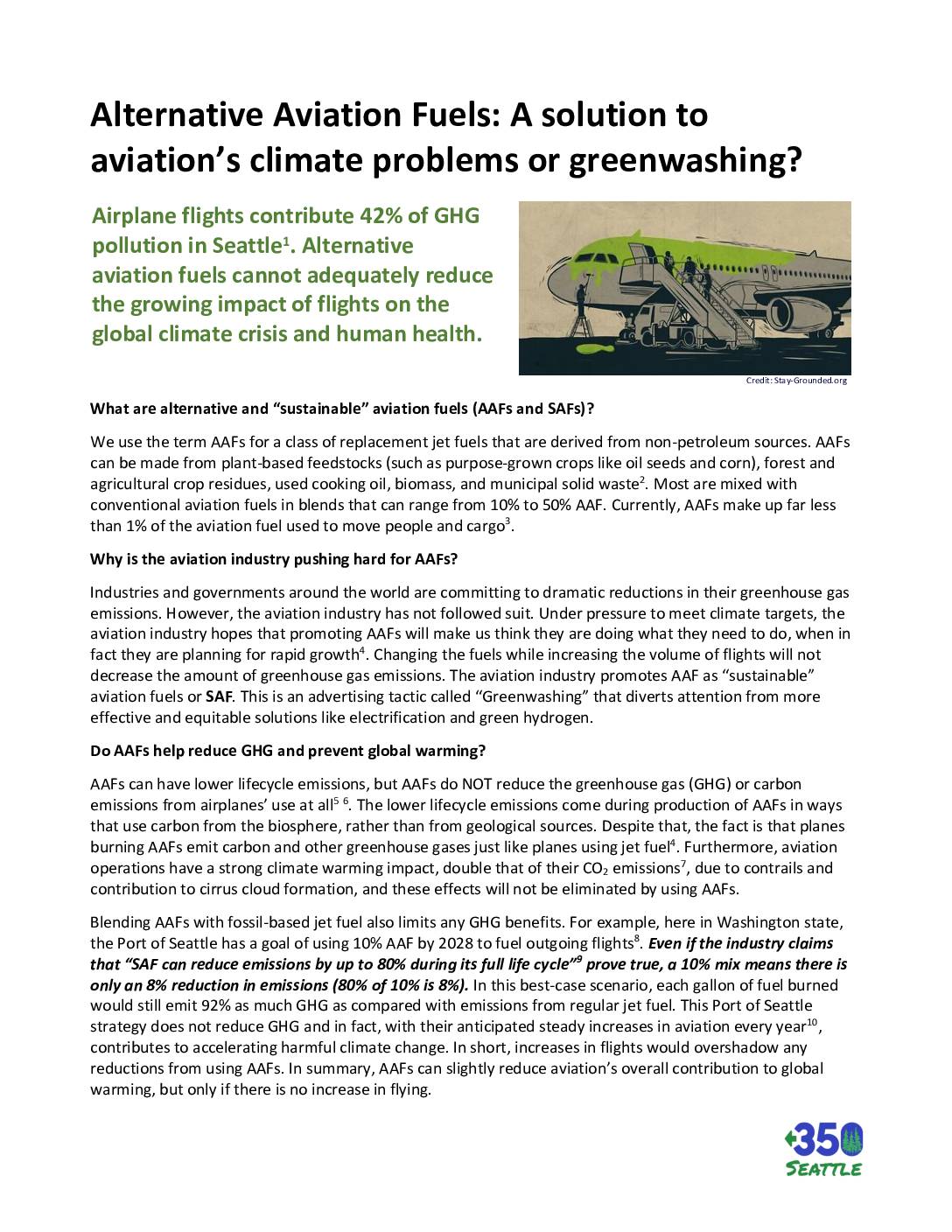
Alternative Aviation Fuels: A Solution To Aviation’s Climate Problems Or Greenwashing?
This document from 350 Seattle argues that alternative aviation fuels (AAFs), often marketed as 'sustainable aviation fuels' or SAFs, are largely a greenwashing tactic by the aviation industry and cannot meaningfully reduce greenhouse gas emissions, especially as flight volumes continue to grow. It highlights that planes burning AAFs still emit carbon just like conventional jet fuel, and that scaling up AAF production raises serious equity concerns, including health impacts on low-income communities and people of color living near Sea-Tac Airport and under flight paths. 350 Seattle instead calls for an emissions cap on aviation, a halt to airport expansion, and investment in true zero-emission solutions. -
 2021-08-17
Burien Airport Committee agenda and draft minutes, August 17, 2021
The Burien Airport Committee held virtual meetings in July and August 2021 to discuss issues related to Seattle-Tacoma International Airport and its surrounding community. Key topics included a presentation on the Sustainable Airport Master Plan (SAMP) covering 20 years of airport facility development, a briefing on Burien's Climate Action Plan, and an upcoming presentation on alternative jet fuels from Washington State University's ASCENT program. The committee also discussed zoning and land use near the airport and provided updates on the SEA Stakeholder Advisory Round Table (StART). -
 2021-02-17
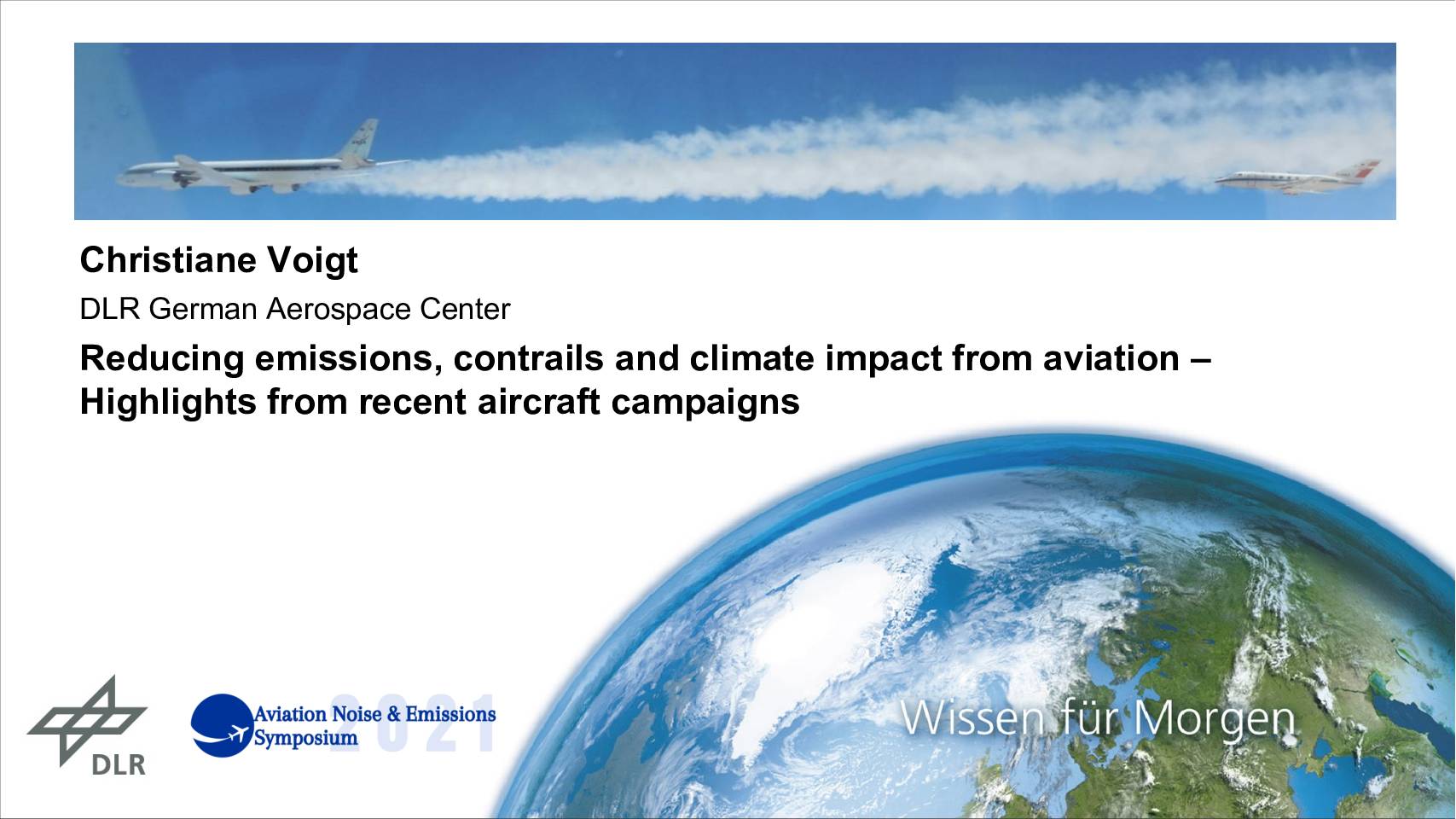
Reducing emissions, contrails and climate impact from aviation – Highlights from recent aircraft campaigns
A 2021 seminar by DLR researcher Christiane Voigt examines how aviation contributes to climate change through CO2 emissions, contrail cirrus clouds, and NOx gases, with contrail cirrus identified as the largest single warming factor at 57.4 mW m⁻². The presentation outlines strategies to reduce aviation's climate footprint, including the use of alternative fuels, lean combustion technology, and contrail avoidance routing. Findings draw on data from recent aircraft measurement campaigns and observed emission reductions during the 2020 COVID-19 lockdown.