TagAlternative Fuels(34)
-
 2024-05-18
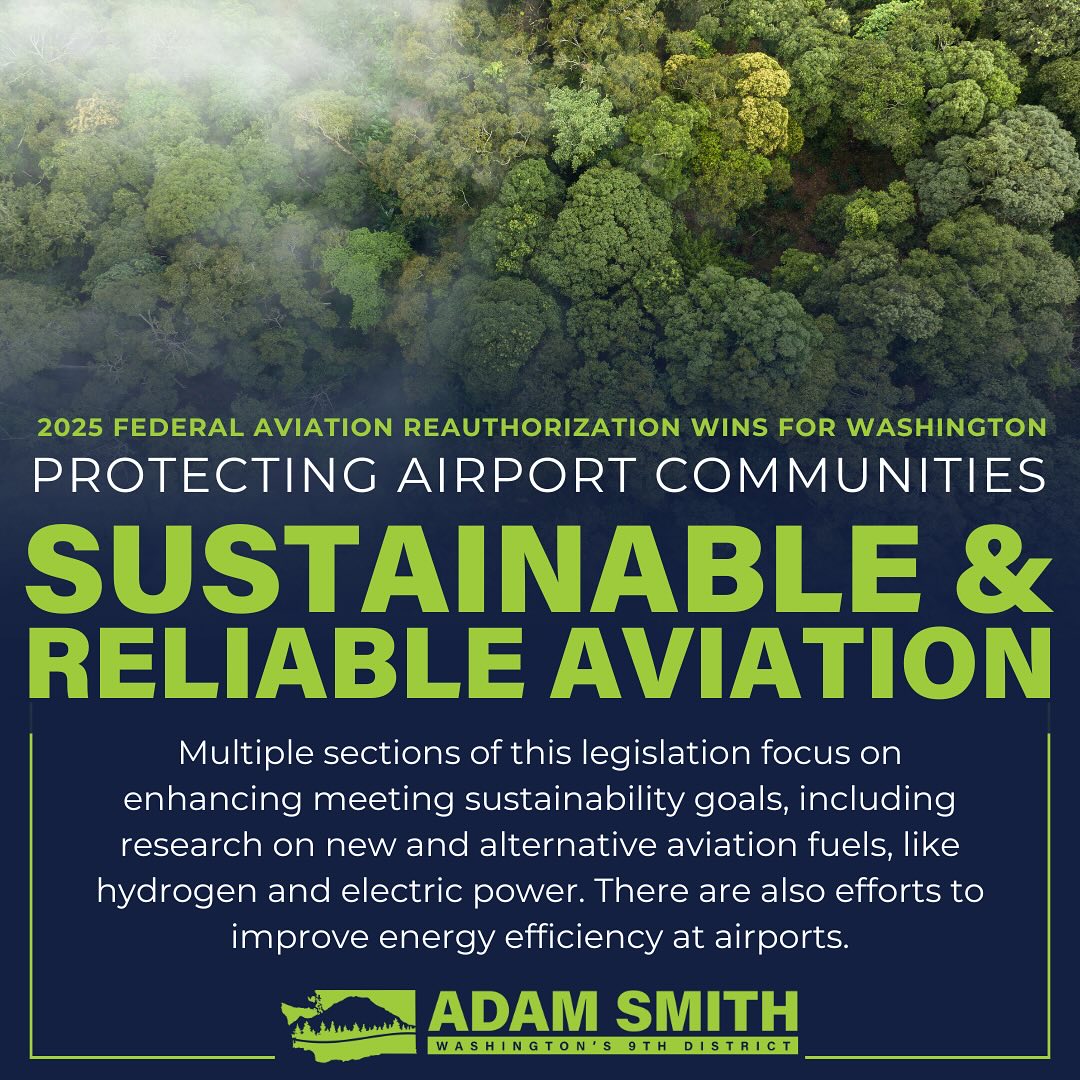
2025 Federal Aviation Reauthorization Wins for Washington – Protecting Airport Communities
Promotional graphic from U.S. Representative Adam Smith (Washington's 9th District) highlighting 2025 Federal Aviation Reauthorization provisions focused on sustainability, including research into alternative aviation fuels (hydrogen and electric power) and improved energy efficiency at airports. The graphic is branded with Smith's official congressional logo and framed under the theme 'Protecting Airport Communities.' -
 2024-05-08
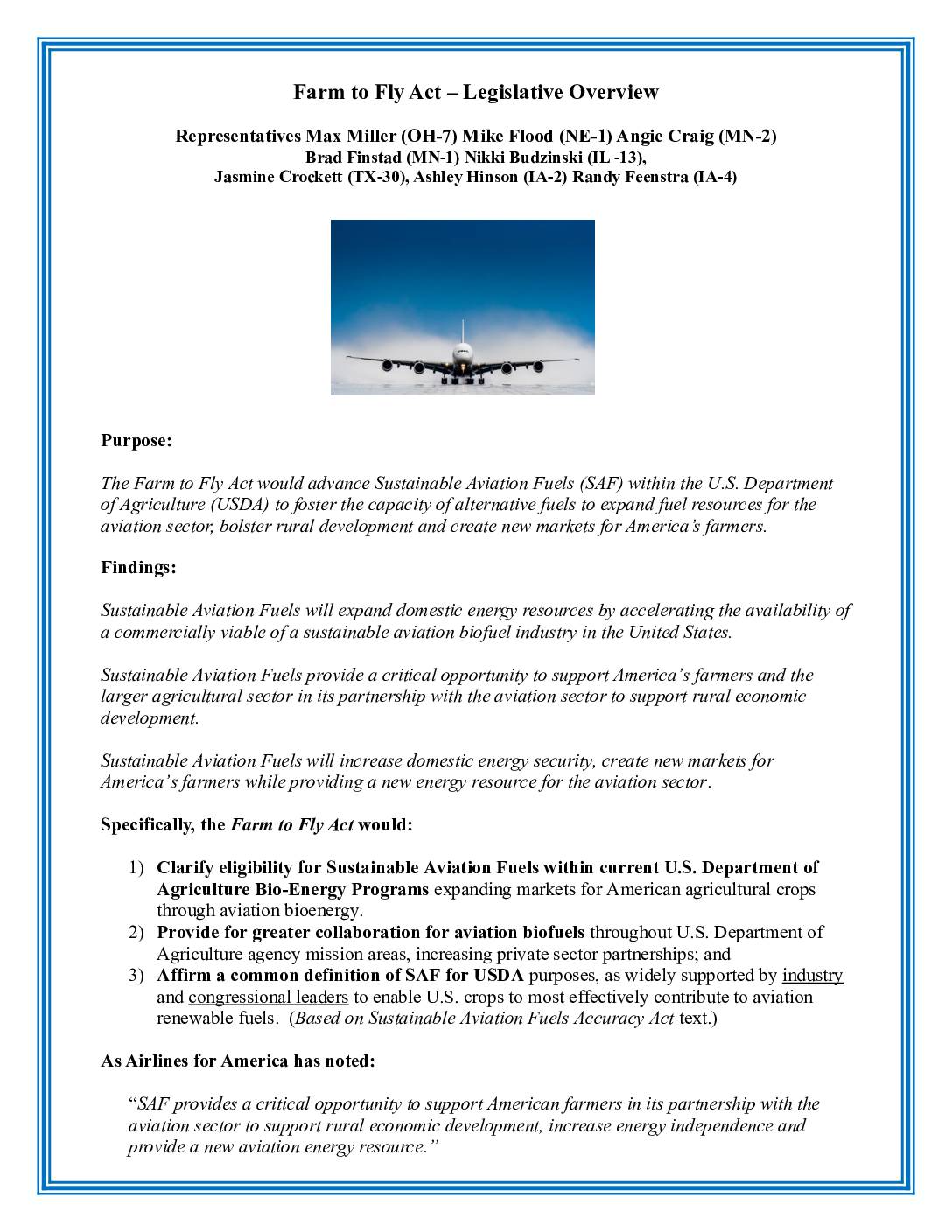
Farm to Fly Act – Legislative Overview
The Farm to Fly Act is a proposed piece of U.S. legislation aimed at promoting Sustainable Aviation Fuels (SAF) by expanding their eligibility within USDA bioenergy programs, encouraging federal agency collaboration, and establishing a standardized definition of SAF. The bill seeks to create new markets for American farmers by connecting agricultural crops and biomass to aviation fuel production, while also boosting rural economic development and domestic energy security. It is backed by a broad coalition of agricultural organizations, renewable fuel producers, and major U.S. airlines. -
 2024-05-01
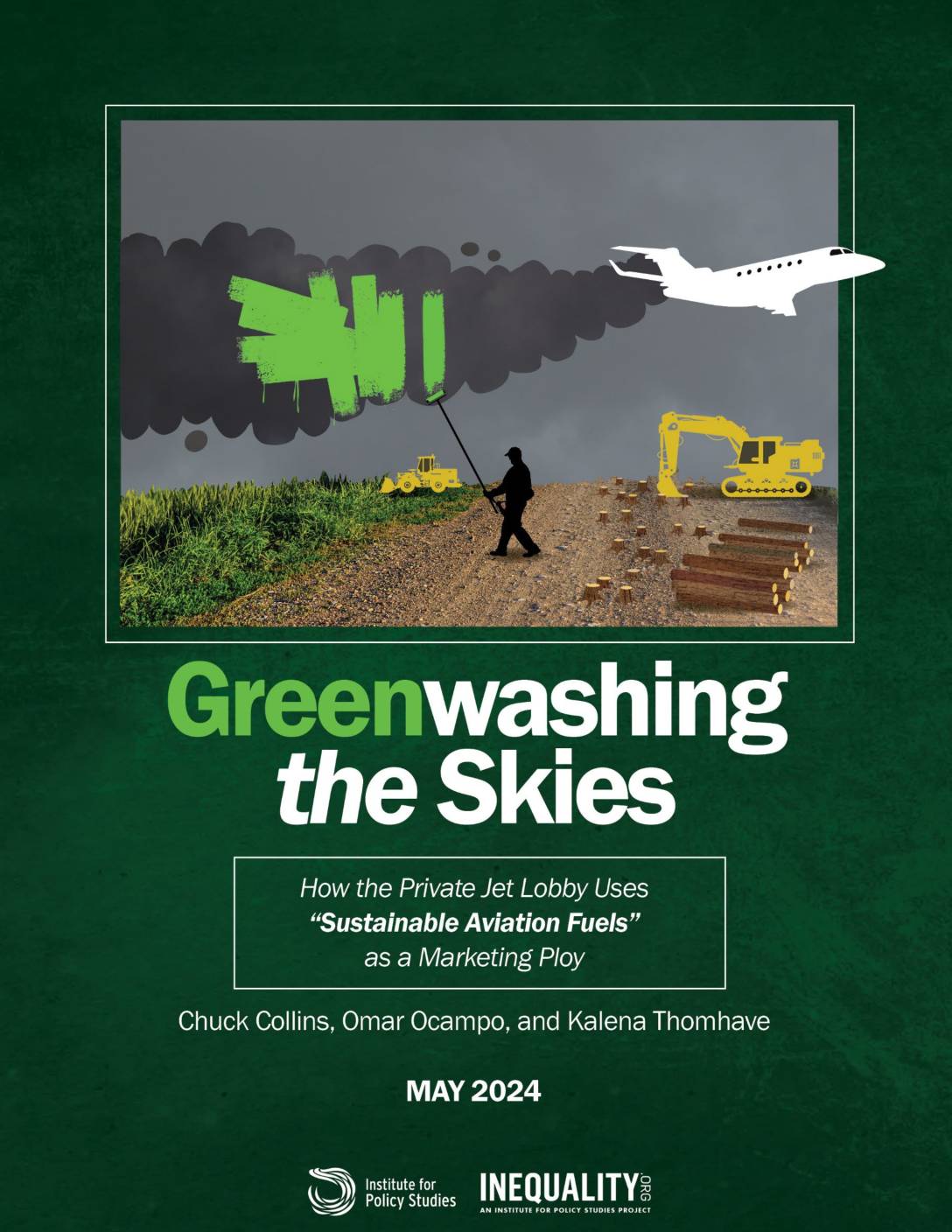
Greenwashing the Skies: How the Private Jet Lobby Uses “Sustainable Aviation Fuels” as a Marketing Ploy
A May 2024 report by the Institute for Policy Studies argues that the private jet industry uses 'Sustainable Aviation Fuels' (SAF) as a marketing tool to deflect criticism of its environmental impact, rather than as a genuine climate solution. The report finds that SAF is often not truly sustainable, is limited in supply, comes at high cost, and has been shaped by industry lobbying to weaken meaningful standards. The authors recommend stronger fuel taxes, transparency requirements, bans on short-hop flights, and greater investment in public transportation as more effective alternatives. -
 2024-04-24
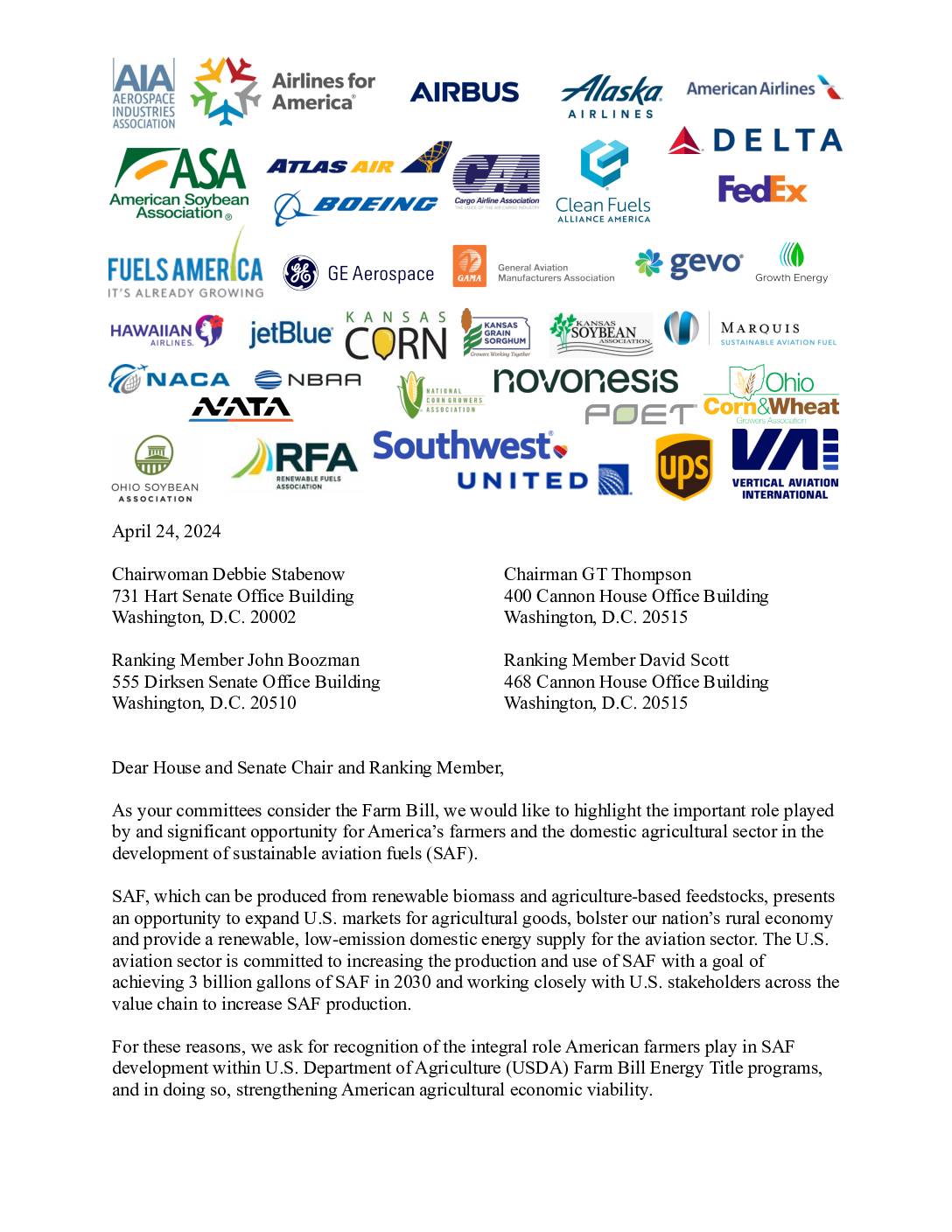
Letter to House and Senate Agriculture Committee Leadership on Sustainable Aviation Fuel and the Farm to Fly Act
In April 2024, a broad coalition of aviation, agriculture, and biofuel organizations wrote to House and Senate Agriculture Committee leaders urging them to include sustainable aviation fuel (SAF) provisions in the Farm Bill. The letter specifically supports the Farm to Fly Act, which would expand USDA energy programs to recognize SAF feedstocks from American farms, promote collaboration between agriculture and aviation sectors, and establish a common emissions measurement standard. The signatories argue this would benefit U.S. farmers, rural economies, and the aviation industry's goal of producing 3 billion gallons of SAF by 2030. -
 2024-04-11
Climate Protest Signs with Fossil Free Future Theme
Protesters march through an urban area carrying signs reading 'Fossil Free Future' and 'Stop the Money Pipeline to Climate Destruction.' Many participants wear face masks, suggesting the event took place during the COVID-19 pandemic era. -
 2023-12-08
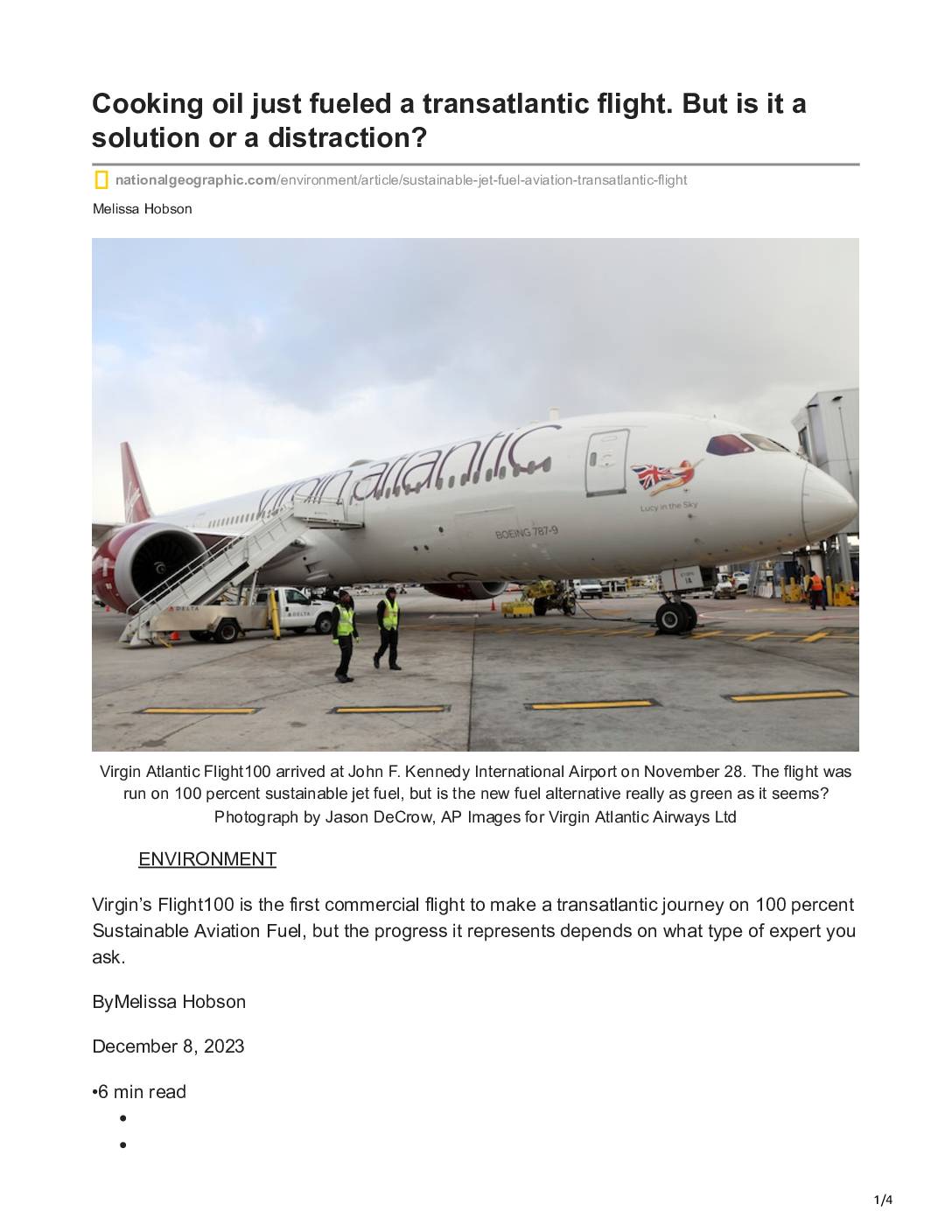
Cooking oil just fueled a transatlantic flight. But is it a solution or a distraction?
Virgin Atlantic completed the first transatlantic commercial flight powered entirely by Sustainable Aviation Fuel (SAF), made primarily from used cooking oil, flying from London Heathrow to New York JFK. While supporters say SAF can cut emissions by over 90% compared to conventional jet fuel and works with existing aircraft, critics argue it is a greenwashing effort due to limited fuel supply and potential land-use conflicts. SAF currently makes up less than 1% of global jet fuel and costs roughly three times more than conventional fuel, leaving its large-scale viability uncertain. -
 2023-09-04
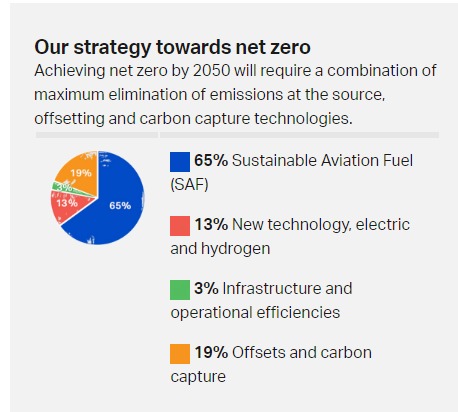
Net Zero Strategy Pie Chart — Aviation Emissions Reduction
A pie chart titled 'Our strategy towards net zero' outlines a combination of approaches to achieve net zero by 2050: 65% Sustainable Aviation Fuel (SAF), 19% Offsets and carbon capture, 13% New technology, electric and hydrogen, and 3% Infrastructure and operational efficiencies. No organizational logo or authorship is clearly visible in this cropped image. -
 2023-08-23
Flying electric aircraft; what’s the difference?
New Vision Aviation President Joseph Oldham presents an overview of flying electric aircraft, drawing on operational experience accumulated since receiving their aircraft in March 2018, including over 220 flight hours and 3,000 nautical miles traveled without incident. The organization has conducted evaluations with FAA test pilots and engineers from multiple aviation companies developing advanced electric aircraft. A notable 2021 cross-country flight demonstrated solar-only charging capabilities, covering 227.9 nautical miles at an average fuel economy of 3.43 nm/kWh. -
 2023-08-13
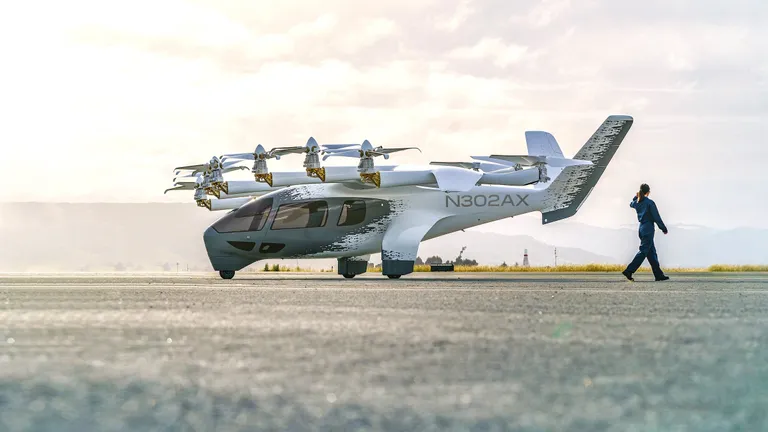
Electric Aircraft with Multiple Rotors on Airport Tarmac
An Archer Aviation Midnight electric vertical takeoff and landing (eVTOL) aircraft bearing FAA registration N302AX sits on a tarmac, with a person in a flight suit walking nearby. The Midnight is a multi-rotor eVTOL designed for urban air mobility operations. -
 2023-05-02
Unleaded aviation gasoline
Swift Fuels, a West Lafayette, Indiana-based company, presented on unleaded aviation gasoline at the Aviation Noise & Emissions Symposium 2023 at UC Davis. The company markets two premium unleaded avgas products: UL94, sold since 2015 with FAA STC approval and ASTM D7547 certification, and a forthcoming high-octane 100R formula. These fuels are designed as lead-free alternatives to conventional aviation gasoline, with approvals from both engine and airframe original equipment manufacturers.