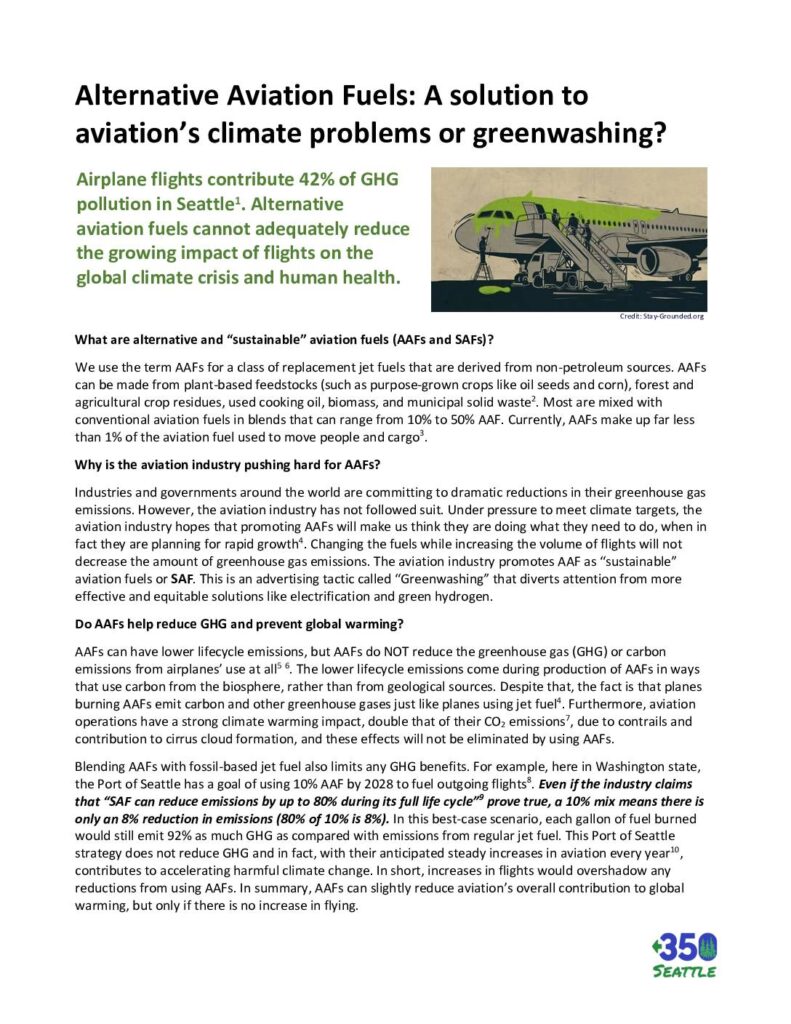
This document from 350 Seattle argues that alternative aviation fuels (AAFs), often marketed as 'sustainable aviation fuels' or SAFs, are largely a greenwashing tactic by the aviation industry and cannot meaningfully reduce greenhouse gas emissions, especially as flight volumes continue to grow. It highlights that planes burning AAFs still emit carbon just like conventional jet fuel, and that scaling up AAF production raises serious equity concerns, including health impacts on low-income communities and people of color living near Sea-Tac Airport and under flight paths. 350 Seattle instead calls for an emissions cap on aviation, a halt to airport expansion, and investment in true zero-emission solutions.Open full document
Notes
350 Seattle position paper arguing that alternative aviation fuels (AAFs) and sustainable aviation fuels (SAFs) cannot adequately reduce GHG emissions from aviation and constitute greenwashing. Covers Port Of Seattle’s 10% AAF goal by 2028, lifecycle emissions claims (up to 80% reduction per IATA), contrails and cirrus cloud formation (non-CO2 warming impacts), feedstock supply chain issues including deforestation, land conflicts, food scarcity, and labor abuses. Addresses equity impacts on communities of color near Sea-Tac Airport, particulate matter health effects (cancer, heart disease, asthma), and calls for declining emissions cap to zero by 2040, electrification, and green hydrogen alternatives.