TagAirport Expansion(165)
-
 2019-07-04
LOQSV 2019 Candidate Questionnaire Cover Letter
The League of Quiet Skies Voters (LOQSV), a Seahurst, WA-based organization focused on aviation noise and its impacts on health and the environment near Sea-Tac Airport, sent a candidate questionnaire to 2019 election candidates on July 4, 2019. The letter invited candidates to share their positions on aviation expansion, human health, and environmental concerns, with responses to be published before the primary election if submitted by July 19, 2019. LOQSV described itself as an advocate for communities neighboring the 8th busiest airport in the United States. -
 2019-06-01
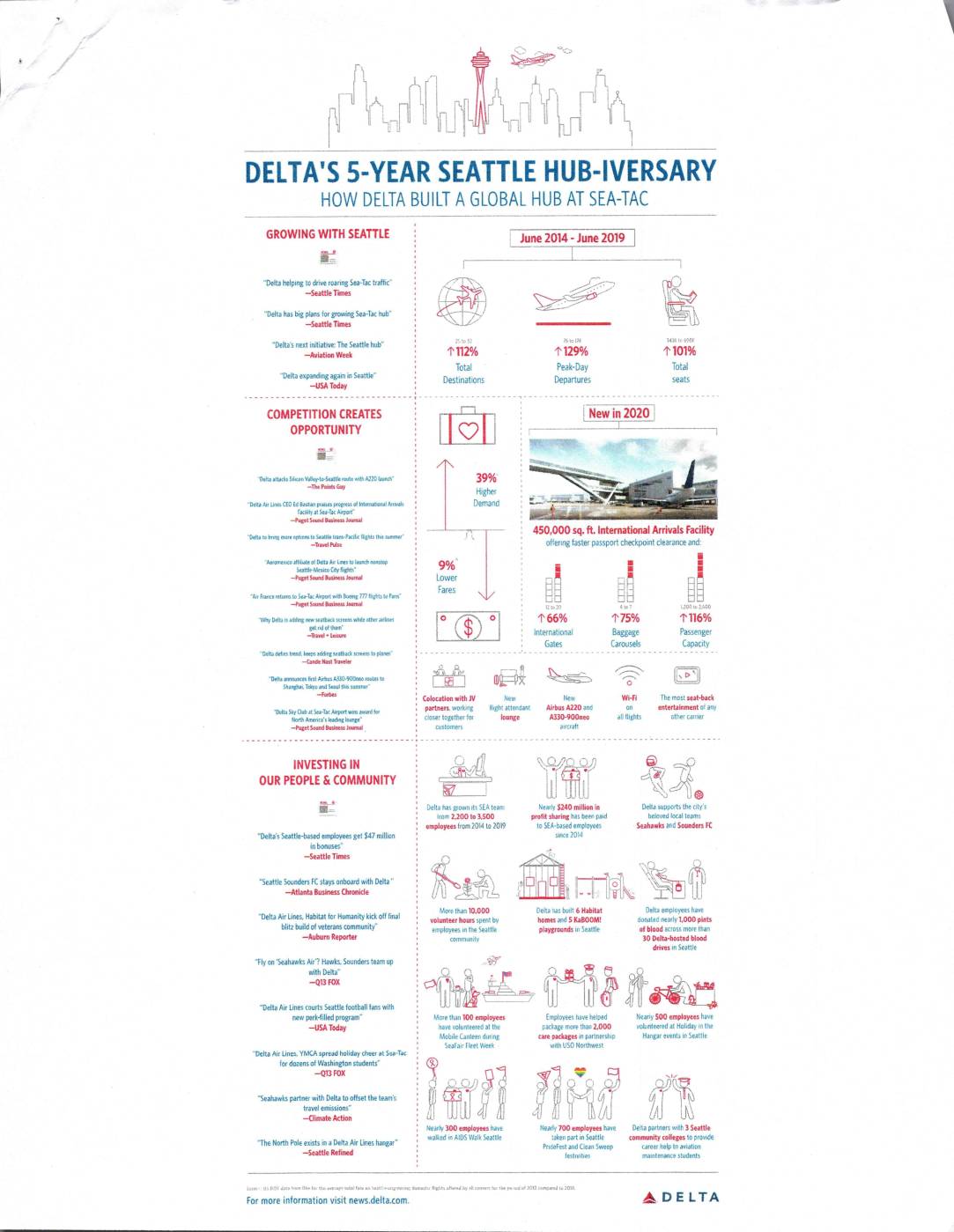
Delta’s 5-year Seattle hub-iversary: How Delta built a global hub at Sea-Tac
Delta Air Lines marked its 5-year anniversary of establishing a global hub at Seattle-Tacoma International Airport (Sea-Tac), highlighting growth from 25 to 53 total destinations, a 129% increase in peak-day departures, and 9% lower fares between June 2014 and June 2019. The airline also expanded its workforce from 2,200 to 3,500 Seattle-based employees and invested in a new 450,000 sq. ft. International Arrivals Facility. This period of rapid growth at Sea-Tac is documented alongside FAA Terminal Area Forecast data projecting continued aviation activity increases through 2045, relevant context for understanding long-term noise impacts at the airport. -
 2019-01-07
Resolution No. 406 addressing growth and safety at Sea-Tac Airport
In January 2019, the City of Burien, Washington considered Resolution No. 406, calling for action on growth and safety concerns at Seattle-Tacoma International Airport. The resolution highlights the negative health, environmental, and economic impacts on Burien residents due to the city's proximity to the airport, and notes that even with a planned $10 billion expansion under the Sustainable Airport Master Plan, the airport would still lack sufficient capacity within a decade. The city supported ongoing state and federal studies into regional aviation capacity and the impacts of airport operations on surrounding communities. -
 2019-01-01
Terminally challenged: Addressing the infrastructure funding shortfall of America’s airports
This Airports Council International – North America (ACI-NA) report, covering 2019–2023, examines the gap between what U.S. airports need to spend on infrastructure and the funding currently available to them. It estimates total development costs by airport size, project type, and location, and compares ACI-NA findings with FAA projections. The report highlights growing pressures from rising construction costs, increasing passenger and cargo demand, and insufficient federal funding mechanisms. -
 2018-09-28
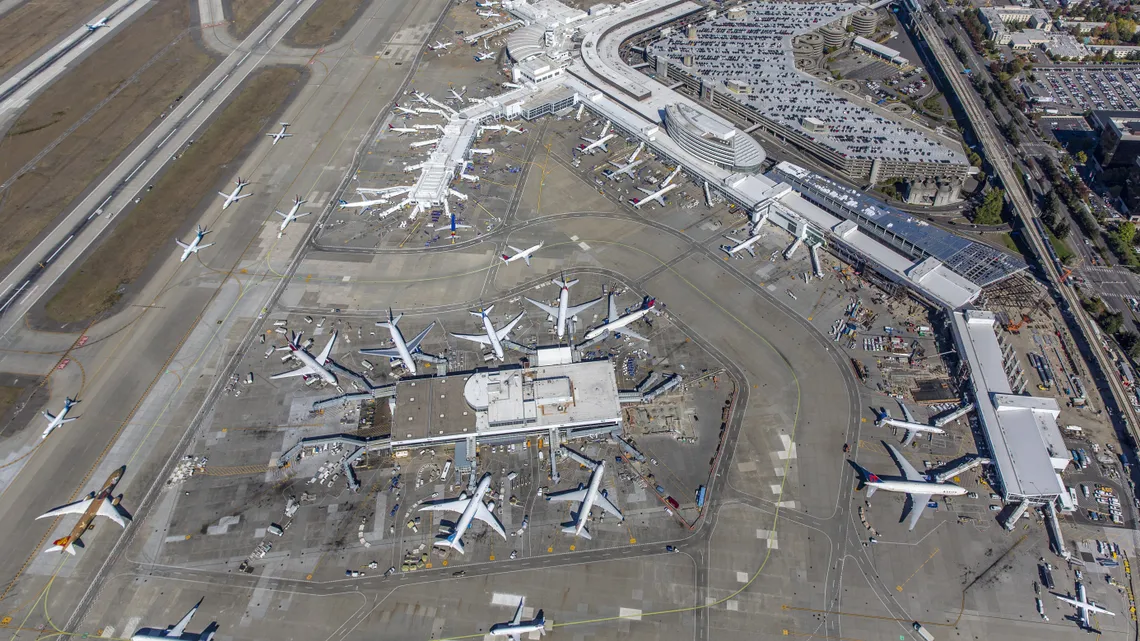
Sea-Tac Airport Aerial View Showing Terminals, Gates, Runways, and Construction Activity
Aerial photograph showing multiple terminal buildings, gates with commercial aircraft from various airlines including what appears to be Delta (red tail livery visible), taxiways, and parallel runways. Construction activity is visible near one terminal area, and large parking structures are visible at upper right. -
 2018-04-12
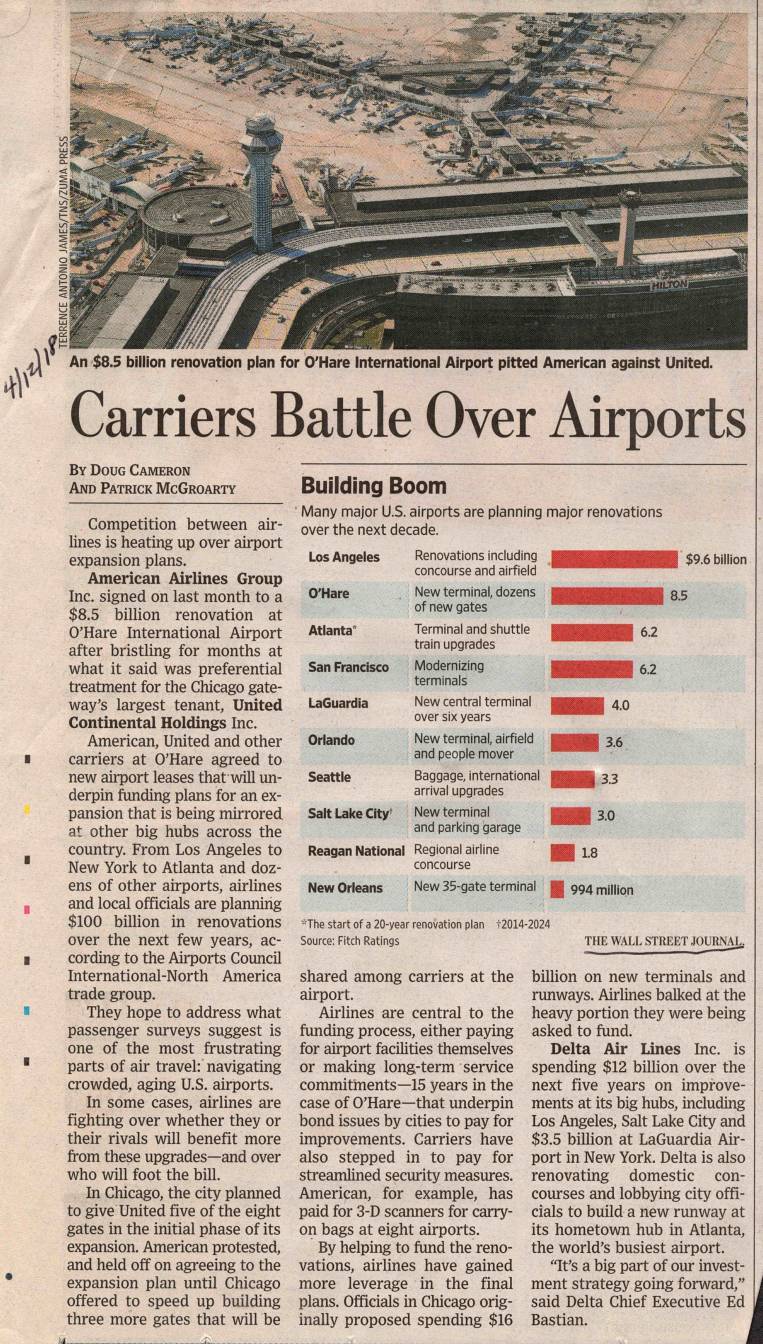
Carriers battle over airports
Major U.S. airlines and local officials are planning approximately $100 billion in airport renovations over the next several years, with projects underway or proposed at airports including Seattle-Tacoma, Los Angeles, O'Hare, and LaGuardia. Airlines like American, United, and Delta are playing a central role in funding these upgrades — either paying directly or making long-term service commitments that back municipal bond issues. Competition between carriers over gate allocations and construction priorities has at times stalled negotiations, as seen when American Airlines challenged United's favored position in Chicago's $8.5 billion O'Hare expansion plan. -
 2018-04-12
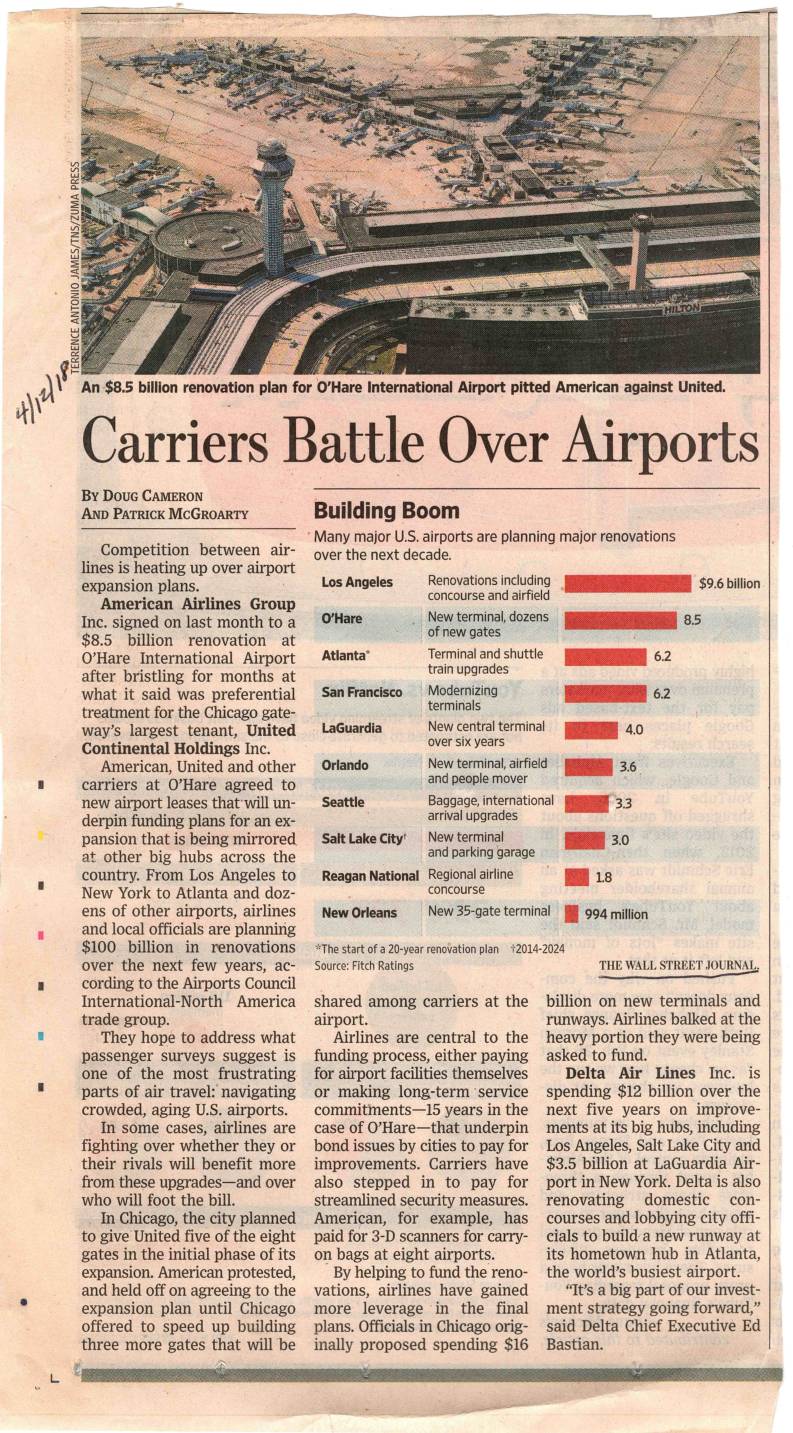
Carriers Battle Over Airports
Airlines compete over airport expansion plans, with American Airlines agreeing to an $8.5 billion O’Hare renovation after disputes with United over gate allocation. The article details $100 billion in planned airport renovations nationwide and how airlines negotiate funding and benefits from these upgrades. -
 2017-09-19
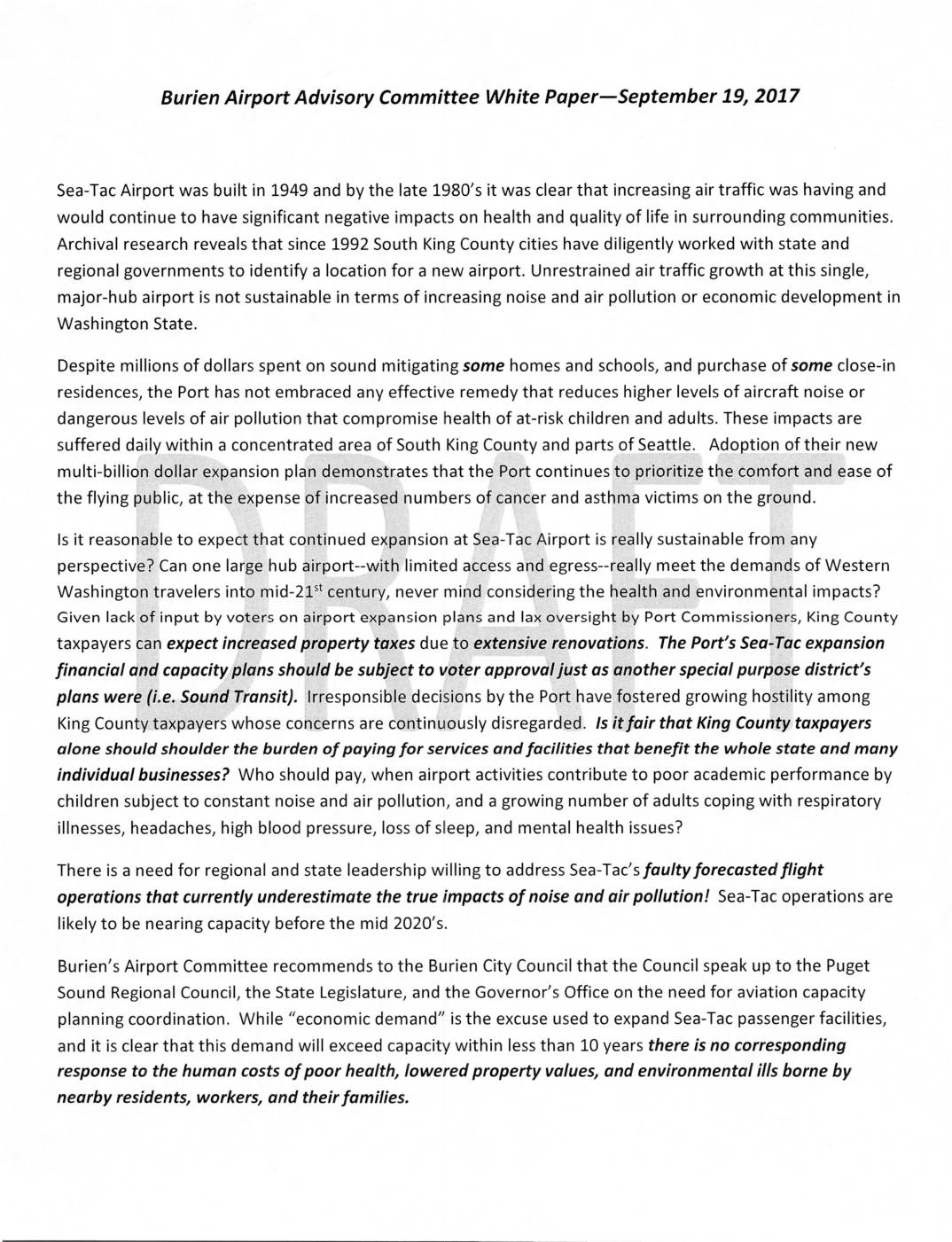
Burien Airport Advisory Committee white paper
A 2017 white paper from Burien's Airport Advisory Committee argues that unchecked expansion at Sea-Tac Airport is causing serious health and environmental harm—including noise pollution, air pollution, and related illnesses—for residents of South King County and parts of Seattle. The committee contends that the Port of Seattle has prioritized the convenience of air travelers over the well-being of nearby communities, while King County taxpayers bear the financial burden of an airport that benefits the entire state. The paper calls on the Burien City Council to urge regional and state leaders to coordinate aviation capacity planning and meaningfully address the human costs of continued airport growth. -
 2017-05-12
SeaTac Airport history
Seattle-Tacoma International Airport (Sea-Tac) has grown from a modest wartime airfield dedicated in 1944 on 906 acres of land near Bow Lake into one of the busiest airports in the United States, now serving nearly 47 million passengers annually. Over the decades, the airport underwent numerous expansions, security upgrades, and name controversies while navigating major events such as airline deregulation, the post-9/11 security overhaul, and a community-opposed third runway completed in 2008. Today, Sea-Tac supports more than 87,000 jobs and generates over $22 billion in economic activity for the region. -
 2016-09-28
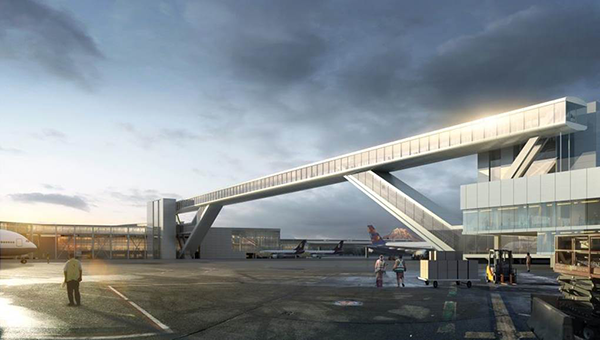
Port of Seattle Reveals Latest Design Images and Video Fly-Through for New International Arrivals Facility
September 29, 2016 SEATTLE – The Port of Seattle today released the latest images and a video for the new International Arrivals Facility (IAF) set to meet the growing, record demand of international traffic at Seattle-Tacoma International Airport. The multi-level 450,000 square foot facility will significantly enhance the international passenger experience, advance the Puget Sound