Tagaircraft(267)
-
-
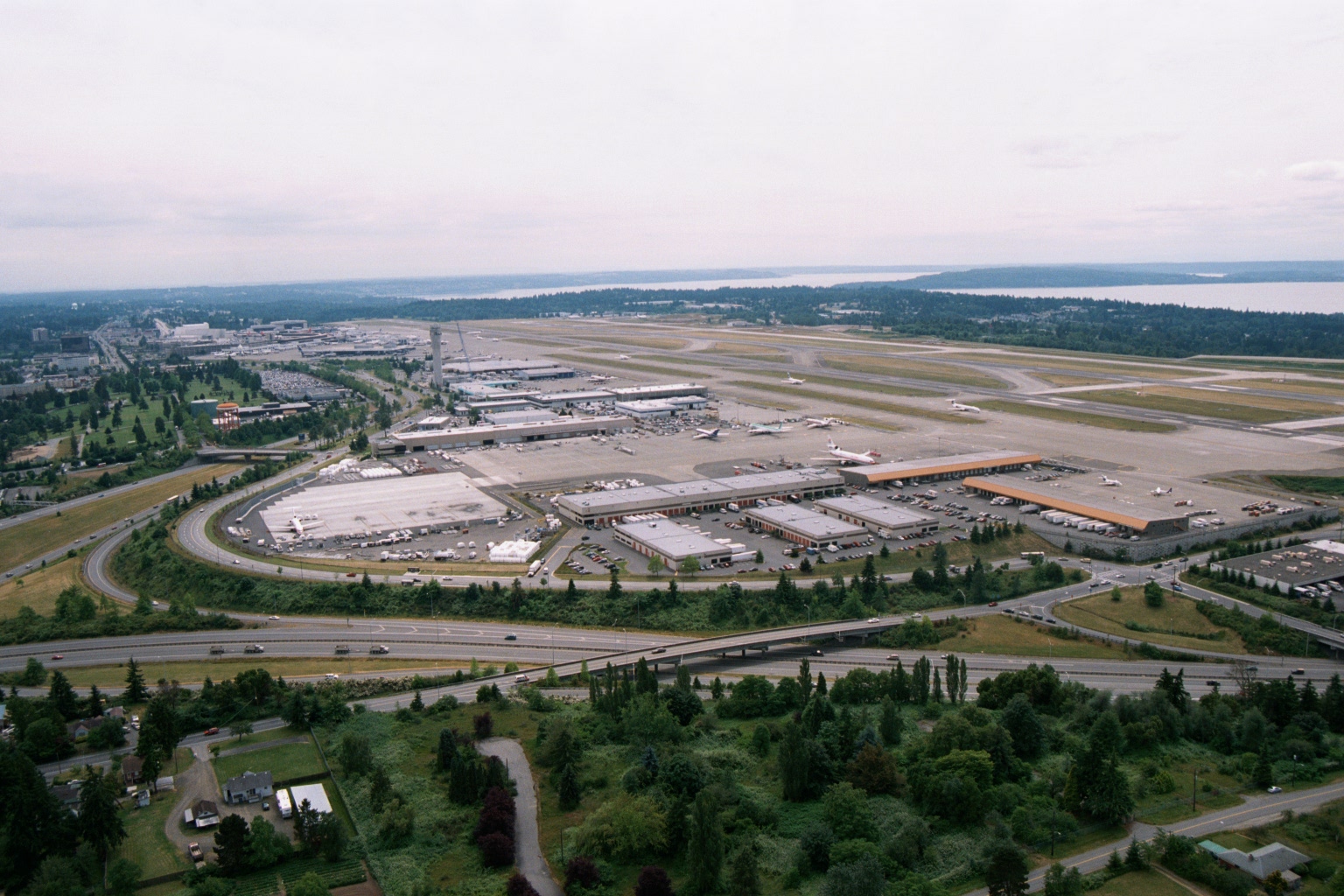 2001-06-22
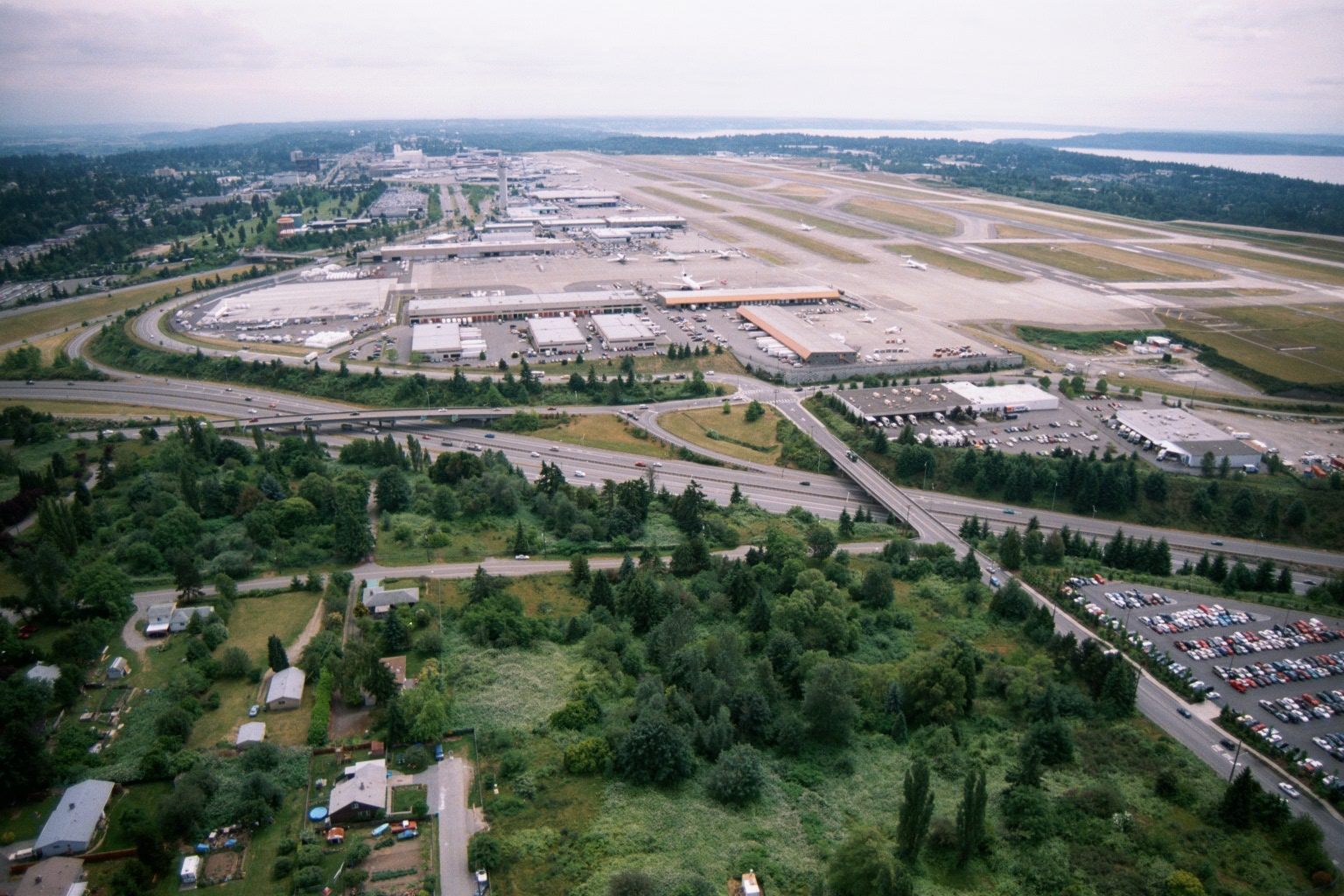
Aerial View of Sea-Tac Airport Looking North, with Puget Sound in Background
Aerial photograph looking north over Seattle-Tacoma International Airport (Sea-Tac), showing the main terminal complex, parallel runways, cargo/maintenance facilities, and Interstate 5 in the foreground. Puget Sound and forested areas are visible in the background, consistent with Sea-Tac's geographic setting between Seattle and Tacoma, Washington. -
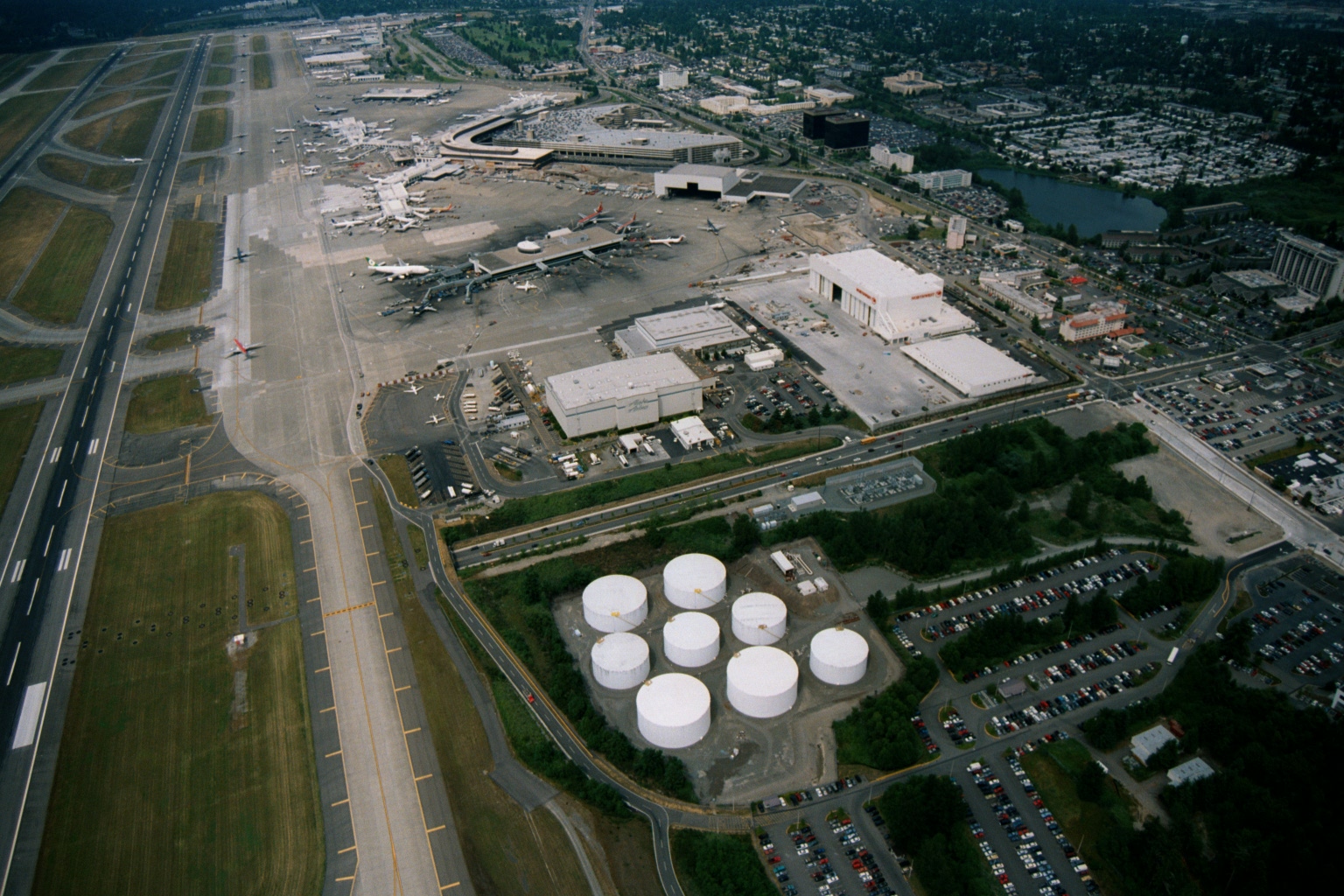 2001-06-22
Sea-Tac Airport Aerial View Showing Terminal, Runways, and Fuel Storage Tanks
Aerial photograph of Seattle-Tacoma International Airport showing the main terminal complex, aircraft gates with multiple commercial airliners, parallel runways, maintenance hangars, and a cluster of white aviation fuel storage tanks in the foreground. The surrounding cities of SeaTac and Des Moines are visible, along with a pond/lake to the northeast of the terminal. -
-
 2001-06-22
Aerial View of Sea-Tac Airport Looking North, with Puget Sound in Background
An aerial photograph looking northward over Seattle-Tacoma International Airport, showing the terminal complex, parallel runways, cargo facilities, and surrounding residential and commercial areas. Interstate 99 (International Boulevard) and Interstate 5 are visible in the foreground, with Puget Sound visible in the upper right background. -
 1998-06-01
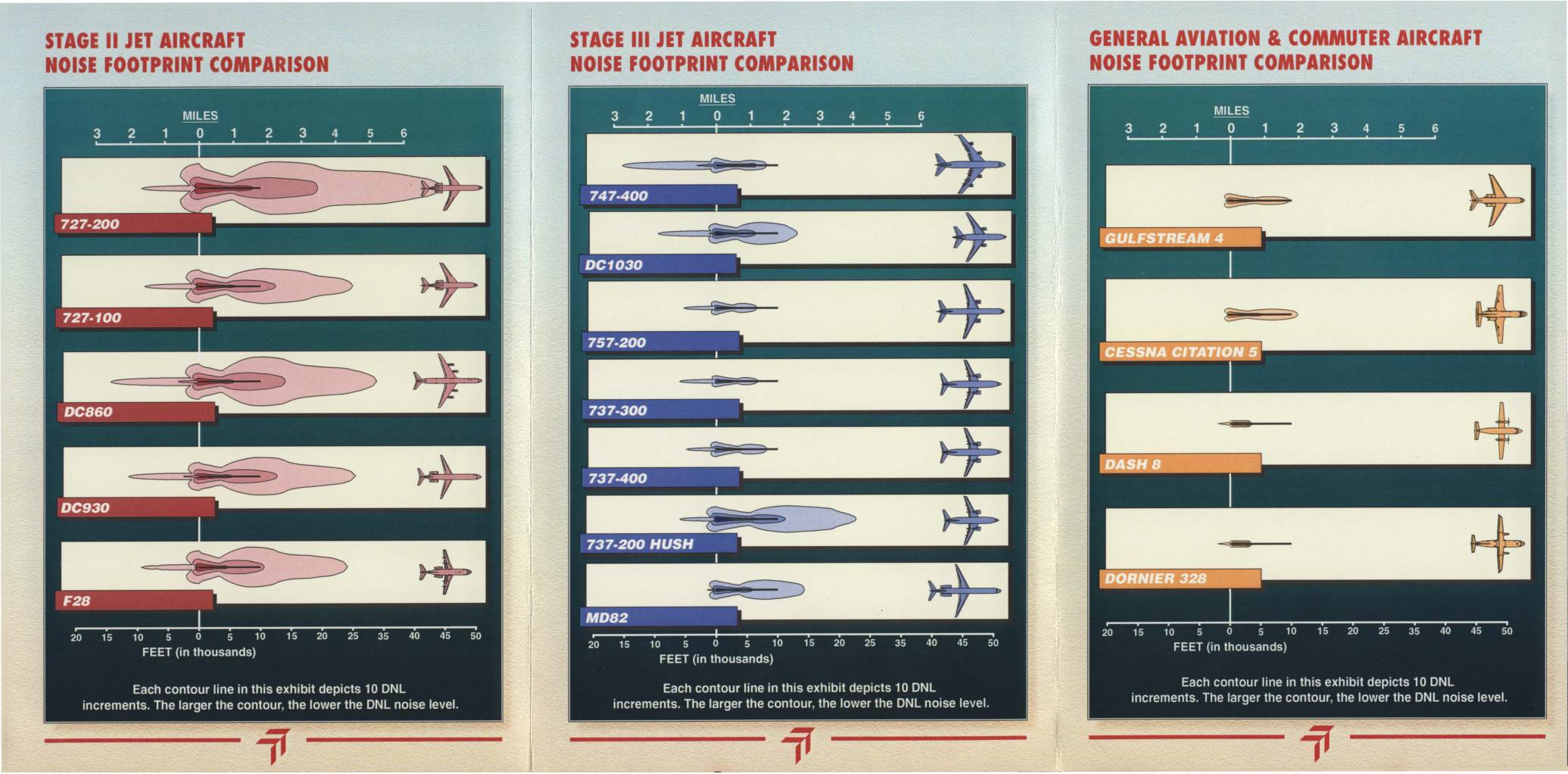
Sea-Tac International Airport: Commercial Aircraft Noise Footprint Comparison
Port of Seattle brochure comparing noise footprints (DNL) of Stage II jet aircraft (727-200, 727-100, DC860, DC930, F28), Stage III jet aircraft (747-400, DC1030, 757-200, 737-300, 737-400, 737-200 Hush, MD82), and General Aviation & Commuter aircraft (Gulfstream 4, Cessna Citation 5, Dash 8, Dornier 328) at Seattle-Tacoma International Airport (Sea-Tac Airport). Explains Day-Night Average Sound -
1998-06-01
Sea-Tac International Airport: Commercial Aircraft Noise Footprint Comparison
This Sea-Tac International Airport brochure, prepared by the Port of Seattle in Summer 1998, compares the noise footprints of Stage II jets, Stage III jets, and general aviation/commuter aircraft to help residents understand the noise impacts of different aircraft types. It explains that Stage III aircraft are significantly quieter than Stage II aircraft, and that replacing older Stage II planes with newer Stage III models would meaningfully reduce noise levels in surrounding communities. The document also defines key noise measurement terminology, including DNL (Day-Night Average Sound Level), and notes that nighttime flights carry a 10-decibel penalty in noise accounting. -
 1995-06-28
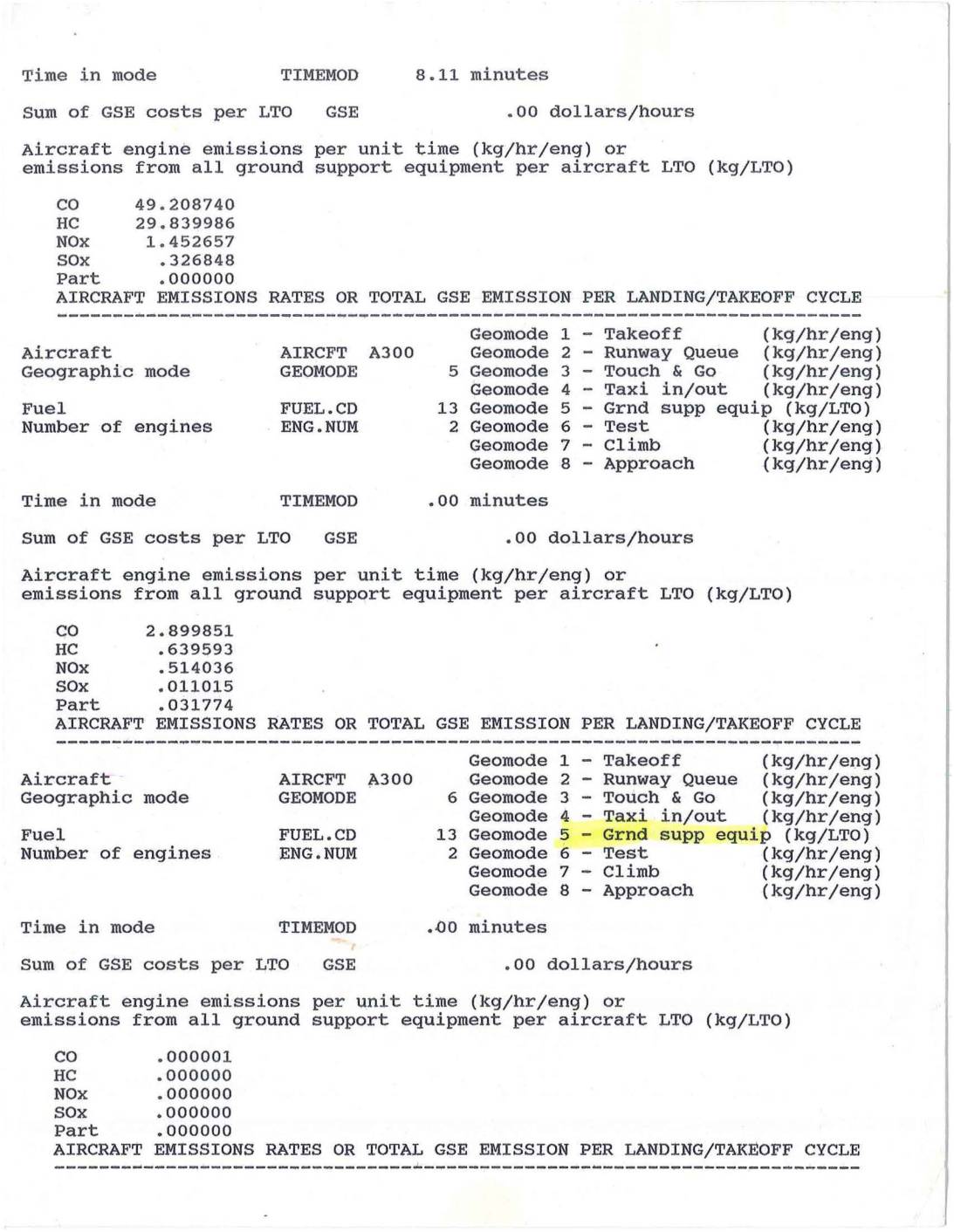
Aircraft Emissions Rates for Landing/Takeoff Cycles – A300, 757, and 737 Aircraft
Technical report showing aircraft engine emissions data for different aircraft types (A300, 757, 737) across various operational modes including takeoff, taxi, climb, and approach phases. Contains detailed emissions measurements for CO, HC, NOx, SOx, and particulates in kg/hr/engine units. -
 1981-01-01
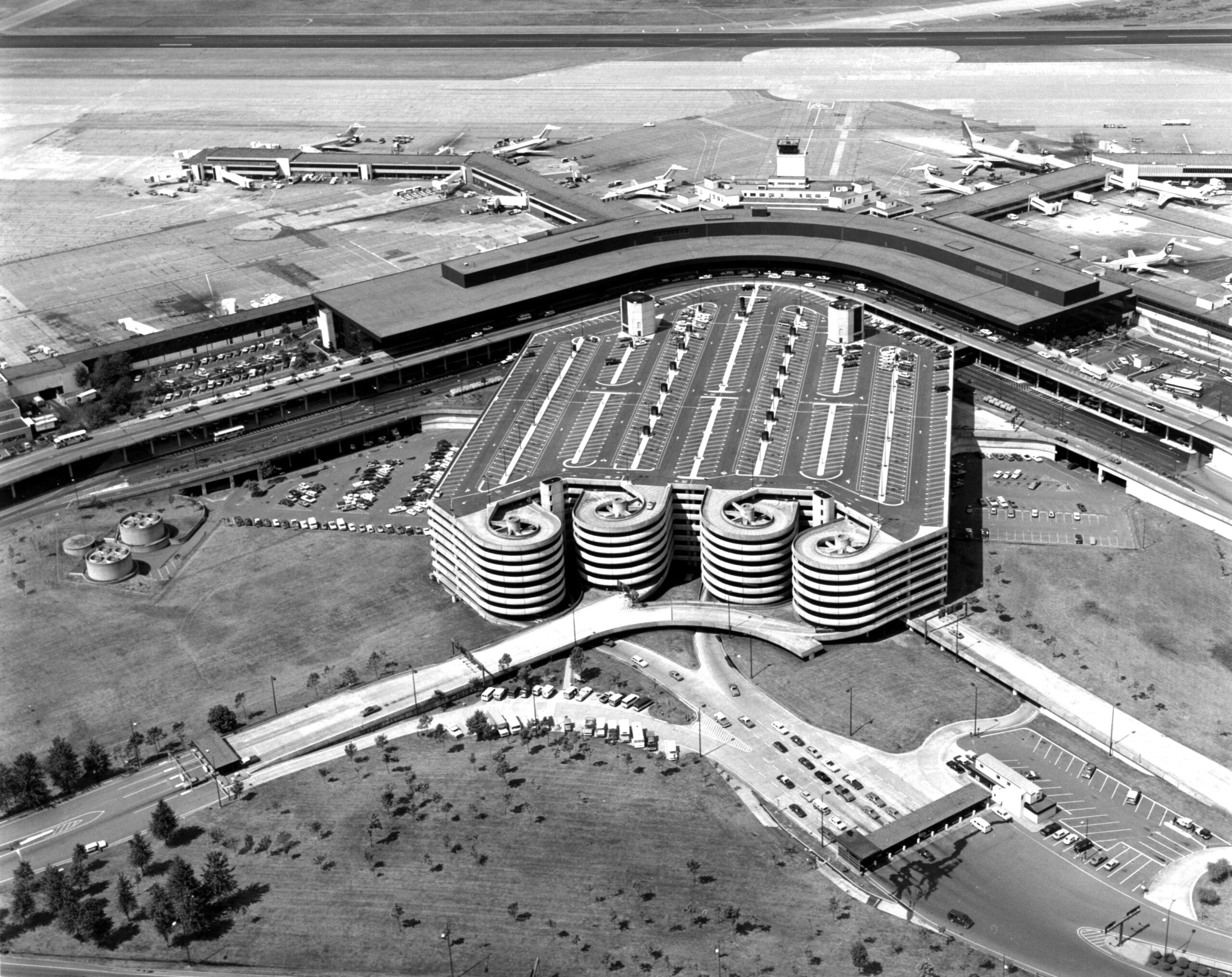
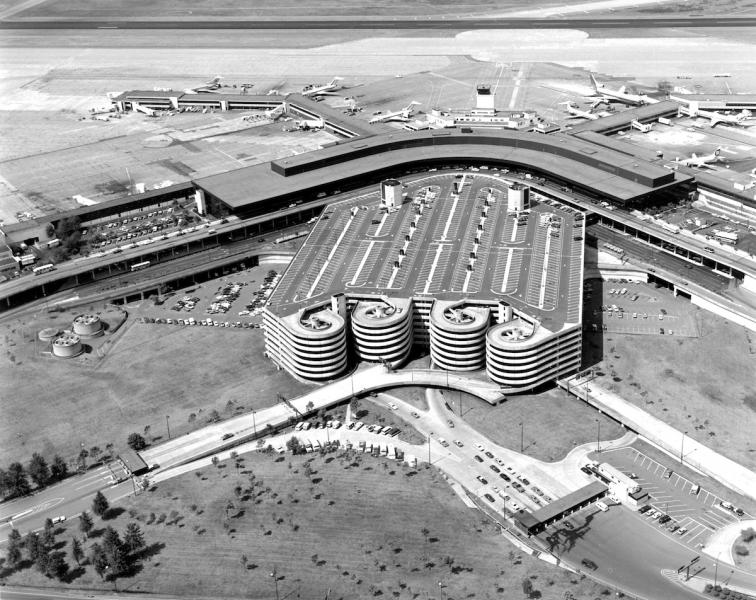
Sea-Tac Aerial July 1981
Black-and-white aerial photograph showing a large airport terminal complex with a curved horseshoe-shaped concourse, multiple jet aircraft at gates, and a distinctive multi-story parking garage featuring cylindrical spiral ramp towers. The image appears to date from the 1960s–1970s based on aircraft types and architectural style visible. -
 1981-01-01
Sea-Tac Parking Lot
Black-and-white aerial photograph showing a large airport terminal building with a curved roofline, multi-level parking garage with circular ramp towers, and numerous propeller and early jet aircraft at gates. No visible text, logos, or captions are present to confirm the specific airport or date.