TagAEDT(17)
-
 2023-04-14
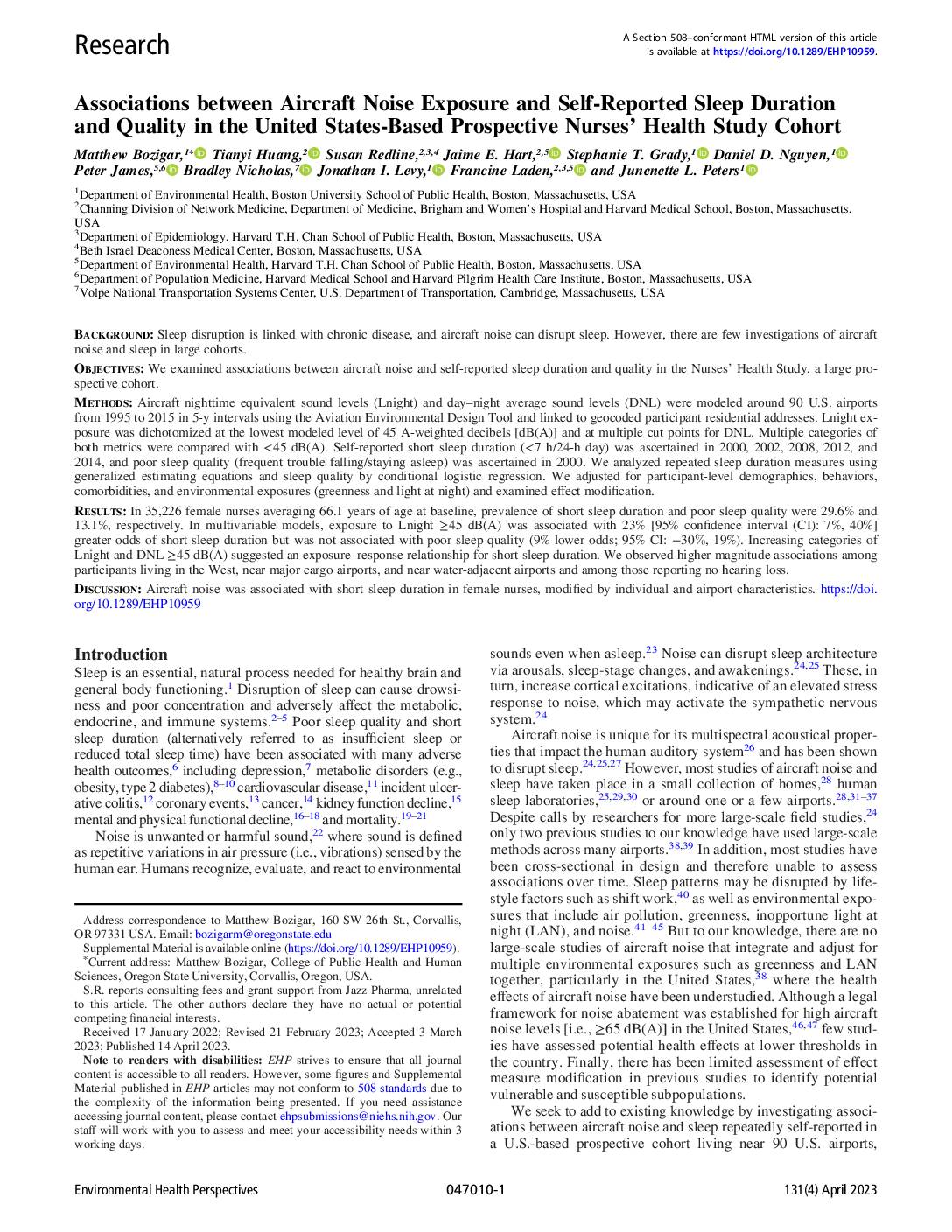
Associations between aircraft noise exposure and self-reported sleep duration and quality in the United States-based prospective Nurses’ Health Study cohort
A large study of over 35,000 female nurses across the United States found that exposure to aircraft nighttime noise levels at or above 45 decibels was associated with 23% greater odds of sleeping less than 7 hours per night. The research, which tracked participants living near 90 U.S. airports between 2000 and 2014, suggests that aircraft noise — including at levels below the federally regulated threshold of 65 decibels — may meaningfully disrupt sleep duration. Stronger effects were observed among residents in the Western United States and those living near major cargo airports, findings with direct relevance to communities around airports like Sea-Tac. -
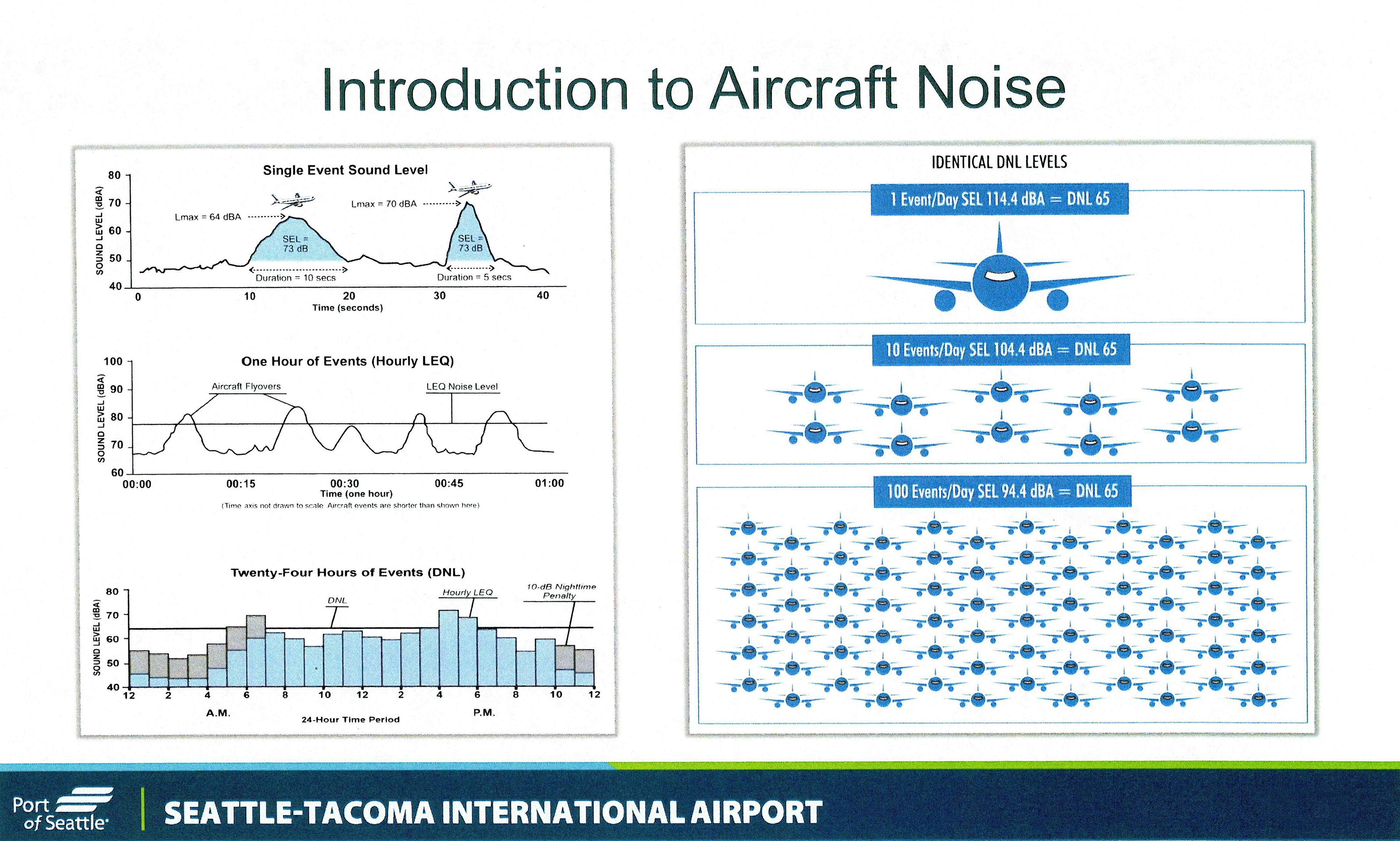
Calculating DNL65
We’ve often made the claim that DNL65 is not really a unit of measure. And when we say that it comes off as both condescending and patronizing. Okeedokee… If you want to understand DNL65, you should probably start by going to the regulations governing Airport Noise Compatibility and Planning aka Part 150. Got it? Great. -
 2022-10-07
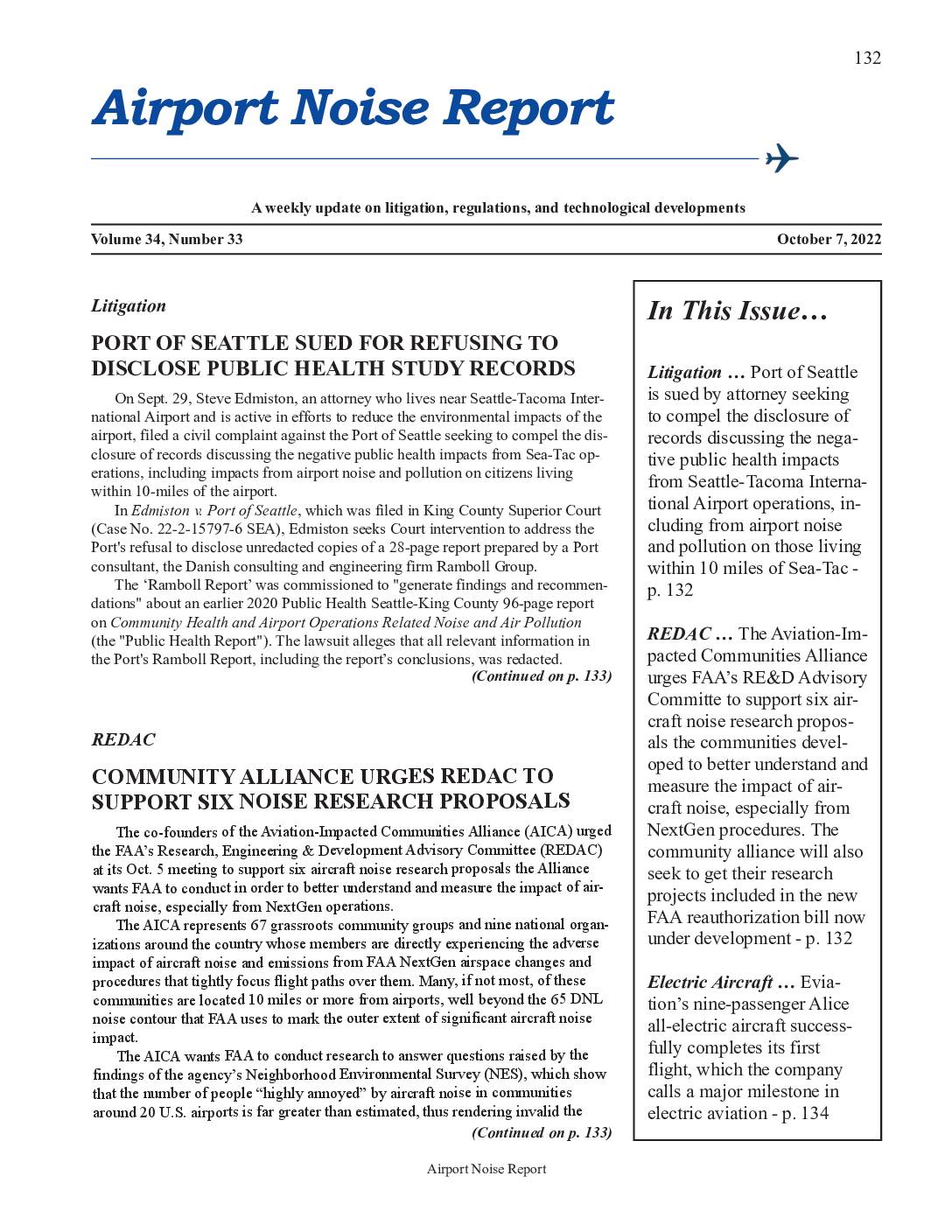
Airport Noise Report, Vol. 34 No. 33: Port Of Seattle sued over public health study records; AICA urges REDAC to support six noise research proposals; Eviation Alice first flight
A Seattle attorney sued the Port of Seattle in September 2022 to force disclosure of a fully redacted consultant report examining public health impacts—including noise, air pollution, and higher rates of disease—on communities within 10 miles of Seattle-Tacoma International Airport. Separately, the Aviation-Impacted Communities Alliance urged a federal advisory committee to support six research proposals challenging the FAA's longstanding 65 DNL noise threshold, which new survey data suggests dramatically understates the number of people harmed by aircraft noise. The issue also covers the first successful test flight of Eviation's all-electric nine-passenger Alice aircraft in Moses Lake, Washington. -
 2020-10-01
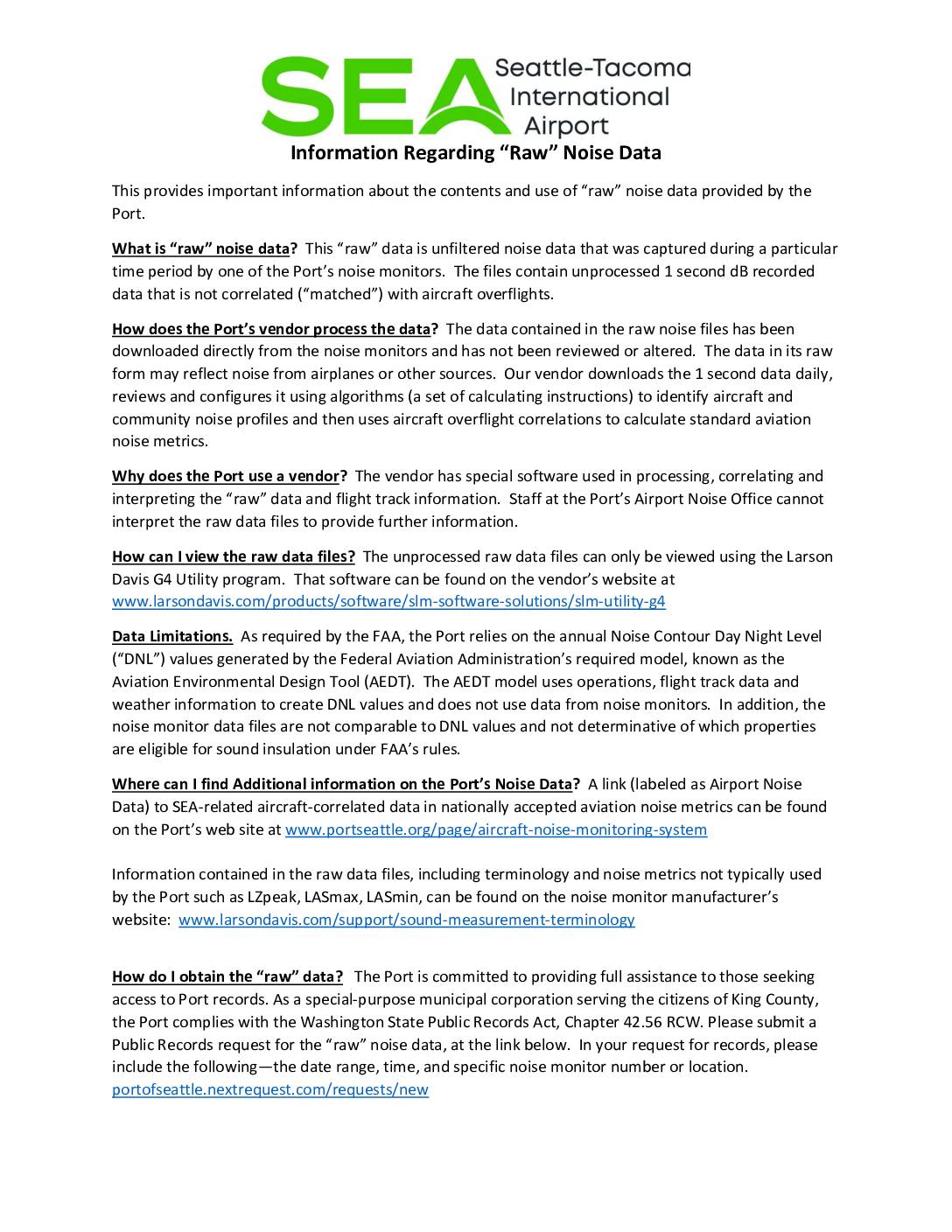
Information Regarding “Raw” Noise Data
This document from Seattle-Tacoma International Airport explains what 'raw' noise data is, how it is collected and processed, and how the public can request it. The unfiltered, one-second decibel readings captured by the Port's noise monitors are not matched to specific aircraft and must be viewed with specialized Larson Davis software; a vendor processes the data using algorithms to produce standard aviation noise metrics. Residents can request raw data through the Washington State Public Records Act portal, though the Port disclaims any liability for how the data is used and notes it cannot be directly compared to the FAA-required DNL noise contour values used for sound insulation eligibility. -
 2018-12-19
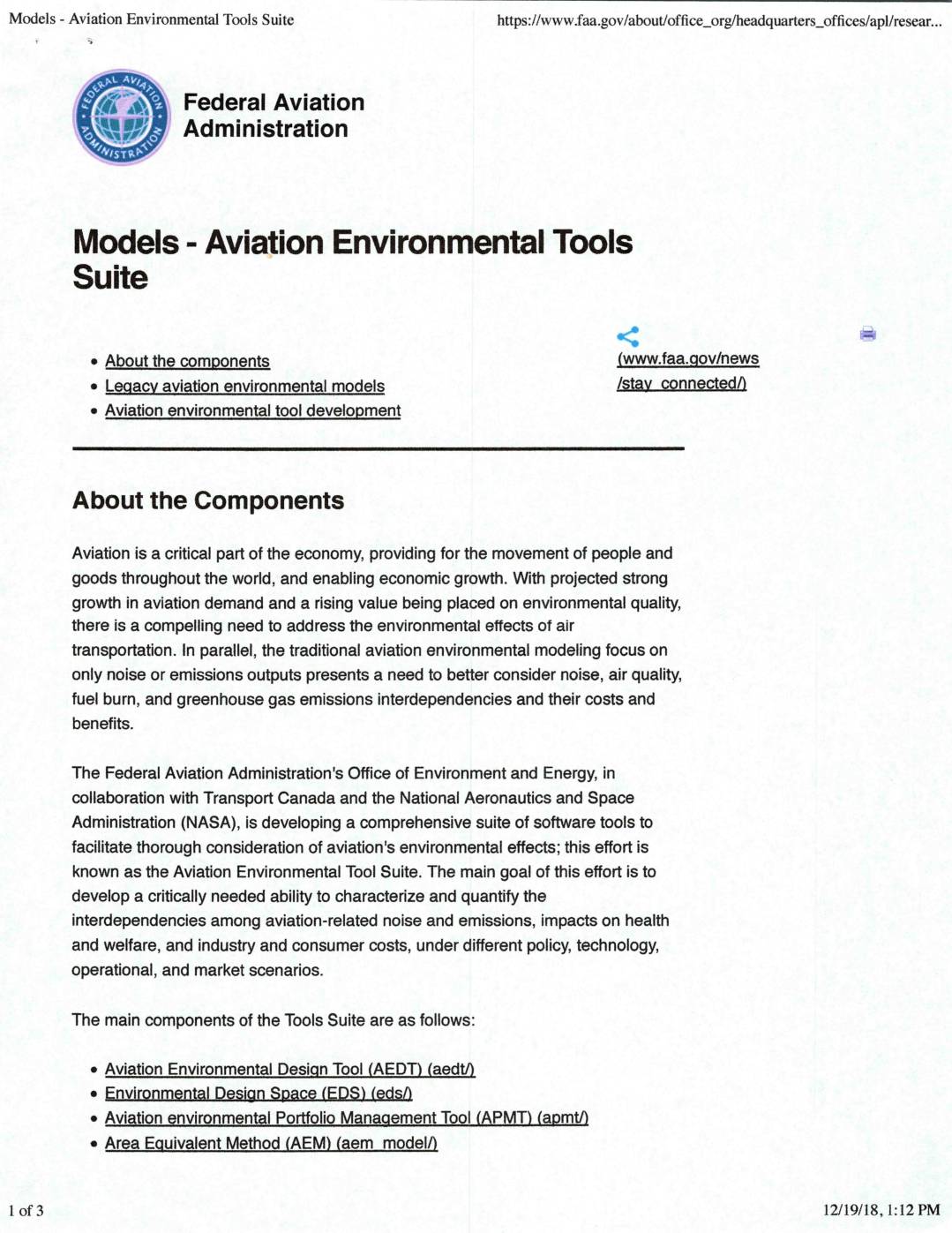
Models – Aviation Environmental Tools Suite
The FAA, in collaboration with NASA and Transport Canada, has developed a suite of software tools called the Aviation Environmental Tool Suite to assess the environmental impacts of aviation, including noise, air quality, fuel burn, and greenhouse gas emissions. The suite's main components include the Aviation Environmental Design Tool (AEDT), Environmental Design Space (EDS), and the Aviation environmental Portfolio Management Tool (APMT), which together help quantify the relationships between aviation-related noise, emissions, and costs. These tools are designed to support policy, technology, and operational decision-making at local, regional, national, and international levels, and are released to the public only after rigorous validation testing. -
 2018-12-19
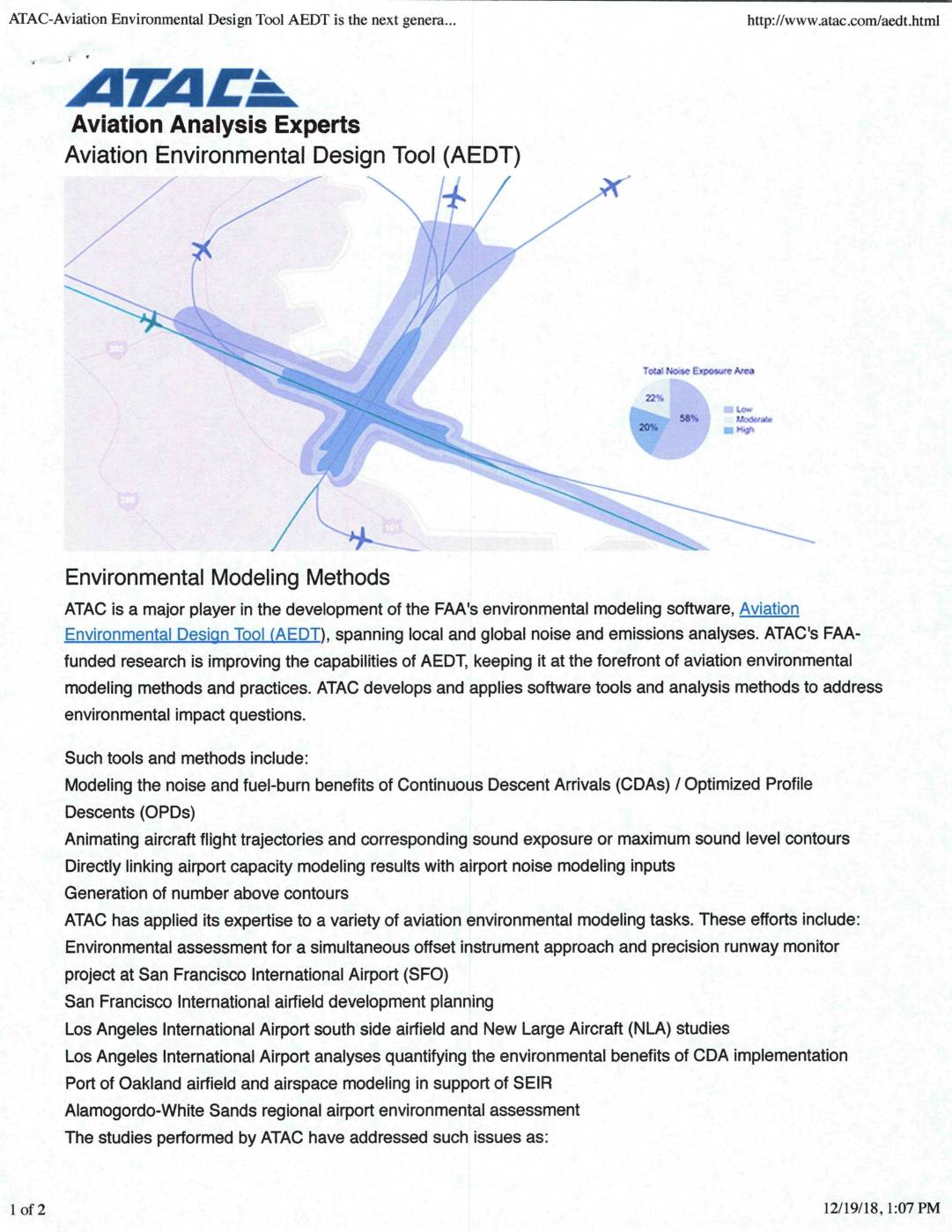
Aviation Environmental Design Tool (AEDT)
ATAC Corporation, an aviation analysis firm based in Santa Clara, CA, plays a major role in developing the FAA's Aviation Environmental Design Tool (AEDT), which models aircraft noise and emissions at both local and global scales. The document also includes a letter from the FAA's Seattle Airports District Office congratulating an airport on the approval of its Part 150 Noise Compatibility Program, a formal plan aimed at reducing or eliminating incompatible land uses around the airport. The FAA notes that approval of the program does not guarantee federal funding, and encourages the airport to periodically review and update the plan as conditions change. -
 2017-09-01
Air Quality Baseline (2016) Condition Report: SAMP Environmental Review, Seattle-Tacoma International Airport
This report, prepared by Landrum & Brown for the Port of Seattle, documents baseline air quality conditions at Seattle-Tacoma International Airport as of 2016, as part of the Sustainable Airport Master Plan (SAMP) Environmental Review. It inventories emission sources across the airport—including aircraft operations, ground support equipment, and stationary sources like boilers and generators—and compares 2016 emission levels to those from 2014. The findings are intended to support future environmental planning and assessment of proposed airport development.