TagUWDEOHS(34)
-
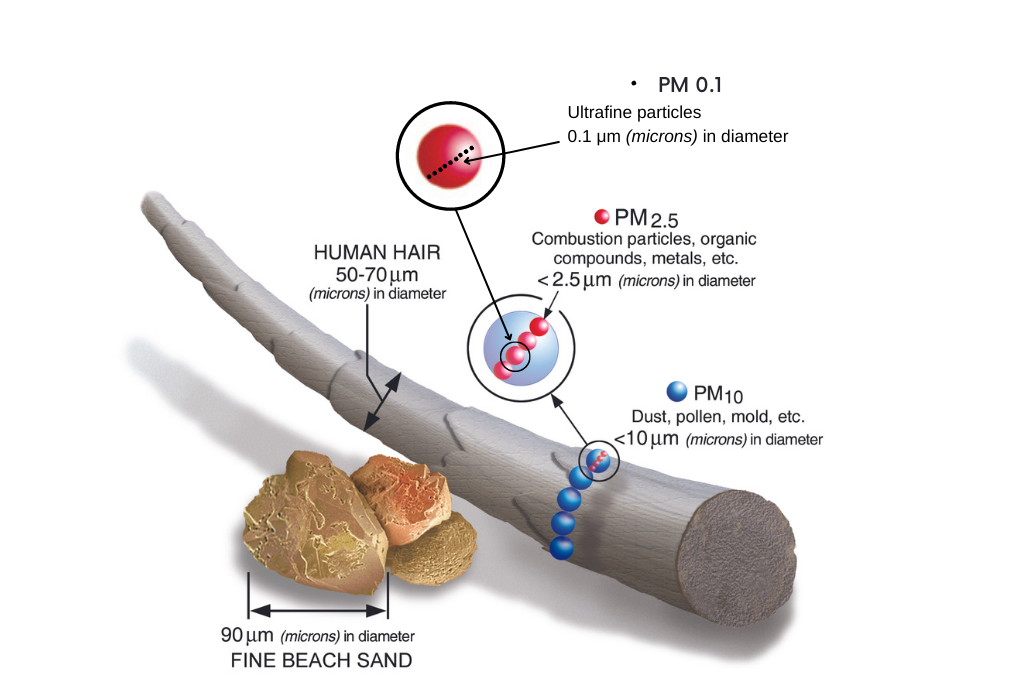
UWDEOHS-PM particle size
An educational diagram comparing the sizes of airborne particulate matter categories: PM0.1 (ultrafine particles, 0.1 microns), PM2.5 (combustion particles, organic compounds, metals; <2.5 microns), and PM10 (dust, pollen, mold; <10 microns). These are shown relative to a human hair (50–70 microns in diameter) and fine beach sand (90 microns in diameter). -
 2022-08-08
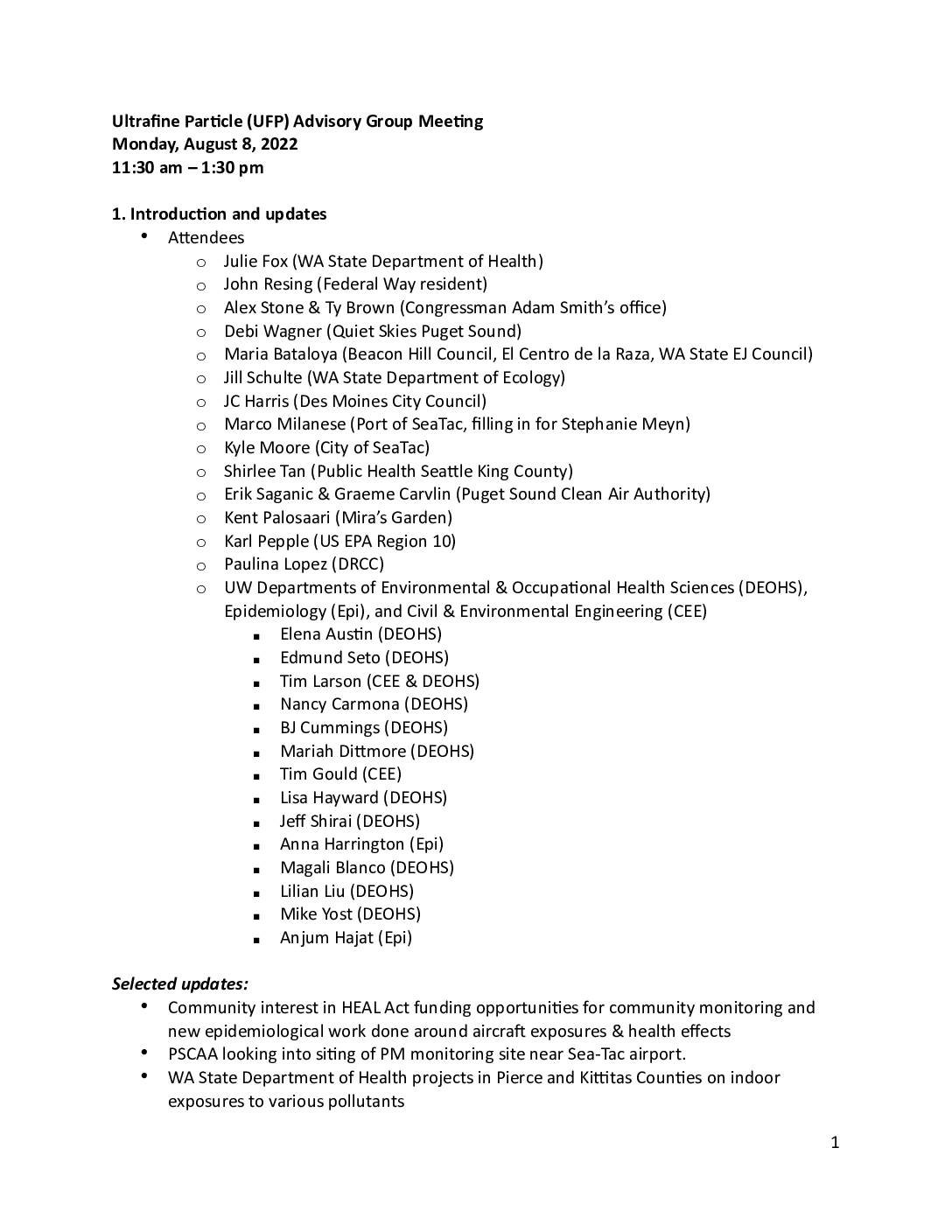
UFP Advisory Group Meeting Minutes: August 8, 2022
A University of Washington research team presented findings to a community advisory group showing that HEPA air purifiers in classrooms near Sea-Tac Airport reduced ultrafine particle (UFP) levels from 50% down to just 10% of outdoor concentrations. The meeting, held August 8, 2022, also covered a small pilot health study suggesting short-term cardiovascular and respiratory differences in people exposed to aircraft UFPs while walking under flight paths. Participants from government agencies, community organizations, and public health departments discussed next steps including expanded outdoor monitoring, wildfire response planning, and potential new funding through the HEAL Act. -
 2022-02-14
Characterization of annual average traffic-related air pollution levels (particle number, black carbon, nitrogen dioxide, PM2.5, carbon dioxide) in the greater Seattle area from a year-long mobile monitoring campaign
Researchers conducted a year-long mobile air quality monitoring campaign across the greater Seattle area, measuring traffic-related pollutants including ultrafine particles, black carbon, nitrogen dioxide, fine particulate matter, and carbon dioxide at 309 locations. The study developed predictive models of annual average pollution levels to support health research on how traffic emissions affect Seattle residents, particularly the elderly. The findings showed strong spatial variation in pollution levels linked to traffic and land use patterns across the region. -
 2021-12-01
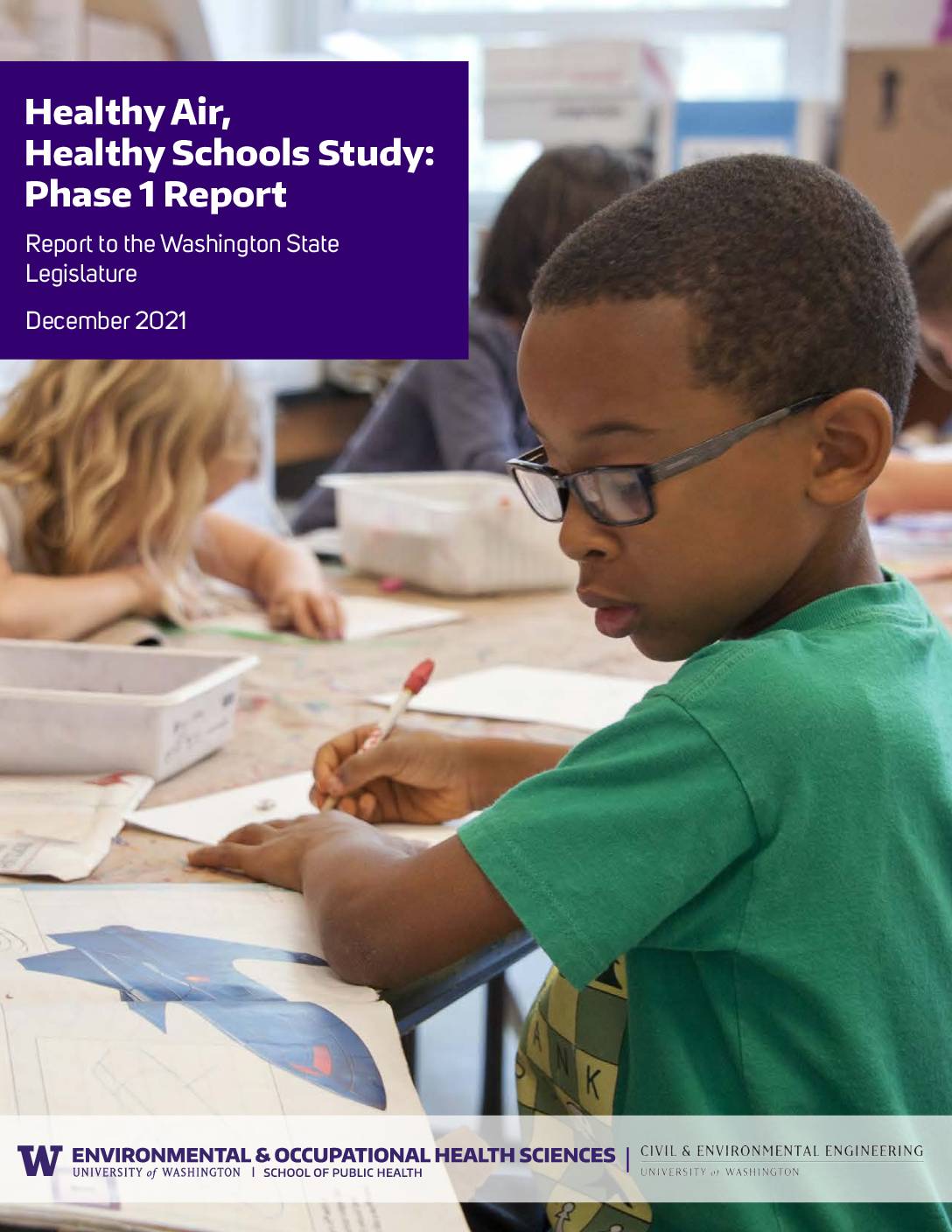
Healthy Air, Healthy Schools Study: Phase 1 Report
The Healthy Air, Healthy Schools Study Phase 1 Report, published in December 2021 by the University of Washington for the Washington State Legislature, investigates air quality conditions affecting schools in communities near Seattle-Tacoma International Airport, including SeaTac, Burien, Federal Way, Normandy Park, and Des Moines. The study was conducted in partnership with Federal Way Public Schools and Highline Public Schools, with researchers from UW's Environmental & Occupational Health Sciences and Civil & Environmental Engineering departments. It represents the first phase of a broader effort to understand how local air pollution — potentially influenced by airport and related traffic activity — impacts the health of students in these communities. -
 2021-05-01
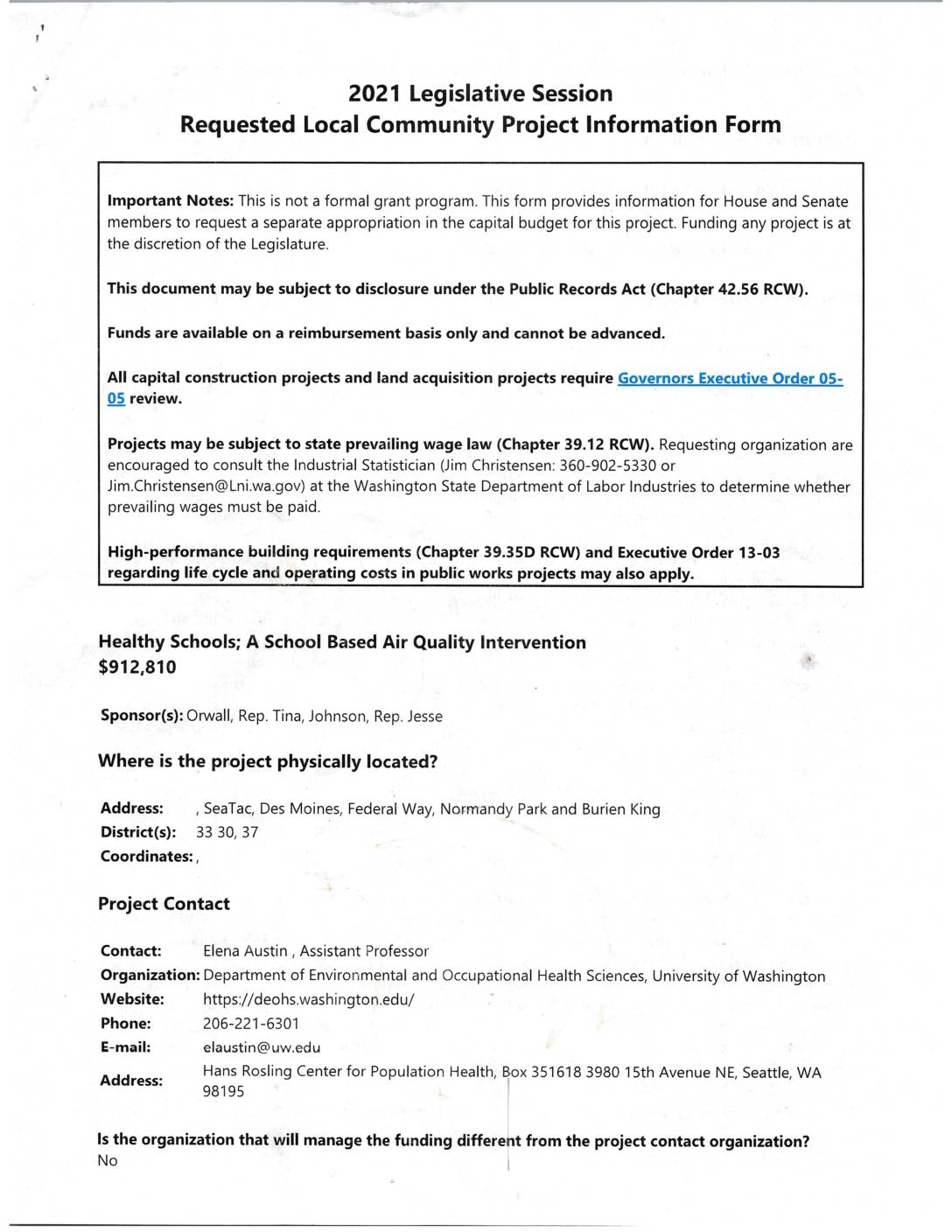
Healthy schools; A school based air quality intervention
A 2021 Washington State legislative funding request of $912,810, sponsored by Representatives Tina Orwall and Jesse Johnson, seeks to deploy HEPA portable air cleaners in 20 schools across SeaTac, Des Moines, Federal Way, Normandy Park, and Burien to reduce students' exposure to outdoor air pollution from traffic and wildfire smoke. The University of Washington's Department of Environmental and Occupational Health Sciences would lead the project, measuring indoor air quality improvements and student performance outcomes. The initiative builds on an ongoing 2021 pilot study monitoring air quality in five schools within the Highline and Federal Way School Districts. -
 2021-03-29
Characterizing Ultrafine Particulate Matter and Black Carbon Exposure Levels for a Seattle-Based Cohort From a Mobile Monitoring Campaign
This research presentation describes a mobile air monitoring study conducted in Seattle to measure ultrafine particulate matter and black carbon pollution levels for elderly residents participating in the Adult Changes in Thought (ACT) study, which investigates aging and dementia. Researchers used a vehicle-mounted monitoring system to collect repeated short-term air quality samples across the Seattle area, aiming to estimate long-term pollution exposure for cohort participants aged 65 and older. The study is funded by the National Institute of Environmental Health Sciences and the National Institute on Aging. -
 2021-01-01
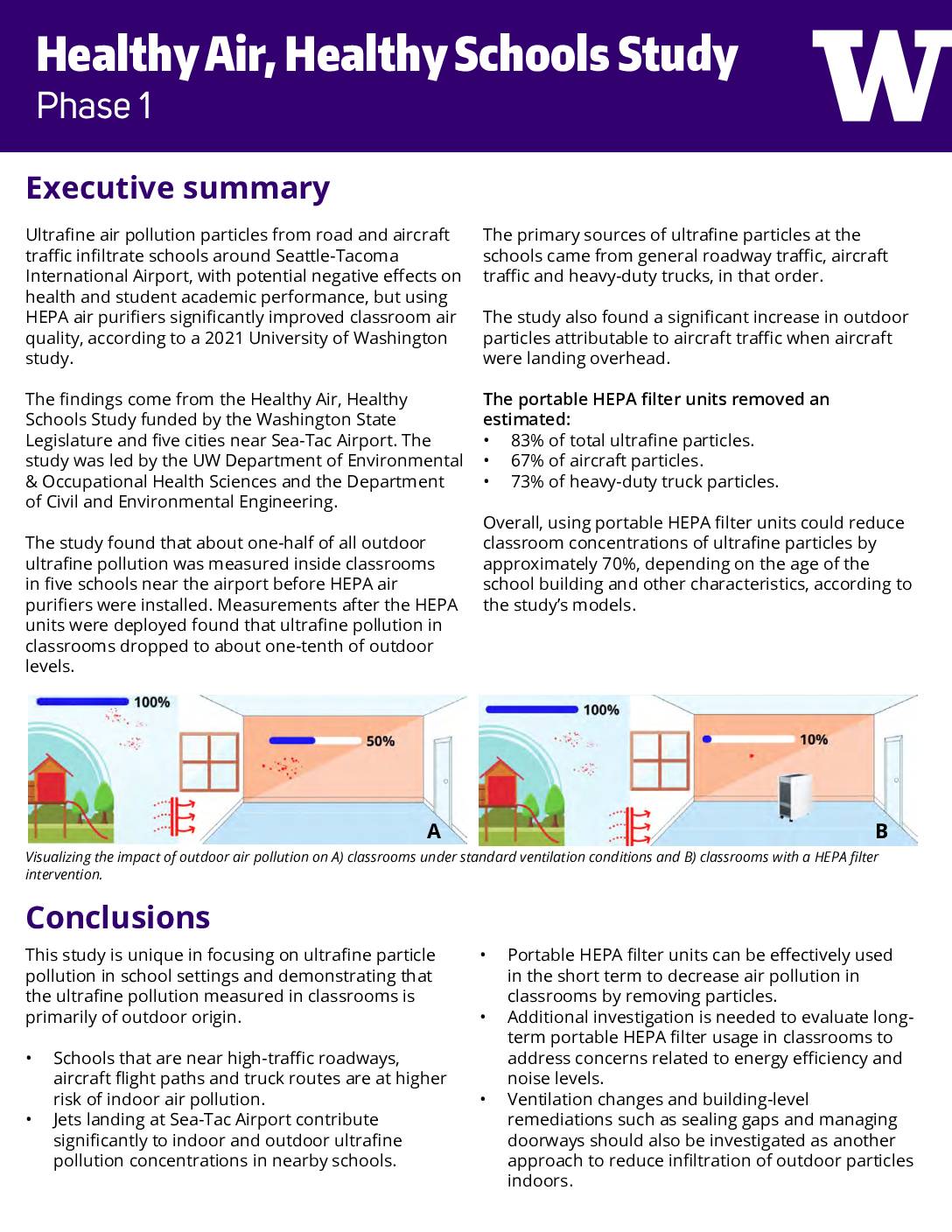
Healthy Air, Healthy Schools study executive summary
A 2021 University of Washington study found that ultrafine air pollution particles from road and aircraft traffic near Seattle-Tacoma International Airport were infiltrating nearby school classrooms, with indoor levels reaching roughly half of outdoor concentrations before any intervention. Installing portable HEPA air purifiers reduced classroom ultrafine particle levels to about one-tenth of outdoor levels, cutting overall particle concentrations by an estimated 70%. A follow-up Phase 2 study is now underway in 30 Washington schools to examine longer-term air quality improvements and their effects on student health and academic performance. -
 2016-12-27
Orwall Proposes Air Quality Study
Examining the impact of ultra-fine particles in airport communities 12/27/2016 by Clara McMichael Citing a need for a study regarding air quality and related health concerns in the communities surrounding the Seattle-Tacoma International Airport (SeaTac), Rep. Tina Orwall called a meeting that brought together representatives from federal, state, and local government as well as the Port -
 2016-12-27
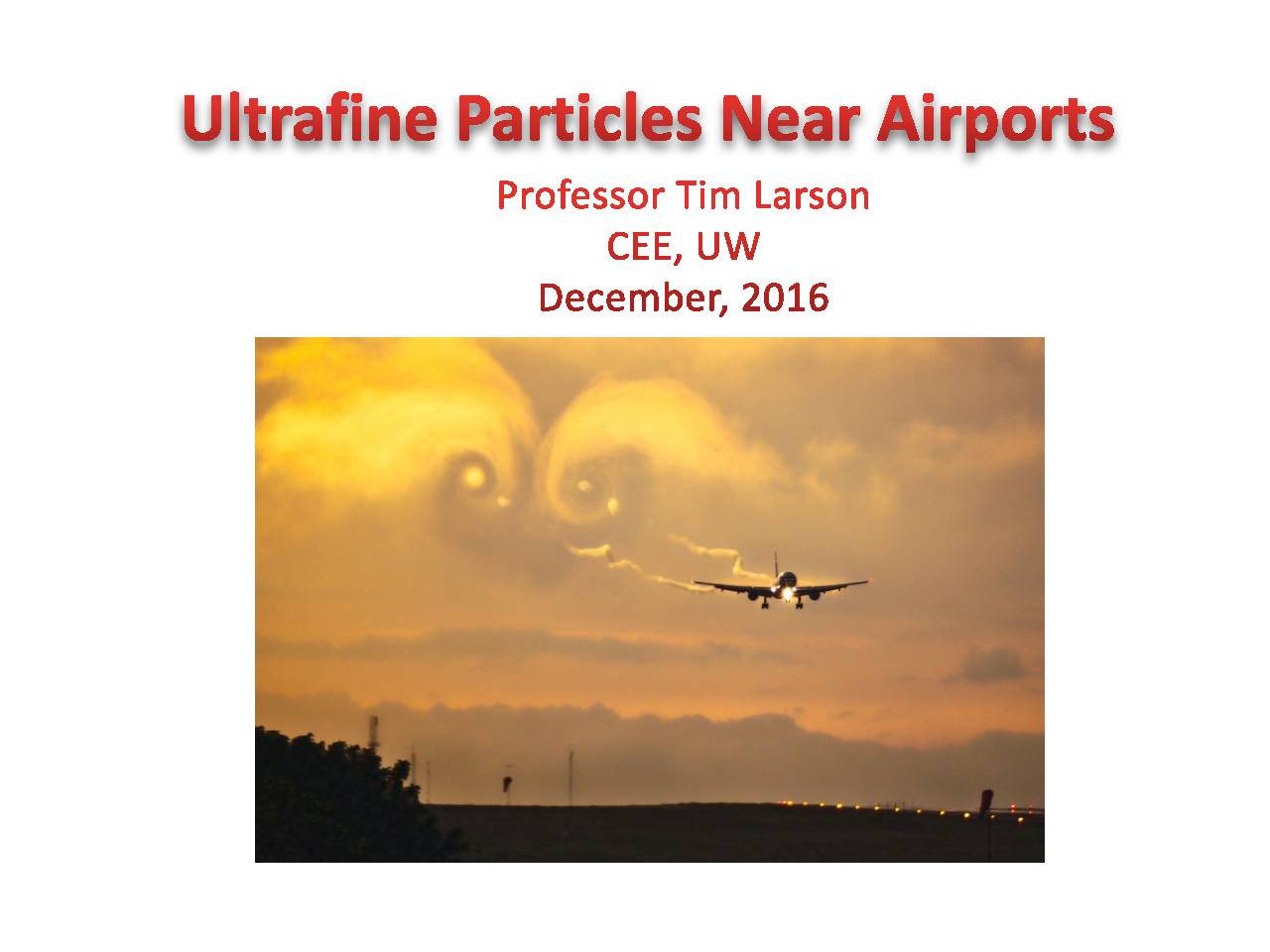
Ultrafine Particles Near Airports
This December 2016 presentation by University of Washington Professor Tim Larson examines ultrafine particles (UFPs) — tiny airborne particles smaller than 0.1 micrometers — found near airports, including sources such as jet engine exhaust and other combustion products. The research, conducted in collaboration with USC scientists, investigates the concentration and spread of these microscopic particles in communities surrounding airports. The findings are relevant to ongoing discussions about air quality and public health impacts near facilities like Sea-Tac Airport. -
 2016-12-01
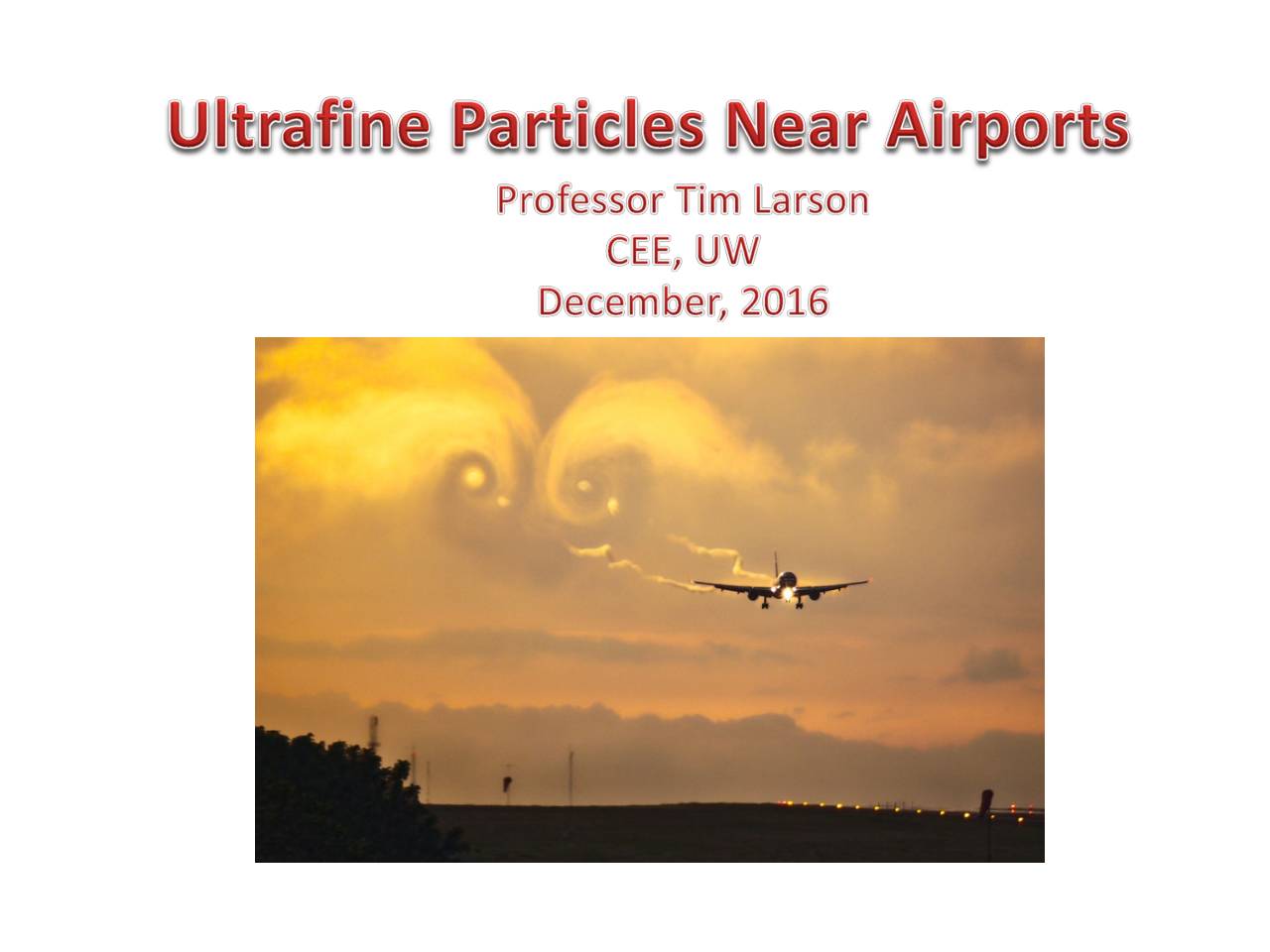
Ultrafine Particles Near Airports
This December 2016 presentation by University of Washington Professor Tim Larson examines ultrafine particles (UFPs) — tiny airborne particles smaller than 0.1 micrometers — found near airports, with a focus on emissions from aircraft and other combustion sources. Conducted in collaboration with researchers from UW and USC, the study explores how these microscopic particles, which are far smaller than diesel smoke or tobacco smoke particles, may pose environmental and health concerns for communities near airports like Sea-Tac. The research provides scientific context for understanding air quality impacts associated with airport operations.