TagThird Runway(1084)
-
 2002-10-22
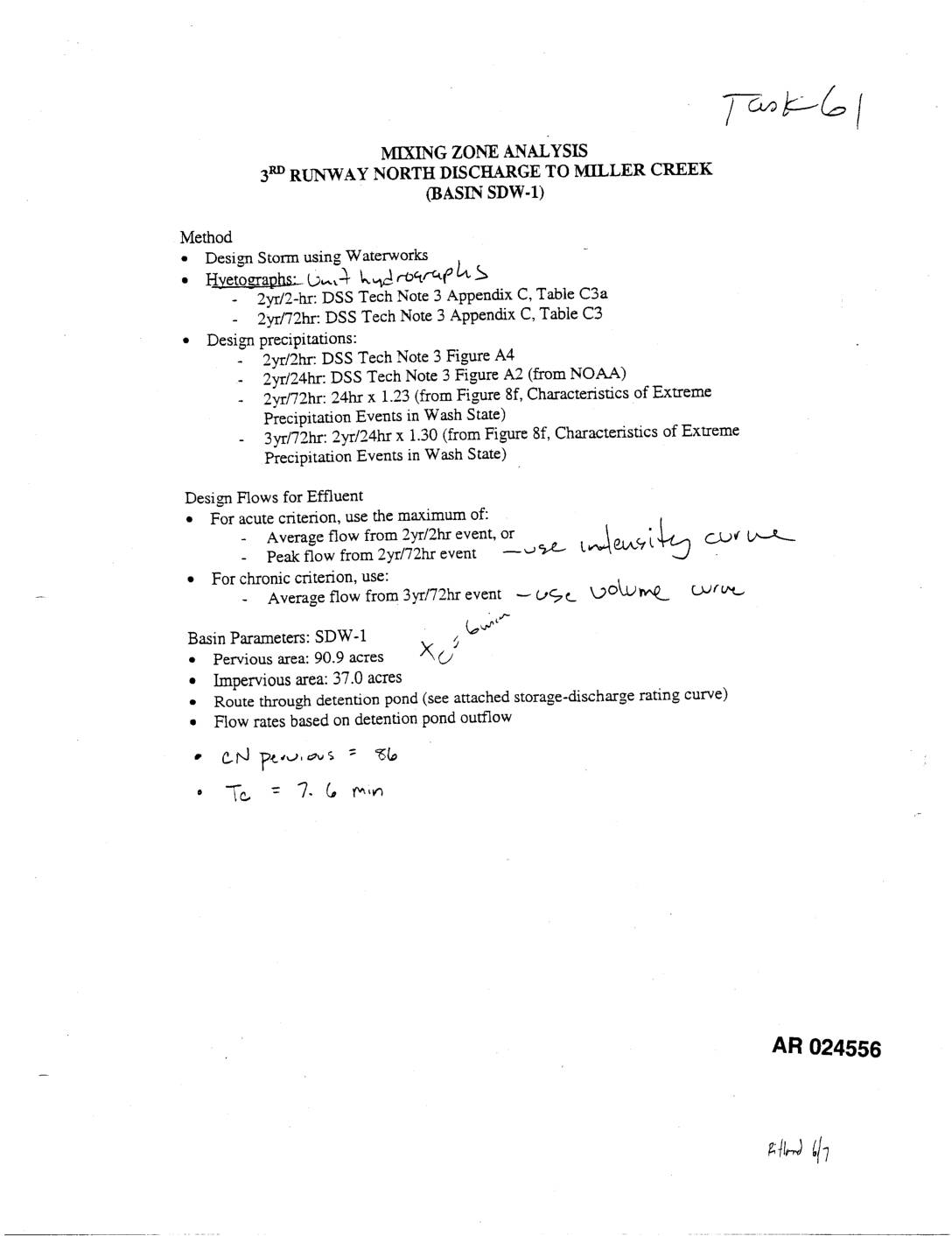
EXH AR024556: Mixing Zone Analysis — 3rd Runway North Discharge Miller Creek (Basin SDW-1)
This technical document describes a mixing zone analysis for stormwater discharge from the 3rd Runway North at Sea-Tac Airport into Miller Creek, designated as Basin SDW-1. The analysis uses design storm modeling with various rainfall scenarios (2-year/2-hour, 2-year/72-hour, and 3-year/72-hour events) to calculate effluent flow rates for both acute and chronic water quality criteria. Stormwater from the basin's approximately 128 acres of pervious and impervious area is routed through a detention pond before discharge, with outflow rates determined by a storage-discharge rating curve. -
 2002-10-22
EXH AR024333: Withdrawn Document
This document, identified as AR 024333, has been officially withdrawn and contains no substantive content available for review. It is part of the administrative record but has been removed from public access, leaving only a placeholder page indicating its withdrawn status. -
 2002-10-22
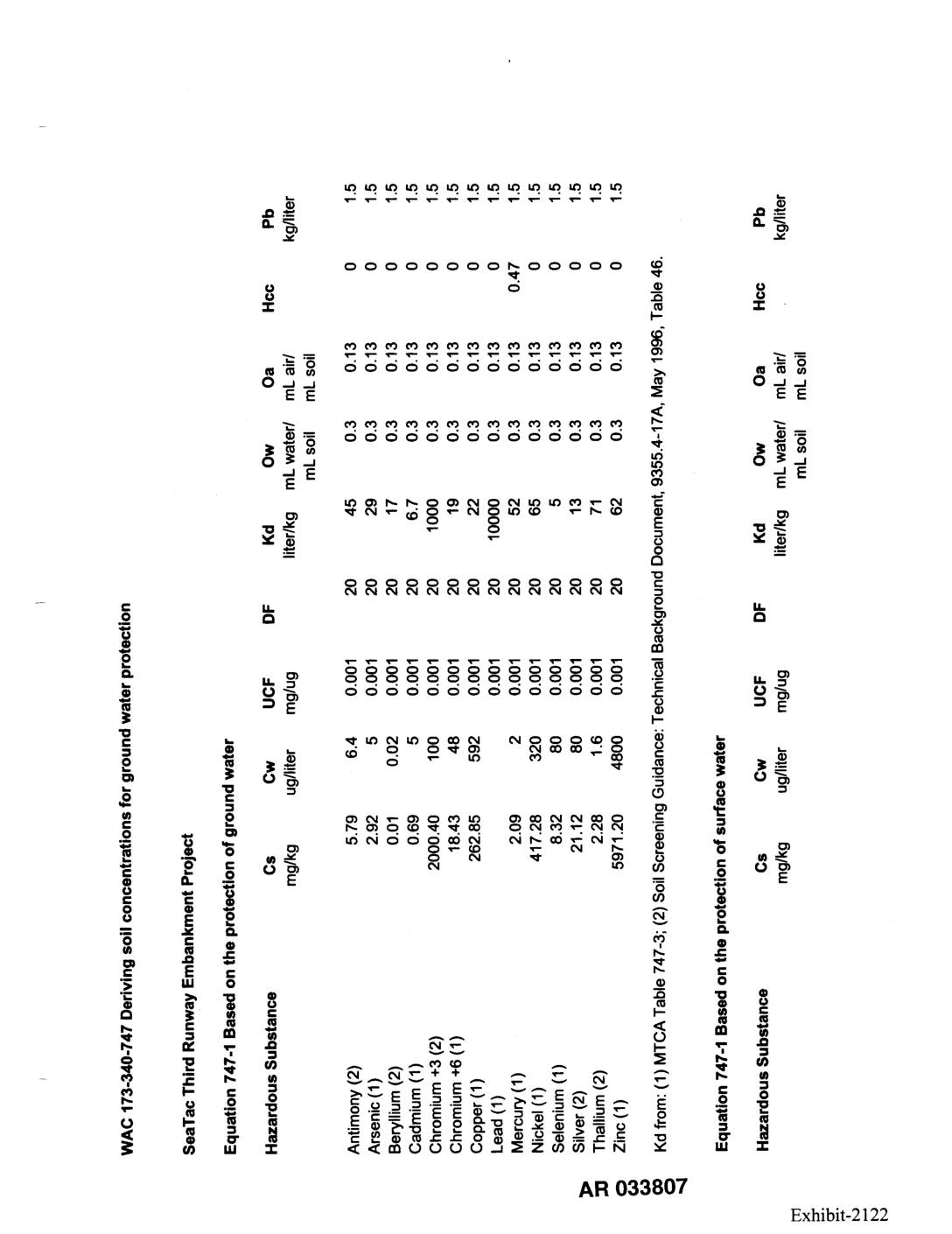
EXH AR033807: WAC 173-340-747 Deriving Soil Concentrations for Ground Water Protection — Sea-Tac Third Runway Embankment Project
Exhibit AR033807, WAC 173-340-747 soil concentration calculations for ground water and surface water protection under the Model Toxics Control Act (MTCA), SeaTac Third Runway Embankment Project. Tables derive cleanup levels for hazardous substances including antimony, arsenic, beryllium, cadmium, chromium +3, chromium +6, copper, mercury, nickel, selenium, silver, thallium, zinc, and lead using Equations 747-1 and -
 2002-10-22
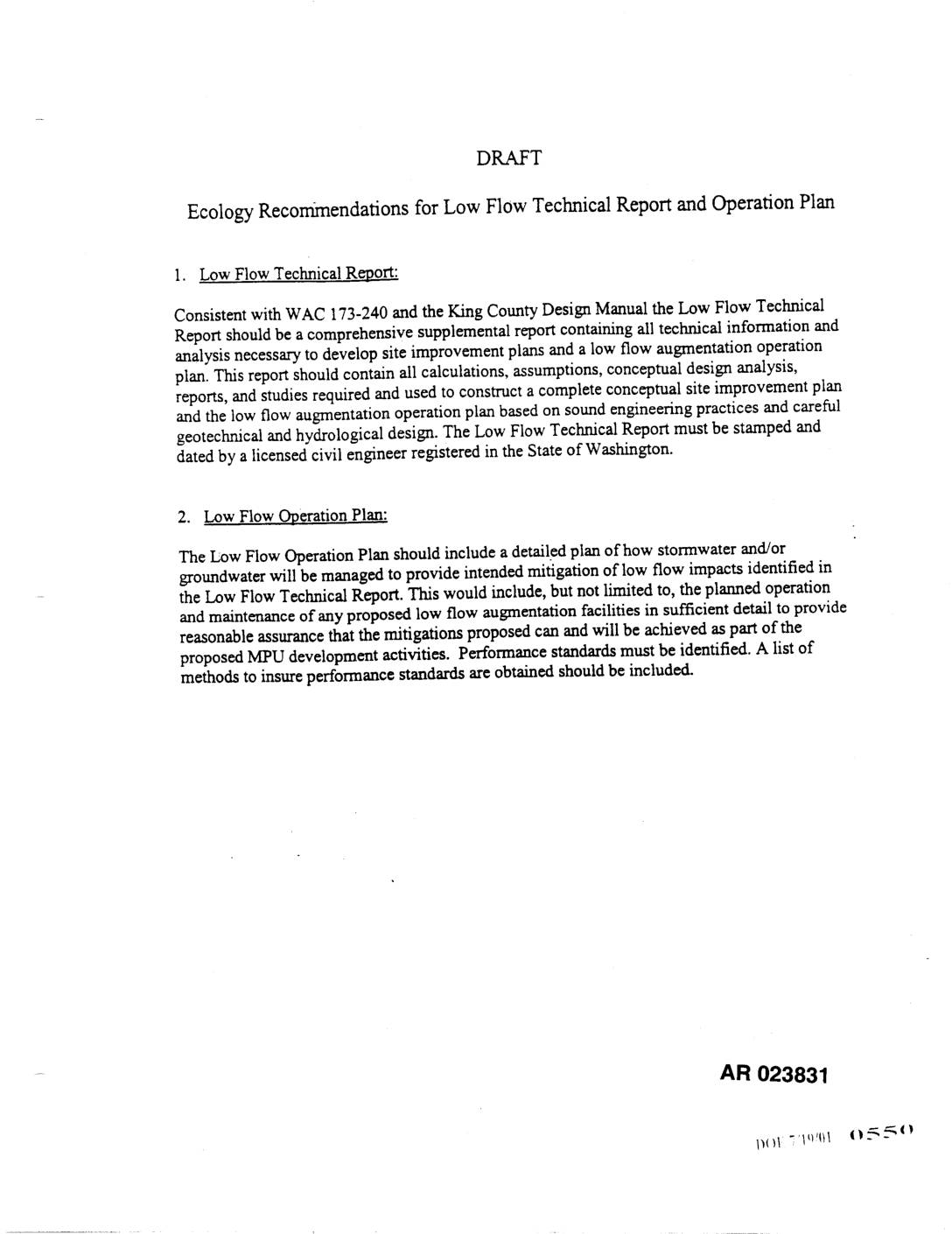
EXH AR023831: Ecology Draft Recommendations Low Flow Technical Report & Operation Plan
This draft document from Washington State's Department of Ecology outlines requirements for a Low Flow Technical Report and a Low Flow Operation Plan related to MPU development activities. The Technical Report must include all calculations, engineering analyses, and hydrological studies needed to address low flow impacts, and must be stamped by a licensed Washington civil engineer. The Operation Plan must detail how stormwater and groundwater will be managed to mitigate those impacts, including maintenance procedures, performance standards, and methods to ensure those standards are met. -
 2002-10-22
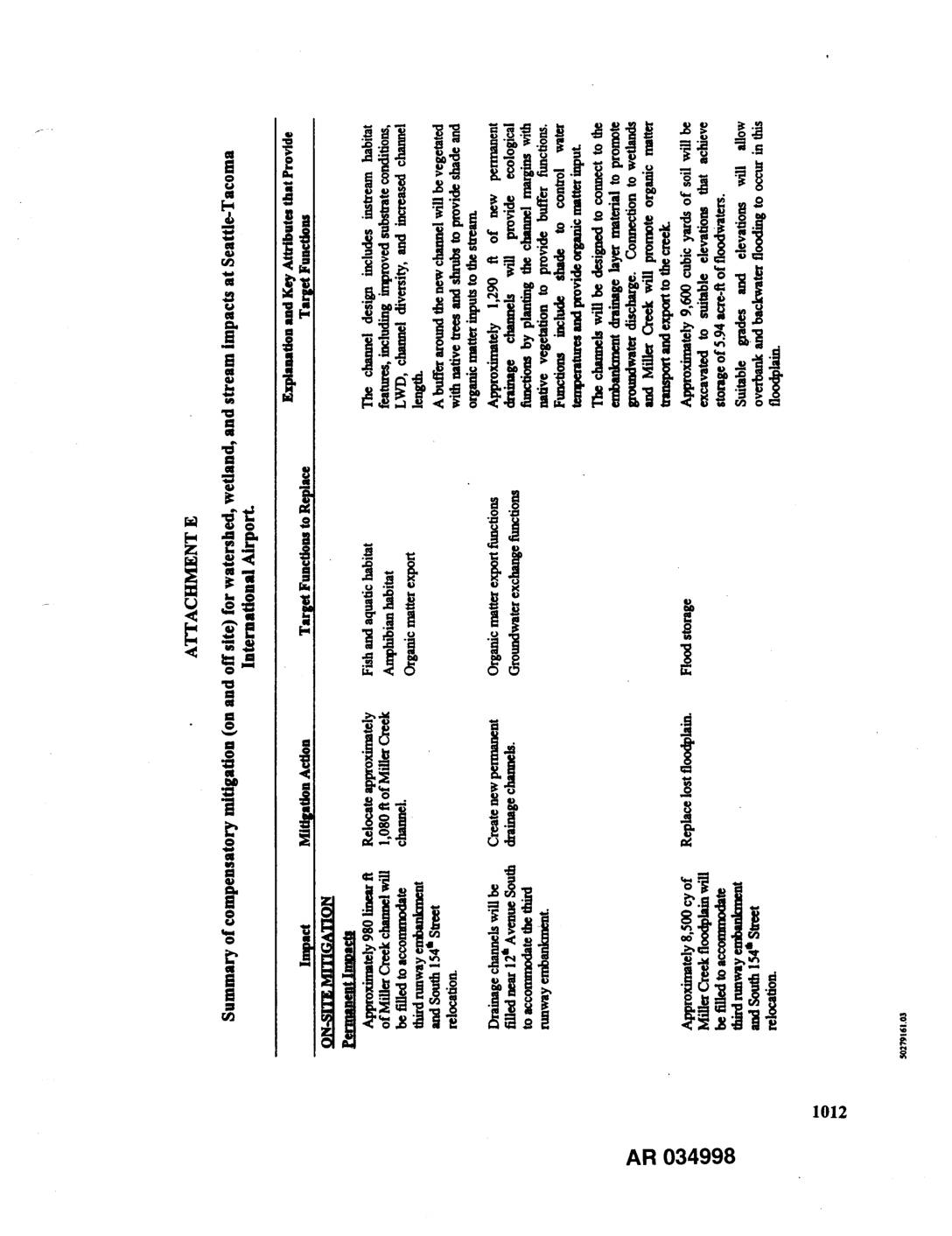
EXH AR034998: Attachment E — Summary of Compensatory Mitigation for Watershed, Wetland, and Stream Impacts at Seattle-Tacoma International Airport
Exhibit AR034998-AR035000, Attachment E: Summary table of compensatory mitigation (on-site and off-site) for watershed, wetland, and stream impacts at Seattle-Tacoma International Airport related to third runway embankment and South 154th Street relocation. Details on-site permanent impacts including filling approximately 980 linear feet of Miller Creek channel, filling 8,500 cy of Miller Creek floodplain, and filling -
 2002-10-22
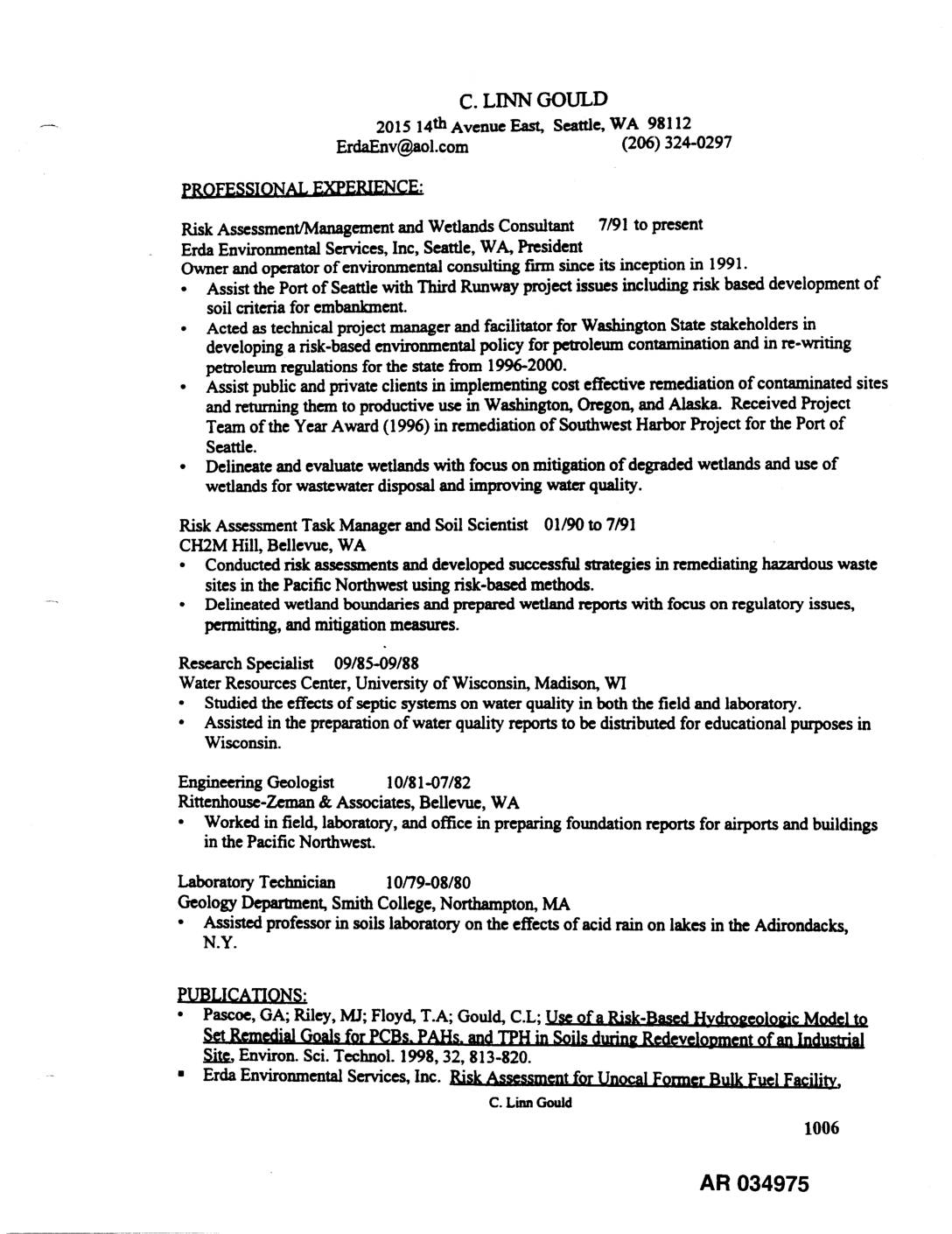
EXH AR034975: Curriculum Vitae of C. Linn Gould, Erda Environmental Services
Curriculum vitae of C. Linn Gould, President of Erda Environmental Services, Inc., Seattle, WA. Gould worked as Risk Assessment/Management and Wetlands Consultant from 1991 onward, including work for the Port of Seattle Third Runway project (risk-based soil criteria for embankment), Washington State petroleum contamination risk-based environmental policy (1996-2000), and remediation of the Southwest Harbor Project -
 2002-10-22
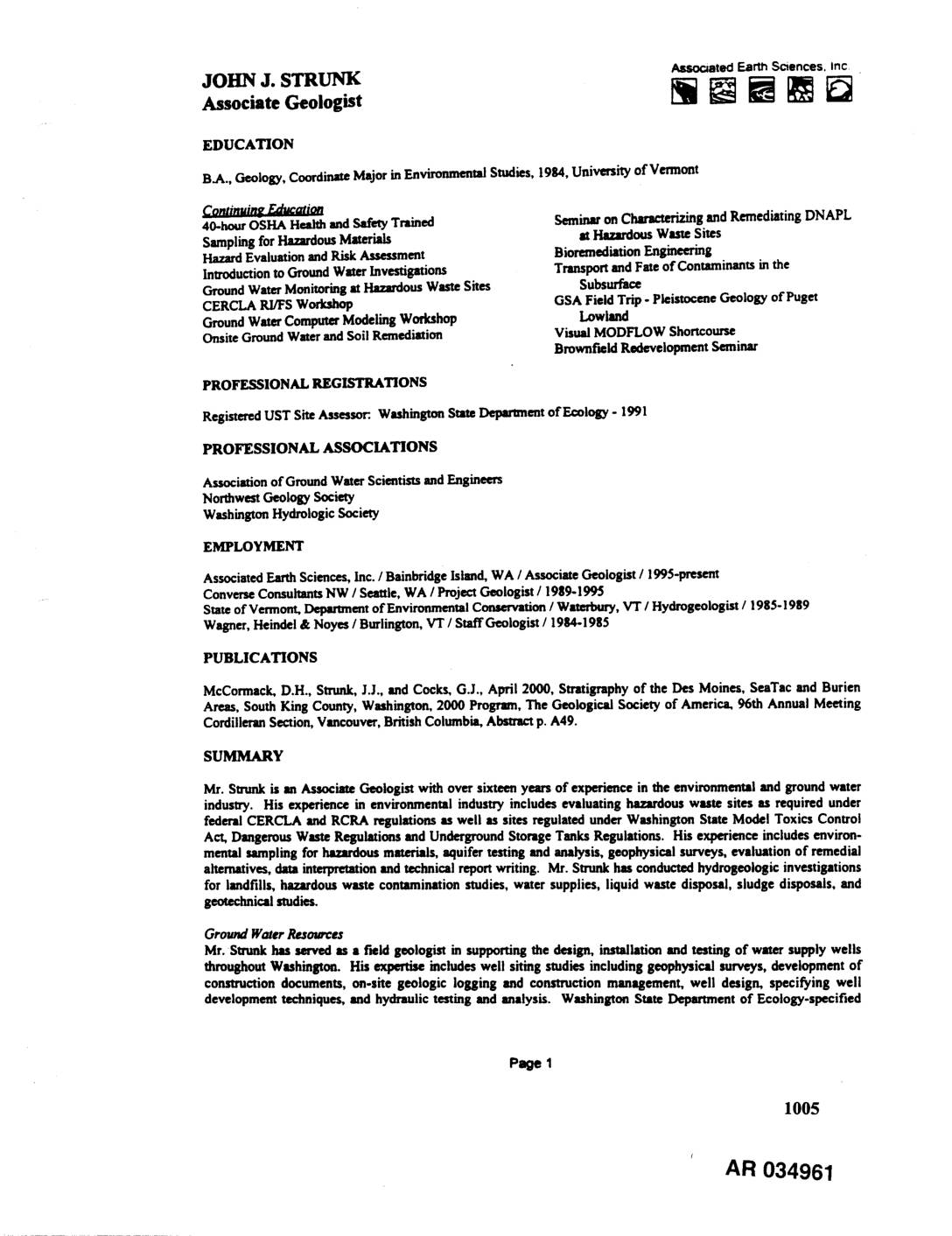
EXH AR034961: John J. Strunk, Associate Geologist — Resume, Associated Earth Sciences, Inc.
Resume of John J. Strunk, Associate Geologist at Associated Earth Sciences, Inc. (AESI), Bainbridge Island, WA. Over sixteen years of experience in environmental and ground water industry. Projects include Area-Wide Ground Water Study at Seattle-Tacoma International Airport (Sea-Tac Airport) under MTCA Agreed Order between Ecology and Port Of Seattle; Third Runway project support regarding ground -
 2002-10-22
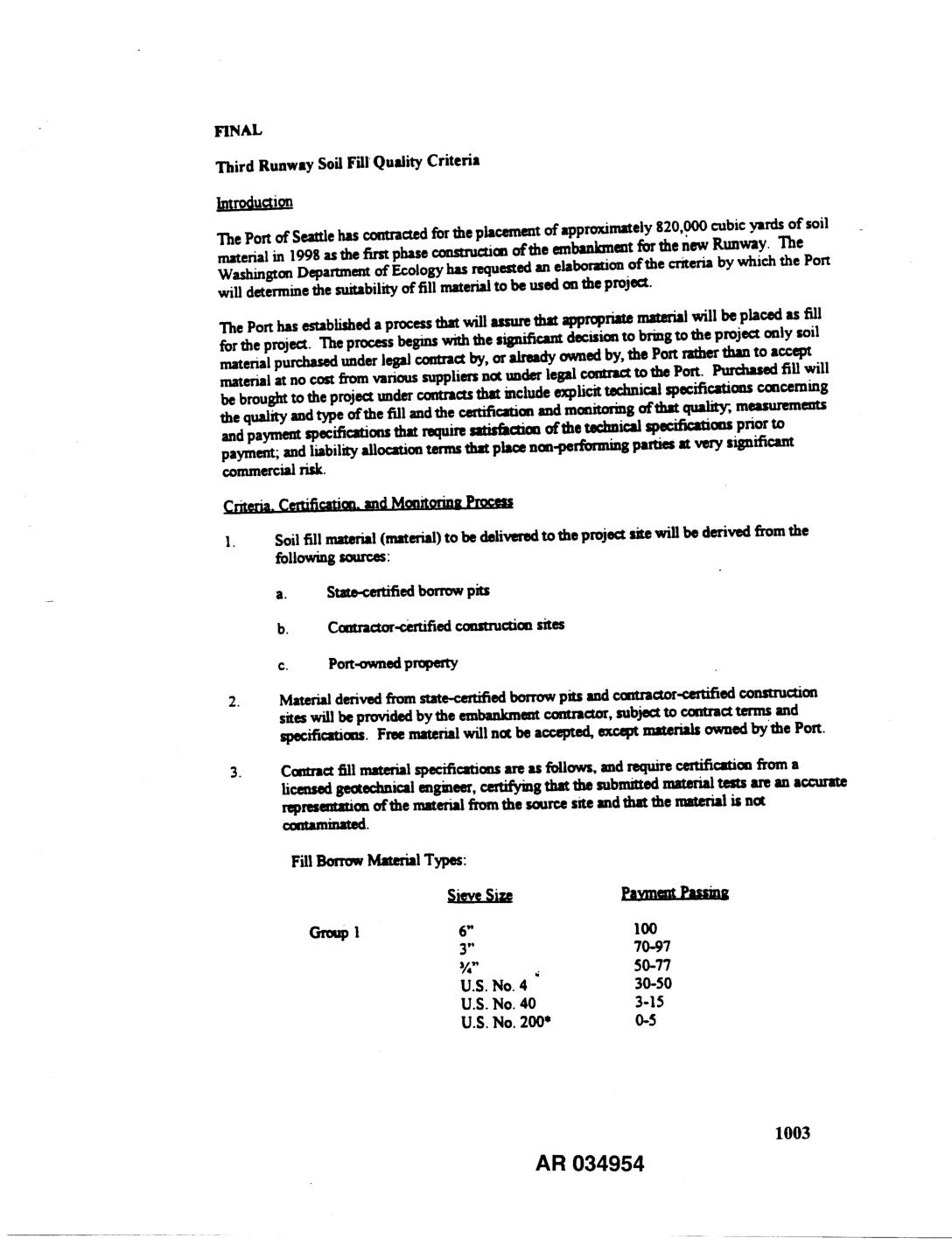
EXH AR034954: Third Runway Soil Fill Quality Criteria
Port Of Seattle document establishing soil fill quality criteria for Third Runway embankment construction in 1998, covering approximately 820,000 cubic yards of fill material. Specifies Fill Borrow Material Types (Group 1, Group 2, Group 3) with sieve size gradation requirements (6″, 3″, ¾”, U.S. No. 4, U.S. No. 40, U.S. No. 200), MTCA Method A -
 2002-10-22
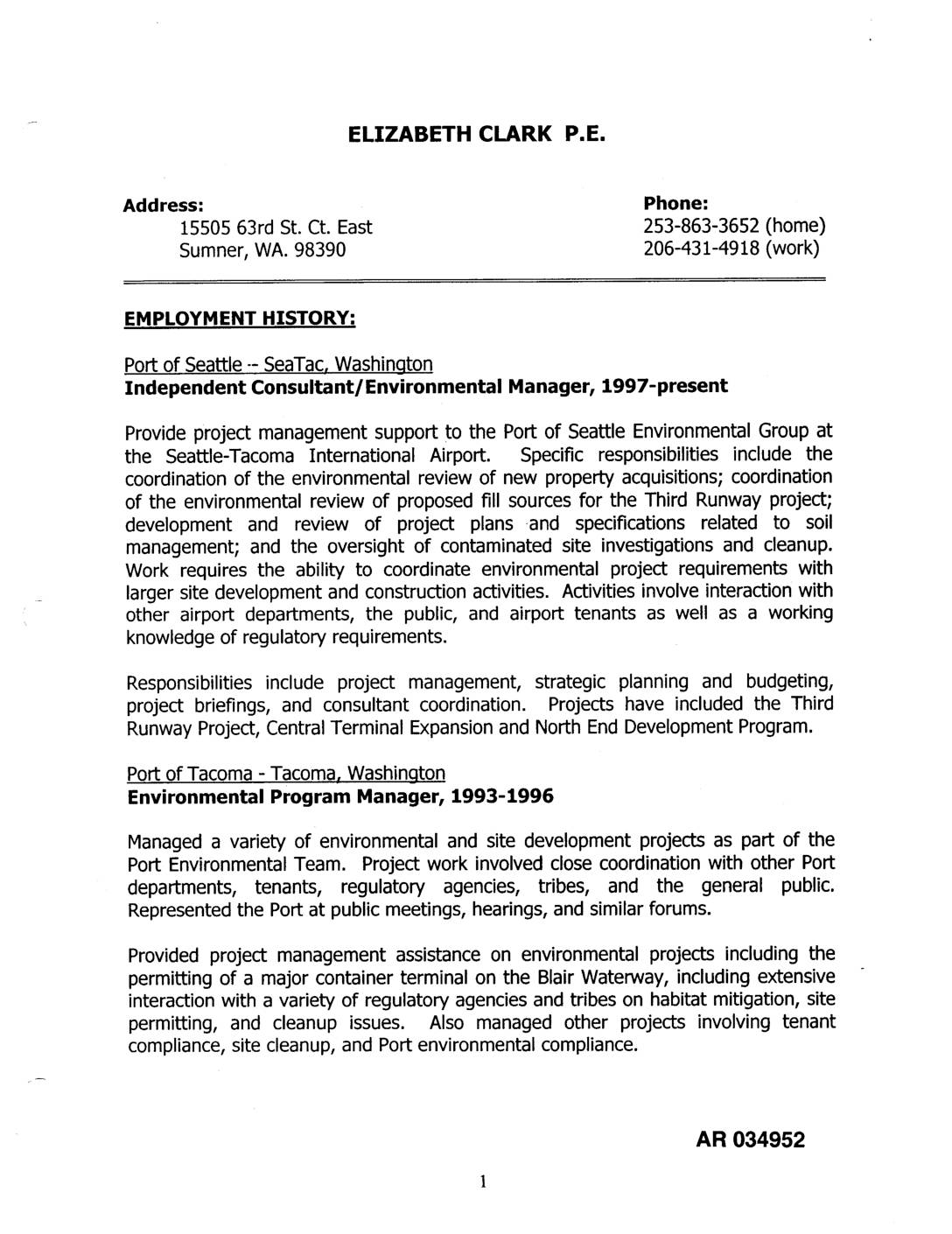
EXH AR034952: Resume of Elizabeth Clark P.E., Independent Consultant/Environmental Manager
Resume of Elizabeth Clark P.E., licensed civil engineer in Washington State, detailing employment as Independent Consultant/Environmental Manager for Port of Seattle at Seattle-Tacoma International Airport (1997-present), Environmental Program Manager for Port of Tacoma (1993-1996), and Project Engineer/Tacoma Branch Manager at Landau Associates Inc. (1985-1993). Covers contaminated site investigations, soil management, Third Runway project, Central Terminal -
 2002-10-22
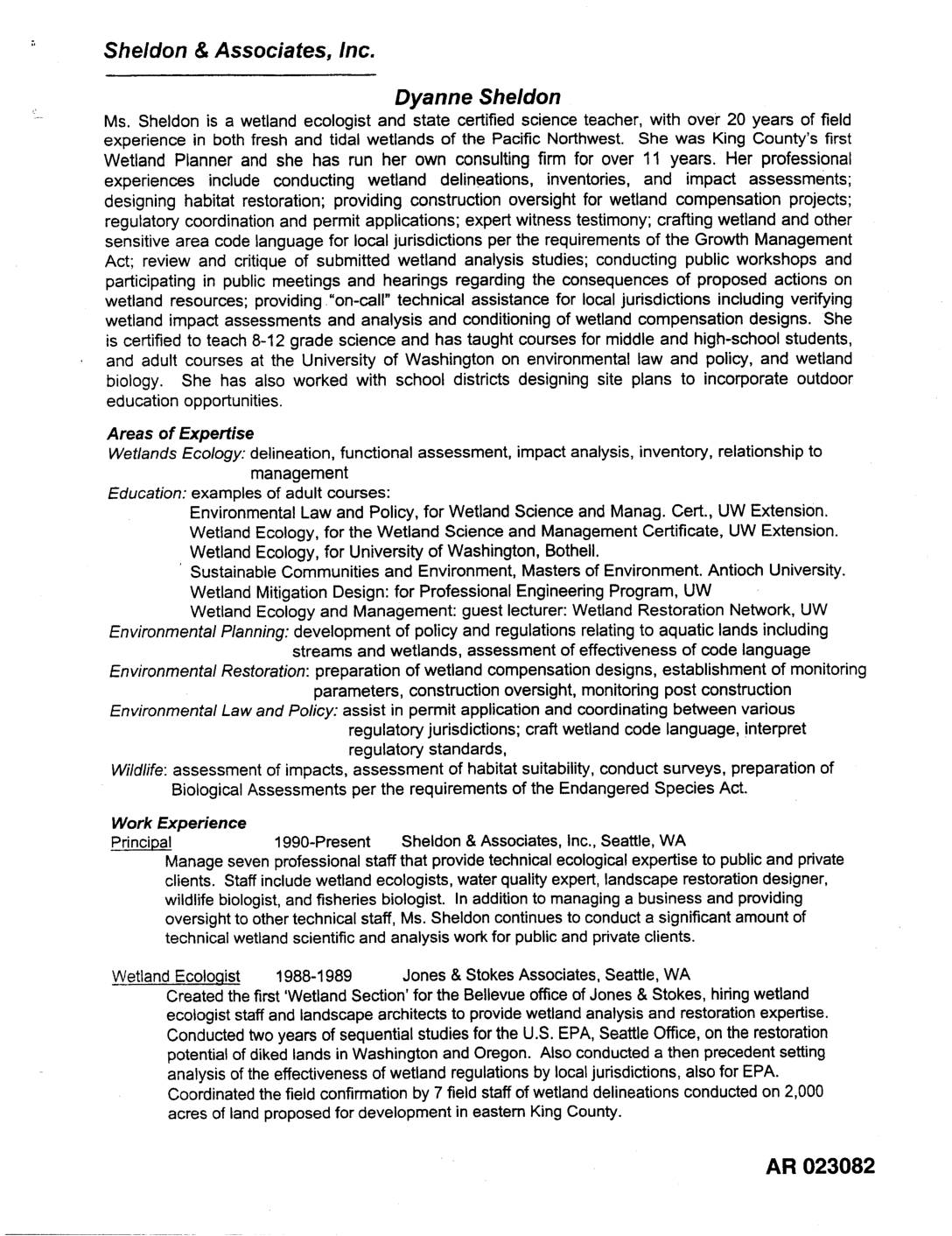
EXH AR023082: CV Dyanne Sheldon, Wetland Ecologist, Sheldon & Associates Inc.
This document is the professional curriculum vitae of Dyanne Sheldon, principal of Sheldon & Associates, Inc., a Seattle-based wetland ecology consulting firm. Among her relevant work, she co-authored both the Sea-Tac Airport Wetland Inventory and the Sea-Tac Airport Wetland Management Plan in 1991 for the Port of Seattle's Environmental Management Section. Her broader expertise spans wetland delineation, habitat restoration, environmental planning, and regulatory compliance across the Pacific Northwest.