TagThird Runway(1084)
-
 2002-10-23
EXH AR037700: Draft Restrictive Covenants for Mitigation Sites for Seattle-Tacoma International Airport Master Plan Improvements
Draft Declaration of Restrictive Covenants by Port Of Seattle for four mitigation sites associated with Seattle-Tacoma International Airport Master Plan Improvements, including third runway construction. Covers Miller Creek Buffer Areas, Miller Creek/Lora Lake Wetland and Floodplain, Tyee Valley Golf Course Wetland Enhancement, and Auburn Wetland Mitigation Site (approximately 69 acres in City of Auburn). Executed -
 2002-10-23
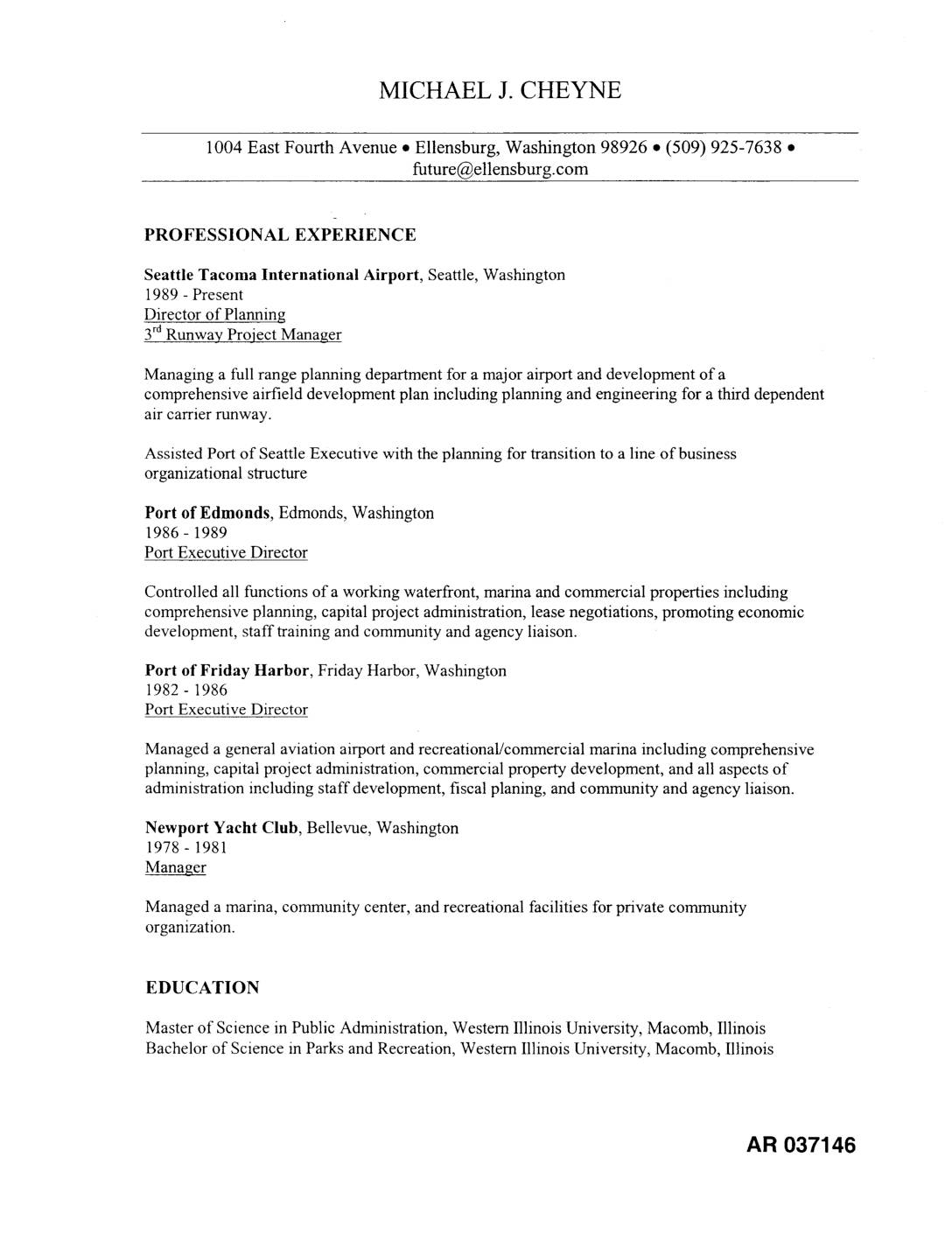
EXH AR037146: Resume of Michael J. Cheyne, Director of Planning, Sea-Tac Airport
Resume of Michael J. Cheyne, located at 1004 East Fourth Avenue, Ellensburg, Washington 98926. Cheyne served as Director of Planning and 3rd Runway Project Manager at Seattle-Tacoma International Airport (1989-present), Port Executive Director at Port of Edmonds (1986-1989), Port Executive Director at Port of Friday Harbor (1982-1986), and Manager at Newport Yacht Club in Bellevue -
 2002-10-22
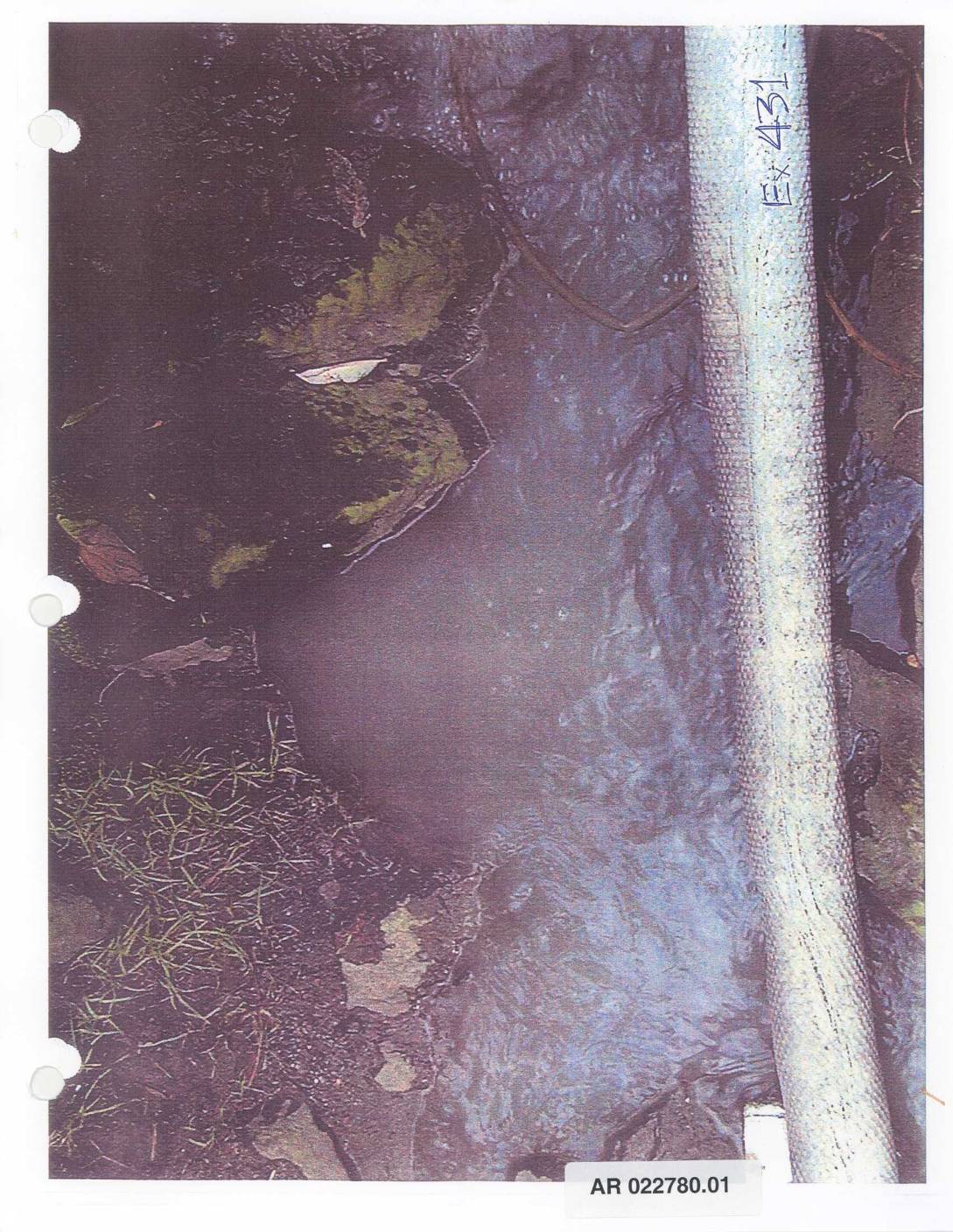
EXH 431: Photo Pipe & Water Seepage Third Runway Construction Site
This document, labeled Exhibit 431 and bearing reference number AR 022780.01, is a photograph from the administrative record, appearing to show ground-level environmental conditions near a pipe or post, with visible soil, leaf litter, pine needles, and wet or saturated ground surface. The image likely documents site conditions relevant to environmental or noise mitigation proceedings associated with Seattle-Tacoma International Airport. No additional text or descriptive caption accompanies the photograph. -
 2002-10-22
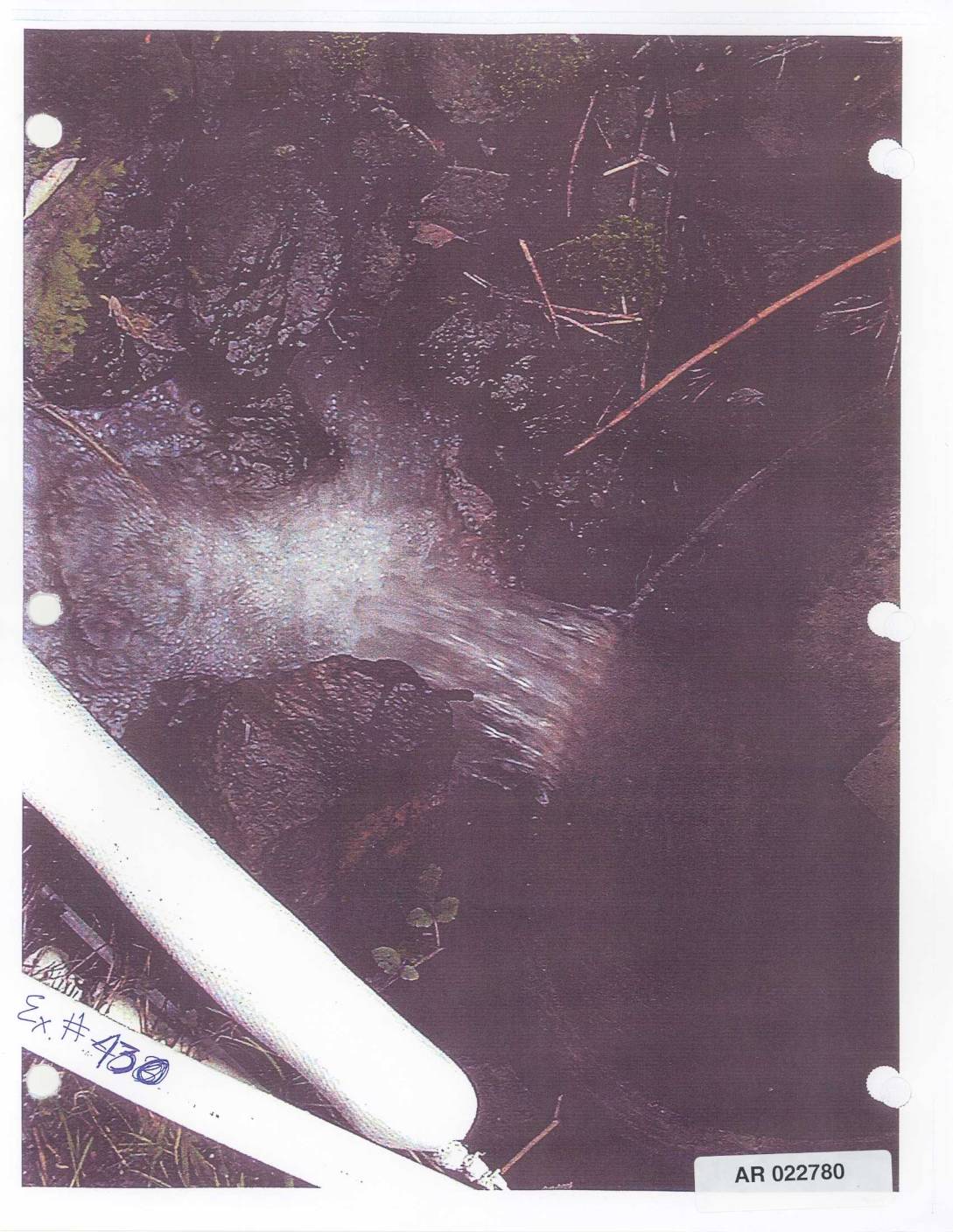
Exhibit 430: AR 022780 — Photograph of Discharge or Seepage at Construction Site, Third Runway EIS
This document, labeled Exhibit #430 and archived as AR 022780, is a photograph showing what appears to be a ground-level view of a wet or muddy outdoor area with debris, sticks, and small plants visible. A white pipe or tube is partially visible in the lower left corner of the image. The photo appears to have been submitted as evidence or documentation in a proceeding related to Sea-Tac Airport noise or environmental policy matters. -
 2002-10-22
EXH AR012954: Declaration of Michael Cheyne — Port Of Seattle Third Runway, PCHB 01-133
Declaration of Michael Cheyne, Port Of Seattle project manager for the Sea-Tac third runway construction, filed in PCHB case No. 01-133 (Airport Communities Coalition v. Department of Ecology and Port Of Seattle). Cheyne describes his role overseeing administration, planning, design, and construction of the Sea-Tac third runway as part of the Master Plan Update (MPU). -
 2002-10-22
EXH AR012506: Declaration of John J. Strunk in Support of Port Of Seattle’s Response Opposing ACC’s Motion for Stay
Declaration of John J. Strunk (geologist, Associated Earth Sciences Inc., AESI) filed in PCHB No. 01-133, Pollution Control Hearings Board for the State of Washington, supporting Port Of Seattle’s response opposing Airport Communities Coalition (ACC) motion for stay. Strunk details AESI’s groundwater evaluation at Seattle-Tacoma International Airport (STIA), including work on the Aircraft Operations and -
 2002-10-22
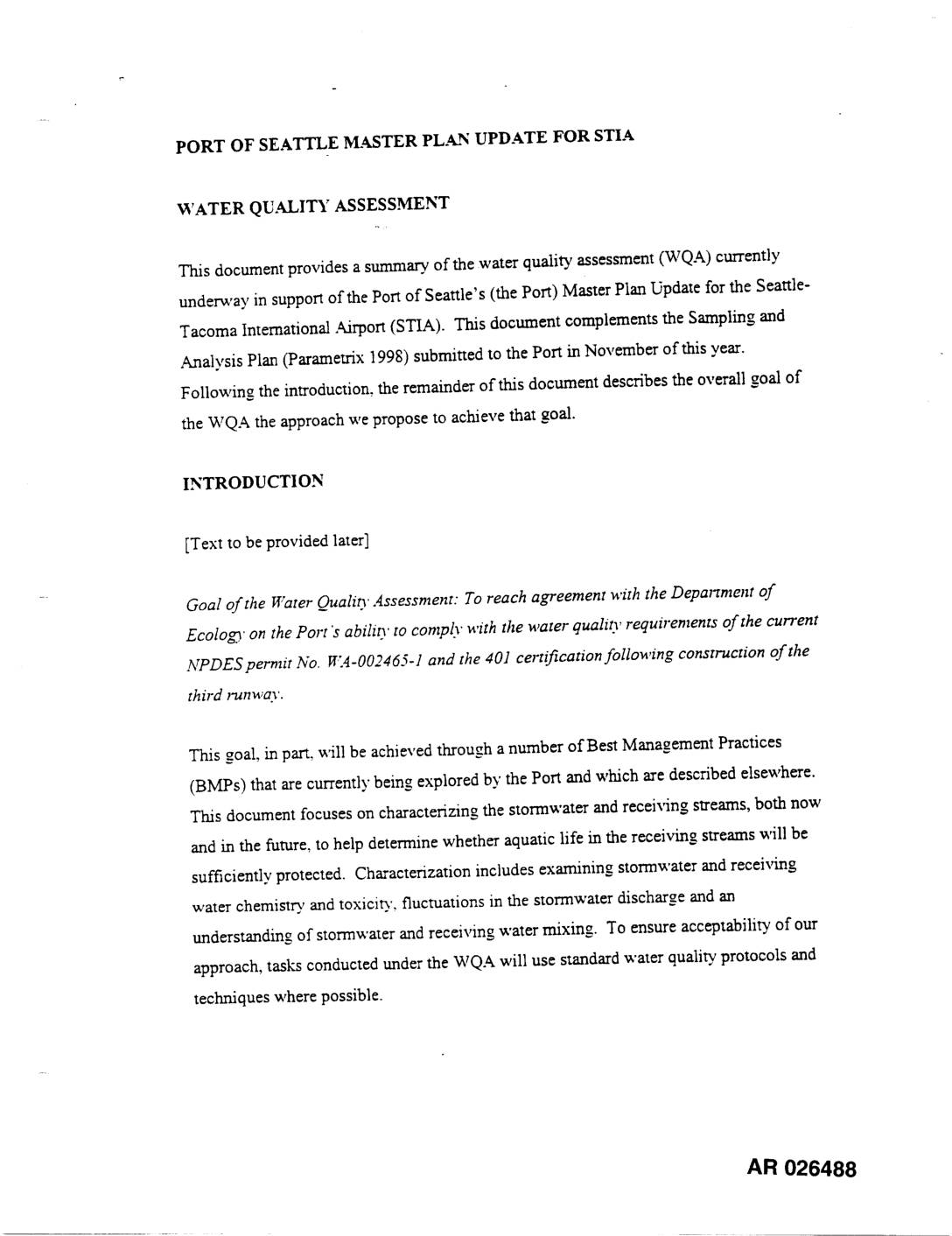
EXH AR026488: Water Quality Assessment Summary — Master Plan Update STIA
This document outlines a Water Quality Assessment (WQA) conducted in support of the Port of Seattle's Master Plan Update for Seattle-Tacoma International Airport (STIA), focused on evaluating the airport's ability to meet water quality requirements under its NPDES permit following construction of a proposed third runway. The assessment uses three approaches: a Water Effect Ratio (WER) study to adjust water quality standards for site-specific conditions, a mixing zone analysis to determine where standards must be met in receiving streams, and an examination of variability in stormwater quality. The goal is to reach agreement with the Washington Department of Ecology on whether aquatic life in nearby receiving streams will be adequately protected. -
 2002-10-22
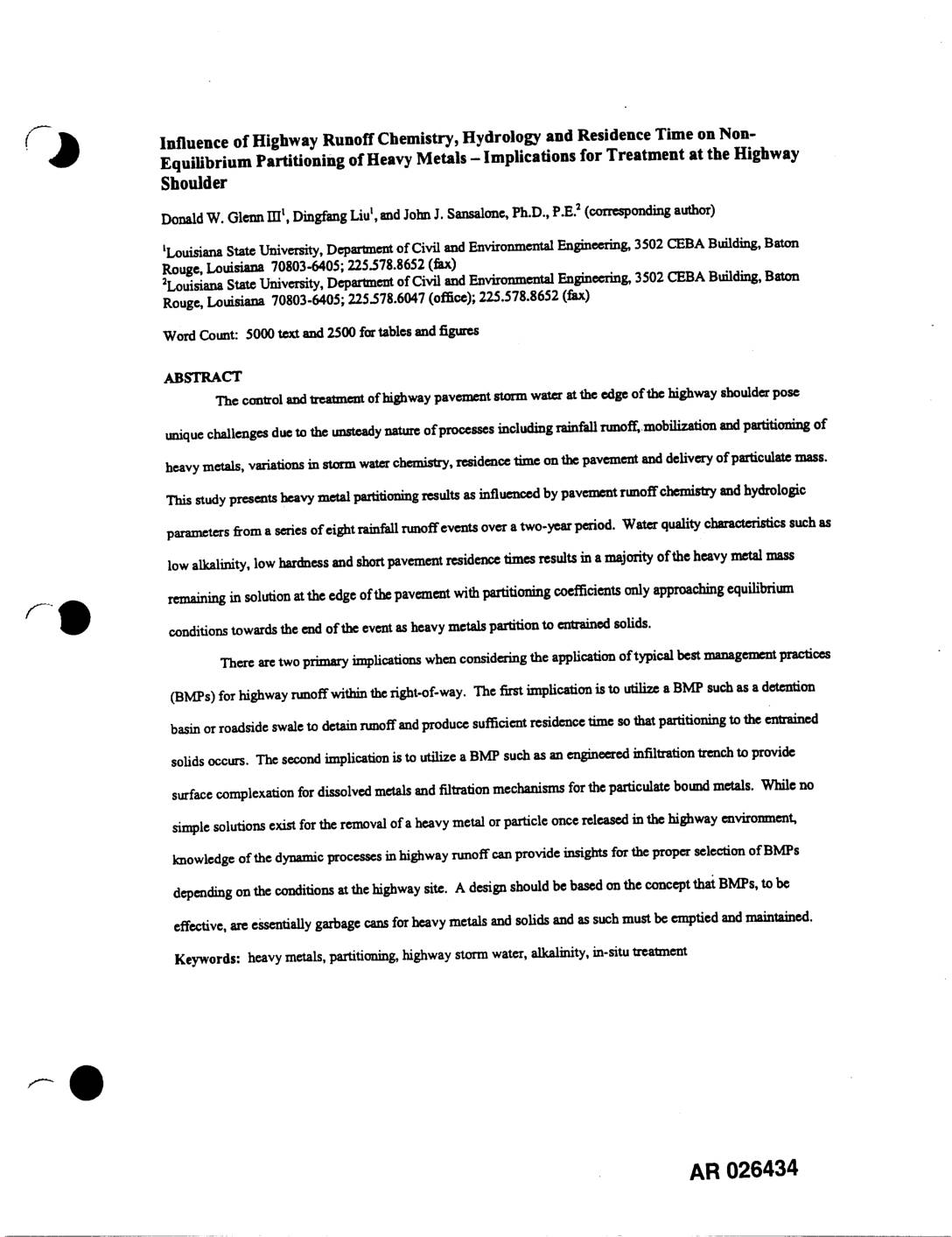
EXH AR026434: Highway Runoff Chemistry Hydrology Residence Time Non-Equilibrium Partitioning Heavy Metals Treatment
This research study examines how heavy metals in highway stormwater runoff behave as water flows off pavement, finding that most heavy metals remain dissolved rather than attaching to solid particles due to low alkalinity and short travel times on the pavement surface. The study, conducted on Interstate 75 in Cincinnati over two years, explores how best management practices like detention basins or infiltration trenches could be used to capture these metals before they reach receiving waters. -
 2002-10-22
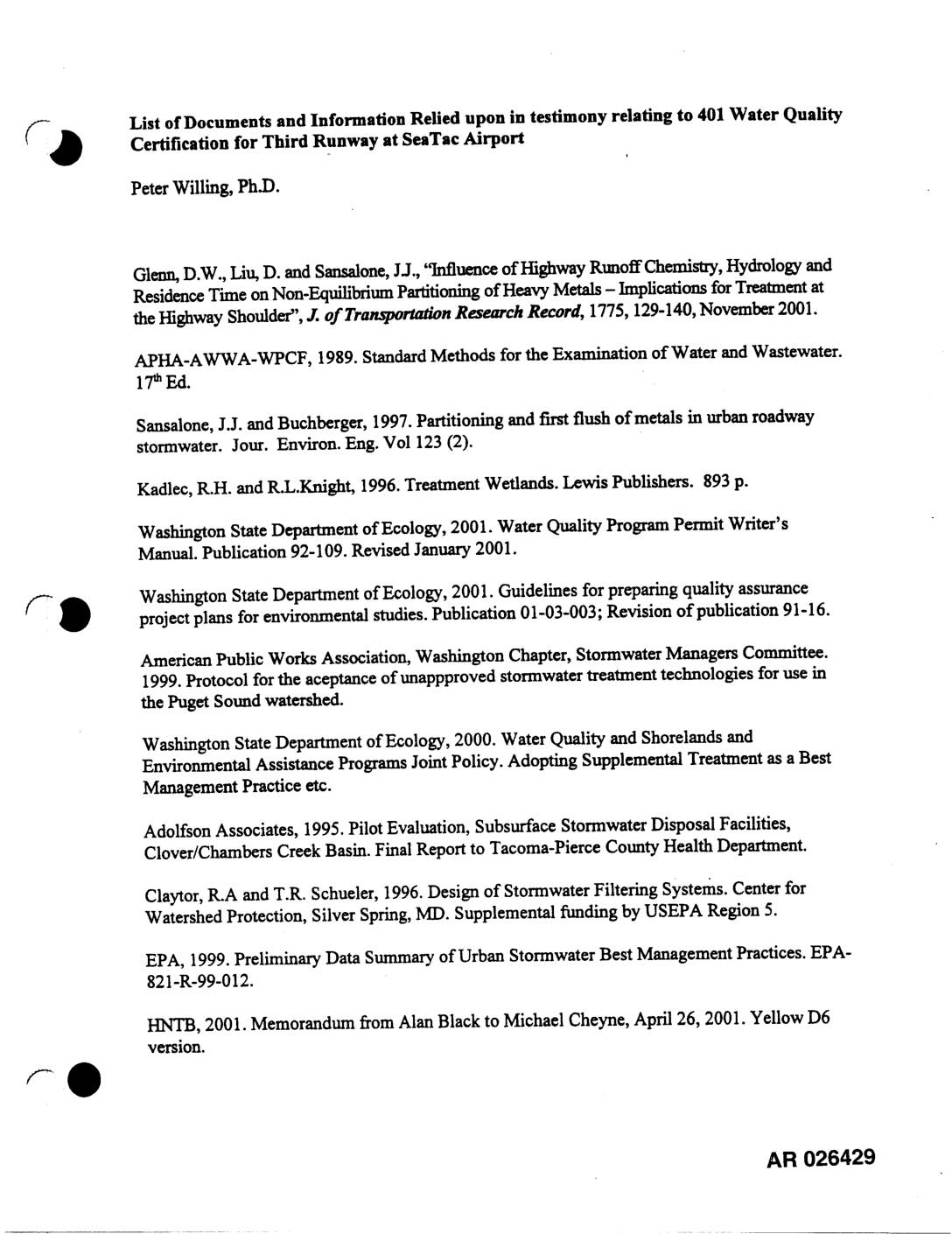
Exhibit 713: List of Documents and Information Relied Upon in Testimony Relating to 401 Water Quality Certification for Third Runway at Sea-Tac Airport
Reference list compiled by Peter Willing, Ph.D., of documents relied upon in testimony regarding the 401 Water Quality Certification for the Third Runway at Sea-Tac Airport. Sources cited include studies on highway runoff chemistry, heavy metals partitioning, urban stormwater BMPs, treatment wetlands, NPDES permits, and Port of Seattle annual stormwater monitoring reports (1998–2001). Key references -
 2002-10-22
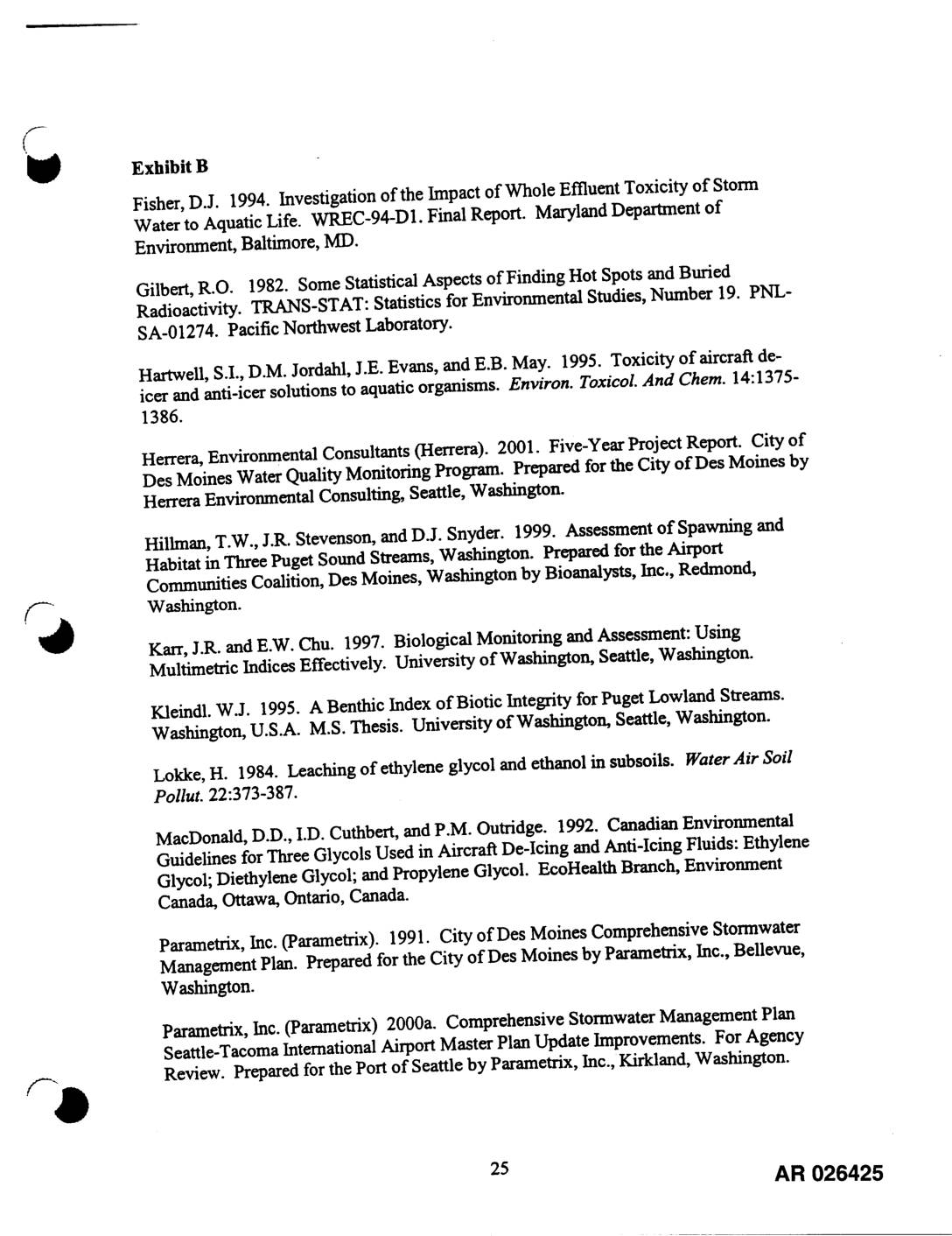
EXH 711: Bibliography — Stormwater & Aquatic Environmental References, STIA EIS
This document is a reference bibliography (Exhibit B) listing scientific and regulatory sources related to environmental monitoring at Seattle-Tacoma International Airport. It includes studies on stormwater quality, aircraft de-icing and anti-icing fluid toxicity, aquatic habitat assessment, and sediment guidelines, drawn from sources such as the Port of Seattle, Parametrix Inc., and various environmental agencies. The references support environmental compliance reporting under the airport's NPDES stormwater permit.