TagState of Washington(113)
-
 2009-07-01
Washington Aviation System Plan: Chapter 6: System Performance
The Washington Aviation System Plan outlines performance objectives for public-use airports across Washington State, covering operational standards such as pavement condition, runway safety areas, and obstacle clearance. Airports are evaluated against these goals based on their classification level, ranging from Commercial Service to Seaplane Bases, with requirements tailored to each category's role and facilities. All airports, regardless of classification, are expected to maintain up-to-date planning documents and land use compatibility protections to ensure long-term safety and viability. -
 2009-07-01
Washington Aviation System Plan, Chapter 7: Activity Forecast
This 2009 Washington Aviation System Plan chapter presents long-term forecasts of passenger traffic at Washington State airports through 2030, with Sea-Tac projected to grow from roughly 14.6 million to 26.6 million enplanements—an 82% increase. Sea-Tac is expected to continue dominating statewide air travel, accounting for 85% of all passenger enplanements in 2030. The forecasts were developed to help the state and FAA identify future capacity constraints and plan necessary airport infrastructure improvements. -
 2009-03-10
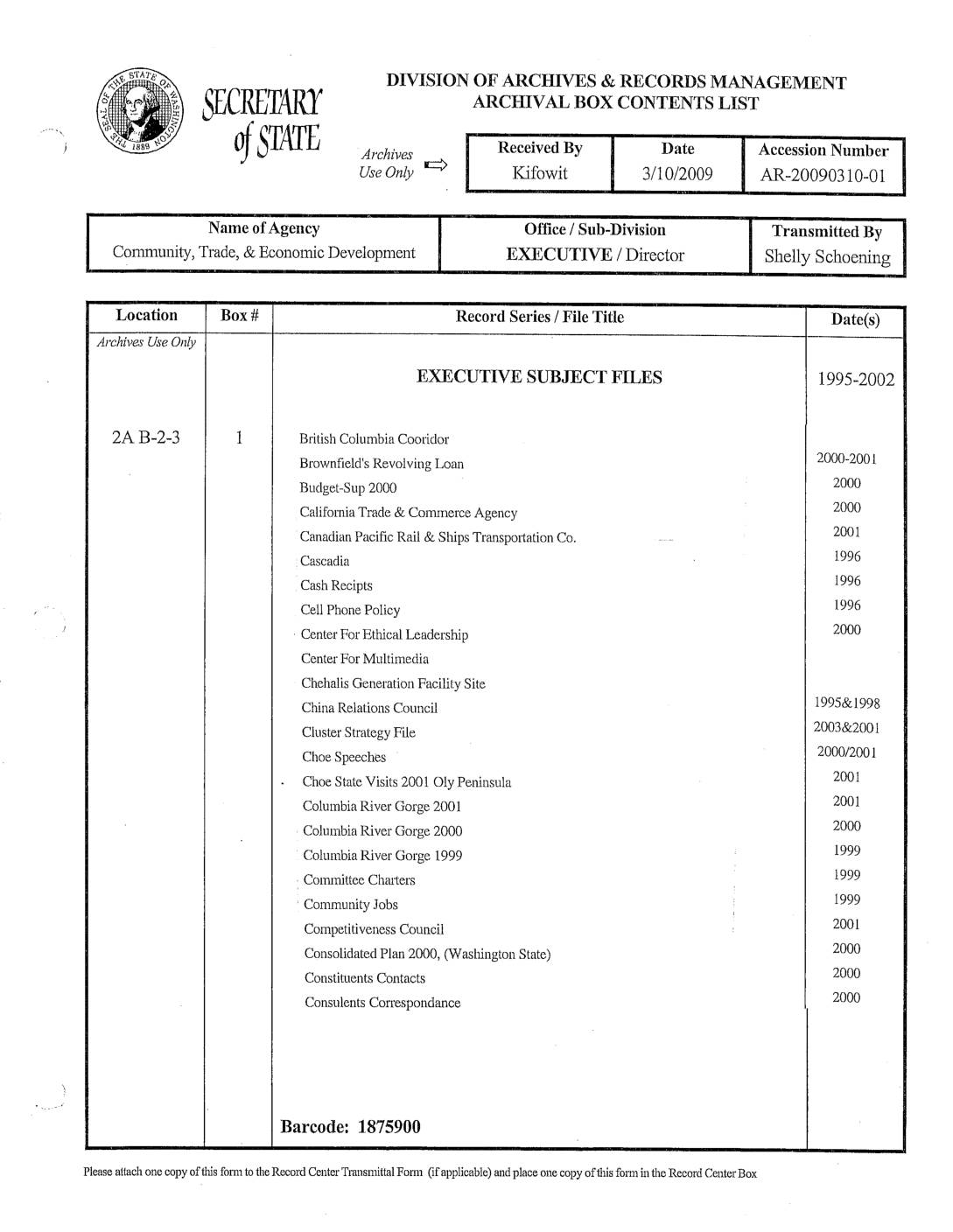
EXH AR-20090310-01: Archival Box Contents List — Community, Trade, & Economic Development Executive Subject Files, 1995–2002
This archival box contents list from Washington State's Division of Archives & Records Management documents Executive Subject Files from the Department of Community, Trade, and Economic Development, covering the years 1995–2002. The files span a wide range of topics including trade missions, legislative matters, economic development initiatives, and regional partnerships, but contain no records specifically related to Sea-Tac Airport noise policy. Researchers seeking Sea-Tac noise policy materials may need to consult alternative record series or agencies. -
 2008-12-31
Comprehensive annual financial report for the year ended December 31, 2008
This is the Port of Seattle's Comprehensive Annual Financial Report covering the fiscal year ended December 31, 2008. Prepared by the Port's Accounting and Financial Reporting Department, the report documents the financial activities and performance of the Port of Seattle, the public agency that operates Seattle-Tacoma International Airport and other maritime and real estate facilities in Washington State. The document serves as an official public record of the Port's financial condition for that year. -
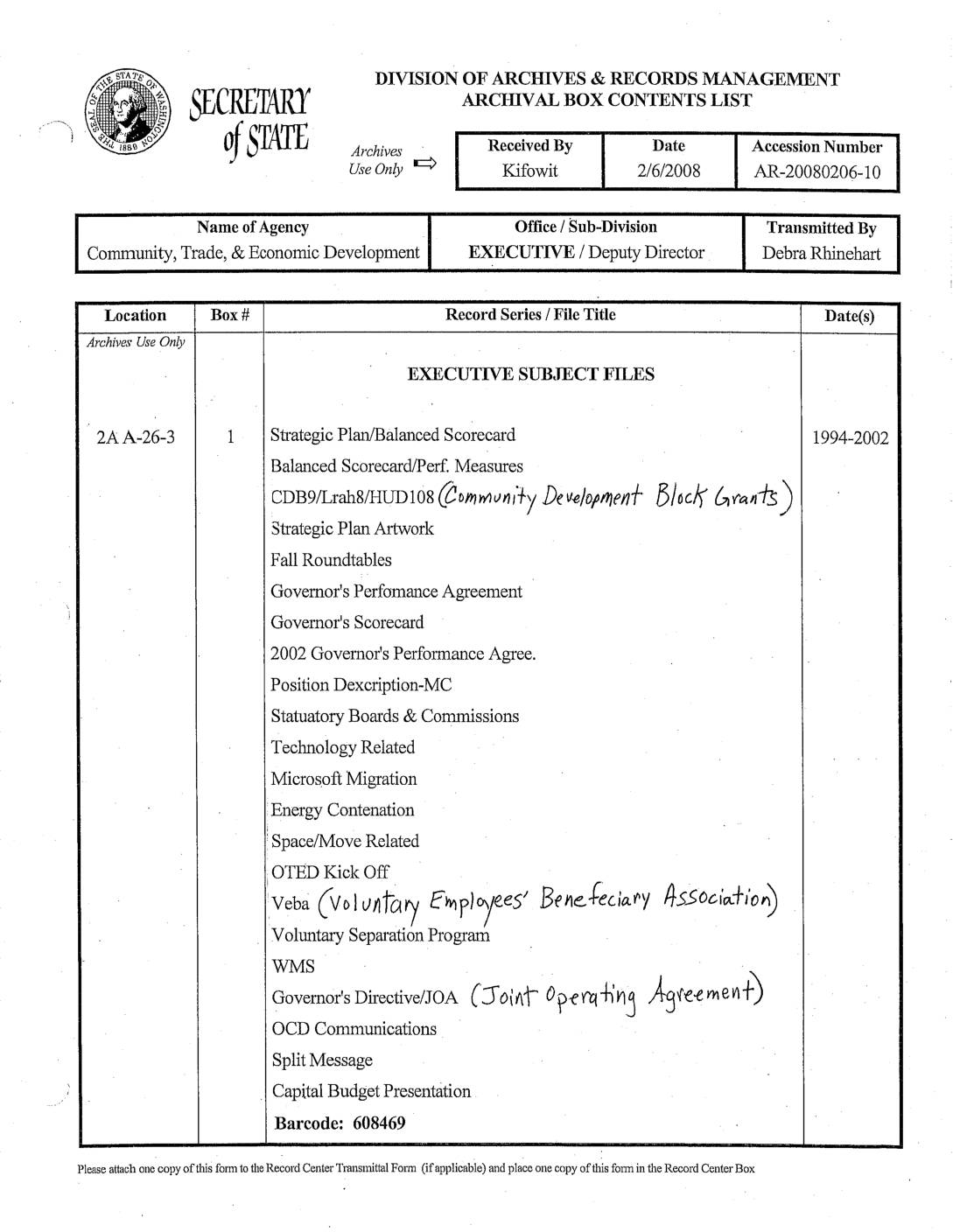 2008-02-06
EXH AR20080206-10: Archival Box Contents List — Community, Trade, & Economic Development Executive Subject Files, 1994–2002
This document is an archival box contents list from the Washington State Division of Archives & Records Management, cataloging Executive Subject Files from the Community, Trade, & Economic Development agency covering the years 1994–2002. The files include records related to strategic planning, Governor's performance agreements, rural economic development, trade missions, and various state programs. The records were received by the archives on February 6, 2008, and transmitted by Deputy Director Debra Rhinehart. -
 2007-12-31
Port Of Seattle comprehensive annual financial report for the year ended December 31, 2007
This is the Port of Seattle's Comprehensive Annual Financial Report for the fiscal year ended December 31, 2007, prepared by the Port's Accounting Department in Washington State. The report provides a detailed financial accounting of the Port of Seattle's operations, which include Seattle-Tacoma International Airport and marine cargo facilities. It was printed on 100% recycled paper, reflecting the Port's commitment to sustainability. -
 2006-12-31
Comprehensive annual financial report for the year ended December 31, 2006
This is the Comprehensive Annual Financial Report for the Port of Seattle, State of Washington, covering the fiscal year ended December 31, 2006. The report was prepared by the Port's Department of Accounting & Procurement Services and provides a detailed financial overview of the Port's operations, which include Seattle-Tacoma International Airport, seaport facilities, and related public infrastructure. It serves as an official public record of the Port's financial health and activities for that year. -
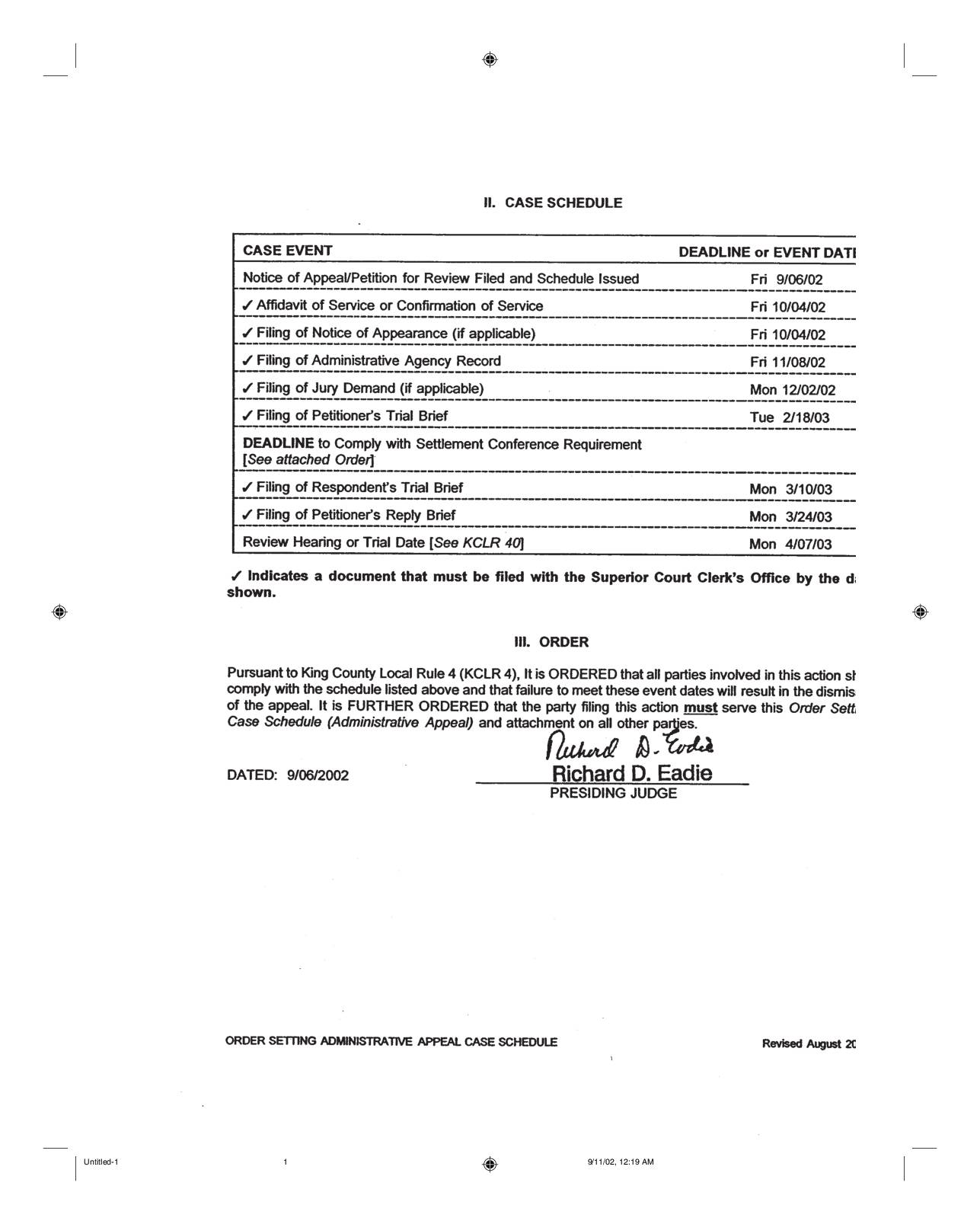 2002-09-06
Order setting administrative appeal case schedule
This is a King County Superior Court case schedule order for an administrative appeal, signed by Presiding Judge Richard D. Eadie on September 6, 2002. The order sets key deadlines for the case, including filing of briefs, administrative agency records, and a review hearing date of April 7, 2003. All parties are required to comply with the schedule, as failure to meet deadlines could result in dismissal of the appeal. -
 2002-02-11
EXH AR027607: A Guide to Instream Flow Setting in Washington State
Draft guide (AR 027607) authored by Clifford D. (Doug) Rushton, Water Resources Program, Washington Department of Ecology, issued February 11, 2002. Intended for use by watershed planning groups developing instream flow recommendations for water bodies in Washington State. Discusses selected approaches to instream flow setting, potential environmental effects at different flow levels, and common assessment -
 2002-02-01
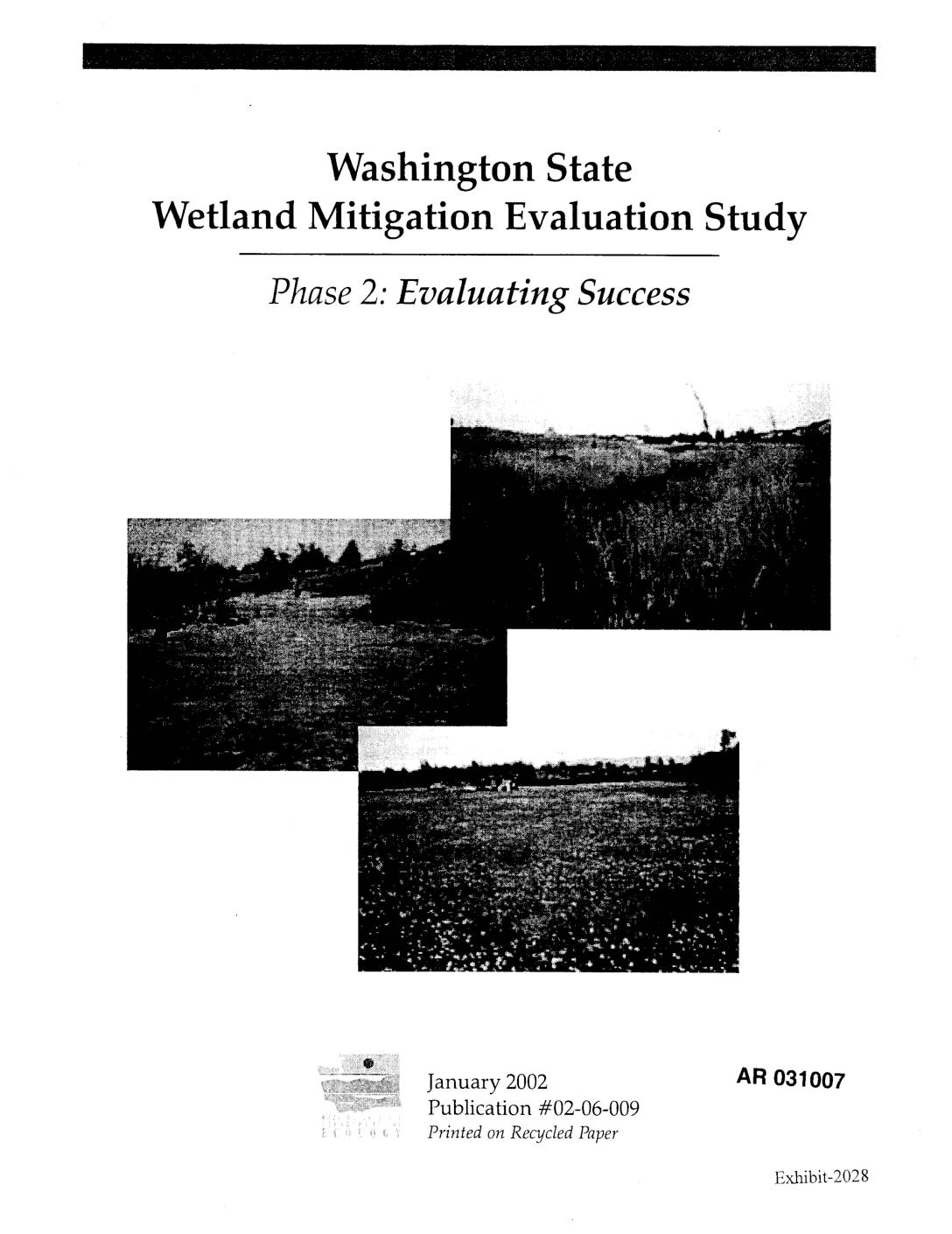
EXH AR031007: Washington State Wetland Mitigation Evaluation Study Phase 2: Evaluating Success
Washington State Department of Ecology Shorelands & Environmental Assistance Program study (Publication No. 02-06-009, AR 031007) authored by Patricia Johnson, Dana L. Mock, Andy McMillan, Lauren Driscoll, and Tom Hruby. Phase 2 evaluation of wetland mitigation success across 24 projects in Washington State, published February 2002. Companion document Appendix F (publication #02-06-010) contains individual project